

Bottom Line
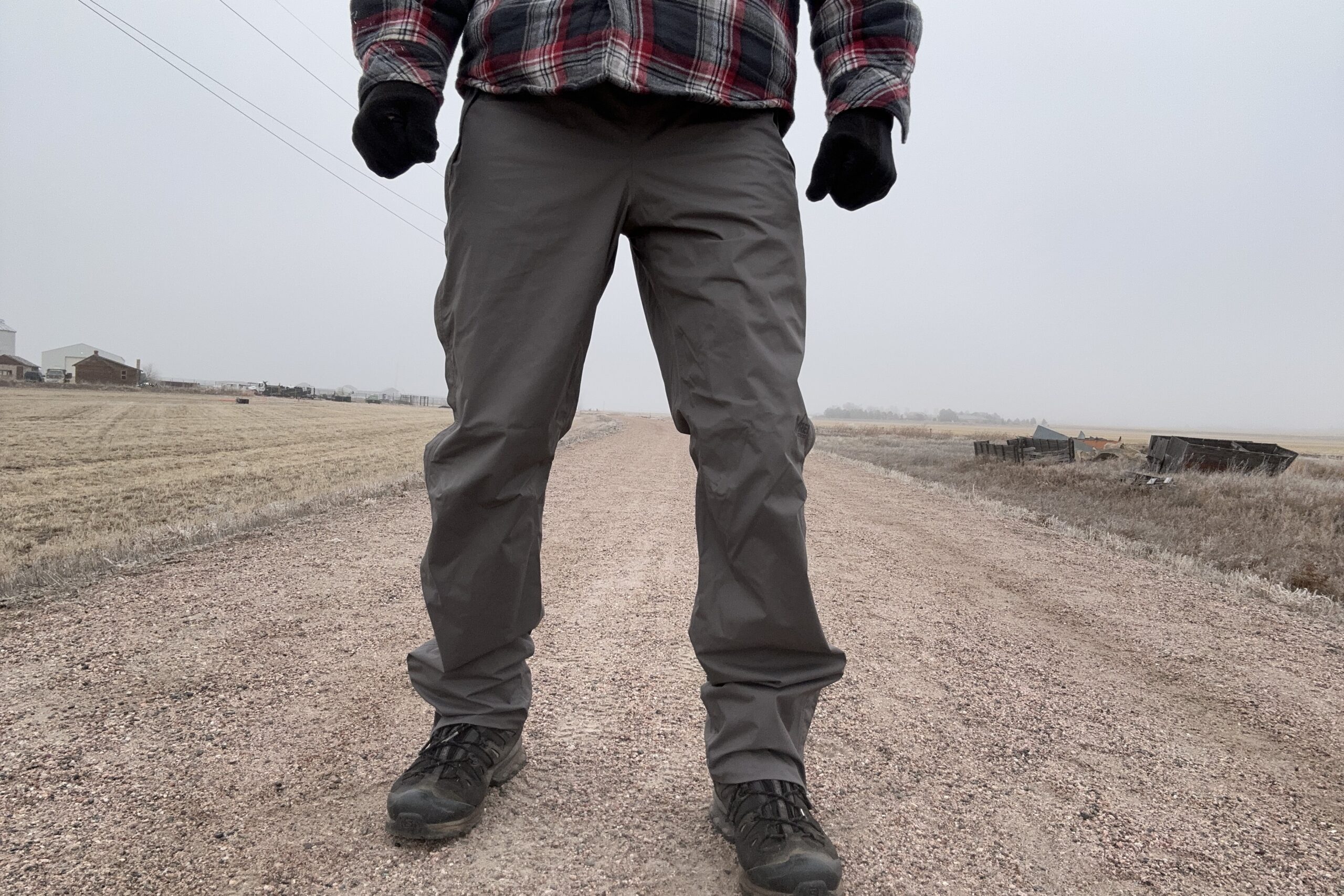
The REI Rainier (men’s / women’s) is an excellent pick for hikers who want full-length leg zippers, generous adjustability, and dependable rain coverage without paying premium-shell prices. At $100, it includes conveniences often reserved for more expensive designs: zippered hand pockets, ankle cinches, a drawcord waist, and side openings that make it practical to change over boots. We especially like it for everyday wet-weather hiking rather than minimalist backpacking.
We wore the Rainier in cold, unsettled conditions in northern Wisconsin and Colorado, then added direct hose-spray testing. Its 2.5-layer shell handled rain well, and the adjustable closures helped seal out drafts and moisture. The tradeoff is a heavier, bulkier package with a less pleasant feel against the skin than the softest competitors.
It runs generously, so hikers between sizes may prefer to try the smaller option. That extra volume is useful over insulation but not ideal for shoppers who prefer a tailored silhouette. The Rainier is most compelling when the budget matters and you expect to put rain pants on and take them off repeatedly. See our best rain pants guide for a complete review of our favorites.
How We Tested
In our published testing, we hiked in the Rainier for three months in northern Wisconsin and the Colorado Rockies, including chilly, drizzly days. Repeated full-force hose tests helped us compare water shedding, drying time, and potential weak spots with other shells. We also evaluated the long zippers over footwear, waistband adjustments, and comfort during movement.
Quick Specs
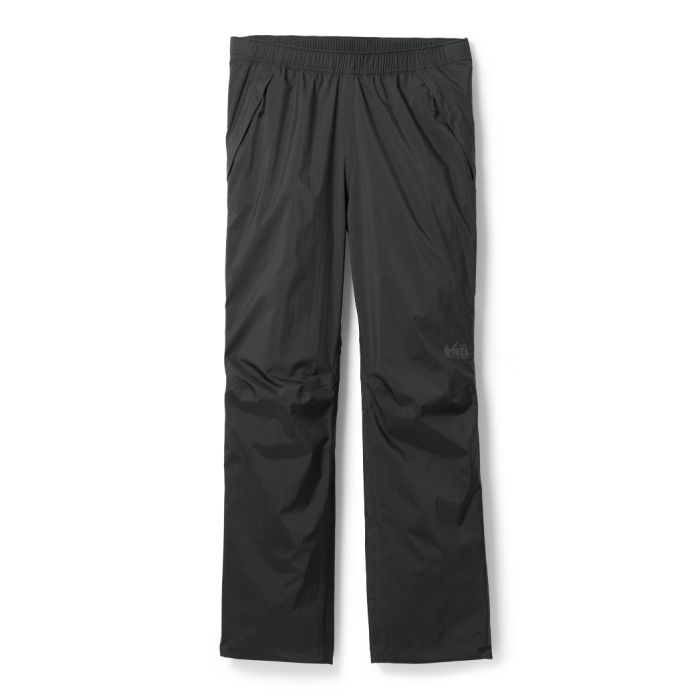
REI Rainier
Best Climate Neutral Certified Rain Pants
CleverHiker Rating: 4.5/5.0
Price: $100
Weight: 12 oz. / 11.9 oz.(men’s / women’s)
Zipper Length: Full
Pros
- Price
- 2 zippered hand pockets
- Slim fit
- Inclusive sizing
- Elastic waist
- Durable Velcro adjustments
- Cinching ankle cuffs
- Excellent ventilation
Cons
- Heavier/bulkier than most on this list
- Fabric not as comfortable against the skin
- Noisy fabric
- Not as packable as some
Comfort & Mobility
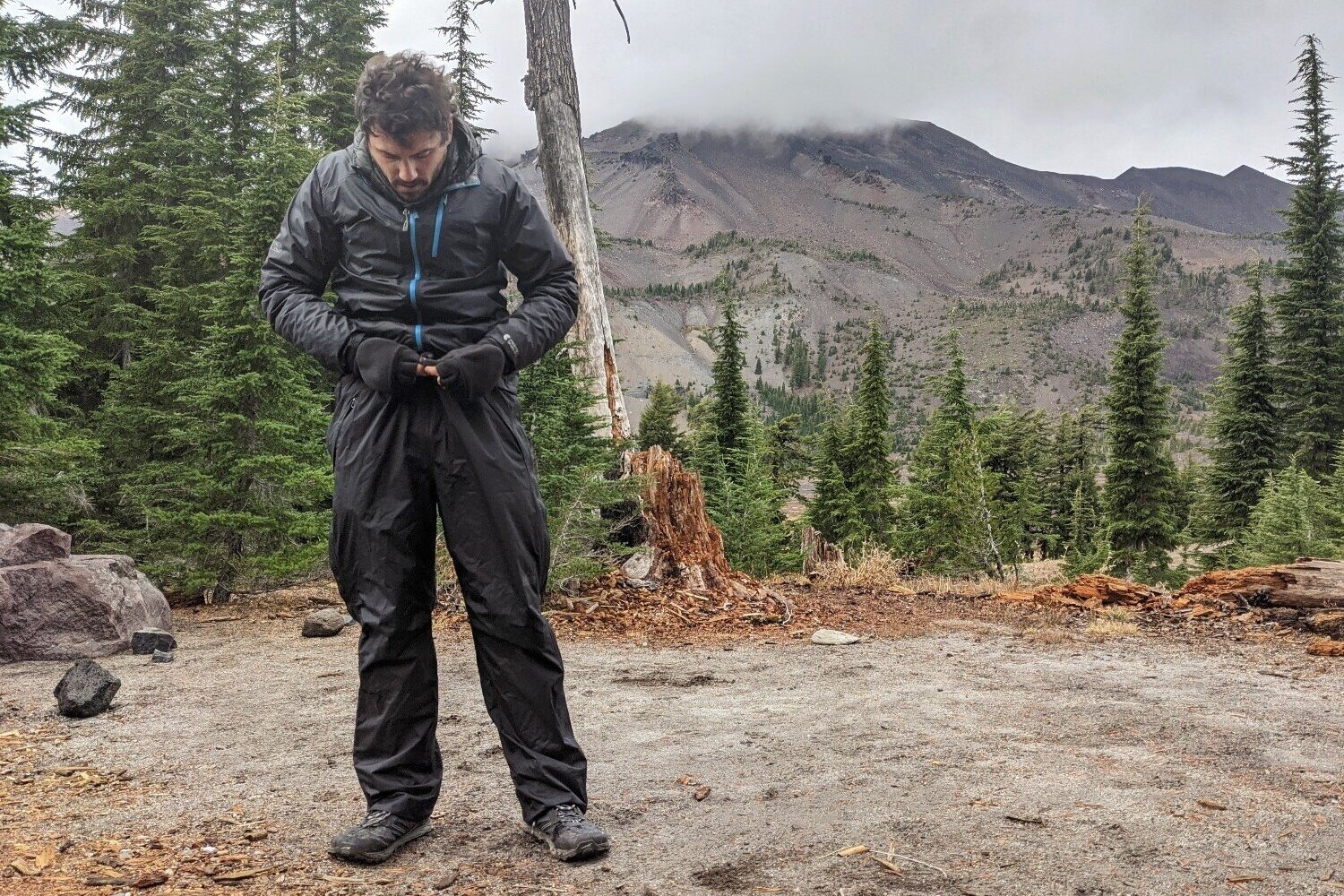
The Rainier’s roomy fit leaves substantial space for hiking pants or insulating layers. Its elastic waistband combines Velcro tabs and a drawcord, which makes it easier to find a secure fit than on pants with only a simple elastic band. We appreciated this flexibility during chilly days when our layering changed with the weather.
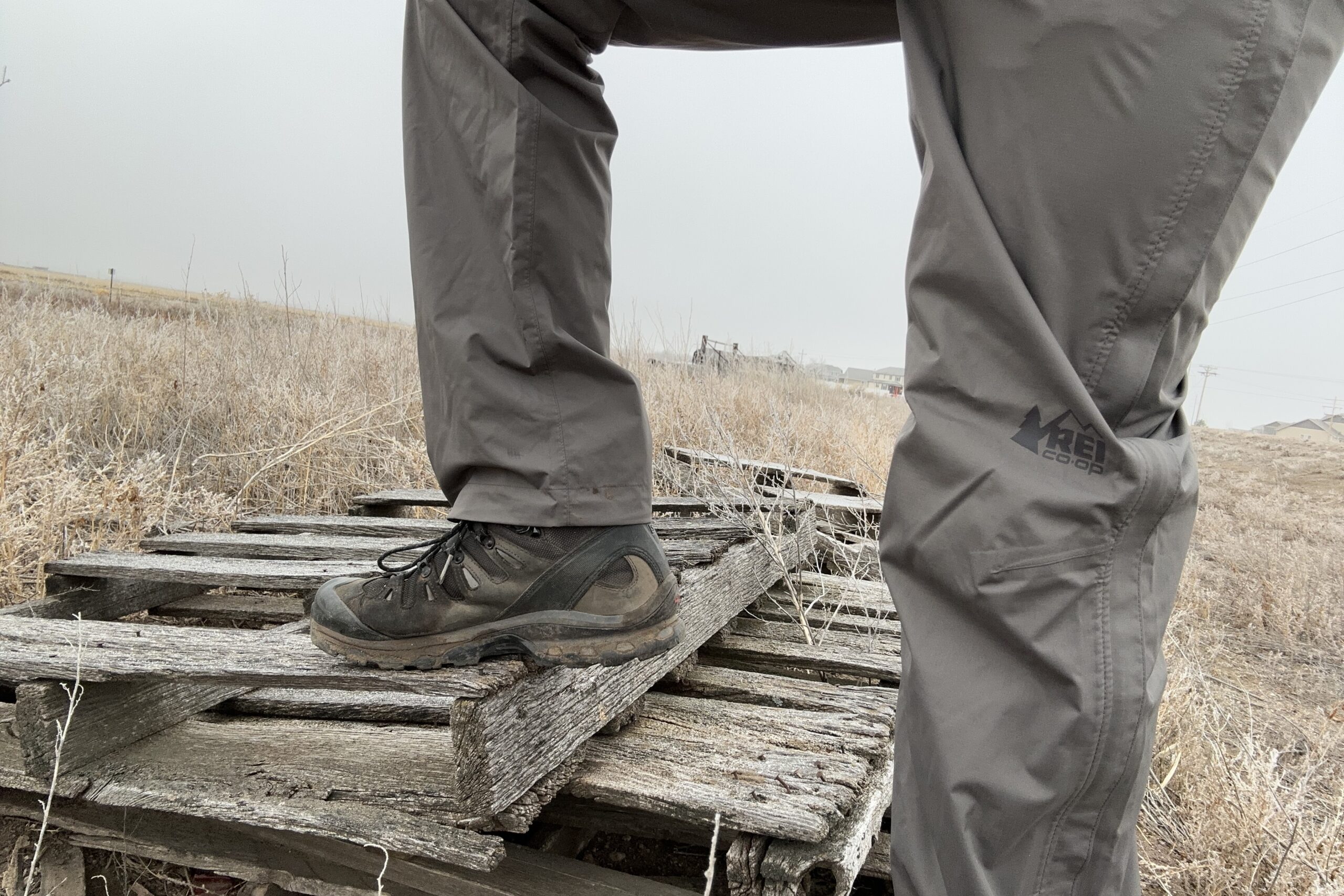
The compromise is fabric feel. The current inner material feels smoother and quieter than previous Rainier models, even though the fabric is not as supple as the Black Diamond Fineline Stretch. Articulated knees and adjustable cuffs also help on scrambles, while the fit can feel slightly restrictive if sized too small. Anyone choosing between sizes should account for the generous cut rather than assuming a larger size will automatically be more comfortable.
Comfort & Mobility Score: 4.6/5.0
Weather Resistance
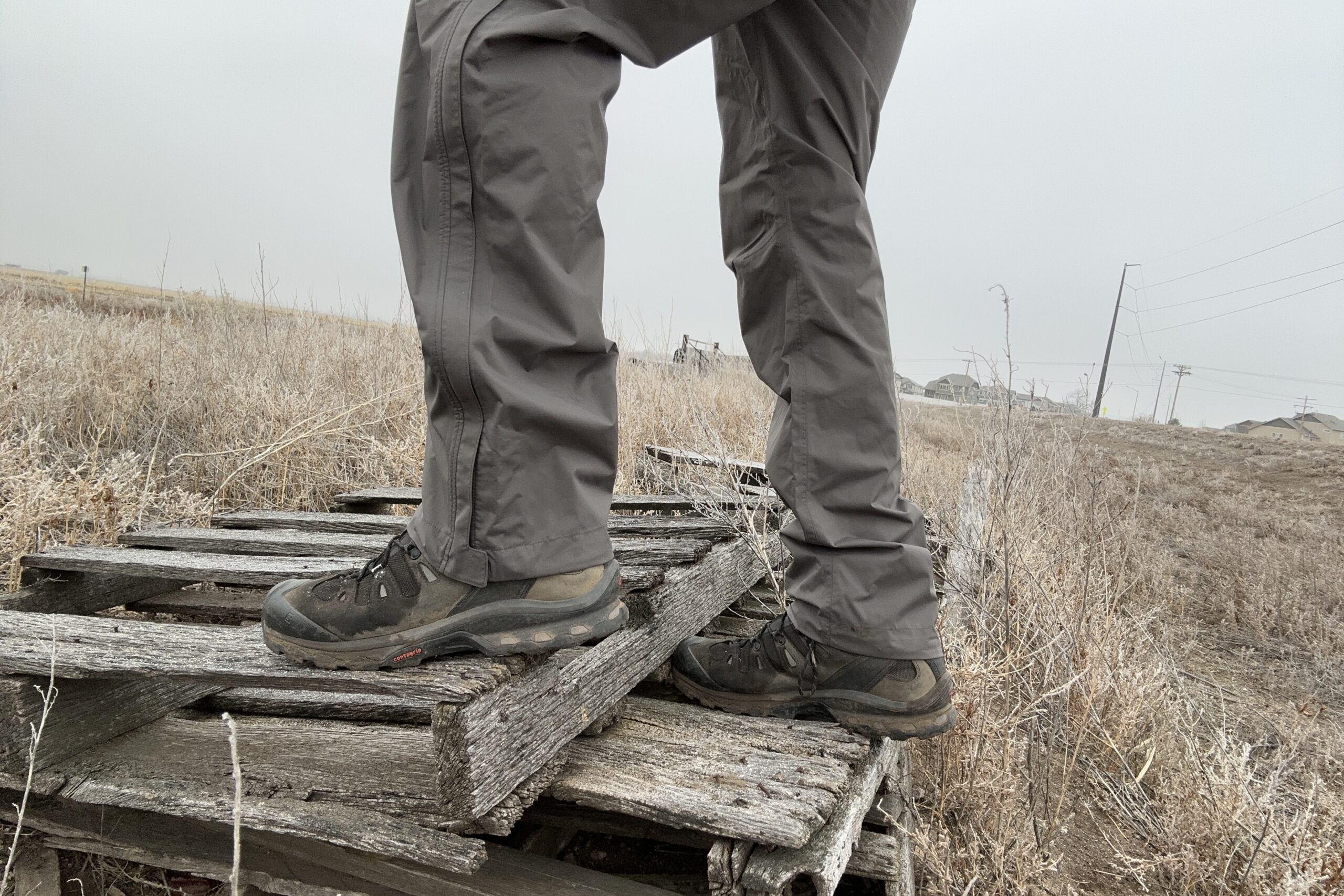
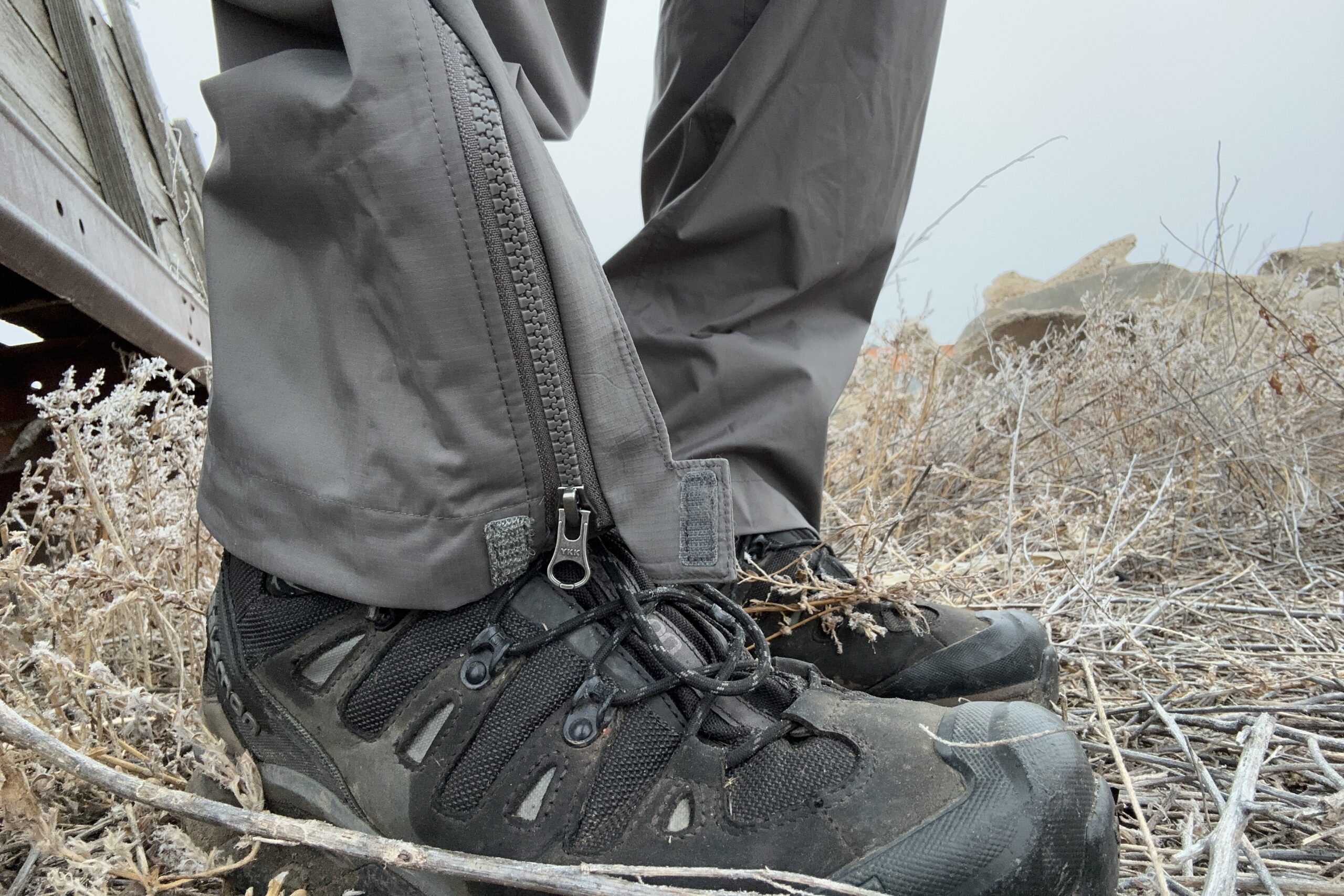
During damp hikes and forceful hose tests, the shell provided reassuring coverage for its price. Adjustable ankle cuffs help close the gap around boots, while the high side zippers are useful when pulling the pants over wet layers without dragging muddy footwear through the legs.
Our hose tests included repeated 30-minute spray cycles, and the seams held up well. We did notice occasional dampness around the knees and seat during wet outings.
A two-and-a-half-layer construction is not the same as the thicker three-layer Torrentshell or alpine-focused Beta. Those alternatives are more persuasive when severe exposure and repeated abrasion dominate your trips. For normal trail storms, however, the Rainier provides a convincing balance of function and expense.
The difference between external leakage and internal dampness matters in interpreting this result. The Rainier’s seams performed well under repeated spray, but the occasional wet feeling at the knees and seat prevents us from treating it as an uncompromising storm shell. Hikers who need confidence on routine rainy trails get strong protection for the money; sustained abrasive alpine exposure is a different assignment.
Weather Resistance Score: 4.6/5.0
Ventilation
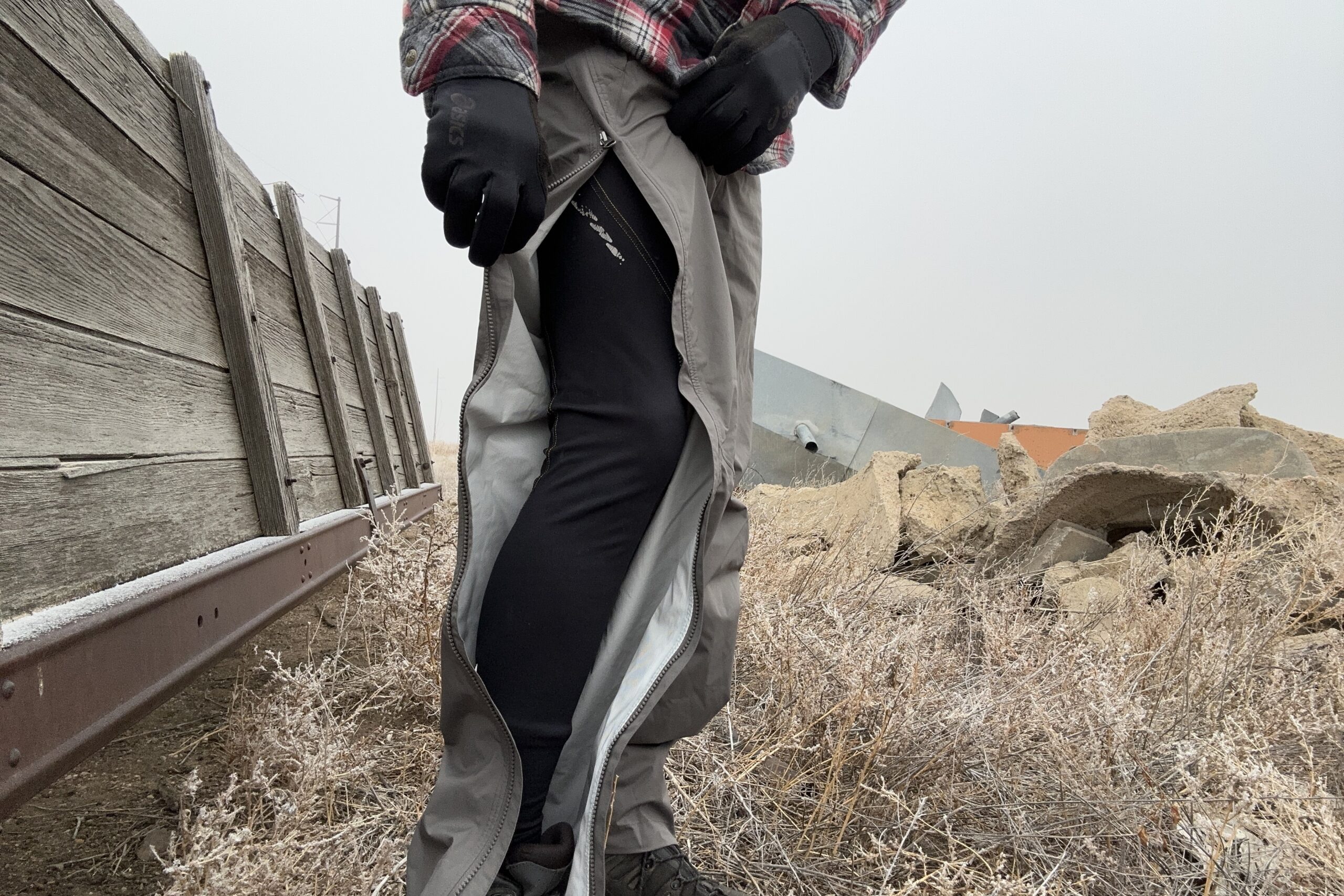
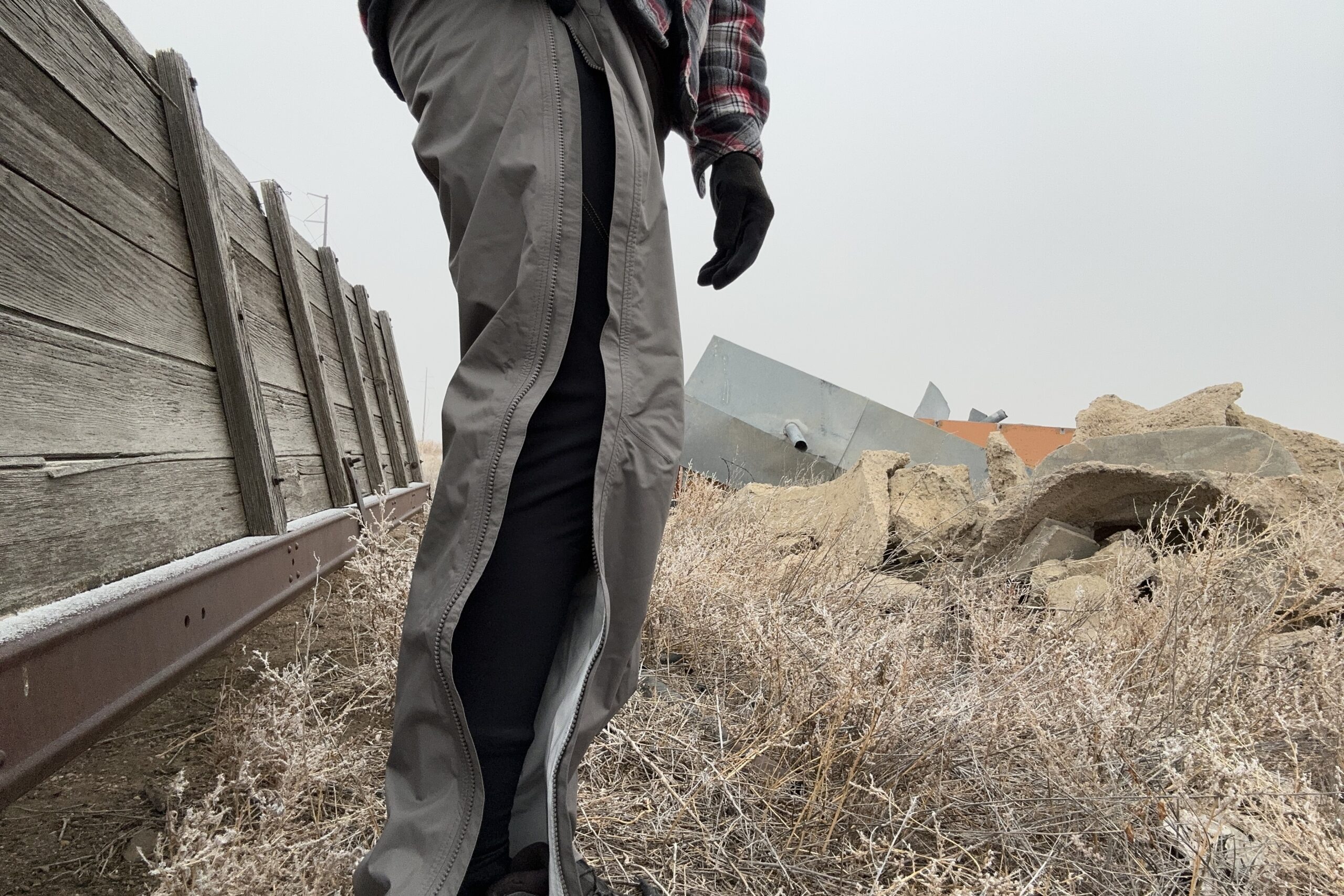
Full side openings are the main selling point. You can shed heat through the legs without wrestling your boots off, and the same design speeds up changes when a storm rolls in. We found this more convenient than short ankle-only openings on budget designs.
On a hike, we loosened the top slider by several inches while keeping the hip closures secure, releasing heat without fully opening the leg. Opening a large zipper while rain is blowing sideways can also admit moisture, so use the vents selectively. The Rainier is a better match for hikers who value adjustable airflow than for those willing to accept a sealed, featureless shell to save ounces.
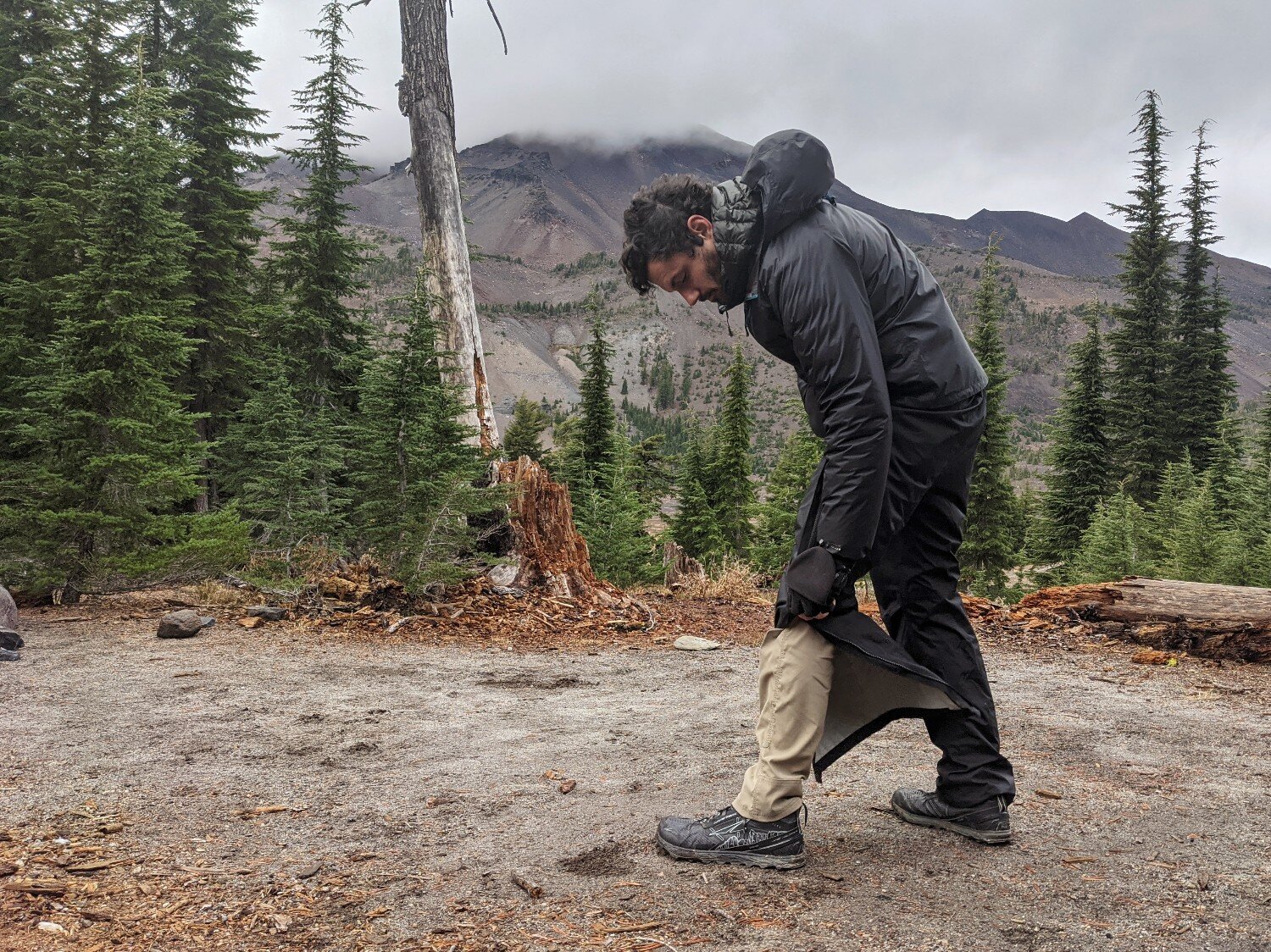
The benefit of the Rainier’s long zippers extends beyond letting out heat. On cold, muddy trails, removing a rain layer without first stripping off footwear avoids dragging wet soles through the pants. This is a major functional step above the Trailmade’s ankle openings, particularly for hikers who repeatedly change layers as showers pass.
Ventilation Score: 4.3/5.0
Weight
At 12 ounces for men and 11.9 for women in the live comparison table, the Rainier is not a light emergency-only layer. The full-length zippers and handwarmer pockets are useful when temperatures fluctuate, but their hardware adds bulk. Its substantial zipper tracks, pockets, and adjustable cuffs account for some of that weight, and the pants take more space in a pack than the Vertice or Helium.
That penalty is easiest to justify when you regularly wear rain pants and benefit from their hardware. If most hikes are dry and your shell rarely leaves the pack, a lighter, simpler pair may be more useful even if it costs more.
Weight Score: 4.4/5.0
Durability
The adjustment tabs, zippers, and reinforced closures stayed usable during testing. The overall build feels suited to frequent recreational trail use rather than merely surviving a single shower. Its fabric does not have the same confidence-inspiring abrasion resistance as the Torrentshell, however.
For repeated bushwhacking or rough rock, we would pay more for a thicker shell. For maintained routes, campsites, and ordinary rainy hikes, the Rainier offers enough practical toughness that the lower price does not feel like a major sacrifice. We tested it against alpine scrub, sharp rock, and fallen trees; it resisted light and moderate abrasion, though repeated scraping will eventually wear the DWR treatment.
Durability Score: 4.6/5.0
Should You Buy the REI Rainier Rain Pants?
Choose the Rainier when you want an accessible price, lots of sizing and fit flexibility, and long zippers for shoe-on changes. It makes particular sense for cool-weather day hikes and trips when you expect rain pants to be used frequently.
Pass if you strongly value quiet fabric, compact packing, or minimum weight. The Fineline feels better during active movement, while the Torrentshell is the more rugged long-term choice.
What Other Rain Pants Should You Consider?
When considering the REI Rainier pants, some other top picks from our guide to the best rain pants might appeal to you as well.
Patagonia Torrentshell 3L Review: The Torrentshell’s heavy-duty three-layer shell is better for hikers who expect brush, boulder scrambles, or repeated storms. It is also surprisingly affordable relative to premium alpine gear. You give up some of the Rainier’s full-length zipper convenience, and the fabric remains stiff and noisy.
REI Trailmade Review: The Trailmade is the less expensive, lighter choice for occasional hikes on maintained trails. It saves money and pack space but offers less confidence in extended wet conditions and has more limited practical ventilation in the published hands-on review. Pick it when you rarely need the shell rather than wearing one throughout the day.
Black Diamond Fineline Stretch Review: The Fineline suits hikers who dislike boxy rain pants and need greater freedom for steep climbing and scrambling. Its stretchy, smooth material and full-length closures improve mobility and on-off convenience, but the slim cut layers less easily and the fabric is less rugged than the Rainier’s more substantial build.