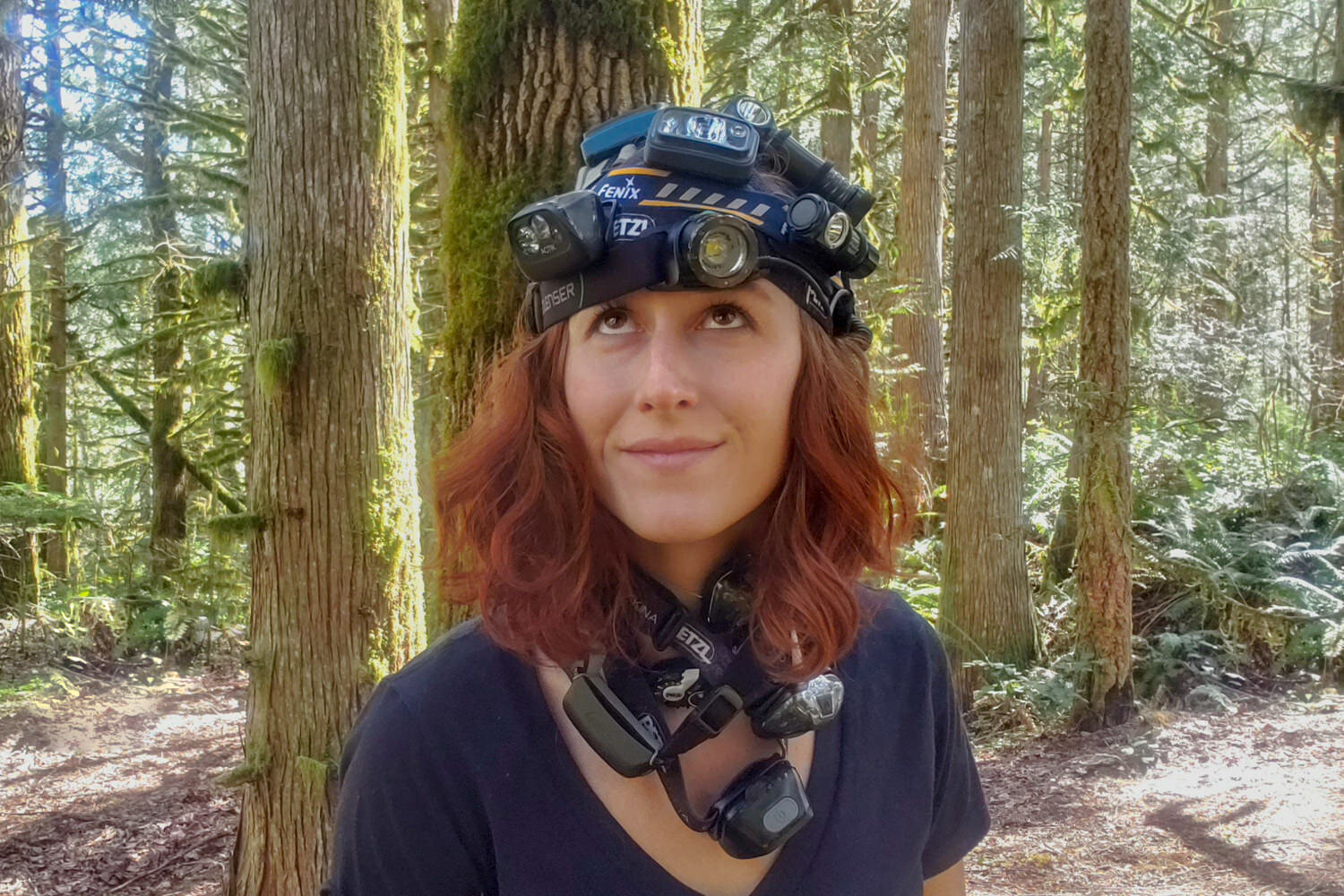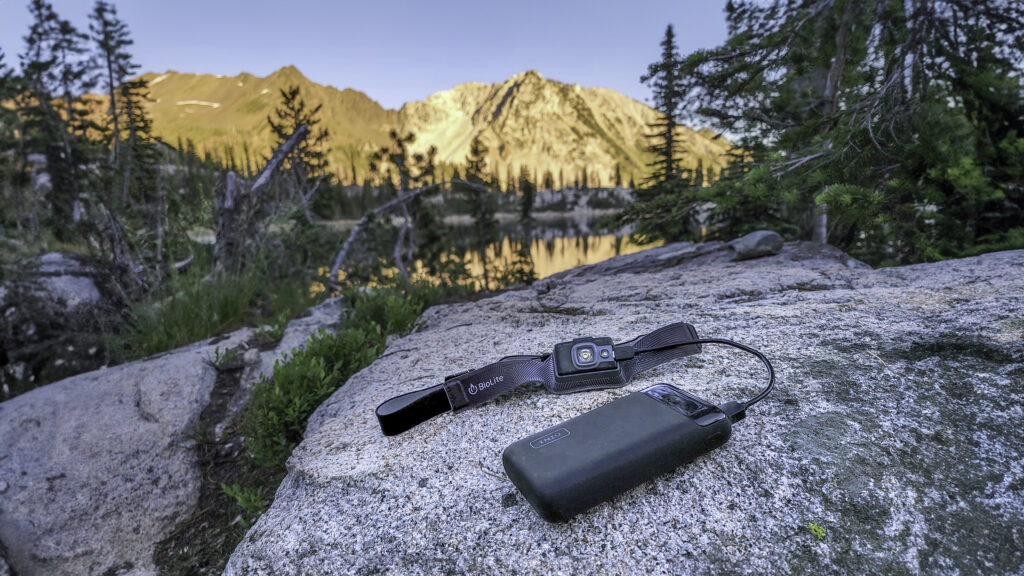


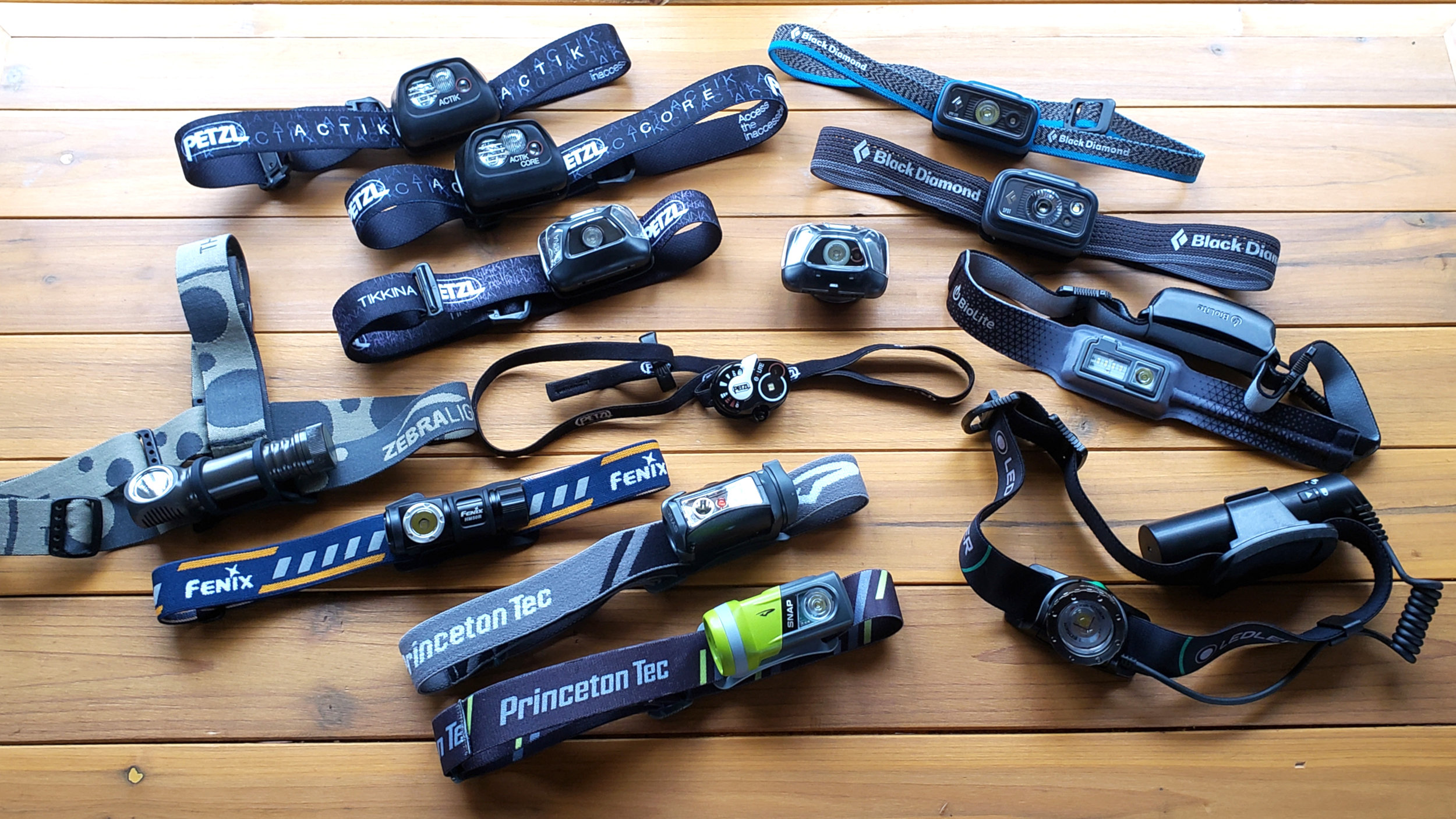
We started with over 40 of the top-performing headlamps in the industry – including brands like Black Diamond and Petzl – and rigorously evaluated them for light quality, burn time, comfort, weight, and ease of use.
Editor’s Note: We last updated this gear guide on April 14, 2026.
How We Test
We’ve collectively spent hundreds of hours under the stars, ensuring that the headlamps featured in our gear guide are the cream of the crop. These headlamps have been tested in many conditions – from the blistering deserts of Utah and Nevada to soggy alpine basins in Colorado and high, lonesome trails in the Sierra Nevada.
And for more info, check out some of our other popular gear guides:
#1. Best Headlamp Overall
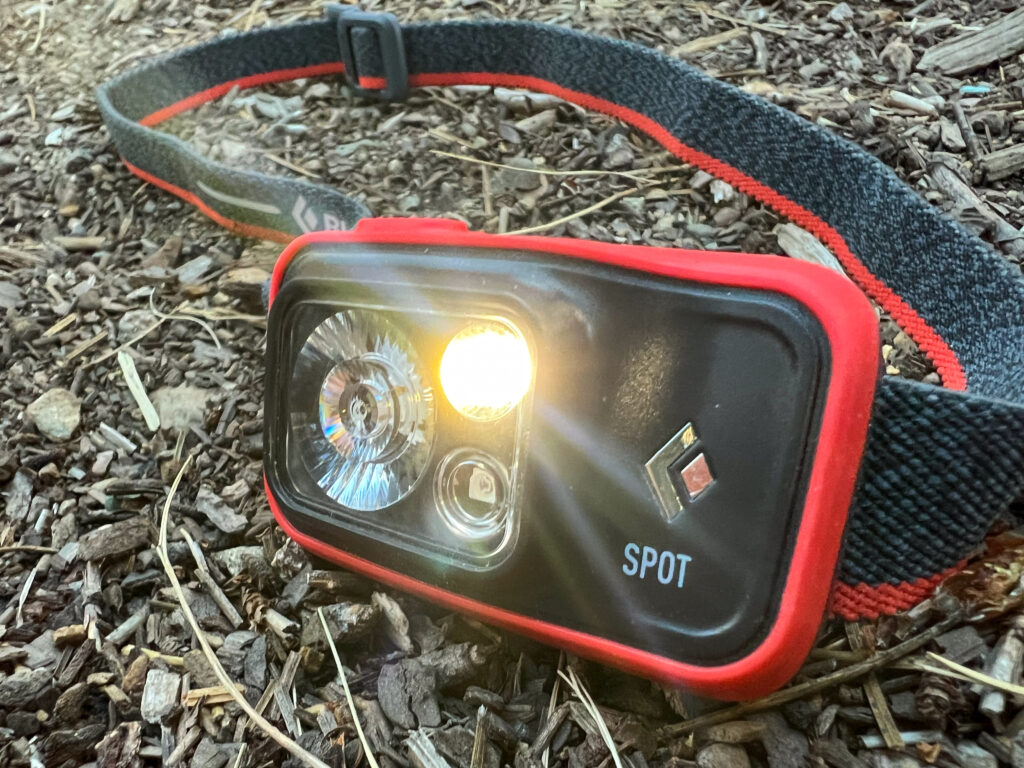
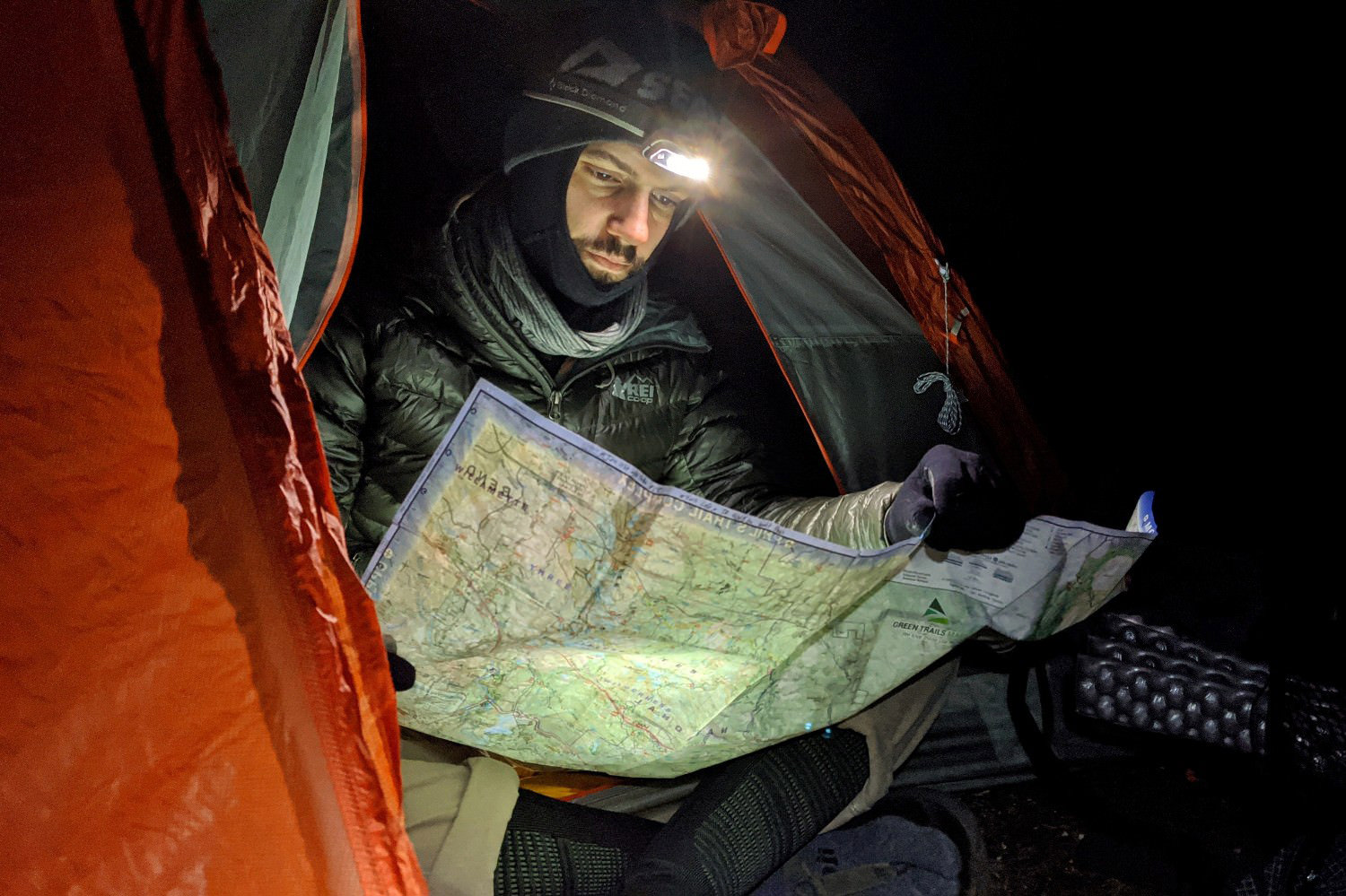
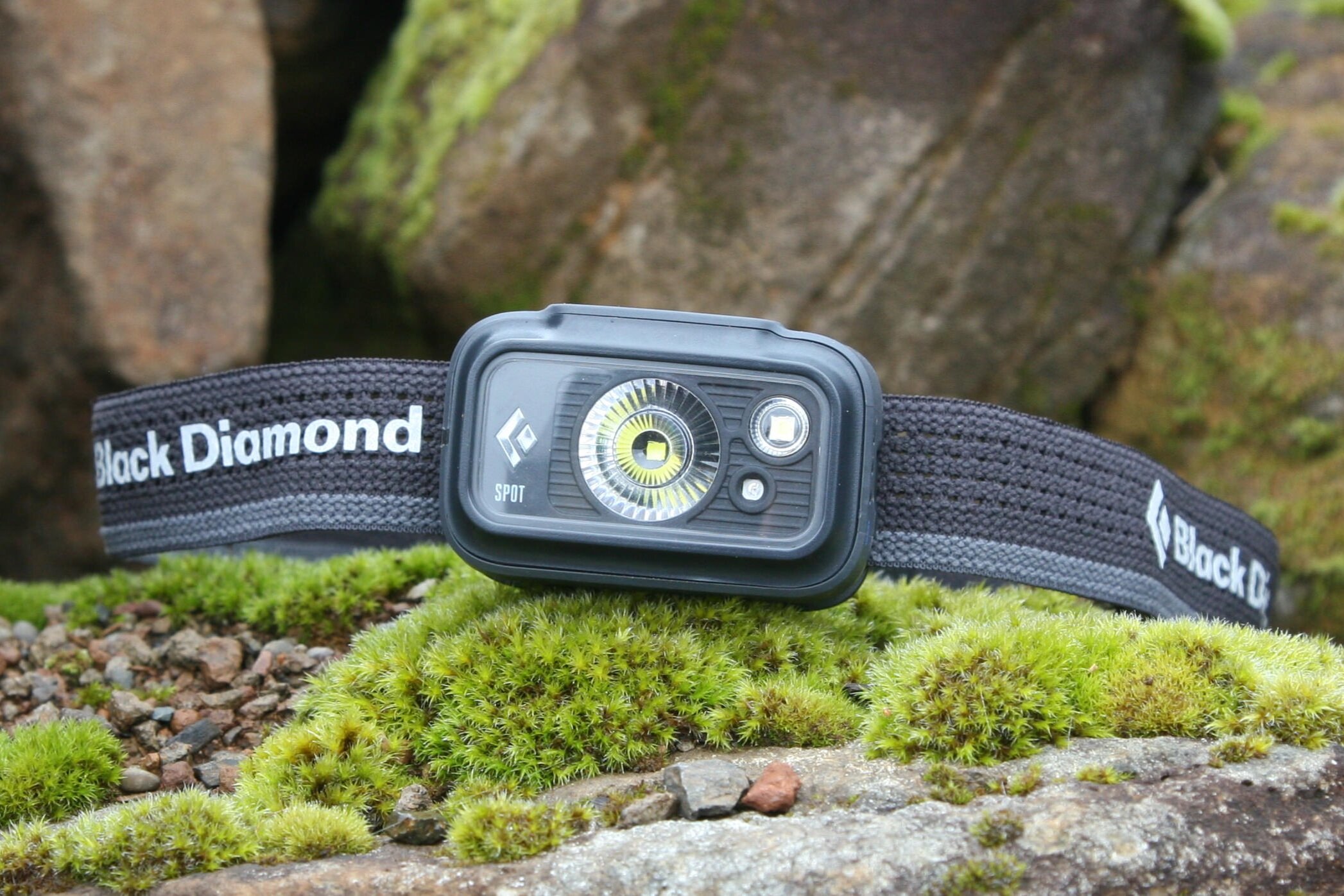
We’ve been impressed how the Black Diamond Spot 400-R packs versatility, comfort, quality, and functionality into such a small forehead light.
Quick Picks for Headlamps
Check out this quick list of our favorite headlamps, or continue scrolling to see our full list of the best headlamps with in-depth reviews.
1. Best Headlamp Overall: Black Diamond Spot 400-R ($70)
2. Best Headlamp Overall Runner-Up: BioLite Range 500 ($70)
3. Best Feature-Rich Headlamp: Nitecore NU27 ($45)
4. Best Voice-Activated Headlamp: Coast FL97R ($66)
5. Best Headlamp for Runners: Petzl SWIFT LT ($55)
6. Best Well-Rounded Headlamp: Petzl ACTIK CORE ($88)
7. Best Ultralight Headlamp: Nitecore NU25 UL ($37)
8. Best Ultrabright Headlamp: Black Diamond Distance LT 1100 ($150)
9. Best Value Headlamp: Black Diamond Spot 400 ($60)
10. Bright Headlamp with Good Battery Life: Petzl ACTIK ($65)
11. Best Budget Headlamp: Petzl TIKKINA ($20)
12. Best Headlamp for Hunting and Fishing: Ledlenser HF6R Signature ($90)
13. Headlamp that Performs Well in the Cold: Fenix HM50R V2.0 ($60)
14. Best Headlamp for Kids: Petzl TIKKID ($27)
Black Diamond Spot 400-R
Best Headlamp Overall
CleverHiker Rating: 4.9/5.0
Price: $80
Weight: 3 oz.
Max Lumens/Beam Distance: 400 lm / 328 ft (100 m)
Burn Time Low/High: 225 hrs / 4 hrs
Pros
- Bright enough for most non-technical adventures
- Lightweight
- Rechargeable
- Easy to use
- Comfortable for long-term wear
- Versatile light modes
- Long battery life
Cons
- The strap stretches a bit over time
- Not bright enough for technical pursuits
- Light quality can be harsh at full power
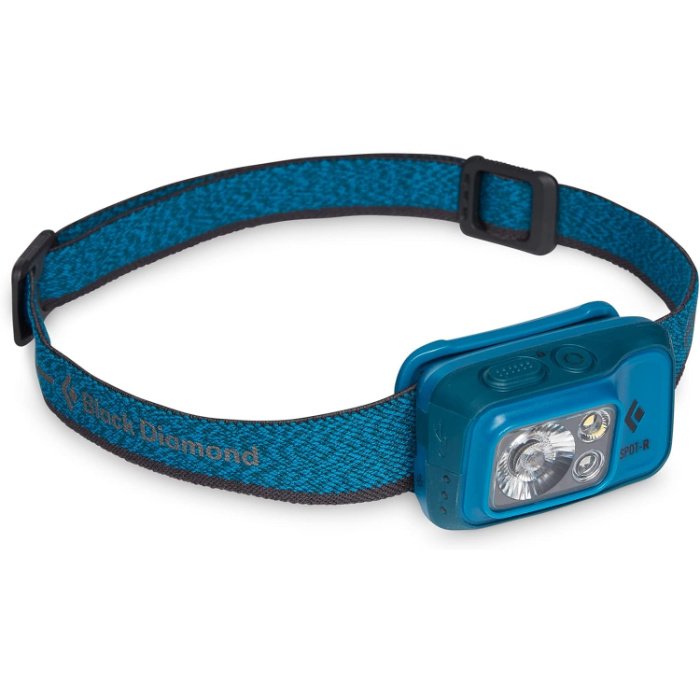
The Black Diamond Spot 400-R is a versatile, reliable headlamp ideal for most outdoor enthusiasts. Although it’s not specialized for higher-exertion activities like mountaineering or trail running, it shines as a well-rounded, rechargeable option for night hikes, camping, and general use. The Spot 400-R offers ample brightness, multiple lighting modes, and impressive battery life in a lightweight, comfortable package.
This model also delivers great value with good performance and durability. At 3 ounces, it’s light enough for extended wear without compromising comfort. The adjustable strap is supportive, though it can stretch over time. One of its standout features is Black Diamond’s PowerTap technology, allowing instant brightness adjustments. However, it’s a bit sensitive and can activate unintentionally.
With a maximum output of 400 lumens, the Spot 400-R provides sufficient illumination for most non-technical adventures. The beam is focused and powerful, though the light quality at full brightness can be harsh. Additionally, the headlamp offers impressive burn times, particularly on lower settings, making it dependable for longer outings.
For those seeking a versatile, rechargeable headlamp with solid all-around performance, the Black Diamond Spot 400-R is a top choice. It’s user-friendly, comfortable, and durable enough for various outdoor scenarios. However, if you need a headlamp for more specialized activities or a budget-friendly option, you might explore alternatives like the ultralight Nitecore NU25 UL or the non-rechargeable Black Diamond Spot 400.
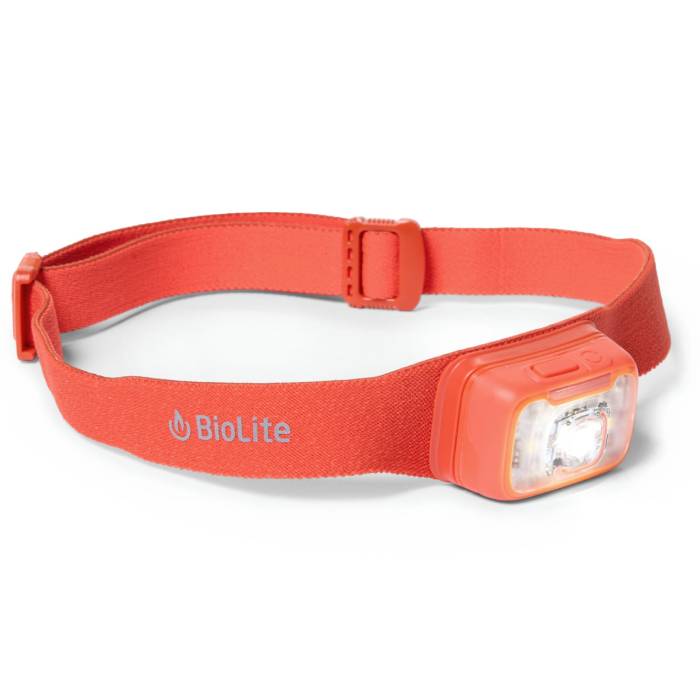
BioLite Range 500
Best Headlamp Overall Runner-Up
CleverHiker Rating: 4.8/5.0
Price: $70
Weight: 0.6 oz.
Max Lumens/Beam Distance: 500 lm / 328 ft (100 m)
Burn Time Low/High: 200 hrs / 6 hrs
Pros
- Stable
- Bright
- High-quality optics
- Super-fast recharging
- No-bounce design
- Lightweight
Cons
- Can’t remove the band from the lamp to wash
- No pass-through charging
It’s pretty rare for a new-to-market headlamp to make a run at our top spot, but the BioLite Range 500 did just that. The Range is a recent offering from BioLite, and even though we’ve only had our hands on it for a few months, we are thoroughly impressed. On paper, it’s quite similar to our reigning top pick and longtime favorite, the Black Diamond Spot 400-R. The two headlamps are about the same weight and have similar all-around appeal.
This is a do-it-all headlamp that impressed us with its overall comfort, as well as its weight distribution, ease of use, solid illumination, and – most notably – its fast charging. Just 8 minutes on the charger returns an hour of usable light, and you can go from 0 to 80 percent in just 30 minutes.
The Range 500 also earned high marks from our analysts for its IP67 waterproofing and comfortable 3D SlimFit headband, which stayed put through trail runs and multi-night backpacking trips. Worrying about your headlamp battery may not be a thing of the past quite yet, but BioLite is getting closer to making it a reality.
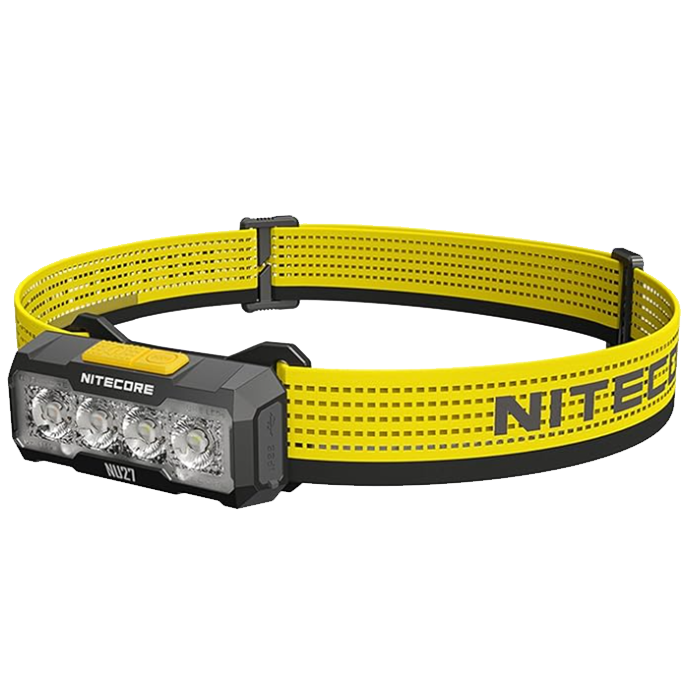
Nitecore NU27
Best Feature-Rich Headlamp
CleverHiker Rating: 4.7/5.0
Price: $45
Weight: 2 oz.
Max Lumens/Beam Distance: 600 lm / 402 ft (123 m)
Burn Time Low/High: 57 hrs / 3 hrs
Pros
- Excellent value
- Multiple color temperature options
- Lightweight
- Budget friendly
- Five brightness settings for each color output
- Two red-light modes
Cons
- Not the best flood-lighting
- No settings memory
- Odd lens flair near the edges of the beam
- Not the best burn time on the lowest setting
The Nitecore NU27 stands out in Nitecore’s headlamp lineup, being the first to allow users to switch between warm, neutral, and cool color temperatures. The warm light (3,000K) is gentle on the eyes and helpful in poor weather conditions like fog or rain. The neutral light (4,500K) offers a more natural feel, while the cool white (6,500K) enhances visibility but can be harsh. Each color temperature has five brightness levels (Ultralow: 6 lumens, Low: 70 lumens, Mid: 300 lumens, High: 400 lumens, Turbo: 600 lumens), along with two red-light settings.
While max output is listed at 600 lumens, the NU27 feels brighter than other headlamps at that rating thanks to its impressive throw. At just 2 ounces, it offers the best brightness-to-weight ratio in our lineup. Standard features include a locking function, battery life indicator, and USB-C charging.
However, there are some drawbacks. The lack of a memory function means it resets to neutral color temperature on the lowest setting every time it’s turned off. The beam could benefit from a wider flood function, and the lens creates a disorienting flare near the edges of the beam.
All that said, the Nitecore NU27 offers exceptional value in a bright, lightweight, and versatile package. This is a great headlamp for casual hiking, running, backpacking, climbing, and more.
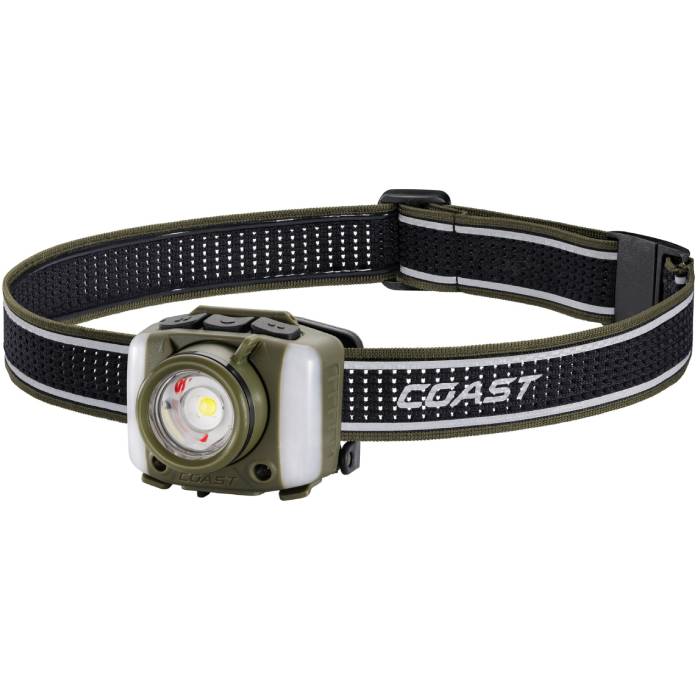
Coast FL97R
Best Voice-Activated Headlamp
CleverHiker Rating: 4.7/5.0
Price: $60
Weight: 4.2 oz.
Max Lumens/Beam Distance: 1,250 lm / 738 ft (225 m)
Burn Time Low/High: 15 hrs / 2 hrs
Pros
- Extremely bright
- Rechargeable
- Eight output modes
- Simple to use
- Voice-activated
- Can be powered by the rechargeable battery or three AAAs
Cons
- Low burn time
- Heavy
- Bulky
Coast may not be the first brand that comes to mind when you think of headlamps, but that’s no reason to keep it off your short list. In fact, it’s emerging as one of the stronger headlamp manufacturers thanks to its focus on high-quality constructions and genuinely innovative design choices.
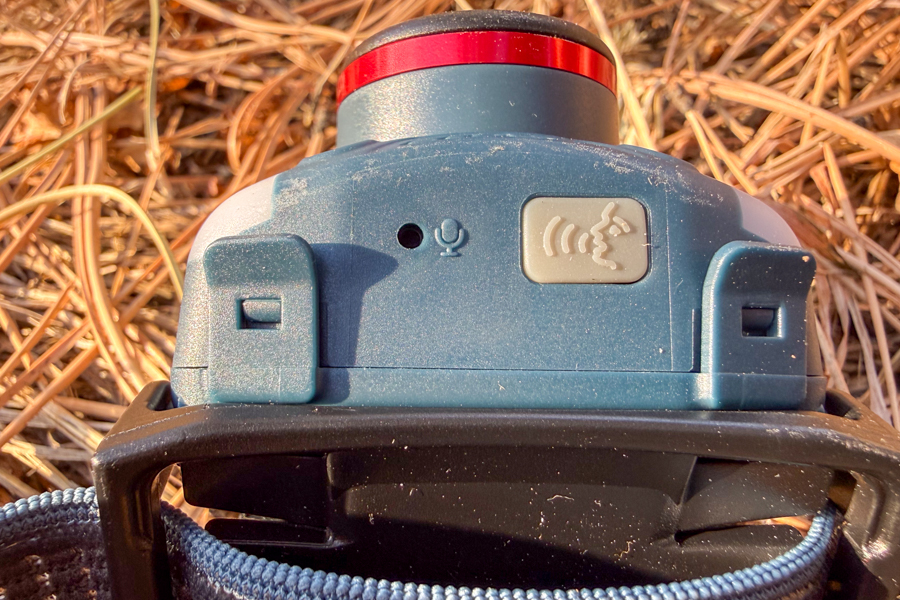
We went into our analysis of the Coast FL97R skeptical since we had never tested a headlamp with voice activation before, but the system exceeded our expectations. Say “Coast” to wake the headlamp, then call out the mode you want. As long as voice activation is enabled, the FL97R responds. We tested it in a busy camp kitchen, on a windy trail above treeline, and inside a tent, and it handled all three settings well enough to count as a real feature rather than a marketing gimmick.
We were also impressed by how manageable the interface is given the FL97R’s extensive feature set. The three-button layout gives you spot/flood, red/green, and ARC180° area lights – and you can run multiple light modes at the same time. Our analysts really enjoyed the area lights for tent use – they threw a warm, wide wash that worked well as a lantern substitute at the end of the day (they’re great for reading, too). The GLIDE FOCUS lever allows you to move smoothly from flood to spot and anywhere in between without fumbling in the dark.
The main downsides are weight and bulk. At 3.8 ounces, the FL97R is not a headlamp we’d recommend for trail running or any other high-output activity where bounce is a factor. But for camp use and hiking, that trade-off is easy to live with.
More: Coast FL97R Full Review
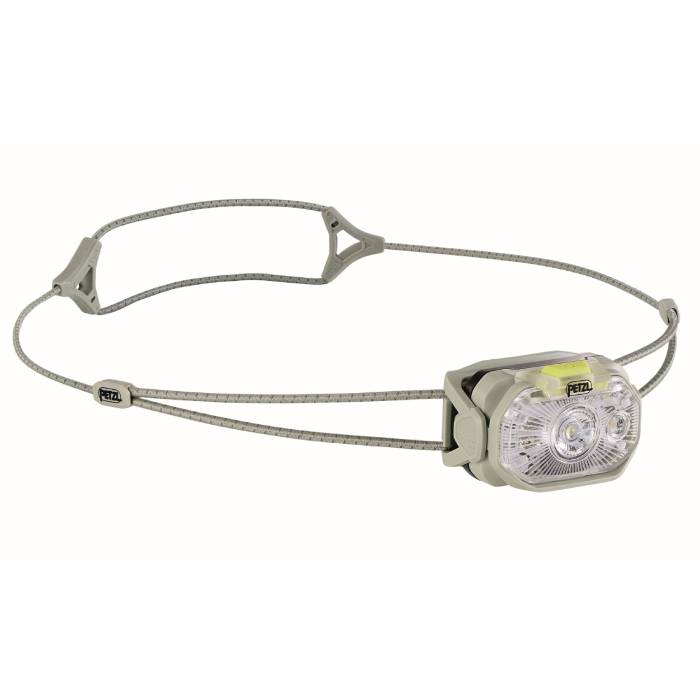
Petzl SWIFT LT
Best Headlamp for Runners
CleverHiker Rating: 4.6/5.0
Price: $55
Weight: 1.5 oz.
Max Lumens/Beam Distance: 380 lm / 230 ft (70 m)
Burn Time Low/High: 60 hrs / 2hrs
Pros
- Ultralight
- Simple to use
- Tilts up and can be worn around the neck
- Compact size
- Stable
Cons
- Not the brightest
- Slow recharge time
- No pass-through charging
The Petzl SWIFT LT is an ultralight, running-focused headlamp that manages to strike a really nice balance between weight and functionality. In other words, it’s stripped-down enough to appeal to the UL crowd without being completely featureless – not something we can say about every ultralight headlamp we’ve tested.
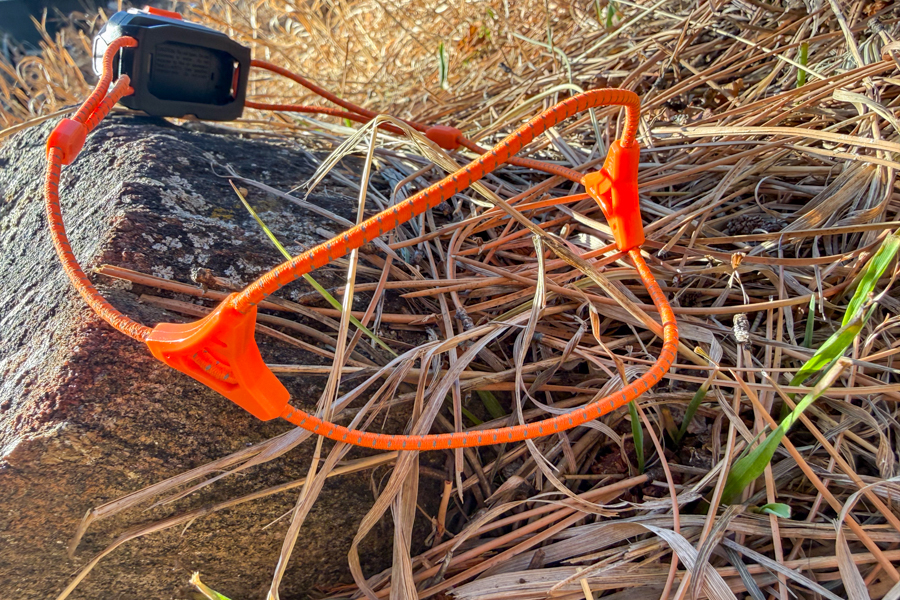
Like many ultralight headlamps, the SWIFT LT drops the larger elastic headband in favor of a streamlined shock cord design. The cord doesn’t trap sweat the way a traditional band can, allowing heat to escape more readily during high-output activity. Our analyst did experience some pressure points here and there, but they were entirely manageable – and better than expected given the streamlined build. The compact size and light weight work together to keep the lamp remarkably steady, even at a sprint.
The single-button design is easy to learn. There are three white-light settings and a red-light mode. The SWIFT LT uses a mixed beam, meaning there is no flood or spot toggle – just a single wide beam. The beam covers most of what trail runners and thru-hikers actually need, though users who push into open terrain will notice the 230-foot ceiling.
Our main gripes with the SWIFT LT are that it charges surprisingly slowly, isn’t compatible with alkaline batteries, and doesn’t support pass-through charging, so it’s important to make sure the headlamp is topped off before heading out. We would also like to see the waterproofing improved beyond the current IPX4 rating. Overall, though, we think highly of the SWIFT LT for evening and early-morning trail runs, fast-and-light overnight trips, and any situation where weight and packability are top priority.
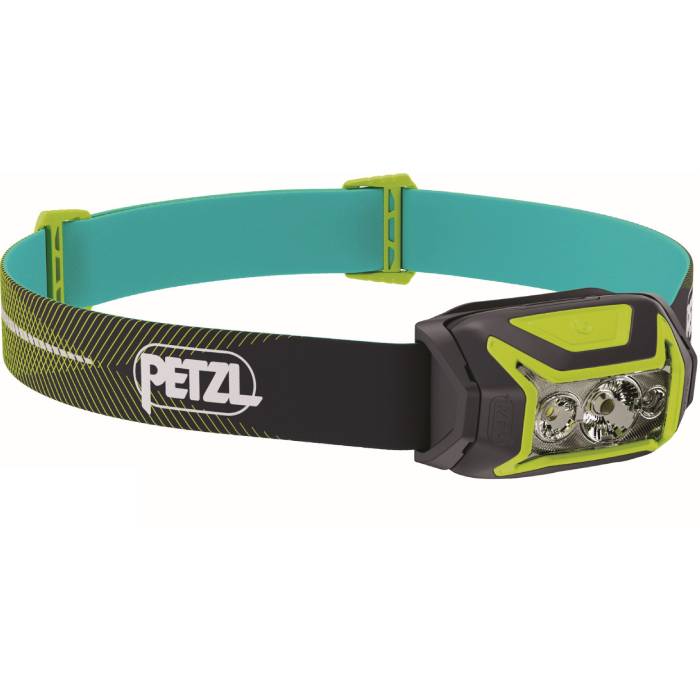
Petzl ACTIK CORE
Best Well-Rounded Headlamp
CleverHiker Rating: 4.6/5.0
Price: $88
Weight: 3.1 oz.
Max Lumens/Beam Distance: 625 lm / 377 ft (115 m)
Burn Time Low/High: 100 hrs / 2 hrs
Pros
- Rechargeable
- Bright performance lighting
- Comfortable
- Easy to use
Cons
- Expensive
- Not fully waterproof
The Petzl ACTIK CORE has been in our lineup long enough to have earned its spot several times over, and the current model gives us no reason to move it. Now with 625 max lumens (the prior version had 600), it’s one of the brighter headlamps in our lineup, and the hybrid battery system – comprising Petzl’s rechargeable CORE battery or three AAAs – remains a highly practical feature for anyone managing power on a multi-day trip.
The single-button interface is easy to master and intuitive even in the dark, which matters more than it sounds at 4 a.m. on a cold trail. Another detail that kept coming up in our notes is the phosphorescent reflector. While it might sound like a minor detail, we found it invaluable for locating the headlamp in the dark without having to turn on an additional light.
The well-rounded design isn’t without trade-offs, however. At 3.1 ounces, it’s not setting any weight records, and the beam pattern – a focused center spot that gradually widens into a broad peripheral wash – prioritizes close-range versatility over pure throw.
Still, the ACTIK CORE remains a strong option for hikers, backpackers, and campers who want a bright, reliable headlamp. The design’s sensible backup power option and long track record in the backcountry are undeniable draws.
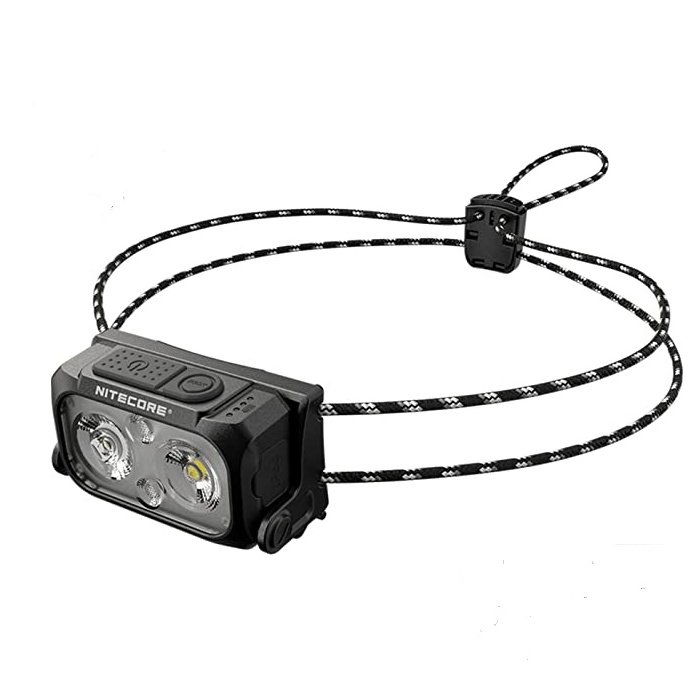
Nitecore NU25 UL
Best Ultralight Headlamp
CleverHiker Rating: 4.6/5.0
Price: $37
Weight: 1.7 oz.
Max Lumens/Beam Distance: 400 lm / 433 ft (132 m)
Burn Time Low/High: 45 hrs / 2.7 hrs
Pros
- Ultralight
- Compact
- Affordable
- Rechargeable
- Water-resistant
- Nice features
Cons
- Not as durable as some
- Red-light mode can be too bright
The Nitecore NU25 UL offers exceptional value, making it a top choice for outdoor enthusiasts seeking a lightweight and affordable option. Weighing only 1.7 ounces, this headlamp excels in ultralight design, ideal for activities like trail running and long-distance hiking. Its compact build allows for easy storage and quick access, while its shock cord-style strap, though minimal, provides surprising stability and comfort. At a lower price point, the NU25 UL combines high-end features – such as a maximum output of 400 lumens, dual red-light modes, and USB-C fast charging – at a fraction of the cost of premium models.
The NU25 UL has a fast charge time of around 1.25 hours and features an IP66 rating for water resistance, which is suitable for most outdoor conditions but not for submersion. It delivers impressive performance and a versatile beam, including spotlight and floodlight options. One thing to note is that the materials feel somewhat fragile compared to higher-end headlamps. Additionally, the red-light mode, although bright, can be too intense for some settings.
Overall, the Nitecore NU25 UL is a versatile and feature-packed headlamp that meets a wide range of needs, from night hiking to everyday tasks, offering excellent functionality without a hefty price tag. However, other options might be more suitable if you require a headlamp for extremely bright or highly technical activities or need a more rugged design.
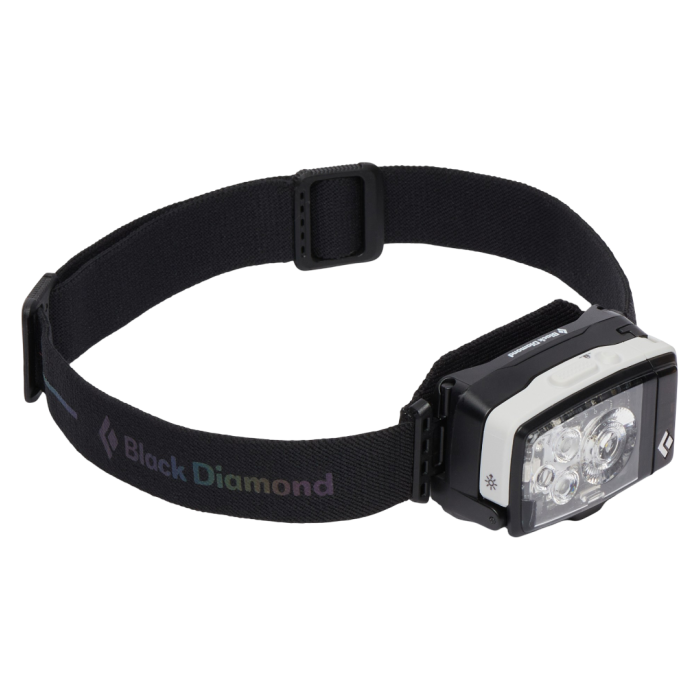
Black Diamond Distance LT 1100
Best Ultrabright Headlamp
CleverHiker Rating: 4.5/5.0
Price: $150
Weight: 3.8 oz.
Max Lumens/Beam Distance: 1,100 lm / 410 ft (125 m)
Burn Time Low/High: 120 hrs / 4.25 hrs
Pros
- Extremely bright
- Very wearable for its size
- Stable enough for most high-output use
- Packed with features
- Runtime is solid for the brightness
Cons
- Expensive
- Not particularly small or lightweight
- Overkill for casual use
The Black Diamond Distance LT 1100 is one of the brightest headlamps in our lineup, built for folks who prioritize performance and visibility above all else. With a max output of 1,100 lumens and a beam that cuts deep into the darkness, it’s not exactly designed for fast-moving activities like trail running. That said, we found it worked well for ski touring and navigating technical terrain after dark.
It’s not a small or ultralight unit, but it’s surprisingly wearable for its size thanks to a wide, soft headband and a well-balanced design. The weight sits entirely up front, so there’s a bit of bounce, but it stays stable enough for most high-output use.
The Distance LT 1100 comes packed with features like RGB lighting (red, green, and blue modes), PowerTap boost for temporary max brightness, and a pivoting light engine. It’s waterproof, rechargeable via USB-C, and features a battery that’s swappable in the field, though not quite as easily as some might like. The runtime is solid for the brightness, but recharging can take a while.
All in all, this isn’t the most compact or beginner-friendly headlamp, and it’s probably overkill for casual use. But if you need maximum visibility and rugged performance in a durable, feature-rich package, the LT 1100 delivers.
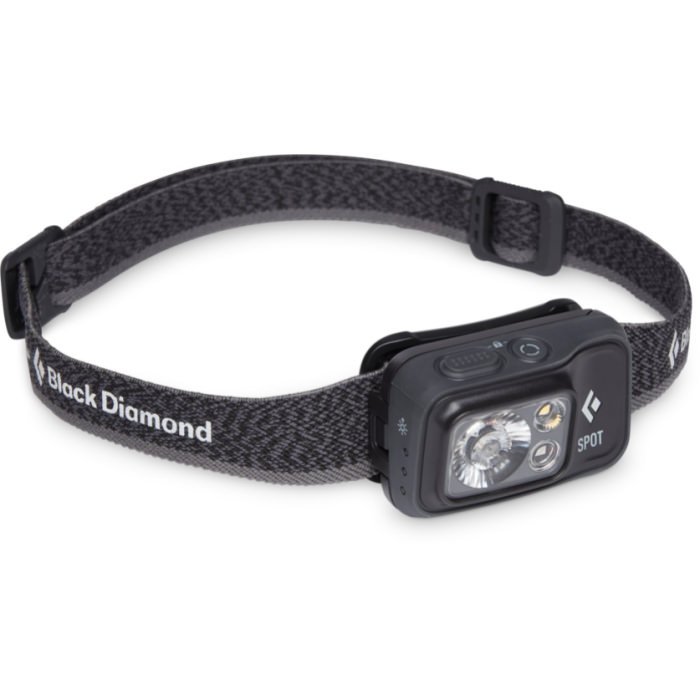
Black Diamond Spot 400
Best Value Headlamp
CleverHiker Rating: 4.4/5.0
Price: $60
Weight: 3 oz.
Max Lumens/Beam Distance: 400 lm / 328 ft (100 m)
Burn Time Low/High: 200 hrs / 2.5 hrs
Pros
- Excellent value
- Long burn time
- Nice features
- Waterproof
- Well balanced and comfortable
Cons
- Harsh light in spot mode
- Not the most intuitive controls
The Black Diamond Spot 400 consistently earns high marks in our gear guide, and it’s easy to see why. This headlamp excels in versatility, comfort, and functionality. All those perks somehow still come at an affordable price tag. The Spot 400 delivers an exceptional blend of features, including spot and red-light modes and a peripheral function. With a simple tap, Black Diamond’s convenient PowerTap technology provides instant brightness adjustments. This combination makes it a reliable choice for general night hiking, camping, and backpacking.
One notable downside is that it’s not rechargeable, though Black Diamond does offer a rechargeable version, the Spot 400-R, and a separate rechargeable battery pack is available for the Spot 400 itself. Despite this, the Spot 400’s value is solid, especially for casual outdoor enthusiasts who may not need a headlamp for extreme conditions.
While the Spot 400 provides ample light for most activities, it falls short for more demanding tasks like night skiing or mountaineering where higher brightness might be necessary. Additionally, the beam can be quite harsh at its brightest setting, which may be uncomfortable for prolonged use. The controls have a bit of a learning curve, and the sensitivity of the PowerTap can lead to unintended activations. Your blinded buddies and partners will swiftly tell you to dial in the brightness settings.
Overall, the Black Diamond Spot 400 is a fantastic choice for those seeking a well-rounded, budget-friendly headlamp for everyday outdoor adventures.
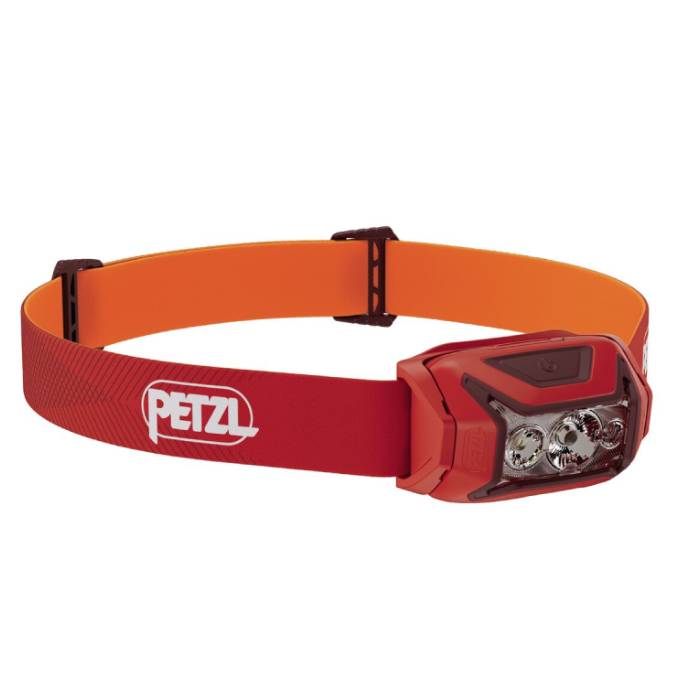
Petzl ACTIK
Bright Headlamp with Good Battery Life
CleverHiker Rating: 4.2/5.0
Price: $65
Weight: 3.5 oz.
Max Lumens/Beam Distance: 450 lm / 328 ft (100 m)
Burn Time Low/High: 100 hrs / 2 hrs
Pros
- Bright
- Long burn time
- Performance lighting (doesn’t dim as battery depletes)
- Easy to use
- Rechargeable battery option
- Locking feature
- Battery meter
Cons
- Not fully waterproof
- Expensive for minimal features
The Petzl ACTIK is a versatile headlamp balancing performance across several key areas. Its most appealing features include its straightforward usability, hybrid-energy capability, robust lighting performance, and extended burn time.
The ACTIK can operate on either three long-lasting lithium AA batteries or a rechargeable CORE battery, which provides flexibility based on your power preferences or access. However, if you’re leaning towards using the rechargeable option, the ACTIK CORE model is a more economical choice, as it comes with the CORE battery and eliminates the need for separate purchases.
On the other hand, the non-rechargeable ACTIK is ideal for those seeking longer burn times without the hassle of frequent recharges. Overall, both models are reliable, well built, and user-friendly, making them a dependable choice for a variety of activities.
More: Petzl ACTIK Full Review
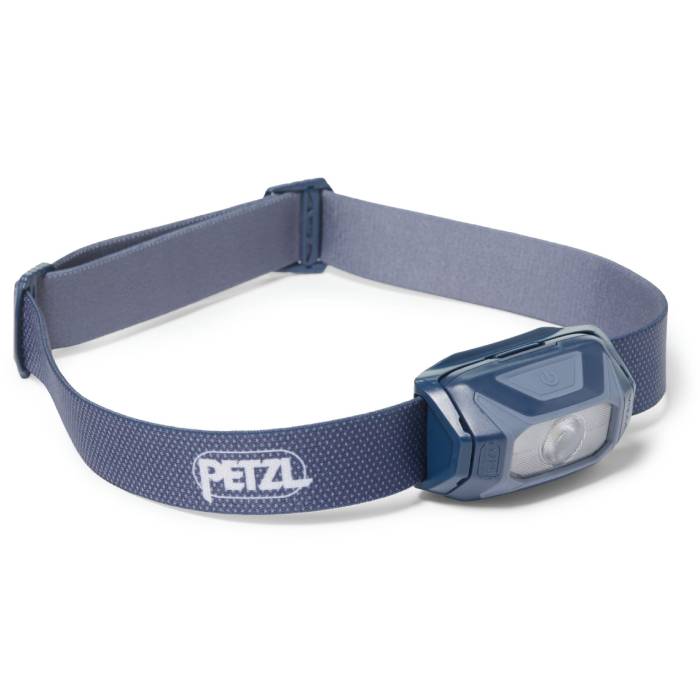
Petzl TIKKINA
Best Budget Headlamp
CleverHiker Rating: 4.2/5.0
Price: $20
Weight: 3.2 oz.
Max Lumens/Beam Distance: 300 lm / 213 ft (65 m)
Burn Time Low/High: 100 hrs / 2.5 hrs
Pros
- Affordable
- Long burn time
- Easy to use
- Rechargeable battery option
Cons
- Lacks features
- Not fully waterproof
The Petzl TIKKINA is a no-frills headlamp that excels in providing essential functionality at a budget-friendly price. With three adjustable brightness settings controlled by a single, user-friendly button, the TIKKINA keeps things simple and straightforward. While it lacks advanced features such as a red-light function or lock mode, its affordability makes it a strong contender in the budget category. This headlamp delivers reliable performance with 300 lumens and a burn time of up to 100 hours on its lowest setting.
The TIKKINA operates on three AAA batteries, and while it’s not rechargeable out of the box, Petzl offers an optional CORE rechargeable battery pack (sold separately). Although this upgrade significantly increases the total cost, it provides an eco-friendly alternative for those who prefer rechargeability.
The TIKKINA may not meet the needs of avid adventurers seeking higher brightness or more features. However, it is a solid choice for casual outdoor activities like car camping, evening walks, or general household use. Its IPX4 rating ensures it can withstand light rain and splashes, making it suitable for fair weather conditions. For those who value simplicity and cost effectiveness, the Petzl TIKKINA is an excellent and practical headlamp that delivers reliable performance without breaking the bank.
Ledlenser HF6R Signature
Best Headlamp for Hunting & Fishing
CleverHiker Rating: 4.1/5.0
Price: $90
Weight: 4.8 oz.
Max Lumens/Beam Distance: 1,000 lm /558 ft (170 m)
Burn Time Low/High: 60 hrs / 3 hrs
Pros
- Super bright, especially in Boost mode
- Easily adjustable from spot to flood
- Flood function is surprisingly bright
- Red, blue, and green-light functions are designed for hunters
- Rechargeable
- Durable aluminum body
- Water- and dustproof
Cons
- Proprietary charging cable
- Heavy
- Complicated instructions
- Narrow flood beam
- The strap makes it less packable
The Ledlenser HF6R Signature is designed for power and durability, featuring a 1,000-lumen output, a smooth spot-to-flood adjustment, and a fairly unique addition: RGB lighting options (red, blue, and green). It’s an excellent choice for hunters, ranchers, and anyone needing a bright, weatherproof headlamp for stationary or low-intensity activities. Its durable construction and IP68 waterproof rating ensure reliable performance in rugged conditions.
Another really cool feature of the HF6R is its seamless focus adjustment wheel, allowing for quick and easy transitions between a concentrated spotlight and a broad floodlight. The RGB lighting options further set it apart, with red for night vision, green for blending into natural environments, and blue for tasks like blood tracking – features that cater specifically to hunters.
However, the HF6R’s weight (4.8 ounces) and bulk limit its practicality for backpacking or activities like trail running. The proprietary charging cable can also be inconvenient, particularly on multi-day trips. And while the beam is exceptionally bright, the floodlight’s narrow range makes it less effective for close-up tasks.
This headlamp is best suited for situations where brightness and durability take precedence over portability. It may not be the most versatile option for fast-paced or ultralight adventures, but it’s a reliable choice for those prioritizing high power and rugged build quality.
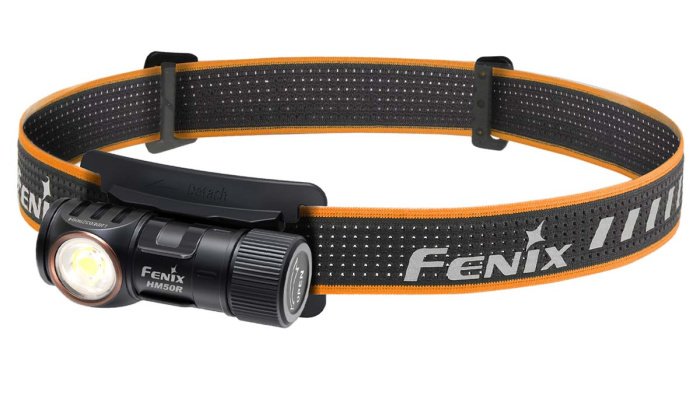
Fenix HM50R V2.0
Headlamp that Performs Well in the Cold
CleverHiker Rating: 4.0/5.0
Price: $60
Weight: 2.8 oz.
Max Lumens/Beam Distance: 700 lm / 377 ft (115 m)
Burn Time Low/High: 42 hrs / 3 hrs
Pros
- Performs well in cold conditions
- Rechargeable option
- Bright
- Durable metal housing
- Waterproof
- Battery meter
Cons
- Expensive
- Short burn time
- Uses uncommon batteries
- Slight learning curve for the different modes
- No locking feature
If mountaineering or alpine climbing is your game, the Fenix HM50R V2.0 could be your ideal headlamp. Designed with rugged adventures in mind, it features a large, easily accessible side button that remains operable even while wearing gloves – a crucial consideration for chilly alpine environments. This thoughtful design detail ensures that you can adjust settings without fumbling, which is particularly valuable when dealing with icy or extreme conditions.
The Fenix HM50R V2.0 comes equipped with a rechargeable battery, making it a convenient choice for everyday use and regular excursions. However, its versatility doesn’t stop there – it also accepts CR123A batteries, which are known for their performance in extremely low temperatures. This dual-battery capability means that the HM50R can maintain reliable operation even in the harshest conditions, where other headlamps might falter.
While the Fenix HM50R V2.0 offers high-end features and a robust build that can withstand severe weather, it may be overkill for most casual users. Its advanced design and durability are for those who face the most demanding conditions and require a headlamp that can handle extreme environments.
Nevertheless, the headlamp’s quality construction and performance in extreme weather conditions make it an excellent choice for serious mountaineers and alpine climbers. Its ability to operate effectively in freezing temperatures and reliable, easy-to-use interface provide a dependable light source in challenging environments. The Fenix HM50R V2.0 is built to endure the rigors of hardcore adventures, offering peace of mind to those who venture into the wildest and most unforgiving terrains.
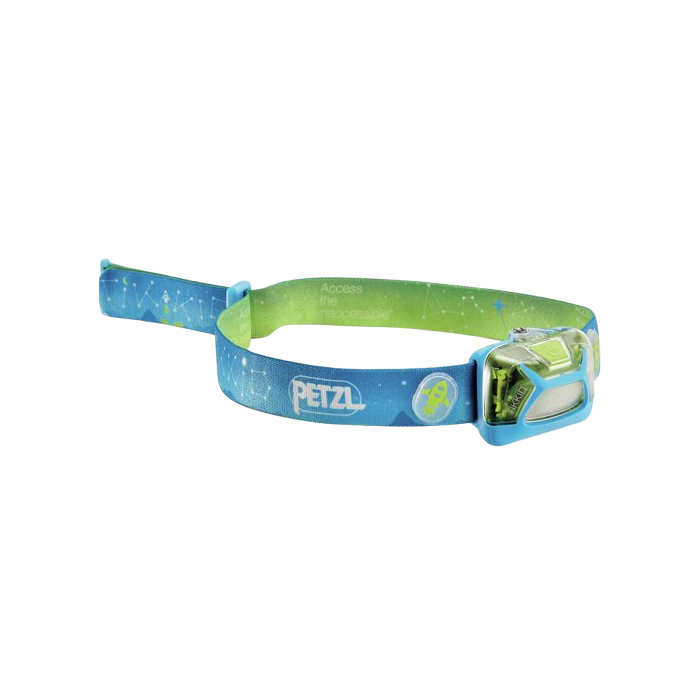
Petzl TIKKID
Best Headlamp for Kids
CleverHiker Rating: 3.8/5.0
Price: $27
Weight: 1.8 oz.
Max Lumens/Beam Distance: 20 lm / 23 ft (7 m)
Burn Time Low/High: 110 hrs / 61 hrs
Pros
- Kid-friendly design and features
- Long burn time
- Easy to use
- Rechargeable battery option
Cons
- Lacks red-light mode
- Not fully waterproof
We commend Petzl for developing a kids’ headlamp that’s more than just a chintzy toy – the Petzl TIKKID is a genuine headlamp with functionality that goes beyond mere play. Our three-year-old gear tester managed to break more toy headlamps than we can count and even a few adult models along the way. Handing a child a powerful light can be a challenge – kids love to shine lights directly into their eyes and everyone else’s. However, the TIKKID offers a practical solution for backcountry flashlight tag, story time in camp, or memorable nighttime adventures on foot.
This headlamp provides just the right amount of brightness to be useful without overwhelming young eyes, and its child-friendly styling adds a fun element to the experience. The TIKKID features a maximum brightness of 20 lumens, perfect for guiding kids on trails or illuminating their surroundings without causing discomfort or distraction. With its intuitive single-button operation and adjustable strap, the TIKKID is easy for young children to use and for parents to manage.
The Petzl TIKKID is our top pick for a child-friendly headlamp this year. It combines functionality with safety, offering a reliable light source that kids can handle confidently. For families looking for a practical, safe, and enjoyable headlamp for their little adventurers, the TIKKID is an exceptional choice.
More: Petzl TIKKID Full Review
Product Comparison Table
| oSort | Product | Price | Weight | Max Lumens/Beam Distance | Burn Time Low/High | Illumination & Light Quality | Burn Time | Weight Score | Comfort | Ease of Use | Features | 0 |
Black Diamond Spot 400-R View at REI View at Amazon 
|
$80 | 3 oz. | 400 lm / 328 ft (100 m) | 225 hrs / 4 hrs | 4.5 | 4.8 | 4.7 | 4.7 | 4.6 | 4.8 | 1 |
BioLite Range 500 View at REI View at Amazon
|
$70 | 0.6 oz. | 500 lm / 328 ft (100 m) | 200 hrs / 6 hrs | 4.6 | 4.8 | 4.7 | 4.8 | 4.7 | 4.8 | 2 |
Nitecore NU27 View at Amazon View at Nitecore
|
$45 | 2 oz. | 600 lm / 402 ft (123 m) | 57 hrs / 3 hrs | 4.6 | 4.6 | 4.8 | 4.8 | 4.5 | 4.8 | 3 |
Coast FL97R View at Home Depot View at Amazon |
$60 | 4.2 oz. | 1,250 lm / 738 ft (225 m) | 15 hrs / 2 hrs | 5.0 | 4.6 | 4.3 | 4.6 | 4.7 | 4.9 | 4 |
Petzl SWIFT LT View at REI View at Amazon |
$55 | 1.5 oz. | 380 lm / 230 ft (70 m) | 60 hrs / 2hrs | 4.3 | 4.7 | 5.0 | 4.5 | 4.5 | 4.5 | 5 |
Petzl ACTIK CORE View at REI View at Amazon
|
$88 | 3.1 oz. | 625 lm / 377 ft (115 m) | 100 hrs / 2 hrs | 4.5 | 4.6 | 4.6 | 4.6 | 4.6 | 4.7 | 6 |
Nitecore NU25 UL View at Amazon View at Garage Grown Gear 
|
$37 | 1.7 oz. | 400 lm / 433 ft (132 m) | 45 hrs / 2.7 hrs | 4.5 | 4.7 | 4.9 | 4.6 | 4.5 | 4.5 | 7 |
Black Diamond Distance LT 1100 View at REI View at Black Diamond |
$150 | 3.8 oz. | 1,100 lm / 410 ft (125 m) | 120 hrs / 4.25 hrs | 4.9 | 4.8 | 4.3 | 4.6 | 4.4 | 4.8 | 8 |
Black Diamond Spot 400 View at REI View at Amazon |
$60 | 3 oz. | 400 lm / 328 ft (100 m) | 200 hrs / 2.5 hrs | 4.5 | 4.4 | 4.7 | 4.9 | 4.4 | 4.6 | 9 |
Petzl ACTIK View at Amazon View at Backcountry |
$65 | 3.5 oz. | 450 lm / 328 ft (100 m) | 100 hrs / 2 hrs | 4.3 | 4.6 | 4.5 | 4.5 | 4.6 | 4.5 | 10 |
Petzl TIKKINA View at REI View at Amazon
|
$20 | 3.2 oz. | 300 lm / 213 ft (65 m) | 100 hrs / 2.5 hrs | 4.2 | 4.3 | 4.6 | 4.4 | 4.8 | 4.4 | 11 |
Ledlenser HF6R Signature View at Ledlenser |
$90 | 4.8 oz. | 1,000 lm /558 ft (170 m) | 60 hrs / 3 hrs | 4.8 | 4.7 | 3.8 | 3.5 | 4.6 | 4.6 | 12 |
Fenix HM50R V2.0 View at REI View at Amazon |
$60 | 2.8 oz. | 700 lm / 377 ft (115 m) | 42 hrs / 3 hrs | 4.6 | 4.7 | 4.6 | 4.3 | 4.4 | 4.3 | 13 |
Petzl TIKKID View at Amazon View at Backcountry |
$27 | 1.8 oz. | 20 lm / 23 ft (7 m) | 110 hrs / 61 hrs | 3.6 | 3.9 | 3.8 | 4.0 | 4.4 | 3.8 |
|---|
Analysis & Results
We evaluate headlamps using seven key metrics: weight, comfort, ease of use, burn time, illumination and light quality, features, and value. The comparative results below highlight the top-performing models in each category, providing insights into how well each headlamp excels across these essential areas.
What’s the best value headlamp?
We define value as the balance between a headlamp’s cost and its performance. A higher price does not always equate to better quality, and a great value headlamp delivers essential features and reliable performance without unnecessary overhead. Evaluating value helps you choose a headlamp that meets both your needs and budget effectively.
Among the headlamps we reviewed, several stood out. The Black Diamond Spot 400-R earns high marks for overall value, offering premium features like IP67 waterproofing, PowerTap technology, and solid all-around performance at a palatable price. The Nitecore NU25 UL and Nitecore NU27 also deliver exceptional value given their feature sets and brightness, while the Petzl SWIFT LT is a wallet-friendly investment for ultralight users in particular.
The BioLite Range 500 punches above its price tag, as well. Fast charging, IP67 waterproofing, a brightness memory function, and a legitimately comfortable integrated headband warrant a higher cost, which makes the Range 500 feel like an overachiever in this regard. Similarly, the Coast FL97R brings the most features of any headlamp in our lineup, including voice activation, diffused area lighting, and compatibility with rechargeable or disposable batteries – all at a very approachable price point.
At the other end of the spectrum, the Petzl ACTIK CORE sits at a higher price than the Spot 400-R, and we chose not to rank it above the 400-R for that reason, though its hybrid battery design and proven track record may justify the premium for some users. The Ledlenser HF6R Signature and Black Diamond Distance LT 1100, though very bright and feature-packed, carry higher prices that limit their all-around appeal.
Which headlamp has the best illumination and light quality?
The Coast FL97R leads our lineup in raw brightness with 1,250 lumens at full tilt and 738 feet of throw. The GLIDE FOCUS lever allows for smooth, stepless adjustments between spot and flood, which is more intuitive than the multi-press mode cycling on most headlamps. The ARC180° area lights add a useful camp-use dimension that no other headlamp in our lineup offers.
The Black Diamond Distance LT 1100 remains a strong performer for users who need sustained high-output brightness. At 1,100 lumens with a max distance of 410 feet, its beam is clean and well balanced between spot and flood. The Ledlenser HF6R Signature (1,000 lumens / 558 feet) delivers the best throw in our lineup outside of the FL97R, which reflects its specialized design for hunting and fishing in open terrain.
In the middle of our lineup, the Nitecore NU27 (600 lumens / 402 feet) and Petzl ACTIK CORE (625 lumens / 377 feet) are both strong performers. The NU27’s ability to switch between three color temperatures sets it apart for users who care about light quality in different environments. The ACTIK CORE’s beam pattern, a focused center spot that gradually widens into a broad peripheral wash, tends to feel more natural on trail than the NU27’s narrower throw. The Fenix HM50R V2.0 (700 lumens / 377 feet) offers competitive brightness in a compact package, with cold-weather battery performance as its defining advantage.
The Black Diamond Spot 400-R (400 lumens / 328 feet) and BioLite Range 500 (500 lumens / 328 feet) are also a nice middle ground. Both deliver more than enough light for on-trail hiking and camp use. Testers noted that the Range 500 feels brighter than its specs suggest, particularly in flood mode.
The Petzl SWIFT LT (380 lumens / 230 feet) has the most limited illumination profile of the rechargeable headlamps in our lineup. Its fixed wide beam with no spot or flood toggle covers close-range trail use well, but users who push into open terrain or need to scan ahead will notice the 230-foot max throw. The beam runs on the cool side of neutral, which some testers found energizing on early-morning starts and others found harsh. The Petzl TIKKINA (300 lumens / 213 feet) is the most modest performer of the group (excluding the kids’ TIKKID), which is appropriate for a budget-tier headlamp designed for casual use.
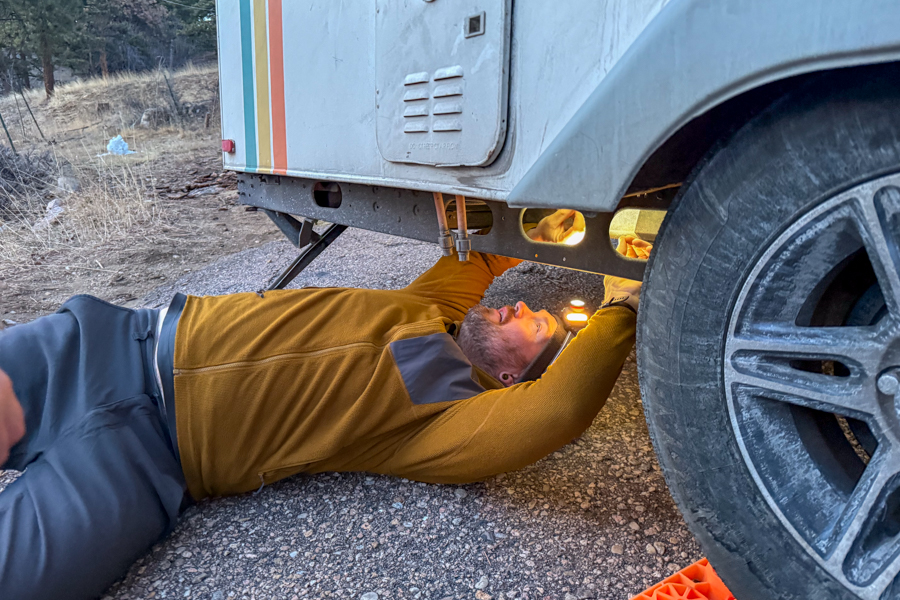
Which headlamps have the best burn time?
Burn time comparisons between headlamps require some context: Most manufacturers list runtime on the headlamp’s lowest setting, which can be misleading when comparing designs with very different brightness floors. We look at both high and low settings to get a complete picture.
The Black Diamond Spot 400-R is a standout here, with up to 225 hours on its lowest setting and a solid 4 hours on high. For multi-day trips where charging opportunities are limited, that runtime gives the 400-R an edge. The Petzl TIKKINA also impresses on low, offering up to 100 hours, which is plenty for casual users and short trips. The Black Diamond Distance LT 1100 is the surprise of the group: Despite being our second-most-powerful headlamp, it delivers up to 120 hours on low, outperforming most of the lineup in runtime while also topping the charts in brightness.
The Petzl ACTIK CORE offers up to 100 hours on low and 2 hours on high, with the added flexibility of its hybrid battery system (Petzl’s CORE rechargeable battery or three AAAs). This makes it one of the most practical options for extended backcountry trips with sporadic access to power sources.
The BioLite Range 500 brings a different angle to the burn time conversation. While 6 hours on high and 200 hours on low are strong numbers, the headlining feature is its fast-charge capability: 8 minutes of charging delivers roughly 1 hour of use, and 30 minutes gets you to 80% capacity. That changes the math on multi-day trips considerably for anyone near a power source, even briefly.
The Petzl SWIFT LT is honest about its trade-offs. It offers 2 hours of burn time at max power, 6 hours on standard, and 60 hours on low. It also charges slowly compared to the Range 500, so users who forget to plug in before a trip may run out of juice in the field. That said, the SWIFT LT is not built for all-night epics – it’s made for fast-and-light objectives where weight and portability matter more than maximum runtime.
The Coast FL97R is best suited for use cases when you’re not far from a power source or are willing to carry backup AAAs. The headlamp lasts for up to 2 hours on high, 5 hours on medium, and just 15 hours on low. The 40-second turbo burst at 1,250 lumens is short but useful for scanning terrain at a distance. The hybrid power system (ZITHION-X rechargeable battery or standard AAAs) mirrors the ACTIK CORE’s versatility.

What are the lightest headlamps?
The lightest headlamps we tested are the Petzl SWIFT LT and Nitecore NU25 UL. We consider both ultralight options, with the SWIFT LT edging ahead at 1.5 ounces compared to the NU25 UL’s 1.7-ounce build. For most hikers, the difference is negligible, but for ultralight backpackers counting every fraction of an ounce, the SWIFT LT is the lightest rechargeable headlamp in our lineup.
The Nitecore NU27 deserves an honorable mention here, as well, coming in 2 ounces and offering considerably more brightness than both the SWIFT LT and NU25 UL (and noticeably better throw than the former).
Among our top headlamps, the Black Diamond Spot 400-R (3 ounces) and BioLite Range 500 (2.6 oz) are competitively lightweight given their feature sets and all-around performance. The Petzl ACTIK CORE (3.1 ounces) feels noticeably heavier in hand than the Spot 400-R and Range 500, and ounce-counters will feel that difference on longer trips.
At the heavier end of the spectrum, the Coast FL97R comes in at 4.2 ounces, reflecting its feature set and overall brightness. The Black Diamond Distance LT 1100 weighs 3.8 ounces. The Ledlenser HF6R Signature is the heaviest performance headlamp we tested at 4.8 ounces, which might not matter much to hunters and fishermen (the headlamp’s intended user group) but could be a dealbreaker for other outdoor users, like hikers and backpackers.

What’s the most comfortable headlamp?
Comfort matters more than you might think with a headlamp, particularly on long nights, multi-day trips, or fast-moving objectives. Issues like bounce and pressure points can add up over time, leading to prolonged discomfort.
The BioLite Range 500 set a high bar in this category. Its 3D SlimFit headband fits closer to the head than most, which translates to less bounce while running and less pressure during longer periods of wear. Analysts pushing their pace appreciated the moisture-wicking material, and the 2.6-ounce Range managed to stay put across a variety of activities – no adjustments required.
The Black Diamond Spot 400-R also performed well from a comfort perspective. Its soft, adjustable strap and lightweight housing made it barely noticeable after hours of continuous wear. One long-term note: The strap stretched slightly over time, though it was still quick and easy to adjust.
The Petzl ACTIK CORE earns consistent praise for its secure, comfortable fit. The soft, stretchy strap and balanced lamp housing kept pressure points to a minimum on longer trips. At 3.1 ounces, it’s heavier than the Spot 400-R and Range 500, but testers found it stayed firmly in place and didn’t cause discomfort during prolonged wear.
The Petzl SWIFT LT uses a shock cord in place of a traditional headband, which raised comfort concerns going into testing. In practice, most analysts found it more comfortable than expected for short to mid-length trips. Some noted pressure points during extended wear, but nothing serious or consistent enough to be a dealbreaker. For its specialized use case – fast-and-light objectives – the shock cord keeps the lamp close to your head and prevents the side-to-side movement common in looser-fitting designs.
The Coast FL97R‘s Ultra-Strap was comfortable for lower-output uses like casual hiking and performing camp chores. Analysts found it bounced noticeably while running, which is an expected trade-off with a 4.2-ounce headlamp.
On the heavier end, the Ledlenser HF6R Signature (4.8 oz) and Black Diamond Distance LT 1100 (3.8 oz) were less comfortable during prolonged use. The HF6R’s weight and bulk led to noticeable pressure over time, and the LT 1100 caused some bounce during high-impact activities due to its front-heavy build.
Which headlamps have the best features?
The Coast FL97R is the most feature-rich headlamp in our lineup. Voice activation lets you cycle through modes hands-free, a GLIDE FOCUS lever provides smooth beam adjustment, ARC180° area lights offer wide ambient illumination for camp use, and a dual-power system (using the proprietary rechargeable battery or three AAAs) means you are rarely without options. It takes a session to learn the three-button layout, but once you have it, the controls make sense.
The Black Diamond Spot 400-R is the most well-rounded design on our list, with PowerTap technology for quick brightness adjustments, a red-light mode, IP67 waterproofing, and a lock function. It manages to accomplish all of this with minimal complexity.
The Nitecore NU27 offers the most distinctive feature set among our core performers: three color temperatures (each of which has five brightness settings), two red-light modes, a battery life indicator, a lock, and USB-C charging. The most notable omission is a memory function; the headlamp resets to its default neutral color temperature on the lowest setting every time it powers off.
The BioLite Range 500 also offers a few standout features. In addition to fast charging, it also has brightness memory (it returns to your last-used setting when powered on) and IP67 waterproofing. The wide 3D SlimFit headband also sets the Range apart, providing solid comfort and security.
The Petzl ACTIK CORE‘s hybrid battery system (Petzl’s CORE rechargeable battery or three AAAs) remains one of the most useful features in the category for backcountry travelers. The phosphorescent reflector, which glows in the dark for easy location, is the kind of small detail that earned consistent praise from testers.
The ultralight Petzl SWIFT LT keeps things minimal by design. Notable features include a tilt function for beam-angle adjustment, a reflective headband element, and a lock. There is no spot or flood toggle, no red-light mode, and no memory function. For the ultralight user who wants a clean, snag-free headlamp that just works, these likely won’t be turnoffs. For everyone else, they are real constraints.
At the budget end, the Petzl TIKKINA covers the basics without many frills: 300 lumens of max brightness, three AAA batteries for power, and no advanced lighting modes. In other words, it’s dependable but barebones.
What headlamps are the easiest to use?
When you’re out in the dark, complicated headlamp controls are a real problem. Our testing surfaced stark differences in how intuitive each headlamp is to operate, especially with gloves or cold hands.
The Black Diamond Spot 400-R, Spot 400, and Distance LT 1100 all use Black Diamond’s PowerTap technology, which allows you to switch between brightness settings by tapping the side of the lamp housing. It is fast and natural once you’ve used it a few times. The downside: PowerTap can trigger unintentionally in a pocket or pack, leading to a drained battery if you’re not intentional about the headlamp’s placement.
The Petzl ACTIK CORE‘s single-button interface is easy to learn and intuitive in the dark. The phosphorescent reflector on the back of the unit glows, allowing you to locate it without turning on another light. This sounds trivial until it saves you at 3 a.m. in a crowded tent.
The Nitecore NU27 packs a lot of modes into a small interface, and switching between the three color temperatures is straightforward once you’ve memorized the sequence. The reset-to-default behavior (no memory function) is the main friction point for everyday use.
The BioLite Range 500 uses a two-button layout that’s easy to learn. Our analysts found that gloves made it slightly harder to distinguish the buttons by feel, which is worth noting for winter users in particular. That said, the brightness memory function helps offset this: Once it’s set to your preferred level, you don’t have to cycle through modes on every startup.
The Petzl SWIFT LT operates with a single button, which is about as simple as it gets. The biggest potential issue is overshooting your target mode when cycling through the brightness levels, which requires looping back around. It’s a minor irritation on a headlamp this straightforward, but it happened enough in testing to be noteworthy.
The Nitecore NU25 UL also earned high marks for its simplicity, with a straightforward button layout for mode selection and brightness. It’s the kind of headlamp you can hand to anyone with no explanation or instructions required.
On paper, the Coast FL97R has the steepest learning curve in our lineup. Three buttons and a voice-activation system mean more options, but it’s actually quite intuitive. The layout is logical, and the voice activation performed better than expected. However, it’s not a headlamp you grab in the dark and hand to someone unfamiliar with it.
The Ledlenser HF6R Signature also fell a little short in ease of use. A proprietary charging cable and more complicated operation make it less convenient for quick field adjustments.
How to Choose a Headlamp
When choosing a headlamp, several key factors should be considered to ensure you get the right balance of performance, comfort, and durability.
How to choose durable and weather resistant headlamps?
Durability is crucial for any headlamp, especially if you plan to use it in challenging conditions. Look for models made from robust materials that can withstand rough use. Headlamps are typically rated with an IP (Ingress Protection) rating, which indicates their resistance to water and dust. For general hiking and backpacking, an IPX4 rating – resistant to splashes and ambient humidity – is usually sufficient. However, if you expect to encounter heavy rain or submersion, consider headlamps with higher ratings like IPX7 or IPX8, which offer greater protection against water.
How many lumens do you need?
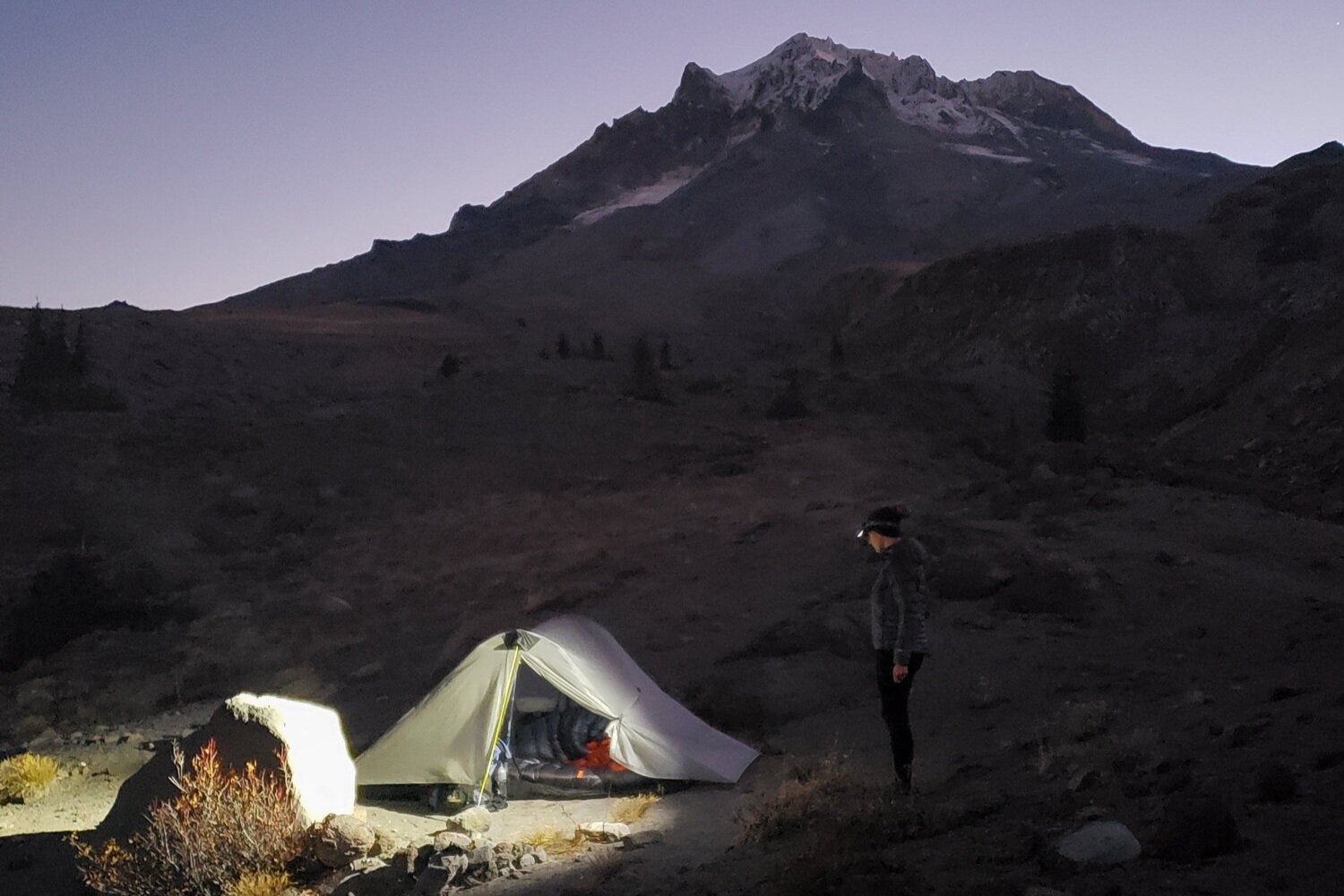
Lumens measure the total amount of light emitted from a headlamp. While a higher lumen count generally indicates a brighter light, it doesn’t tell the whole story. The quality of the beam pattern – such as its width and throw – is also crucial. Two headlamps with the same lumen rating can have vastly different lighting performance depending on their beam design and lens quality. For effective illumination, consider how well the beam distance and pattern match your intended use.
What are the pros/cons of different headlamp batteries?
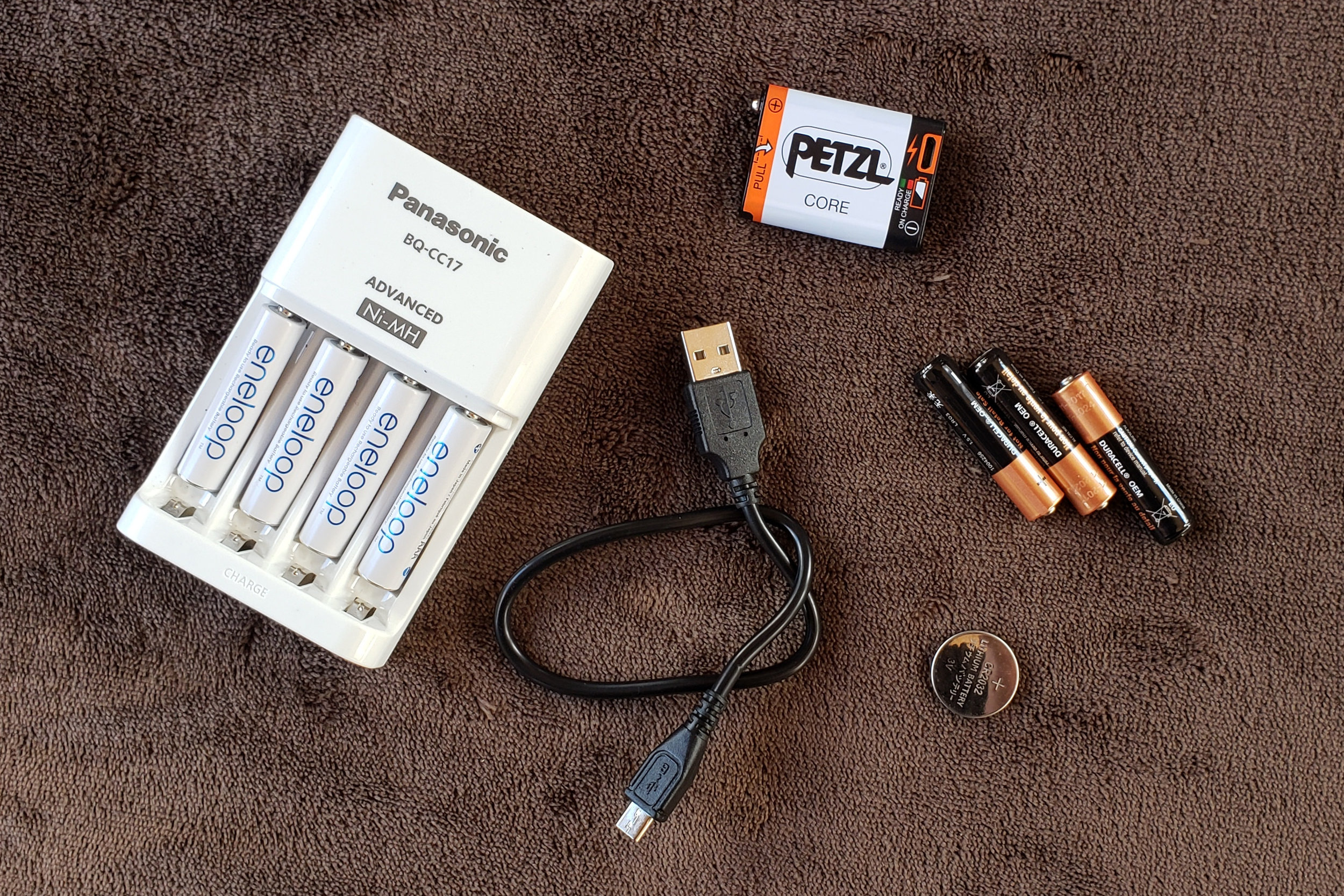
Battery type and longevity are significant factors in headlamp performance. Rechargeable batteries reduce waste and can be cost-effective over time but often have shorter burn times. They are ideal for daily use or short trips where frequent recharging is convenient. For longer excursions, where charging may be impractical, look for headlamps that use standard batteries like AA or AAA. Lithium batteries offer longer burn times and better performance in extreme temperatures compared to alkaline batteries, though they might be too powerful for some low-drain models. Always check manufacturer recommendations for the best battery type for your headlamp.
Evaluating burn time
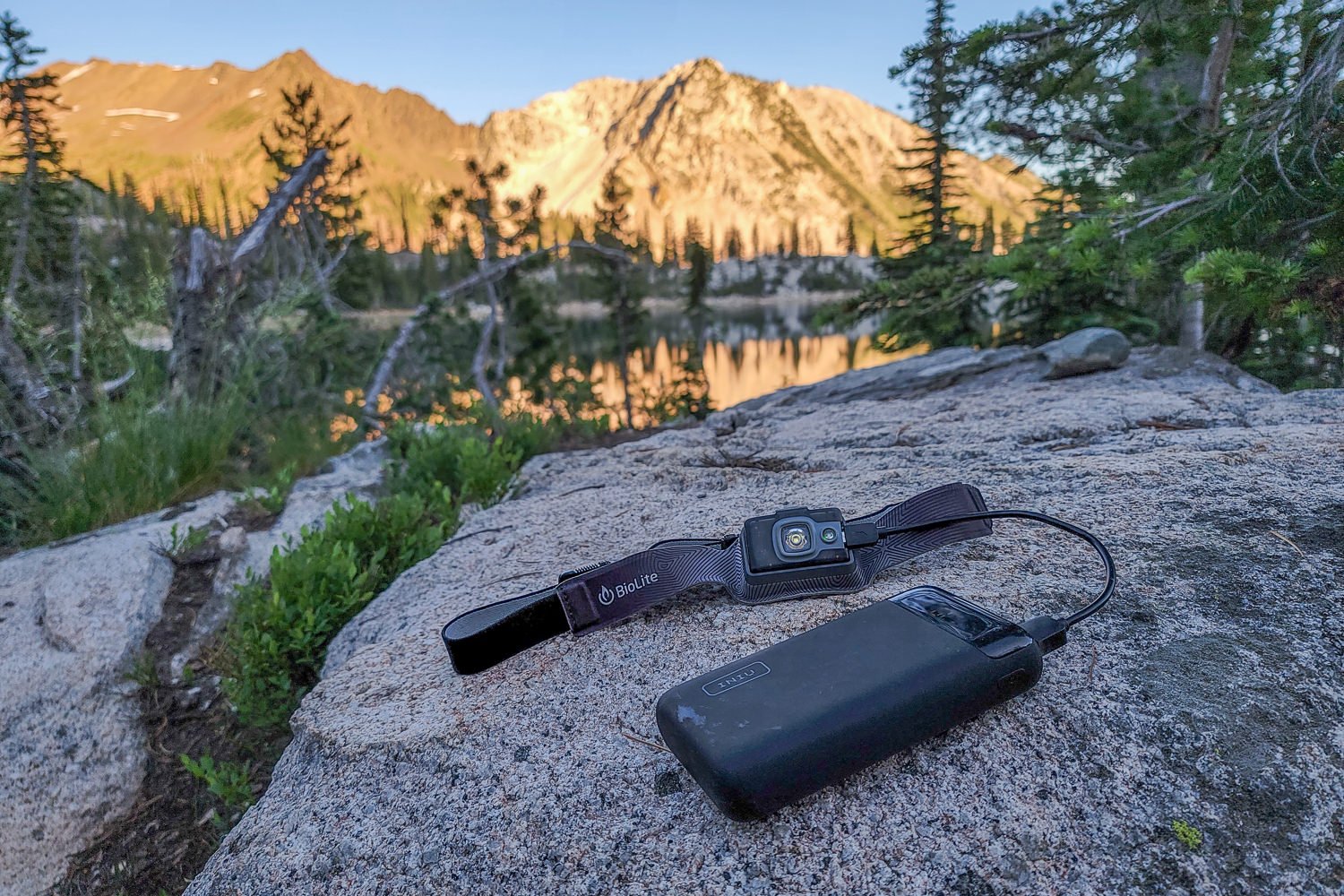
Burn time refers to how long a headlamp can run before needing a recharge or battery replacement. Headlamps typically last longer on lower settings, so choosing a model with adjustable brightness can help maximize battery life. Evaluate your typical usage and whether you need a long-lasting light for extended trips or a shorter duration for routine activities.
What light modes do you need?
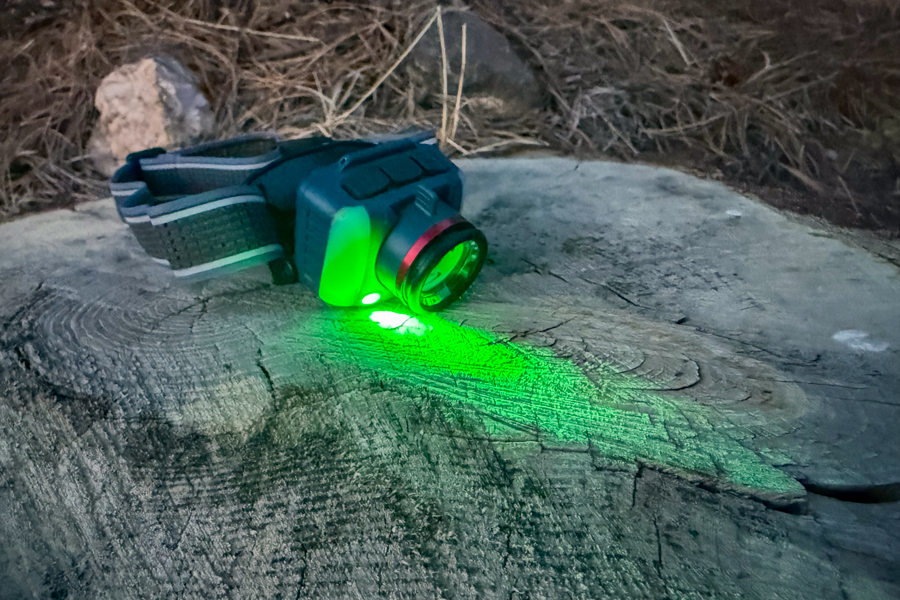
Headlamps often come with various light modes tailored to different needs. Common modes include red-light for minimal impact on night vision and reduced insect attraction, strobe for visibility and emergency signaling, high-beam for powerful illumination on dark trails, and low-beam for conserving battery life during close-up tasks. Consider which modes will be most useful for your activities.
How to choose a comfortable headlamp?
Comfort is essential for a headlamp you’ll wear for extended periods. Look for headlamps with adjustable straps that provide a secure fit without excessive pressure. Features like weight distribution between the front and back of the headlamp, along with soft, wicking strap materials, can enhance comfort and reduce bouncing. A well-designed headlamp will make your outdoor experience more enjoyable and hassle-free.
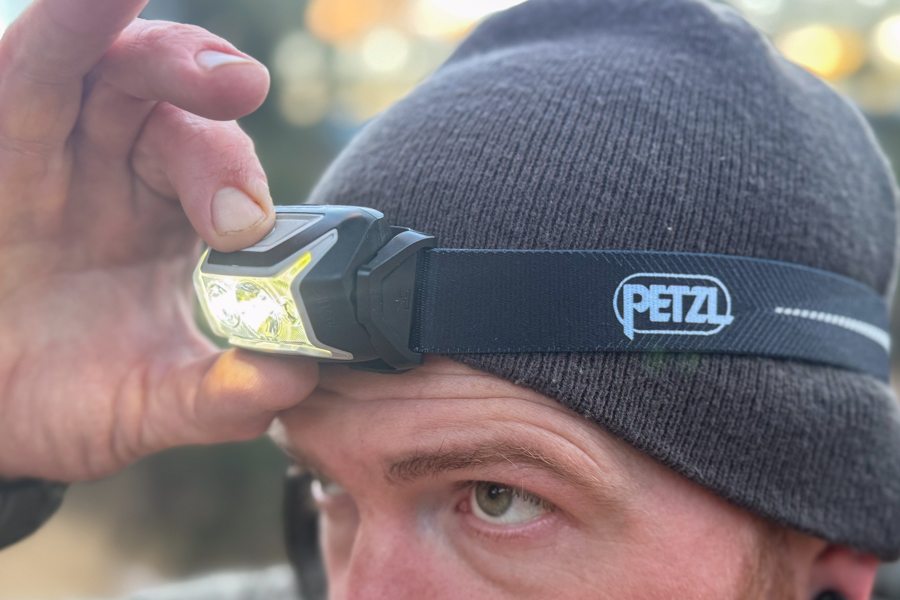
Simple vs complex features
Consider your preference for features and complexity. If you appreciate advanced features and versatility, opt for a headlamp with multiple functions. However, for straightforward tasks, a simpler model with basic functionality might be more appropriate. For winter sports where gloves are necessary, a headlamp with a single large button is easier to operate.
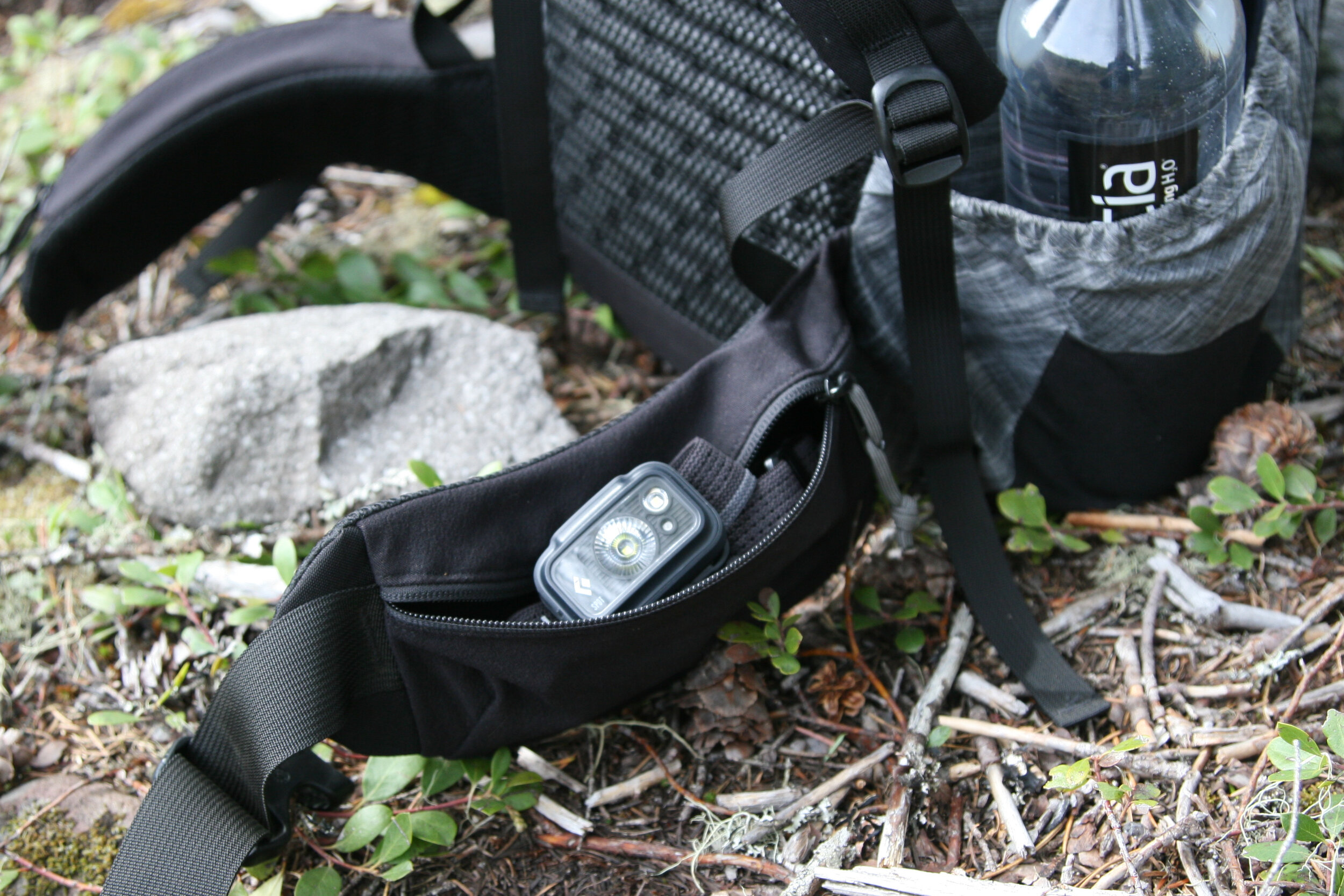
BACKUP
Always have a backup light source. Before heading out, ensure your headlamp’s batteries are fully charged or replaced. For extended trips, carry a small, lightweight backup light like the Photon Micro-Light or Petzl e+LITE in case your primary headlamp fails. A smartphone flashlight can also serve as an emergency backup.
By focusing on these criteria – durability, lumens, battery type, burn time, light modes, and comfort – you can choose a headlamp that best fits your needs and ensures reliable performance in various conditions.
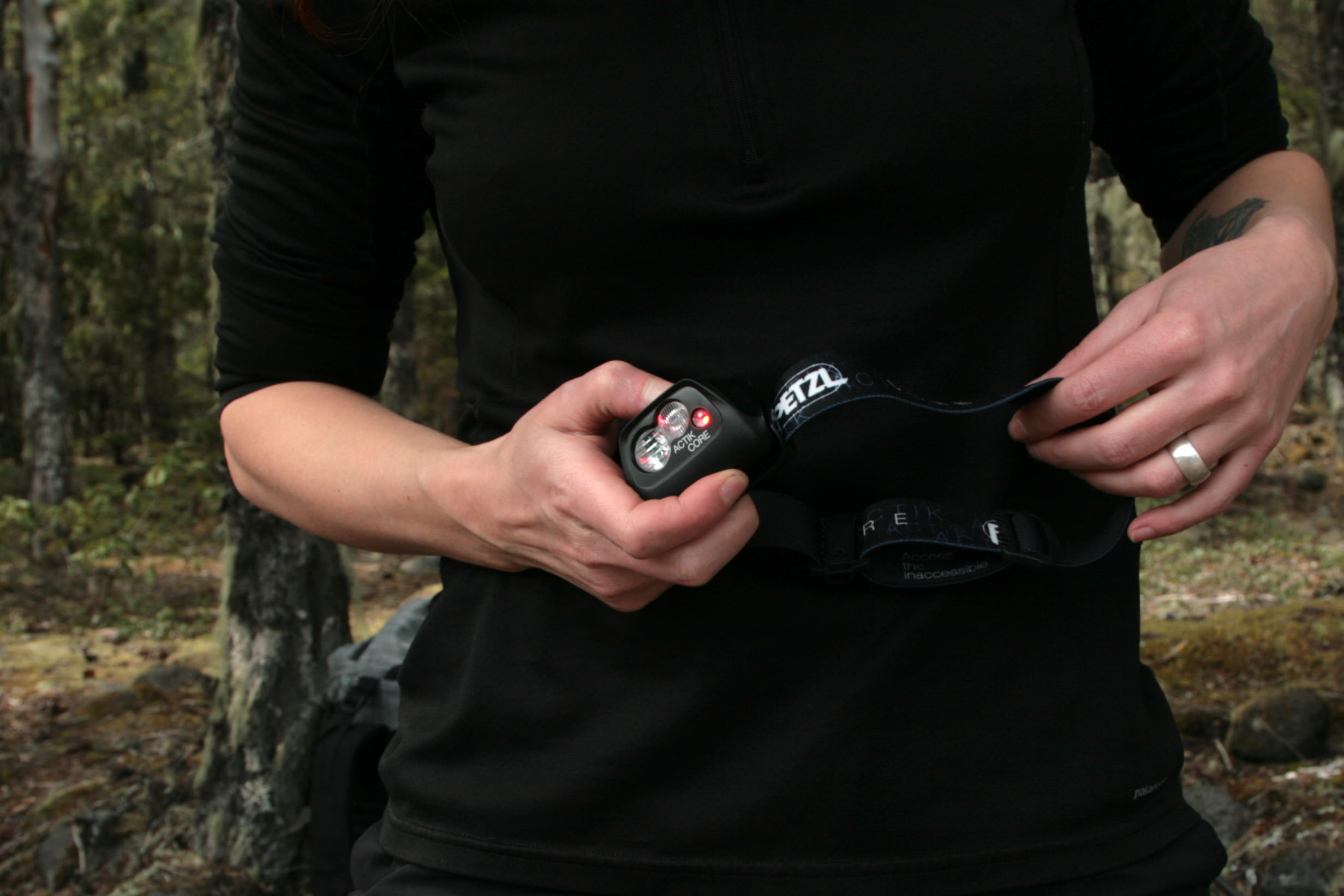
Why Trust CleverHiker
Gear Analyst, Ben Dawson, brings over 10 years of experience working in the outdoor industry. From writing for Elevation Outdoors Magazine to representing dozens of outdoor companies across the country – including La Sportiva, Sea to Summit, and Rab – to producing video series on backpacking, hiking, and gear testing, Ben is an expert at using and abusing gear. He logged over 250 hours dedicated specifically to evaluate headlamps while camping under some of the darkest skies on the planet.
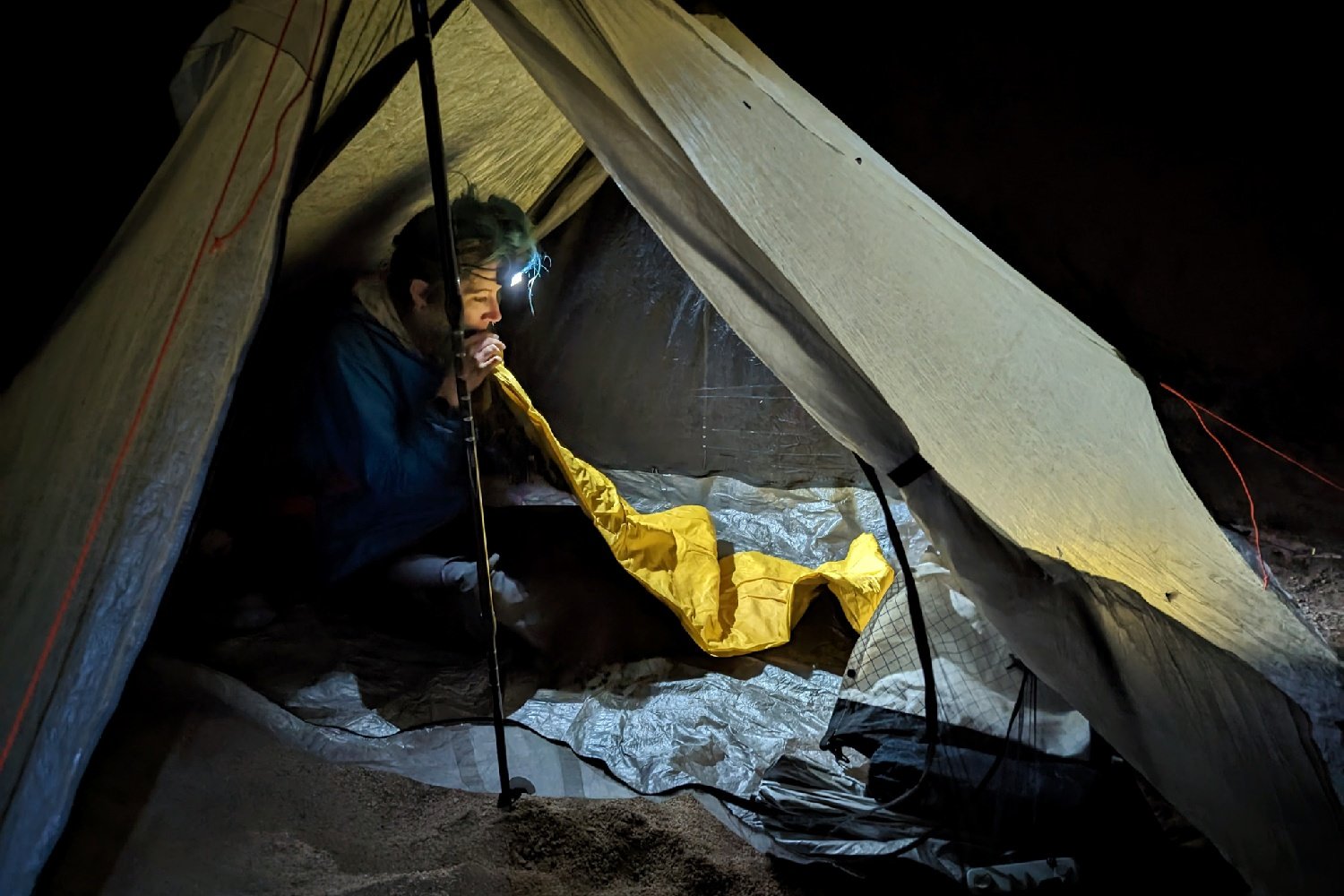
Testing Methodology
We tested headlamps in a variety of environments and conditions across the western United States. Our goal was to assess how well each headlamp performed in conditions such as cold, wet weather, and dusty environments. We evaluated each headlamp over a minimum of 50 trail miles across several activities to thoroughly understand the intricacies of each product.
ILLUMINATION & LIGHT QUALITY
When testing illumination and overall light quality, we assess each headlamp’s performance across several key factors: brightness, beam throw, and beam width. We measure the lumen output to gauge how bright the light is, ensuring it meets the manufacturer’s specifications. For beam throw, we test how far the light can project effectively, determining its reach and how well it illuminates distant objects. We also evaluate the beam width to understand the light’s coverage area, ensuring it provides a wide, consistent spread without significant dark spots or uneven lighting.
During testing, we use each headlamp in various conditions, such as open trails and confined spaces, to assess its versatility and performance. We note how the light quality impacts visibility and safety during different activities, from navigating trails to setting up camp. This comprehensive approach helps us determine how well each headlamp’s illumination meets diverse needs and conditions.
BURN TIME
To test burn time, we measure how long each headlamp’s battery lasts under typical usage conditions. We conduct tests by running the headlamp continuously on its highest and lowest settings to establish a range of burn times. This includes tracking the time until the light output noticeably dims or the headlamp turns off. We also monitor the headlamp’s performance in different scenarios, such as extended nighttime activities or intermittent use over several days.
Additionally, we evaluate how the burn time matches the manufacturer’s claims and note any significant deviations. To ensure a comprehensive assessment, we use each headlamp in various environmental conditions, including cold temperatures that can impact battery life. This helps us gauge the reliability of the burn time across diverse situations, ensuring that users can depend on the headlamp for their intended activities.
WEIGHT
To assess the weight of headlamps, we consider several aspects to ensure they meet user comfort and performance standards. We weigh each headlamp to gauge its overall mass, comparing it against similar models to determine if it’s light, average, or heavy. During testing, we evaluate how the headlamp’s weight impacts comfort over extended periods of use, such as hiking or camping. We check for any noticeable strain on the user’s head or neck and assess how the weight affects balance and stability. Additionally, we test how well the headlamp stays in place during movement and whether its weight contributes to fatigue. By evaluating these factors, we identify headlamps that offer a lightweight, comfortable experience without compromising on functionality or durability.
COMFORT
When testing headlamps for comfort, we focus on several key factors to ensure a pleasant user experience. We evaluate the headlamp’s weight and balance, checking for any noticeable strain or discomfort during extended use. We assess the adjustability of the headband, ensuring it fits securely without causing pressure points or slipping. We also test the padding on the headband and the design of the lamp housing for softness and breathability.
We further evaluate comfort by wearing the headlamp during various activities, such as hiking and camping, to gauge its performance over time. We pay attention to how the headlamp interacts with hats and helmets, as well as its ability to remain stable while moving. Overall, we aim to identify headlamps that offer a comfortable, ergonomic fit for diverse users and prolonged use.
EASE OF USE
To evaluate ease of use, we focus on several key elements. We start by examining the headlamp’s control interface, assessing how intuitive and straightforward it is to operate. This includes testing the simplicity of button functions, mode selection, and adjustments to brightness settings. We also evaluate the clarity of user instructions and the effectiveness of any indicators, such as battery levels or mode displays. During testing, we use the headlamp in various scenarios – such as night hikes or campsite tasks – to gauge how easily users can switch between functions and make adjustments on the fly.
Additionally, we consider how user-friendly the headlamp is for different wearers, including those who might not be familiar with advanced gear. By focusing on these factors, we determine which headlamps provide a seamless and hassle-free experience.
FEATURES
When evaluating the features of headlamps, we assess each model’s functionality and additional features that enhance usability. We examine aspects like adjustable brightness settings, multiple light modes (such as red-light or strobe), and any specialized functions that contribute to the headlamp’s versatility. We also consider the ease of accessing and switching between these features, ensuring they are intuitive and straightforward.
Additionally, we test the headlamp’s compatibility with accessories, such as helmet mounts or bike attachments, and any included extras, like rechargeable batteries or protective cases. We assess the durability of these features, checking if they withstand typical wear and tear.
By using the headlamps in various scenarios – such as night hikes, camp chores, and emergency situations – we gauge how well these features enhance the headlamp’s performance and convenience. This helps us determine the overall value and practicality of each headlamp’s feature set.
Conclusion
Our in-depth evaluations of headlamps cover crucial metrics like burn time, illumination, comfort, weight, and ease of use. By comparing and contrasting each model meticulously, we help you find the headlamp that aligns perfectly with your needs and budget. Trust our detailed insights to make an informed decision and enhance your outdoor adventures with the right gear.