
Bottom Line
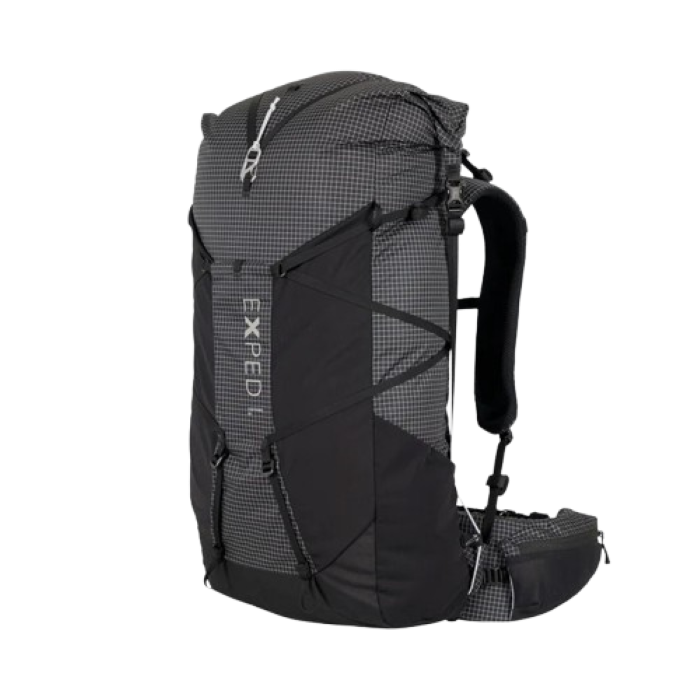
The Exped Lightning 50 is a well-built lightweight pack with a feature set we genuinely enjoyed, but several unusual design choices kept it from earning a stronger recommendation. The hipbelt pockets are among the smoothest one-handed pockets we tested, the waterproof top pocket is genuinely useful, and the lashing and strap-management details show a lot of thought. Comfort is solid for its weight, too.
The frustration comes from repeated interactions: the high bottle pockets are hard to reach, the top Y-strap is awkward with bulky gear, and the compression system can interfere with the rear stretch pocket. Those repeated access problems are what hold the Lightning down in our ranking despite construction quality that otherwise feels premium.
How We Tested
Sustained climbs on Minnesota trails helped Taylor Passofaro separate the Lightning 50’s strong construction from the small usability issues that emerge through repetition. Testing covered load transfer and ventilation along with its excellent hipbelt zippers, waterproof top pocket, pole storage, Y-strap, bottle reach, and the way compression interacts with the rear pocket.
Quick Specs
- Best for: backpackers who want a sleek, lightweight pack with strong construction and useful technical features
Exped Lightning 50
Quality Lightweight Backpack
CleverHiker Rating: 4.1/5.0
Price: $270
Measured Weight: 2 lb. 10.4 oz.
Volume: 50 L
Max Weight Rec.: 48.5 lb.
Pros
- Excellent balance of features and weight
- Comfortable hipbelt and shoulder straps
- One-handed zippers on hipbelt pocket
- Good lashing options
- Overall construction quality
Cons
- Back padding
- Top Y strap requires more work
- Back pocket gets compressed
- Water bottle pockets
- Mesh hipbelt pockets

Comfort
The Lightning was comfortable on our tester’s bony frame without ever feeling like the category’s most supportive suspension. Separated hipbelt and shoulder padding create some breathing room, while load transfer remains decent rather than locked-in and rigid. That competent middle ground is what produces a 4.2 comfort score. It stayed comfortable enough on sustained climbs.
The separated hipbelt and shoulder-padding layout is unusual enough that it deserves context. By leaving more open space across the back, Exped creates more room for ventilation than a continuous foam panel, but the tradeoff is that isolated pads can concentrate pressure if the fit is not right. On our lead tester’s bony frame, that was not a problem; the padding felt supportive without creating obvious hot spots.
We did work hard enough on steep Minnesota trails to get sweaty, but the result was in line with what we expect from a framed pack rather than a sign of poor ventilation. Load transfer was adequate but not especially rigid, and that is where the Lightning loses ground to the best-supported packs. Its comfort profile works best for hikers who value a lighter, cleaner-feeling chassis and do not need the planted sensation of a heavier frame.
Comfort Score: 4.2 / 5.0

Features
The Lightning’s individual details are often excellent even when the complete system feels less seamless. One-handed hipbelt zippers, a waterproof top pocket, pole storage, shoulder-strap mesh, rear storage, compression, and tidy strap keepers earn it a 4.5 for features. The catch is interaction: the Y-strap can fight bulky gear and compression can squeeze the rear pocket.
The Lightning’s feature set is distinctive because several small details are genuinely better than average. The hipbelt pockets are exceptionally smooth to open and close with one hand, which makes them useful for snacks, a phone, or a headlamp while moving. A small waterproof-zip pocket on top is another favorite because it keeps maps, a buff, or other frequently used items accessible without taking up hipbelt space.
The pack also includes shoulder-strap storage, dedicated trekking-pole carry, a large rear stretch pocket, a top Y-strap, multiple roll-top securing options, compression straps, and tiny Velcro loops that tame dangling webbing. The reason we stop short of calling the system excellent is interaction between those features. The Y-strap takes more work than a simple top strap, and the compression layout can squeeze the rear pocket, so thoughtful pieces sometimes compete with each other.
Features Score: 4.5 / 5.0

Durability
Most of the Lightning feels better built than its 4.0 durability score might suggest. The main body, stitching, hardware, attachment points, and extension collar inspired confidence in testing, but exposed mesh bottle and hipbelt pockets are much more vulnerable to snagging and abrasion. The chassis feels strong; the storage zones are what pull the score down.
Exped’s construction quality is immediately apparent. The main body uses 210D HMPE ripstop nylon with a PU coating, and we did not find weak stitching or sloppy finishing during testing. The fabric feels much tougher in hand than its low overall pack weight might suggest, and the load-bearing attachment points give us confidence that the pack was designed for repeated use rather than just spec-sheet lightness.
The vulnerabilities are mostly the mesh components: bottle pockets and hipbelt storage are more exposed to snagging and abrasion than the woven body. That creates an uneven durability profile rather than a weak pack. We would trust the Lightning on established trails and normal backpacking use, but we would be more careful in dense brush or around rough granite where a mesh pocket may contact the environment before the tough main fabric does.
Durability Score: 4.0 / 5.0

Ease of Use
Repeated small interruptions, not one catastrophic flaw, make the Lightning our lowest-scoring pack here for ease of use at 3.8. Adjustments, clips, hipbelt operation, and pole carry are all competent, but bottles are hard to reach, the Y-strap demands attention, and compression can choke rear-pocket access. Those frictions compound over a full day and become hard to ignore.
The hipbelt pockets, clips, and basic harness controls are all easy to operate, and the dedicated trekking-pole stow system works cleanly. Those strengths make the usability problems more noticeable because they are concentrated in a few repeated tasks. Water bottles sit high and are difficult to remove without contorting an arm or loosening the pack. The top Y-strap takes more attention than a conventional strap, especially with bulky gear secured above the roll-top.
The compression system can also tighten across the rear pocket, reducing access to the very storage hikers tend to use for quick layers. None of these issues is severe by itself, but they recur throughout a hiking day. That is why the Lightning can feel exceptionally well made while still earning a lower ease-of-use score than simpler designs such as the Circuit or Flash.
Ease of Use Score: 3.8 / 5.0

Should You Buy the Exped Lightning 50?
Choose the Lightning if you care about build quality, technical organization, and thoughtful small features enough to tolerate a few awkward trail interactions. Its hipbelt pockets, waterproof storage, and lashing options are excellent, and the overall construction feels more premium than many packs in this weight class. Skip it if easy bottle access and simple external storage are priorities; those are the exact areas where the design frustrated us. The Osprey Exos is the stronger ventilation choice, while the REI Flash 55 offers a simpler value-focused layout.

What Other Backpacking Backpacks Should You Consider?
Osprey Exos 58 Review: Better airflow and an easier suspended-frame experience are the reasons to pick the Exos over the Lightning’s more technical hardware. It gives up some of the Exped’s sleek feature execution, but its bottle access and warm-weather airflow are easier to live with.
REI Flash 55 Review: The Flash delivers a lower-cost, lighter, and more conventional route to a framed pack with modular organization. The Lightning feels more premium in some details, but the Flash avoids several of the Exped’s repeated usability frustrations while costing less.
Granite Gear Crown3 60 Review: Choose the Crown3 if exterior lashing flexibility and crossover versatility are more important than the Lightning’s cleaner construction and excellent hipbelt zippers. Both appeal to hikers between traditional and lightweight systems, but they solve that middle ground differently.