

Our experienced staff and expert gear analysts came together to share their best trail hacks and tips for staying clean in the backcountry. One thing we all agreed on: getting a yeast infection, UTI, parasites, infected wounds or burns, or just a common cold is way worse in the wild than at home. Our hygiene tips will help you stay healthy and at least tame your B.O. It will also protect the environment and other backcountry users.
In the wild, we think stink gets some slack. And while you may lean into your natural fragrance, a hygiene routine can go a long way toward helping you feel fresh and stay healthy in the backcountry.
Below, we outline the most effective hygiene essentials, which you can leave at home, how to stay as clean as possible in the wild, and how to address certain health hazards that result from letting things slide.
Most importantly, we’ll give you our packing list of goods you need to stay clean while still being mindful of the environment.
Hygiene Essentials to Pack
When you’re trying to shave ounces off your pack weight, it can be hard to decide what gear makes the cut in terms of personal hygiene. Below, we outline what we bring along on every backcountry trip and what we leave behind.
HAND SANITIZER
Keeping your hands clean is imperative to your health in the backcountry. We’ll just say it – it limits the spread of fecal matter from your hand to your mouth and reduces the chance of contracting Giardia, a truly unfortunate parasitic infection contracted from ingesting solid waste (or water containing infected solid waste).
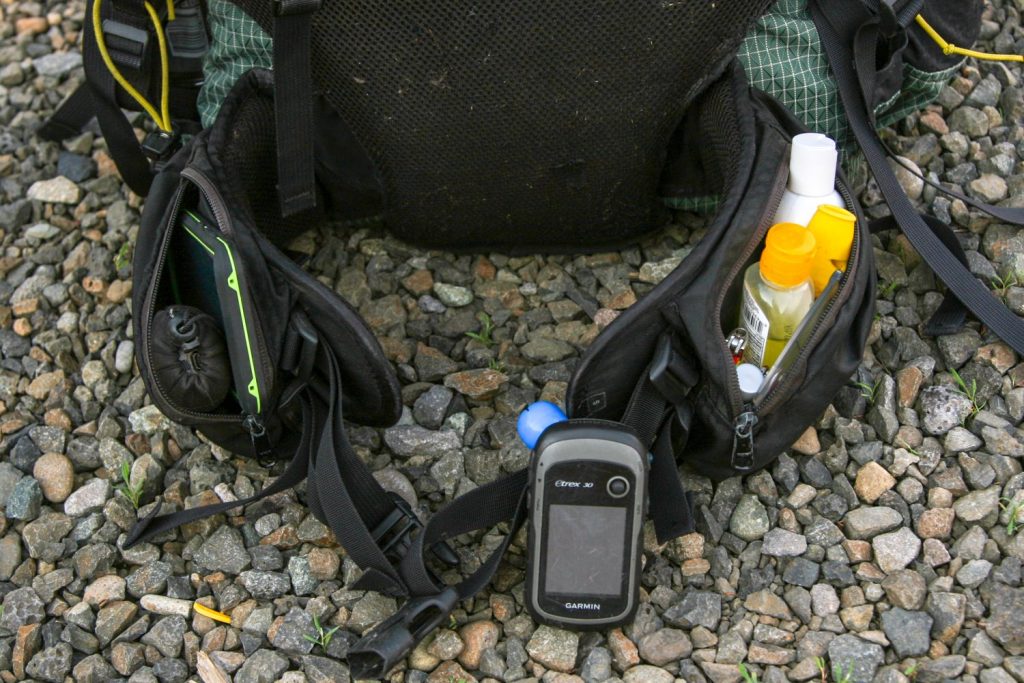
We keep a small one-ounce container of unscented, alcohol-based gel hand sanitizer in our hipbelt pocket for easy access. Since they kill germs on the surface of the skin, the CDC warns that hand sanitizers are not as effective when hands are visibly dirty or greasy, so wash and scrub your hands with a water bottle rinse first if they’re visibly grimy. Also, keep your fingernails trimmed because that’s where bacteria can hide.
BIODEGRADABLE SOAP
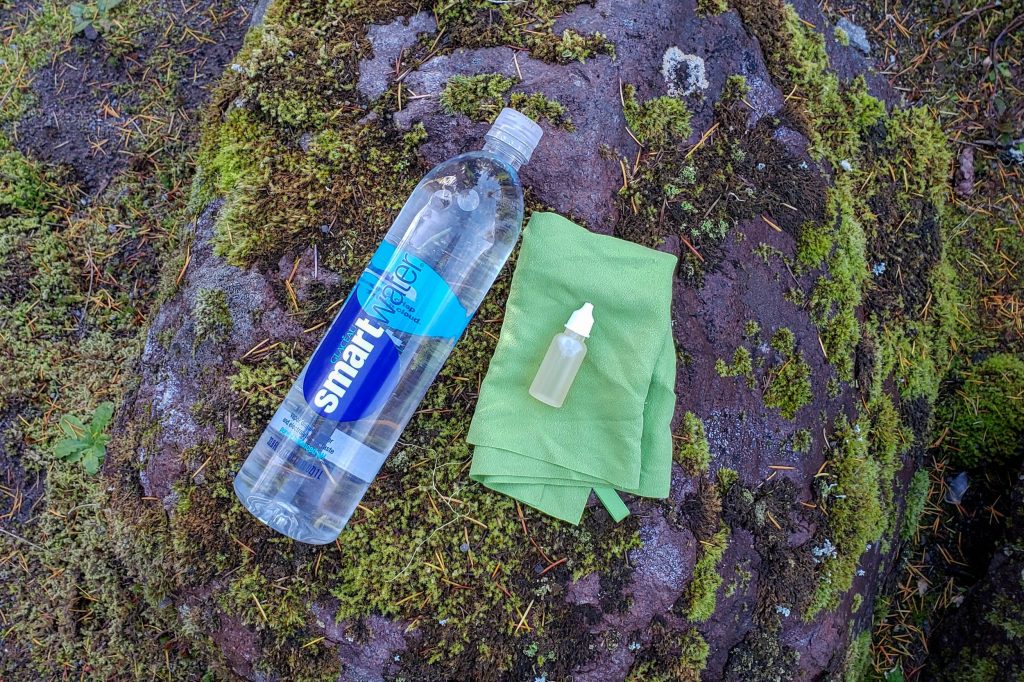
We usually just clean ourselves with water in the backcountry, and that works great. But some hikers like to use soap to clean up after a long day of hiking. If that’s you, we recommend biodegradable soap such as Dr. Bronner’s Organic Pure Castile Liquid Soap (Unscented).
Keep in mind that biodegradability doesn’t mean these products can be used indiscriminately. Never suds up or rinse yourself directly in a water source, even with biodegradable soap.
Instead, fill a water bottle or two and walk at least 200 feet away from any water sources to clean up. This makes a huge difference for wildlife, large and small, as well as fellow hikers. Who wants to cook their dinner in a pot of your bath water?
TRAVEL TOOTHBRUSH & TOOTHPASTE
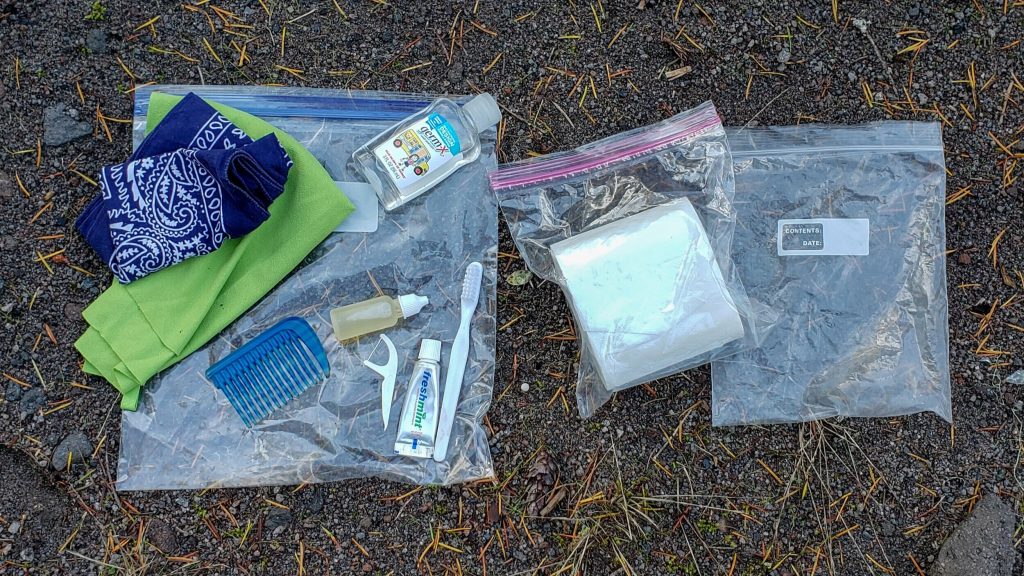
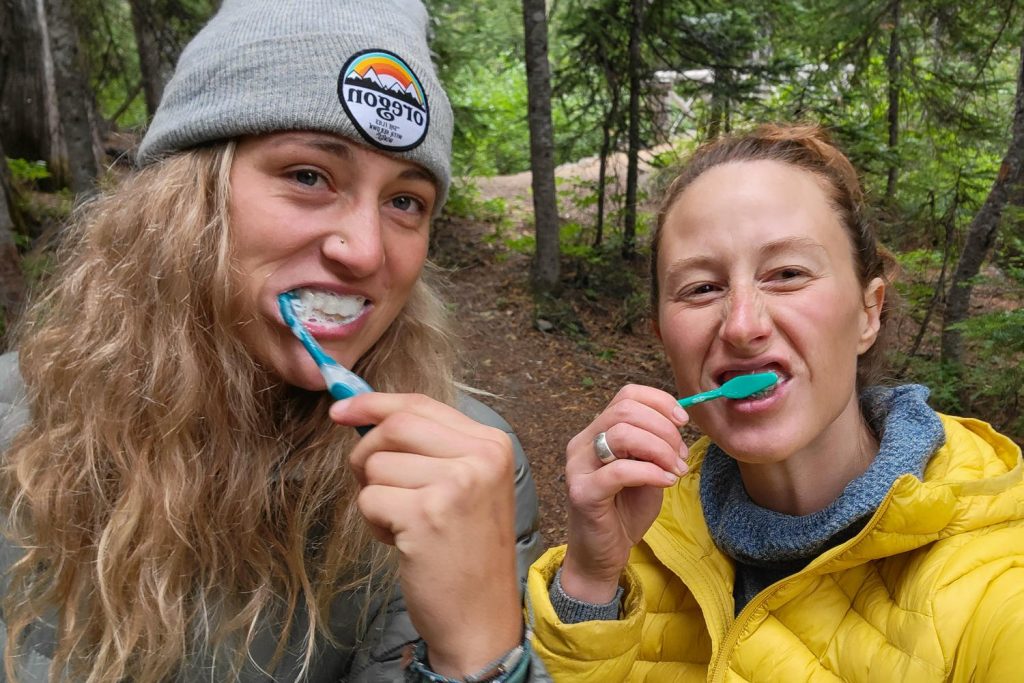
We always bring a folding (or sawed-off) toothbrush and travel-sized toothpaste to minimize weight and bulk. Carrying along a small amount of floss is also a good idea (backpacking food often sticks to the teeth).
The best way to Leave No Trace when brushing your teeth in the backcountry is to use the “Eco Spray.” Essentially, you’re dispersing toothpaste with a little water, high pressure, and full commitment (as demonstrated below).
WASH CLOTH OR BANDANA
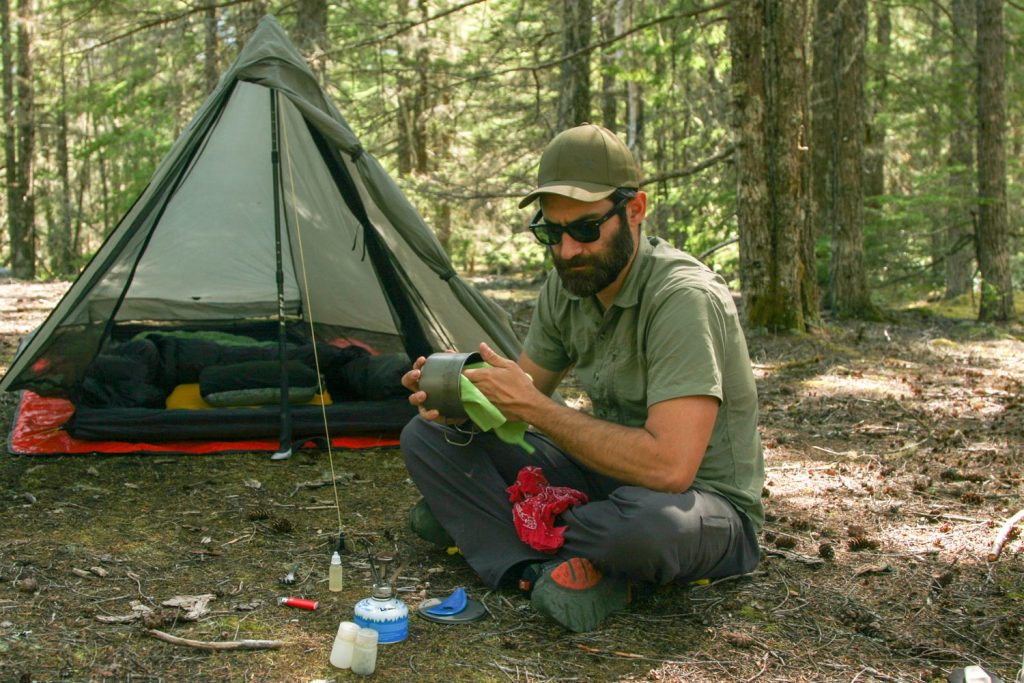
A cotton bandana can double as a washcloth for cleaning, and it also dries quickly. You can also pick up expandable, reusable washcloths like Pack-n-Wipes, which are super compact, lightweight, and dry quickly.
PACK TOWEL
In addition to a bandana or washcloth, we often have a quick-dry microfiber pack towel to dry ourselves. They’re lightweight and super absorbent. You don’t need a full-body towel – a size equivalent to a bandana should do the trick.
UNSCENTED MOIST TOWELETTES/WET WIPES
When backpacking in areas such as glaciers, deserts or canyon country, where you’ll have very little access to ample flowing water or lakes, carrying body wipes can make all the difference. Not only can you use them for big doo-doos, but they are also great for in-camp “showers,” when ample water isn’t available. Simply, wipe the body down from top to bottom.
Remember to always pack out your wipes and toilet paper, never to bury them. They don’t degrade well, and critters dig them up. Even products that are labeled as biodegradable take a long time to decompose – especially in arid environments. We recommend Sea to Summit Wilderness Wipes.
Even though humans have been pooping and cleaning for thousands of years, there’s always someone innovating ways to make it ultralight and ultra-nice. PACT makes dehydrated, compressed outdoor wipes and mycelium tabs that ultralighters love. The wipes look like large Altoids and weigh 3 measly grams. Just add a little water to rehydrate it, and it unfolds into a lovely wipe. The mycellium tabs are meant to add to your doo-doo in your cat hole to speed up decomposition. Neat!
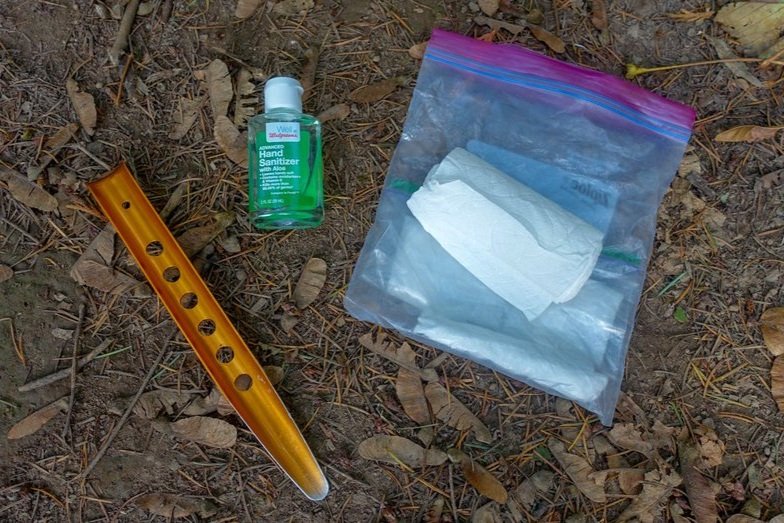
TOILET PAPER AND ZIPLOC BAGS
Save a partial roll of toilet paper from home, pull out the cardboard, flatten it, and place it in its own Ziploc bag. If you are a hardcore minimalist, ditch the TP and use leaves, snow, or smooth stones, and bury all of it after use.
Burning toilet paper to avoid littering or carrying it out is not a great idea. TP rarely burns completely, and can lead to devastating wildfires. Plus, you know, you are burning your fecal matter in a fire pit that other people will want to use. Instead, pack out your TP in a plastic bag.
Pee rags like a Kula Cloth are another practical option. Or make your own with a dedicated bandana or small rag that you can clip to your pack. Use it to wipe yourself when you urinate instead of using toilet paper. This will allow it to dry out between uses, and ultraviolet rays from the sun will help keep it disinfected.
If toilet paper is barbaric to you, Happy Bottom makes a portable bidet that we suggest checking out. Let us know how it goes, flows? Who knows…
WHAT TO LEAVE AT HOME
- DEODORANT – Deodorant attracts creatures and insects. It’s also heavy, and to be honest, it can’t handle backpacking B.O.
- SHAMPOO & HAIR RINSE – Even all-natural products introduce compounds that are harmful to an ecosystem and contaminate drinking water. Consider using dry shampoo or just embrace your greasier hair.
- RAZORS – Here’s your chance to grow that beard – on your face or your legs.
- DISPOSABLE PRODUCTS – Unless you are committed to making them multi-use, you’ll have to carry out a lot of tiny things.
Leave No Trace Considerations
Minimizing your environmental impact while maintaining your preferred standard of cleanliness is always a challenge. Here are some best practices.
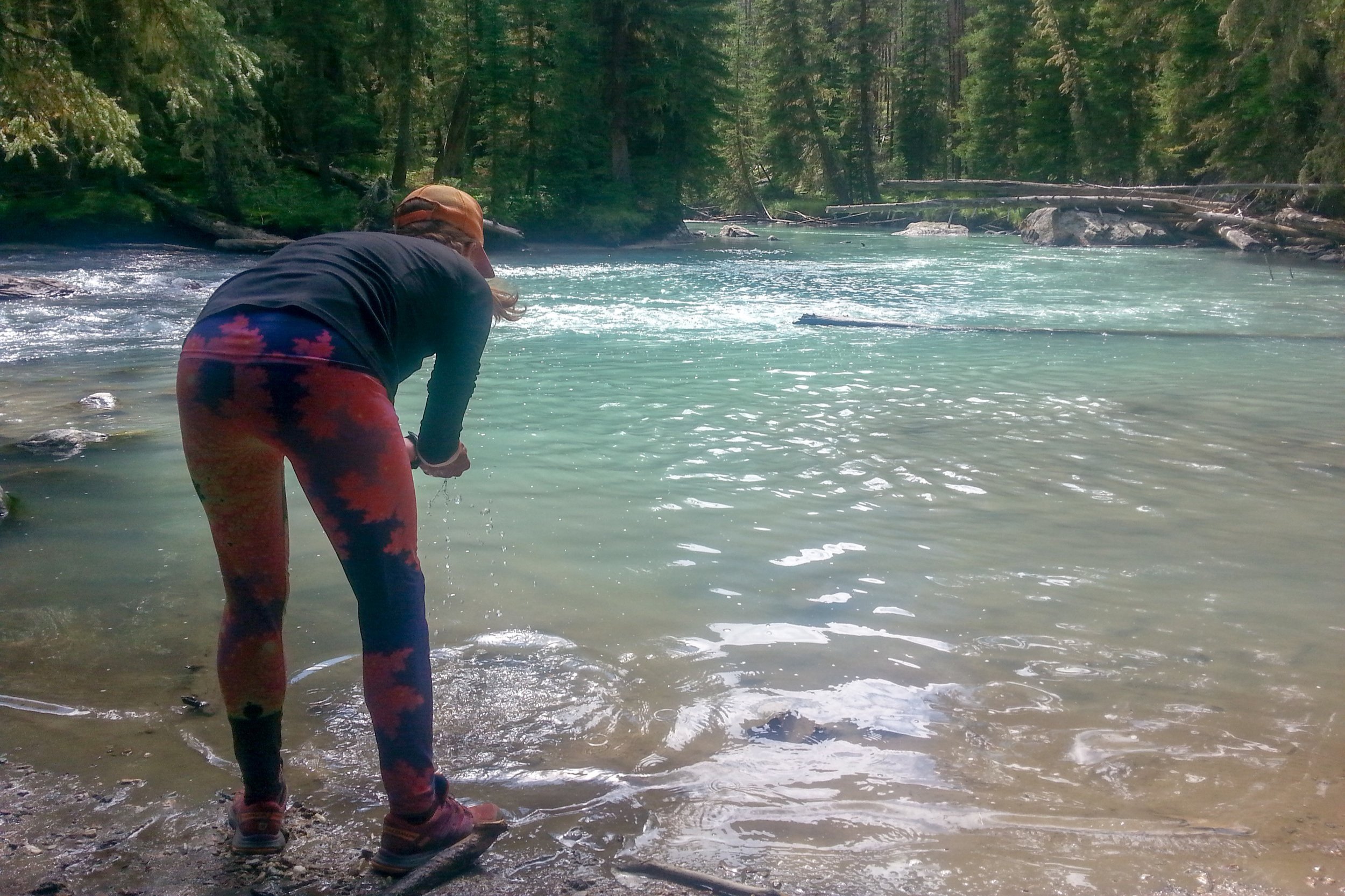
- Always rinse off thoroughly with a water bottle before swimming in creeks, lakes, or rivers. The lotions, sunscreens, insect repellents, and body oils of hundreds of people contaminate these vital water sources. DEET is particularly an issue, so you’ll want to make sure you wipe it off very well. You and everyone else don’t want to drink your skanky water.
- Never use soap products – even biodegradable ones – directly in a water source. Always walk at least 200 feet away from all water sources to clean up.
- Pack out all used toilet paper, wipes, tampons, and pads. Bury human waste (including menstrual blood) in a 6-8 inch cathole.
For People Who Have a Period
Having your period on the trail requires some extra preparation. Carrying out used tampons or pads isn’t ideal unless you are hiking to places with trash services.
Menstrual cups, such as the Diva Cup are a good option for minimizing waste and weight in the backcountry. To dispose of contents safely, you’ll have to dig a 6-8 inch hole and empty the contents as needed.
Always wash and sanitize your hands before removing and reinserting the cup. It’s also a good idea to bring some unscented silicone disinfectant wipes, like Pixie feminine wipes.
If you’re not quite sold on menstrual cups, we recommend tampons without applicators to minimize weight and waste. Never bury used tampons – animals will dig them up, and most commercial tampons don’t degrade well.
Keeping your yoni as lovely as ever in the backcountry just means regular cleaning, some time to breathe, and a few preventive measures. Avoid compressive, restrictive shorts/pants. Consider cotton underwear or other highly breathable, quick-drying shorts/undies. Some women go commando, or just have a daily routine of letting things air out to avoid yeast infections. If you are prone to them, consider adding a probiotic to your med kit and adding vitamin C packets to your snack bag. If you go with wet wipes, just be sure to test them at home to make sure they don’t wreck your pH.
Hair Care
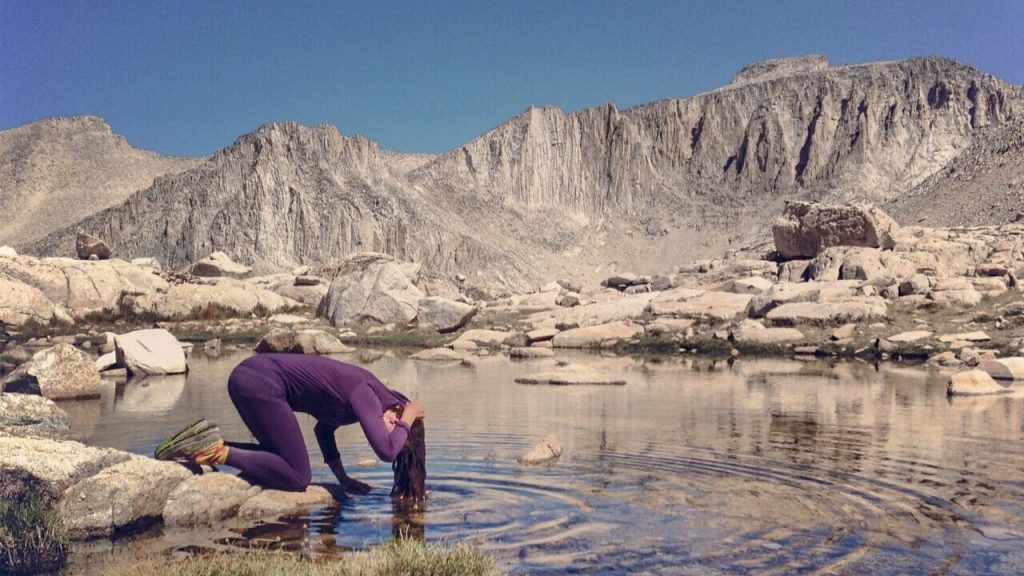
For most backpacking trips under five days, most people just embrace their trail grime and deal with greasy hair. For those spending more time on the trail, you may want to have a plan. At some point, excess hair oil combined with dead skin cell accumulation can lead to clogged hair follicles, inflammation, and even an overgrowth of yeast on your scalp. If water is plentiful, use a collapsible water cache bucket to carry water away from the water source so you can rinse your hair using a biodegradable shampoo/hair rinse combo. Make sure you dig a hole 6-8 inches deep and rinse over it.
Another option is to carry a small portion of a solid shampoo bar, such as the Ethique Eco-Friendly Solid Shampoo Bar. Dry shampoo brushed through hair is very effective at lifting dead skin cells, dirt, and other debris off your scalp.
If you don’t mind – or were considering – a shorter ‘do anyway, you can avoid greasy hair discomfort. Cut it short, shave the whole dome, or buzz part or all of it(just remember to wear your hat during the day to protect your scalp from the sun). Some women will do a half-shave for thru-hiking to keep knots down and your neck cooler.

Cleaning Your Clothes in the Backcountry
If you’re on the trail for multiple days, chances are your clothes will start accumulating a funk you’ll be eager to shed. They’re probably also filthy. Giving your clothes a quick wash in the backcountry will make you feel trail fresh.
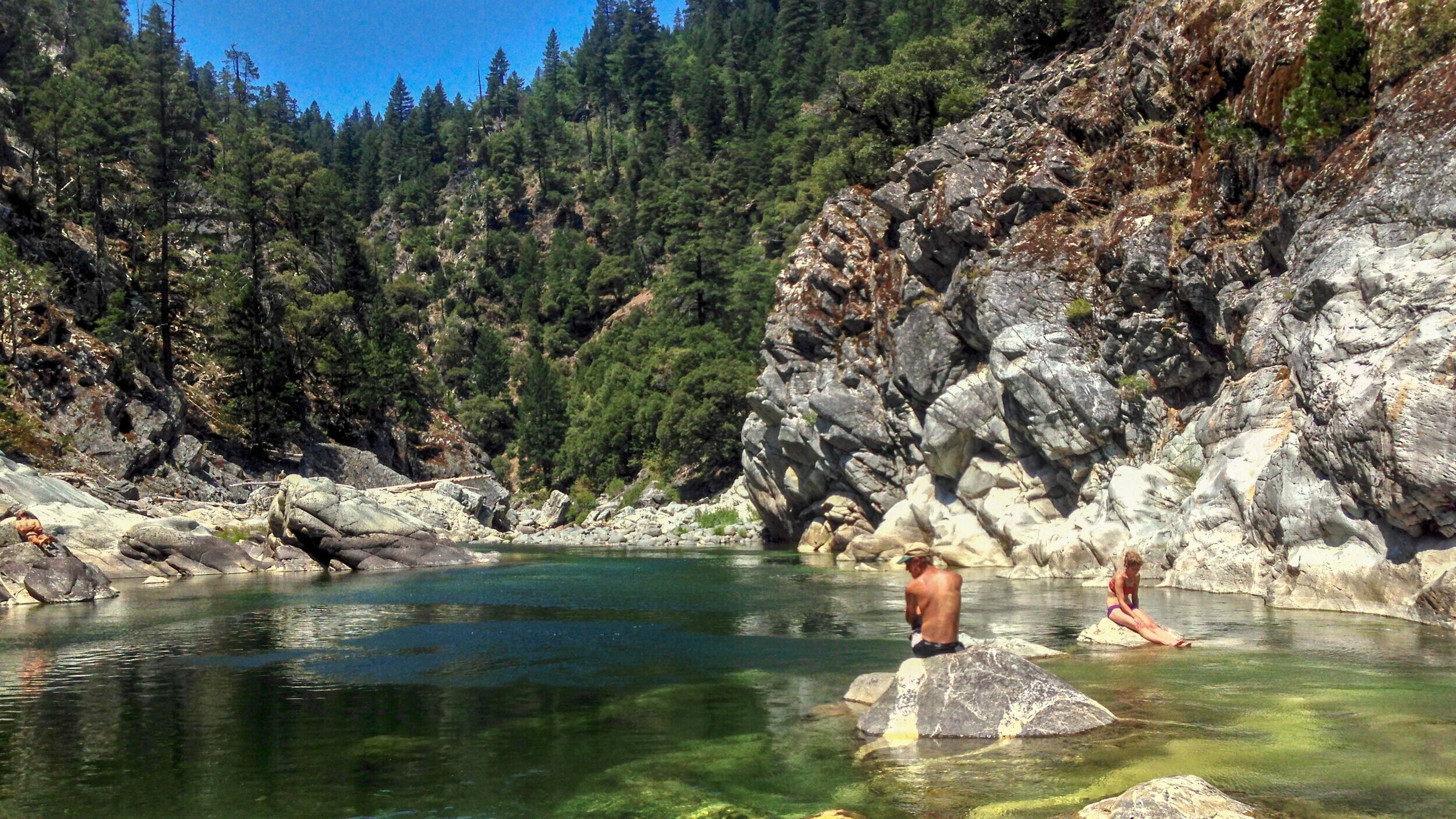
When we come across a lake with hospitable water, and we’ve rinsed off the sunscreen and bug spray, we usually just jump in with our clothes on and then sit out in the sun and dry out (best reserved for hot days). Sun is a good way to zap stank.
If you like to wash your clothes regularly in the backcountry, it’s important to bring clothing that dries quickly. Below are our recommendations and top picks for backcountry clothing.
- Choose underwear (see our guides to the best for men and the best for women) that is easy to wash and quick to dry. We usually only bring two pairs on any backpacking trip, regardless of length – wear one pair (or don’t) while washing/drying the other.
- Choose tops, shorts or pants made from lightweight and quick-dry materials. See apparel guides for our picks of best tops, short, and pants.
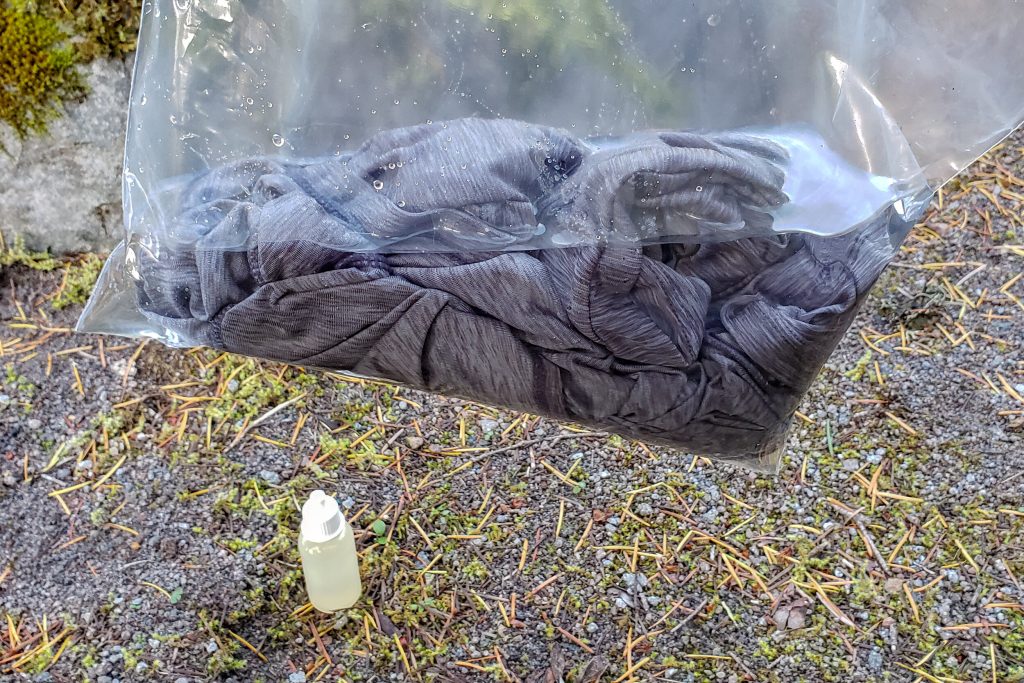
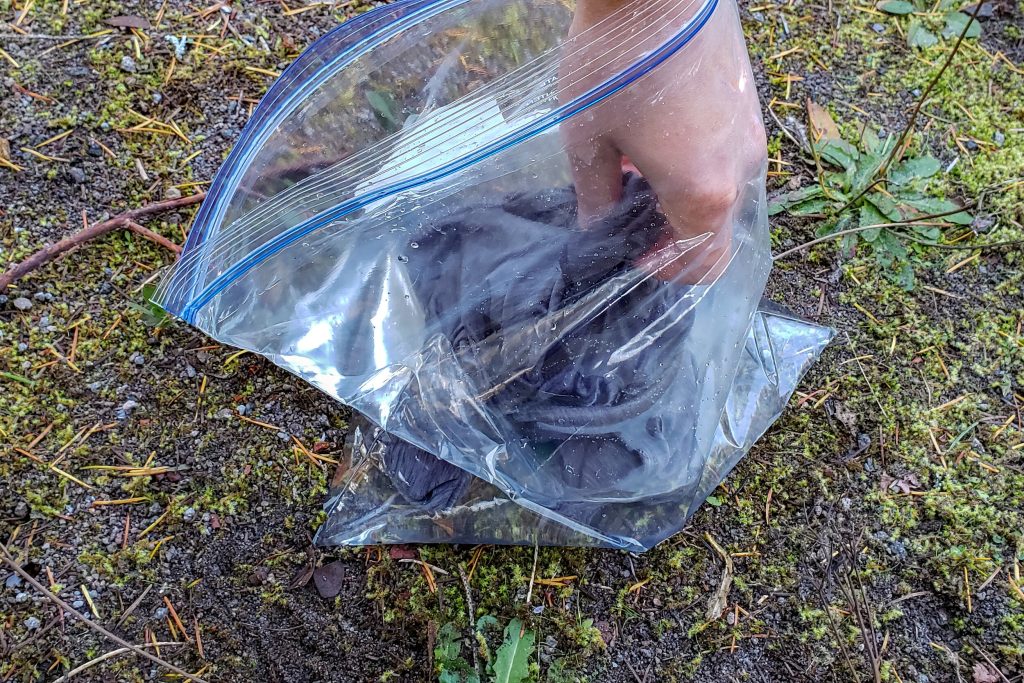
For those who want to properly wash their clothes in the backcountry, there are some options, though it’s a bit high maintenance for our backpacking style.
- Pack a large gallon-size zip style bag with a small amount of biodegradable cleaner in the bottom of it. Add clothing, add water, and squish around for a while. Empty into a hole you’ve dug in the ground, and rinse, empty, and repeat until soap-free.
- Another option is a Scrubba wash bag. This convenient, pocket-sized washing bag weighs less than five ounces. It’s a bit like an old-fashioned washboard in a bag and is a lot more effective than hand washing. Grip backing on the outside prevents sliding on rock or hard surfaces during the washing process, and it has an air release valve (that allows the bag to double as a dry bag).