
Bottom Line
The Kelty Asher 55 is a legitimate entry-level backpack for someone who wants simple fundamentals without spending much. On Minnesota state-park trips, it surprised us by carrying a roughly 45-pound test load without creating pressure points on our lead tester’s bony frame. That comfort is the Asher’s strongest argument.
The compromises are mostly storage and durability: the bottle pockets are tight and shallow, there is no large rear stuff pocket, one hipbelt pocket is little more than a phone sleeve, and several exposed mesh areas give us more long-term concern than the tougher packs in this guide. The Asher is our entry-level recommendation for a new backpacker who values low cost and simplicity more than polished access or premium materials.
How We Tested
Early-spring Minnesota state-park trips gave Taylor Passofaro the chance to push the Asher well beyond a token budget-pack test, including loads around 45 pounds. We watched hipbelt and shoulder pressure, frame support, bottle access, ventilation, exposed mesh wear points, and whether the stripped-down layout would actually feel intuitive to a first-time backpacker.
Quick Specs
- Best for: first-time backpackers who want a simple, lower-priced traditional pack
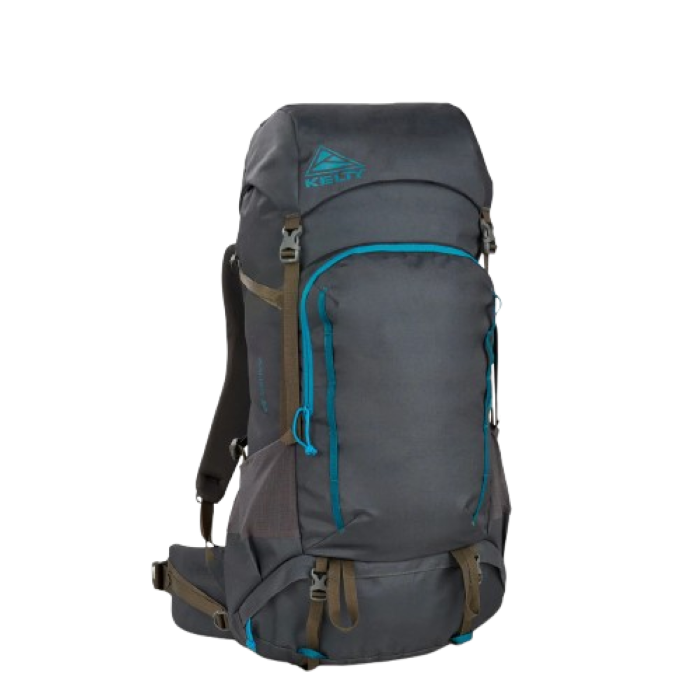
Kelty Asher 55
Best Entry-Level Backpack
CleverHiker Rating: 4.0/5.0
Price: $170
Measured Weight: 2 lb. 14.9 oz.
Volume: 55 L
Max Weight Rec.: 55 lb.
Pros
- Budget price
- Good comfort at 45 pounds
- Not overwhelmed with features
Cons
- Durability
- No back stuff pocket
- Uncomfortable water bottle pockets
- One thin hipbelt pocket

Comfort
Comfort is where the Asher most exceeded our expectations for a budget pack. A wide padded hipbelt, cushioned shoulder straps, and perimeter frame controlled roughly 45 pounds without obvious hot spots on our bony tester, enough for a 4.2 score. Ventilation and refinement remain average, but the basic suspension carries more credibly than the price suggests.
The wide hipbelt and shoulder straps are the foundation of that comfort. Both use generous foam, and the perimeter frame transferred the 45-pound test load to our hips without creating the frame-contact problems we sometimes see in inexpensive packs. The back panel and lumbar area also stayed free of hot spots during early-spring testing. Ventilation is much less remarkable.
Mesh helps somewhat, but broad areas of foam remain against the back, and the hipbelt and shoulder straps are not especially breathable. We would not choose the Asher for someone whose top priority is reducing back sweat. What impressed us is that the basic suspension works without pretending to be sophisticated. It relies on familiar backpacking design rather than proprietary comfort systems, and for an occasional backpacker or someone building a first kit, that straightforward support is a real strength.
Comfort Score: 4.2 / 5.0

Features
The Asher makes a first pack easy to understand by omitting much of the complexity found higher in this guide. That simplicity is useful, but a missing rear stuff pocket, one small mesh hipbelt pocket, and tight shallow bottle pockets leave obvious gaps in quick-access storage. Those omissions keep the feature score at 3.8.
The Asher still includes the core systems a new backpacker is likely to need: a top lid, load lifters, side compression straps, a U-shaped rear zipper pocket, bottom access, and useful external lashing points. Those features keep the pack from feeling stripped to the point of frustration. The missing storage is more noticeable after using better-equipped packs.
There is technically one hipbelt pocket, but the stretch-mesh sleeve is only large enough for a phone or snack, and the absence of a large rear stuff pocket removes one of our favorite places for wet layers or quick-access gear. The U-shaped rear pocket partly fills that role but is slower to use. This is why the Asher works best for beginners who value a clear, uncluttered layout; experienced backpackers who know exactly which on-body storage they rely on may outgrow the feature set quickly.
Features Score: 3.8 / 5.0

Durability
The Asher’s basic structure feels serviceable; the smaller details are what raise durability questions. Mesh side pockets can snag, the lone hipbelt pocket uses thin material, and the top cinch deserves monitoring, which puts the pack at 3.8. Normal established trails are reasonable territory, but repeated bushwhacking and high-mileage abuse favor tougher designs.
Most of the pack is built from 600D polyester, which feels reassuringly burly for an entry-level model, and we found the stitching solid across the main structure. The concerns are concentrated rather than universal. Both bottle pockets use exposed mesh in a high-abrasion zone, the cinch collar uses lighter fabric with seams that stretch more than we would like, and the lone hipbelt pocket is also mesh. Those are the places we would inspect first after repeated contact with brush or rock.
The rest of the pack feels much more robust than the score might imply. That is important for the intended buyer: someone using the Asher for a handful of established-trail weekends each year is unlikely to stress those weak points the way a thru-hiker or off-trail user would. In that lighter-duty role, the pack could deliver many years of service despite the vulnerable storage details.
Durability Score: 3.8 / 5.0

Ease of Use
Simplicity works in the Asher’s favor when it is time to fit and load the pack. The harness needs little tuning, the main body packs predictably, and there are fewer systems for a beginner to get wrong, supporting a 4.4 ease-of-use score. Friction shows up later in storage access: bottles are awkward, the rear zipper does not enter the main compartment, and quick hipbelt storage is limited.
The large straps, buckles, and cinch mechanisms are easy to understand, which is exactly what we want in a first backpack. Kelty also puts the hipbelt tightening pull on the belt rather than at the buckle, giving the user better leverage when snugging the pack around the hips. Most zippers operate normally, although the lower zipper is not especially smooth. The bottle pockets are the major exception to the otherwise intuitive design.
Their high, tight mesh openings made a 32-ounce Nalgene difficult to remove and replace while wearing the pack, often forcing a shoulder-strap loosen-and-reach routine. That repeated “chicken wing” motion is a real trail annoyance and the main reason the Asher does not score higher here. Aside from bottle access, however, the pack asks very little from the user and is easy to understand on a first trip.
Ease of Use Score: 4.4 / 5.0

Should You Buy the Kelty Asher 55?
Buy the Asher if you are putting together a first backpacking kit and want a straightforward framed pack at the low end of the category’s price range. Its simple suspension and controls are easy to understand, and our 45-pound test showed more comfort than we expected from a budget design. Skip it if you want easy on-body bottle access, substantial hipbelt storage, or materials intended for frequent brushy and abrasive travel. The REI Trailmade is a more polished beginner option, while the REI Flash 55 is the better long-term step up if your budget allows.

What Other Backpacking Backpacks Should You Consider?
REI Trailmade 60 Review: The Trailmade is another beginner-friendly value pack, but its simpler organization, durable materials, and easier bottle access feel more polished than the Asher’s storage setup. It costs a little more, so the Asher still has an edge when keeping the initial purchase price as low as possible matters most.
REI Flash 55 Review: A larger initial spend on the Flash buys lower weight, better adaptability, and a pack that is easier to grow into. It costs more than the Asher, but it is easier to grow into as your kit gets lighter and your trips become more ambitious.
Gregory Paragon 60 Review: The Paragon makes sense once suspension refinement and all-day comfort matter more than keeping the entry price low. It is substantially more expensive, but its smoother load transfer and more useful access make it a better fit for backpackers who expect to spend a lot of time under a loaded pack.durable, making it an excellent first (or last) backpack.