

Bottom Line
The Mountain Hardwear Trango 2 Four-Season Tent is a burly, storm-ready shelter built for tough winter environments, and for us, it quickly proved why it’s a longtime favorite in the mountaineering world. During our testing period in cold, windy Colorado conditions, the Trango impressed us with its rock-solid structure, low-profile design, and overall quality of materials.
The color-coded poles and webbing make setup easier than expected for a fully featured expedition tent, and both vestibules, especially the large front one, offer extra storage for all of the gear that comes along with big trips in cold weather.
Inside, the Trango 2 scores high marks for its large pockets, overhead gear line, and targeted reinforcement throughout the tent body. Venting is more limited than in some modern designs, and the tent’s low height isn’t ideal for hanging out, but its stability and protection in severe weather are outstanding.
For adventurers who prioritize strength, reliability, and four-season security, the Trango 2 is a solid value. You can see how it stacks up in out guide to the best four-season tents.
How We Tested
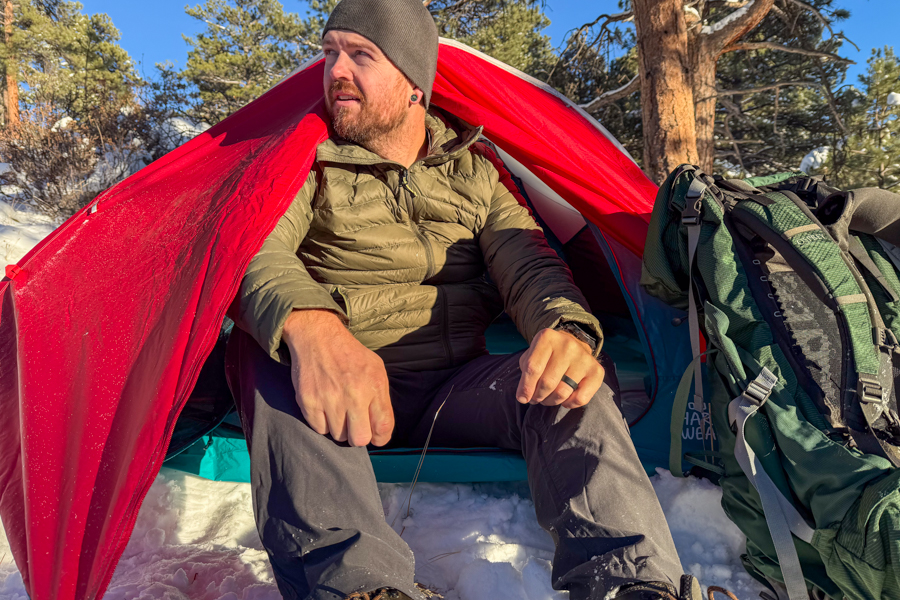
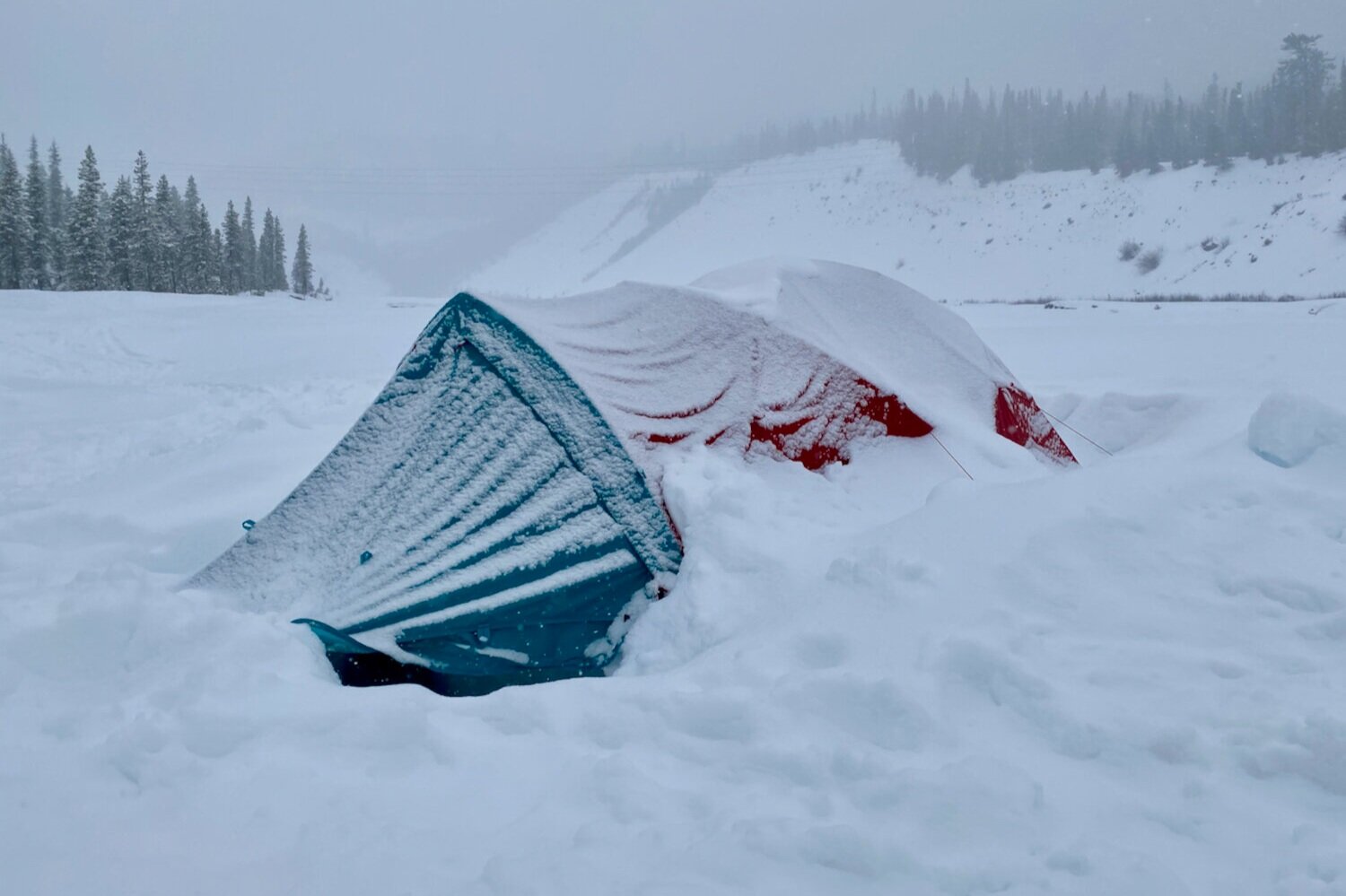
We tested the Trango 2 throughout early and mid-winter in Colorado’s Arapaho and White River National Forests. Over several overnights, we saw everything from single-digit temperatures to sustained high winds and steady snowfall. The tent endured three straight days of intense gusts without shifting, giving us a clear read on its real-world stability.
Quick Specs
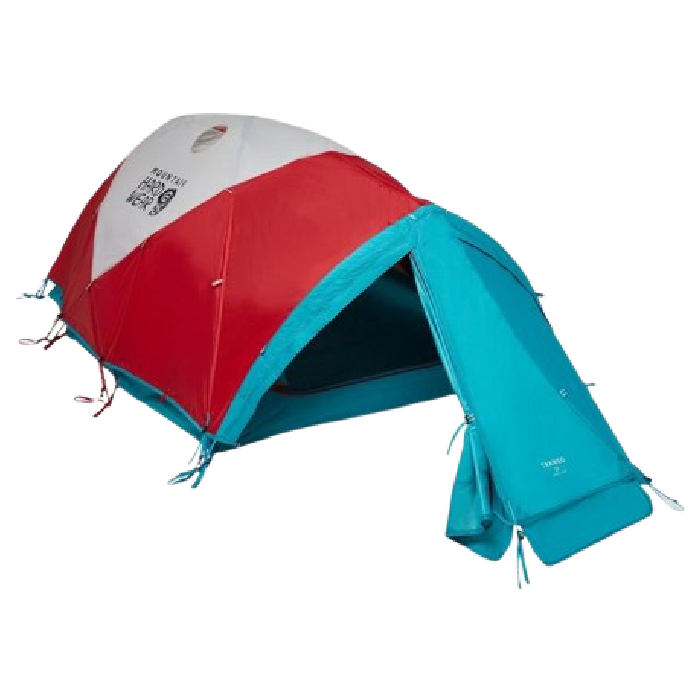
Mountain Hardwear Trango 2
Best Overall 4-Season Tent
CleverHiker Rating: 4.9/5.0
Price: $950
Weight: 9 lb. 7 oz.
Dimensions (LxWxH): 92 X 64 X 38
Square Footage: 40 sf
Pros
- Excellent durability
- Storm-worthy
- Large interior
- Dual vestibules
- Ample interior storage
- 3-point pre-installed guy lines
Cons
- Price
- Weight
- Large packed size

Comfort
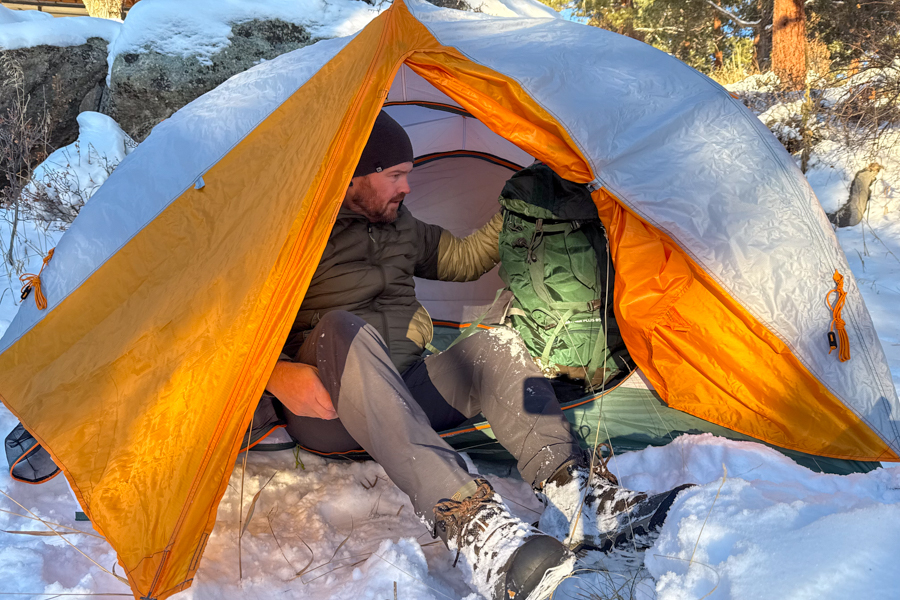
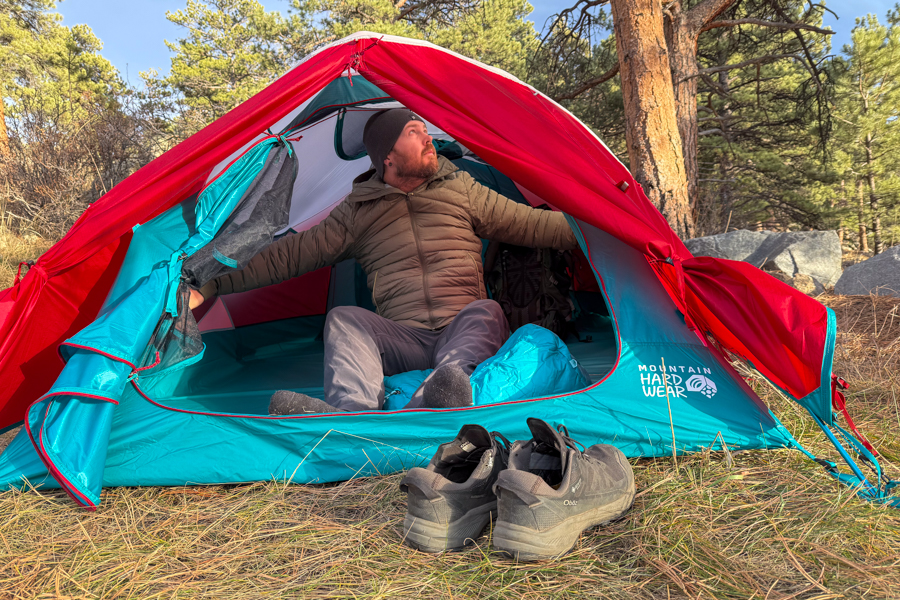
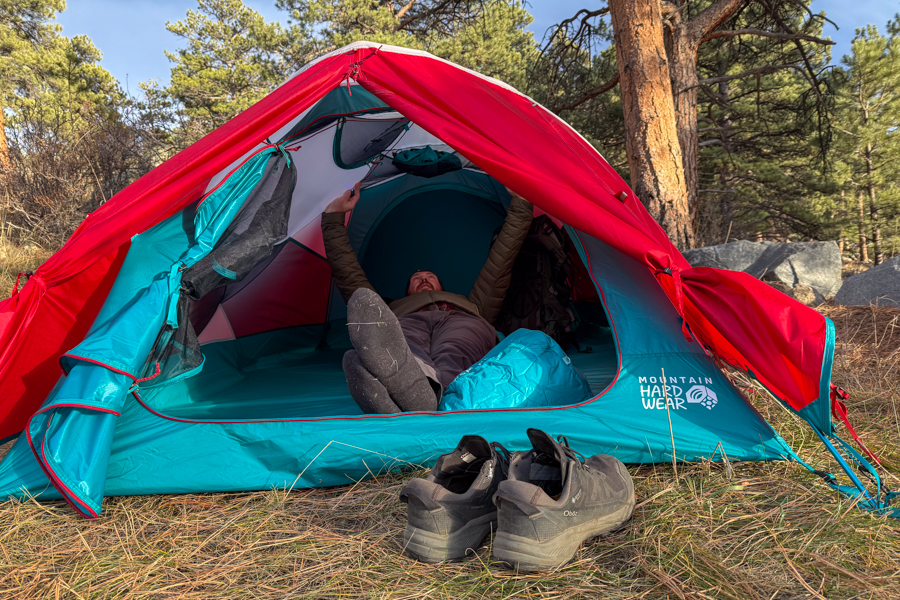
The Trango 2 is comfortable in the ways that really matter for a true four-season tent, but its low profile limits interior hangout space. We found it roomy for one, comfy for two, and cramped for three. This tent sits close to the ground for better stability in high winds, which naturally reduces headroom.
One of our taller analysts, at 6’2″, reported that he could lie down with a bit of extra length to spare, but sitting upright and kneeling felt a little compact. All that said, you won’t have the kind of interior height you’d get from a more spacious 3-season or 3+-season shelter.
What sets it apart comfort-wise is its organization. The interior is covered in genuinely useful storage: large sidewall pockets, layered ceiling pockets, and a gear-hanging system. On long winter nights, that layout helps keep soggy gloves, headlamps, and essential layers exactly where you want them. The dual vestibules also help reclaim interior space, especially the large front vestibule, which easily stashes boots, packs, and the general chaos of winter gear.
Ventilation is the one comfort drawback. Without a kickstand vent on the fly and with limited mesh, airflow is more controlled than airy. That’s a tradeoff you make for warmth and storm security, but it’s worth noting for anyone who runs warm or plans to use this tent beyond deep winter.
Weight & Packed Size
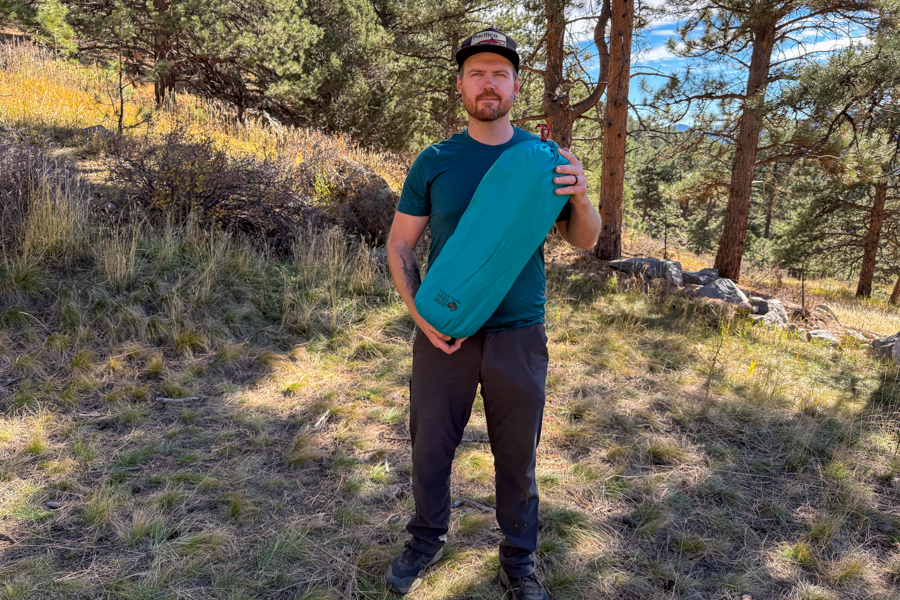
The Trango 2 is heavy and bulky, but that’s expected for a tent built to survive in harsh conditions. At over 9 pounds packed, it’s not something you’ll casually haul on long approaches unless you truly need full four-season protection. Most expedition-ready tents in this class fall into a similar weight range, and the Trango is right in line with that expectation: durable materials, a robust pole structure, and reinforced panels simply weigh more than the ultralight fabrics used in milder-weather shelters.
You feel the weight and bulk most when you’re trying to pack it down. It takes up a lot of space. The Trango doesn’t compress nearly as small as alpine-style single-wall tents, and you’ll need to divide components between two people to make the load manageable. That said, the tent’s sturdier materials do provide benefits in the field: abrasion-resistant fabric, poles that handle lateral stress, and a fly that doesn’t flap wildly in high winds all contribute to its bombproof feel.
For winter campers prioritizing protection over minimalism, the weight is a reasonable tradeoff. But for those counting every ounce or planning long-distance winter travel, the Trango 2 may feel like more shelter than necessary.
Weather Resistance
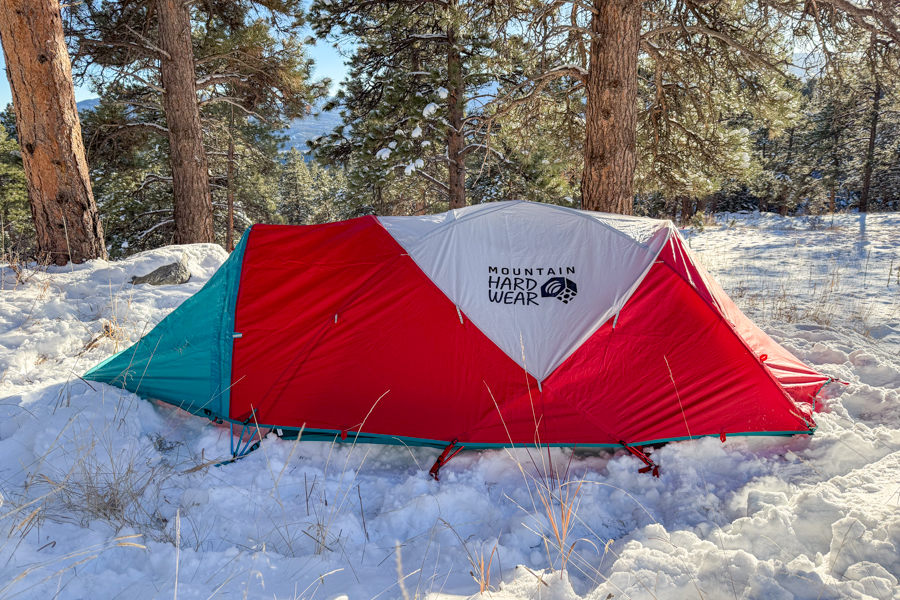
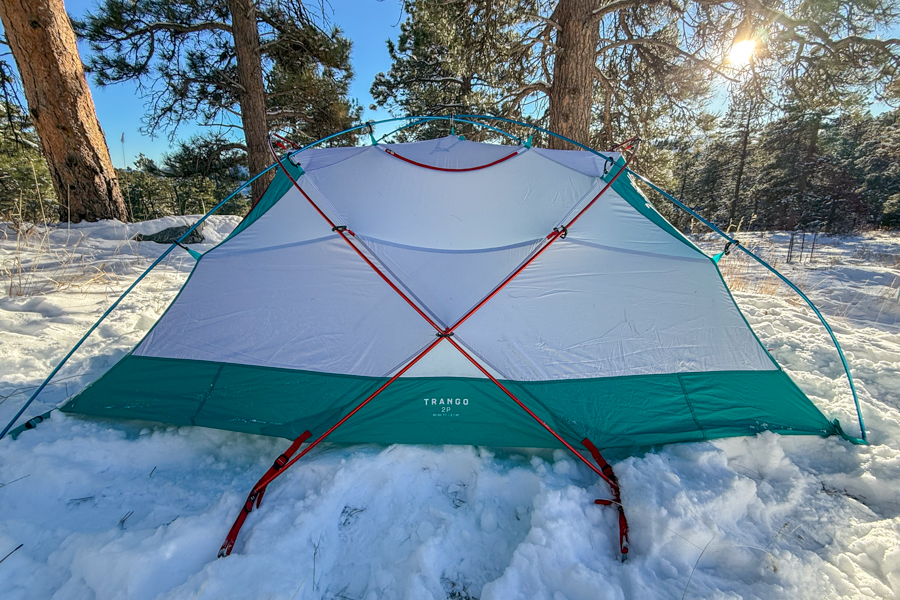
Weather protection is where the Trango 2 really earns its reputation. This tent is built to withstand some of the harshest conditions on the planet. During testing in Colorado’s early and mid-winter storms, we saw three straight days of relentless high winds, single-digit temperatures, and steady snowfall. The tent stayed stable and didn’t require constant readjustment, which speaks to the effectiveness of its low-profile and sturdy pole architecture. It’s not immovable or magical; it simply performs the way a well-built four-season tent should.
The fly sits low to the ground for good coverage, and the adjustable skirts help manage snow and heat retention. We also liked the two-way vestibule zippers, which can double as vents when you need a bit more airflow. The large front vestibule provides a protected space for gear and makes getting in and out easier during storms.
Ventilation is more limited than on some other designs, but that’s typical for tents that prioritize warmth and weatherproofing. Overall, the Trango 2 delivers dependable, confidence-inspiring protection for winter camping and moderate alpine conditions.
Ease of Setup
For an expedition-ready four-season tent, the Trango 2 is surprisingly straightforward to set up once you learn the sequence. It’s definitely more involved than a typical backpacking tent, but that’s the tradeoff for a stormproof tent.
During our testing, the first pitch took a bit. The setup includes four main poles, two cross poles, and a lot of gated clips. However, the color-coded system helps shorten the learning curve quickly. You can pitch the fly in different orientations depending on your campsite and wind direction.
Once you’ve set it up a couple of times, the Trango becomes much more manageable. The all-clip inner attaches cleanly, the poles slot into place without wrestling, and the tent’s low height actually makes things easier in the wind. Even in gusty conditions, the Trango pitched tautly without needing much adjustment. It may look intimidating, but it’s really not.
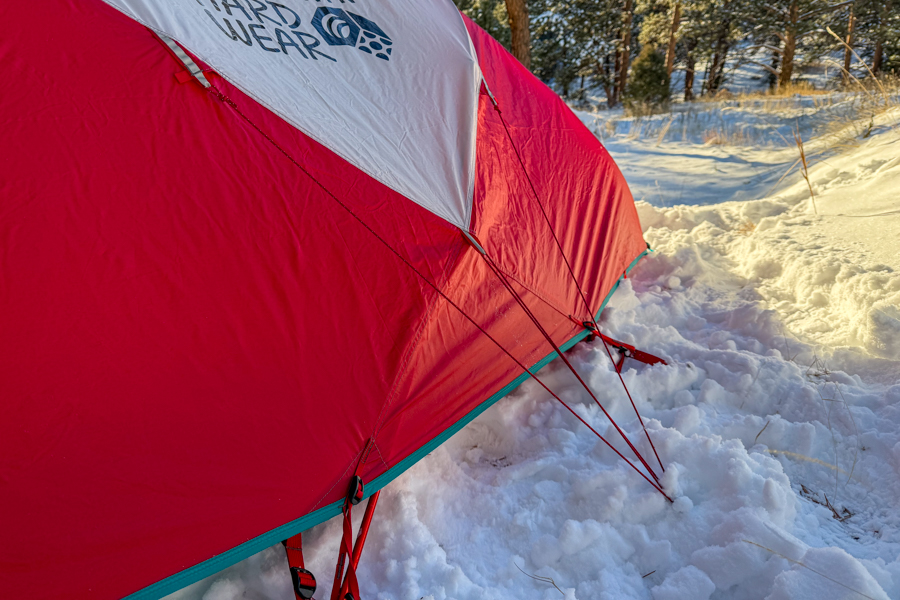
The fly connects smoothly, and the tensioners are easy to operate. Pre-attached three-point guy lines on each side streamline anchoring, though the included stake count only covers the basics and leaves no extras. If you need to add some additional guy lines, which are included but not pre-attached, you’ll need a few more stakes.
One thing to note is that the gated clips used to hold the poles in place can be a little tricky to operate with thick gloves on.
Durability
This tent has been around for 20 years. It wouldn’t have stayed on the market this long if it weren’t truly built to last. From the moment you handle the materials, the difference between this tent and others is evident.
The fabrics are noticeably thicker, the materials are reinforced in all of the right places, and the poles feel strong without being unwieldy. Throughout our testing, the tent held up exceptionally well to high winds, abrasion from crusty snow, and regular pitching on frozen ground.
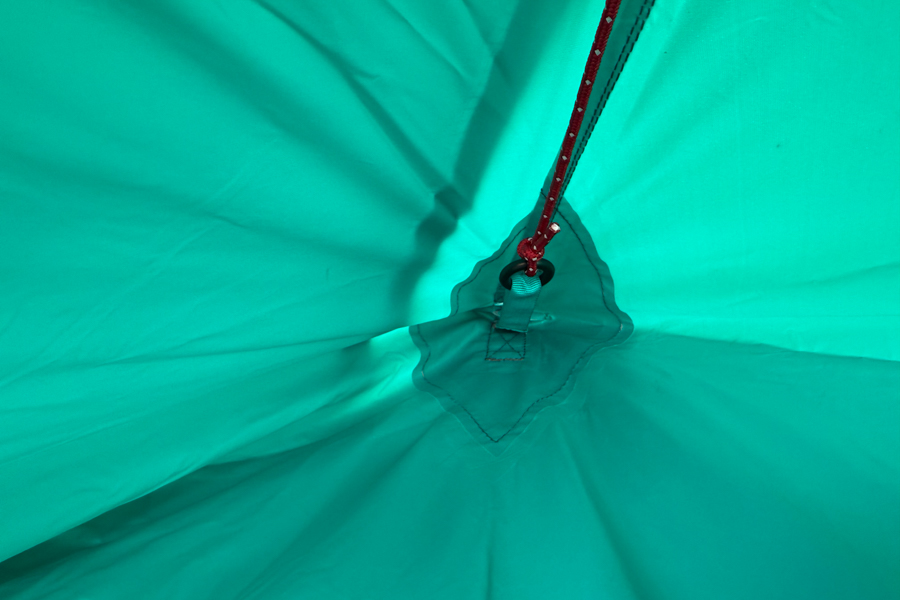
Inside, the craftsmanship is just as obvious. Seams are clean and well-finished, pockets are securely anchored, and nothing feels fragile or prone to premature wear. There are endless online user reviews from long-term owners that echo our impression. It’s well known that the Trango holds up year after year of winter use better than most tents in its class.
We do have one small durability concern that’s shown up across several Mountain Hardwear tents we’ve tested: slight imperfections in the interior mesh. This appears to be a quirk of the manufacturing process rather than a functional flaw, and we haven’t experienced any failures because of it. Still, it’s something we’ll continue to watch during long-term testing.
Versatility
The Trango 2 doesn’t pretend to do everything, and honestly, that’s part of its charm. It was made to be a basecamp workhorse, something you trust when the winds pick up and the snow starts stacking up. In that world, it’s fantastic. But take it on milder adventures, and it starts to feel a little overbuilt for the job.
At over 9 pounds with a substantial packed size, it’s not a great choice for shoulder-season backpacking, mild-weather camping, or trips where you’ll be moving camp frequently. The low interior height limits livability on relaxed outings, and the limited ventilation makes it less comfortable in warm or humid environments.
Most users looking at the Trango know exactly what they’re signing up for: a durable, storm-ready shelter built for harsh conditions. In that sense, the tent fulfills its purpose extremely well. But if you want a single tent that can handle winter storms and feel comfortable in a wide range of seasons and environments, there are more adaptable four-season models available.
Should You Buy the Mountain Hardwear Trango 2?
The Mountain Hardwear Trango 2 is a great fit for campers who routinely head out in deep winter conditions and want a shelter they can count on in extreme weather. Its sturdy pole structure, low profile, and durable materials make it a reliable choice for high winds, heavy snow, and cold, exposed environments.
If you’re looking for a tent to use as a winter basecamp, or you prefer a shelter that leans heavily toward protection over weight savings, the Trango 2 delivers strong long-term value.
That said, just because it can handle all four seasons doesn’t mean it’s ideal for them. The weight, packed size, and limited ventilation make it less practical for shoulder-season backpacking or trips in warmer climates. For dedicated winter adventurers, though, the Trango 2 is a dependable, well-built investment that’s designed to last through years of harsh-weather use.
What Other Four-Season Tents Should You Consider?
For more options in this category, check out the winter-ready models in our guide to the best four-season tents.
The North Face Mountain 25 Review: The Mountain 25 is one of the Trango’s closest peers: a classic two-person, double-wall mountaineering tent with decades of storm-tested credibility. It offers comparable protection and durability, with a slightly taller interior that some campers find more comfortable. Choose it if you want a less burly expedition tent with a bit more headroom and livability.
KUIU Storm Star 2P Review: The Storm Star is a sturdy four-season shelter built with hunters and alpine travelers in mind. It provides excellent stability, strong materials, and a notably intuitive setup. It’s a great alternative for those who want a tent that still feels solid in harsh weather but comes in a more modern, semi-freestanding design with slightly better ventilation and interior space.
Alps Mountaineering Tasmanian 2 Review: The Tasmanian 2 is a budget-friendly four-season option that still offers respectable weather protection and durability. This entry-level tent is a solid choice for winter campers who need a dependable shelter without premium pricing. Choose it if value is your top priority and you primarily camp below treeline.