

Bottom Line
The NEMO Hornet OSMO 2 is our favorite one-and-a-half-person backpacking tent: exceptionally light for the amount of space it gives a solo hiker, but still practical enough for real three-season trips.
Our Hornet testing spans multiple generations and thousands of trail miles from the Appalachians to the Cascades and Rockies. The current OSMO version adds a fly fabric that resists sagging better than traditional silnylon and keeps the compact Divvy stuff-sack system, Nightlight Pocket, and simple pole architecture.
Two adults can make it work, but we think the Hornet is at its best for one person who wants room to spread out. Taller hikers and pairs should expect a tighter fit, and the foot end must be staked for a proper pitch.
How We Tested
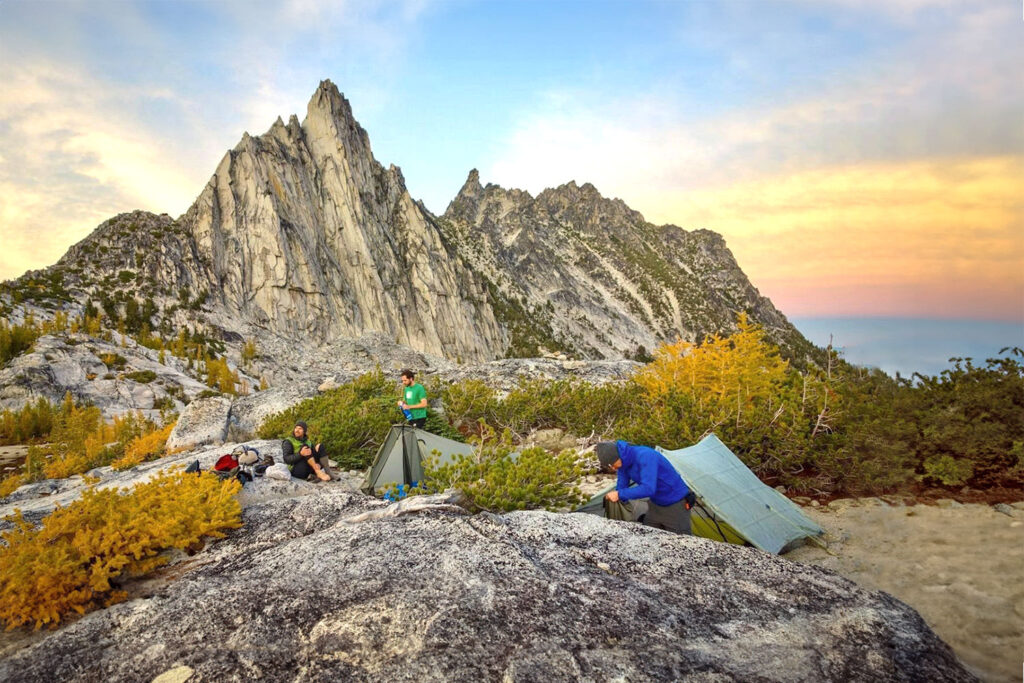
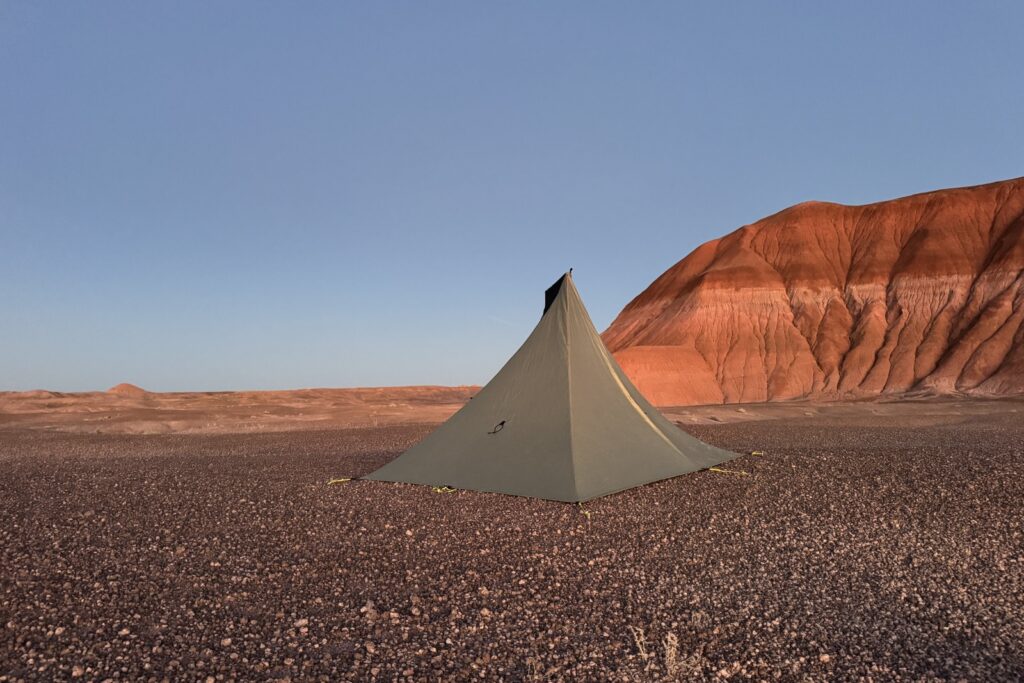
CleverHiker has extensively field tested Hornet tents across mountain, forest, and desert environments, including prolonged rain and abrasive terrain. We score the current Hornet OSMO 2 against our full backpacking-tent lineup for comfort, weight and packability, weather resistance, setup, and durability.
Quick Specs
- Best for: Solo backpackers who want extra living space at ultralight weight
- Floor area: 27.7 sq. ft.
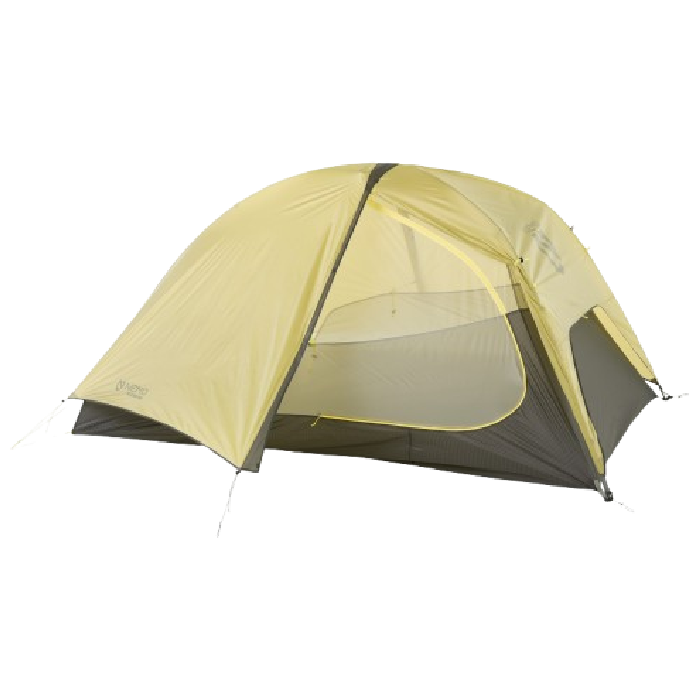
NEMO Hornet OSMO 2
Best One-and-a-Half-Person Backpacking Tent
CleverHiker Rating: 4.6/5.0
Price: $480
Packed Weight: 2 lb. 8 oz.
Dimensions (LxWxH): 85 x 51/43 x 39 in.
Type: Semi-freestanding
Pros
- Ultralight
- Well-priced for the specs
- Very roomy for one
- Convenient pockets
- High-quality materials and construction
- Good ventilation
- Packs down small
Cons
- Expensive
- Small for two
Comfort
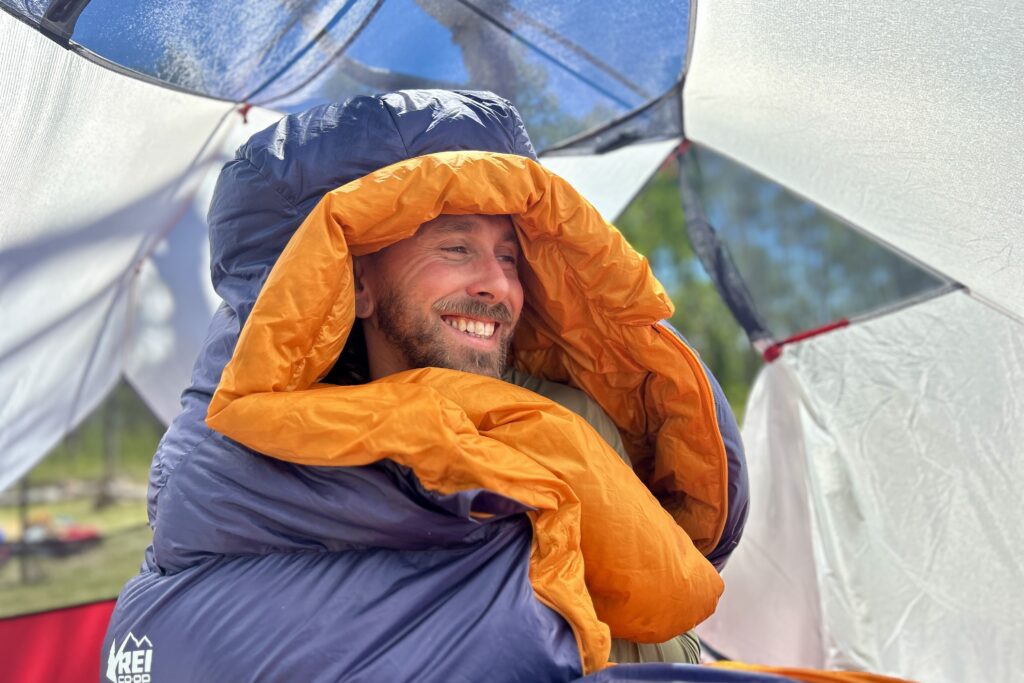
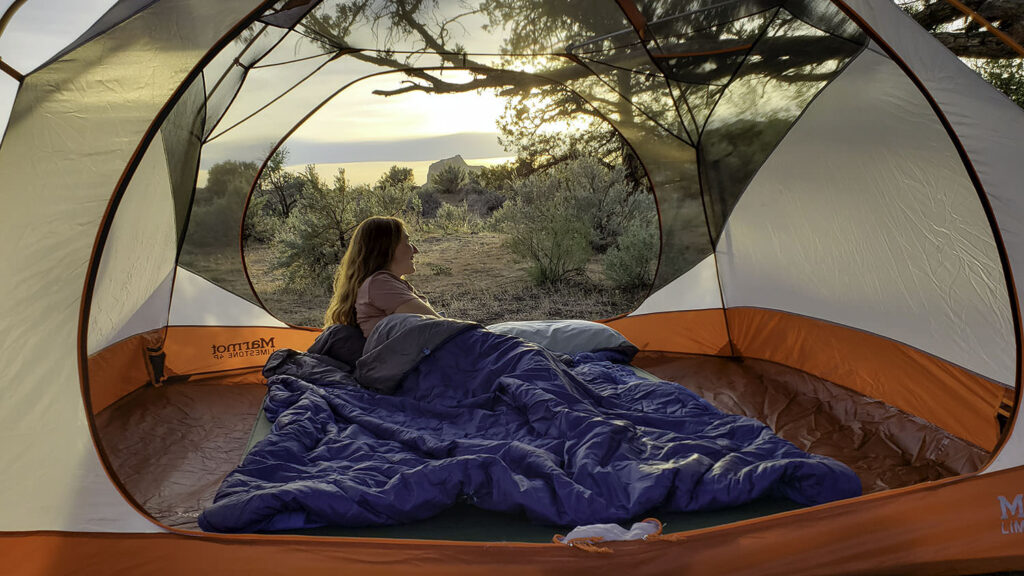
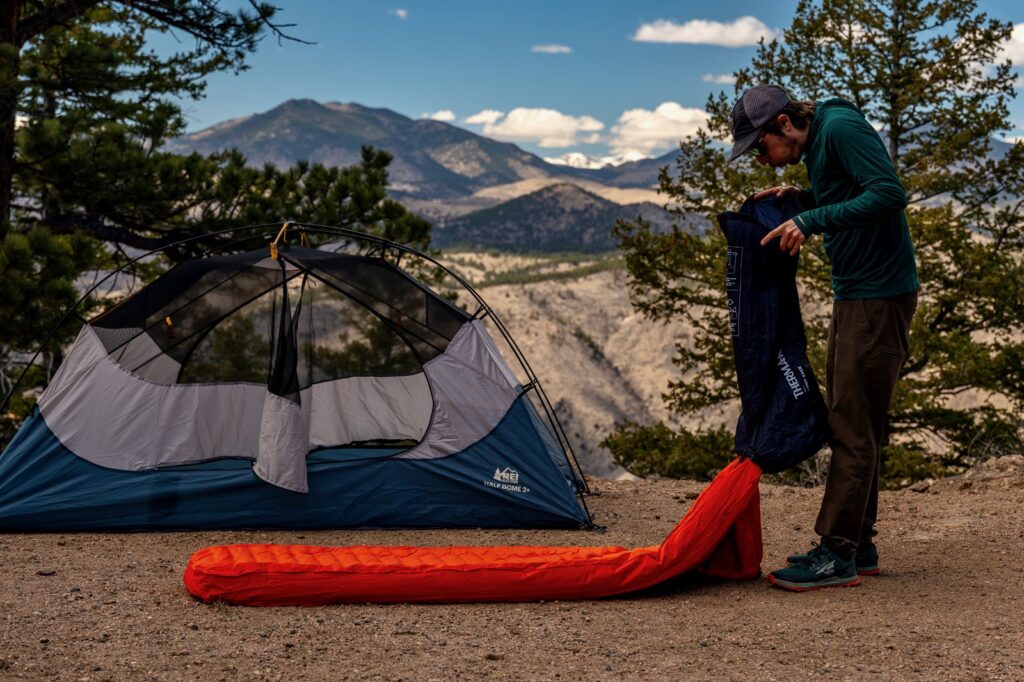
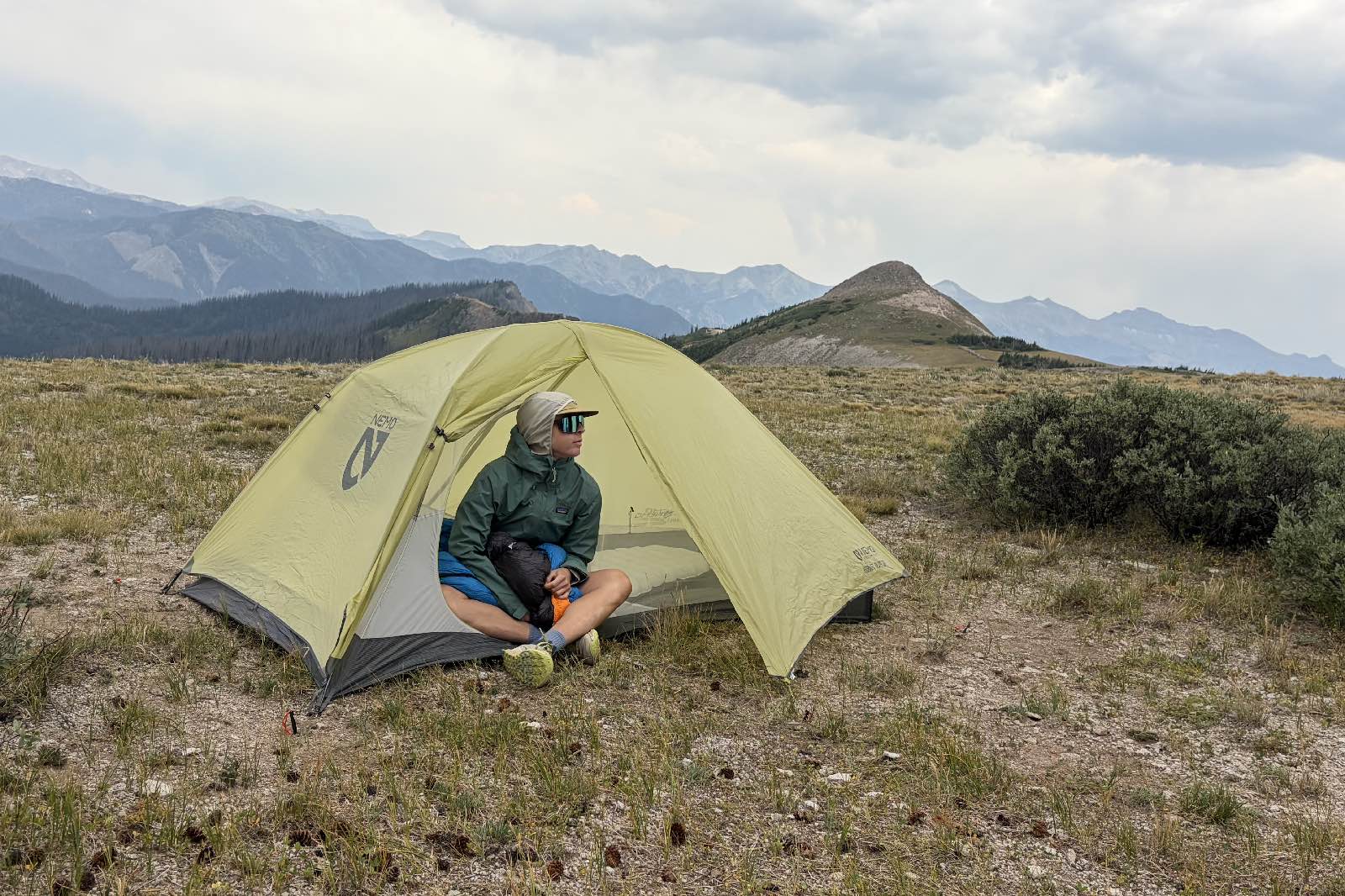
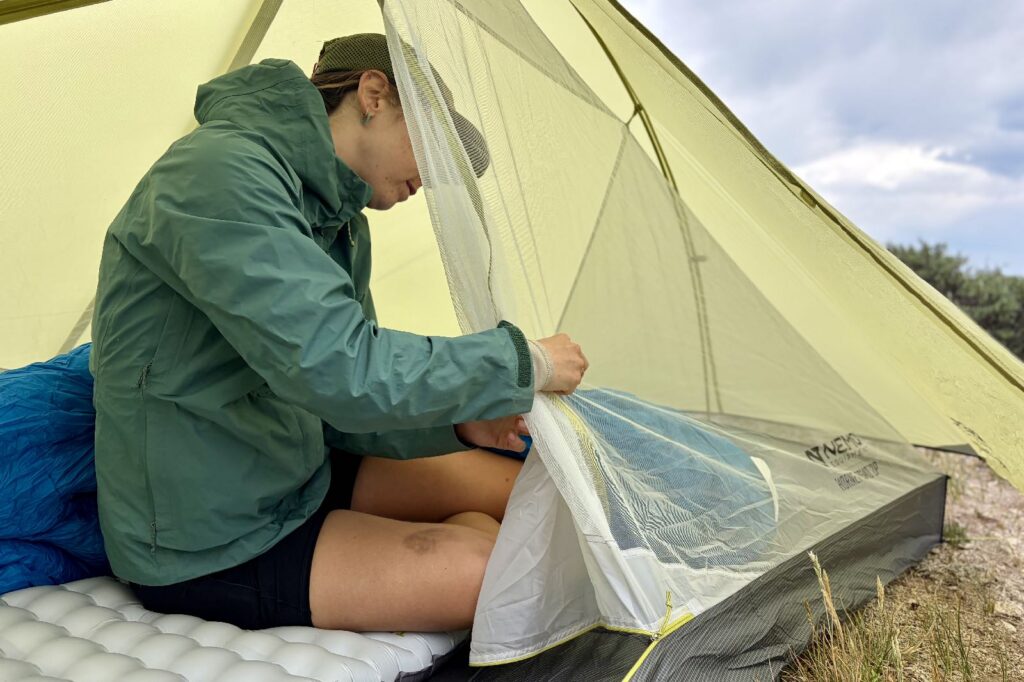
The Hornet OSMO 2 is at its best as a generously sized solo shelter. Its 27.7-square-foot floor gives one backpacker plenty of room for a sleeping pad, clothing, and small gear, while two side doors keep entry easy and provide flexible vestibule storage. For one person, it feels far less compromised than most dedicated 1P ultralight tents.
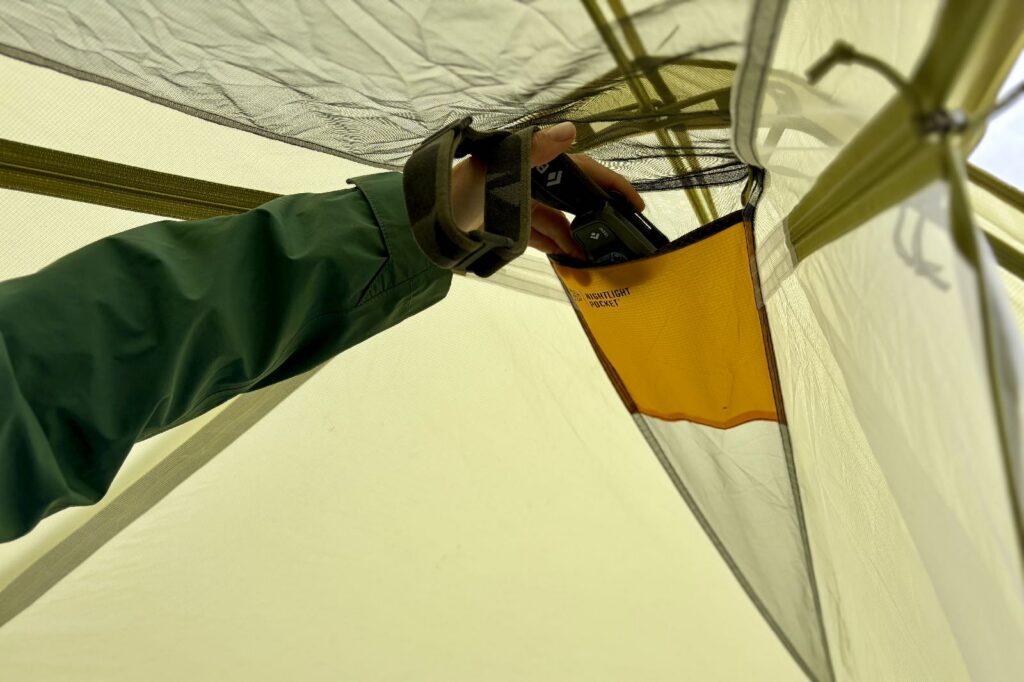
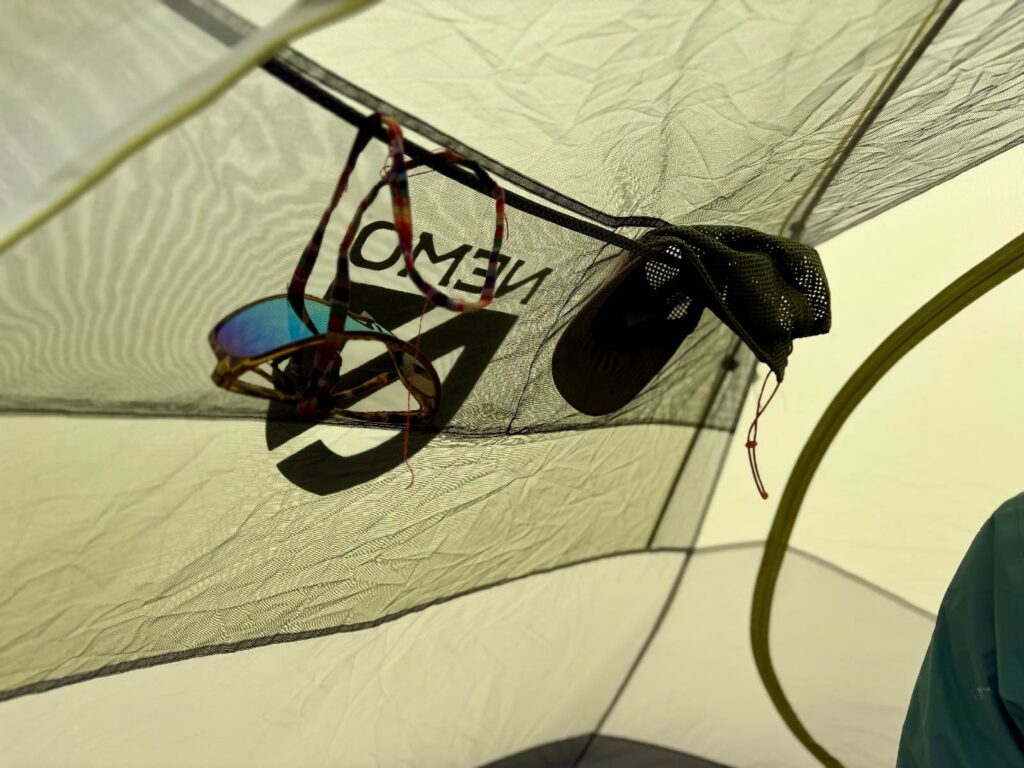
NEMO adds several small livability details that make the space work harder. The Nightlight Pocket diffuses a headlamp, interior pockets keep essentials organized, and the Divvy stuff sack makes it easy to split components when two people do share the tent. The pole geometry also lifts the walls enough to keep the interior from feeling like a simple low A-frame.
Two adults can fit, but the 51-to-43-inch taper and 39-inch peak make it a close-quarters arrangement. Taller hikers may also find the foot area and limited peak height less forgiving than roomier freestanding tents. We recommend the Hornet most strongly to solo hikers who want two-person floor space without carrying a conventional two-person weight.
The Hornet’s strongest comfort case is as a roomy solo shelter rather than a true two-person palace. One hiker gets excellent floor space, two doors, and useful storage at a very low weight. Two adults can fit, but the tapered geometry and lower-volume foot area make the shared experience noticeably tighter, especially for taller users or wide pads.
Comfort Score: 4.4 / 5.0
Weight & Packability
At a CleverHiker-measured 2 pounds, 8 ounces, the Hornet OSMO 2 lands in a sweet spot between true trekking-pole ultralight shelters and more substantial freestanding tents. It is light enough for long-distance trips while still giving you dedicated poles, a separate inner, and two doors. That combination makes it especially attractive to hikers who want low weight without moving to a single-wall shelter.
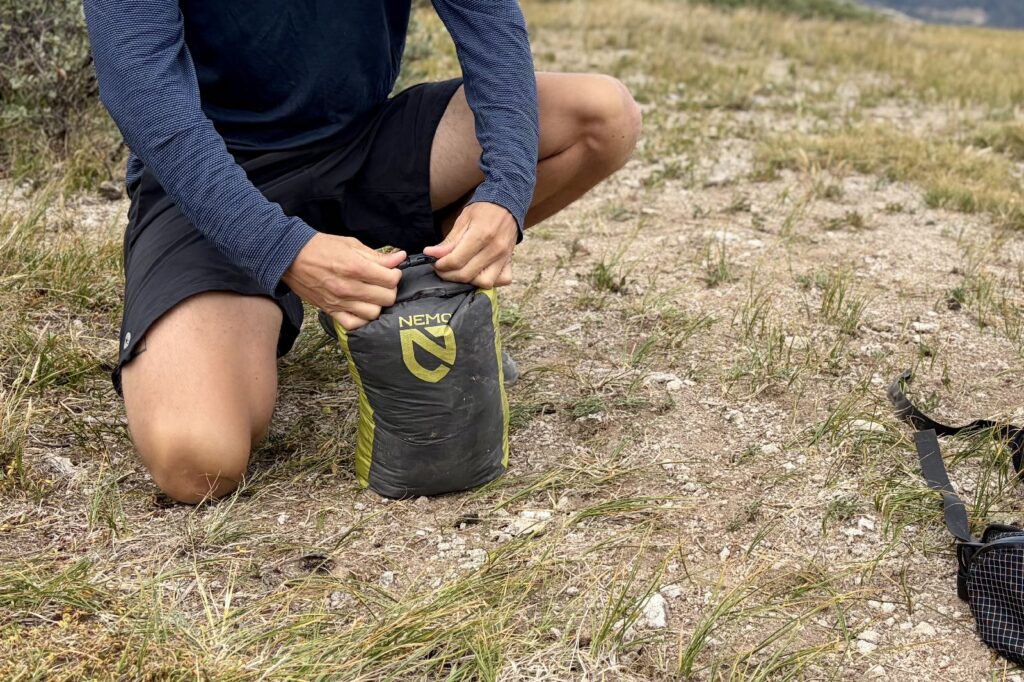
The packed package is compact and easy to fit inside a backpack. NEMO’s Divvy stuff sack can also help two hikers split the shelter components when the tent is shared, though we think the Hornet’s best use is usually as a roomy solo option. The shorter pole sections are less awkward to pack than many full-size freestanding pole sets.
There are lighter tents in this guide, but they require more compromises in setup, condensation management, or price. The Hornet’s value is not simply the number on the scale; it is how few familiar tent conveniences you give up to get there. For hikers who want a double-wall shelter with traditional poles at ultralight weight, it is a strong balance.
That low weight is especially impressive because the Hornet remains a double-wall tent with dedicated poles, two doors, and two vestibules. It gives hikers many of the conveniences of a conventional backpacking tent without moving into a trekking-pole design. The tradeoff is less structural margin and thinner materials than heavier freestanding shelters.
Weight & Packability Score: 4.6 / 5.0
Weather Resistance
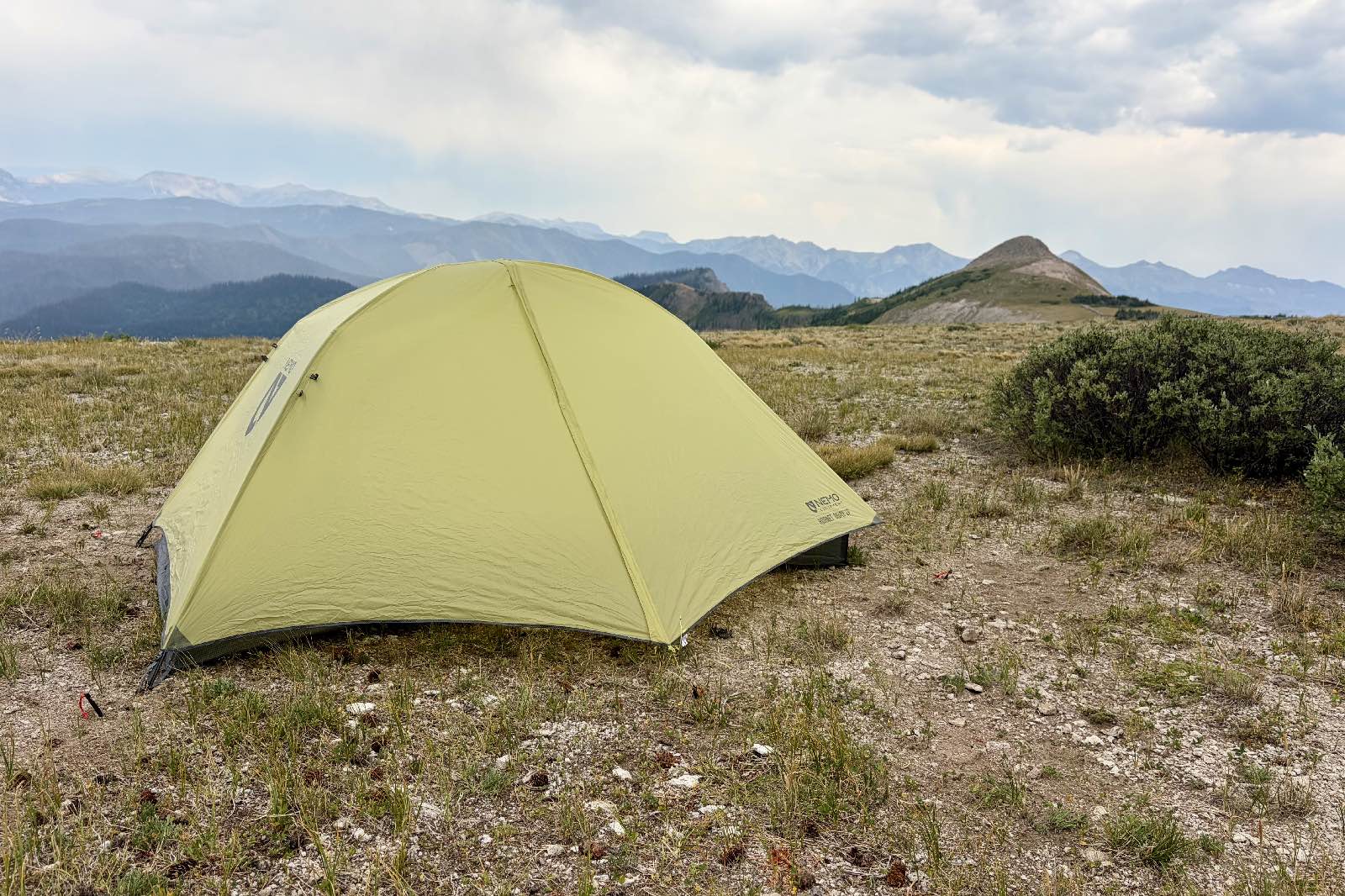
NEMO’s OSMO fabric is an important part of the Hornet’s weather performance. It resists the wet-weather sag that can plague traditional silnylon, so the fly is less likely to relax onto the inner after prolonged rain. The updated coverage also gives the shelter a more dependable protective envelope than older ultralight designs with very abbreviated flies.
The double-wall construction helps manage condensation by separating the sleeping area from the wet fly, and the mesh inner provides ample airflow in warm conditions. Proper tension matters because this is a semi-freestanding tent: the foot end needs to be staked securely to achieve the intended shape and keep the fly off the inner. When the pitch is taut, the Hornet handles normal three-season storms well for its weight.
Its limitations show up in highly exposed conditions. The light pole structure and low overall mass do not provide the same wind margin as the Portal, Dagger, or Hubba Hubba LT, and rocky sites can make the required foot-end staking more annoying. We see the Hornet as a three-season lightweight shelter, not a storm fortress.
For typical three-season trips, the Hornet provides solid rain protection and benefits from OSMO fabric that resists sagging better than traditional silnylon. The semi-freestanding foot end still depends on a clean stakeout, and the lighter frame is not intended for the same punishment as a storm-focused shelter. Careful site choice and a taut pitch remain important.
Weather Resistance Score: 4.3 / 5.0
Ease of Setup
The Hornet uses a simple semi-freestanding pole structure that is much more familiar than a trekking-pole tent. The dedicated poles create most of the shape on their own, so setup is quick once you understand which end is the head and which end is the foot. For typical campsites, one person can pitch it without much fuss.
The main difference from a fully freestanding tent is that the foot corners must be staked out to create the full interior volume. That is easy in soil and forest duff, but less convenient on rock slabs, hard-packed ground, or platforms where stakes are difficult to place. Carrying a little extra cord gives you more options for tying off to rocks or logs.
Because the body is light and the geometry is straightforward, breakdown is equally fast. The compact pole set and Divvy sack are helpful when packing up in cramped camps. We would still practice the pitch once at home, but the learning curve is modest compared with non-freestanding ultralight shelters.
The semi-freestanding layout is simple enough that most backpackers will understand it quickly. The main difference from a freestanding dome is that the foot corners must be staked to create full interior volume. On normal soil that adds little hassle, but on rocky or hard-packed ground it can require more attention to anchors and placement.
Ease of Setup Score: 4.5 / 5.0
Durability
The Hornet OSMO 2 uses lightweight materials, but the construction quality is high and the OSMO fabric gives the canopy a reassuring balance of strength and weather performance. NEMO’s hardware, clips, and pole connections are refined, and our experience with multiple Hornet generations suggests the design holds up well when used as intended. It is more durable than its low weight might imply.
The thin fabric still deserves normal ultralight care. Clearing sharp sticks and rocks from the site, avoiding unnecessary abrasion, and being deliberate with zippers will extend the tent’s life. Backpackers who are especially hard on gear may prefer the heavier Dagger, Hubba Hubba LT, or an REI crossover model.
For a shelter in this weight class, the Hornet’s durability is a reasonable compromise rather than a major weakness. You get a double-wall tent, dedicated poles, and useful interior features without pushing above two and a half pounds. That is a strong package for experienced backpackers who understand the care lightweight fabrics require.
NEMO keeps the Hornet light with thin fabrics and compact components, so normal ultralight-tent care matters. That means avoiding abrasive campsites, controlling zipper pulls, and packing the shelter so sharp hardware does not grind into the fabric. The construction quality is high, but its durability should be judged against other lightweight shelters rather than heavy crossover tents.
Durability Score: 4.2 / 5.0
Should You Buy the NEMO Hornet OSMO 2?
Buy the Hornet OSMO 2 if you are a solo backpacker who wants the comfort of a two-person footprint at a weight that still makes sense for long days.
Choose a larger shelter if you regularly share with another adult, especially if either person is tall or uses wide pads.
What Other Backpacking Tents Should You Consider?
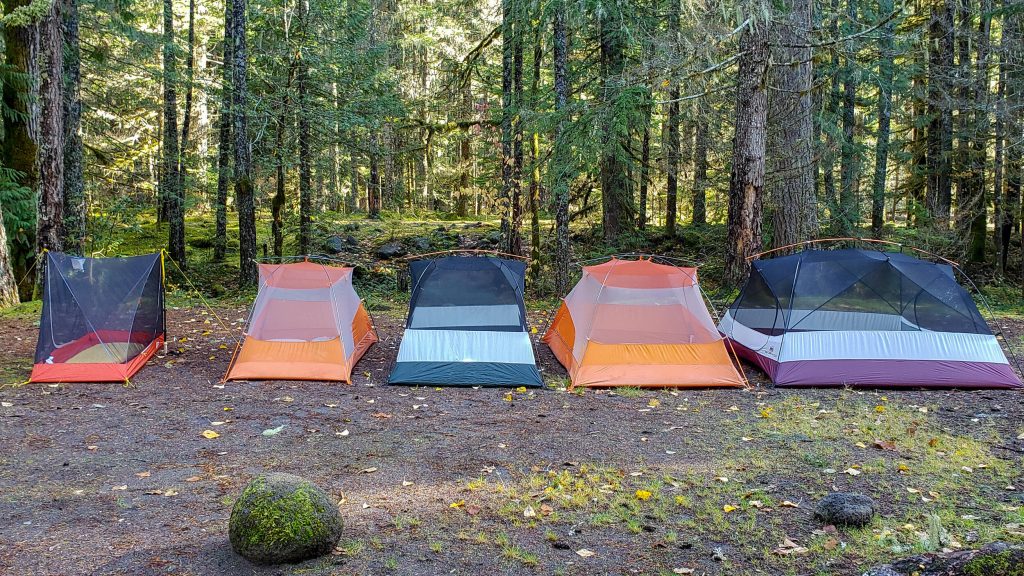
Big Agnes Tiger Wall UL2 Review: The Tiger Wall UL2 is the closest match in weight and overall concept. It is also semi-freestanding, offers excellent storage, and works especially well as a roomy solo tent or a tight shelter for two. Pick the Tiger Wall if you value its huge interior pocket and Big Agnes layout; pick the Hornet if NEMO’s OSMO fabric and compact packing appeal more.
MSR FreeLite 2 Review: The FreeLite 2 is another very light semi-freestanding tent with a true rectangular floor and two doors. It is a little lighter and has an especially simple pole geometry, but its steep walls and low ceiling can feel tighter for two. Both are strongest as spacious solo shelters, with the FreeLite favoring simplicity and the Hornet favoring a more tapered ultralight design.
Durston X-Mid 2: The X-Mid 2 gives you more interior volume and huge vestibules for substantially less money. It is also a trekking-pole shelter with a much larger footprint and a more demanding pitch on uneven ground. The X-Mid is the value play for experienced users, while the Hornet is easier for hikers who prefer dedicated poles.