
Bottom Line
The Therm-a-Rest Air Head Down pairs a soft down-topped cover with a carefully curved inflatable shape. Our tester liked its fit across sleeping positions, especially the way the contour held his neck compared with rectangular pillows. Its twist valve is less convenient than the multifunction valves on Sea to Summit’s pillows.
Our field comparisons showed that the Air Head Down’s softly padded, crescent-shaped profile works especially well for side sleepers. On one cold Pecos Wilderness night, we preferred it to three other inflatables carried on the same trip. The Regular model’s 4.9-ounce weight remains reasonable for backpacking, and its packed cylinder is easy to fit into a sleeping kit.
The main inconvenience is the twist valve, which can let some air escape just as you’re trying to seal the pillow. Sea to Summit’s Aeros models are easier to adjust and, in the case of the Aeros Down, markedly lighter. Still, the Air Head Down earns its ergonomic recommendation for hikers who have struggled with rectangular pillows and don’t mind a little extra valve fiddling.
We compare the Air Head Down with the lighter Aeros family and more comfortable campground options in our best camping pillows guide.
How We Tested
We compared the Air Head Down with other backpacking pillows for fit, comfort, support, packed weight, and ease of inflation.
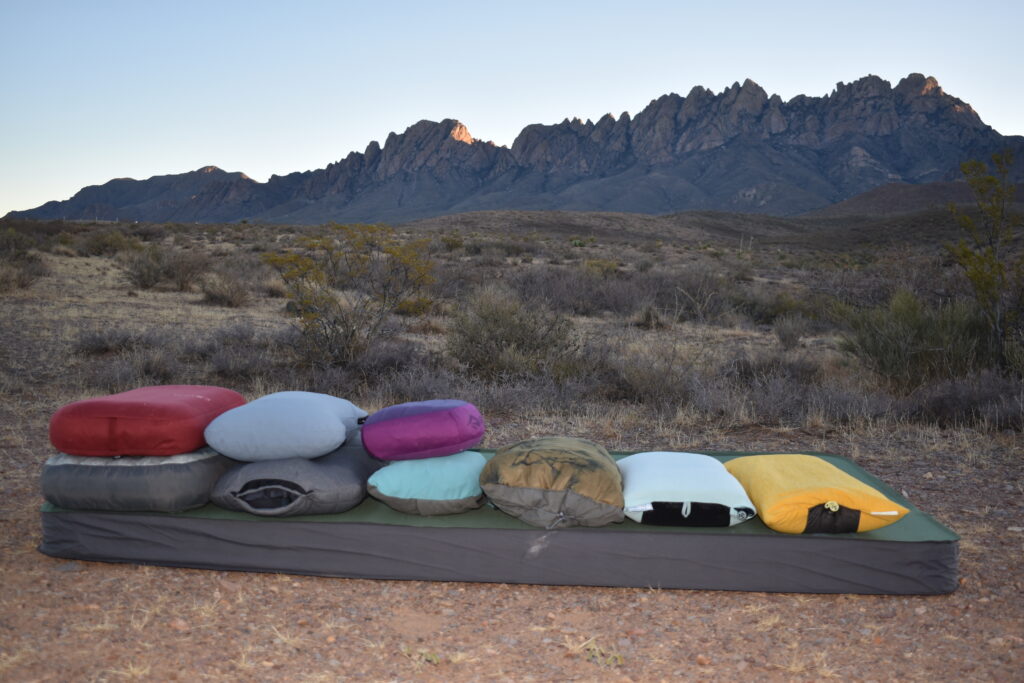
Field trips into the Gila and Pecos wilderness areas were supplemented with nights at home so our tester could make repeated comparisons between different air pillows. One particularly cold Pecos outing provided a direct four-pillow comparison. We also compared its valve operation, packed shape, and carrying weight with competing pillows.
Quick Specs

Therm-a-Rest Air Head Down
Most Ergonomic Backpacking Pillow
CleverHiker Rating: 4.6/5.0
Price: $65 – $76
Weight: 4.9 oz. (Regular)
Pillow Type: Air with down top
Pros
- Contoured ergonomic shape
- Down-cushioned cover
- Trail-friendly weight
Cons
- Fiddly twist valve
- Down requires special care
- Heavier than Aeros Down

Comfort
Down insulation between the sleeper and air core tones down the rigid feeling of an inflatable. The sculpted profile cradled our tester’s head in several sleeping positions, though it cannot match the pillowy sensation of a full foam model.
On a cold backpacking night in the Pecos Wilderness, this was our analyst’s favorite inflatable among the four pillows he carried. That direct comparison mattered more than the presence of down alone: the contour settled around his neck, and its cover made the bladder feel less harsh. We still preferred full foam at campground sites, but that isn’t a practical comparison when every ounce must be carried.
Our side sleeper favored the curved contour even though the surface was still clearly inflatable. The down cover blunts direct pressure on the ear, which matters when you stay on one side for much of the night.
Comfort Score: 4.5/5.0

Weight & Packability
At 4.9 ounces, the Air Head Down remains sensible for backpacking, but the Sea to Summit Aeros Down and Aeros Premium save ounces and compress into even smaller packages. That is meaningful on minimalist treks rather than short campground approaches.
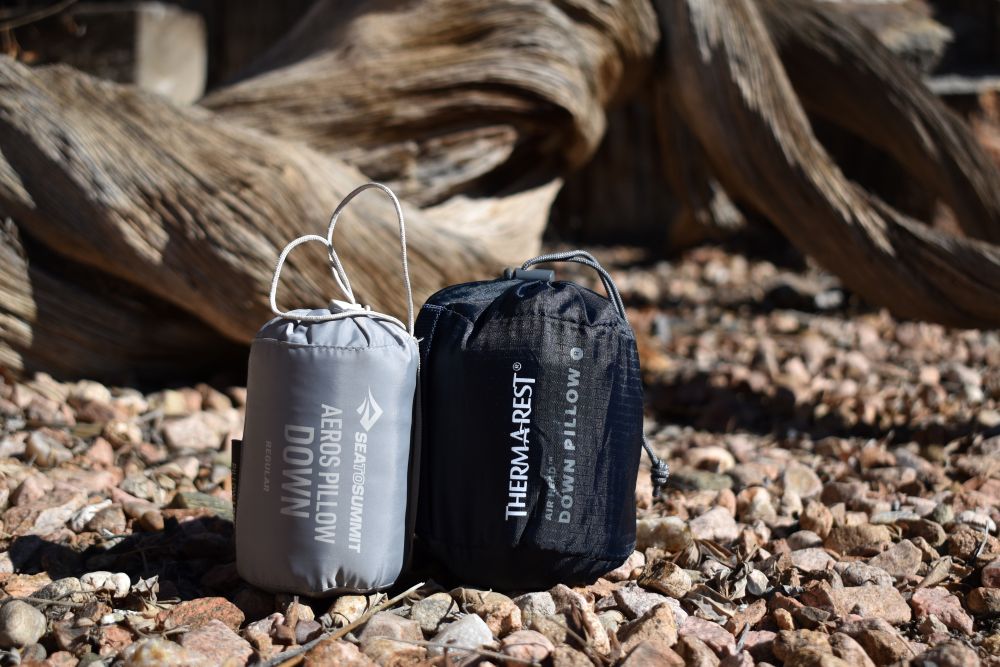
Our sample weighed 5.3 ounces and packed into a compact cylinder between baseball and softball size. It packs bigger than the Aeros Down, though still much more efficiently than compressible foam models.
The small cylindrical packed shape is workable on multi-night hikes, and its weight remains below many comfort-focused alternatives. For hikers obsessing over a few ounces, though, the considerably smaller Aeros Down has the edge.
Weight & Packability Score: 4.6/5.0
Support
Its shape is its defining support advantage. Despite having less thickness than the Aeros Down, it aligned with our tester’s neck more naturally. Our tests found the Exped Mega Pillow and Aeros Premium slightly better when maximum elevation mattered.
The curved silhouette helped hold our tester’s head in a comfortable position for both back and side sleeping. We gave the Air Head Down an edge over the rectangular Aeros Down for neck placement, even though the latter inflates to a greater height. Sleepers requiring the firmest or tallest possible platform might still prefer the Exped Mega.
Our four-pillow overnight comparison is useful because our analyst could move directly among different shapes under similar sleeping conditions. The Air Head Down felt naturally aligned despite having less raw inflation height than several alternatives.
Support Score: 4.7/5.0

Ease of Use
The twist valve works but can release some air before it is fully closed; our tester had to develop a technique to seal it efficiently. The removable down cover is convenient for cleaning with down-appropriate care.
Closing the twist valve while the pillow is full lets a little air escape, which can be frustrating when trying to maximize height. Our tester sometimes had to block the opening while twisting the valve shut. The color-matched stuff sack and removable cover worked well; use a down-specific cleaner so the insulation keeps its loft.
The twist closure works adequately once learned, but our tester sometimes lost pressure while closing it. Frequent users who value effortless morning deflation and quick adjustments should be aware of that nuisance.
Ease of Use Score: 4.7/5.0

Should You Buy the Therm-a-Rest Air Head Down?
The Air Head Down deserves consideration from backpackers who want neck-friendly curvature and a noticeably cushioned surface. Our side sleeper found its design especially comfortable compared with other inflatables on a cold Pecos Wilderness trip. It is light enough for most backcountry adventures, and its small stuff sack is no hardship to pack.
We would steer dedicated gram-counters toward the even lighter Aeros Down, which sacrifices some ergonomic fit. Be aware that the twist valve takes more effort to seal without losing air, a minor annoyance for campers who inflate and deflate nightly. Anyone who prefers straightforward valve adjustment might favor the Aeros Premium instead. For those sensitive to neck position and air-bladder firmness, the Air Head Down strikes a rewarding balance.

What Other Camping Pillows Should You Consider?
Sea to Summit Aeros Down Review: Choose the Aeros Down when very low weight and a soft down surface matter more than ergonomic contouring. It weighs just 2.5 ounces in Regular, versus the Air Head Down’s 4.9 ounces, but the Therm-a-Rest cradled our tester’s neck better.
Sea to Summit Aeros Premium Review: The Aeros Premium has a useful curved shape and an easier multifunction valve. We found its support excellent for backpacking, although the Air Head Down’s down top made the contact surface more comfortable for some sleepers.
Exped Mega Pillow Review: The Mega is a better fit for campers who want a large, soft-topped pillow and the strongest support score among our air models. That comfort-first size comes at a meaningful weight and packed-volume penalty compared with the Air Head Down.