

After backpacking thousands of miles and consuming hundreds of meals prepared with dozens of backpacking cook sets, we have opinions on what works best for all kinds of trips and hiking styles, from ultralight to gourmet-capable.
We’ve put them to the test in vastly varying conditions, including the dry deserts of Utah, the humid forests of the Appalachian Mountains, and the thin air of Colorado’s Rocky Mountains. We paired this real-life experience with quantitative testing to evaluate each item’s cooking performance, weight, packability, usability, and durability.
We know the endless options out there can be daunting when putting together your backpacking cook kit. After testing around 40 cooksets over the years, we’ve narrowed the choices down to our 11 favorites. Our list includes a wide range of products from reputable brands such as Toaks, MSR, Snow Peak, Vargo, Stanley, SOTO, Evernew, and GSI Outdoors. We’ve made sure to include recommendations for everyone, regardless of your cooking style.
Editor’s Note: We updated this gear guide on July 21, 2026, to reflect our gear analyst’s updated field notes and make any changes to specs and prices.
How We Test Backpacking Cookware
We grade backpacking cookware on the four metrics that we believe matter most: cooking performance, weight and packability, usability, and durability. While some hikers may prioritize a single metric, others may want to balance all of them to determine the best overall value. We break it down so you can decide based on your meal plans while backpacking.
A cook set is only one piece of the backpacking puzzle, so be sure to check out our other guides to complete your kit:

#1. Best Backpacking Cookware Overall
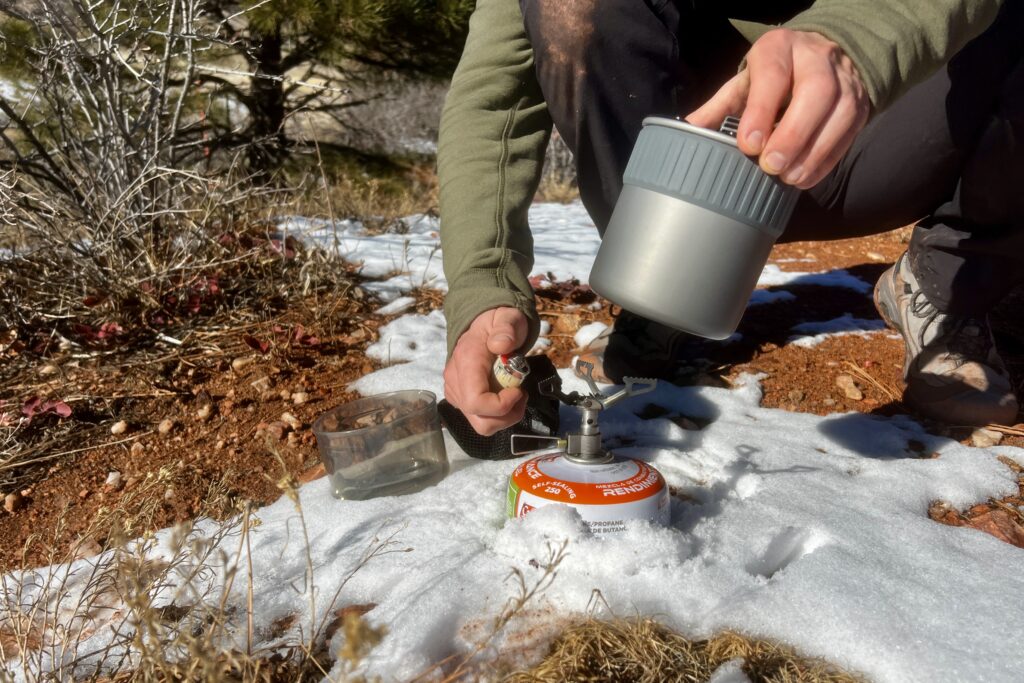
The MSR Trail Mini Solo Cook Set is our best overall backpacking cookware thanks to its versatility, ease of use, and loads of features. The affordable price and minimum weight make it equally good for newbies and seasoned backpackers.

Quick Picks for Backpacking Cookware
Take a look at our list of favorites or keep reading to see our in-depth reviews of the best backpacking cookware.
1. Best Backpacking Cookware Overall: MSR Trail Mini Solo Cook Set ($50)
2. Best Ultralight Backpacking Cookware: Evernew Pasta Pot 1L ($85)
3. Most Affordable Ultralight Cookware: Toaks Titanium 750mL ($27)
4. Best Four-Season Ultralight Kit: Soto Thermostack Combo ($75)
5. Best Two-Pot Backpacking Cookware: MSR Ceramic 2-Pot Set ($95)
6. Most User-Friendly Cookware: GSI Outdoors Halulite Boiler ($50)
7. Most Versatile Backpacking Cookware: Vargo Bot 1L ($100)
8. Best Family-Style Backpacking Cookware: GSI Outdoors Bugaboo Camper Ceramic Cookset ($170)
9. Most Affordable Aluminum Backpacking Cookware: Soto New River Pot ($35)
10. Most Durable Cookware: MSR Alpine Stowaway 1.1L ($29)
11. Versatile Two-Pot Titanium Set: Snow Peak Titanium Mini Solo ($89)
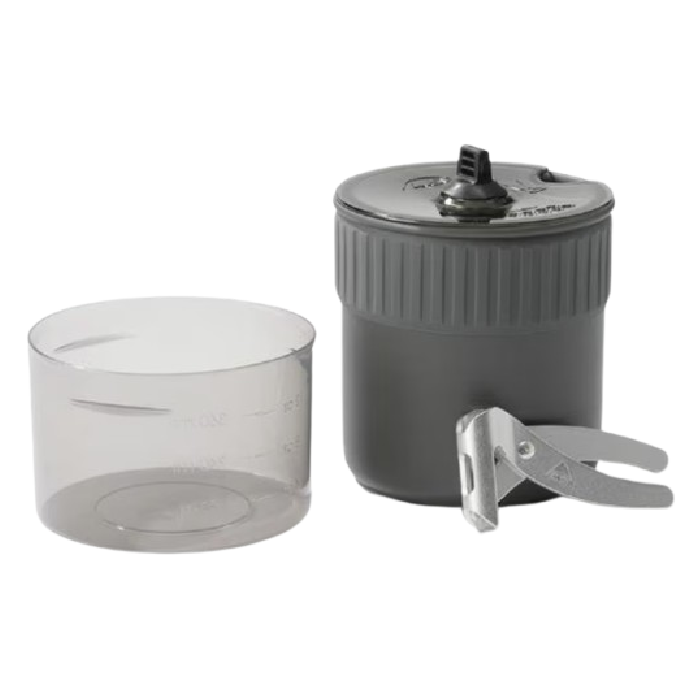
MSR Trail Mini Solo Cookset
Best Backpacking Cookware Overall
CleverHiker Rating: 4.7/5.0
Price: $50
Measured Weight: 7.4 oz.
Includes: Aluminium pot (750mL), pot handle, rubber pot grip, cup, lid, stuff sack
Materials: Aluminum
Pros
- Lots of features
- Durable pot
- Price
Cons
- Plastic elements are fragile
- Not the lightest
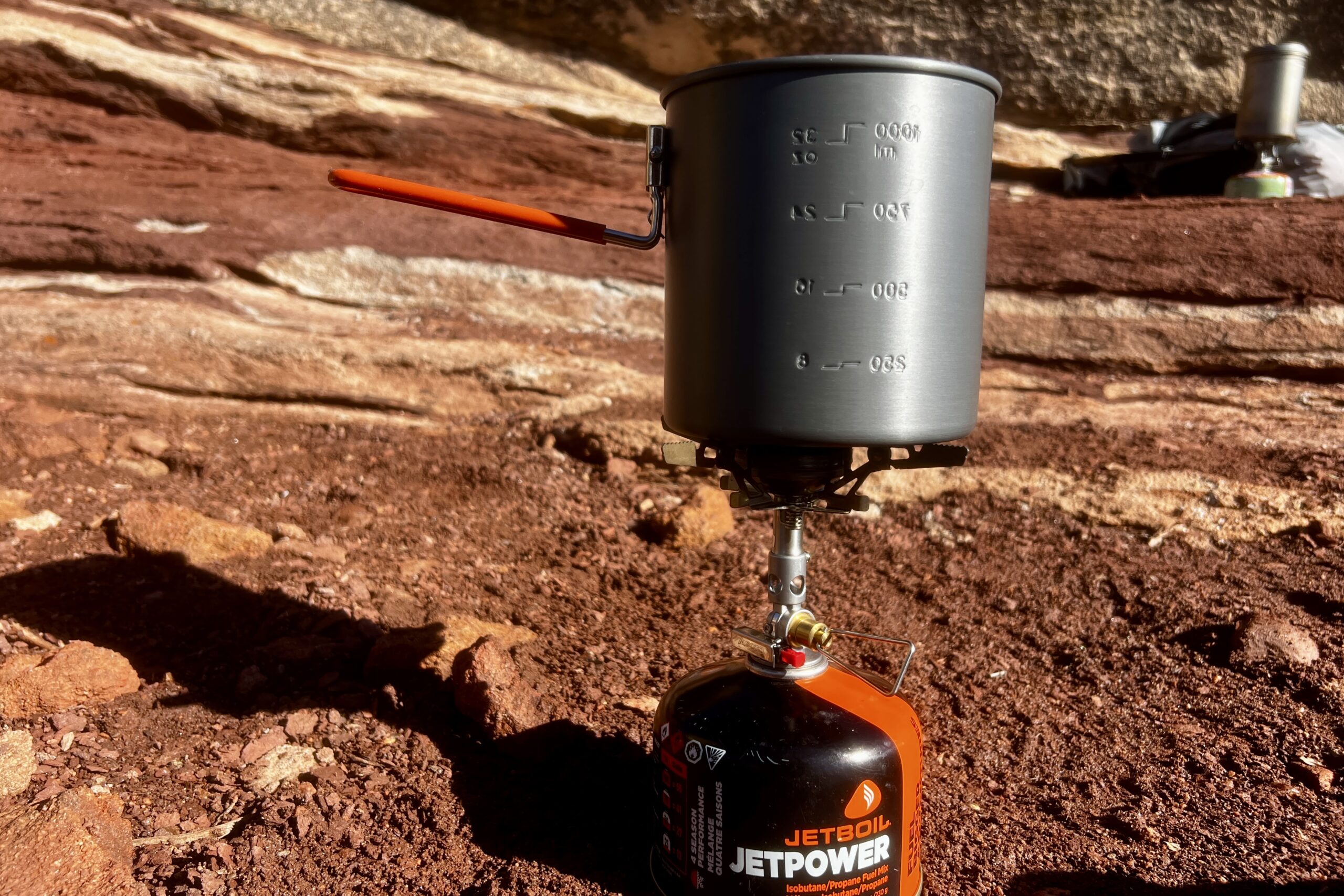
The MSR Trail Mini Solo is one of our all-time favorite cooksets due to its versatility, ease of use, and tons of extra features. The hard-anodized aluminum performs better than titanium, thanks to its slower, more even heat distribution, so you can do more than just boil water with this pot.
Despite its compact size, the Trail Mini Solo comes with a ton of extra features, including a lid with drain holes and a pour spout, a plastic measuring cup (cold- and hot-safe), an aluminum pot lifter, a stuff sack, and an additional insulated pot grip for enjoying warm beverages. Each of these features increases the kit’s overall range and ease of use.
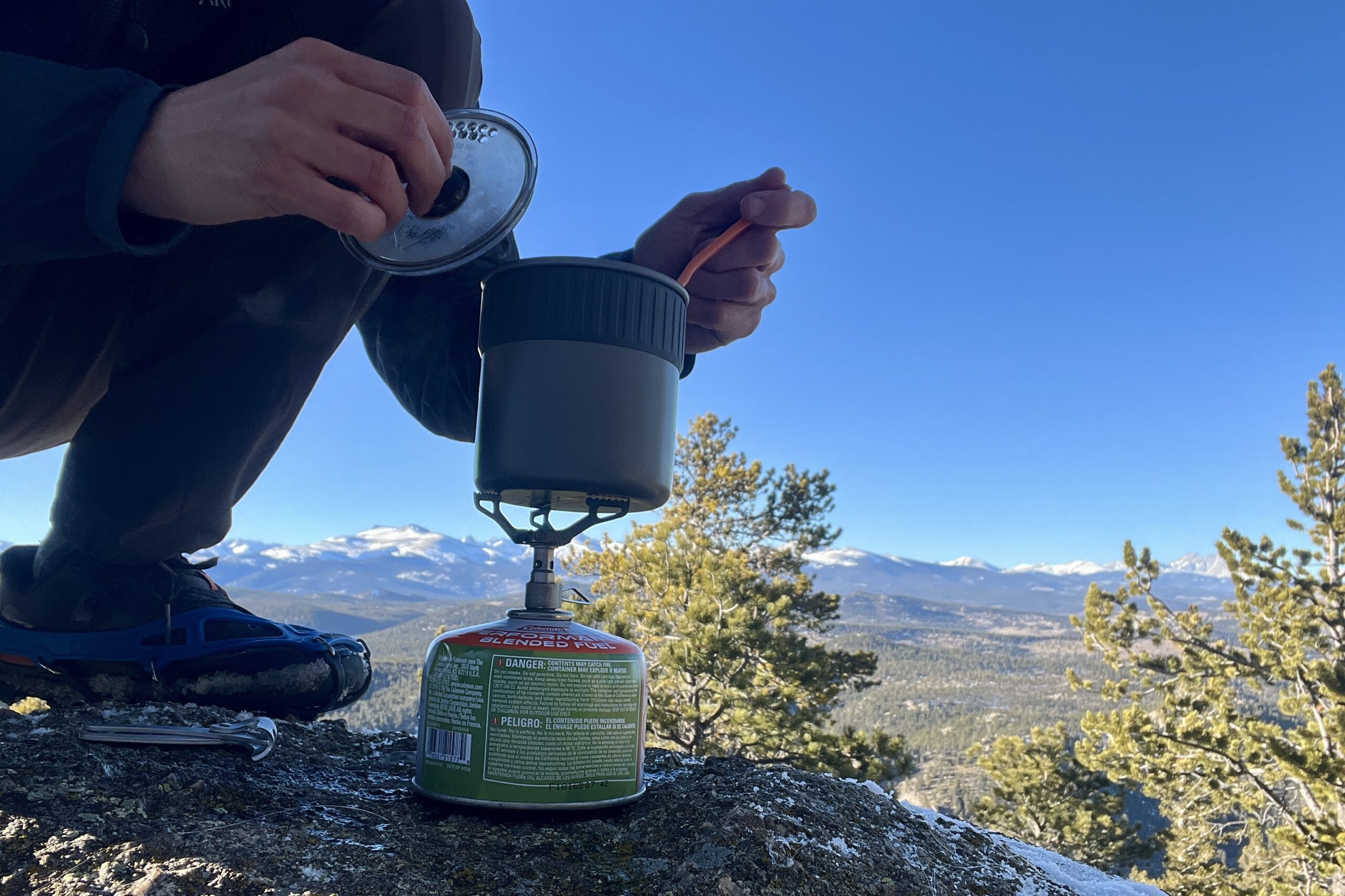
While the sheer quantity of components might sound bulky, the entire kit is designed to nest together nicely, with a total volume of 80 cubic inches. The interior of the pot even accommodates an 8-ounce fuel canister, MSR’s PocketRocket 2 stove, the pot lifter, and a lighter.
The durability of the kit varies depending on the component. The hard-anodized aluminum pot is thick and robust and treated for increased heat and scratch resistance. The plastic cup, on the other hand, is quite fragile and should be treated with care. Overall, the Trail Mini Solo offers a ton of value for beginner backpackers and season thru-hikers alike. Even with the amount of extras included, it manages to maintain a very affordable price point.
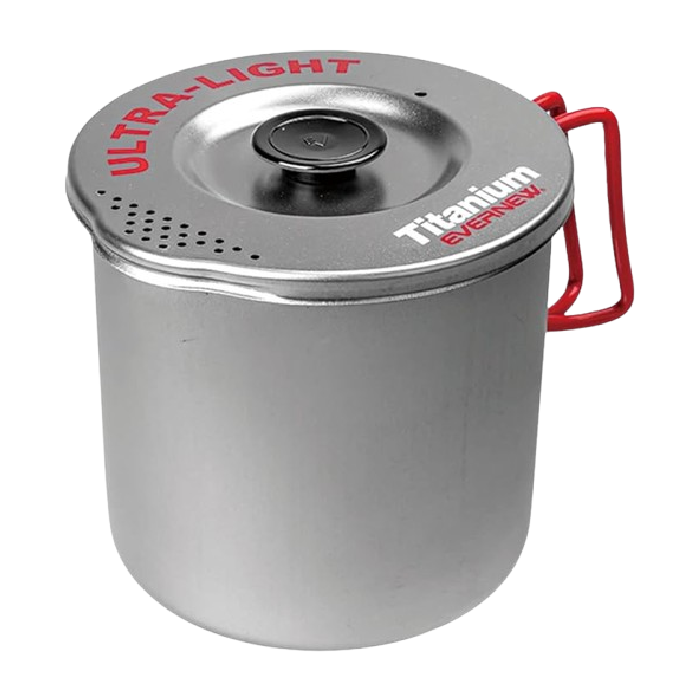
Evernew Titanium Pasta Pot 1L
Best Ultralight Backpacking Cookware
CleverHiker Rating: 4.6/5.0
Price: $85
Measured Weight: 4.4 oz.
Includes: Titanium pot (1L), lid, stuff sack
Materials: Titanium
Pros
- Ultralight
- Lots of features
- Wide base
Cons
- Lid is hard to remove
- Not the best cooking performance
The Evernew Pasta Pot 1L is a large, fully featured pot in an incredibly lightweight package. The weight and packability will satisfy most thru-hikers, while the added features increase its range of use to almost all backcountry cooking styles.
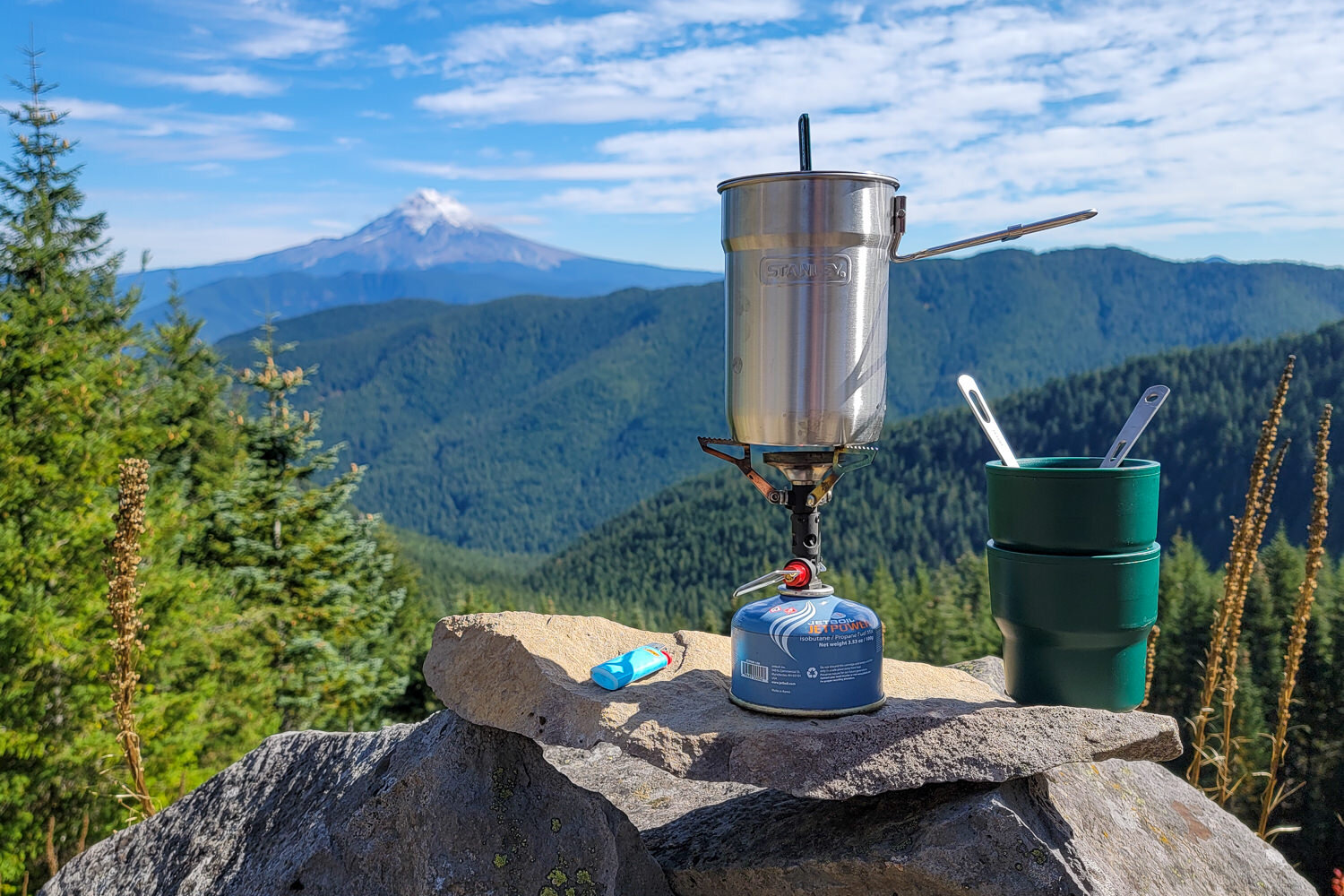
The Pasta Pot 1L (also available in a 750mL option) is the second lightest cookset we tested, with an overall weight of 4.4 ounces, or 323 milliliters per ounce. The one-liter version occupies approximately 119 cubic inches of pack space, which is on the larger side for ultralight cooksets. On the upside, it accommodates an 8-ounce fuel canister, along with a stove and other cooking accessories.
The thoughtful cooking features of the Pasta Pot set it apart from other ultralight options. The pot includes a pour spout, a generous number of drain holes, a pressure release hole, insulated pot handles, and a tight-fitting lid with a handle. The lid can be finicky, but it offers exceptional security for draining and food storage.
Another function of the tight-fitting lid is its ability to help the pot retain its shape over time. Although titanium has an incredible strength-to-weight ratio, the thinness of the pot construction could warp over time and with lots of cooking. The pot handles are nice and sturdy, but the lid handle is made of plastic and is a noticeable weak point in the pot’s construction.
Overall, the Evernew Pasta Pot 1L strikes an amazing balance between usability and cooking performance in an ultralight package. The price point is very reasonable for what you’re getting, making it an excellent value for ultralight backpackers who appreciate a few extra features.
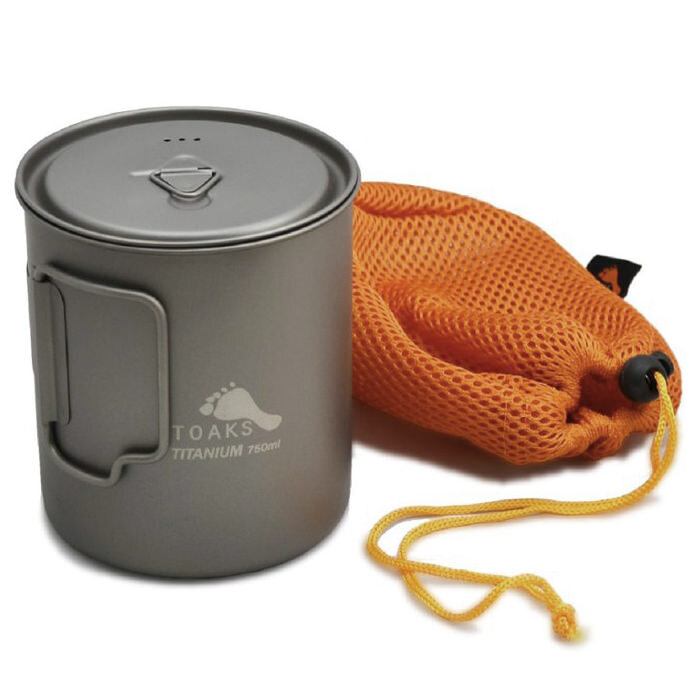
TOAKS Titanium 750ml
Most Affordable Ultralight Cookware
CleverHiker Rating: 4.6/5.0
Price: $27
Measured Weight: 4.1 oz.
Includes: Pot (.75 L), lid, stuff sack
Material: Titanium
Pros
- Ultralight
- Packable
- Decent cooking performance
Cons
- Not the most durable
- Not non-stick
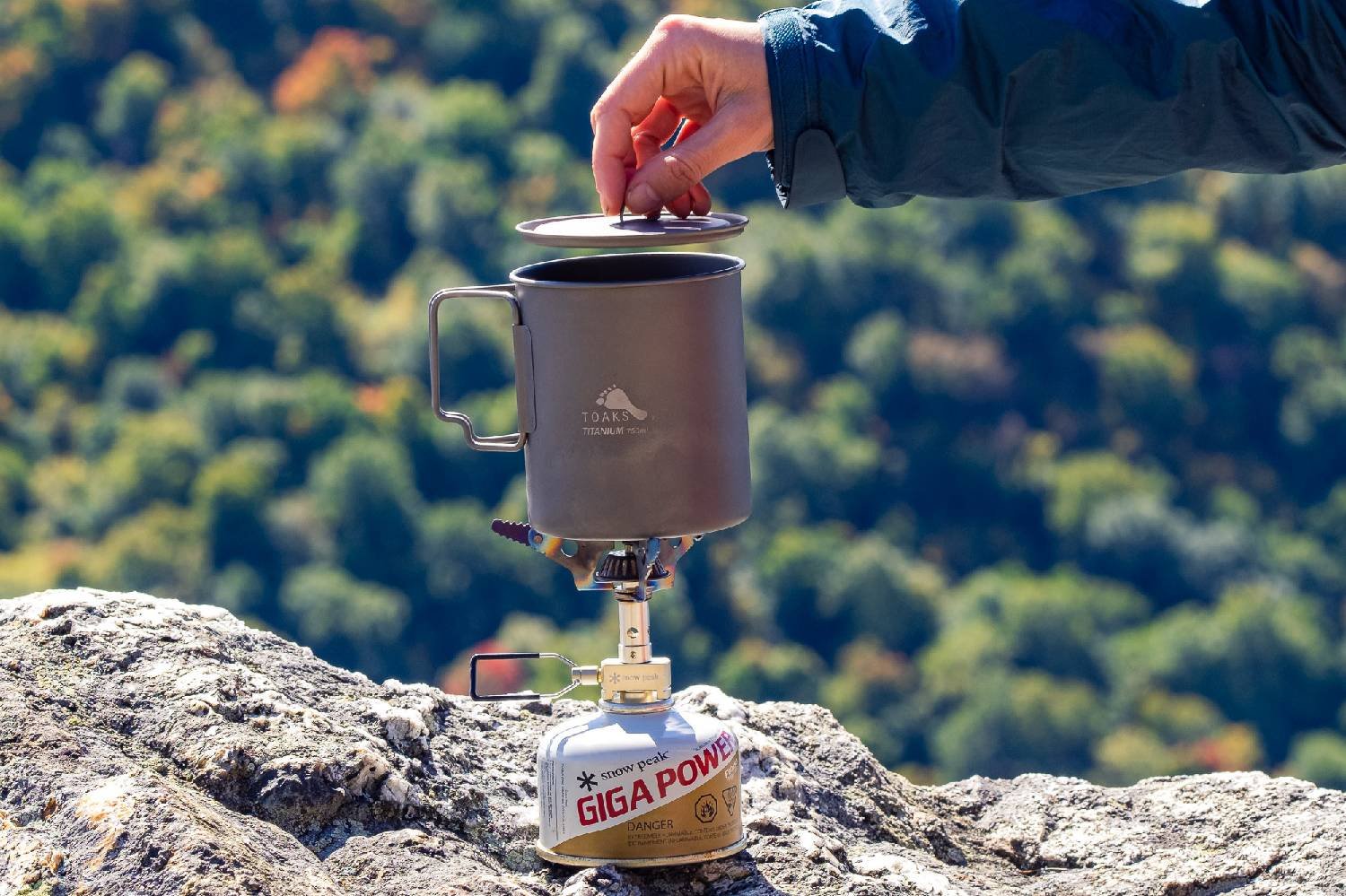
The Toaks Titanium 750mL is our favorite for weight and packability. If your meals revolve around boiling water and you identify as a minimalist, an ultralight, or a no-fuss chowhound, this is your next ultralight cookpot.
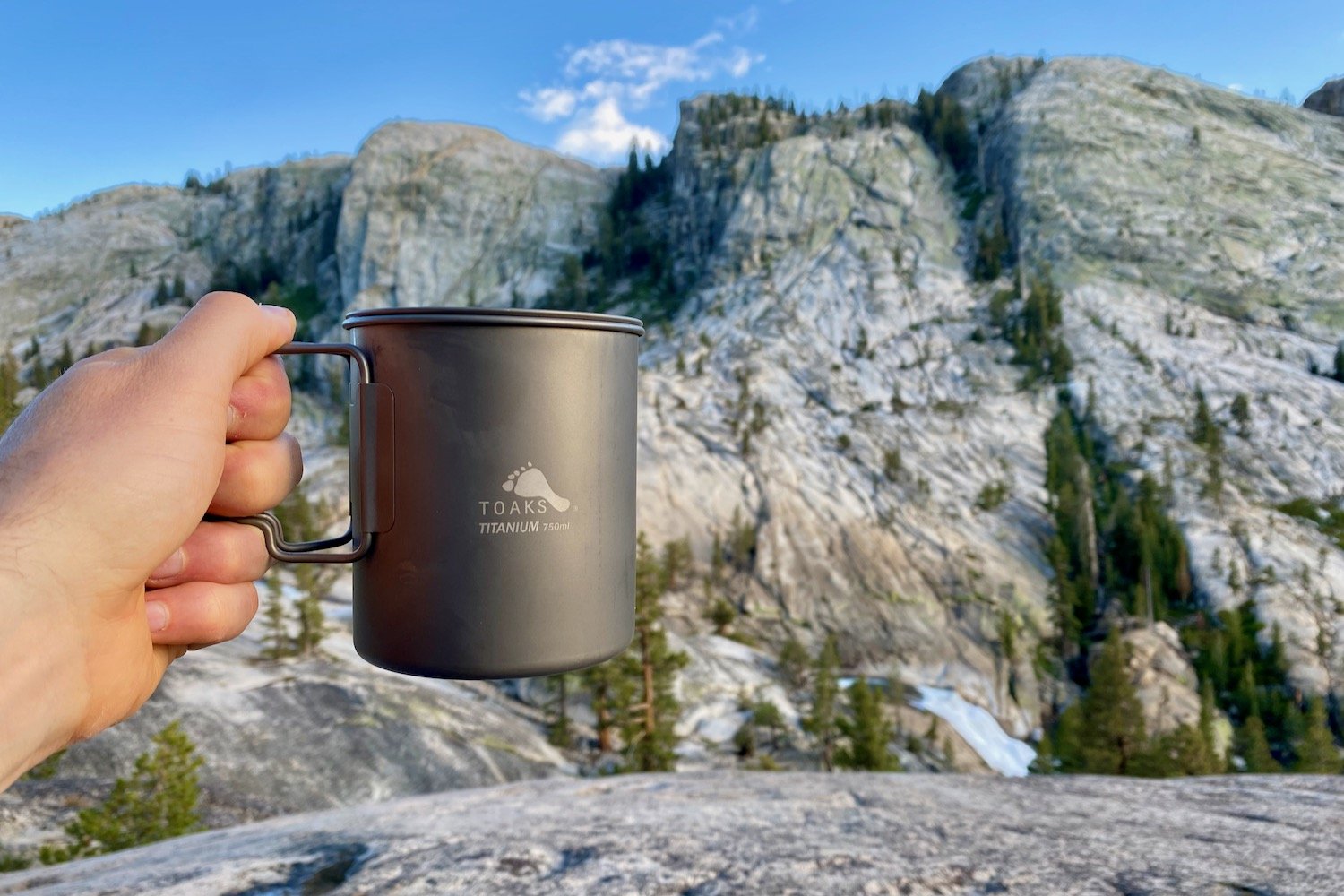
It is both the lightest and most compact cookset we tested, with a total weight of 4.1 ounces and a packed size of about 72 cubic inches with enough room for a 4-ounce fuel canister, an ultralight stove, and a lighter. It even comes with a plush, mesh stuff sack that holds the kit securely together and can be used as a pot holder to some extent.
While the pot does an excellent job at heating up quickly and boiling water efficiently, it may not provide enough control for backcountry chefs cooking complex meals. The thin titanium is prone to hot spots, resulting in uneven heat distribution, and, although its diameter is reasonably sized, it’s best suited for single portions. As far as non-stick goes, it doesn’t compare to Teflon or ceramic, but cleans up decently for titanium.
The Toaks hits a happy medium when it comes to usability. It lacks some of the fancy bells and whistles present on more expensive and capable cook sets, but includes all the basics. The pot has a lid with drain holes (although limited) and a foldable handle. The pot itself has foldable handles as well.
Overall, titanium is incredibly strong for its minuscule weight, but the thickness sacrifices some durability. Warping is possible after years of heating, and some of the moving parts feel a bit flimsy. However, with proper care, the Toaks Titanium 750mL can withstand years of use and provide a ton of value for its price. The 750ml pot is the most popular size, but there are larger and smaller sizes available.
More: Toaks 750 mL Full Review

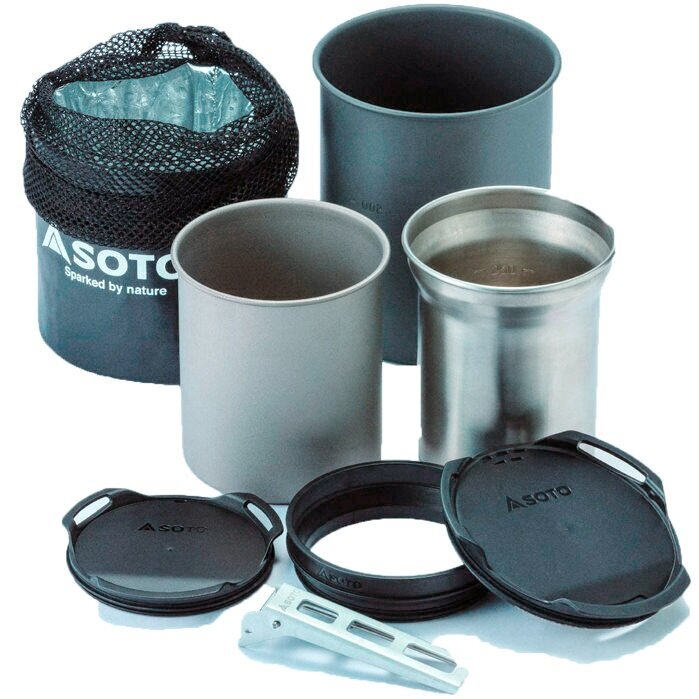
SOTO Thermostack Combo
Best Four-Season Ultralight Kit
CleverHiker Rating: 4.6/5.0
Price: $75
Measured Weight: 10.8 oz.
Includes: Two titanium pots (750mL and 400mL), stainless steel cup (350mL), collar attachment, lids, insulated sleeve/stuff sack, pot grip
Materials: Titanium, Aluminum, Stainless Steel
Pros
- Great value
- Durable
- Excellent heat retention
- Pots nest together to make an insulated mug
Cons
- Can't nest a fuel canister and all components
- Not the lightest
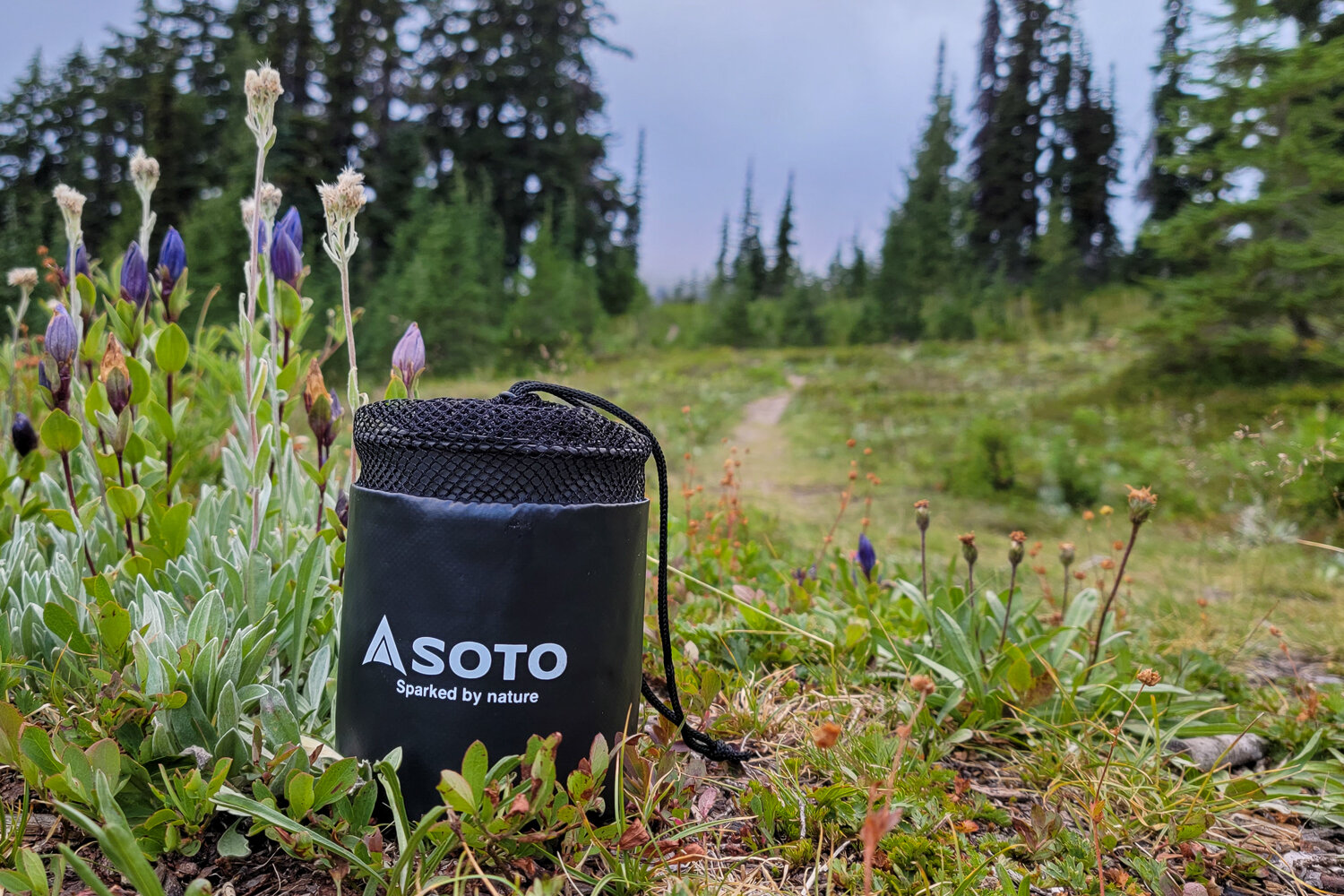
The SOTO Thermostack Combo features a smart design optimally suited for four-season ultralight backpacking. The kit can be utilized either as a single 750-milliliter ultralight pot or as a full kit with added comfort for cold-weather camping.
Stand-out features such as the cozy carrying case, silicone-sealed lids, and double-wall insulated mug extend its usage beyond that of similar cook sets. They effectively keep food and beverages warmer for longer, so you can too when temperatures plummet.
While the cooking performance of the Thermostack isn’t winning any awards, the aluminum pot distributes heat fairly well and cleans up decently enough. The lid even has basic drain holes and a pour spout (although it’s awkward to use with the pot lifter).
You can use the entire kit in various configurations to adjust its bulk and weight. At its minimum, it weighs about 5 ounces. But even with all its components, the Thermostack combo weighs only 10.7 ounces — well below the ultralight cookware threshold. The kit is designed to stack neatly, with room for a stove inside and a fuel canister on the outside, all cinched in the carrying case.
As for durability, the SOTO Thermostack earns points for its hard-anodized aluminum pot, titanium cup, and bulletproof stainless steel mug. As long as you take care with the plastic lids and pot lifter, the Thermostack will hold up to years of use. Because it is such a versatile kit, we don’t bat an eye at the price. Although the Thermostack is not the kit to cook for a whole family, this cook set will satisfy the needs of an ultralight backpacker (or two) year-round.
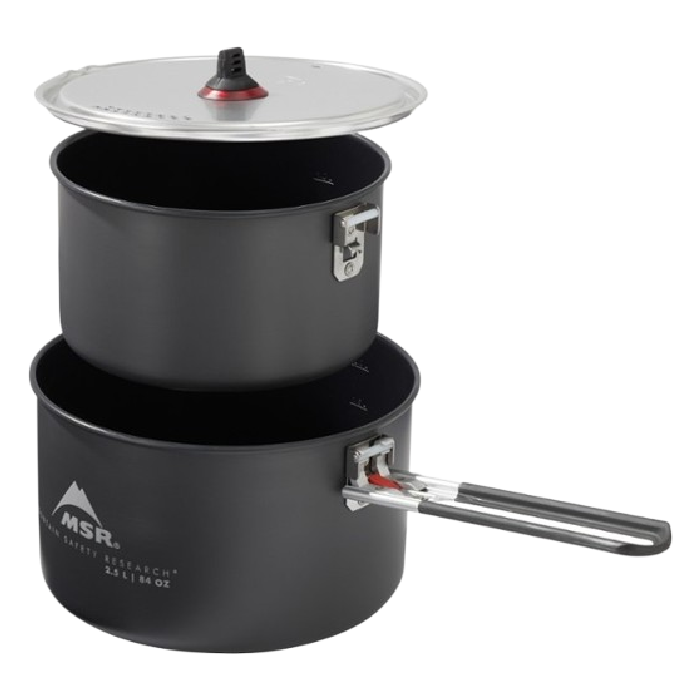
MSR Ceramic 2-Pot Set
Best Two-Pot Backpacking Cookware
CleverHiker Rating: 4.5/5.0
Price: $95
Measured Weight: 15.9 oz.
Includes: Two aluminium pots (1.5L and 2.5L), lid, pot grip, shammy cloth
Materials: Ceramic-coated aluminum
Pros
- Excellent cooking performance
- Easy to clean
- Great for small groups
- Very non-stick
Cons
- Takes up a lot of space
- Non-stick coating requires care
- Heavy
The MSR Ceramic Non-Stick Two-Pot Set easily earns the badge of ‘best for cooking’ among our full line of favorite backpacking cookware. It is full of handy features that make cooking more efficient, and it outperforms most cooksets in backcountry applications.
The two pots, with a combined capacity of 4 liters, feature wide bases for easy stirring and accommodate enough food to feed a small family. The thin, hard-anodized aluminum material heats up quickly and evenly for efficient cooking and minimal burning. The Ceramic non-stick coating repels even stubborn eggs and makes clean-up effortless.
The entire set is designed to be user-friendly. The secure, insulated, removable pot handle helps prevent mishaps. The lid features a rubber handle, a pressure-release valve, and numerous drain holes for high-performance backcountry cooking.
Superior cooking performance comes with a slight cost in durability. Aluminum also conducts heat faster than titanium or stainless steel. Also, the non-stick coating, although more durable than Teflon, can degrade over time. However, the aluminum has been hardened with anodization, and the ceramic coating can last a long time as long as you’re careful.
This Two-Pot set may be the heaviest and bulkiest cook set on our list, but it nests neatly and securely and can serve as the sole cookware for an entire group. If packed strategically, its impressive capacity-to-weight ratio and handy features efficiently offset added weight and size.
Overall, the MSR Ceramic Non-Stick Two-Pot Set is ideal for the backcountry culinary enthusiast or group that values a balance between weight and superior cooking performance. It’s not trying to be the best pick for the solo ultralighter, and for that, there are plenty of other options.
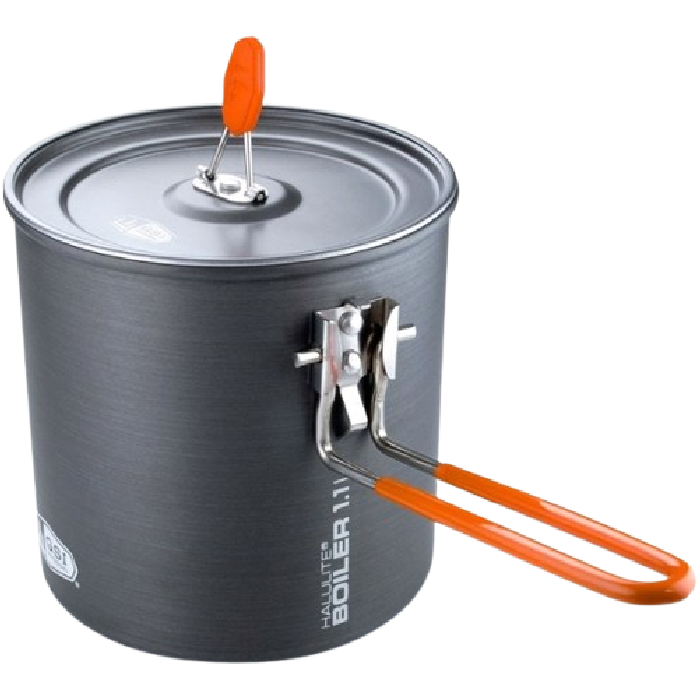
GSI Outdoors Halulite Boiler Pot
Most User-Friendly Backpacking Cookware
CleverHiker Rating: 4.5/5.0
Price: $50
Measured Weight: 8.1 oz.
Includes: Aluminum pot (1L), lid, stuff sack
Materials: Aluminum
Pros
- Durable
- Easy to use
- Good cooking performance
- Good price
Cons
- No drain holes or pour spout
- Bulkier than some
The GSI Outdoors Halulite Boiler is a streamlined cookpot designed for functional simplicity and affordability over cooking performance. It’s an excellent choice for beginner backpackers or anyone on a budget.
Cooking on the pot’s anodized aluminum is slightly more predictable than on titanium, thanks to its thicker material and better heat distribution. It takes a little longer to heat up, but the heat is more even, especially when paired with a medium to large stove. The Halulite’s 1-liter capacity is ideal for couples and big eaters, and its wide opening easily accommodates multiple utensils. The Halulite Boiler is designed with longevity in mind. The thicker aluminum pot withstands the elements, and the handle and pot lid feel heavy-duty.
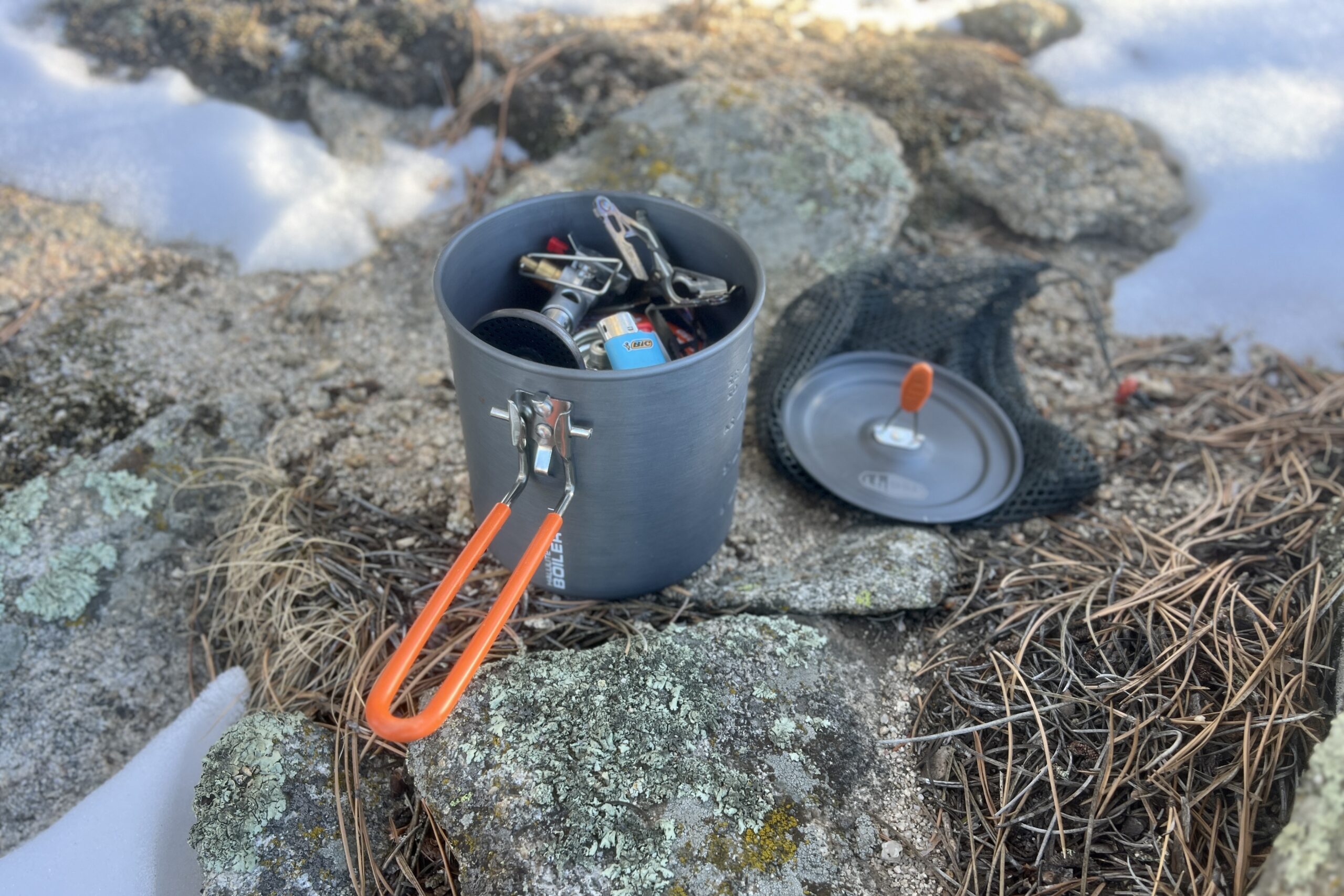
Despite its substantial size, the Halulite Boiler competes with even ultralight stoves in terms of weight and packs down neatly. The pot easily accommodates an 8-ounce fuel canister, stove, and lighter, or a 4-ounce canister and plenty of cooking accessories. The folding handle and stuff sack hold everything securely in place with minimal rattle. Fast-packers and ultralight backpackers might find the Halulite too bulky for their liking despite its decent weight and packability.
The minimal feature set is simple and effective. Graduated markings on the pot’s interior make measuring simple in both metric and imperial units, and the insulated pot handle facilitates safe and secure handling. Although the lack of drain holes, a pour spout, and additional accessories keeps the cost low, culinary experts who consider those features essential might want to look into other options.
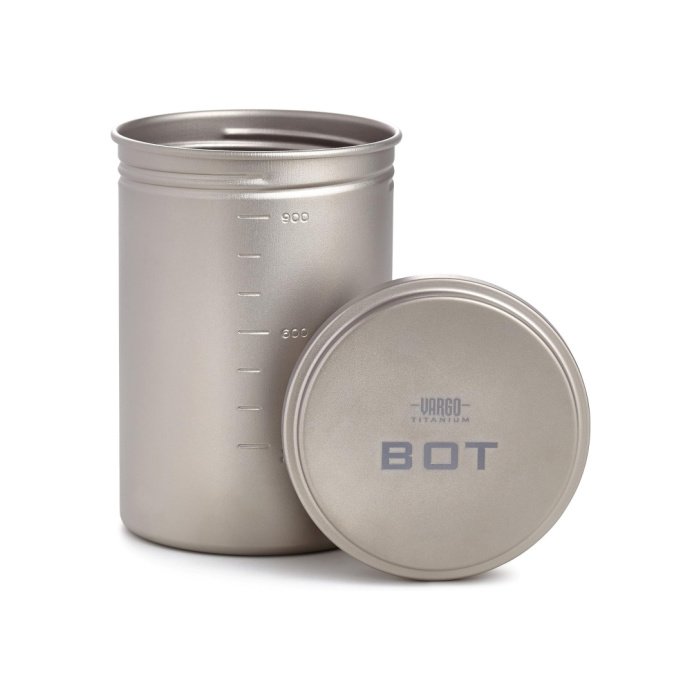
Vargo Bot
Most Versatile Backpacking Cookware
CleverHiker Rating: 4.4/5.0
Price: $100
Measured Weight: 5 oz.
Includes: Pot (1L), screw-on lid
Materials: Titanium
Durability: 4.5
Pros
- Ultralight
- Sealable/leakproof
- Doubles as extra water storage
- Good for cold-soaking
Cons
- No handle
- Lid can get stuck
- Pricey
The Vargo Bot 1L is a niche piece of backpacking cookware that isn’t for everyone. It’s truly ideal for the ultralight backpacker who utilizes a variety of cooking methods from cold-soaking to water boiling, but it will be significantly insufficient for a culinary master.
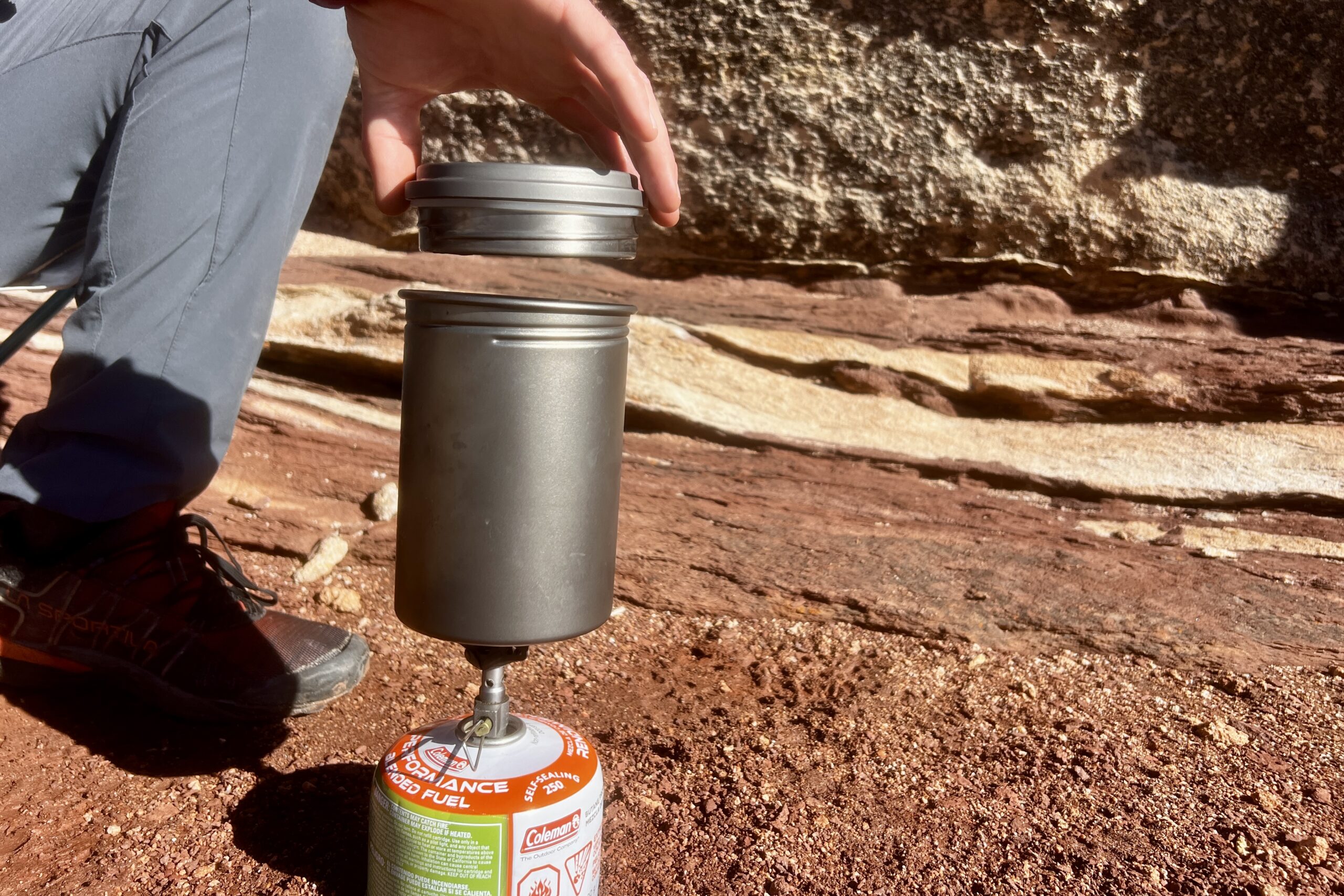
The best feature on the Bot is the screw-on titanium lid with a built-in silicone seal. The lid makes it uniquely suited for cold soaking and for storing extra food or water. Unlike most sealable containers, the Bot is made of titanium and doubles as a capable cooking pot.
The lid creates a watertight seal and increases the pot’s durability, although it’s difficult to remove in freezing and high-altitude conditions. To be a good storage container, the lid must lack common features such as drain holes and a pour spout. Those who only boil water in the backcountry won’t miss these features, while others may consider them crucial.
Titanium pots are designed for maximum weight savings and packability over cooking performance, and the Bot is no exception. It’s exceptionally light for a 1-liter pot, weighing just 5 ounces. Its tall, narrow design offers more packing options over wider pots, too. It easily slides into any main pocket on a backpack, including side pockets.
The Bot is far from Gordon Ramsay-approved cookware, but it disperses heat surprisingly well for titanium, and even cleans up easily, provided you cook with care and stir often. We even had decent success scrambling eggs in the Vargo Bot. The Bot is undeniably unique, lightweight, and packable, but the design will result in either a love-or-hate relationship for most backpackers.
More: Vargo Bot Full Review
GSI Outdoors Bugaboo Camper Ceramic Cookset
Best Family-Style Backpacking Cookware
CleverHiker Rating: 4.4/5.0
Price: $170
Measured Weight: 3 lb. 6.9 oz.
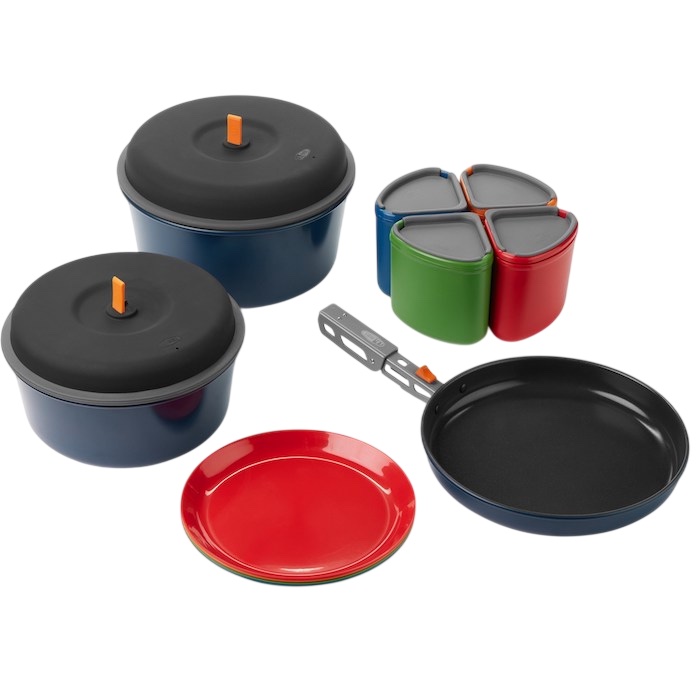
Includes: 3L pot, 2L pot, 9” frying pan, 4 mugs, 4 bowls, 4 plates, pot grip, sink/carrying case, lids
Materials: Ceramic-coated lluminum
Pros
- Complete set for four people
- Non-stick coating
- Household cookware level of performance
- Included wash basin
Cons
- Heavy and bulky
- Expensive
The GSI Bugaboo Ceramic Camper Cookset is less of a backpacking cook system and more of a full backcountry kitchen built for shared meals. It’s clearly designed for groups who care more about the experience of cooking and eating together than they do about miles covered or ounces saved. Instead of stripping things down to the bare minimum, it leans into comfort, capacity, and familiarity.
At its core, the system does a great job of making camp cooking feel approachable and organized. The two pots and skillet heat evenly and behave much more like household cookware than typical backpacking gear, which makes a noticeable difference when you’re preparing real meals instead of just boiling water. The ceramic non-stick coating is a handy feature, making both cooking and cleanup far easier than typical aluminum or titanium setups.
This is also the most complete system on our list. Everyone gets a proper plate, bowl, and mug, and the inclusion of a carrying case that doubles as a wash basin reinforces the idea that this is meant to be a self-contained kitchen rather than a collection of separate pieces. It’s cohesive, practical, and well thought out for group use.
The obvious tradeoff is weight and bulk. This is not a system that disappears into your pack or blends into an ultralight kit. It’s large, and it demands commitment from the group carrying it. But that’s also the point. If your trips are centered around shared meals, slower mornings, and time spent around camp rather than covering big distances, the Bugaboo system delivers a level of comfort and functionality that lighter setups simply can’t match.
More: GSI Outdoors Bugaboo Ceramic Camper Cookset Full Review
Soto New River Pot
Most Affordable Aluminum Backpacking Cookware
CleverHiker Rating: 4.4/5.0
Price: $35
Measured Weight: 5.3 oz.
Includes: Aluminum Pot (1L), lid, stuff sack
Materials: Aluminum
Pros
- Straightforward design
- Lightweight
- Large capacity
- Affordable
Cons
- Not non-stick
- Lid doesn't stay secured
- Leaky pour spout
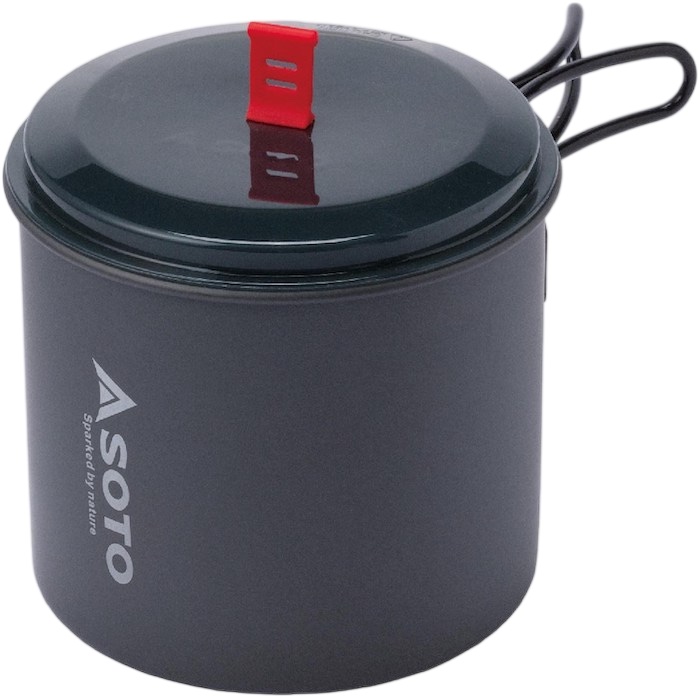
The SOTO New River Pot is a simple, well-executed piece of gear that focuses on doing the basics right and keeping the cost down. At 1 liter, it offers a practical capacity for solo hikers or pairs, and the aluminum construction provides fast, even heating for efficient everyday use. It’s the kind of pot that feels intuitive from the start: no learning curve, no extra fuss, just a straightforward design that works.
The New River Pot is impressively lightweight for its size. While it’s not as light as titanium, it’s light enough for most backpackers, and for many, the improved heat distribution of aluminum is a worthwhile tradeoff.
The simplicity does come with some downsides. The lack of a non-stick surface means food is more likely to stick and burn, which can make cleanup a hassle if you’re doing anything beyond boiling water. The lid design is also a bit underwhelming, requiring a hand to keep it in place while pouring, and the included accessories don’t feel quite as durable as the pot itself.
Still, those drawbacks are fairly easy to accept given the overall package. This is not a specialized cooking pot, nor is it the lightest option available, but it strikes a balance that will appeal to a wide range of backpackers. For those who prioritize affordability, reliability, and basic performance, the New River Pot is a solid, dependable choice.
MSR Alpine Stowaway 1.1L
Most Durable Backpacking Cookware
CleverHiker Rating: 4.4/5.0
Price: $29
Measured Weight: 14.7 oz.
Includes: Stainless steel pot (1.1L), lid
Materials: Stainless Steel
Pros
- Very durable
- Even heat distribution
- Sturdy handle
- Wide base
Cons
- Heavy & bulky
- No drain holes
- Heats slowly
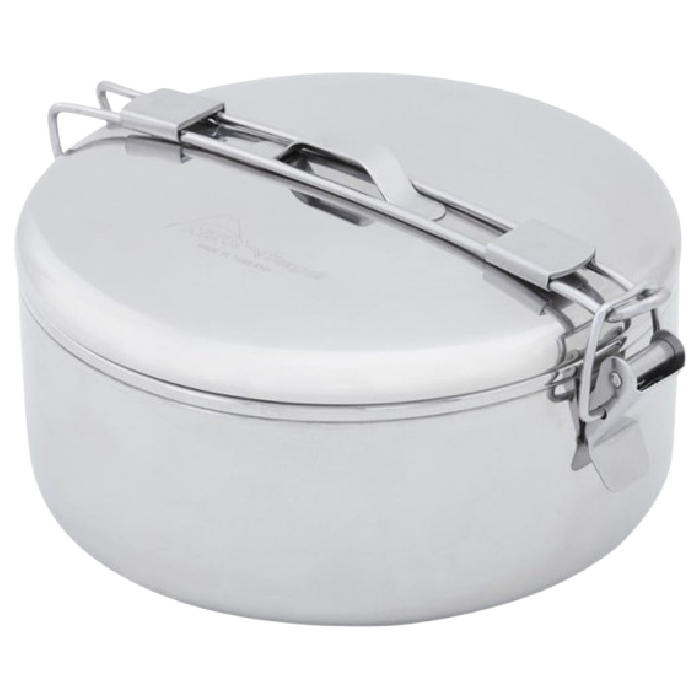
The MSR Alpine Stowaway 1.1L is a major budget buy that performs similarly to home kitchen pots and is tough as nails. However, it does come with a significant weight cost.
Stainless steel will feel more familiar to beginner backpackers as it heats up more slowly than titanium and aluminum and disperses heat more evenly. The wide base helps with cooking hefty meals, but it is a little unstable on smaller backpacking stoves. Stainless steel can still burn food to the pot, making cleanup difficult, but it’s still more non-stick than most other cookware sets.
Although stainless steel is significantly more affordable than titanium, it is significantly heavier. Weighing in at almost a pound, the Stowaway misses the mark of the ultralight backpacker’s weight standards. It will also occupy a decent amount of pack real estate, with a total packed volume of approximately 147 cubic inches.
For the minimalists out there, the Stowaway is about as simple as it gets — no drain holes, pour spout, or fancy bells and whistles. This lack of features helps keep the cost down and provides a tighter seal for storing leftovers.
The shining characteristic of the Stowaway, apart from its affordability, is its unbeatable durability. Stainless steel is built to last and is almost impervious to warping, bending, or breaking. This is one of the only pots on our list that we would recommend cooking with directly on a campfire. For bushcrafters, car campers, base campers, and romantics alike, this could be the Stowaway’s sole selling point.
Overall, the Alpine Stowaway from MSR is ideal for someone looking for a pot that works for both car camping and shorter backpacking trips. It’s also good for over-the-fire chefs or anyone who breaks gear like it’s going out of style.
Snow Peak Mini Solo
Best Titanium Combo Backpacking Cookware
CleverHiker Rating: 4.3/5.0
Price: $89
Measured Weight: 6.9 oz.
Includes: Pot (.9L), lid, cup
Materials: Titanium
Pros
- Ultralight
- Compact
- Cup can double as a lid
- Handy lid tab
- Secure handles that don't get hot
Cons
- Price
- No drain holes
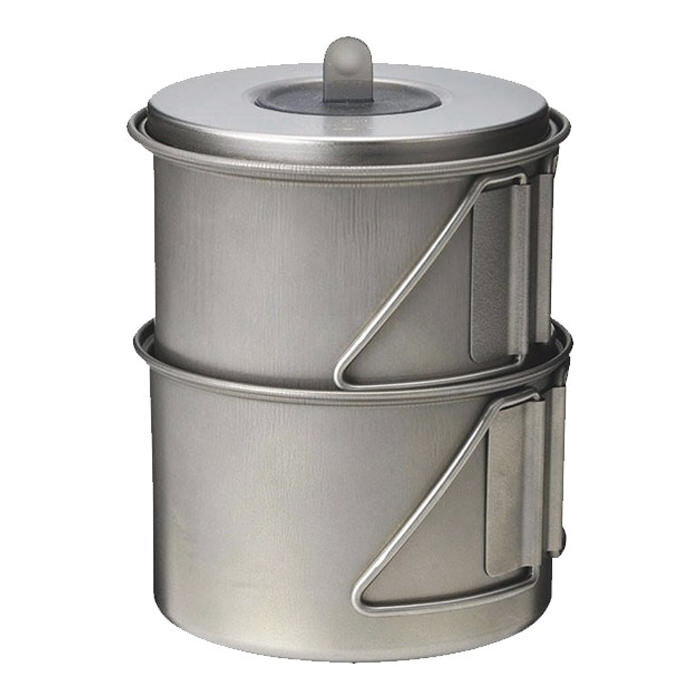
While most ultralight cook sets focus on a single, fully featured pot, Snow Peak offers large capacity versatility with this two-pot combo. The thoughtful design not only maintains an ultralight weight standard but also nests together to take up minimal pack space.
This set is the fourth lightest on our list and is only about the size of a jar of pickles. The spacious interior of the 900-milliliter pot accommodates a 4-ounce fuel canister, a stove, a lighter, and a couple of cooking accessories. Our only gripe is with the loosely fitting mesh stuff sack, which does very little to eliminate rattling.
Titanium is not known for its superior cooking performance. It heats up quickly, is difficult to clean, and tends to burn food on the bottom of the pot. That being said, the relatively small diameter of the Mini Solo does a decent job of heating up evenly when paired with a stove of similar diameter.
This combo offers excellent ease of use, from its handles to its minimal feature set. While other cook sets can feel like handling a hot potato, the Mini Solo’s handles stay pretty cool for safe, secure handling. The highly detailed graduation markings on the cup offer precise measurements in 100-milliliter and 1-ounce increments. The downside to this minimal feature set is the lack of drain holes and a pour spout on the lid, which some backpackers may consider crucial.
Ultimately, the Snow Peak Titanium Mini Solo Combo offers excellent ease of use in a versatile, ultralight package. Although it’s a perfect fit for the right backpacker, it’s definitely on the pricey side.
Product Comparison Table
| oSort | Product | Price | Measured Weight | Cooking Performance | Weight & Packability | Usability | Durability | 0 |
MSR Trail Mini Solo Cookset View at Backcountry View at Amazon 
|
$50 | 7.4 oz. | 4.4 | 4.5 | 4.8 | 4.7 | 1 |
Evernew Titanium Pasta Pot 1L View at Amazon |
$85 | 4.4 oz. | 4.4 | 4.9 | 4.6 | 4.4 | 2 |
TOAKS Titanium 750ml View at REI View at Amazon 
|
$27 | 4.1 oz. | 4.4 | 5.0 | 4.4 | 4.4 | 3 |
SOTO Thermostack Combo View at Amazon View at REI
|
$75 | 10.8 oz. | 4.4 | 4.4 | 4.7 | 4.7 | 4 |
MSR Ceramic 2-Pot Set View at REI View at Amazon
|
$95 | 15.9 oz. | 5.0 | 4.2 | 4.5 | 4.1 | 5 |
GSI Outdoors Halulite Boiler Pot View at REI View at Amazon |
$50 | 8.1 oz. | 4.6 | 4.4 | 4.3 | 4.8 | 6 |
Vargo Bot View at Amazon View at Garage Grown Gear |
$100 | 5 oz. | 4.4 | 4.9 | 3.9 | 4.5 | 7 |
GSI Outdoors Bugaboo Camper Ceramic Cookset View at REI View at Backcountry |
$170 | 3 lb. 6.9 oz. | 5.0 | 3.5 | 4.9 | 4.0 | 8 |
Soto New River Pot View at REI View at Amazon |
$35 | 5.3 oz. | 4.3 | 4.5 | 4.4 | 4.4 | 9 |
MSR Alpine Stowaway 1.1L View at REI View at Amazon
|
$29 | 14.7 oz. | 4.7 | 3.8 | 4.0 | 5.0 | 10 |
Snow Peak Mini Solo View at Snow Peak View at Amazon |
$89 | 6.9 oz. | 4.0 | 4.5 | 4.3 | 4.4 |
|---|
Analysis & Results
What backpacking cookware has the best value?
Some people may choose a cookset based on a single goal, whether it’s to lower their pack weight or to cook a delicious meal for the whole family. But if you’re on a budget or new to backpacking, you probably want the best all-around performance at the most affordable price.
Of all the cookware we tested, the MSR Trail Mini Solo Cook Set clearly offers the best value. It comes with a ton of extra practical features that significantly enhance the set’s versatility, and it’s reasonably lightweight and packable. Aluminum is also a good cooking surface for beginner backpackers as it’s more forgiving than titanium.
The Toaks Titanium 750mL and MSR Alpine Stowaway 1.1L are the best budget buys, each offering different strengths. The Toaks is our go-to pot for shedding pack weight, but the MSR Stowaway offers versatile cooking at minimal cost with its wide stainless steel base. It’s also nearly indestructible, so it will last a lifetime.
The SOTO New River Pot is also an excellent value, approaching the weight of an ultralight titanium setup while still having a full liter of capacity, sturdy handles, and a capable lid.
Very similar in design to the New River Pot is the GSI Outdoors Halulite Boiler. It’s made of a thicker aluminum, so it’s heavier, but it heats more consistently, is easier to clean, and is more durable.
From there, you begin to pay for premium performance. However, full sets like the SOTO Thermostack Combo, MSR Ceramic Two-Pot Set, and GSI Outdoors Bugaboo Ceramic Camper Cookset help justify the cost with a complete, multifaceted kit rather than a single pot.
The Evernew Pasta Pot, although on the pricer side, is incredibly capable for an ultralight pot, thanks to its wide diameter, handy features, and decent cooking performance. For this reason, we think it punches above its weight for dedicated ultralight enthusiasts.
Which backpacking cookware has the best cooking performance?
The priority of a set’s cooking performance is determined mostly by your backcountry cooking style. We’ve hiked entire long trails doing nothing more than boiling 500 milliliters of water for ramen noodles, for which weight and packability were the only things that mattered. However, if you tend to bring fresh produce and a chef’s knife in your pack, you probably want to prioritize a few more capabilities.
The MSR Ceramic 2-Pot Set and the GSI Outdoors Bugaboo Ceramic Camper Cookset are the clear winners for backcountry gourmets. They boast over 4 liters of cooking capacity to feed a small group, and the pots heat up both quickly and evenly. The ceramic, non-stick coating makes both cooking and cleaning a piece of cake, and the design features additional practical elements with cooking in mind.
The MSR Alpine Stowaway offers familiar, kitchen-like performance with its wide, stainless steel pot, and it also happens to be one of the cheapest sets on our list. Although it cooks like typical stainless steel and can be tough to clean, its simple, no-frills design is perfect for the stove or fire.
The next-best options are aluminum pots for their fairly even, not overly quick, heat transfer. The GSI Halulite Boiler ranks at the top of this category for its large diameter and ample cooking capacity. The hard-anodized aluminum also has a hefty feel, which seems to minimize hot spots. The SOTO New River Pot has a very similar design, but the material is noticeably thinner. Smaller aluminum pots for solo adventures include the SOTO Thermostack Combo and the MSR Trail Mini Solo Cook Set.
Titanium tends to be more difficult to cook with due to its thin, rapid heat transfer. However, the best titanium pot for cooking performance is the Evernew Pasta Pot 1L, thanks to its wide base and 1-liter capacity.
It’s not exactly cook, but if you fancy yourself a cold-soaker, the Vargo Bot 1L is the only winner.
Which backpacking cookware is the lightest and most packable?
Backpacking gear tends to fall on a spectrum between ultralight and affordable. In other words, substantial weight savings usually come at a pretty penny.
Luckily, there are exceptions to this rule. The Toaks Titanium 750mL pot is both the lightest cookware on our list and one of the most affordable. In this case, ultralight comes at the cost of features, durability, and capacity rather than hard-earned dollars. It weighs a mere 4.1 ounces while occupying no more space in a pack than a 12-ounce cup of coffee.
Next on the list is everything titanium. Both the Vargo Bot 1L and the Evernew Titanium Pasta Pot 1L offer ample capacity for big eaters while still weighing under five ounces. The Snow Peak Titanium Mini Solo weighs a hair more but offers more capacity in the form of a multi-pot set with good packability.
Aluminum is the next lightest material after titanium. The SOTO Thermostack Combo comes with numerous extra components for four-season camping, which add up in weight but are intelligently designed to nest together efficiently. If you pack only the main pot, it tops out at just 5.7 ounces.
The MSR Trail Mini Solo and the SOTO New River Pot, although both are aluminum, are lightweight and pack down to an impressively small size. The GSI Halulite Boiler, also aluminum, has the opposite quality. It takes up more space but is impressively lightweight due to its minimalist design.
It’s worth noting that the MSR Ceramic Two-Pot Set, while it’s one of the heaviest cook sets on our list, has the highest capacity-to-weight ratio. For all of its weight, it offers a ton of cooking capacity.
Even though the GSI Outdoors Bugaboo Ceramic Camper Cookset is significantly heavier than anything else on our list, it’s designed for four people, and it all nests together remarkably well.
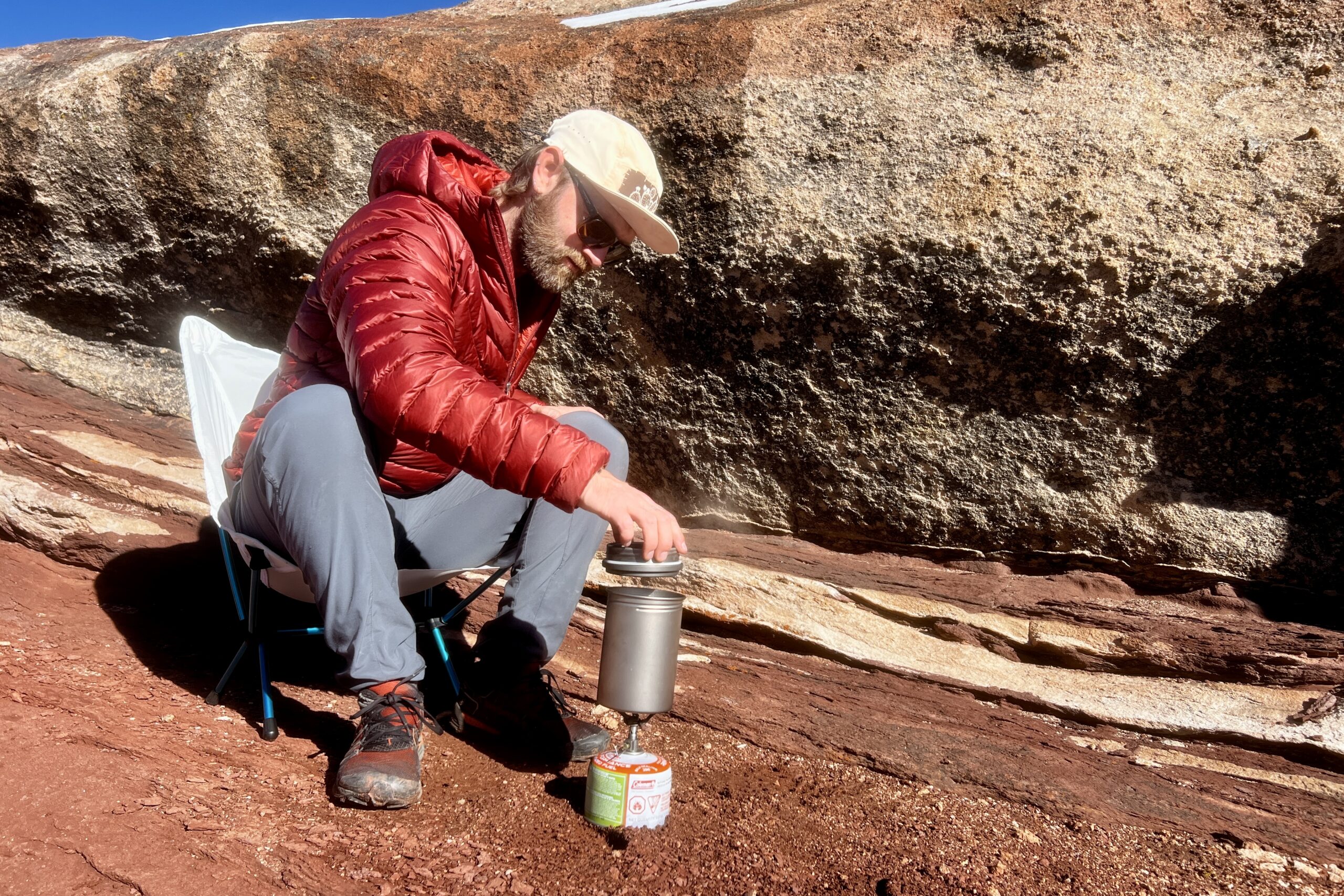
Which backpacking cookware is the easiest to use?
Practical features are nice to have, but tend to add up in either weight or cost. Cookware that scores highly for usability has features such as drain holes, measurement markings, pot cozies, and extra cups or mugs. Minimalist gear that works exceptionally well and is easy to use gets points for usability as well.
The cookset that we’ve determined rises above the rest in this category is the GSI Outdoors Bugaboo Ceramic Camper Cookset. Unlike other cooksets, it’s designed for people who like to focus on shared meals at camp rather than logging big miles. It’s truly a joy to use, from its large, non-stick cooking surfaces to its included wash basin.
The MSR Trail Mini Solo Cook Set is our favorite lightweight solo cookware. It comes with a ton of extra features, including a plastic measuring cup, a fully-featured lid, a pot lifter, a rubber pot grip, and a stuff sack. Everything functions as it should and enhances the kit’s usability.
Closely following in second is the SOTO Thermostack Combo. We dubbed the Thermostack as the best four-season cookware thanks to its insulated mug, pot cozy, and tightly fitting lids that increase its effectiveness in cold weather conditions. It’s just as capable as the Trail Mini Solo, but it has a couple of minor design quirks.
Next is the Evernew Titanium Pasta Pot 1L with its wide diameter, fully-featured lid, and insulated pot handles, followed by the MSR Ceramic 2-Pot Set with its impressive cooking capacity and overall culinary efficiency.
From there, we’re splitting hairs a bit between the Toaks Titanium 750mL, GSI Outdoors Halulite Boiler, Snow Peak Titanium Mini Solo, and SOTO New River Pot. They all provide a unique set of pros and cons, whether it’s the ultra-stable folding handle on the Halulite Boiler or the detailed graduation markings on the Mini Solo.
Ultimately, it’s up to you to decide what features best suit your cooking style.

Which backpacking cookware is the most durable?
The best way to truly test a product’s durability is to use it until it breaks. We haven’t experienced any catastrophic failures with our cookware yet, which is a positive sign. However, certain aspects of durability can be confidently inferred from the design.
Here are a few rules of thumb to go by. The thicker the material, the more durable. Stainless steel is the most durable. Titanium, although it has an excellent strength-to-weight ratio, is often made thin. Plastic components, moving parts, and non-stick coatings are common points of vulnerability.
Without a doubt, the MSR Alpine Stowaway is the most durable cookware option on our list. It’s made of stainless steel and can easily withstand the high heat of a campfire and significant wear and tear from bashing rocks on the trail. The material is difficult to bend and won’t warp even after years of use. It does have moving parts, but everything feels very sturdy.
The GSI Outdoors Halulite Boiler impressed us as being an incredibly durable aluminum pot. The aluminum is hard-anodized (as is all of the aluminum cookware on our list), which significantly increases its scratch- and heat-resistance. Overall, the aluminum is thick and rigid, and the handle is heavy-duty.
The SOTO Thermostack Combo and MSR Trail Mini Solo Cook Set are similarly constructed from hard-anodized aluminum, offering heavy-duty and robust designs. However, they both have plastic components, which you wouldn’t think of as much of an issue, but in the hands of a stiff backpacker on a backcountry kitchen “floor,” they could be doomed.
The rest of the cook sets (besides the MSR Ceramic Two Pot Cook Set and GSI Outdoors Bugaboo Ceramic Camper Cookset) are made from thin titanium, which is easy to flex and prone to warping over time. The MSR Ceramic Two-Pot Set and GSI Bugaboo Ceramic set received the lowest scores due to their non-stick coating, thinner aluminum construction, and numerous plastic parts.
How to Choose Backpacking Cookware
How Important is Weight & Packability?
Keeping backpacking cookware as lightweight and compact as possible is crucial, especially if you’ll be hiking long distances or tackling significant elevation changes.
A simple pot with a lid, a cup, and a spoon is generally all we carry in the backcountry. We prefer cookware that nests together in a compact package and can fit a stove, lighter, and a small fuel canister inside. Bonus points if the pot can hold a spoon and other accessories.
However, if you’re with a group that plans to cook and eat together, it can sometimes be more efficient to carry a larger kit and split the pieces among the group.
What Kind of Material is Best?
Titanium is ideal for ultralight backpacking because it’s super lightweight and yet durable. That said, it’s better for boiling water rather than for cooking solid food. Aluminum is very lightweight, affordable, and distributes heat well. It’s strong but not as durable as steel. Stainless steel is the most durable, but it’s much heavier.
How Much Volume Do I Need?
Compact cookware will save space in your backpack, but the trade-off is reduced pot volume. Typical lightweight trail meals — such as freeze-dried meals and ramen — usually call for about two cups of water.
For solo hikers who don’t cook a lot of food at once, a small pot is the most space- and energy-efficient option. If you’ll be cooking for multiple people or you like to heat water for a hot drink and a meal at the same time, a larger pot (around one liter) will be more convenient.
Which Cooking Styles Work with Backpacking Cookware?
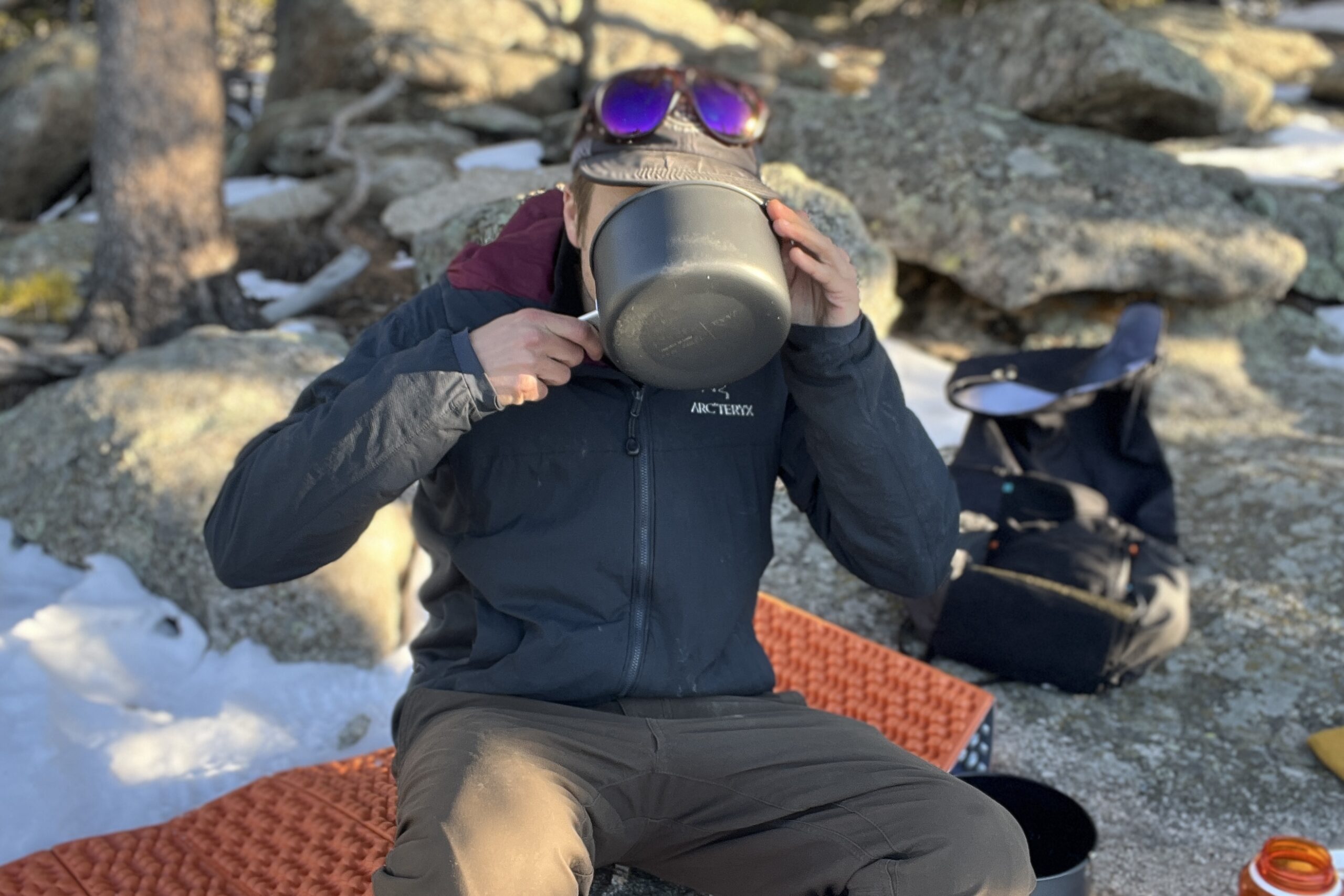
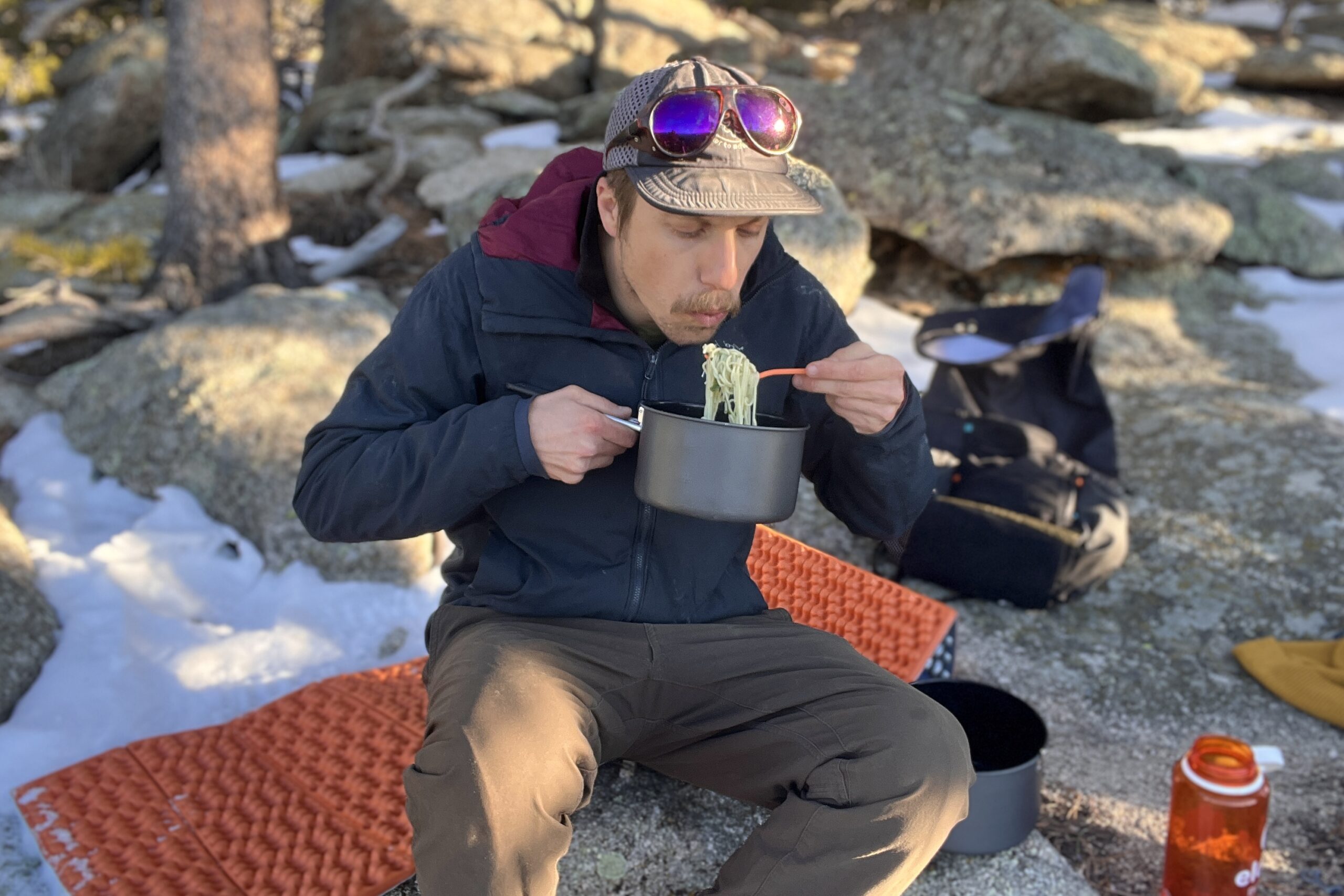
Consider what kinds of cooking tasks you’ll realistically be doing in the backcountry. We almost always boil water and then add dehydrated food to the pot (or bag) to sit for a few minutes before chowing down. This method usually works great with a simple titanium or aluminum pot.
Folks who always cook premade freeze-dried meals need nothing more than a pot that boils water quickly. Cold soakers can benefit significantly from a sealable lid.
If packing out fresh produce and cooking gourmet meals is part of the joy of backpacking, you’ll probably want something with excellent cooking performance and a non-stick coating.
Why Trust CleverHiker
Gear analyst Brett Kretzer has been backpacking around the globe for decades, constantly rotating and testing new gear. He’s cooked hundreds of meals in these cook sets with a variety of cooking methods.
Brett loves to cold-soak oats for a second breakfast but prefers a hot meal after a long day of hiking. When car camping, he still travels light but likes to pull out all the stops for his famous steak tacos.
Brett’s backpacking experience spans a wide range of trails and conditions. He has thru-hiked over 2000 miles, completing Vermont’s Long Trail, the Colorado Trail (x2), the GR11 in the Spanish Pyrenees, as well as numerous smaller U.S. trails and sections of the Triple Crown trails.
His unique experiences as a gear expert for a variety of retailers and publications make him uniquely qualified to interpret gear with an experienced, analytical eye.
How We Test Backpacking Cookware
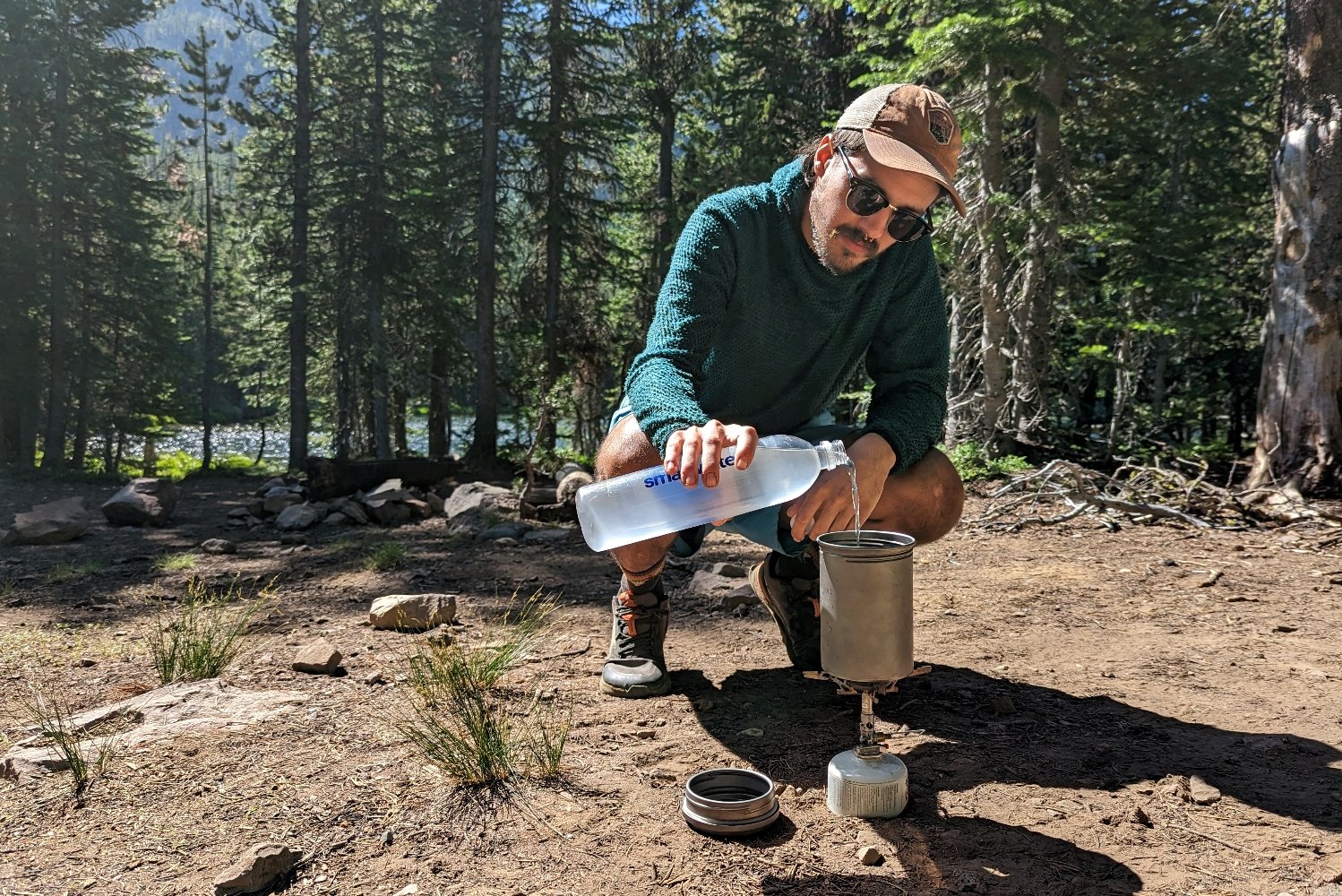
Evaluating Cooking Performance
We closely measured multiple parameters in a controlled setting to determine the cooking performance of each cookset. We first measured the heat transfer rate by timing how long it took to boil 500 milliliters of water. Unsurprisingly, thinner materials heat up significantly faster than thick, heavy-duty metals.
The flip side of that coin is the pot’s heat dispersion. Are there hot spots in the middle of the pot, or does the whole bottom heat up evenly? This metric, along with non-stickiness, was determined using a good old-fashioned scrambled-egg test. Pots with uneven heat dispersion tend to burn the egg in the center.
As eggs are notoriously sticky, this test also clearly revealed how non-stick each pot was, which didn’t always correspond to the pot’s ease of cleaning.
How We Measure Weight & Packability
Weight and packability can be a huge deal-breaker for ultralight backpackers, as every ounce counts when covering lots of miles. Instead of taking the product page’s word for it, we placed each kit on our scale. We also noted whether the entire set was necessary throughout the year or if leaving pieces behind was an option.
Furthermore, a cook set’s weight doesn’t always tell the whole story. We calculated each piece of cookware’s capacity-to-weight ratio to perform a weight-benefit analysis. While some cookware sets look very heavy at first glance, they may be large enough to feed a whole family, and vice versa.
The other side of this metric is packability. We asked additional questions, such as: How well do the pieces nest together? Will fuel and other accessories fit into the pot? And of course, how much pack space does it take up? We also took notes of any rattles while it was stuffed inside our packs.
Evaluating Usability
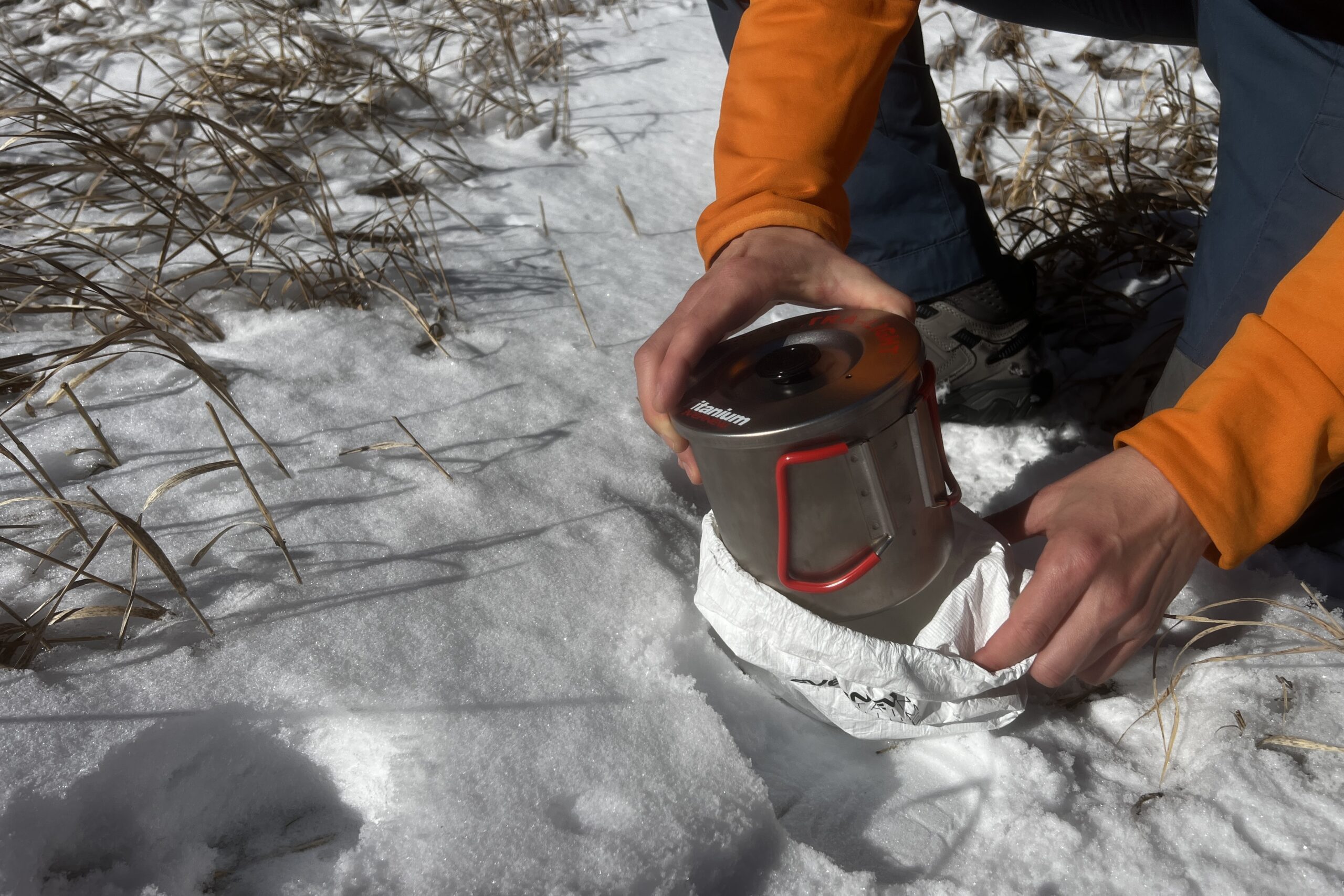
Usability refers to the cookware’s additional practical features and its overall ease of use. While some pots include handy add-ons like drain holes, a pour spout, a pot koozie, an insulated mug, measuring cups, or a stuff sack, others opt for cost savings with functional simplicity.
We also made sure to point out any downfalls to save you the frustration. For example, some handles were prone to getting too hot to touch or were wobbly and unstable.
For some, handy features are an unnecessary luxury, and for others, they greatly enhance the overall backcountry cooking experience.
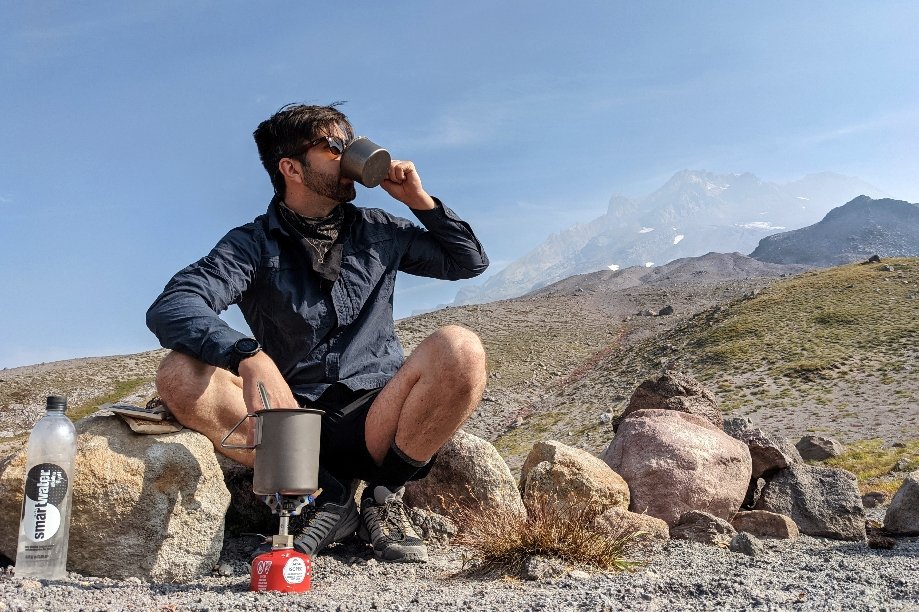
Measuring and Evaluating Durability
Backpacking gear can be expensive. So when you spend your hard-earned dollars on gear, you want it to hold up to years of use.
Much of a cook set’s durability can be inferred from its material and overall construction. And we’ve used our extensive knowledge of backpacking gear to interpret these details for you. Don’t worry, we also put the gear through plenty of real-life abuse out on the trail.
In general, ultralight gear comes with a sacrifice of durability. Ultralight titanium is flexible and prone to warping over time, while heavy stainless steel is basically bulletproof and will last a lifetime. Plastic components save weight but are inherently vulnerable.
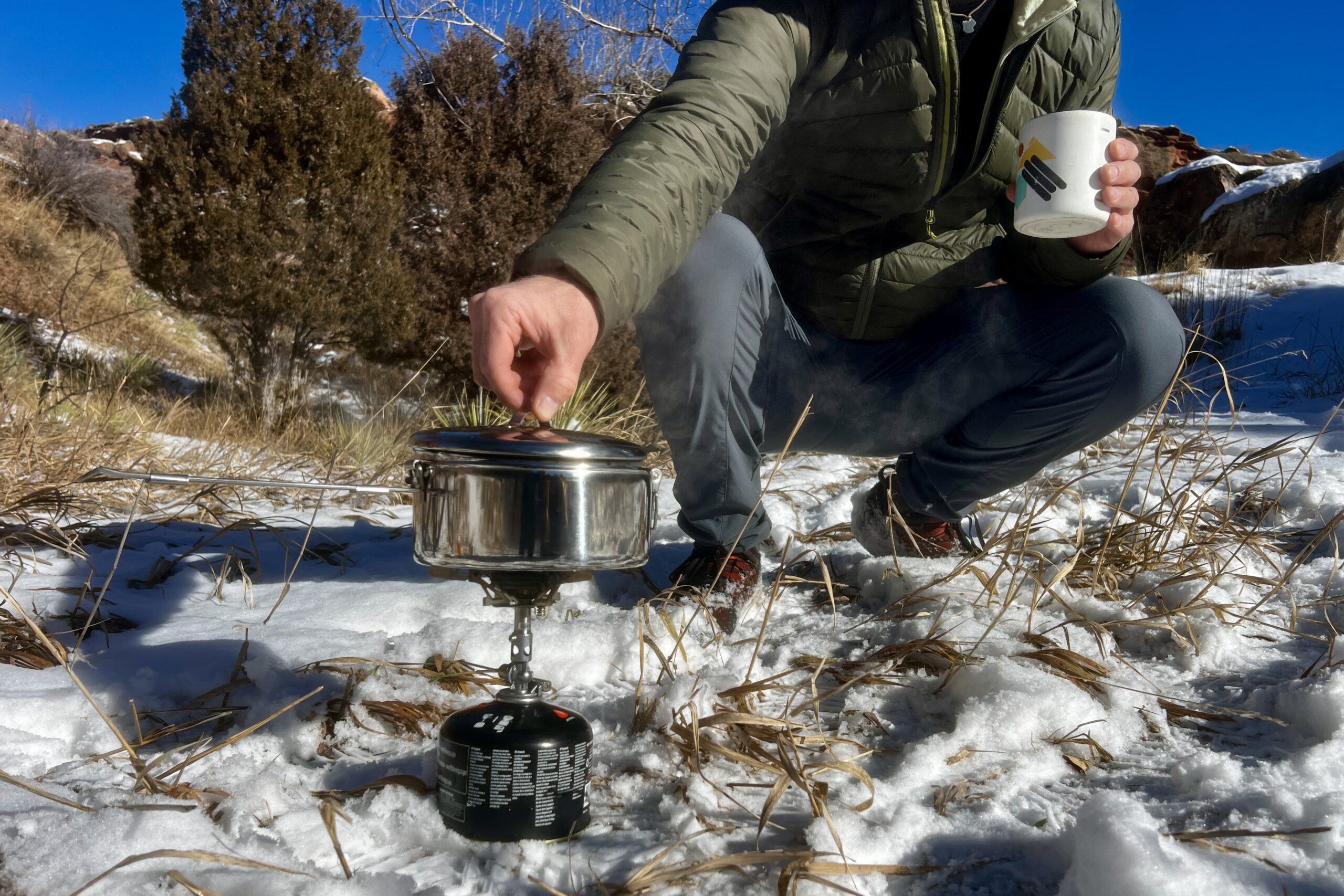
When our cookware gets damaged, it’s usually our fault. Sometimes it’s been us taking a big fall on while boulder hopping, or setting our packs down WWF smackdown style, or getting distracted and charring the heck out of our precious meal. Or we store it wet in the off-season, and it gets a little rusty. So, not the pot’s fault, but these things happen!
Conclusion
The best backpacking cookware will balance durability, usability, weight & packability, and cooking performance. When picking backpacking cookware, your cooking style is probably the most important factor to consider. Next is weight and packability, since you’ll be hauling it around. Many items on this list are versatile, packable, and lightweight. We hope this helps you find your next piece of backpacking cookware.