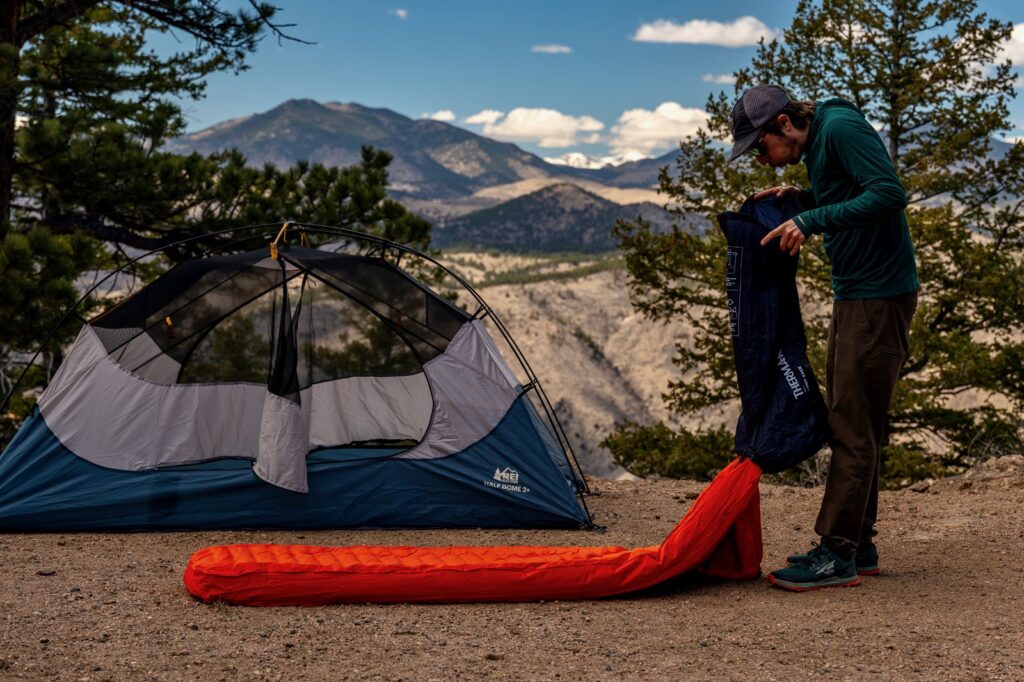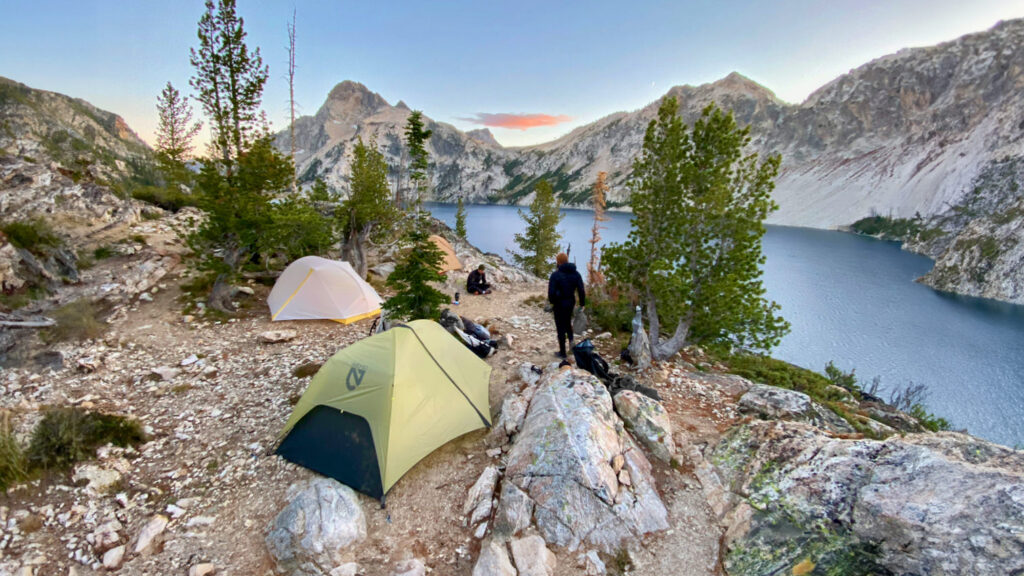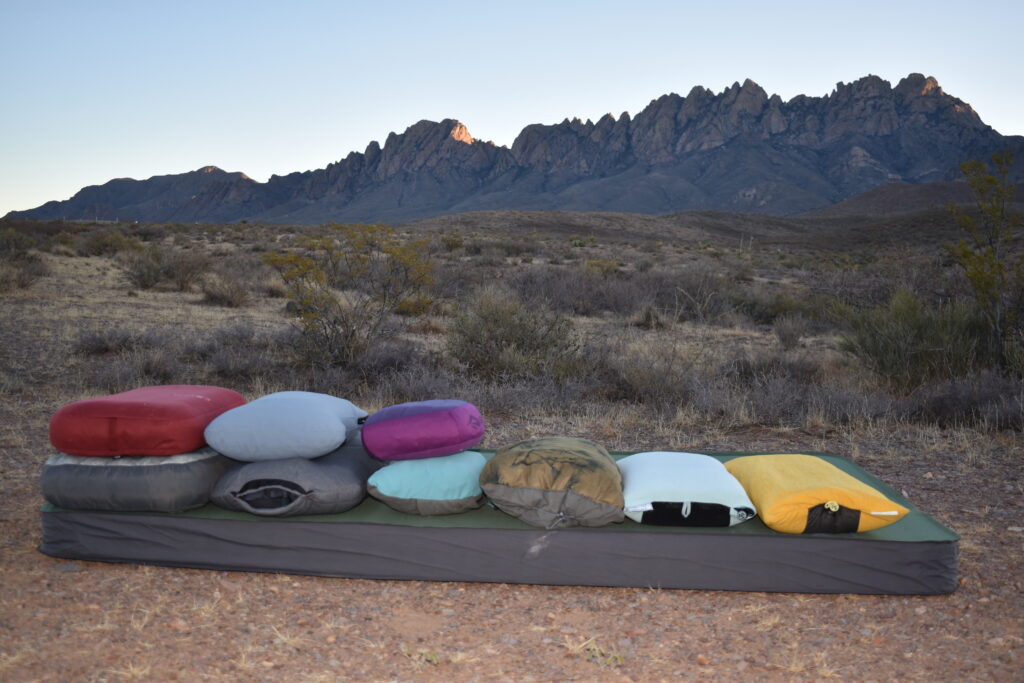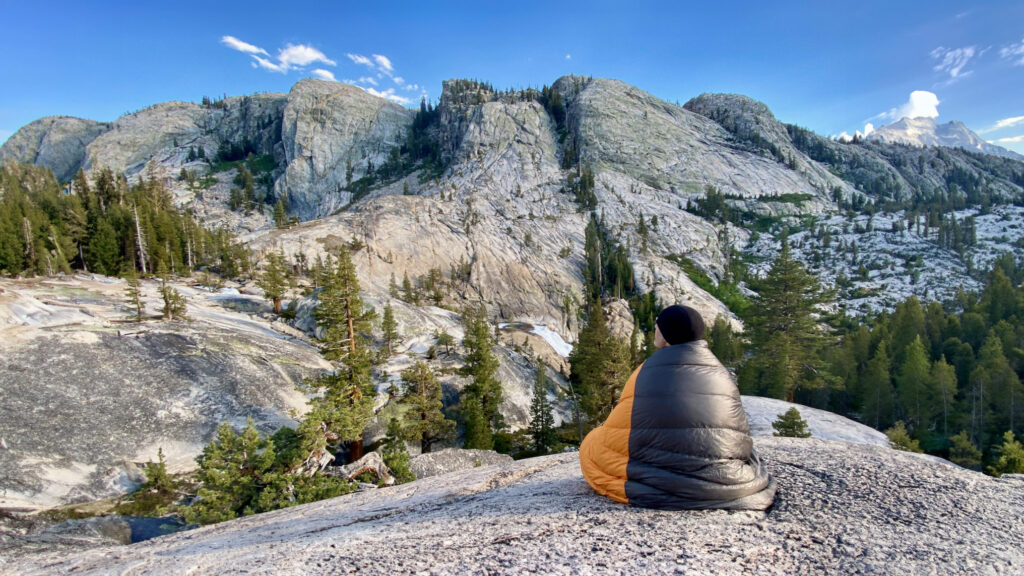


Over the past 13 years, CleverHiker has researched about 400 sleeping bags and tested around 60 of them in the backcountry. Our experience spans more than 2,000 nights, from frigid camps around 13,000 feet to hot, sticky nights in the Sonoran Desert. This guide narrows that experience to the 14 backpacking sleeping bags and quilts we currently recommend.
We focus on the tradeoffs that matter once you leave the trailhead: whether a bag is actually warm enough for its stated use, how well you sleep inside it, how much weight and pack space it consumes, and whether the features make repeated nights easier or simply add bulk.
Editor’s Note: We updated this guide on October 2, 2026, to reflect product price changes and revise product specifications.
How We Test
We evaluate sleeping bags across four core metrics: warmth, comfort, weight and packability, and features. Those scores are kept separate so a bag with one exceptional strength cannot hide a meaningful weakness in another area.
Our testing happens on real trips over repeated nights. That includes thru-hikes, high-elevation camps, damp long-distance trails, desert routes, snowy shoulder-season trips, and dedicated winter use. We compare field experience with the current published specifications and use the same category framework across the ranked field.
And for more info, check out some of our other most popular gear guides:

#1. Best Backpacking Sleeping Bag Overall
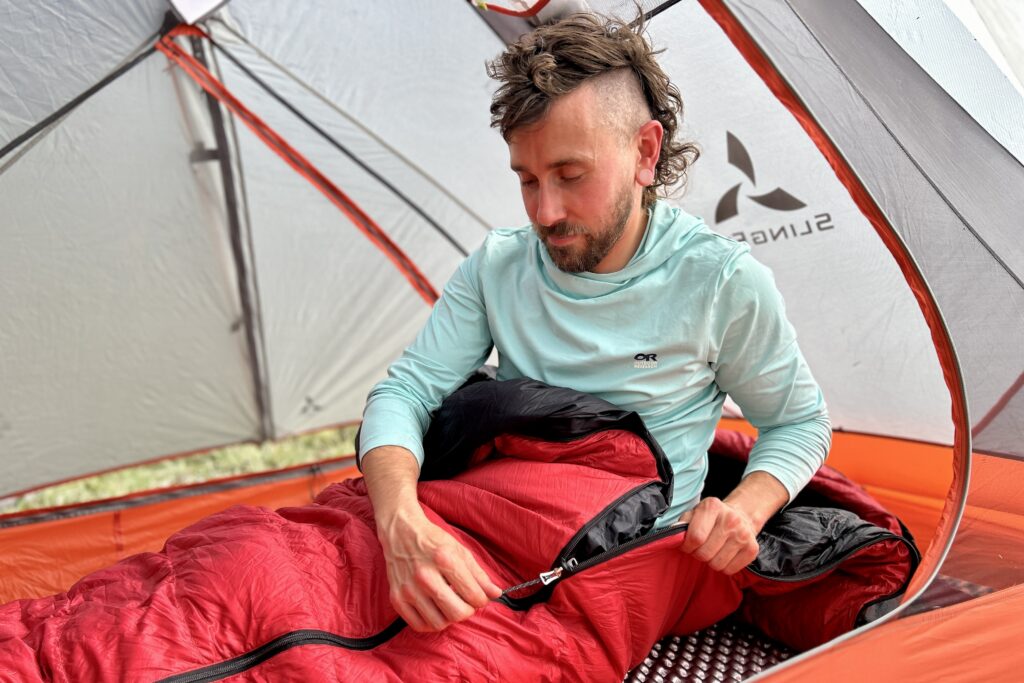
The Feathered Friends Swallow UL 20 is our best overall backpacking sleeping bag. It weighs just 1 pound, 10.6 ounces, carries 16.8 ounces of 950+ fill down, and has kept our testers comfortable across roughly 100 nights in the Cascades, Rockies, and Sonoran Desert.

Quick Picks for Best Backpacking Sleeping Bags
Check out this quick list of our favorite sleeping bags, or continue scrolling to see our full list with in-depth reviews.
1. Best Backpacking Sleeping Bag Overall: Feathered Friends Swallow UL 20 ($659)
2. Warm Sleeping Bag With Inclusive Sizing: REI Co-op Magma 15 ($399)
3. Best Backpacking Quilt: Enlightened Equipment Enigma Quilt 20 ($320)
4. Exceptionally High-Quality & Warm Sleeping Bag: Western Mountaineering UltraLite 20 ($640)
5. Most Comfortable Backpacking Sleeping Bag: Western Mountaineering TerraLite 25 ($625)
6. Best Winter Sleeping Bag for Backpackers: Mountain Hardwear Phantom 0 ($780)
7. Best Features on a Backpacking Sleeping Bag: NEMO Disco 15 Endless Promise Men’s ($300) & Women’s ($300)
8. Best Ultralight Sleeping Bag: Sea to Summit Spark 15 Men’s ($549) & Women’s ($549)
9. Very Warm and Affordable Backpacking Sleeping Bag: Exped Terra 15 ($200)
10. Best Budget Backpacking Sleeping Bag: Kelty Cosmic Down ($180)
11. Super Affordable Down Sleeping Bag: Mountain Hardwear Bishop Pass 15 ($335)
12. Best Ultralight Quilt / Sleeping Bag Hybrid: Zpacks Classic 20 ($419)
13. Best Synthetic Sleeping Bag: Marmot Trestles Elite Eco 20 ($189)
14. Best Most Inexpensive Backpacking Sleeping Bag: Teton Sports Trailhead 20 ($65)
Feathered Friends Swallow UL 20
Best Backpacking Sleeping Bag Overall
CleverHiker Rating: 4.8/5.0
Price: $659
Comfort Rating: N/A
Weight: 1 lb. 10.6 oz.
Fill Power: 950+
Fill Weight: 16.8 oz
Pros
- Warm and ultralight
- Very compressible
- Comfortable
Cons
- No ISO or EN rating
- Expensive and minimal features
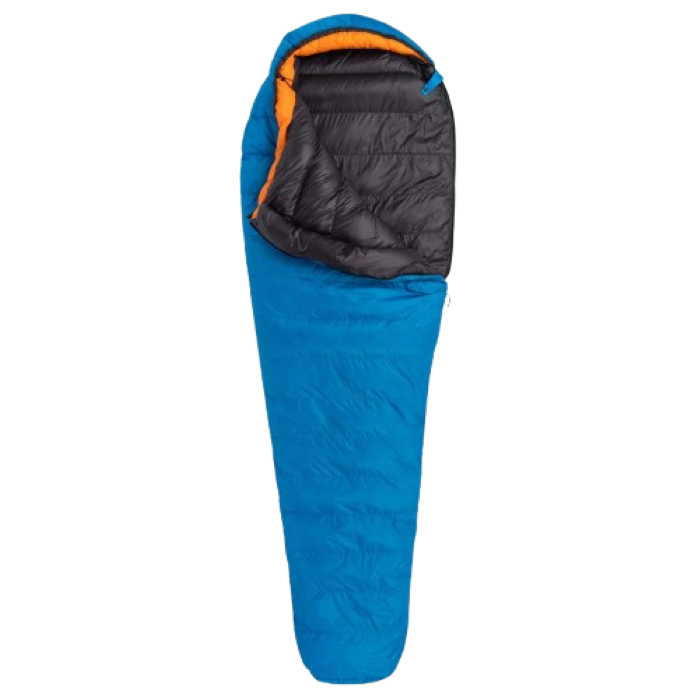
The Feathered Friends Swallow UL20 earns our top spot because it combines premium warmth, low weight, and excellent packability without forcing the compromises of a quilt. We’ve slept in it about 100 nights across the Cascades, Rockies, and Sonoran Desert, and its 16.8 ounces of 950+ fill down consistently delivers impressive loft for a bag weighing just 1 pound, 10.6 ounces.
The mummy shape, draft collar, and simple baffle system make the Swallow efficient in cold three-season conditions, while the fit remains more comfortable than many tight ultralight bags. Broad-shouldered or restless sleepers may still prefer the TerraLite or Disco, and the lack of pockets or extra features is noticeable at this price.
For frequent backpackers who care most about warmth-to-weight and packed size, the Swallow is the most complete performance bag in the field. Casual users can save substantial money with the Magma, Cosmic, or Exped Terra.
The Swallow’s current design also benefits from a soft, durable Pertex shell and a simple feature set that keeps unnecessary hardware out of the weight budget. It is not the roomiest mummy bag, and it intentionally skips extras like an interior pocket, but that tradeoff is exactly why it works so well for thru-hikers and frequent backpackers who would rather spend ounces on insulation than accessories.
REI Co-op Magma 15
Warm Sleeping Bag with Inclusive Sizing
CleverHiker Rating: 4.7/5.0
Price: $399
Comfort Rating: 21°F
Weight: 2 lb. 3.6 oz.
Fill Power: 850
Fill Weight: 23.3 oz.
Pros
- Large variety of size options
- Generous draft collar blocks chill well
- Good price for the warmth
- Stash pocket
- No zipper snagging
Cons
- Less spacious in the hood and leg area
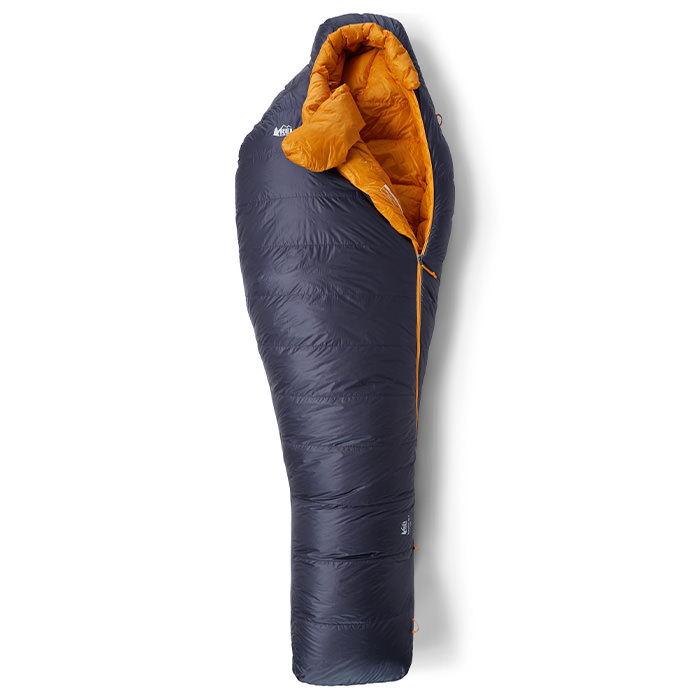
The REI Co-op Magma 15 is one of the strongest values for cold sleepers. Its 23.3 ounces of 850-fill down, 21°F comfort rating, oversized draft collar, and efficient mummy shape provide real cold-weather confidence at a price well below most premium cottage-brand bags.
REI’s unusually broad range of lengths and widths is a major advantage. The standard fit is trim through the legs and hood, but hikers who need more room can select wider versions instead of abandoning an efficient mummy design entirely. Our Magma experience spans hundreds of nights from the Beartooths to late-fall Colorado Trail trips and snowy Rocky Mountain conditions.
The Magma is heavier than the Swallow, Spark, Enigma, or Zpacks Classic, but it balances price, warmth, sizing, and packability better than most competitors. It is an especially good choice for cold sleepers and shoulder-season backpackers.
The Magma is also one of the most inclusive performance bags in the category because REI offers several lengths and widths. That matters if a standard mummy bag usually feels too tight through the shoulders or legs. The wide models preserve the Magma’s strong warmth and value while giving sleepers more room, which makes it easier to recommend across a broader range of body types.
More: REI Magma 15 Full Review
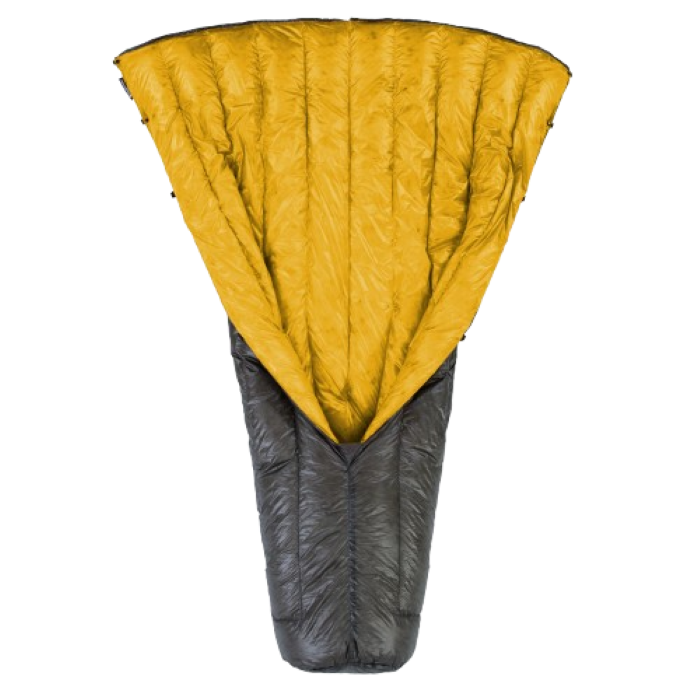
Enlightened Equipment Enigma 20
Best Backpacking Quilt
CleverHiker Rating: 4.7/5.0
Price: $320
Comfort Rating: N/A
Weight: 1 lb. 5.6 oz.
Fill Power: 850
Fill Weight: 15.5 oz
Pros
- Ultralight
- Roomy and ventable
- Very compressible
- More affordable than sleeping bags
Cons
- Learning curve
- Not as warm as sleeping bags
- Minimal features
The Enlightened Equipment Enigma 20 is our favorite backpacking quilt and one of the lightest high-performing sleep systems in the category. CleverHiker has logged roughly 400 nights in the Enigma across thru-hikes, and its sewn footbox, pad straps, and high-loft down provide an excellent warmth-to-weight ratio.
The open back creates much more freedom of movement and ventilation than a mummy bag. That makes the Enigma especially comfortable for side sleepers and hikers who dislike zippers, but it also means warmth depends more on pad insulation, strap setup, and draft management. There is no integrated hood or full zipper.
For experienced backpackers willing to learn quilt technique, the Enigma delivers exceptional value, customization, and low weight. Hikers who want a more self-contained cold-weather system should choose the Magma, Swallow, or UltraLite.
Customization is a big part of the Enigma’s appeal. It comes in multiple widths, lengths, temperature ratings, and down options, so experienced quilt users can tune the system to their body and expected conditions instead of accepting a one-size-fits-most design. The 10D fabric is delicate, but that material choice is part of what lets the Enigma deliver such a low carried weight and tiny packed size.
Choose the Zpacks Classic 20 if shaving every possible ounce matters more than customization, or the Sea to Summit Spark 15 if you want ultralight weight with a full mummy hood and enclosed back.
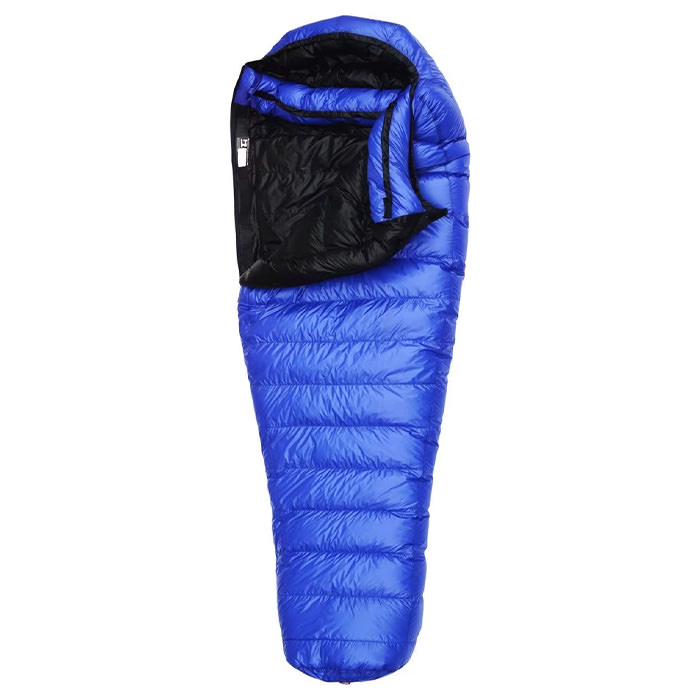
Western Mountaineering UltraLite 20
Exceptionally High-Quality and Warm Sleeping Bag
CleverHiker Rating: 4.7/5.0
Price: $640
Comfort Rating: 25°F
Weight: 1 lb. 13 oz.
Fill Power: 850+
Fill Weight: 16 oz.
Pros
- Excellent warmth-to-weight ratio
- Ultralight for a mummy bag
- Very warm
- Generous down collar & draft tube block chill well
- No-snag zipper
Cons
- Expensive
- A bit narrower than some
Every detail on the Western Moutaineering UltraLite is a benchmark premium mummy bag. Its 850+ fill down, 360-degree draft collar, full-length draft tube, and no-snag zipper create one of the best warmth-to-weight combinations we’ve tested in a traditional sleeping bag.
Our experience includes an Arizona Trail thru-hike and cold nights in Colorado and Utah, including desert conditions in the teens with an appropriate pad and layers. The bag’s conservative warmth philosophy and trim shape make it especially dependable for cold three-season trips.
The UltraLite is expensive and can feel narrow to broad-shouldered or active sleepers. Choose the TerraLite if room is the priority or the Swallow if you want our top overall blend of weight and warmth. For classic mummy-bag efficiency, the UltraLite remains outstanding.
Western Mountaineering’s conservative temperature philosophy is another reason we trust the UltraLite in cold conditions. The bag is designed around practical comfort rather than an optimistic lower-limit number, and our Arizona Trail use backed that up. If you like the UltraLite’s build but need more shoulder room, the TerraLite gives you a roomier Western Mountaineering option at only a small weight penalty.
The Feathered Friends Swallow UL 20 is the closest premium alternative if you want similarly elite warmth-to-weight with a slightly different fit, while the TerraLite is the better Western Mountaineering choice for sleepers who need noticeably more room.
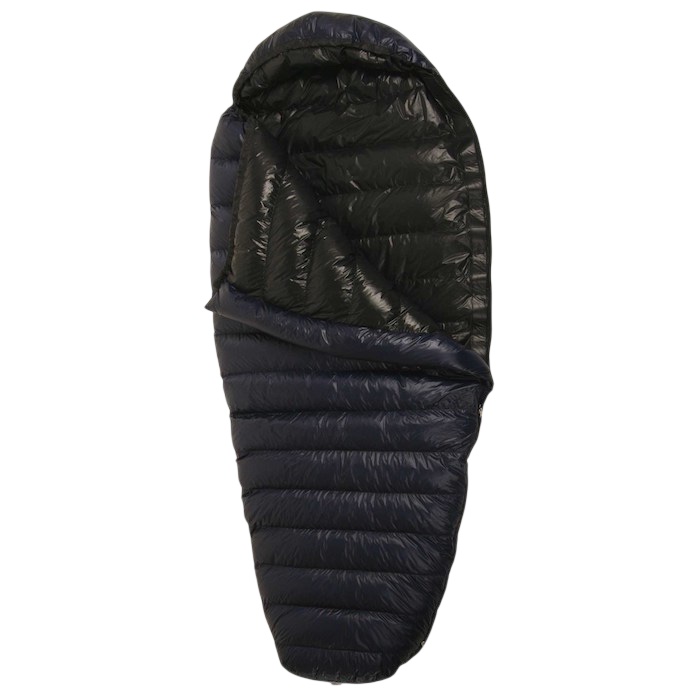
Western Mountaineering TerraLite
Most Comfortable Backpacking Sleeping Bag
CleverHiker Rating: 4.7/5.0
Price: $625
Comfort Rating: 28 ISO
Weight: 1 lb. 13.6 oz.
Fill Power: 850
Fill Weight: 18 oz
Pros
- Extremely roomy, semi-rectangular shape
- Warm and lightweight
- Hood cinches nicely
- Packs easily
Cons
- Black interior
- On the pricey side
The Western Mountaineering TerraLite is our comfort leader because its semi-rectangular shape gives side sleepers and larger hikers far more room without turning into a heavy camping bag. It still weighs just 1 pound, 13.6 ounces and carries 18 ounces of 850-fill down.
We tested the TerraLite through cold Rocky Mountain shoulder-season trips with temperatures regularly in the 20s. The hood cinches effectively, the footbox can vent on warmer nights, and the zipper liner works smoothly. The extra interior volume is slightly less thermally efficient than a tight mummy, but the warmth remains impressive.
The price is high, the black interior makes small items difficult to find, and the stuff sack feels fragile. If sleep quality and room to move matter as much as pack weight, however, the TerraLite is one of the most thoughtfully designed bags here.
The TerraLite’s full-length zipper can also open around the footbox, which gives warm sleepers much better ventilation than a fixed mummy footbox. Its slick zipper liner resists the fabric snags that plague many lightweight bags, so the extra comfort is not limited to interior space. The result is a premium bag that feels noticeably easier to live with night after night.
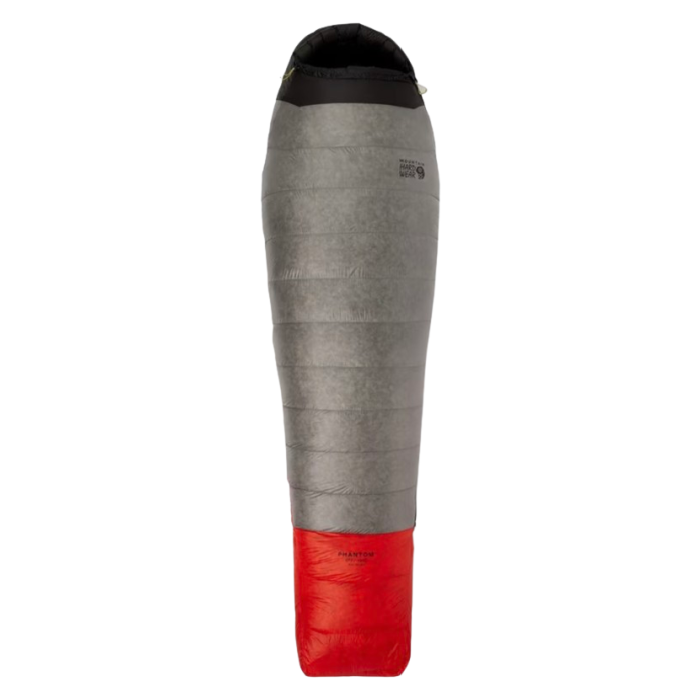
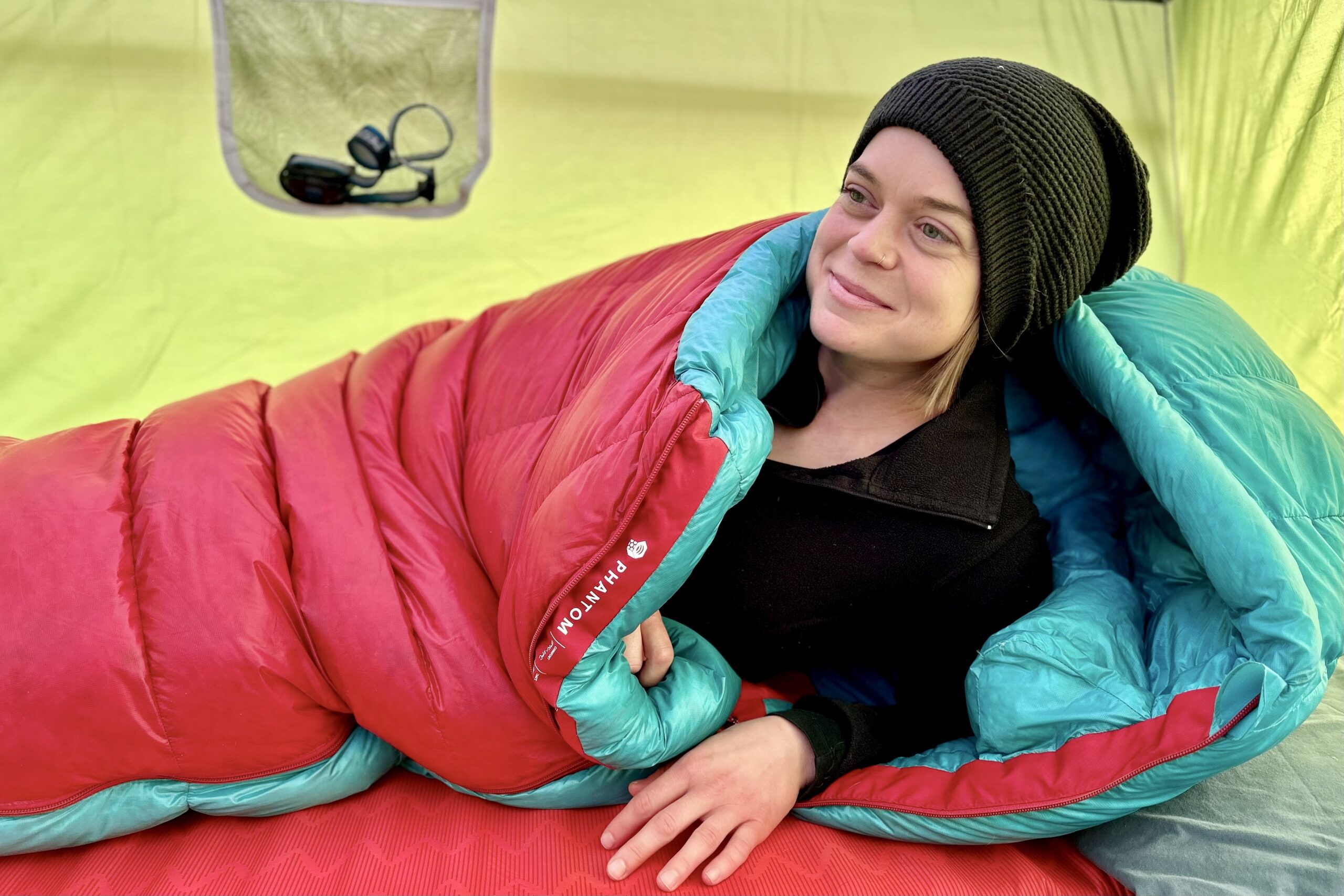
Mountain Hardwear Phantom 0
Best Winter Sleeping Bag for Backpackers
CleverHiker Rating: 4.6/5.0
Price: $780
Comfort Rating: 13°F
Weight: 2 lb. 10.6 oz.
Fill Power: 850
Fill Weight: 29.6 oz.
Pros
- Very warm
- Excellent warmth-to-weight ratio
- Generous down collar & draft tube block chill well
- No-snag zipper
- Compression sack included
- RDS certified
Cons
- Expensive
- Fit is a bit narrow
The Mountain Hardwear Phantom 0 is the clear winter specialist in this group. Nearly 30 ounces of 850-fill down, a generous neck collar, full zipper draft protection, and an insulated hood create the warmest sleep system in our current ranking.
CleverHiker has used the Phantom through winter in the Utah desert and Colorado high country, including high-altitude nights in Rocky Mountain National Park. Its 13°F comfort rating is the number we use for planning rather than assuming the 0°F product name guarantees comfort at zero.
At 2 pounds, 10.6 ounces it is heavy for normal three-season trips, and the narrow fit will not suit everyone. But for backpackers who regularly sleep below freezing, the Phantom provides far more cold-weather margin than trying to stretch a lighter summer bag.
The Phantom is also loaded with winter-specific details that matter after dark: large draft structures, easy-to-find zipper pulls, a contoured footbox, and a shell built to handle harsher conditions than a minimalist three-season bag. Those features explain some of the added weight, but they also make the bag easier to operate when temperatures are low enough that you do not want to spend time fighting your sleep system.
If most of your trips stay above freezing, the REI Magma 15 or Western Mountaineering UltraLite 20 will save substantial weight and pack space. The Phantom makes sense when genuine winter margin is worth carrying.
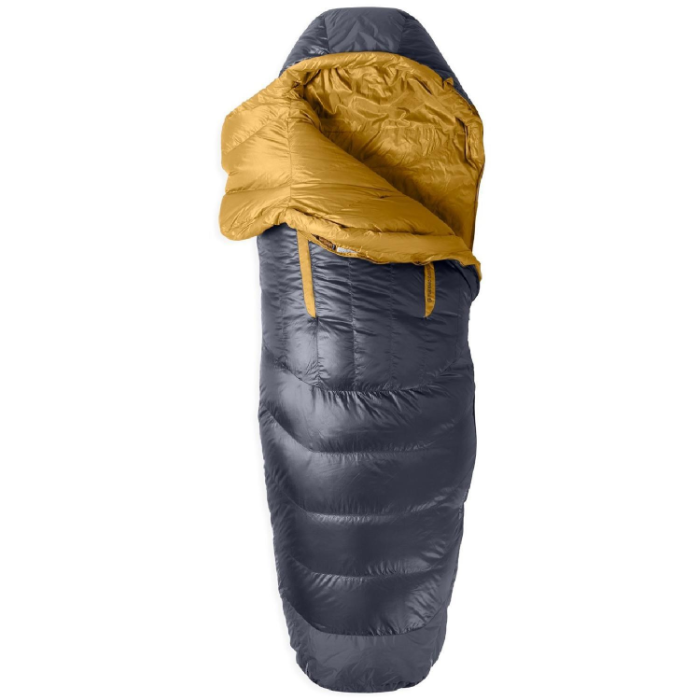
NEMO Disco 15 Endless Promise
Best Features on a Backpacking Sleeping Bag
CleverHiker Rating: 4.6/5.0
Price: $300
Comfort Rating: 25°F
Weight: 2 lb. 11 oz.
Fill Power: 650
Fill Weight: 23 oz.
Pros
- Roomier fit than other bags
- Above-average durability
- Generous down collar & draft tube block chill well
- Waterproof footbox
- Fully recyclable design
- Pillow pocket and stash pocket
- Compression sack included
- RDS certified
Cons
- Heavy and bulky
- Not as heat efficient as some
The NEMO Disco 15 Endless Promise (men’s / women’s) is the best choice for feature-focused side sleepers. Its Spoon Shape creates extra room at the knees and elbows, while Thermo Gill vents, a Blanket Fold draft collar, pillow pocket, waterproof footbox, stash pocket, and recyclable construction make it the most fully featured three-season bag in the guide.
The 25°F comfort rating and 23 ounces of 650-fill down give the Disco useful cold-weather range, though its roomy shape is less thermally efficient than a narrow mummy. Side sleepers and people who toss and turn may sleep better enough to make that trade worthwhile.
The penalty is 2 pounds, 11 ounces of weight and substantial packed bulk. Ultralight hikers should look elsewhere, but comfort-first backpackers who actively use the extra features get a lot of bag for $300.
NEMO’s Thermo Gills and Blanket Fold collar give the Disco a wider usable temperature range than its roomy shape might suggest. The pillow pocket, waterproof footbox, and Endless Promise recyclable construction add practical appeal as well. We think of the Disco as a crossover bag: heavier than our ultralight picks, but unusually comfortable and versatile for people who split time between backpacking and car camping.
Choose the Western Mountaineering TerraLite 25 if you want a roomier bag at much lower weight, or the REI Magma 15 if thermal efficiency matters more than the Disco’s extra features and side-sleeper space.
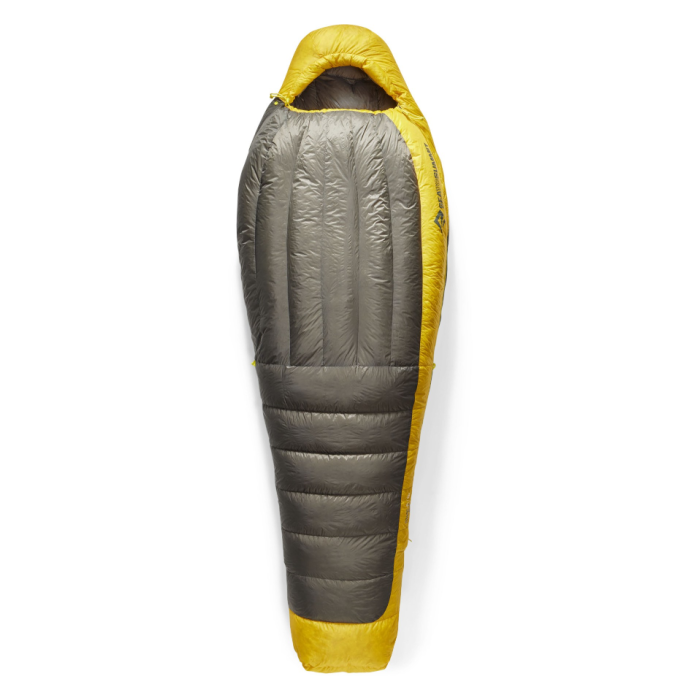
Sea to Summit Spark 15
Best Ultralight Sleeping Bag
CleverHiker Rating: 4.6/5.0
Price: $549
Comfort Rating: 29°F
Weight: 1 lb. 9.7 oz. / 2 lb. 0.8 oz.
Fill Power: 850
Fill Weight: 16.9 oz. / 24.2 oz.
Pros
- Ultralight and highly packable
- Excellent warmth-to-weight
- Compression sack included
- Draft collar blocks chill well
- RDS certified
Cons
- Expensive
- Thin material
- Zipper can snag
The Sea to Summit Spark 15 (men’s / women’s) is our favorite ultralight full mummy bag. Its 850-fill down, 360-degree draft collar, efficient hood, and carefully placed baffles deliver a complete sleeping-bag enclosure at weights that approach quilt territory.
The smaller listed configuration weighs 1 pound, 9.7 ounces and compresses exceptionally small in the included sack. That makes the Spark ideal for high-mileage trips and smaller packs where both ounces and cubic inches matter.
The 29°F comfort rating is more important than the “15” product name, and the thin shell requires careful handling. The zipper can also catch fabric. If you want ultralight weight without learning a quilt system, the Spark is the strongest conventional option.
The Spark uses vertical box baffles through the torso to keep down from migrating away from the core, which is especially useful for sleepers who roll from side to side. That construction, combined with the full mummy hood and draft collar, is why the Spark can stay so light without feeling like a stripped-down quilt. The shell is thin, so careful handling is part of the bargain.
The Enlightened Equipment Enigma 20 saves more weight if you are comfortable with a quilt, while the Feathered Friends Swallow UL 20 costs more but offers stronger all-around warmth and a more premium long-term build.
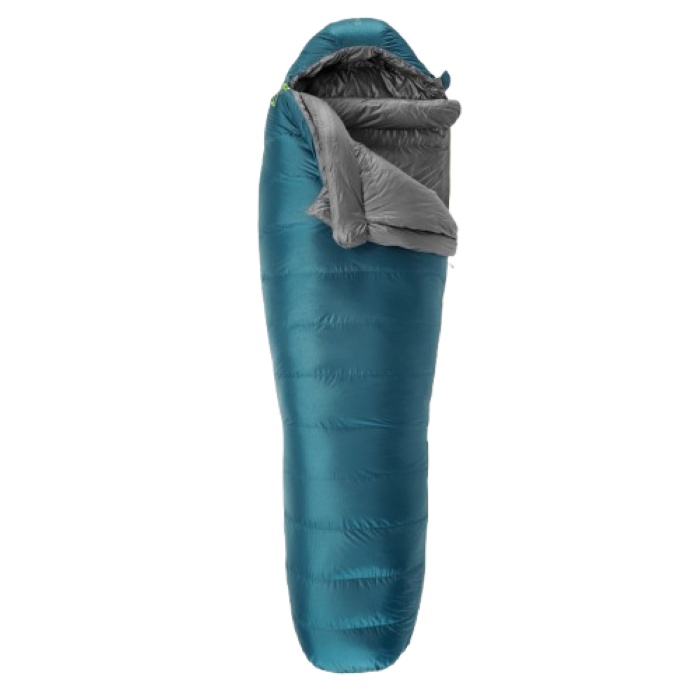
Exped Terra 15
Very Warm and Affordable Backpacking Sleeping Bag
CleverHiker Rating: 4.5/5.0
Price: $260
Comfort Rating: 25ºF
Weight: 3 lb. 0.5 oz.
Fill Power: 650
Fill Weight: 28 oz
Pros
- Affordable
- Practical features
- Much lighter than synthetics
- Included compression sack
Cons
- Weight
- Medium quality down
The Exped Terra 15 offers excellent cold-weather value. Its 28 ounces of 650-fill down, roughly 25°F comfort rating, snap-close draft collar, adjustable hood, and classic mummy shape kept us warm on cold fall nights in Colorado’s Indian Peaks Wilderness.
The Terra also feels more refined than its price suggests. A roomy gusseted footbox, soft 20D fabrics, glow-in-the-dark zipper pull, interior pocket, webbing-backed zipper, and included compression sack make it one of the most practical value bags in the group.
The downside is weight. The current category card lists 3 pounds, 0.5 ounces, which is far heavier than premium down bags. If price and reliable warmth matter more than ultralight mileage, the Terra is a very strong buy.
The Terra’s gusseted footbox is another standout because it gives feet more room than most mummy bags without making the entire bag overly wide. Add the glow-in-the-dark zipper pull, interior pocket, cinchable hood, and snap-close draft collar, and this feels much more polished than a typical mid-priced bag. The included compression sack is genuinely useful, even if it adds a few ounces.
The Mountain Hardwear Bishop Pass 15 is a lighter value alternative with a similarly traditional mummy fit, while the REI Magma 15 is the better upgrade for frequent backpackers who want higher-fill-power down and lower carried weight.
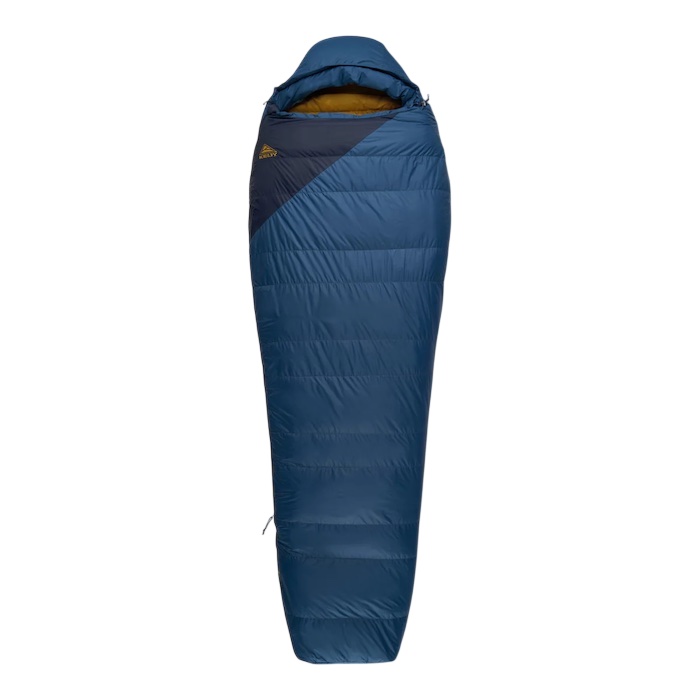
Kelty Cosmic Down 20
Best Budget Backpacking Sleeping Bag
CleverHiker Rating: 4.5/5.0
Price: $180
Comfort Rating: 31 ISO
Weight: 2 lb. 7.7 oz.
Fill Power: 550
Fill Weight: 16.4 oz
Pros
- Affordable and warm
- Reasonably light
- Yellow interior so you can find your things
- Full hood draft collar
Cons
- Low fill power
- Zipper snags
The Kelty Cosmic Down 20 is our favorite budget sleeping bag for regular backpacking. It gives newer hikers genuine down insulation, a full hood and draft collar, a useful stash pocket, and manageable backpacking weight for $180.
CleverHiker has used the Cosmic platform for chilly Rocky Mountain nights and roughly 150 backpacking miles, including a Canyonlands loop. The 550-fill down is not highly efficient, but the 31°F ISO comfort rating and mummy construction provide useful three-season warmth around freezing.
The main compromises are added bulk and a zipper that can snag. Premium bags save substantial weight, but for beginners building a complete kit, the Cosmic leaves money for a quality pad, shelter, and other essentials while still performing like real backpacking equipment.
The Cosmic’s lower fill power is the main reason it cannot match premium bags for weight and packed size, but the tradeoff is straightforward: it keeps the purchase price low while still providing real down insulation. The bright interior, stash pocket, roomy lower half, and full draft collar all make it easier to use than many entry-level bags. For a first backpacking setup, that is a compelling balance.
The Mountain Hardwear Bishop Pass 15 is a worthwhile step up for colder trips, while the TETON Sports Trailhead 20 costs far less for hikers who only need a mild-weather starter bag. The Cosmic sits between them as the better all-around beginner choice.

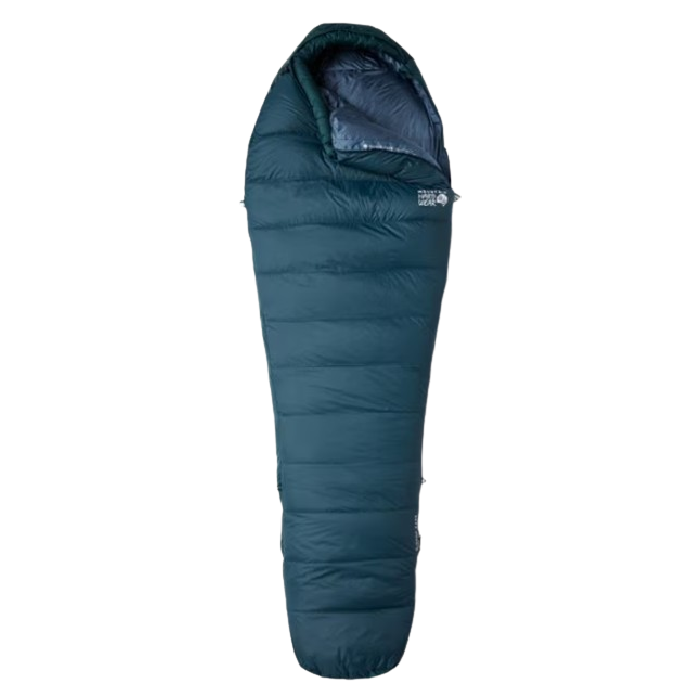
Mountain Hardwear Bishop Pass 15
Super Affordable Down Sleeping Bag
CleverHiker Rating: 4.5/5.0
Price: $335
Comfort Rating: 26°F
Weight: 2 lb. 5.2 oz.
Fill Power: 650
Fill Weight: 21.2 oz
Pros
- Warm and affordable
- Anti-snag zipper
- Compression sack included
Cons
- Heavier than other down bags
- Not very roomy
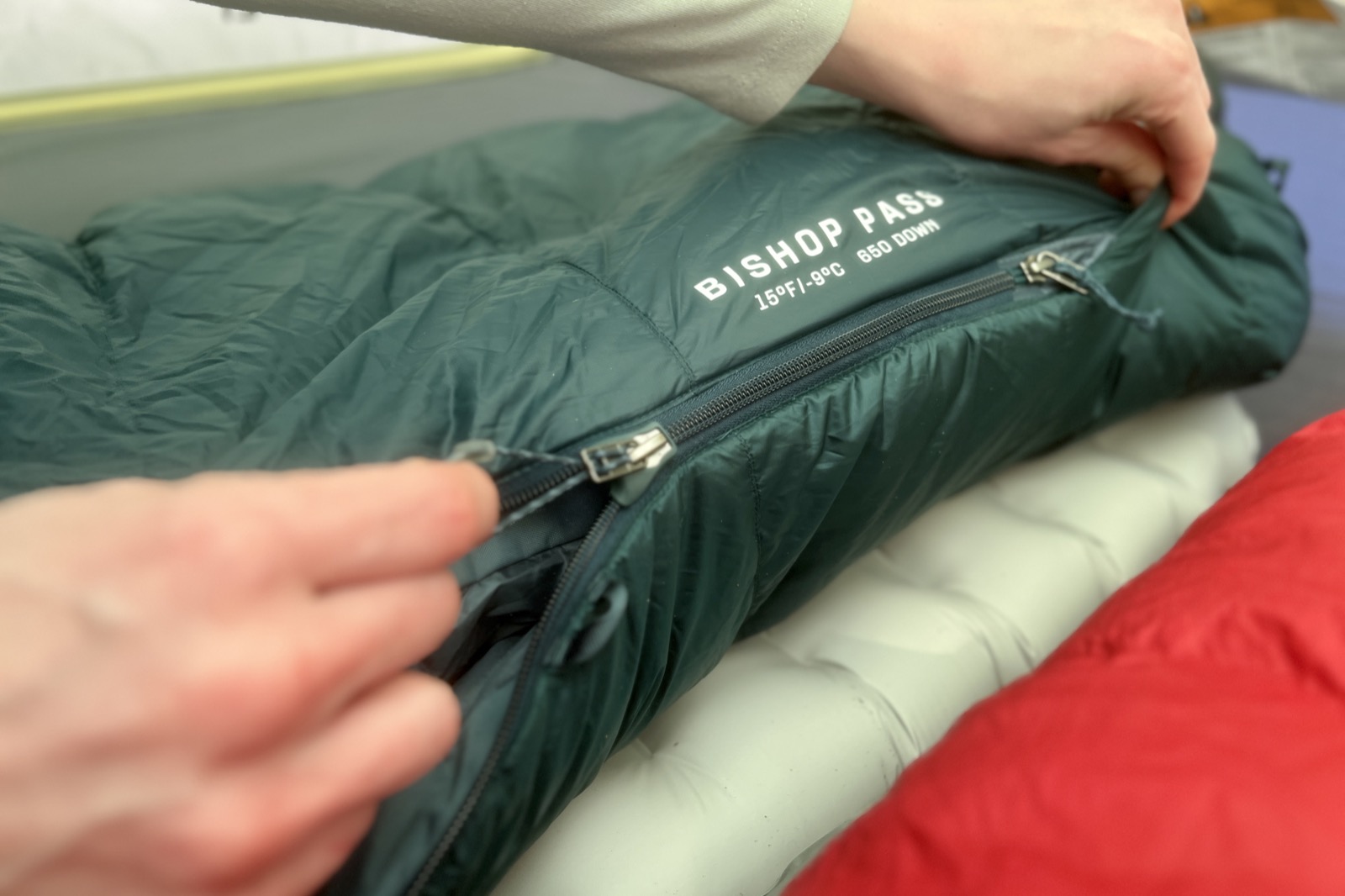
The Mountain Hardware Bishop Pass 15 is a straightforward value-focused down bag with dependable cold-weather performance. We tested it on snowy, sub-freezing Rocky Mountain nights, and its 21.2 ounces of 650-fill down, hood, and draft protection made the 26°F comfort rating feel credible.
The highlight is the webbing-lined anti-snag zipper, which operates more smoothly than many budget sleeping-bag zippers. Mountain Hardwear also includes a glow-in-the-dark pull, small interior pocket, and compression sack.
The trim mummy shape can feel narrow, and 2 pounds, 5.2 ounces is heavier than premium down bags. For hikers who want warmth and a polished zipper system without paying top-tier prices, the Bishop Pass occupies a useful middle ground.
The Bishop Pass also has one of the better zipper systems in the value tier. Webbing along the zipper path helps prevent snags, the glow-in-the-dark pull is easy to locate at night, and a small interior pocket adds basic organization. It is not roomy enough for everyone, but hikers with a slimmer build get reliable warmth and useful refinement without stepping into premium pricing.
The Exped Terra 15 is roomier and more feature-rich at a similar value-oriented level, while the REI Magma 15 is a stronger choice for frequent backpackers willing to spend more to reduce weight and packed volume.
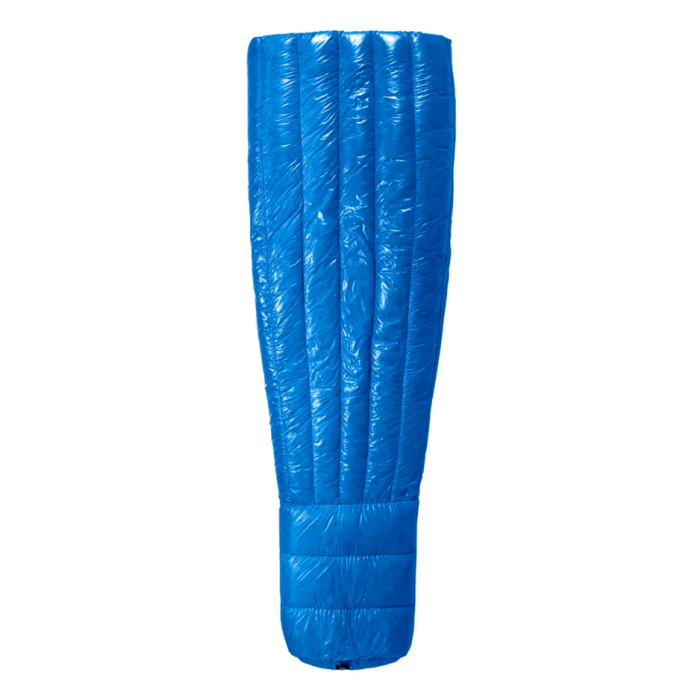
Zpacks Classic 20
Best Ultralight Quilt / Sleeping Bag Hybrid
CleverHiker Rating: 4.4/5.0
Price: $419
Comfort Rating: N/A
Weight: 1 lb. 2.8 oz.
Fill Power: 900
Fill Weight: 12.7 oz.
Pros
- Ultralight and highly packable
- Excellent warmth-to-weight ratio
- Overstuffed baffles prevent cold spots
- RDS certified
Cons
- Expensive
- Not warm enough for sub-freezing trips
- No hood
The Zpacks Classic 20 Sleeping Bag is the lightest sleeping-bag-style option in the guide at just 1 pound, 2.8 ounces. A sewn footbox, vertical baffles, 900-fill down, and a three-quarter zipper give it more enclosure than an open quilt without the weight of a traditional hooded mummy bag.
We’ve carried the Classic on long-distance routes including the John Muir Trail and Colorado Trail, with more than 1,000 trail miles represented in our live testing history. It packs extremely small and is ideal for experienced ultralight hikers.
The tradeoff is cold-weather margin. Our field experience is most comfortable in roughly the upper 30s to low 40s for many users, and there is no hood. Choose it for mild three-season mileage, not repeated sub-freezing trips.
The Classic’s long-distance credentials are a major part of its appeal. We have used it on thru-hikes of the John Muir Trail and Colorado Trail, plus shorter trips, and it has held up through more than 1,000 trail miles. The sewn footbox and three-quarter zipper give it more draft control than a fully open quilt while preserving the ultralight simplicity that makes it so attractive to thru-hikers.
The Enlightened Equipment Enigma 20 gives you a more traditional quilt experience with broader customization, while the Sea to Summit Spark 15 adds a full mummy hood and back panel for hikers who want less draft management.
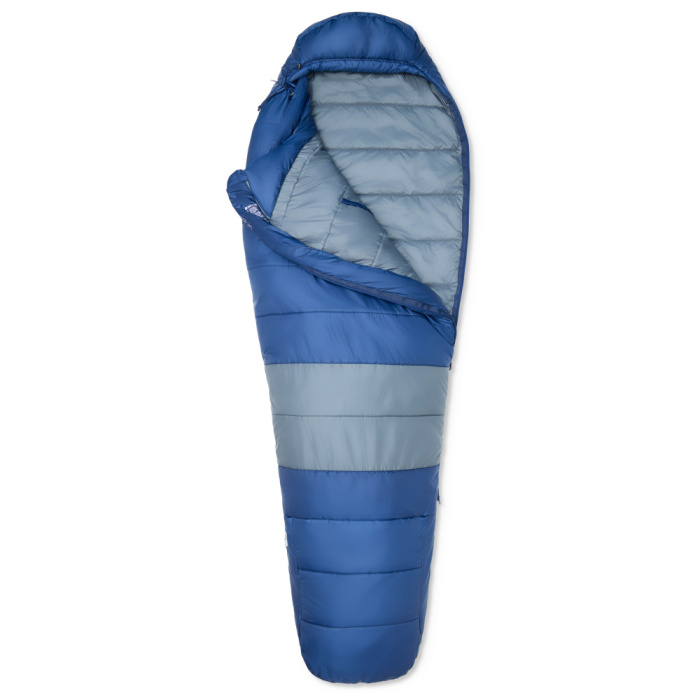
Marmot Trestles Elite Eco 20
Best Synthetic Sleeping Bag
CleverHiker Rating: 4.2/5.0
Price: $200
Comfort Rating: 32°F
Weight: 3 lb. 12.4 oz.
Fill Power: Synthetic
Fill Weight: Synthetic
Pros
- Affordable
- Above-average durability
- Stash pocket
- Synthetic fill retains insulative properties when damp
- Compression sack included
Cons
- Heavier and bulkier than others
- A little tight in the leg
The Marmot Trestles Elite Eco 20 is our top synthetic option for backpackers who prioritize damp-weather reliability and durability. CleverHiker used the Trestles platform for roughly 2,000 miles on the Appalachian Trail, where wet conditions in the Smokies and Virginia made synthetic insulation’s moisture tolerance valuable.
The bag includes a useful blanket-fold quarter zipper, stash pocket, full hood, and compression sack. Its 32°F comfort rating gives it genuine cool-weather range, and the fabrics feel less delicate than premium ultralight shells.
The cost is 3 pounds, 12.4 ounces of weight and substantial bulk, plus a leg area that feels tighter than expected. Dry-climate backpackers generally get better performance from down, but the Trestles remains a practical specialist for wet environments and budget users.
Synthetic insulation is the reason the Trestles remains relevant despite its weight. We used this platform for roughly 2,000 miles on the Appalachian Trail, where wet and humid sections made its ability to retain useful insulation when damp a real advantage. The quarter-length blanket-fold zipper also gives the upper body easy ventilation while keeping the feet covered on milder nights.
The Kelty Cosmic Down 20 is much lighter for general backpacking in dry conditions, while the Exped Terra 15 offers down insulation, better packability, and strong value. Choose the Trestles when synthetic moisture tolerance is the priority.
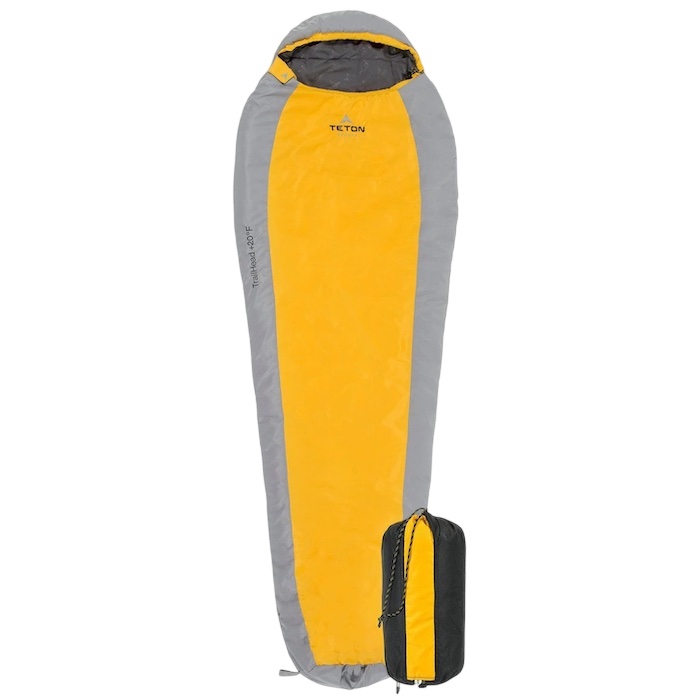
Teton Sports Trailhead 20
Most Inexpensive Backpacking Sleeping Bag
CleverHiker Rating: 3.8/5.0
Price: $65
Comfort Rating: 40-50ºF
Weight: 2 lb. 12.3 oz.
Fill Power: Synthetic
Fill Weight: Synthetic
Pros
- Very affordable and good durability
- Surprisingly lightweight
- Zipper doesn't snag
- Good for backpacking newbies that are unsure if they want to fully commit
Cons
- Not very warm
- Constricting
The Teton Outdoors Trailhead 20 exists to minimize the cost of trying backpacking. At about $65, it provides a hood, interior pocket, smooth zipper, hanging loops, and surprisingly manageable weight, making it a legitimate entry-level option for mild summer trips.
The critical limitation is temperature. Despite the “20” name, our real-world comfort estimate is closer to 40–50°F. We intentionally used it in freezing conditions and found it clearly outside its appropriate range. The fit is also narrow and can feel clingy.
Beginners who only plan warm summer overnights can use the Trailhead to learn whether they enjoy backpacking before making a large investment. Anyone heading into mountains, shoulder seasons, or forecasts near freezing should spend more on a warmer bag.
The Trailhead’s feature set is better than its price suggests: the zipper runs smoothly, the hood cinches down, an interior pocket keeps small items close, and hanging loops make proper storage easier at home. None of that turns it into a cold-weather bag, but it does make the Trailhead a functional way for a new backpacker to try a few warm-weather trips before investing in a more capable sleep system.
The Kelty Cosmic Down 20 is the better first serious backpacking bag if the budget allows, while the Marmot Trestles Elite Eco 20 provides much stronger cool-weather synthetic performance for hikers who specifically want non-down insulation.
Product Comparison Table
| oSort | Product | Price | Comfort Rating | Weight | Fill Power | Fill Weight | Warmth | Comfort | Weight & Packability | Features | 0 |
Feathered Friends Swallow UL 20 View at Feathered Friends 
|
$659 | N/A | 1 lb. 10.6 oz. | 950+ | 16.8 oz | 4.8 | 4.8 | 4.8 | 4.6 | 1 |
REI Co-op Magma 15 View at REI
|
$399 | 21°F | 2 lb. 3.6 oz. | 850 | 23.3 oz. | 4.8 | 4.7 | 4.4 | 4.7 | 2 |
Enlightened Equipment Enigma 20 View at Enlightened Equipment
|
$320 | N/A | 1 lb. 5.6 oz. | 850 | 15.5 oz | 4.5 | 4.8 | 5.0 | 4.6 | 3 |
Western Mountaineering UltraLite 20 View at Amazon View at Garage Grown Gear |
$640 | 25°F | 1 lb. 13 oz. | 850+ | 16 oz. | 4.8 | 4.7 | 4.7 | 4.5 | 4 |
Western Mountaineering TerraLite View at REI View at Amazon |
$625 | 28 ISO | 1 lb. 13.6 oz. | 850 | 18 oz | 4.5 | 5.0 | 4.7 | 4.5 | 5 |
Mountain Hardwear Phantom 0 View at Amazon View at Mountain Hardwear |
$780 | 13°F | 2 lb. 10.6 oz. | 850 | 29.6 oz. | 5.0 | 4.8 | 3.8 | 4.7 | 6 |
NEMO Disco 15 Endless Promise View Men's View Women's |
$300 | 25°F | 2 lb. 11 oz. | 650 | 23 oz. | 4.7 | 4.9 | 3.7 | 4.9 | 7 |
Sea to Summit Spark 15 View Men's View Women's |
$549 | 29°F | 1 lb. 9.7 oz. / 2 lb. 0.8 oz. | 850 | 16.9 oz. / 24.2 oz. | 4.5 | 4.5 | 4.8 | 4.4 | 8 |
Exped Terra 15 View at REI View at Exped |
$260 | 25ºF | 3 lb. 0.5 oz. | 650 | 28 oz | 4.6 | 4.7 | 3.7 | 4.8 | 9 |
Kelty Cosmic Down 20 View at REI View at Amazon 
|
$180 | 31 ISO | 2 lb. 7.7 oz. | 550 | 16.4 oz | 4.5 | 4.7 | 4.0 | 4.6 | 10 |
Mountain Hardwear Bishop Pass 15 View at REI View at Backcountry |
$335 | 26°F | 2 lb. 5.2 oz. | 650 | 21.2 oz | 4.5 | 4.6 | 4.0 | 4.7 | 11 |
Zpacks Classic 20 View at Zpacks |
$419 | N/A | 1 lb. 2.8 oz. | 900 | 12.7 oz. | 4.2 | 4.4 | 5.0 | 4.4 | 12 |
Marmot Trestles Elite Eco 20 View at REI
|
$200 | 32°F | 3 lb. 12.4 oz. | Synthetic | Synthetic | 4.5 | 4.2 | 3.5 | 4.5 | 13 |
Teton Sports Trailhead 20 View at Amazon
|
$65 | 40-50ºF | 2 lb. 12.3 oz. | Synthetic | Synthetic | 3.5 | 3.5 | 3.5 | 4.6 |
|---|
Analysis & Results
In this section, we peel back the layers to reveal the sleeping bags that offer the greatest value, and top-performers when it comes to warmth, weight, packability, comfort, and features.
Which sleeping bags Offer the best value?
Value is not the same as lowest price. The TETON Sports Trailhead 20 crushes the cost of entry at $65, but its real comfort range is mild summer weather. The Kelty Cosmic Down 20 is the more capable beginner investment because it provides down insulation, useful three-season warmth, and manageable backpacking weight for $180.
The next value tier includes the Exped Terra 15, Mountain Hardwear Bishop Pass 15, and Marmot Trestles Elite Eco 20. The Exped and Bishop use 650-fill down and deliver meaningful cold-weather performance at much lower prices than premium bags. The Marmot is heavy, but synthetic fill gives it a real advantage in persistently damp environments. The NEMO Disco 15 also delivers a lot for $300 because its roomy shape, ventilation, pillow pocket, and draft system would normally command a higher price.
The Enlightened Equipment Enigma 20 is one of the strongest performance values for experienced ultralight users, while the REI Magma 15 stands out for putting 23.3 ounces of 850-fill down into a relatively light, broadly sized $399 bag. The Swallow, UltraLite, TerraLite, Spark, Phantom, and Zpacks Classic charge premium prices for specialized performance rather than budget value.
Which sleeping bag is the warmest?
The Mountain Hardwear Phantom 0 is the warmth leader. Its 29.6 ounces of 850-fill down, oversized draft collar, hood, and winter-focused construction put it in a different class from normal three-season bags. It is the best choice here for repeated below-freezing trips.
Among three-season bags, the Feathered Friends Swallow UL 20, Western Mountaineering UltraLite 20, and REI Magma 15 provide the strongest combination of real warmth and manageable weight. The NEMO Disco 15 follows closely but gives up some thermal efficiency for extra interior room. The Exped Terra 15, Bishop Pass 15, Kelty Cosmic Down, and Marmot Trestles Elite Eco provide useful warmth at lower prices, with the Trestles adding moisture tolerance.
The TerraLite remains impressively warm despite its roomy shape, while the Enigma, Spark, and Zpacks Classic achieve strong efficiency through minimalist construction. Those ultralight systems demand more attention to temperature ratings and complete sleep-system setup. The TETON Trailhead sits at the bottom for warmth and should be reserved for mild summer nights around 40–50°F or warmer.
Which sleeping bag is the lightest & most packable?
The Zpacks Classic 20 is the clear weight leader at 1 pound, 2.8 ounces, followed by the Enlightened Equipment Enigma and Sea to Summit Spark. These products remove or minimize traditional sleeping-bag components to save both ounces and pack volume, making them natural choices for thru-hikers and small-volume packs.
The Feathered Friends Swallow UL 20, Western Mountaineering UltraLite 20, and TerraLite 25 also score exceptionally well because high-fill-power down provides substantial loft without much mass. The REI Magma 15 is heavier but still compresses very well for the amount of insulation it carries.
The Kelty Cosmic Down, Bishop Pass, Phantom, Disco, Exped Terra, and synthetic bags progressively add weight for lower-cost insulation, more features, more room, or winter warmth. The Marmot Trestles Elite Eco is the heaviest at 3 pounds, 12.4 ounces. The TETON Trailhead is surprisingly manageable for its price, but its synthetic fill still consumes more space than high-end down.
Which sleeping bag is the most comfortable?
The Western Mountaineering TerraLite 25 is our comfort leader because its semi-rectangular shape allows side sleepers and larger hikers to move naturally. The NEMO Disco 15 is close behind with its Spoon Shape, extra knee and elbow room, pillow pocket, and comfort-focused ventilation.
The Enigma offers a different kind of comfort: an open, blanket-like quilt experience with excellent freedom of movement. The Swallow UL 20 and Phantom 0 are plush and cozy within more efficient shapes, while the Magma 15 earns points for its unusually broad range of lengths and widths.
The UltraLite, Spark, Cosmic, Exped Terra, Bishop Pass, and Zpacks Classic are comfortable for their intended users but make clearer fit tradeoffs. The Marmot Trestles is tight in the legs for its weight, and the TETON Trailhead feels narrow and clingy. Sleep style matters here more than any other metric, so side sleepers should not automatically choose the lightest or warmest bag.
Which sleeping bag has the best features?
The most feature-forward bags are the NEMO Disco 15, Mountain Hardwear Phantom 0, Exped Terra 15, and Mountain Hardwear Bishop Pass 15. The Disco leads for variety with Thermo Gills, Blanket Fold collar, pillow pocket, waterproof footbox, stash pocket, and recyclable construction.
The Phantom focuses on winter function with reflective or glow-friendly zipper details, heavy draft protection, a contoured footbox, and compression storage. The Bishop Pass and Exped Terra both use webbing-backed anti-snag zippers; the Exped adds a snap draft collar, interior pocket, and glow-in-the-dark tab.
The Cosmic and Marmot Trestles provide useful budget-friendly features, while the TerraLite adds a ventable footbox and excellent zipper liner. The Swallow, UltraLite, Spark, Enigma, and Zpacks Classic intentionally stay minimalist to save weight. The TETON Trailhead scores surprisingly well for the price because its zipper, hood, pocket, and hanging loops all work without much fuss.
How to Choose a Backpacking Sleeping Bag
What Do Sleeping Bag Temperature Ratings Mean?
The number in a sleeping bag’s name is not always the temperature at which most people will sleep comfortably. When EN or ISO ratings are available, we put more weight on the Comfort Rating than the lower-limit number. Cold sleepers should build in extra margin, and every rating assumes an adequately insulated sleeping pad.
Should I Choose Down or Synthetic?
Down provides the best warmth-to-weight and compressibility, which is why most of our top backpacking bags use it. Synthetic insulation is heavier and bulkier but retains more useful insulation when damp and dries faster, making it attractive for persistent wet conditions or lower budgets.
How do fill power and fill weight affect my sleeping bag?
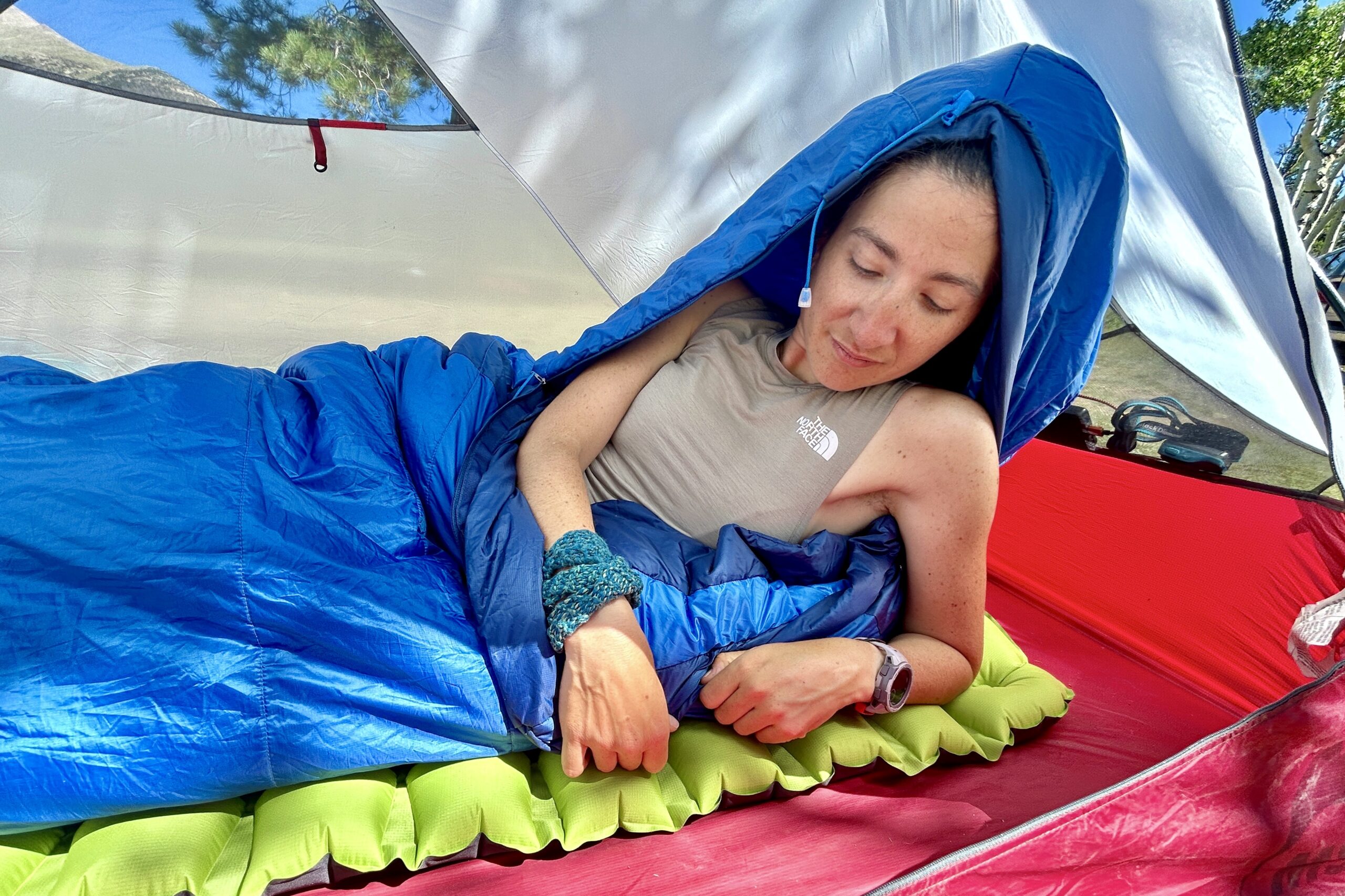
Fill power describes the loft quality of down, not how warm a whole bag is by itself. Fill weight tells you how much down is actually inside. A bag with 950-fill down can be very light and efficient, while a lower-fill-power bag can still be warm if it contains enough insulation. Compare both numbers along with construction and comfort ratings.
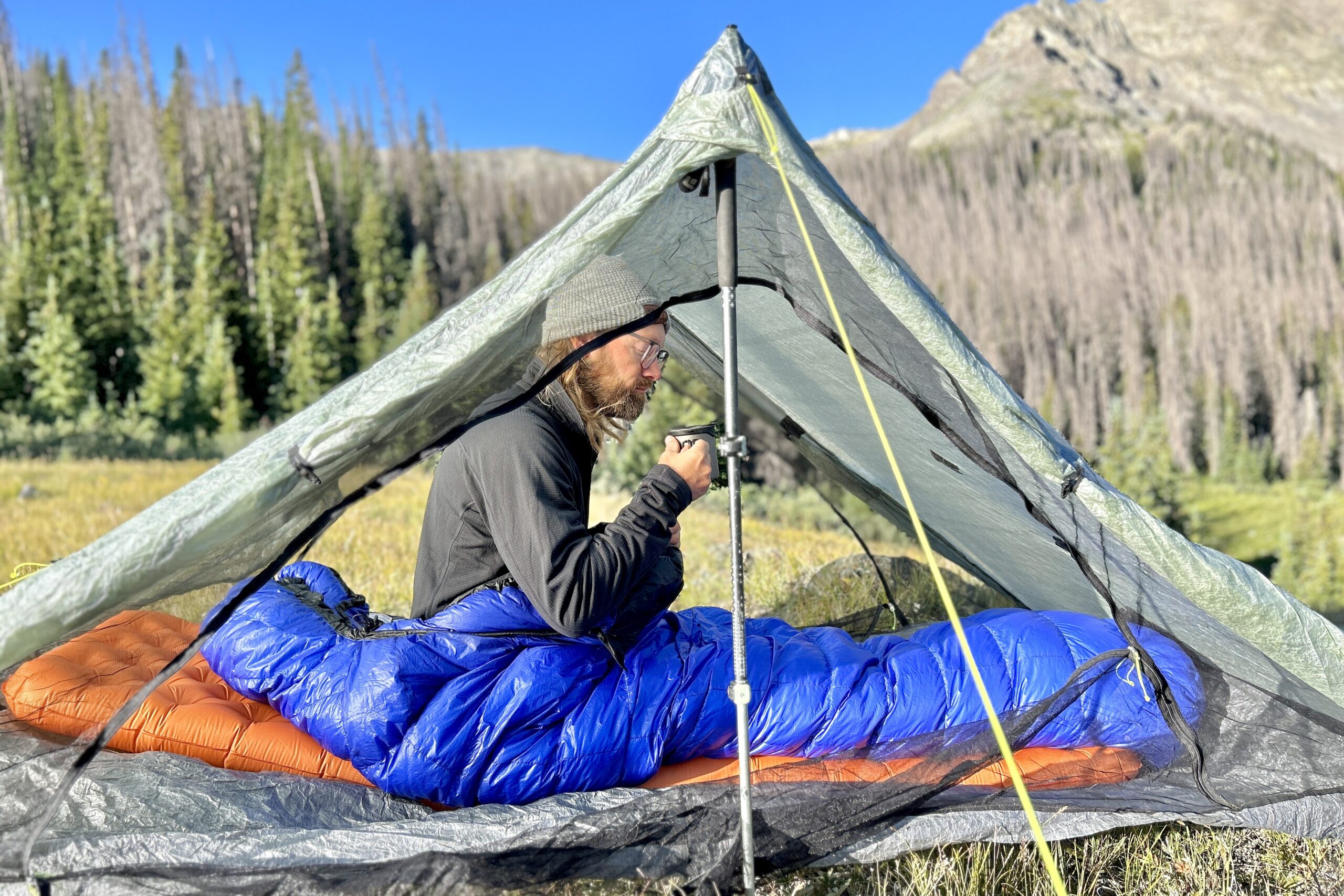
Should I choose a mummy bag or a quilt?
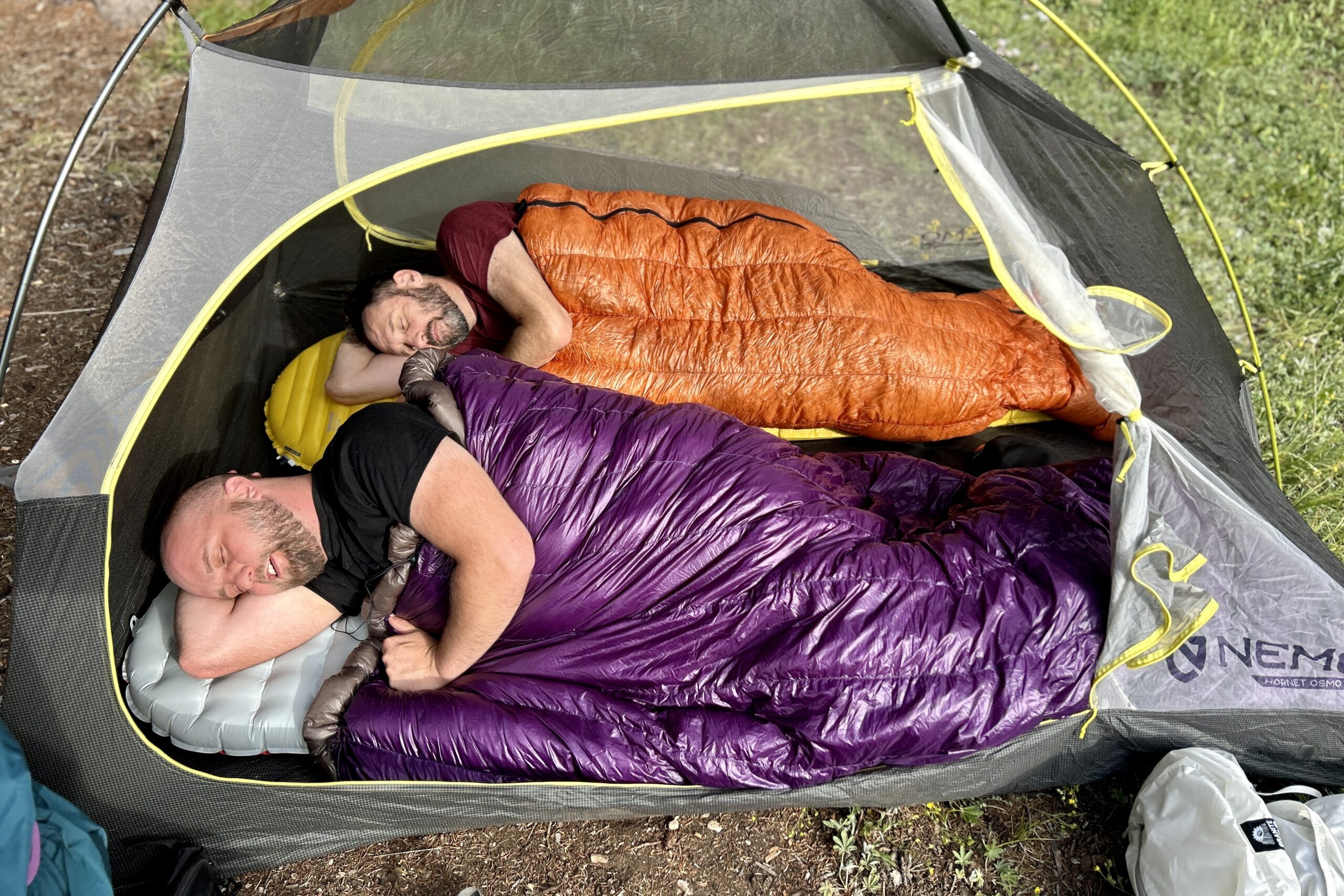
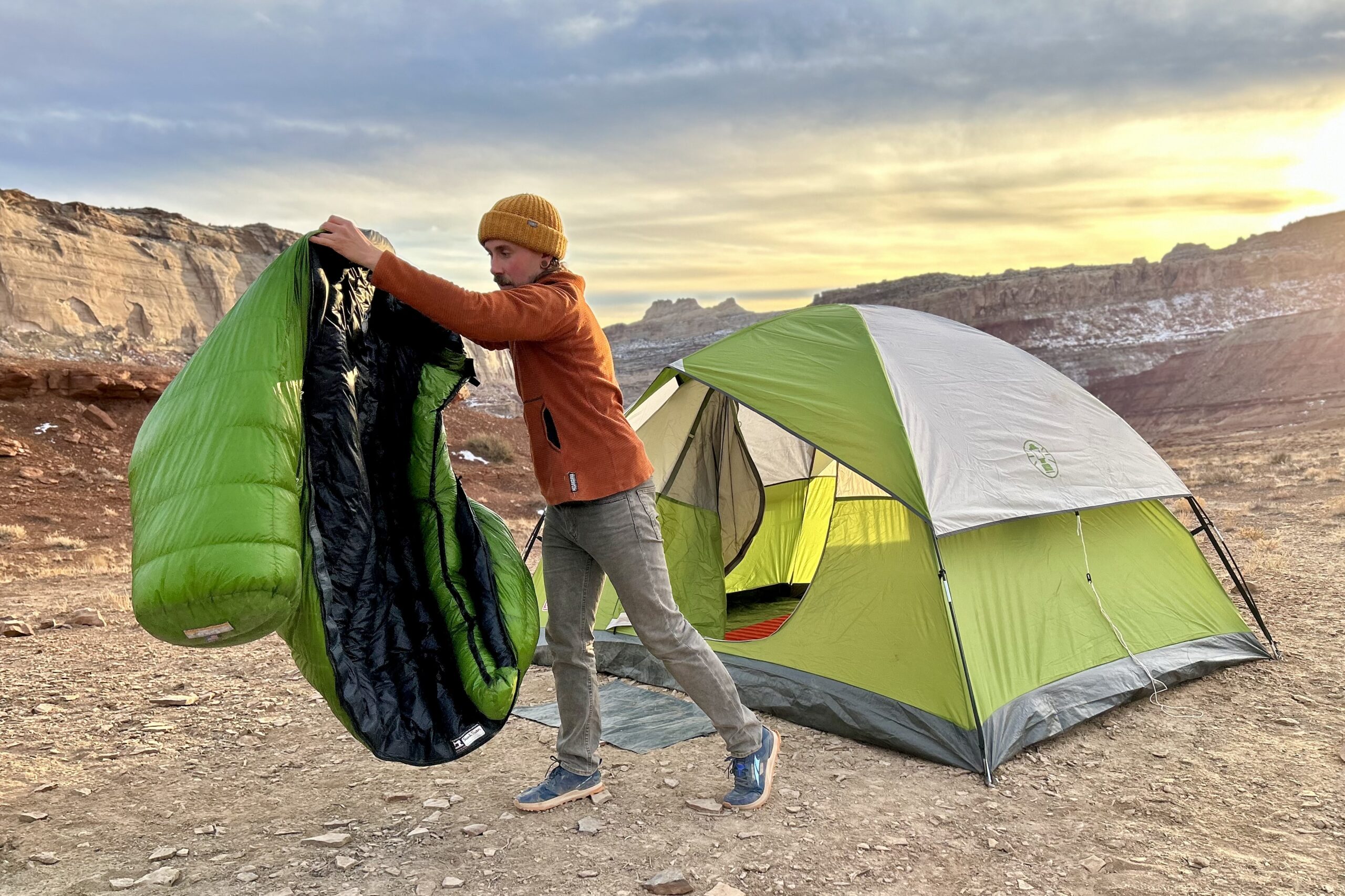
Mummy bags surround the body, include a hood, and reduce drafts automatically, so they are easier to use in cold conditions. Quilts remove the back and hood to save weight and increase freedom of movement. They work best with a well-insulated pad and good draft-management technique.
How should my backpacking sleeping bag fit?
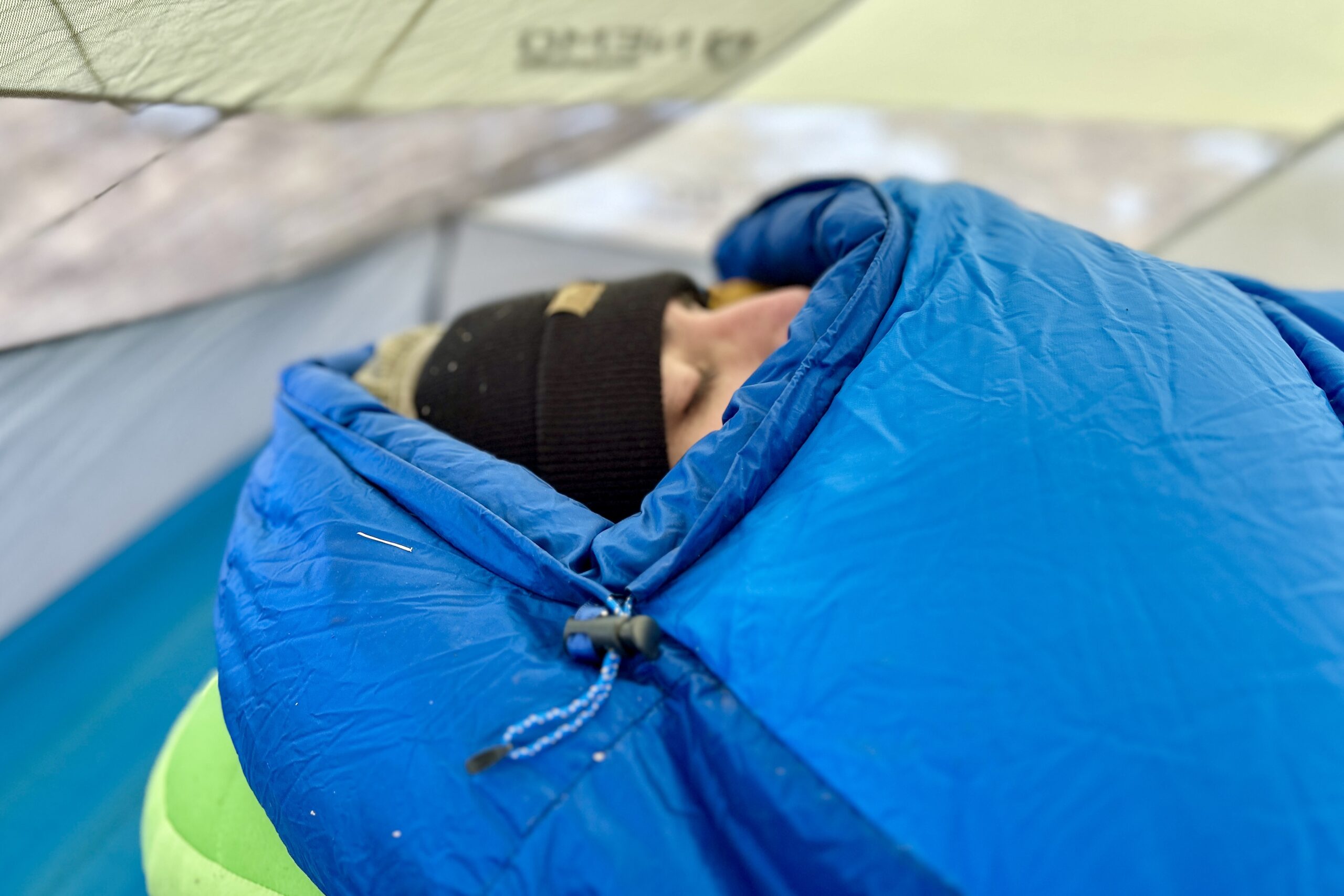
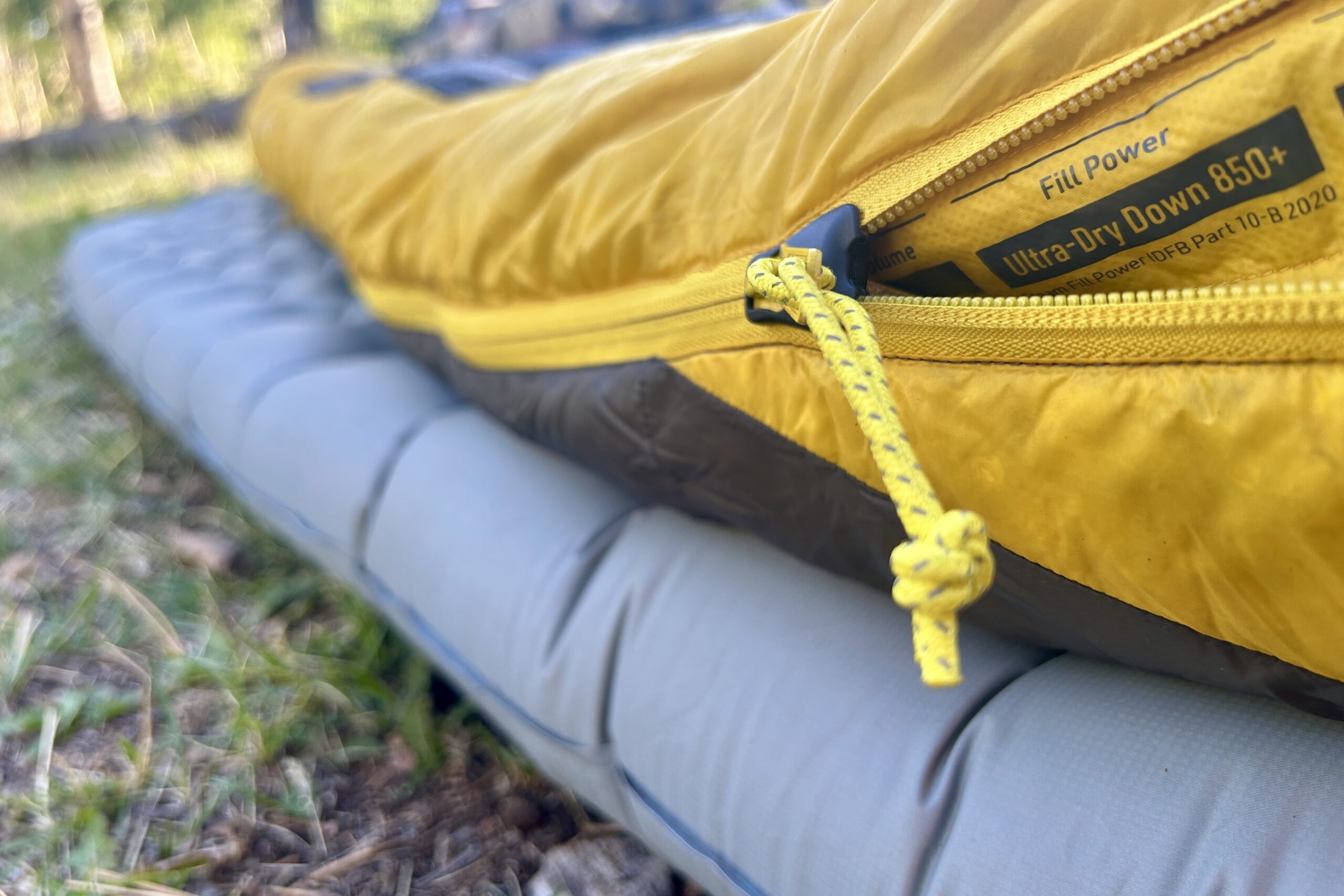
A tighter bag is usually more thermally efficient because your body heats less empty air, but a fit that prevents you from sleeping well is not efficient in practice. Check shoulder, hip, and footbox dimensions and consider how you sleep. Wide, long, or semi-rectangular options can be worth a few extra ounces.
How much should down quality matter to me?
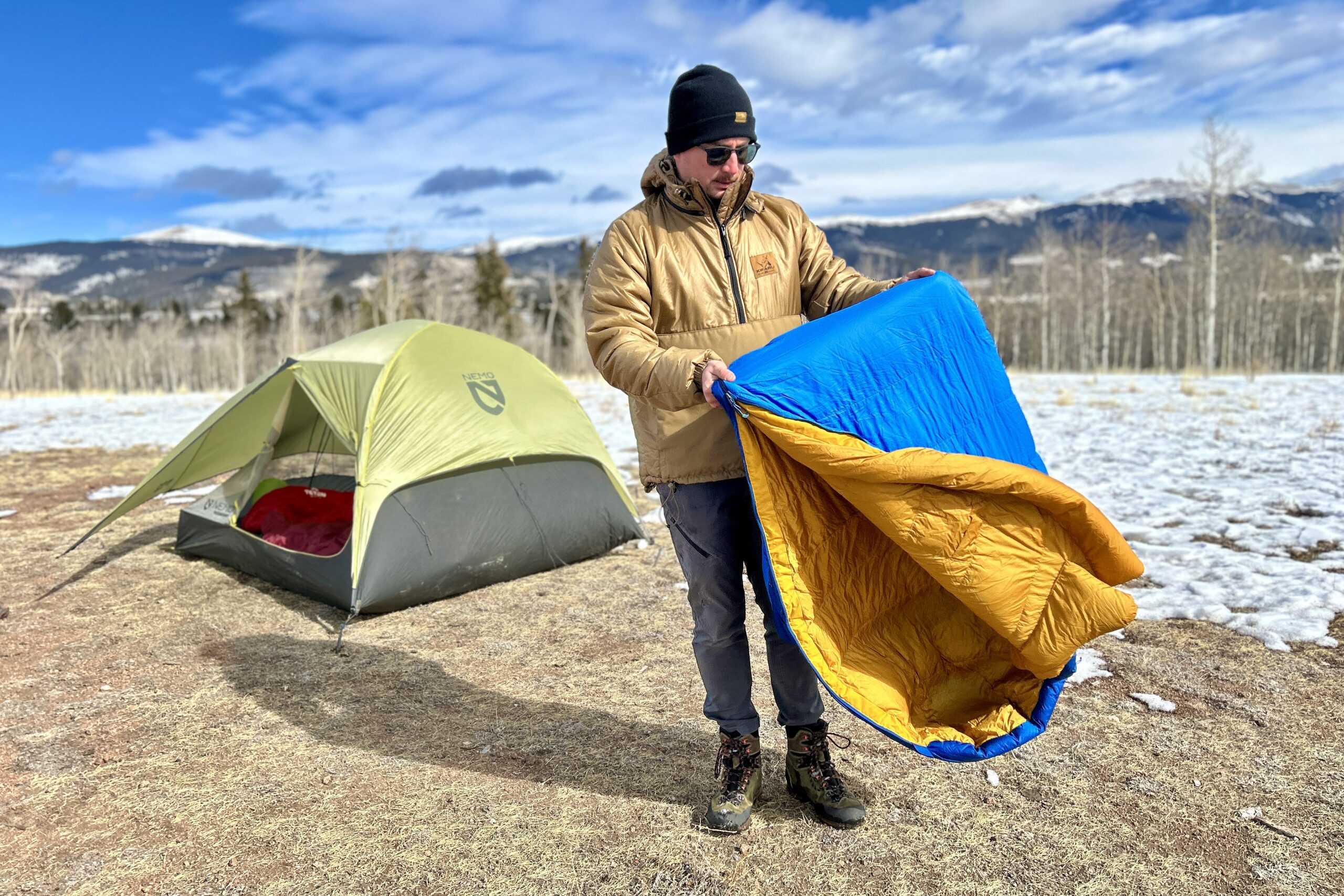
Higher fill power generally means more loft for less weight and smaller packed volume, but it also costs more. Budget bags often use 550–650 fill down and compensate with more fill weight. Premium 850–950+ fill down is most useful when low weight and compact packing are major priorities.
How should I clean and care for my sleeping bag?
Keeping insulation clean helps preserve loft. Store down and synthetic bags uncompressed at home, dry them thoroughly before storage, and follow the manufacturer’s washing instructions. Down bags often require a down-specific detergent and careful drying with low heat and agitation to restore loft.
Why Trust CleverHiker?
CleverHiker has spent more than a decade testing backpacking sleep systems on real trips. Our current sleeping-bag experience includes more than 2,000 backcountry nights and products used on long-distance trails, snowy high-elevation trips, damp Appalachian Trail sections, desert routes, and ordinary weekend backpacking.
We do not treat specifications as substitutes for field experience. Manufacturer ratings and materials help explain performance, but our recommendations come from how the bags actually sleep, pack, vent, wear, and manage cold across repeated use.
Testing Methodology
How do we score backpacking sleeping bags?
We score every ranked sleeping bag on warmth, comfort, weight and packability, and features. Those categories reflect the decisions backpackers actually make: whether the bag protects them at night, whether they can sleep well inside it, how much carrying penalty it creates, and whether its design details improve repeated use.
How do we test sleeping bags in the field?
Whenever possible, we use bags over many nights and compare them with other products in the same category. We also pay attention to standardized comfort ratings, down fill power and fill weight, shell materials, zipper and draft design, packed volume, and how the complete sleep system behaves with an insulated pad.
Conclusion
There is no single best sleeping bag for every backpacker. The Feathered Friends Swallow UL 20 is our top overall performance pick, but the REI Magma 15 offers better value, the TerraLite is much roomier, the Phantom is built for winter, the Spark and Zpacks Classic save more weight, and the Cosmic and Trailhead reduce the cost of getting started.
The most useful choice is the bag whose warmth, fit, weight, and price match the trips you actually take. Use the comfort rating rather than the product name, account for your sleeping pad, and prioritize a fit that lets you sleep well enough to enjoy the next day on trail.