

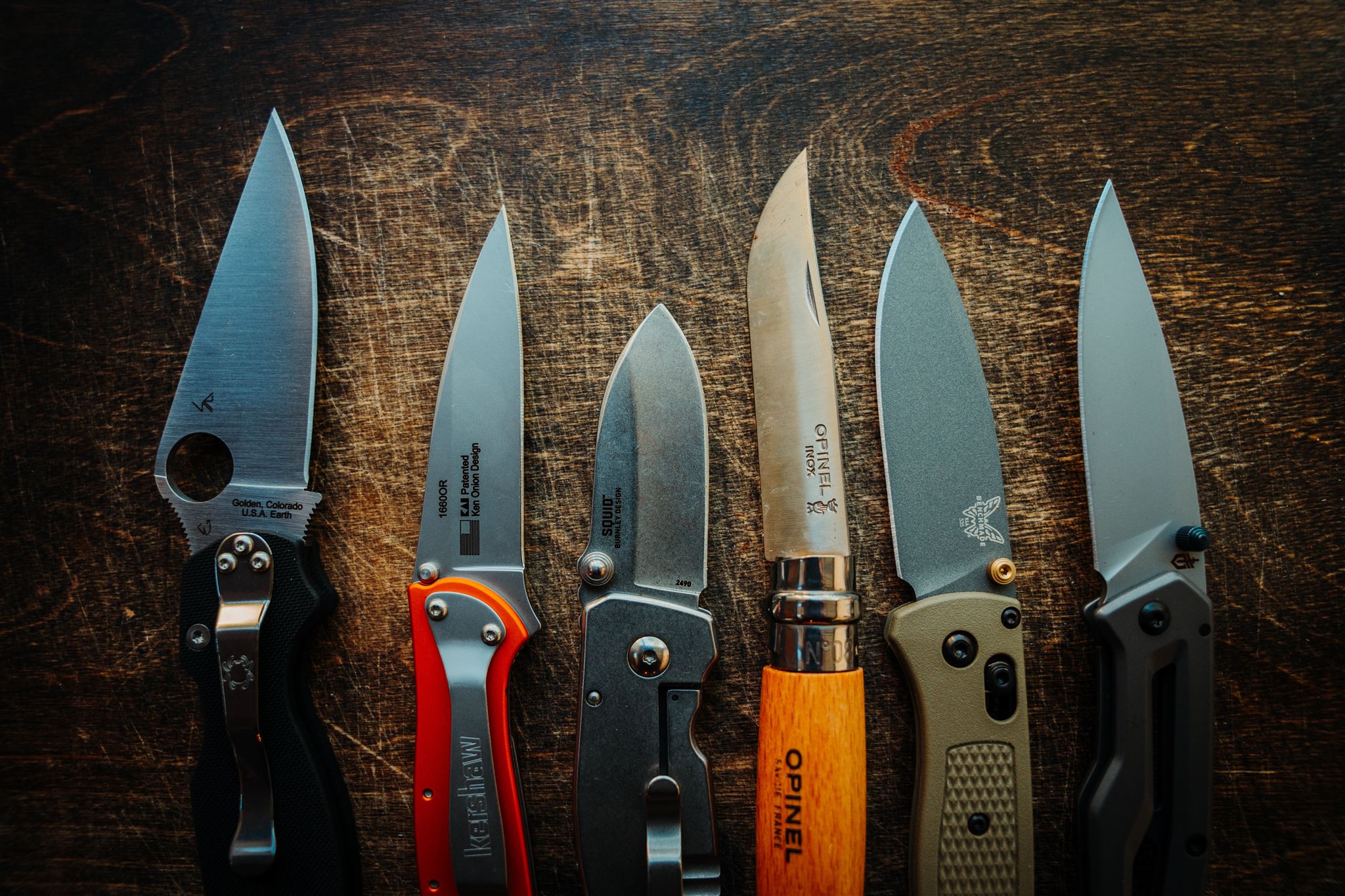
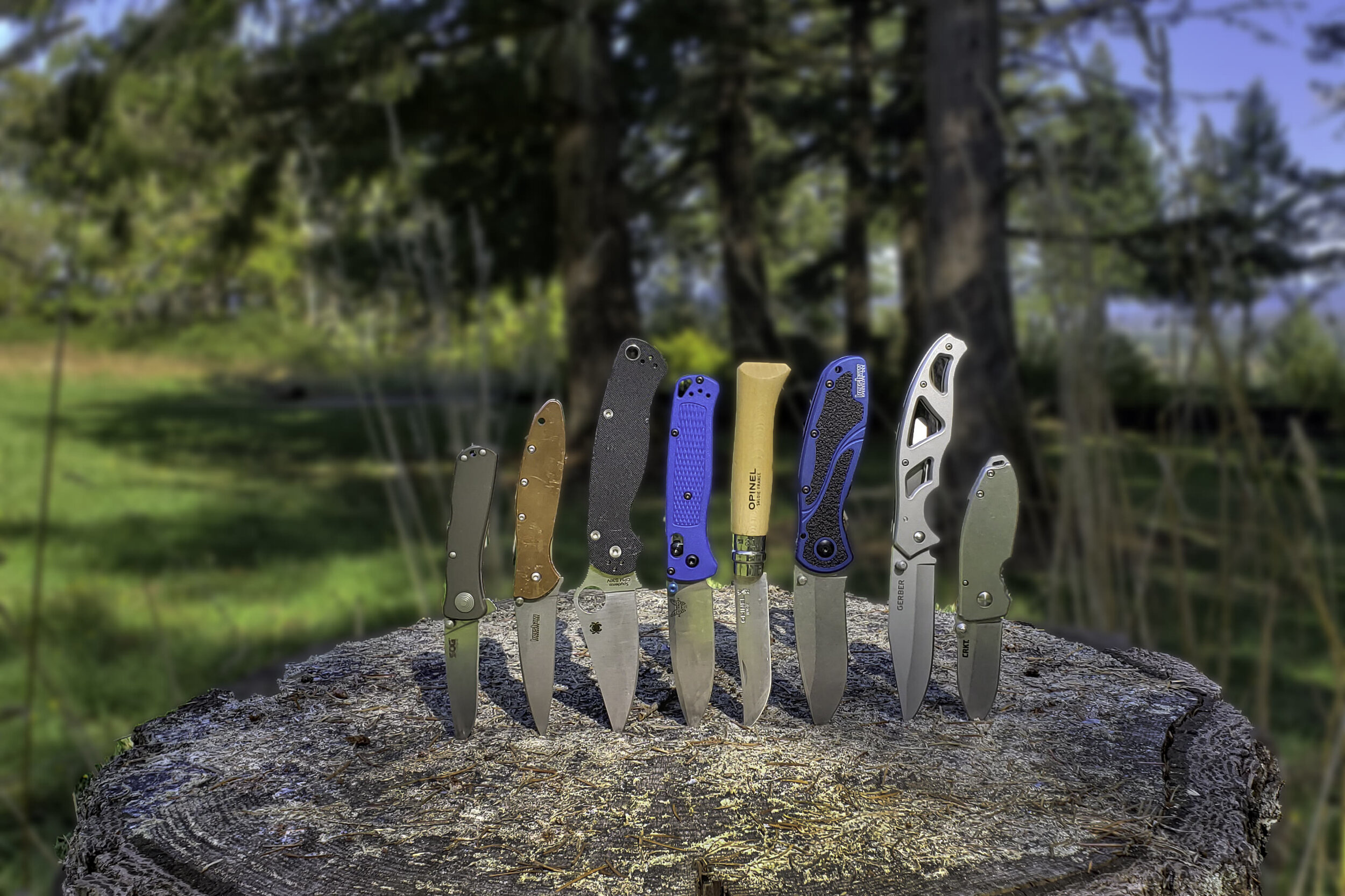
Our team tested over 30 pocket knives from premium EDC knife brands like Kershaw, Benchmade, and Opinel, as well as popular budget options like CRKT and Civivi. We assess key factors like blade material, build quality, blade retention, ergonomics, locking mechanisms, corrosion resistance, and weight.
Editor’s Note: We updated this guide on June 23, 2026, to add new favorites that emerged from this year’s testing, remove some that didn’t make the cut, and update any prices and product specs.
How We Tested Pocket Knives
We tested these knives in just about every bad condition we could think of. We brought them to the beach, to Great Sand Dunes National Park, and out on the river. We also used them for boring real-life tasks like breaking down a thousand Amazon boxes.
Along the way, we paid attention to cutting performance, how easy they were to open one-handed with cold or gloved hands, how they handled moisture and corrosion, and how well the edges held up over months of regular use.
And for more info, check out some of our other popular gear guides:

#1. Best Pocket Knife Overall
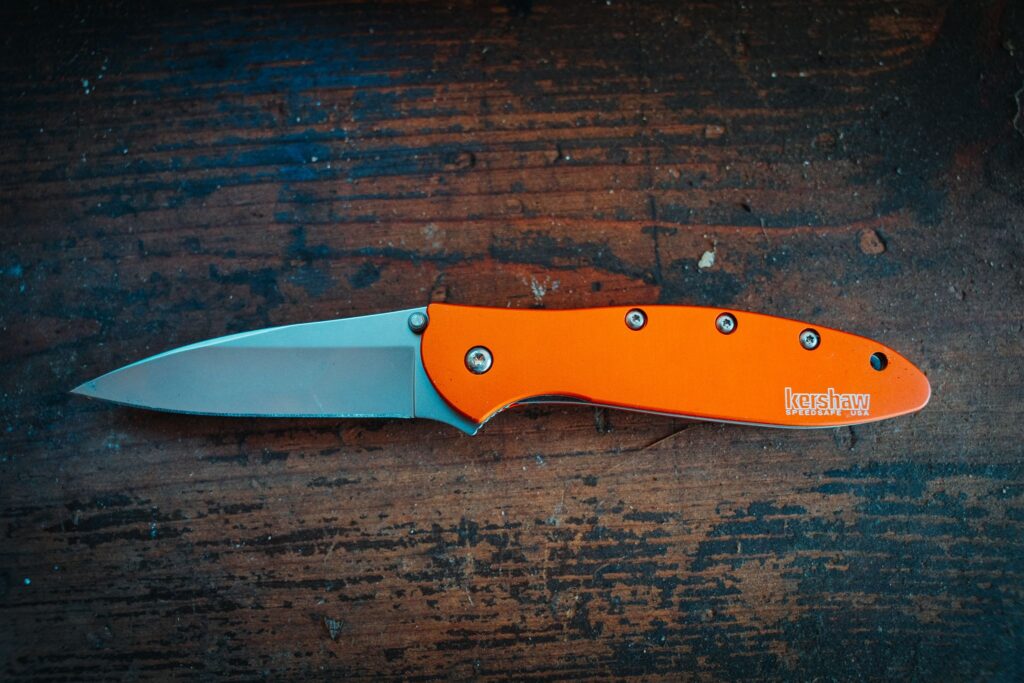
The Kershaw Leek takes the top spot because it hits a really impressive balance of sharpness, carry comfort, and everyday usefulness. Out of all the knives we tested, this was the one we kept reaching for again and again, and after more than 30 knives, that says a lot.
Quick Picks for Pocket Knives
Check out this quick list of our favorites if you’re in a hurry, or continue scrolling to see our full list with in-depth reviews.
1. Best Pocket Knife Overall: Kershaw Leek ($125)
2. Best Premium Pocket Knife: Spyderco Para Military 2 ($282)
3. Best Corrosion Resistance: Kershaw Bel Air ($260)
4. Best Classic Compact Pocket Knife: Buck Knives 55 ($85)
5. Best for Extended Use: Kershaw Blur ($160)
6. Best Ultralight Pocket Knife: Benchmade Bugout 535 ($200)
7. Best for Every Day Carry: Benchmade Mini Griptilian ($150)
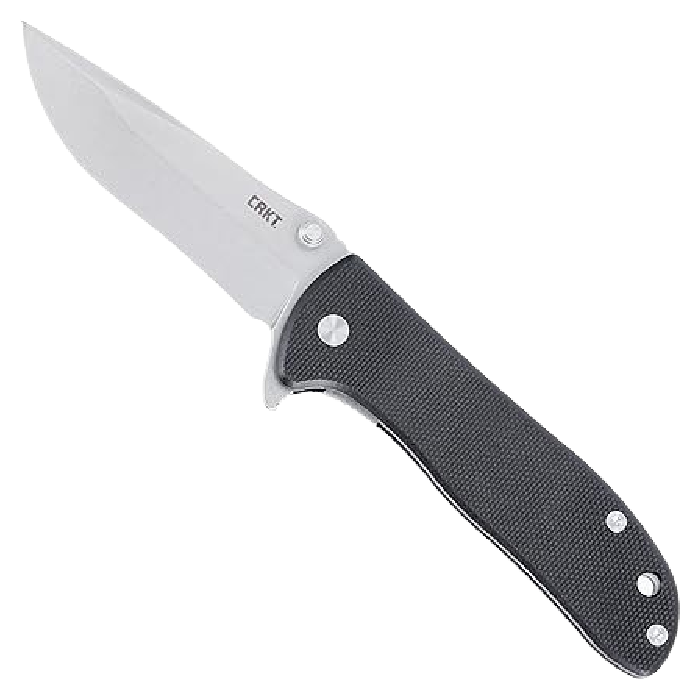
8. Best Starter Pocket Knife: CRKT Drifter ($43)
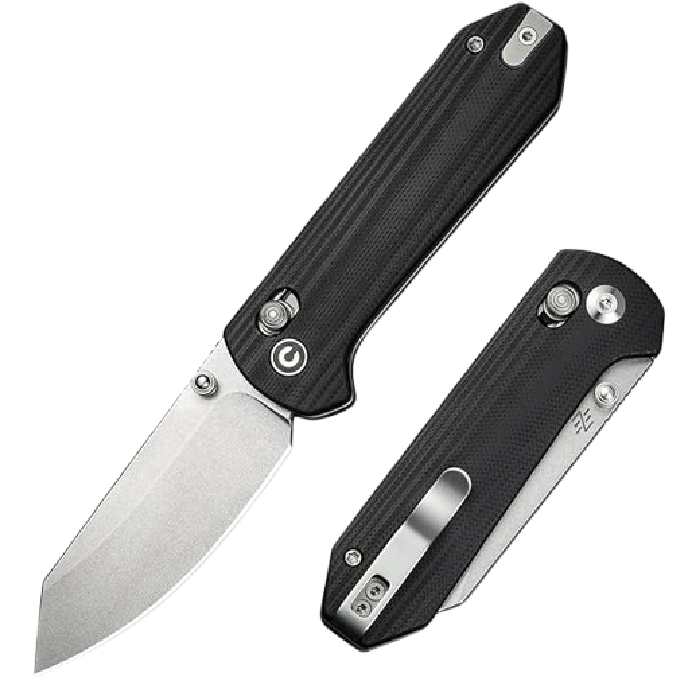
9. Best Lightweight Budget Pocket Knife: Civivi Yonder G10 ($67)
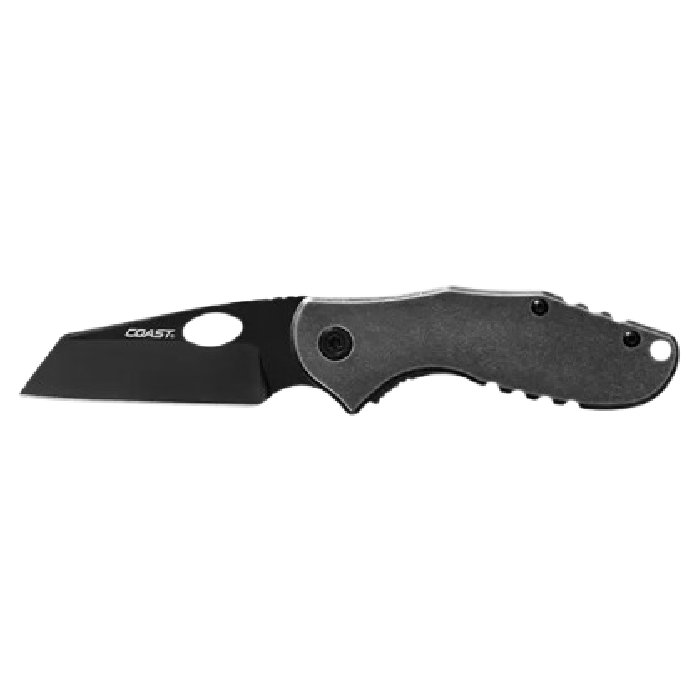
10. Best Pocket Knife for Precision Cutting: Coast Contra ($40)
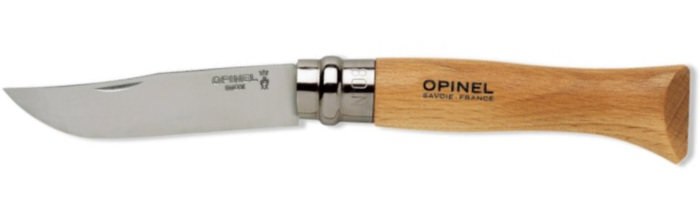
11. Best Budget Pocket Knife: Opinel No. 8 ($22)
Kershaw Leek
Best Pocket Knife Overall
CleverHiker Rating: 4.9/5.0
Price: $125
Measured Weight: 3 oz.
Blade Length: 3 in.
Overall Length: 7 in.
Blade Material: 14C28N stainless steel
Pros
- Very sharp
- Slim and compact
- Easy to open with one hand
- Enhanced safety features
- Secure hand feel
Cons
- Blade tip is a bit thin for rugged jobs
- Can develop rust if not well-maintained
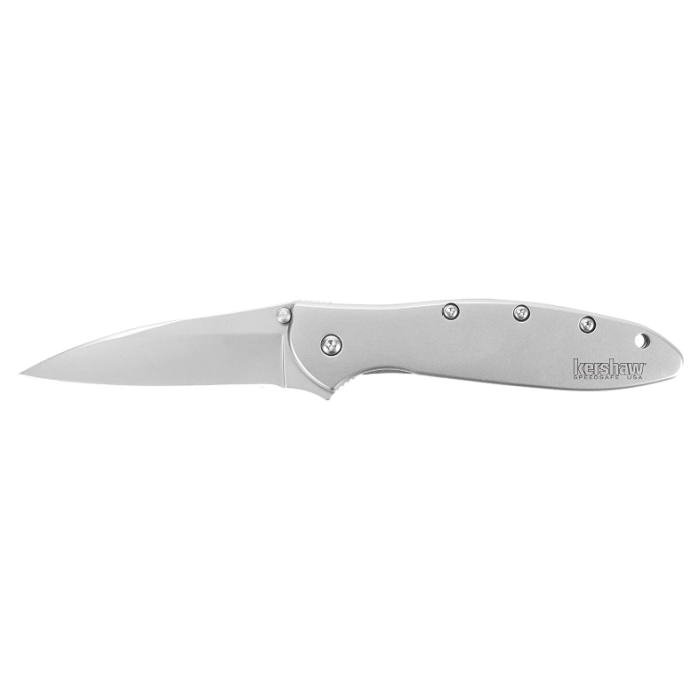
Whether you’re a knife enthusiast or a novice, the Kershaw Leek will quickly become your favorite pocket knife. It is highly portable, performs well, and is reasonably priced and often found well below MSRP. With its 3-inch blade crafted from high-performance steel, the Leek is well-suited for general use and specialized applications. Its slim, stainless steel handle contours for a comfortable grip, and the assisted-opening mechanism ensures the blade springs into action with a smooth, single-finger flick.
The Tip-Lock system provides added security by keeping the blade safely closed when not in use. The knife’s sleek design makes it exceptionally easy to carry, and its razor-sharp blade maintains a durable and easy-to-resharpen edge.
While the Leek is a top performer, minor issues are always possible. For instance, occasional surface rust may develop due to the nature of stainless steel, though it usually cleans off with appropriate maintenance. Additionally, some may experience slight difficulties with the blade lock not fully engaging. However, these minor concerns can be fixed with a few adjustments or maintenance.
If you’re seeking a stylish and functional knife that you’ll be eager to use daily, the Kershaw Leek is an excellent choice. It is best suited for those who need a reliable, compact knife for everyday tasks like precise cutting and detailed work. It is ideal for both general use and more specialized cutting chores.
More: Kershaw Leek Full Review

Spyderco Para Military 2
Best Premium Pocket Knife
CleverHiker Rating: 4.8/5.0
Price: $280
Measured Weight: 3.9 oz.
Blade Length: 3.42 in.
Overall Length: 8.24 in.
Blade Material: CPM S45VN steel
Pros
- Very sharp
- Large hole for easy one-handed open
- Excellent grip
- Ergonomic handle
- Lock keeps fingers clear when closing
- Four position pocket clip
- Unique blade shape
Cons
- Expensive
- Heavier and bulkier than some
- Size isn't inconspicuous
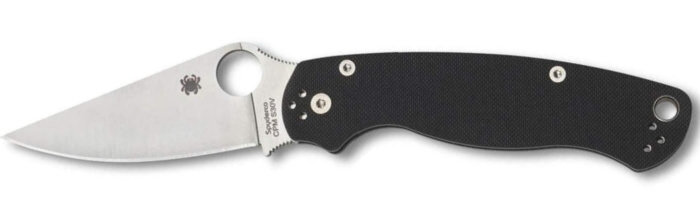
The Spyderco Para Military 2 is a premier choice for anyone seeking a high-performance folding knife. It features a large, sharp blade with exceptional edge retention. The handle has textured black G-10 scales that provide a uniquely secure, ergonomic grip, and the Compression Lock mechanism is strong and offers smooth blade operation. The four-position pocket clip adds versatility, allowing users to carry the knife in various orientations for optimal convenience. During testing, the PM2 stood out for its impressive cutting power, easy deployment, and solid build quality.
Its substantial size and weight might be excessive for users who prefer a more compact, lightweight knife for everyday tasks. While strong, the manual opening and locking mechanism can be stiff initially and may require some time to break in. The blade’s size and overall bulkiness might be a bit overkill for simpler, everyday cutting needs. Additionally, the pocket clip’s placement and the coarse texture of the G-10 handle might not be to everyone’s liking, potentially impacting comfort and ease of carry.
Those looking for a more minimalist or discreet knife might find the size and features excessive. However, the Spyderco Para Military 2 is a high-performance knife that excels in demanding situations and offers top-tier functionality. Its superior materials and design are ideal for heavy-duty tasks and tactical applications.
Kershaw Bel Air
Best Corrosion Resistant Pocket Knife
CleverHiker Rating: 4.8/5.0
Price: $260
Measured Weight: 2.9 oz.
Blade Length: 3.1 in.
Overall Length: 7.3 in.
Blade Material: CPM MagnaCut
Pros
- Very sharp
- Exceptionally smooth action
- Lightweight
- Balanced
- Excellent corrosion resistance
- Holds an edge
- Premium feel
Cons
- Price
- Handle can be slippery when wet
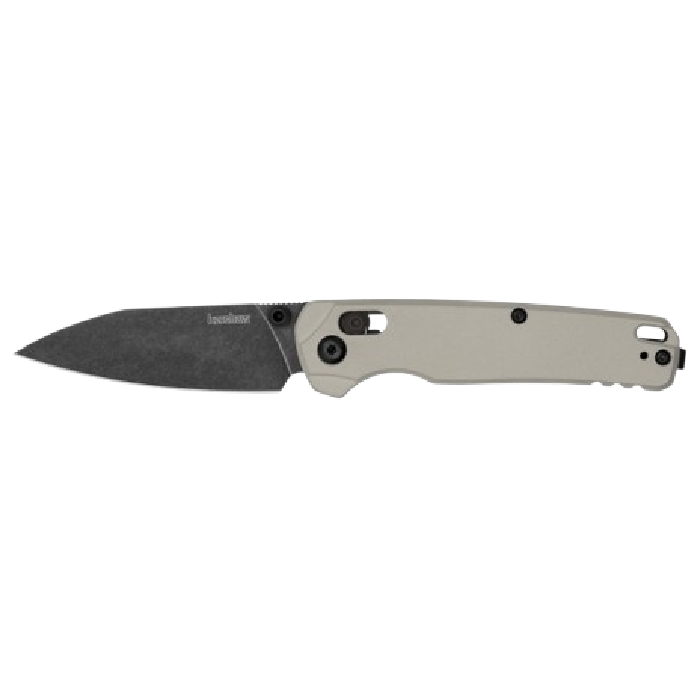
The Kershaw Bel Air is one of those knives that immediately makes a strong first impression. It’s USA-made, uses CPM MagnaCut steel, has a really smooth KVT ball-bearing action, and comes with Kershaw’s ambidextrous DuraLock. At just 2.9 ounces, it’s light in the pocket, but it does not feel cheap or flimsy at all. If anything, it feels more premium than we expected.
What really makes this knife interesting is the MagnaCut blade, and in our testing, it lived up to the hype. After weeks of daily carry, breaking down cardboard, food prep, and cutting rope, edge retention was excellent. We also saw no corrosion, even after moisture and saltwater exposure, which is exactly what you want from a knife built for medium-duty use. The BlackWash finish does a nice job of hiding wear, and the reverse tanto blade shape worked well for everyday tasks, especially when we wanted a knife that could both slice cleanly and handle more controlled push cuts.
We also really liked the DuraLock. It is intuitive, secure, and easy to use with either hand. The reversible deep-carry clip is another plus, keeping the knife low-profile in the pocket without making it harder to grab quickly.
Our biggest hesitation, if you can call it that, is the handle. The smooth finish feels great in dry conditions, but it does get a little slick when wet. And while this sits at the higher end of Kershaw’s price range, the steel, build quality, and overall performance make it worth it.
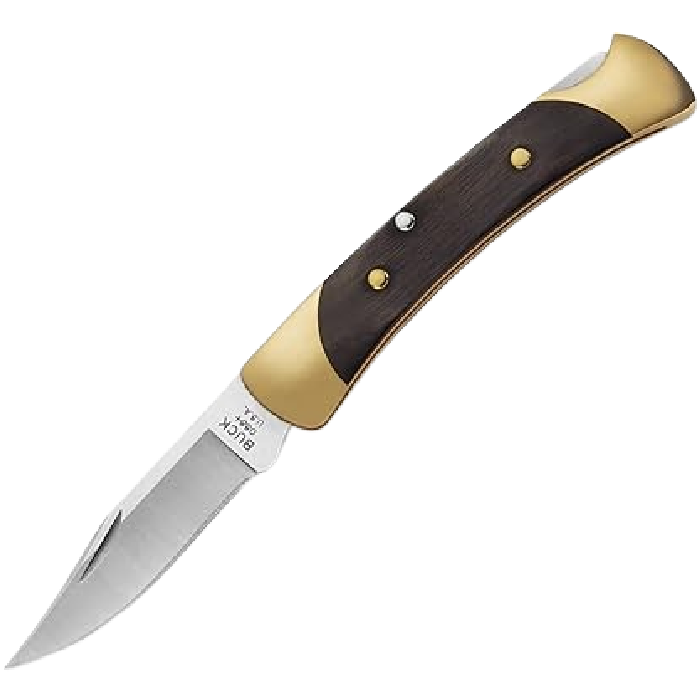
Buck Knives 55
Best Classic Compact Pocket Knife
CleverHiker Rating: 4.7/5.0
Price: $85
Measured Weight: 1.9 oz.
Blade Length: 2.4 in.
Overall Length: 5.75 in.
Blade Material: 420HC stainless steel
Pros
- Classic design with premium materials
- Razor-sharp clip-point blade
- Excellent edge retention for light-duty use
- Compact, pocket-friendly
- Beautiful
- USA made with lifetime warranty
Cons
- Requires two hands to open
- May feel small for big hands
- No pocket clip
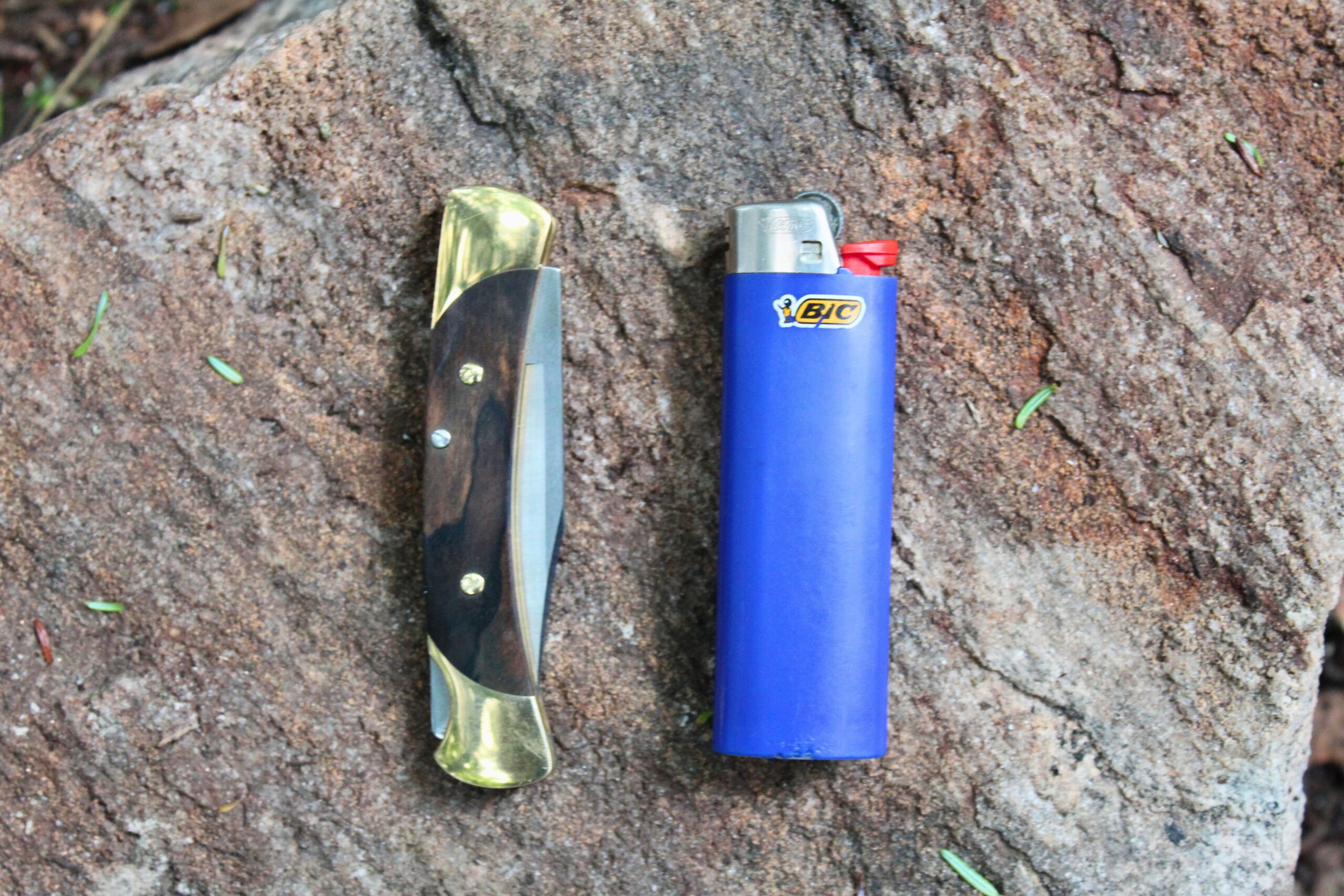
The Buck Knives 55 is a beautiful example of a classic folding pocket knife. It is modeled after the legendary Buck 110 Folding Hunter but scaled down for daily carry. The 55 retains the same clean lines, clip-point blade, and reliable lockback mechanism that made its predecessor famous.
We used the 55 extensively for light-duty camp chores, trail snacks, and gear maintenance on day hikes and overnight trips. Its 2-3/8 inch 420HC stainless steel blade arrived shaving-sharp out of the box and held its edge well through repeated use. The clip-point shape made piercing tasks easy, while the long, sweeping belly of the blade handled slicing and whittling well. It’s not a knife meant for actions like batoning or prying, but it excels when trimming paracord ends, opening packages, and prepping food in the field.
The genuine ebony handle scales paired with polished brass bolsters add durability and visual appeal. In hand, the 55 feels solid and well-balanced for its size, but it is pretty small, and handling it can be difficult with larger hands. The lockback mechanism is smooth and reliable, and we experienced no blade play or accidental disengagements, even during firm slicing tasks. Though it lacks one-handed opening features standard on modern EDC knives, the traditional nail nick makes deployment straightforward.
This knife shines in its build quality and character. It weighs just 1.9 ounces and has a closed length of 3 3/8 inches. At that size, we can easily slide it into any pocket, vest, or pack. But we also often misplace it because it doesn’t have a pocket clip. Too often, we have to pull out everything to find it at the bottom of our pack.
The craftsmanship is outstanding for a knife in this price range, with Buck’s heat treatment process ensuring edge retention and corrosion resistance for years, requiring minimal maintenance.
The Buck 55 isn’t built for tactical use or fast deployment, and those with larger hands may find it slightly cramped. But for anyone seeking a traditionally styled folder for daily chores, light outdoor use, or simply as a beautiful, heirloom-worthy piece, it’s a fantastic value.
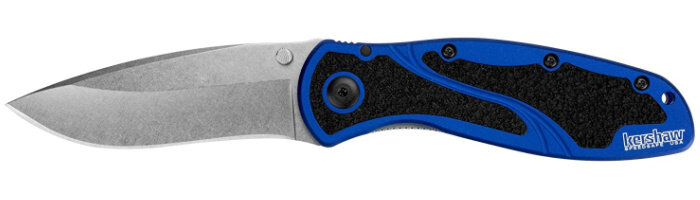
Kershaw Blur
Workhorse Pocket Knife with an Ergonomic Handle
CleverHiker Rating: 4.7/5.0
Price: $160
Measured Weight: 3.9 oz.
Blade Length: 3.4 in
Overall Length: 7.9 in.
Blade Material: 14C28N Stainless
Pros
- Large blade
- Very sharp
- Assisted one-hand open
- Excellent grip
- Ergonomic thumb studs
- Reversible pocket clip
Cons
- Price (but often on sale)
- Heavier and bulkier than some
The Kershaw Blur is a durable and versatile pocket knife that excels in strength and ease of use. Its wide Sandvik stainless steel blade holds an exceptionally sharp edge; it requires little to no sharpening or maintenance, even with everyday use at work or in the field. You can expect long-term reliability from this knife even with heavy use.
The handle’s design combines comfort and functionality. Made from anodized aluminum with Trac-Tec inserts, it provides an outstanding grip. We thought the grip material would wear over time, but it has yet to wear down at all. The knife’s well-balanced feel and ergonomic handle are great for larger hands, but it’s pretty big compared to other everyday carry (EDC) options.
The reversible pocket clip offers flexibility for tip-up or tip-down carry, and the clip being slightly lower on the knife means it sticks out slightly from our pocket. This could be a pro or a con depending on how discreet you like a pocket knife, but we found it makes it easier to pull out of our pocket when wearing gloves.
The feature we liked most about the Blur is its SpeedSafe assisted-opening mechanism, which enables quick one-handed deployment. While the thumb stud is practical, it rubs some and irritates the thumb with repeated use. Additionally, the liner lock mechanism is intuitive and easy to engage, and we can close the knife with one hand. Still, it may fail under extreme pressure, making the knife better suited for light to moderate tasks rather than heavy-duty applications.
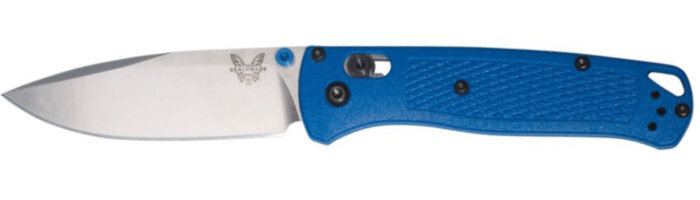
Benchmade Bugout 535
Best Ultralight Pocket Knife
CleverHiker Rating: 4.5/5.0
Price: $200
Measured Weight: 1.9 oz.
Blade Length: 3.24 in.
Overall Length: 7.46 in.
Blade Material: CPM-S30V stainless steel
Pros
- Very lightweight
- Compact design
- Lock keeps fingers clear while closing
- Inconspicuous carrying
- Excellent edge retention
Cons
- Price
- Handle is long
The Benchmade Bugout 535 is a high-quality, ultralight pocket knife that excels in functionality and ease of carry. Designed with a drop-point blade, it offers exceptional edge retention and versatility. The blade finish provides a sleek look and adds a layer of durability and corrosion resistance.
One of the Bugout’s most notable features is its lightweight construction. The textured handle provides a more comfortable grip and is easy to manage. The manual lock mechanism is secure and ambidextrous, making it user-friendly for left- and right-handed users.
There is a lot to love about this knife, but during testing, we noticed the pivot was too tight. This can be adjusted fairly quickly for smoother action. The lightweight nature of the knife is a pro for many, but makes it less suited for heavy-duty tasks. The pocket clip, while functional, is short and isn’t quite as secure as the longer pocket clips tested. However, the oversized lanyard hole and the reversible, deep-carry pocket clip provide versatile carrying options and the potential for a more inconspicuous carry.
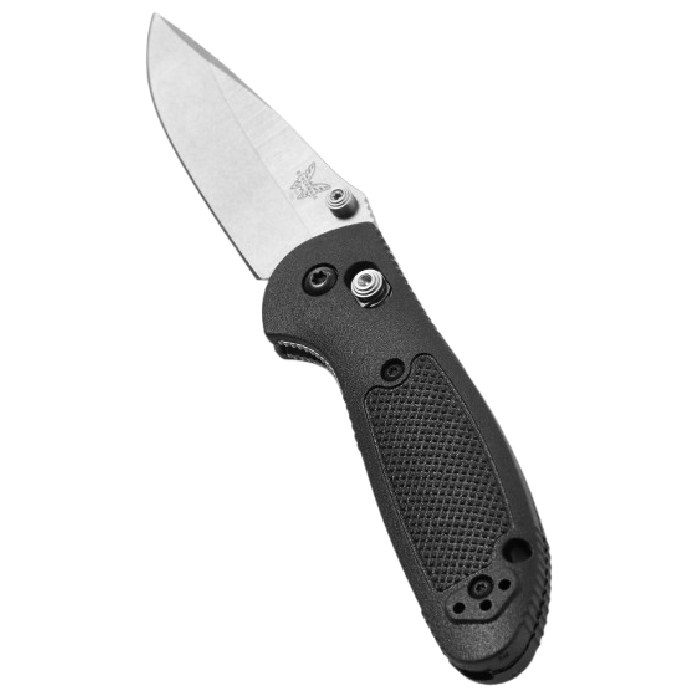
Benchmade Mini Griptilian
Best Pocket Knife for Everyday Carry
CleverHiker Rating: 4.5/5.0
Price: $150
Measured Weight: 2.56 oz.
Blade Length: 2.91 in.
Overall Length: 6.78 in.
Blade Material: CPM-S30V stainless steel
Pros
- Ambidextrous AXIS lock
- Balanced
- Excellent corrosion resistance
- Holds its edge
- Thick blade for everyday use
Cons
- Heavier than it looks
- One-handed opening takes some effort
- Compact size may feel cramped for users with larger hands
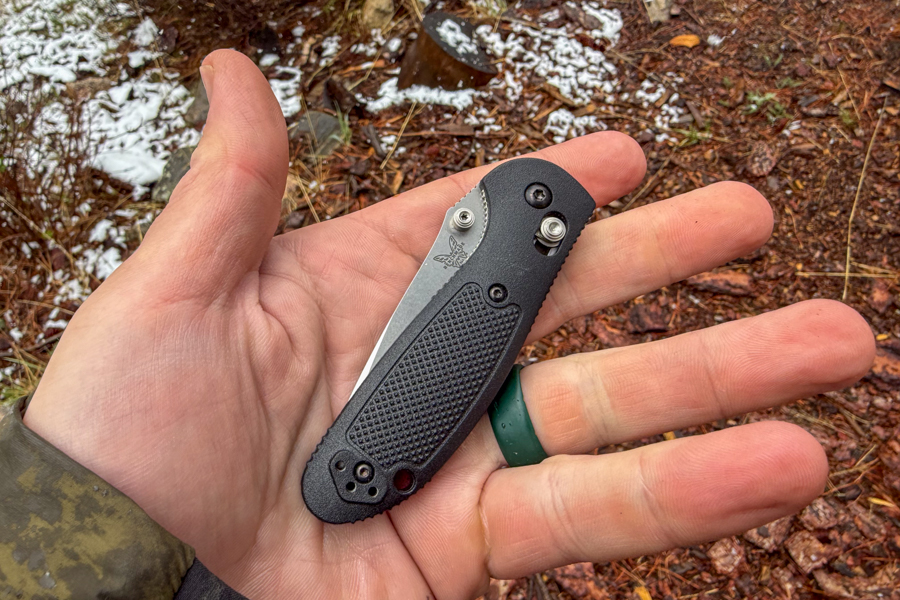
The Benchmade Mini Griptilian 556 is a compact, USA-made, everyday carry knife that delivers reliable performance in a package small enough to disappear into a pocket. The CPM-S30V blade arrived sharp, held its edge through several months of daily use without needing touch-up, and showed no signs of corrosion after exposure to water and rainy conditions throughout our testing.
The AXIS lock is still one of the biggest reasons people love this knife. It is fully ambidextrous, easy to use, and keeps your fingers clear when closing, which is something we always appreciate. The blade has a sturdier feel than some of the thinner knives in our lineup, so even though this is a smaller knife, it does not feel delicate.
That said, it is not perfect. The blade action requires more than a wrist flick to open one-handed, so one-handed opening takes a little more effort than we’d like. And while the compact size is great for carry, it can feel a little cramped if you have larger hands. If that sounds like an issue, the full-size Griptilian is the obvious next place to look.
CRKT Drifter
Best Starter Pocket Knife
CleverHiker Rating: 4.5/5.0
Price: $45
Measured Weight: 2.4 oz.
Blade Length: 3 in.
Overall Length: 6.5 in.
Blade Material: Sandvik 12C27
Pros
- Affordable for the feature set
- Durable micarta handle
- Smooth one-handed opening
- Excellent edge retention
- Cuts rope well
- Compact & easy to carry
- Reliable inner lock mechanism
Cons
- Small for bigger hands
- Stiff pocket clip out of box
Whether you’re just starting to build your everyday carry kit or looking for an affordable backup blade, the CRKT Drifter is a capable pocket knife. Originally intended as a budget-friendly promotional knife, the Drifter has garnered a loyal following due to its reliable performance.
The Drifter is crafted from 12C27 blade steel, which provides excellent edge retention for daily cutting tasks. It features Veff Serrations that efficiently cut through rope, webbing, and other fibrous materials. Its micarta handle is both durable and comfortable, while the smooth-opening ball-bearing pivot and liner lock system is easy for one-handed use. The Drifter’s compact size and portability make it an appealing option for hikers, campers, or anyone seeking a discreet choice.
The tip-down pocket clip might frustrate those who prefer tip-up carry, but we didn’t notice a significant difference in this aspect of the design. Its smaller size can feel cramped and negatively impact ergonomics for those with larger hands. The pocket clip is also fairly stiff out of the box, though it may loosen slightly with regular use (it hasn’t yet for us, but it can also be loosened manually).
For its price point, the Drifter delivers excellent value, offering features and materials typically found in higher-end knives. It’s best suited for light outdoor use and is an affordable entry point for new knife users.
More: CRKT Drifter Full Review
Civivi Yonder G10
Best Lightweight Budget Pocket Knife
CleverHiker Rating: 4.5/5.0
Price: $67
Measured Weight: 2.7 oz.
Blade Length: 2.88 in.
Overall Length: 6.62 in.
Blade Material: 14C28N
Pros
- Lightweight & pocket friendly
- Thin, spey-point blade
- Smooth action with solid lock-up
- Comfortable, grippy G10 handle
- Excellent overall value
- Lefty friendly
Cons
- Crossbar lock can create a hotspot
- Pocket clip feels overly tight
- Edge retention could be better
The Civivi Yonder G10 Pocket Knife is a well-balanced mix of lightweight portability and everyday durability. We tested this little work pony during paddle camping trips in northern Minnesota and Michigan, short backpacking trips, and daily yard work. It proved to be a reliable, versatile tool.
The thin spey-point blade excels at slicing tasks, from chopping apples and cutting paracord or rope. Its high saber grind provides smooth cuts without binding, even when making tight turns through thick cardboard or green wood. The tip is strong enough for utility work without worrying about the blade snapping.
The crossbar lock is secure in wet conditions, and the caged ceramic pivot bearings make one-handed deployment smooth for both left- and right-handed users. That said, the lock and deep-pocket clip can create minor hot spots on the hand during prolonged use, particularly for those with larger hands.
Weighing just under three ounces, the Yonder seemingly disappears in pockets, yet is responsive during heavier cutting chores. Edge retention is average compared with high-end steels, but the blade resharpens quickly, even when splitting small twigs or cardboard boxes. Considering its performance in both backcountry and everyday scenarios, the Civivi Yonder G10 is an outstanding option for hikers who want the performance and look of a premium pocket knife without the high price tag.
Coast Contra
Best Pocket Knife for Precision Cutting
CleverHiker Rating: 4.2/5.0
Price: $40
Measured Weight: 3.1 oz.
Blade Length: 2.4 in.
Overall Length: 6.3 in.
Blade Material: 7Cr17 Steel
Pros
- Budget friendly
- Arrives sharp
- Slim all-metal design
- Wharncliff blade is great for precision cutting
- Black oxide coating resists minor corrosion
Cons
- Not the best edge retention
- Possible QC issues
- Slippery handle when wet
The Coast Contra LX530 is an all-steel everyday carry knife with a slim Wharncliff blade, one-handed flip tab opening, and a minimal frame lock design that makes it one of the most approachable knives in our lineup. It arrives sharp, opens smoothly, and carries comfortably in any pocket thanks to its slim profile and deep-carry steel clip. The black oxide coating gives it a clean, understated look that has held up well.
The tradeoffs feel pretty in line with the price point. The 7Cr17 blade steel is the most budget-tier in our lineup and will need more frequent sharpening than anything else we carry. The slim all-metal handle can be slippery when it’s wet. The biggest issue we ran into was the frame lock on our test knife, which failed completely after a couple of weeks of regular use. We do think that was probably a one-off, and Coast generally has a good reputation for customer service, but it still happened, and it is worth knowing.
For first-time knife buyers, gift-givers, or anyone who wants a sharp, good-looking carry knife without a significant investment, the Contra is a good option. It is not a knife for demanding outdoor tasks or users who need ironclad reliability. But as an entry point into everyday carry, the Contra delivers on the basics in a way that we appreciate.
Opinel No. 8
Best Budget Pocket Knife
CleverHiker Rating: 4.0/5.0
Price: $22
Measured Weight: 1.6 oz.
Blade Length: 3.25 in.
Overall Length: 7.59 in.
Blade Material: 12C27 Sandvik stainless steel
Pros
- Affordable price
- Very lightweight
- Secure collar lock
- Comfortable handle
- Inconspicuous
- Customizable engraving available
Cons
- Not as sharp as some
- Slower two-handed open (nail nick and collar lock)
- No pocket clip
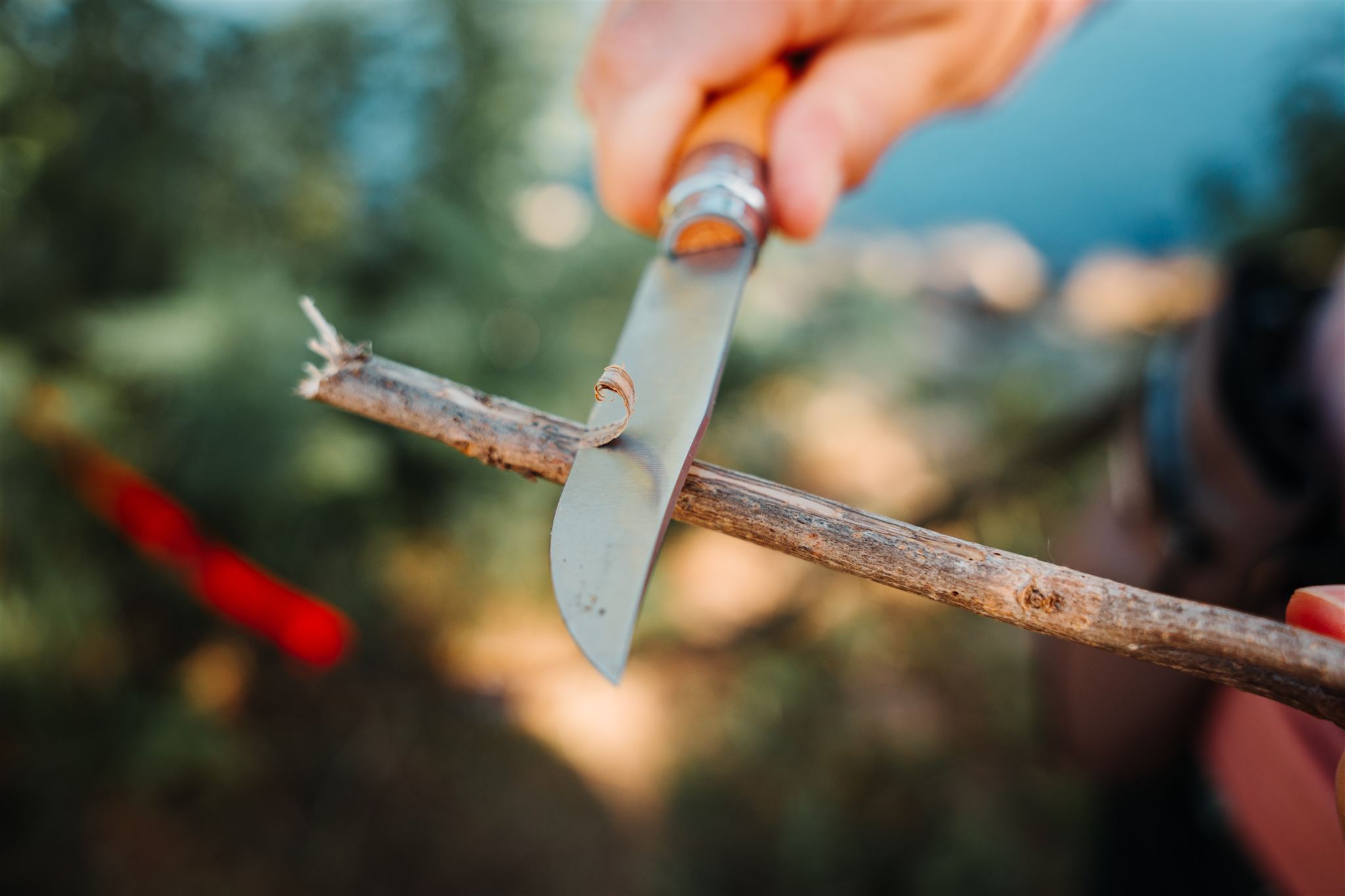
The Opinel No. 8 is a budget-friendly, reliable knife with a simple design. Weighing just 1.5 ounces, it is exceptionally lightweight and portable, making it an excellent choice for hiking, foraging, picnicking, and gardening. Its Sandvik 12C27 stainless steel blade is effective for slicing foods like meats, cheeses, and produce, though it is susceptible to corrosion if not properly cleaned after use. The beechwood handle is ergonomically designed, providing a comfortable grip and adding a touch of classic aesthetic appeal.
However, the Opinel No. 8 has its drawbacks. While the knife’s blade is sharp and durable, it may require more frequent honing to maintain its edge compared to more modern knives. The blade deployment can be slow due to the manual opening mechanism, and the locking mechanism is a bit stiff initially. Additionally, the blade’s lack of a robust lock can make it less suitable for tasks requiring high stability and force, potentially limiting its utility for heavier cutting jobs.
The Opinel No. 8 is best suited for those who appreciate a classic, well-crafted knife at an accessible price point. It excels as a light tool for everyday tasks and outdoor activities.
More: Opinel No. 8 Full Review

Product Comparison Table
| oSort | Product | Price | Measured Weight | Blade Length | Overall Length | Blade Material | Build Quality | Blade Retention | Ergonomics | Locking Mechanism | Corrosion Resistance | Weight Score | 0 |
Kershaw Leek View at Amazon 
|
$125 | 3 oz. | 3 in. | 7 in. | 14C28N stainless steel | 4.9 | 4.8 | 4.8 | 5.0 | 4.8 | 4.4 | 1 |
Spyderco Para Military 2 View at Amazon View at Scheels
|
$280 | 3.9 oz. | 3.42 in. | 8.24 in. | CPM S45VN steel | 4.8 | 4.8 | 4.8 | 4.9 | 4.8 | 4.0 | 2 |
Kershaw Bel Air View at Amazon View at Kershaw
|
$260 | 2.9 oz. | 3.1 in. | 7.3 in. | CPM MagnaCut | 4.7 | 4.8 | 4.7 | 4.9 | 4.9 | 4.5 | 3 |
Buck Knives 55 View at Amazon |
$85 | 1.9 oz. | 2.4 in. | 5.75 in. | 420HC stainless steel | 4.8 | 4.6 | 4.3 | 4.8 | 4.8 | 4.8 | 4 |
Kershaw Blur View at Amazon View at Kershaw |
$160 | 3.9 oz. | 3.4 in | 7.9 in. | 14C28N Stainless | 4.8 | 4.6 | 4.9 | 4.8 | 4.5 | 4.0 | 5 |
Benchmade Bugout 535 View at REI View at Amazon |
$200 | 1.9 oz. | 3.24 in. | 7.46 in. | CPM-S30V stainless steel | 4.7 | 4.6 | 4.7 | 4.7 | 4.7 | 4.8 | 6 |
Benchmade Mini Griptilian View at REI View at Amazon |
$150 | 2.56 oz. | 2.91 in. | 6.78 in. | CPM-S30V stainless steel | 4.7 | 4.6 | 4.6 | 4.7 | 4.7 | 4.5 | 7 |
CRKT Drifter View at Amazon |
$45 | 2.4 oz. | 3 in. | 6.5 in. | Sandvik 12C27 | 4.7 | 4.3 | 4.3 | 4.7 | 4.7 | 4.7 | 8 |
Civivi Yonder G10 View at Amazon |
$67 | 2.7 oz. | 2.88 in. | 6.62 in. | 14C28N | 4.5 | 4.4 | 4.6 | 4.9 | 4.5 | 4.5 | 9 |
Coast Contra View at Amazon View at Coast |
$40 | 3.1 oz. | 2.4 in. | 6.3 in. | 7Cr17 Steel | 4.4 | 4.0 | 4.6 | 4.1 | 4.0 | 4.4 | 10 |
Opinel No. 8 View at REI View at Amazon 
|
$22 | 1.6 oz. | 3.25 in. | 7.59 in. | 12C27 Sandvik stainless steel | 4.3 | 4.3 | 4.5 | 4.4 | 4.2 | 5.0 |
|---|
Analysis & Results
We rate our pocket knives based on specific metrics: blade quality, blade retention, stability, ergonomics, grip, locking mechanism, corrosion resistance, and weight. See how they performed in our real-world testing below.
WHAT POCKET KNIFE HAS THE BEST VALUE?
Value in the pocket knife category spans a wide range, and the right pick depends entirely on what you actually need from a carry knife. The Opinel No. 8 remains our top budget pick: simple, reliable, and sharp right out of the box, with 12C27 Sandvik steel that outperforms most knives at its price point. For campers and hikers who want a classic tool without complication, it is hard to beat.
The Coast Contra LX530 is the most accessible entry point in our lineup, and for first-time knife buyers or anyone who wants a sharp, slim carry knife without a significant commitment, it does the job. The 7Cr17 blade steel is the most budget-tier in our lineup and will need more frequent sharpening, but for occasional use, the tradeoffs are proportional to the price.
For those willing to invest more, the Kershaw Leek and Kershaw Bel Air both represent strong value at their respective price points. The Leek delivers assisted opening, solid 14C28N steel, and a slim profile in a package that overdelivers for what it costs. The Bel Air steps up to CPM MagnaCut steel and USA manufacturing in a package that competes with knives costing considerably more.
At the premium end, the Spyderco Para Military 2 justifies its price through top-tier materials, exceptional ergonomics, and a build that serious users will carry for a decade or more. For knife enthusiasts who want the best, the value case is real, even at the higher price.
WHAT POCKET KNIFE HAS THE BEST BUILD QUALITY?
The Spyderco Para Military 2 leads the lineup in build quality. High-grade CPM S45VN steel, G-10 handle, and meticulous fit and finish throughout make it the most premium-feeling knife we carry. Every component feels intentional and built to outlast regular use.
The Kershaw Bel Air is a close second and the biggest build quality surprise in our current lineup. The 6061-T6 aluminum handle with Cerakote finish, clean machining, and solid component alignment rivals knives at significantly higher prices. The BlackWash blade finish hides wear without looking shabby, and our unit arrived with no blade play and no fit issues.
The Benchmade Mini Griptilian 556 also earns high marks. USA manufacturing, tight tolerances, and the confidence that comes from Benchmade’s track record make it a reliable long-term carry. The Kershaw Leek rounds out the top-quality performers with its slim stainless-steel profile and consistent fit across the lineup.
WHAT POCKET KNIFE HAS THE BEST BLADE RETENTION & STABILITY?
The Kershaw Bel Air leads this category decisively. CPM MagnaCut is one of the most impressive all-around blade steels in production, balancing edge retention, toughness, and corrosion resistance in a way that most steels compromise on at least one of those qualities. After weeks of daily cutting, ours required zero touch-up sharpening.
The Benchmade Bugout 535 and Benchmade Mini Griptilian 556 are both strong performers in blade retention. The Bugout’s CPM-S30V blade holds a sharp edge through extensive use, and the Mini Griptilian performed equally well across several months of daily carry without needing sharpening. The Kershaw Leek also performs admirably, retaining sharpness reliably through daily cutting tasks and requiring less maintenance than most knives at its price.
At the other end of the lineup, the Opinel No. 8 demonstrates decent blade retention for its price but requires more frequent sharpening than higher-tier steel options. The Coast Contra’s 7Cr17 steel is the quickest to dull in our lineup, though it sharpens easily and is appropriate for the occasional use it is designed for.
WHAT POCKET KNIFE HAS THE BEST ERGONOMICS & GRIP?
The Spyderco Para Military 2 leads in ergonomics. Its G-10-textured handle provides an exceptional grip for different hand sizes and grip styles, and the blade-to-handle geometry supports natural cutting angles that reduce fatigue during extended use. It is one of the larger knives in our lineup, which suits users with bigger hands particularly well.
The Kershaw Leek also scored well for ergonomics, with a contoured handle that offers a comfortable grip and prevents slipping despite its slim profile. The Kershaw Bel Air brings well-placed jimping on the spine and a handle shape that supports a natural index position, though the smooth aluminum handle loses grip confidence in wet conditions.
The Benchmade Mini Griptilian 556 is comfortable for medium to smaller hands, but can feel slightly cramped for users with larger hands due to its compact size. Users who find the Mini Griptilian a touch small will want to consider the full-size Griptilian instead.
WHAT POCKET KNIFE HAS THE BEST LOCKING MECHANISM?
The Benchmade Bugout 535 and Benchmade Mini Griptilian 556 share the top spot here, both using Benchmade’s AXIS lock: a spring-loaded crossbar design that is ambidextrous, engages solidly, and releases intuitively with either thumb. It is one of the most trusted locking mechanisms in production knife design and performed consistently in dirty and wet conditions throughout our testing.
The Kershaw Bel Air’s DuraLock crossbar mechanism is a strong runner-up. It engages with a reassuring click, holds the blade firmly under pressure, and releases cleanly with one thumb in both hands. The Spyderco Para Military 2’s compression lock is another reliable performer: the back-of-handle design keeps fingers well clear during closure and holds the blade securely through demanding cutting tasks.
One notable finding from this round of testing: the frame lock on our Coast Contra LX530 unit failed completely after a couple of weeks of regular use. We are treating it as an isolated defect, but it is the most significant safety-related finding from our current testing period.
WHAT POCKET KNIFE WON’T CORRODE?
The Kershaw Bel Air leads corrosion resistance by a meaningful margin. CPM MagnaCut offers best-in-class corrosion resistance among high-performance blade steels, and our testing confirmed it: beach carry, river use, and saltwater exposure produced zero rust, zero pitting, and zero surface discoloration after weeks of outdoor use.
The Benchmade Bugout 535 and Benchmade Mini Griptilian 556 both perform well thanks to their CPM-S30V steel and 14% chromium content. Both showed no meaningful signs of corrosion after exposure to water and outdoor environments throughout our testing. The Kershaw Leek’s 14C28N steel also holds up well in outdoor conditions with basic maintenance.
The Opinel No. 8’s carbon steel blade is the most vulnerable to corrosion in our lineup and requires a wipe-down after wet exposure to prevent rust. For outdoor campers who use their knife in damp environments, this is worth factoring in. The Coast Contra’s black oxide coating adds basic protection for the 7Cr17 steel, but regular wipe-downs after wet use are recommended.
WHAT POCKET KNIFE HAS THE BEST WEIGHT?
We considered how the weight felt during use to find an optimal balance between ease of carry and functionality. The Benchmade Bugout 535 is only 1.9 oz, making it one of the lightest options on our list. This ultralight design enhances its portability, making it ideal for those who prioritize cutting down ounces on the trail. The Kershaw Leek, weighing in at 3 oz, offers a balanced combination of lightness and durability. It provides a comfortable carry experience without feeling overly heavy, making it a versatile choice for everyday use. The heaviest knife featured is the Spyderco Para Military 2, which weighs 3.9 oz. While it is heavier, we feel the weight is justified with premium construction and advanced features.
How to Choose a Pocket Knife
WHAT STYLE OF POCKET KNIFE DO I NEED?
A good pocket knife comes in handy in all kinds of unexpected situations, but consider what you intend to use your knife for most often. If you see yourself sawing through rope or skinning rabbits, you may want to consider a more specialized blade made for climbing or bushcraft.
On this list, we focus mostly on well-rounded pocket knives for everyday carry, whether you’re pulling weeds in the garden, repairing gear before a day hike, or starting a fire in the backcountry.
WHICH STYLE OF BLADE IS BETTER? SERRATED VS. PLAIN EDGE
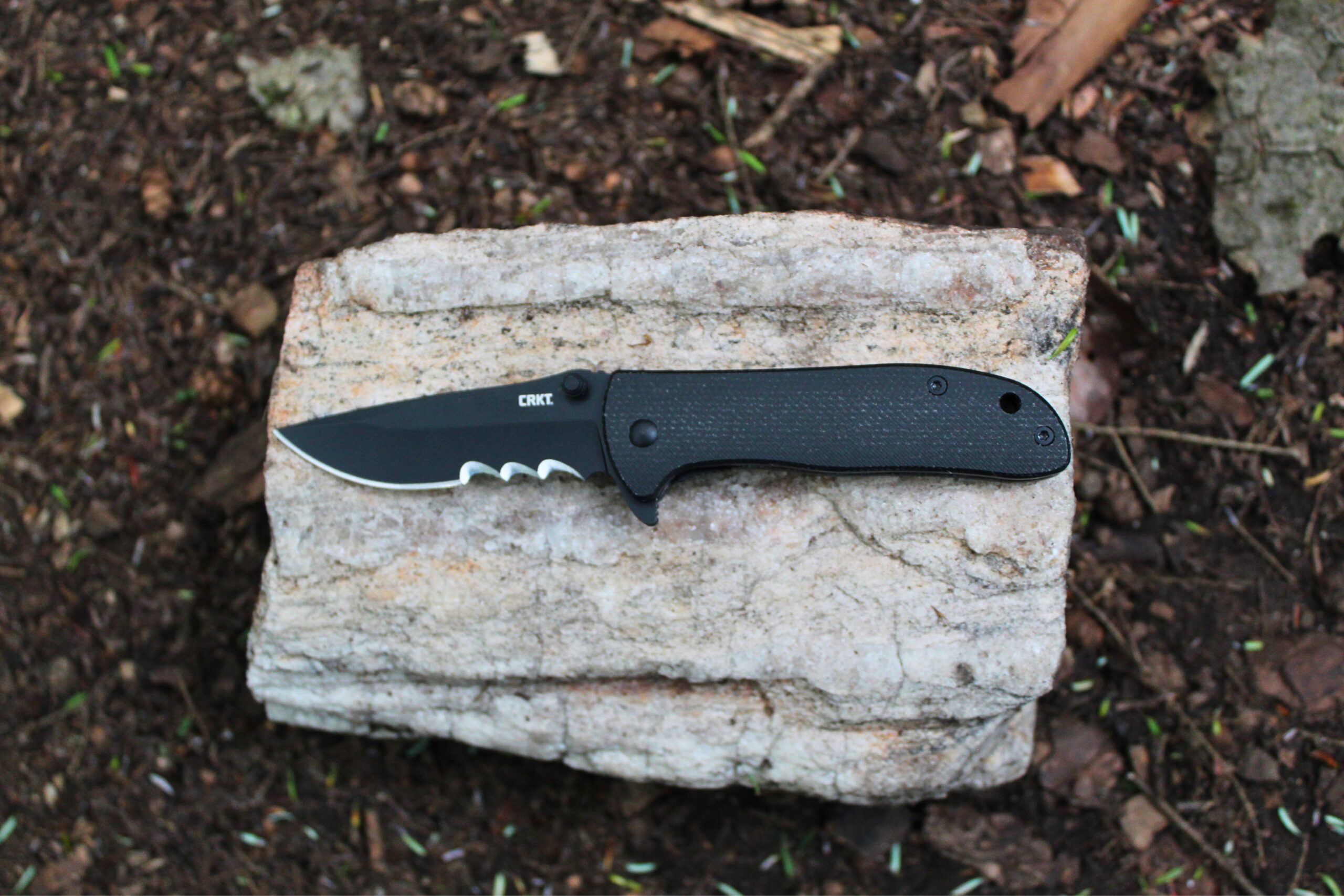
Serrated edges have a series of small, tooth-like ridges that can be particularly useful for tasks involving tougher materials. The design of a serrated blade allows it to cut through fibrous materials such as rope, branches, or even meat more effectively than a plain edge.
However, serrated edges are more challenging to sharpen at home than plain edges. Because the teeth are small and irregular, they require specialized sharpening tools or professional services to maintain their sharpness. Additionally, serrated edges can consume more blade real estate, reducing the length of the plain edge available for slicing tasks. This can make the knife less versatile.
That’s why we prefer a simple, plain edge. If you keep it sharp, it will almost always perform better and be more versatile than a serrated one. A well-maintained plain edge can handle a wide range of cutting tasks, from slicing vegetables to cutting paper, and is typically easier to sharpen using household tools or sharpening stones. The uninterrupted cutting surface allows for clean, precise cuts, making it a preferred choice for everyday tasks where versatility and ease of maintenance are essential.
WHAT KIND OF LOCK SHOULD I LOOK FOR?
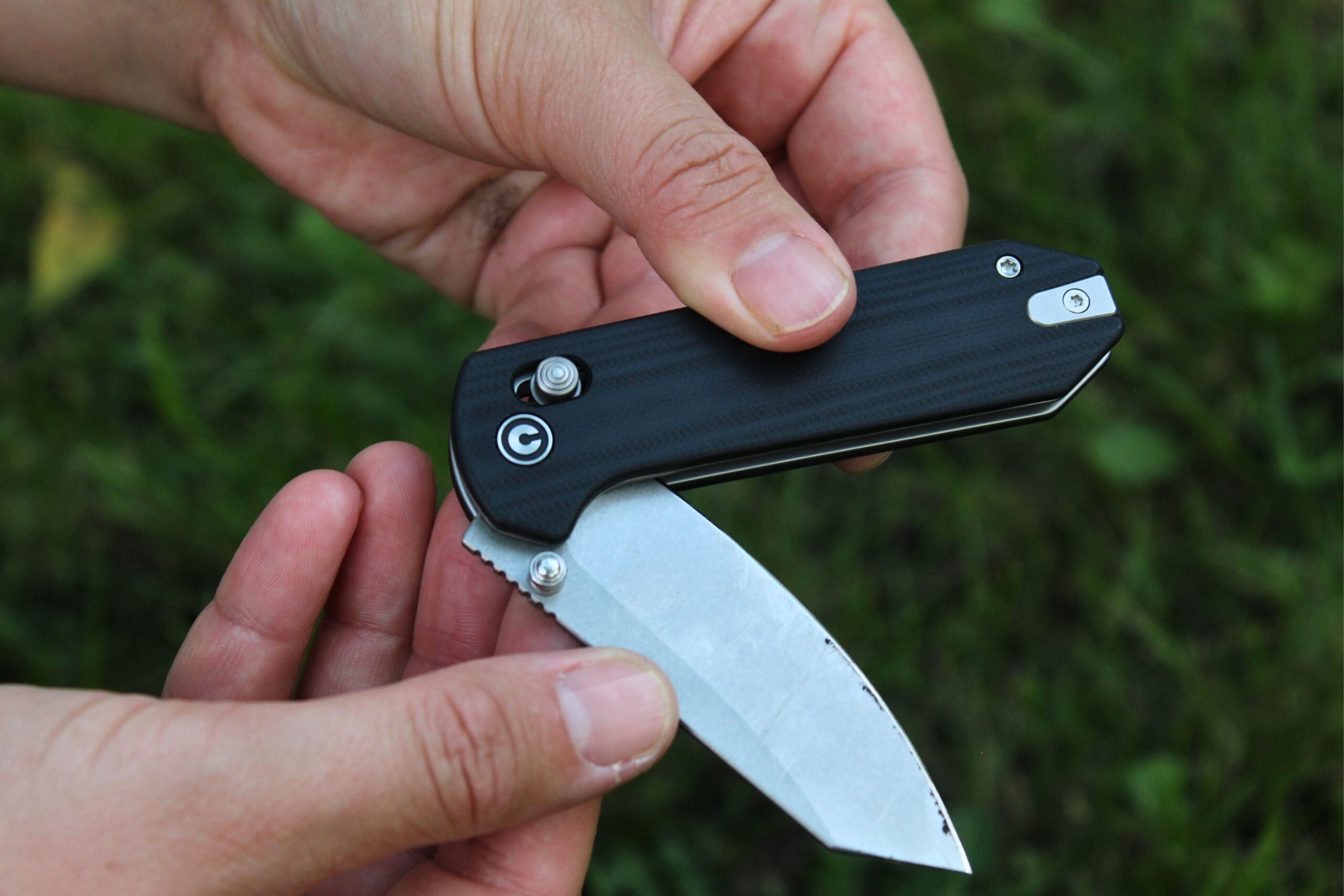
A sturdy lock mechanism makes your knife safer to use during cutting tasks. Each lock type has advantages and considerations that influence the knife’s performance.
The frame lock is a popular choice in high-quality knives. It utilizes a steel lock bar integrated into the handle’s frame. As the blade opens, the lock bar shifts into position, securely locking the blade against the handle. This mechanism is strong and simple, but frame locks tend to wear over time, particularly with heavy use.
In contrast, the liner lock is built into the knife’s liner. When the blade is opened, a portion of the liner slides into a notch on the blade, securing it in place. Liner locks are known for their ease of use and reliability, allowing for smooth, one-handed operation. Despite their advantages, they too can experience wear and may be affected by dirt or debris.
The compression lock, favored by brands like Spyderco, operates by compressing a stop pin against the blade tang. This lock offers better security and smoother operation, ensuring the blade remains firmly in place even with heavy use.
Another option is the detent lock, which employs a spring-loaded ball bearing that locks into a detent in the blade. This provides a simple, effective lock with secure blade engagement and a lightweight design. However, it might not hold as well or be as strong as other lock types.
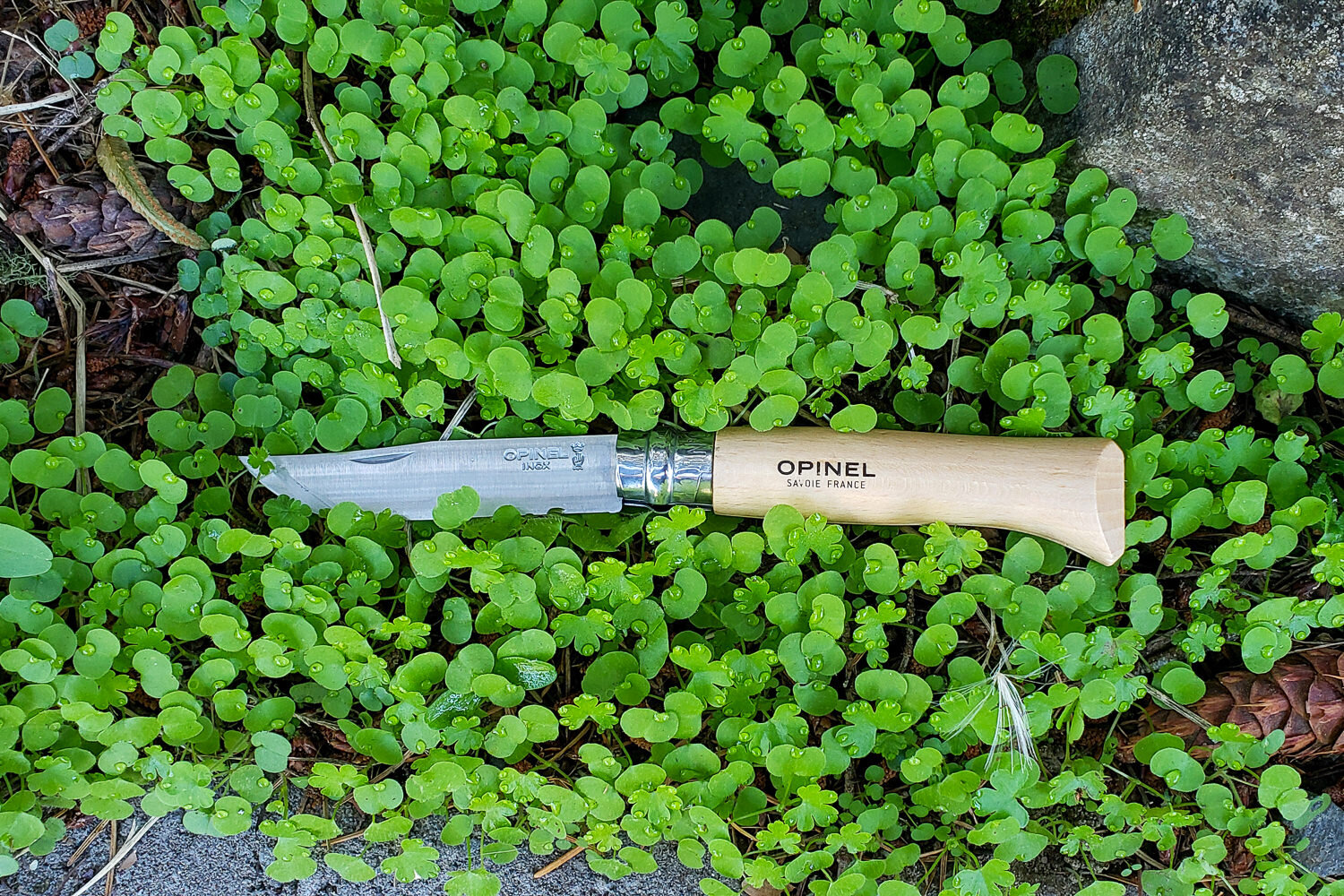
The collar lock, or ring lock, features a rotating collar that encircles the blade’s base when the knife is open, as seen on the Opinel No. 8. This design provides a secure lockup, making it highly reliable for preventing accidental blade closure. It requires more effort than simpler mechanisms but still gives you a secure blade hold.
Lastly, the back lock is found in many traditional pocket knives and features a spring-loaded lock at the back of the handle. This lock engages a notch in the blade, holding it securely open. While durable and reliable, back locks typically require two hands for operation—one to hold the handle and the other to release the lock.
All the knives on our list are equipped with strong frames, liners, compression, or collar locks to keep the blades safe and securely fixed in position when open.
WHAT IS A GOOD SIZE & WEIGHT FOR A POCKET KNIFE?
A pocket knife should be compact and light enough that it won’t bother you to carry it in your pocket, but large enough to fit comfortably in your palm and be adequate for the task at hand.
A good guideline for everyday carry (EDC) is that the knife should be around 4 inches long when closed. This size balances portability and usability, making it easy to carry without being overly intrusive. When open, the blade length typically ranges from 2.5 to 3.5 inches, providing enough cutting surface for most daily tasks while remaining manageable.
A desirable weight for EDC knives is about 4 ounces or less. Lighter knives, generally under 3 ounces, are easier to carry and less likely to cause discomfort when kept in your pocket throughout the day. They are ideal for those who value minimalism or ultralight setups.
Heavier knives, while potentially offering more durability and a more substantial feel, can become cumbersome if carried for extended periods. They may be preferred for tasks requiring more cutting power or when used in scenarios where extra strength is beneficial.
HOW DO BLADE SHAPES WORK?
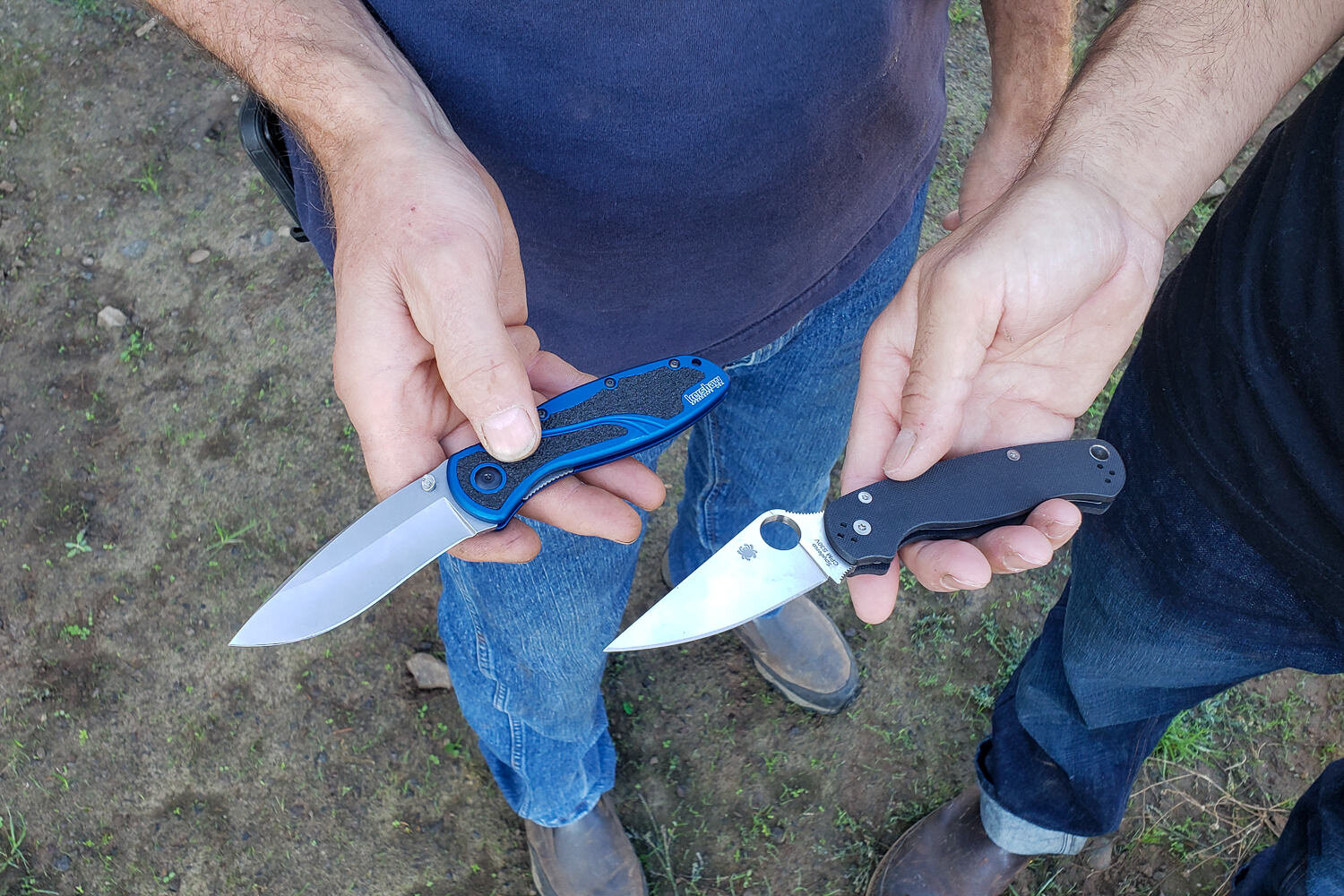
The knives on our list have a range of blade shapes, but most are some form of the classic drop-point, which offers excellent versatility for various cutting and slicing tasks. It features a curved, convex edge that drops towards the tip. The drop-point’s tip allows for controlled cutting and piercing, making it a reliable choice for everyday carry.
Another shape is the clip-point, which has a concave cut along the top of the blade, creating a sharp, pointed tip. The spear-point blade is symmetrical with a central point, making it effective for piercing and stabbing. It excels in tactical situations but is less versatile for slicing. The tanto blade features a strong, angular tip and flat cutting edge, offering excellent durability and impact resistance, but less suited for general slicing.
Finally, the Wharncliffe blade has a straight edge with a sharp, curved point, which is perfect for precision cutting but less effective for heavy-duty use.
Each blade shape offers distinct advantages, catering to different needs and preferences. To learn more, check out this Knife Blade Shapes Guide.
WHAT KIND OF BLADE STEEL IS BEST?
Understanding knife blade steel involves grasping five key elements: hardness, toughness, wear resistance, corrosion resistance, and edge retention.
Hardness refers to the steel’s ability to maintain its edge, measured on the Rockwell scale; harder steels hold an edge longer but can be more brittle.
Toughness indicates how well the steel can withstand impacts and resist chipping.
Wear resistance is how well the blade retains sharpness over time, especially with frequent use.
Corrosion resistance determines the steel’s ability to resist rust and staining, vital for knives exposed to moisture.
Lastly, edge retention measures how long the blade stays sharp before needing to be honed. These factors influence the knife’s cutting performance, durability, and maintenance needs.
Check out the Essential Guide to Knife Steel if you want to know more about a specific blade.
WHAT SHOULD I LOOK FOR IN TERMS OF HANDLE MATERIALS?
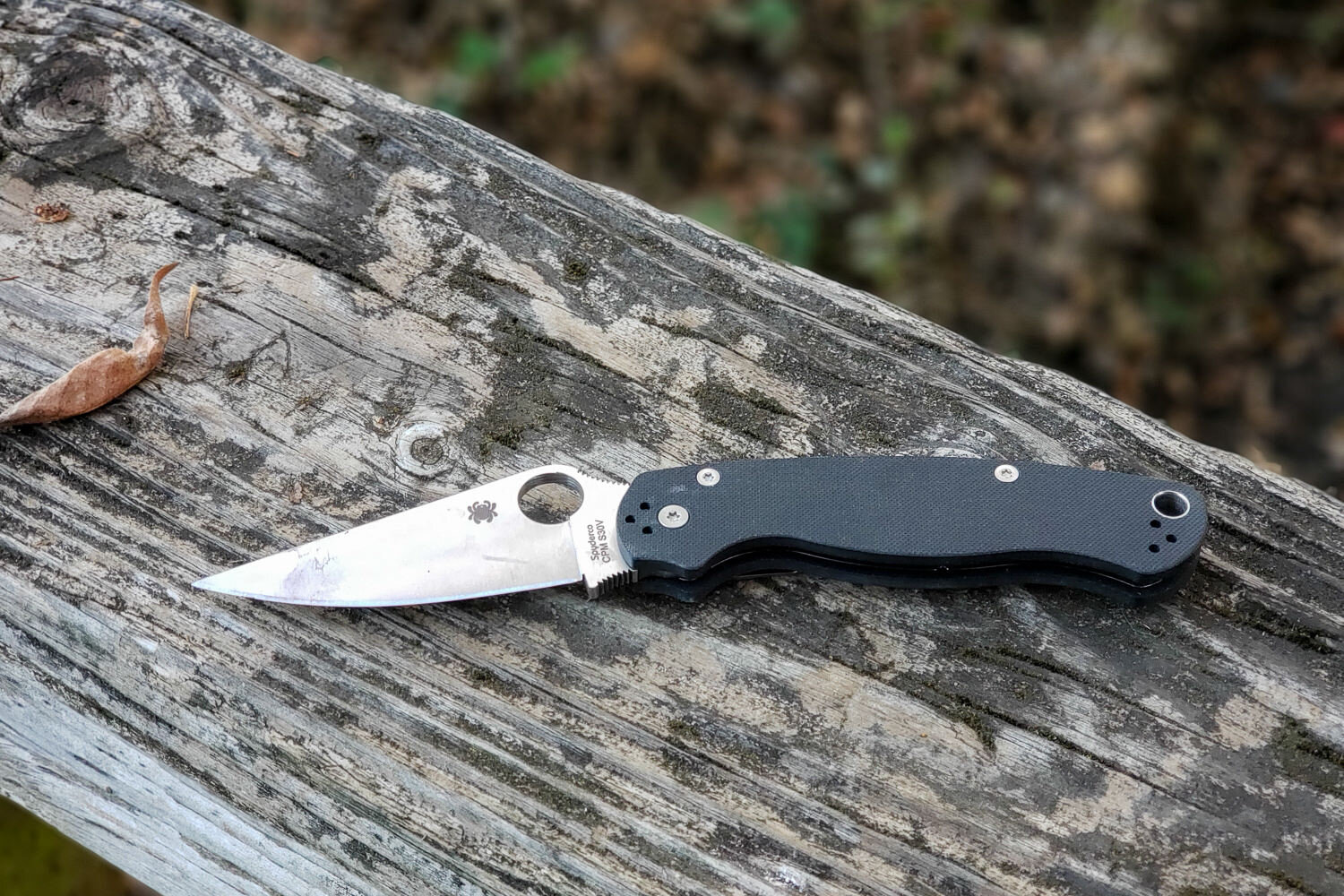
The handle is an integral part of the pocket knife equation: if it is too heavy and bulky, the knife is cumbersome, but if it is too light and flimsy, the knife will feel weak.
The best knives have ergonomic, comfortable, grippy, and durable handles. G-10, a type of laminate commonly used in knife handles, is a good all-around material for its lightweight and texture, but you might prefer materials like anodized aluminum or wood.
STYLING
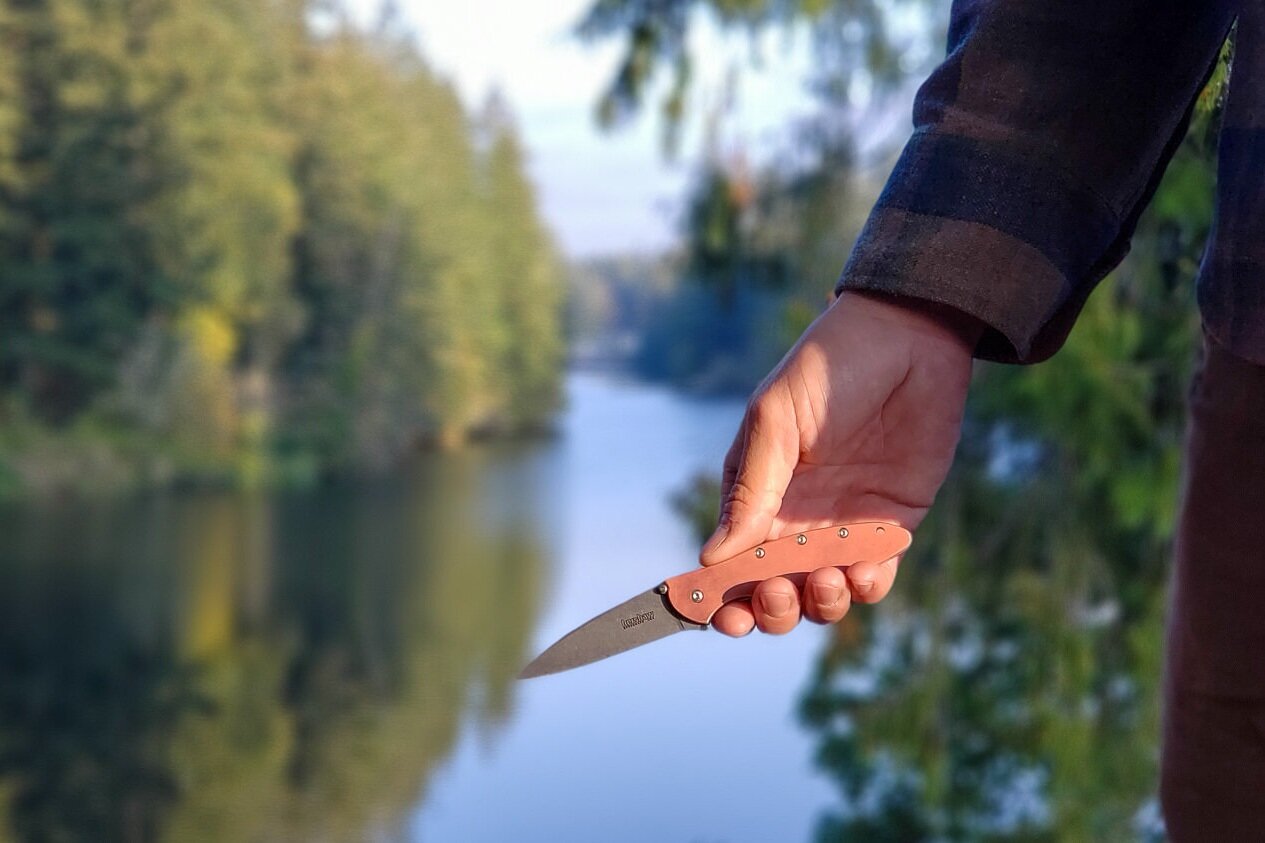
Once you’ve gone over the considerations above, you can narrow your search to knives that appeal to you aesthetically and fit your style. You might want a tough-looking tactical blade, a sleek knife that won’t scare people at the office, or a traditional, old-school design.
POCKET CLIP
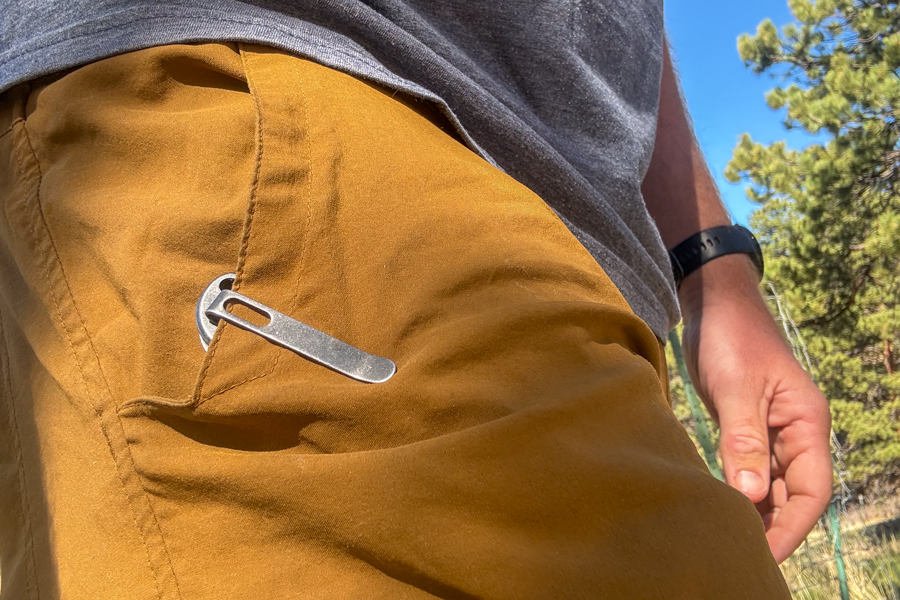
Most people carry their knives in their pants pockets. The knife should rest in the pocket, with the closed blade flush with the front or back seam, so you can grab it easily and prevent the blade from accidentally opening.
Some knives have pre-drilled holes so you can choose the position that suits you best. If you prefer to be inconspicuous and avoid drawing attention to the fact that you’re carrying a knife, look for a deep-carry pocket clip that keeps the blade hidden – some knives include this feature.
Why Trust CleverHiker
At CleverHiker, we pride ourselves on delivering expert, trustworthy reviews to help you make informed decisions. Gear Analyst Ben Dawson has been researching and writing about outdoor gear for more than a decade, and pocket knives have been part of that for a long time. Over the years, the CleverHiker team has tested more than 40 pocket knives across a wide range of prices, blade steels, lock types, and intended uses.
Just as importantly, we do not test knives in a lab. We carry them. We use them for the stuff people actually use pocket knives for: breaking down boxes, camp cooking, road trips, Colorado camping, beach days, river days, and all the random everyday tasks that end up telling you whether a knife is actually good or just good on paper. That kind of long-term use tends to surface the real story pretty quickly. When we recommend a knife, it is because it holds up in actual life, not just because it made a good first impression.
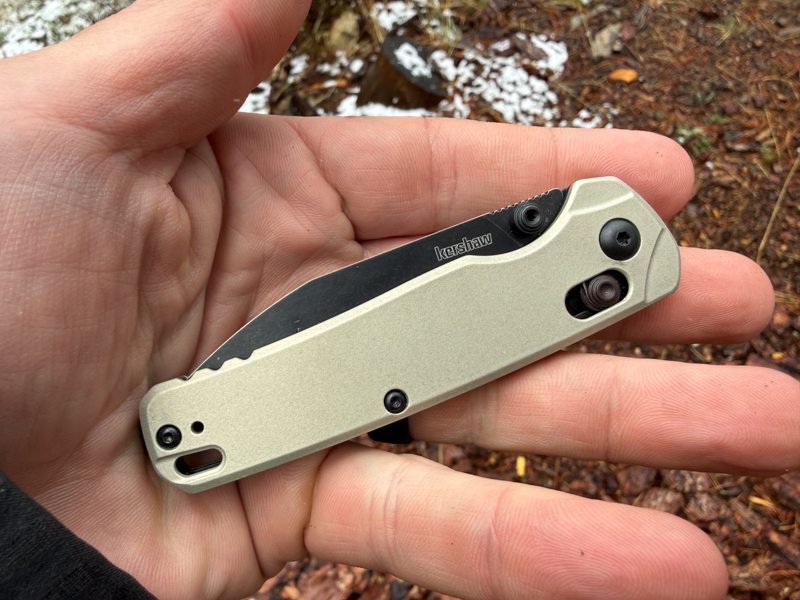
How We Test & Methodology
We tested over 40 pocket knives across beaches, rivers, campsites, and daily carry in Colorado over the course of more than a year. Every knife in our lineup was carried for a minimum of two months before scoring.
HOW DO WE TEST BUILD QUALITY?
The best-built knives in our lineup arrive with tight tolerances, no blade play, and components that align cleanly from day one. We inspected fit and finish out of the box, then reassessed after weeks of regular use to see how the construction held up over time.
We checked for blade play, gaps between components, handle integrity, finish wear, and the quality of hardware, including clips, screws, and pivot mechanisms. Knives that developed issues under normal use were noted and factored into scoring.
HOW DO WE TEST BLADE RETENTION & STABILITY?
The knives with the best blade retention in our lineup held a working edge through weeks of daily cutting without requiring sharpening. We put each blade through repeated cuts on cardboard, rope, paper, food, and camp materials to simulate real-world use and assess how quickly the edge degraded over time.
We also tested blade stability by applying lateral pressure during cutting tasks and checking for any wobble or movement at the pivot. Steel type was a consistent predictor of performance here.
HOW DO WE ASSESS ERGONOMICS & GRIP?
The most ergonomic knives in our lineup felt balanced and secure across multiple grip styles without causing fatigue during extended use. We handled each knife in standard, reverse, and pinch grips, performing cutting tasks over extended periods to assess comfort, balance, and control.
We paid particular attention to how each knife performed for different hand sizes, how handle texture and shape affected grip in wet conditions, and whether the blade-to-handle geometry supported natural cutting angles.
LOCKING MECHANISM
The best locking mechanisms in our lineup engaged solidly, released intuitively, and performed consistently in dirty and wet conditions without hesitation. We repeatedly opened and closed each knife under varying levels of stress to assess lock engagement strength and consistency.
We tested performance in challenging conditions, including wet hands, sand, and after extended use when pivots and mechanisms had accumulated dirt. Safety was assessed by applying force to the blade in the open position and evaluating whether the lock held without slipping.
HOW DO WE TEST CORROSION RESISTANCE?
The most corrosion-resistant knives in our lineup showed zero signs of rust or pitting after extended exposure to moisture, sand, and saltwater. We carried each knife in beach and river environments, exposed blades to saltwater solution, and inspected for rust, pitting, and surface degradation after exposure.
Blade steel was the primary variable, with higher-chromium and powder metallurgy steels consistently outperforming basic stainless options. We also assessed how blade coatings held up to scratches and surface wear.
HOW DO WE MEASURE WEIGHT?
Weight was measured on a digital scale and compared against manufacturer specifications. We also assessed how each knife’s weight distribution affected balance and handling during use, noting whether the weight was centered, handle-heavy, or blade-heavy in both the open and closed positions. A knife’s packaged weight tells part of the story; how it feels in hand during a full day of carry tells the rest.
Conclusion
Choosing the right pocket knife is essential for ensuring you have a reliable tool for everyday tasks and emergencies. Whether you need a knife for intricate cutting, heavy-duty use, or everyday carry, factors like blade shape, steel quality, and locking mechanisms influence performance and safety.
With a range of options available, we hope this guide helps you find the perfect pocket knife to complement your lifestyle and meet your cutting needs.