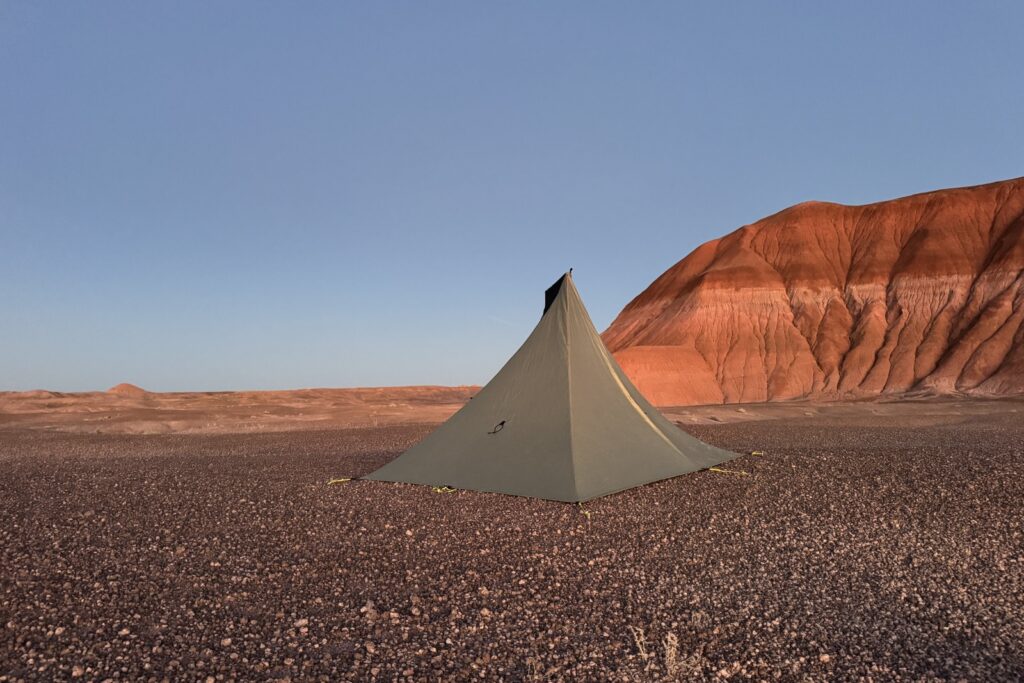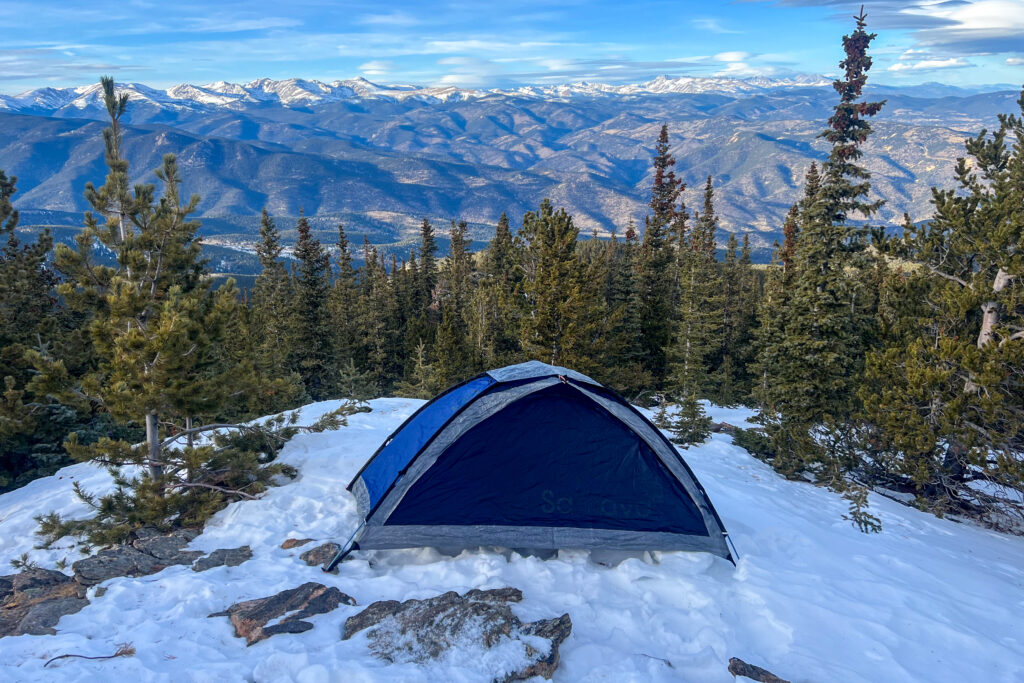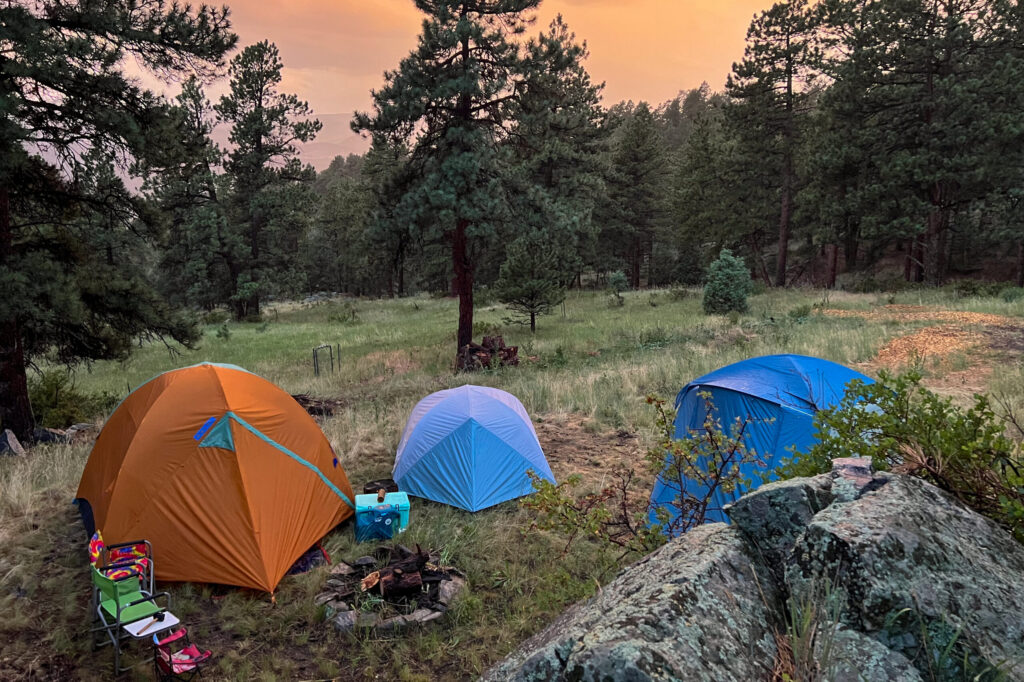


We’ve spent over 800 nights sleeping in ultralight tents. We researched 85 of the most cutting-edge ultralight tents and narrowed them down to the best 15 one-person and two-person models for every adventure and budget. Whether you’re a seasoned thru-hiker looking to see what’s new or just curious about what’s on the lighter side of backpacking, we have picks for everyone.
Editor’s Note: We last updated this gear guide on May 21, 2026 to improve readability and account for 2026 price increases.
How We Test
We evaluated each ultralight backpacking tent based on metrics such as comfort, weight, ease of use, weather resistance, and durability, while also considering the best-value options available.
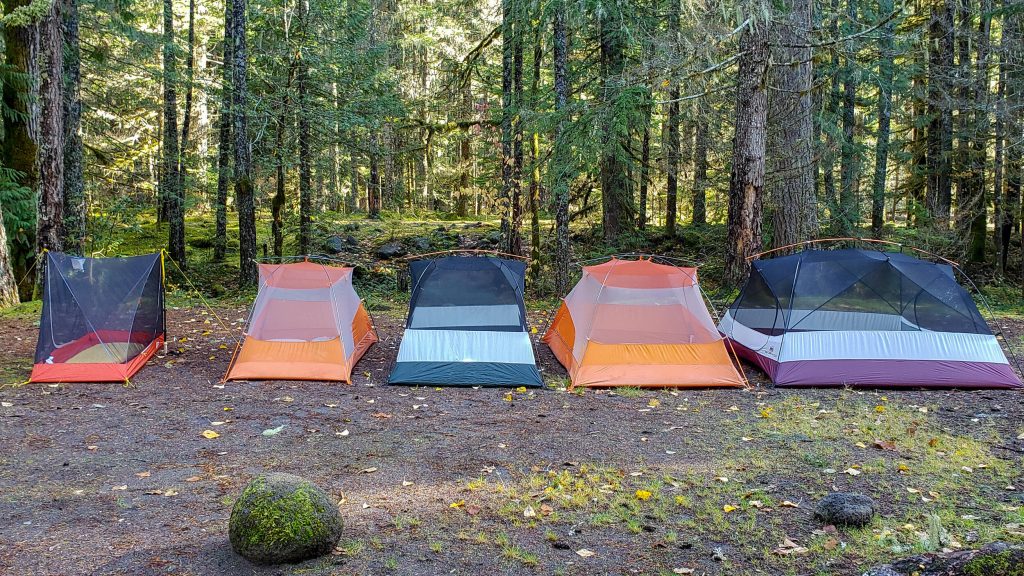
Our team has tested dozens of tents over hundreds of nights in the backcountry to find the best options. We weathered windstorms in remote Norwegian mountain valleys, slept inside thunderstorms on top of Pacific North-west peaks, and waited out rainstorms on lonely paths in the Scottish Highlands. Tents are also set up side-by side to evaluate their features and performance comparatively, all in pursuit of the best recommendations.
For more info, check out some of our other most popular gear guides:

#1. Best Ultralight Tent Overall
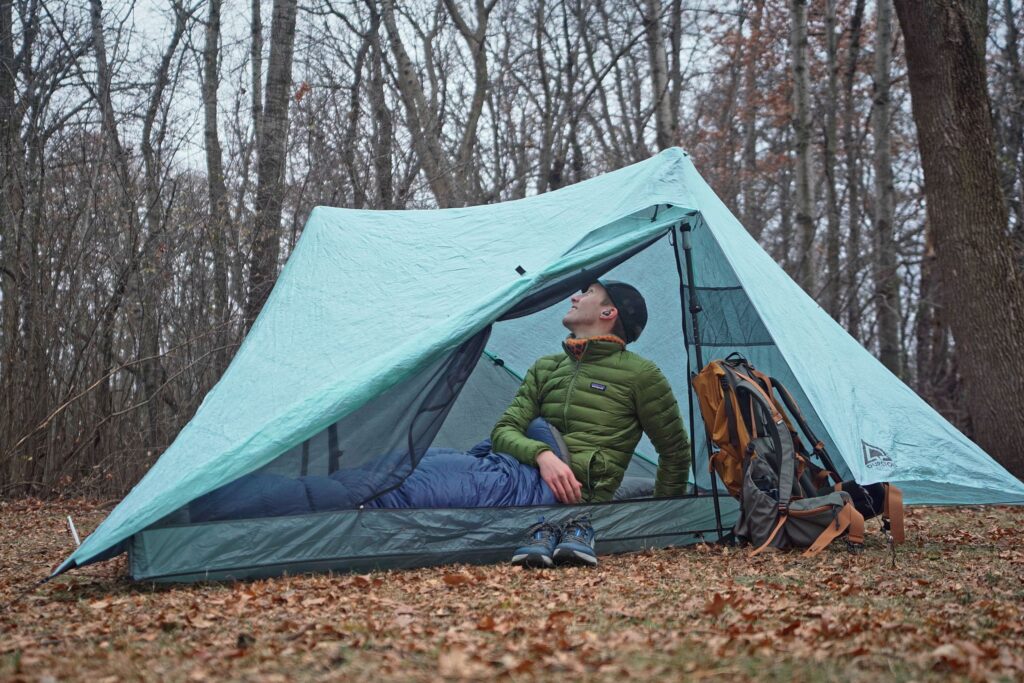
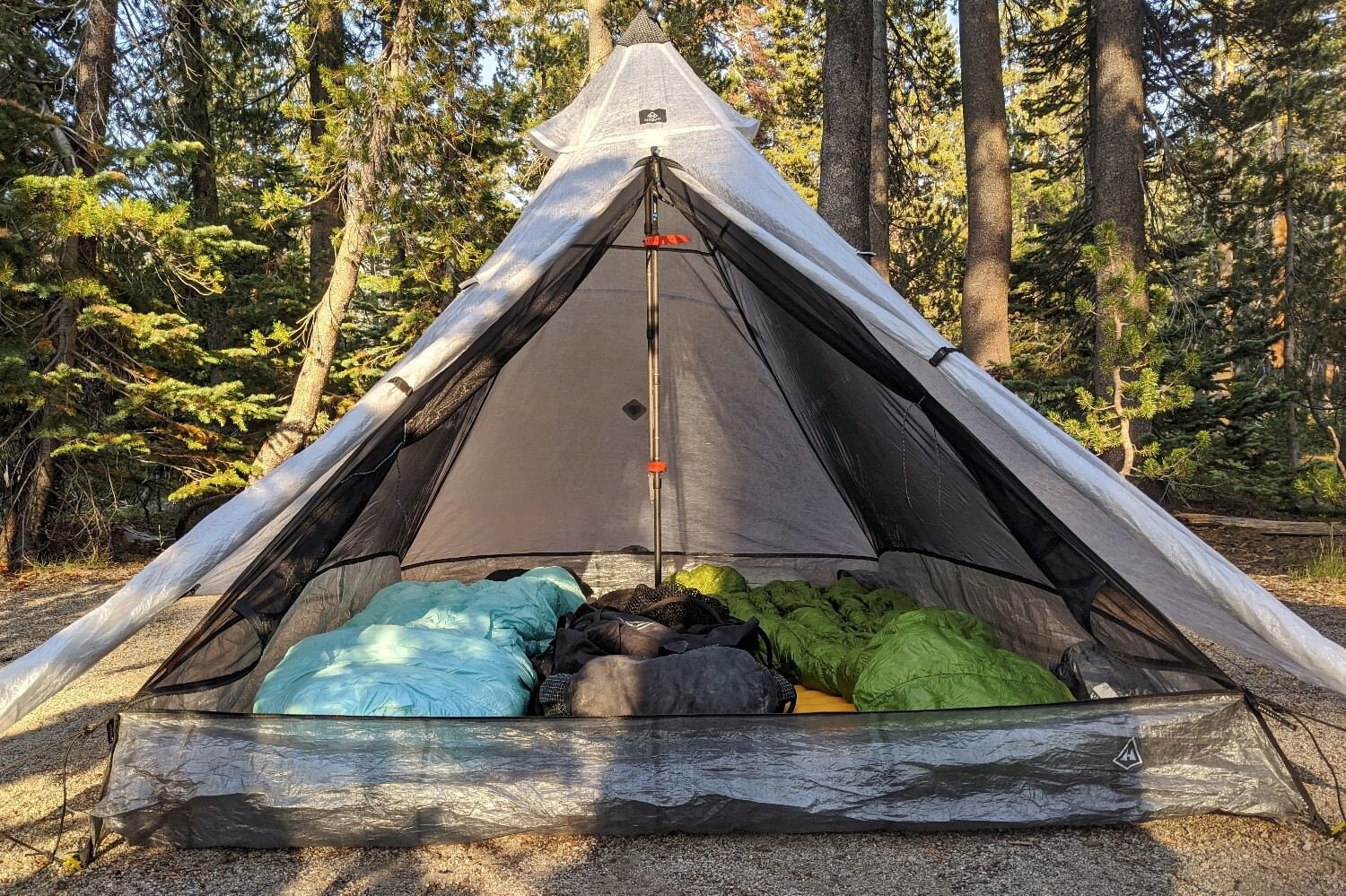
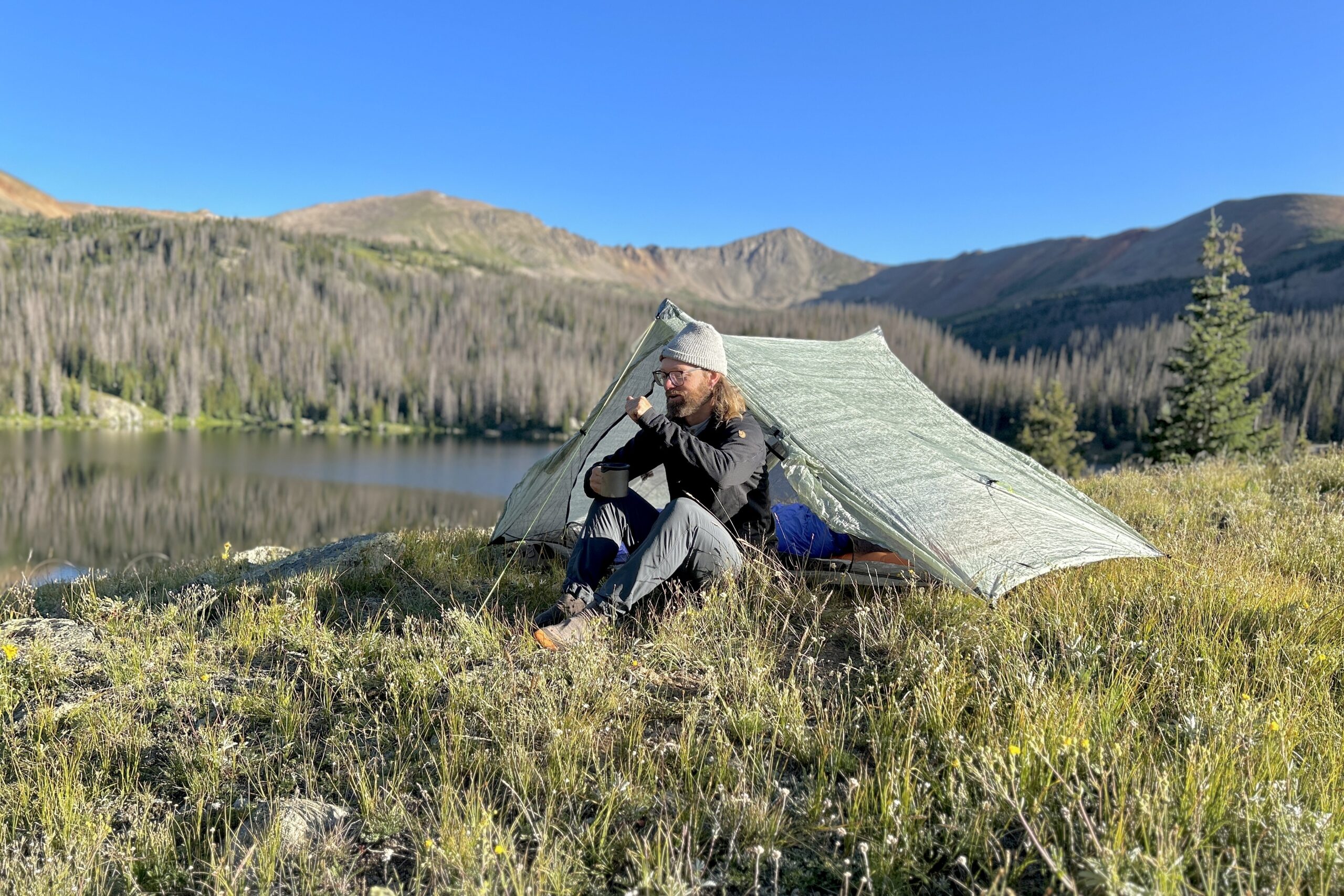
It’s become hard not to reach for the well-balanced and high-performing Durston Gear X-Mid Pro 2+ on every adventure. For two people, this is the best money can buy, which makes its slightly lower price to the competition even more incredible.

Quick Picks for Ultralight Tents
Check out this quick list of our favorites or continue scrolling to see our full list of the best ultralight tents with in-depth reviews.
1. Best Two-Person Ultralight Tent Overall: Durston Gear X-Mid Pro 2+ ($719)
2. Best One-Person Ultralight Tent Overall: Durston Gear X-Mid Pro 1 ($599)
3. Best Balance of Comfort & Weight for One: Zpacks Pivot Solo ($649)
4. Most Spacious & Weather-Worthy Ultralight Tent: Hyperlite Mountain Gear UltaMid 2 ($730)
5. Best Balance of Comfort & Weight for Two: Zpacks Pivot Duo ($849)
6. Easiest to Recommend One-Person Ultralight Tent: Six Moon Designs Lunar Solo ($260)
7. Best Budget Ultralight Tent: 3F UL Gear Lanshan 2 Pro ($190)
8. Best Low-Weight Design: Zpacks Duplex Classic ($749)
9. Best Ultralight Tent with Freestanding Option: Tarptent Double Rainbow ($299)
10. Comfortable and Innovative Tent: Tarptent MesoSpire 2 ($299)
11. Good Balance of Weight & Livability: MSR FreeLite 2 ($500)
12. Best Semi-Freestanding Ultralight Tent: Big Agnes Tiger Wall UL2 ($500)
13. Best Versatile Tarp Net Combo: Six Moon Designs Haven ($375)
14. Best Super Lightweight One-Person Silnylon Tent: Gossamer Gear The One ($315)
15. Best Super Lightweight Two-Person Silnylon Tent: Gossamer Gear The Two ($375)
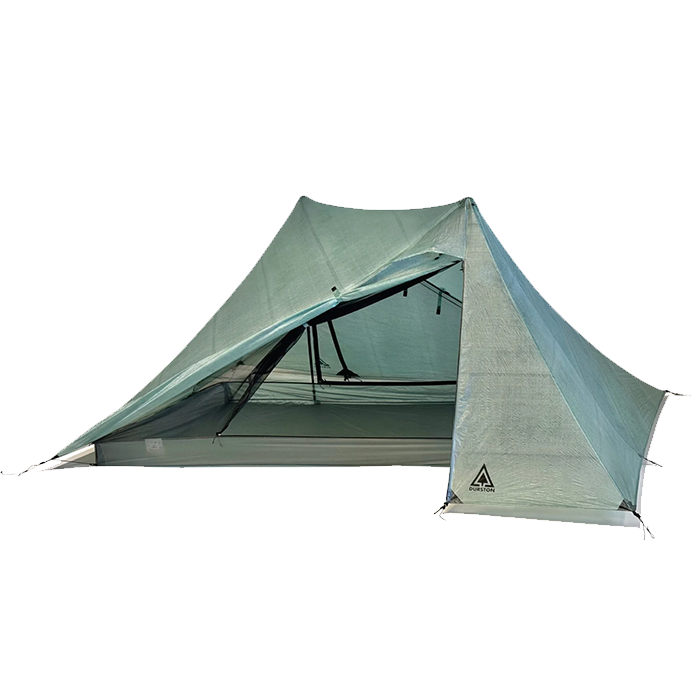
Durston Gear X-Mid Pro 2+
Best Two-Person Ultralight Tent
CleverHiker Rating: 4.8/5.0
Price: $719
Weight: 1 lb. 5.8 oz.
Dimensions (LxWxH): 90 x 52 x 49 in.
Floor Area: 32.5 sq ft
Pros
- Incredible livability for two people
- Easy set-up
- Great ventilation
- Large vestibules and pocketd
Cons
- Alternate pitching styles require some work
- Expensive
No other tent does such a good job of creating a livable, comfortable experience for backpacking adventures while remaining so lightweight as the Durston Gear X-Mid Pro 2+. With an easy setup, excellent weather resistance, and spacious vestibules, this tent impressed us at every turn. If there were one tent we’d want to share with someone on a backpacking adventure, this would be it.
A significant part of the success here is due to the clever design of the offset poles. The two trekking pole locations optimize interior volume more effectively than other configurations. During our first testing of the Pro 2+ in Minnesota on a warm winter afternoon, we laughed with delight upon entering and seeing the spacious interior. Compared to all our other tent options, this one felt the most livable and comfortable. The additional size also ensures that sleeping in any orientation is pleasant. Although the offset pole design creates sloping side walls that may affect headroom for one person sleeping in the same direction, we found it to still be comfortable and not claustrophobic during our tests.
Everything else about the Pro 2+ feels great. The vestibule and door zippers operate smoothly and are well-positioned. The doors are large, L-shaped, and are easy to access regardless of your lying orientation. We appreciate that the vents can be easily closed without leaving the tent and that the vestibules are slightly overhung, preventing rain from falling into the sleeping area when entering or exiting.
The trade-off is that this tent has a significant footprint. Durston Gear offers an alternative pitching guide that can drastically reduce the footprint by collapsing the vestibules, which is a thoughtful touch we appreciate. And of course, this is not a budget tent. However, for its class, this tent stands out as more affordable than its competitors while delivering a better experience.
The Durston Gear X-Mid Pro 2+ may not be the best tent for everyone. But among all the ones we tested, it’s the one we feel most confident recommending for two people seeking comfort on the trail at an incredible weight.

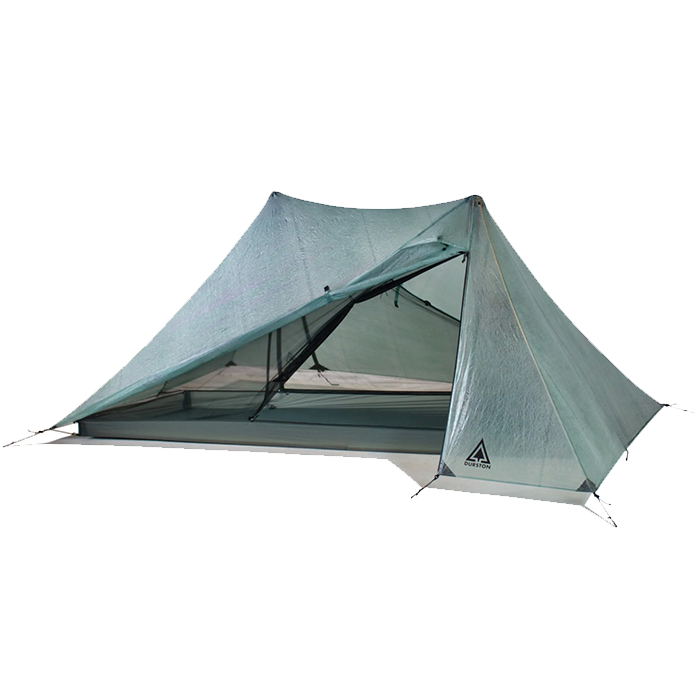
Durston Gear X-Mid Pro 1
Best One-person Ultralight Tent
CleverHiker Rating: 4.8/5.0
Price: $599
Weight: 1 lb. 1.4 oz.
Dimensions (LxWxH): 90 x 32 x 45 in.
Floor Area: 20 sq ft
Pros
- Easy to use
- Great for taller people
- Stormworthy design
- Wonderful interior comfort
- Spacious vestibules
Cons
- Can only fit pack at head or foot end
- Alternate pitches require some work
Of all the one-person tents we researched and tested, the Durston Gear X-Mid Pro 1 came closest to balancing the features we care about while still maintaining an incredible weight. We tested the Pro 1 over 1,000 miles of the PCT and loved it more with each passing mile. When you’re worn out after a long thru-hiking day, and a simple tent brings a smile to your face, you know you’ve scored a quality piece of gear.
We measured the Pro 1 at 17.4 ounces — about average for a one-person Dyneema tent. What sets the Pro 1 apart is the number of features you get for this weight. We appreciated its long interior, which easily accommodated our 5-foot, 11-inch tall tester. Headroom is also excellent. The offset pole geometry provides ample space from front to back and adequate room side-to-side. We could change shirts while sitting up without brushing the condensation off the walls. The vestibules were perfect for storing our pack and shoes at night.
It’s in weather resistance that the Pro 1 also shines a bit brighter than its peers. With a fly that extends all the way down to the ground and an offset dual-peak pyramid-style geometry that cuts through the wind, the tent gave us confidence in storms. One aspect that also helps during a storm is the ease of setup. With only four stakes needed for a secure pitch, this was particularly handy when we were hiking until dark through the rain and needed to set up quickly.
Like all tents, the Durston Gear X-Mid Pro 1 makes some careful design tradeoffs that might not appeal to you. For our hiking style and preferences, we believe those design tradeoffs are smart. We also appreciate that the price is on the lower end for a DCF shelter, especially when outfitted with the silnylon floor. If you’re a thru-hiker or ultralight backpacker, we can confirm from our testing that the X-Mid Pro 1 is absolutely fantastic and well worth the investment.
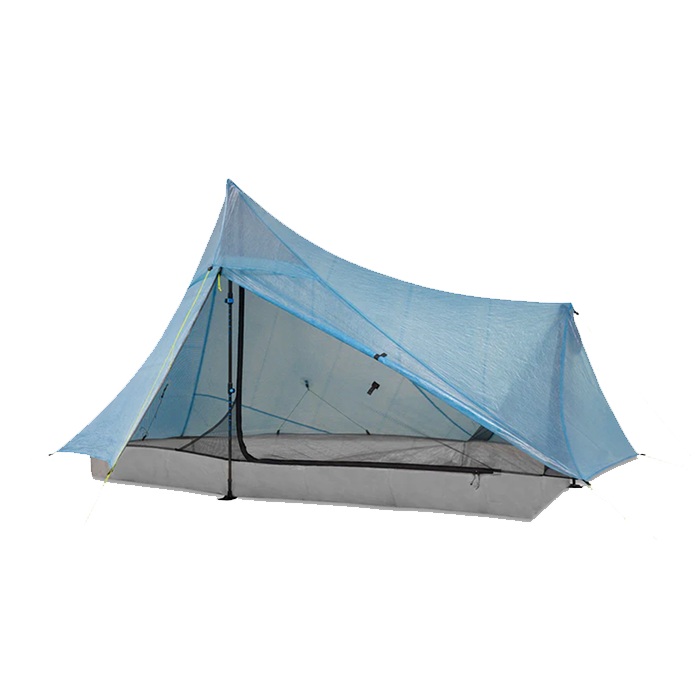
Zpacks Pivot Solo
Incredible Balance of Comfort & Weight for One
CleverHiker Rating: 4.7/5.0
Price: $649
Weight: 1 lb. 0.1 oz.
Dimensions (LxWxH): 84 x 29/42/28 x 52 in.
Floor Area: 21 sq ft
Pros
- Good floorspace
- Large peak vent
- No wet footbox concerns
Cons
- Tricky initial setup
- Small interior pocket
One of the newer tents in our lineup, the Zpacks Pivot Solo is another hit. It has very few downsides and broad appeal among ultralight backpackers.
Like all Zpacks tents, the Pivot Solo features Dyneema Composite Fiber fabric, an ultralight, durable, and waterproof material. We haven’t tested it in any storms yet, but similar pyramid-style designs have performed well in the past.
We liked several design features when we set up the Pivot Solo in the field. The peak vent is large and held open by a peak guyline, which avoids the stiff brim commonly found on other tents. The door features a smooth, water-resistant zipper leading to a spacious vestibule.
The large peak vent manages condensation, but the rainfly’s design choice gets mixed reviews. The fly stops a few inches above the ground, which benefits ventilation but compromises splashback performance. Plus, this fly could leave some backpackers feeling drafty. Personally, we would have preferred the fly to extend closer to the ground. However, some people will appreciate this choice. We also like that the large peak vent helps manage condensation.
Inside, there’s good news with respect to comfort. What excited us most during testing was the small mesh panel at the foot end, made possible by the short vertical pole. It completely eliminates concerns about a wet footbox, providing great peace of mind. The length was also ideal for our 5-foot, 11-inch frame. Although there’s no space above or below for a backpack, there’s room to the side. The headroom is mostly good, and the single tall peak enhances overall livability more than single-pole pyramid tents. One downside is the single mesh pocket. It’s small, angled, and not spacious enough for anything larger than a phone or headlamp.
The price may seem high as it’s one of the most expensive one-person tents we considered. However, you’re getting a complete package with very few downsides for that price. Our overall sentiment is that it’s a worthwhile investment for a thru-hike, especially if you appreciate how Zpacks addressed certain issues with one-person tents.
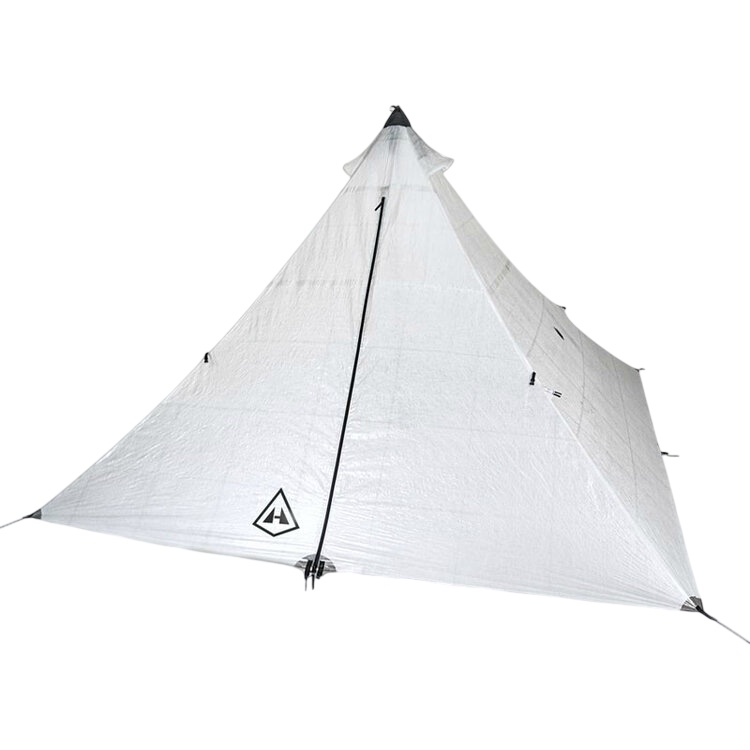
Hyperlite Mountain Gear UltaMid 2 with Full DCF Inner
Most Spacious & Weather-Worthy Ultralight Tent
CleverHiker Rating: 4.7/5.0
Price: $1,150
Weight: 2 lb. 8.7 oz.
Dimensions (LxWxH): 107 x 83 x 64 in.
Floor Area: 63 sq ft
Pros
- Incredible weather resistance
- Huge peak height
- Great floor space
Cons
- Expensive
- No vestibule and the interior pole is in the middle of the floor
For the best weather resistance of any tent we’ve tested, the Hyperlite Mountain Gear UltaMid 2 stands far ahead of the competition, practically in another class of tents. However, all that performance comes with significant trade-offs in other areas that may not make it worthwhile for some backpackers.
Starting with the positives, the UltaMid 2 features a pyramidal shape that excels at deflecting wind from nearly any direction. Combined with ample staking points and guylines, and with some appropriate setup time, this can become a storm fortress capable of withstanding more extreme conditions than other backpacking shelters. The materials are correspondingly sturdy to endure high winds. The rainfly features the incredibly strong 0.8-ounce-per-square-yard Dyneema Composite Fabric (DCF) and excellent stitching. To achieve a pyramid shape with a spacious interior of 63 square feet, the UltaMid 2 boasts a peak height of 64 inches, the tallest in our lineup, effectively eliminating the claustrophobic feelings typical of smaller shelters.
However, focusing so heavily on one area entails trade-offs. And as we mentioned, the UltaMid 2 is nearly in a different class of tents. For starters, it’s heavy. Weighing in at 2 pounds, 8.7 ounces, this is the heaviest tent in our lineup due to its more durable fabrics and components, as well as its interior size and height. Although its large dimensions seem appealing on paper, in practice, they result in a shelter that isn’t as comfortable as the numbers imply. The sloping walls, which are effective at shedding wind, quickly limit headroom. Although our sleeping quilts did not touch the walls, they easily brushed against the inner mesh. Without a vestibule, entering and exiting exposes the interior to rain. Plus, the tall central pole, made of two lashed-together trekking poles, makes it much more challenging to get close to your sleeping partner.
That’s before considering the price. This is the most expensive tent we tested by a considerable margin. So, for more weight, a higher cost, and less comfort than many other tents we evaluated, does this even make sense? Well, yes; it’s simply in a different class of tents. This isn’t meant for casual or even moderately intense backpacking. It’s designed for adventures that push the limits of weather resistance. For those individuals, 40.7 ounces is an impressive weight. And the price is justifiable for the performance at this weight. While we weren’t able to test this tent to its full potential during a mild Midwestern winter, we’re confident it will live up to its stellar reputation.
More:
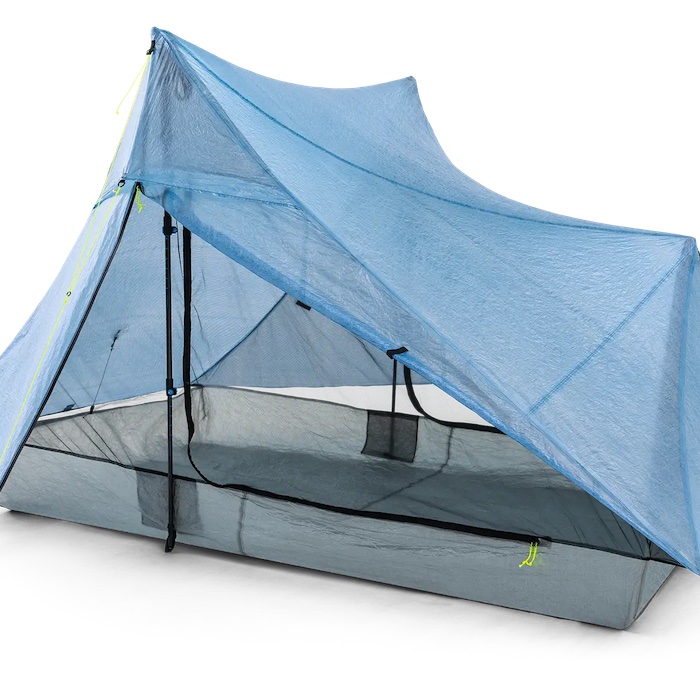
Zpacks Pivot Duo
Incredible Balance of Comfort and Weight for Two
CleverHiker Rating: 4.7/5.0
Price: $849
Weight: 1 lb. 5.1 oz.
Dimensions (LxWxH): 84 x 50 x 52 in.
Floor Area: 29.2 sq ft
Pros
- Great interior space
- Super lightweight
- Mesh at foot end reduces wet footboxes
- Straightforward setup for a trekking pole tent
Cons
- Bulky packed size but in-line with other DCF tents
- Door entry height a bit low and tight vestibules
- Small and insecure interior pockets
For a truly comfortable ultralight tent, the Zpacks Pivot Duo puts a spin on a classic A-frame and comes up with a winner. It nails the fundamentals of a good backpacking tent; it’s spacious, lightweight, easy to set up, and has a variety of thoughtful features that make using it pleasant. We took the Pivot Duo — and its predecessor, the Offset Duo — out to state parks and into Utah’s mountains for testing and came away impressed. Although the standard A-frame design has been used for years (see Zpacks’s wildly popular Duplex), we think adding a third pole at the foot end and shifting the poles makes for a much better shelter.
There are some sacrifices here, though. Although the interior height is great, the door height isn’t. And we found we were constantly crouching to get inside. The vestibules weren’t super spacious either, so when testing larger packs, we found it was a tight fit. Additionally, the triangular-shaped pockets on the inside were very small. Our headlamp and phone kept falling out if we put too much inside, something other pocket designs don’t struggle with.
But these issues don’t detract from how nice it was to sleep in this tent. The mesh at the foot end meant we didn’t worry about waking up with a wet footbox. Plus, having excellent clearance above your face when sleeping is wonderful.
Overall, we believe this is an exceptionally solid shelter, easily one of the best for thru-hiking. If you consider a slightly heavier tent for a significant boost in livability to be worthwhile — as we do — then the Pivot Duo should be near the top of your list.
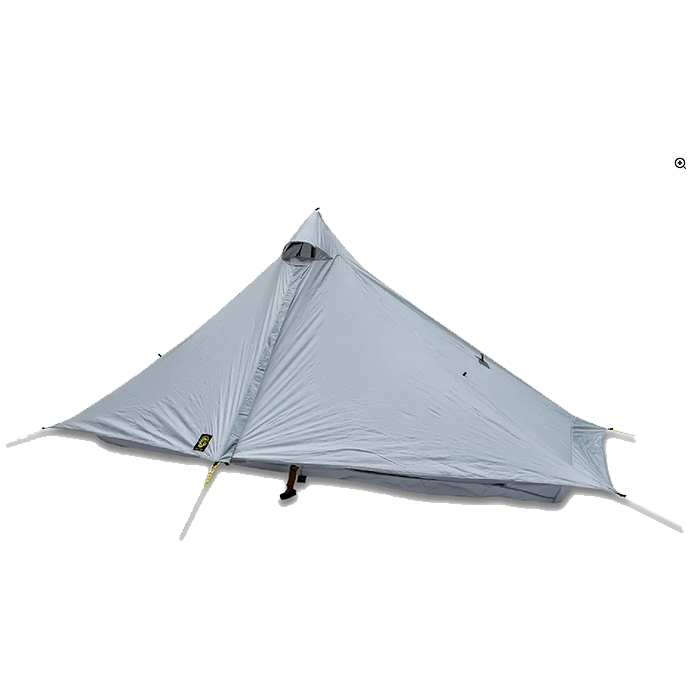
Six Moon Designs Lunar Solo
Easiest to Recommend One-Person Tent
CleverHiker Rating: 4.6/5.0
Price: $260
Weight: 1 lb. 10 oz.
Dimensions (LxWxH): 90 x 48 x 49 in.
Floor Area: 26.3 sq ft
Pros
- Excellent performance for price
- Spacious interior floor space
- Silpoly fabric won’t sag when wet
- Good weather resistance
Cons
- Pyramid design limits headroom
- Tricky setup to get a great pitch
The Six Moon Designs Lunar Solo is one of those tents that’s truly easy to recommend. Without knowing much about someone’s backpacking style, we frequently recommend this high-performing shelter when people ask which tent to buy. And for good reason. It excels in the essentials of backpacking tents in a way that appeals to a wide range of both experienced and novice backpackers.
Firstly, it offers a fantastic price and weight. Weighing in at 26.1 ounces on our scale, that’s a weight that should please traditional backpackers and garner a nod of approval from ultralight enthusiasts. It also provides a surprisingly large amount of space for one person, easily accommodating our gear to the side. It’s even spacious enough to serve as a two-person tent in a pinch! Plus, the silpoly fabric won’t sag when wet in the rain, ensuring that your pitch stays tight throughout the night.
However, that pitch is one of the downsides. With its hexagonal shape, we found the Lunar Solo more complicated than most for achieving a great pitch. It’s definitely easy to set it up and make it look nice, but when we’re weathering a storm, we need it tight and secure all around — something we struggled with on the Lunar Solo. This aspect tends to improve with experience across all tents, but it’s worth mentioning here. The single-wall design, combined with a sloping pyramid shape, also makes it easy to brush against the walls in wet conditions.
Despite these drawbacks, the Lunar Solo still delivers an impressive performance-to-price ratio, making it incredibly popular for good reason. It’s one of the easiest shelters to recommend for this reason. And we believe it will continue to impress outdoor enthusiasts for years to come.

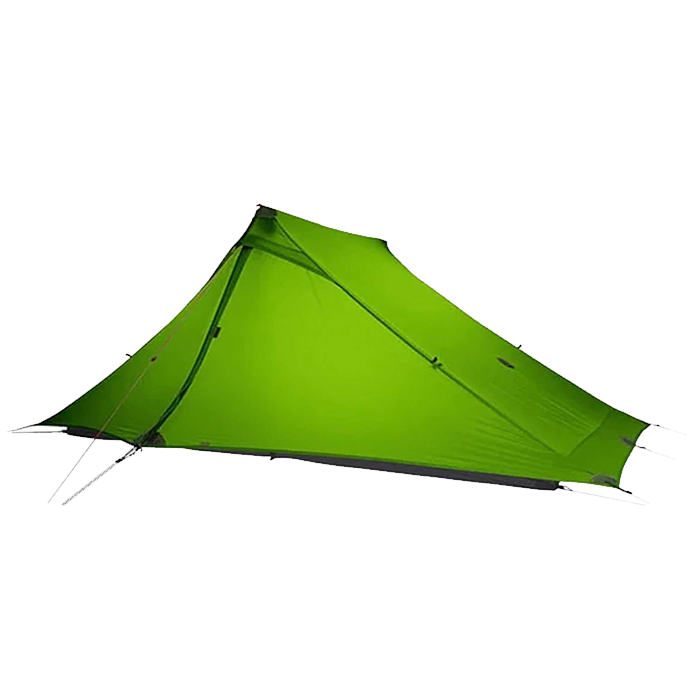
3F UL Gear Lanshan 2 Pro
Best Budget Ultralight Tent
CleverHiker Rating: 4.6/5.0
Price: $190
Weight: 2 lb. 0.3 oz.
Dimensions (LxWxH): 106 x 47 x 49 in.
Floor Area: 29.7 sq ft
Pros
- Good livability
- Easy to pitch
- Excellent included stakes
Cons
- Cheap feeling fabric
- Cumbersome vent design and only one pocket
No other tent provides this level of performance at such an affordable price as the 3F UL Gear Lanshan 2 Pro. Previously, backpackers seeking an inexpensive ultralight option needed to master tarp setups and adapt to using bughead nets for sleeping. But the Lanshan 2 Pro demonstrates how much budget ultralight shelters have evolved. This tent is a great value.
First and foremost, the Lanshan 2 Pro offers decent comfort. It’s not a palace, but we encountered no issues when our 5-foot, 11-inch tester sat up or spread out. We managed to fit two lofty three-season quilts and sleeping pads inside without feeling at risk of contacting the side walls with our feet or head. Although it retains the classic A-frame design, which causes the side walls to slope inward and limits floor space, this wasn’t a significant problem for us due to the tent’s generous dimensions. On a positive note, we appreciated the versatile door design, which allows us to open either side or both at once.
That said, this is still a budget-friendly tent, which means there are some compromises. The fabric’s durability remains uncertain, a skepticism that comes with the budget category. It feels somewhat different from the silnylon in many ultralights. But, so far, we haven’t had any durability issues and remain cautiously optimistic. The vents pose another concern. The rigid fabric that keeps them open is cumbersome when rolling up the tent. While we value the vent size, the brim design feels unnecessarily complicated.
Yet, overall, we genuinely liked this tent more than we anticipated — to the extent that we wouldn’t hesitate to take it on our next big adventure. Its weight is even lighter than some of its counterparts, and its unbeatable price makes it a genuinely appealing option. If you’re new to ultralight camping and feel hesitant about the higher prices, we believe the 3F UL Lanshan 2 Pro is an excellent starting point.
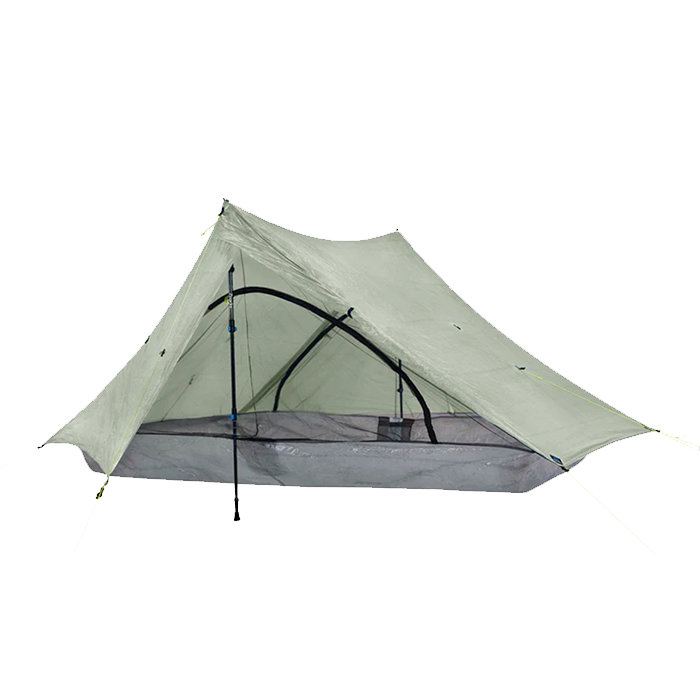
Zpacks Duplex Classic
Best Low-Weight Design
CleverHiker Rating: 4.6/5.0
Price: $749
Weight: 1 lb. 1.9 oz.
Dimensions (LxWxH): 90 x 45 x 48 in.
Floor Area: 28.1 sq ft
Pros
- Amazing weight for a two-person shelter
- Simple setup for a trekking pole shelter
- DCF material doesn’t absorb water
Cons
- Cramped for two people
- Average weather resistance
One of the most popular ultralight backpacking tents, the Zpacks Duplex Classic continues to impress us as one of the lightest two-person tents available. We measured ours at just 18.5 ounces, making this two-person tent lighter than most traditional one-person tents. Even so, our gear analyst concluded that other Zpacks tents surpassed the Duplex when tested side by side.
First, the positives. The Zpacks Duplex is remarkably light for a two-person tent, weighing just 9.25 ounces per person. The brilliance of this design lies in its simplicity. The Duplex features two large doors and vestibules on either side. But there are no rainfly zippers, tent poles, or double-wall construction. There’s just enough space for two, but most backpackers use it as a solo retreat.
On the downside, weather resistance leaves something to be desired. With large fabric panels that catch the wind and a high perimeter rainfly that doesn’t guard against splashback, the Duplex isn’t our top pick for stormy conditions. That said, it performs adequately for most backpacking scenarios. As a bonus, the Dyneema material doesn’t sag when wet and dries quickly.
Overall, our gear analyst preferred the more spacious Zpacks Offset Duo to the Duplex. For weight purists, however, the Duplex’s numbers are undeniable. Its popularity shows that the Zpacks Duplex Classic remains a premium tent — and a worthwhile investment for a thru-hike.
Tarptent Double Rainbow
Best Tent with Freestanding Option
CleverHiker Rating: 4.6/5.0
Price: $299
Weight: 2 lb. 4.5 oz.
Dimensions (LxWxH): 88 x 50 x 42 in.
Floor Area: 30.6 sq ft
Pros
- Excellent weight for non trekking pole design
- Good length for taller people
- Solid magnetic door closure
- Freestanding with trekking poles
- Fun porch mode
Cons
- Limited lateral head room
- Pole removal from sleeve is tricky
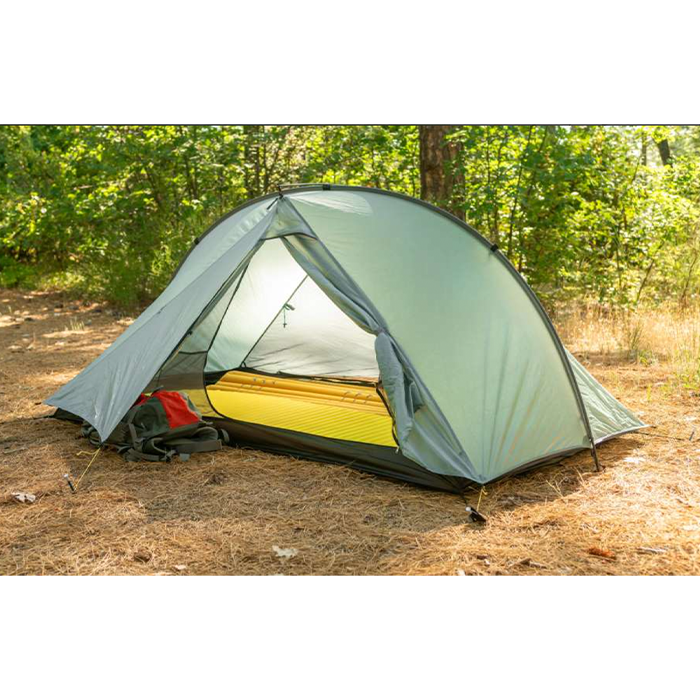
Among ultralight shelters, the Tarptent Double Rainbow is renowned for its comfort, versatility, and affordability. We can attest to its stellar reputation after testing it. Its unique design utilizes a single curved pole running down the spine. This creates near-vertical walls at both the head and foot ends, allowing you to take full advantage of the 88-inch length. This design also provides decent wind resistance. And the two guyline attachment points midway up the pole structure should ensure solid performance in storms.
We appreciated the thoughtful design choices inside the tent. Large pockets on either side are ideal for storing your phone and charger at night. And the ceiling features mitten hooks for an optional liner accessory or for stringing a clothesline to dry gear. One downside is the limited lateral headroom when sitting up. While our 5-foot, 11-inch tester found the headroom acceptable, other shelters in this price range offer better livability.
However, this tent’s standout feature is the ability to convert to freestanding mode. By using two trekking poles horizontally to connect the corners, the entire tent can become freestanding. This is a fantastic benefit for hikers on trails where tent platforms are common (like the Appalachian Trail) or for those who prefer not to search for heavy rocks to secure the corners on poor soil. Additionally, there’s a fabric piece tucked between the doors that you can stretch across when open to create an awning. This is perfect for waiting out light rain and helps the tent feel less claustrophobic.
The price and weight of the Double Rainbow are both competitive, especially given its potential to become a freestanding tent. It is priced significantly lower than premium semi-freestanding models yet weighs only slightly more while offering enhanced livability. Depending on your priorities, the Tarptent Double Rainbow could strike the ideal balance of features and value.
Tarptent MesoSpire 2
Best Comfortable and Innovative Ultralight Tent
CleverHiker Rating: 4.6/5.0
Price: $299
Weight: 2 lb. 4 oz.
Dimensions (LxWxH): 86 x 52 x 47 in.
Floor Area: 31 sq ft
Pros
- Innovative four-pole design
- Comfortable and spacious interior
- Excellent material quality and construction
- Two-way zippers provide excellent ventilation
- Well-placed and well-sized interior pockets
Cons
- Tight tent stake loops make pitching difficult
- Slippery floor material causes pad shifting
- Door closure mechanism small/tough to use with cold hands
- Stiff edge on vents
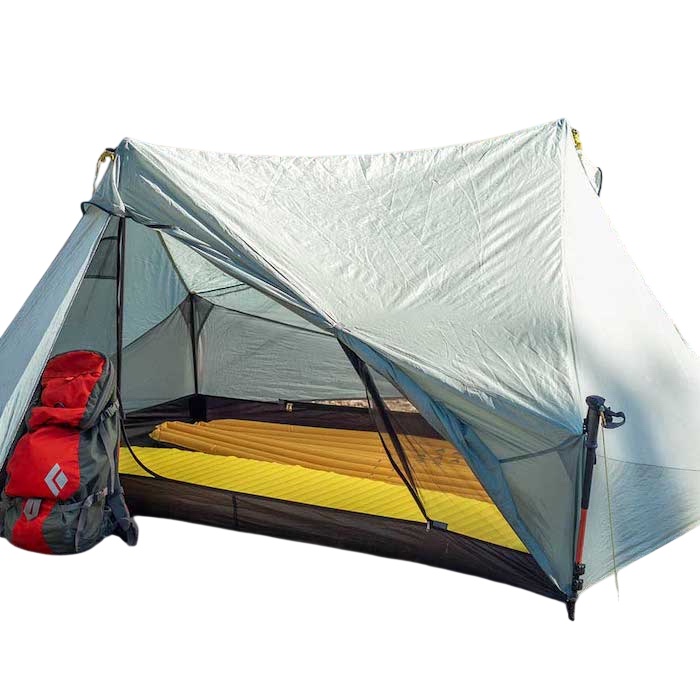
After years of wondering what a four-pole trekking pole tent could do, Tarptent delivers a solid option with the MesoSpire 2 and shows us how much comfort can be had for two people with trekking poles. By using two full-length poles and two shorter poles, the MesoSpire 2 boasts one of the best interior spaces on any backpacking tent. It’s a wonderful experience for two, and the other thoughtful interior design choices, like good pockets, hooks on the peaks, and nice doors, only add to the experience. The venting options are also great. Being able to pull up the corners is a great trick for those days when you want to enjoy a gentle cross breeze.
We did have some issues with the setup process. The loops for two of the corners were tight on the included stakes, which is one of those annoying details that adds up. Even worse were the magnetic door closures. The straps were too short, and the polarity of the magnets seemed reversed, making for a frustrating experience with our cold fingers while testing in Minnesota’s springtime. We also don’t love that the short poles are exposed since deer and other wildlife find cork handles (and the salt from the sweat) delicious. And although this isn’t unique to the MesoSpire 2, it suffers from an extremely slippery floor.
But taken as a whole, the MesoSpire 2 still offers a positive experience. And for those people who don’t like the sloping sides of other trekking pole tents, this will feel like a breath of fresh air. Tarptent is known for innovative and quality products, and this is no different. We think it’s a good shelter, even if it leaves us a bit excited for what an update with a few years of refinement might bring.
MSR FreeLite 2
Good Balance of Weight & Livability for Solo Hikers
CleverHiker Rating: 4.3/5.0
Price: $499
Weight: 2 lb. 0.1 oz.
Dimensions (LxWxH): 84 x 50 x 39 in.
Floor Area: 29 sq ft
Pros
- Roomy for one
- Two doors/vestibules (a perk for solo hikers)
- Convenient pockets
- Rainfly gutter prevents drippy entry
Cons
- Tight for two people
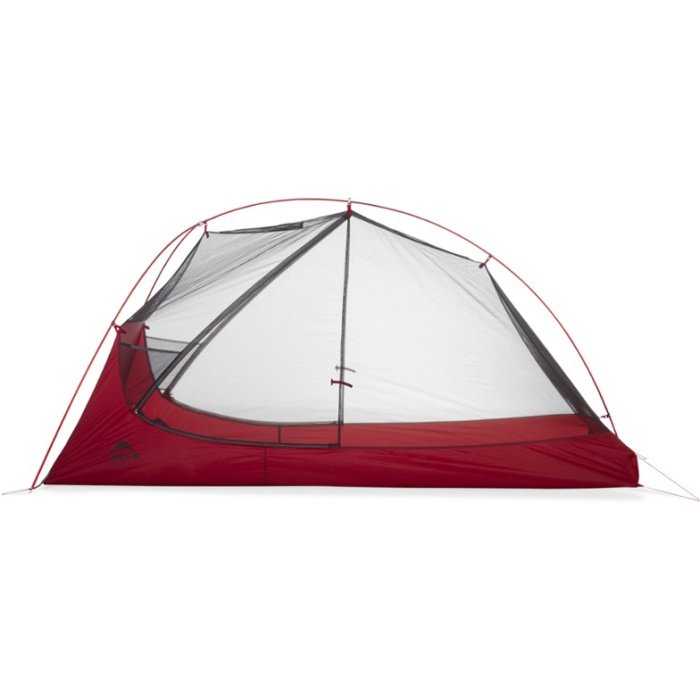
The MSR FreeLite 2 is a great option for those looking to go lighter without sacrificing the convenience of a double-wall tent. It has two large doors and vestibules, a smart rainfly design that prevents drippy entry in the rain, and a lower weight than many similarly designed tents.
We view the FreeLite as more comfortable for solo hikers, since the interior headroom can feel a little cramped when spending extended time inside. But for pairs who value saving weight over additional interior space, the FreeLite has the dimensions to accommodate two people.
The rainbow-shaped FreeLite is effective at shedding precipitation, and the unique rainfly gutters direct water away from the zippered entry to prevent it from pooling and pouring onto the floor while moving in or out of the tent in wet weather.
Solo backpackers wanting the best mix of weight, livability, and weather protection will love the FreeLite, and pairs who would opt to save weight and don’t mind tight quarters will find that this tent delivers excellent performance.
Big Agnes Tiger Wall UL2
Best Semi-Freestanding Ultralight Tent
CleverHiker Rating: 4.2/5.0
Price: $500
Weight: 2 lb. 3 oz.
Dimensions (LxWxH): 86 x 52/42 x 39 in.
Floor Area: 28 sq ft
Pros
- Very light for a pole tent
- Amazing gear storage pocket
- Quality construction
Cons
- Tight for two people
- Poor door design
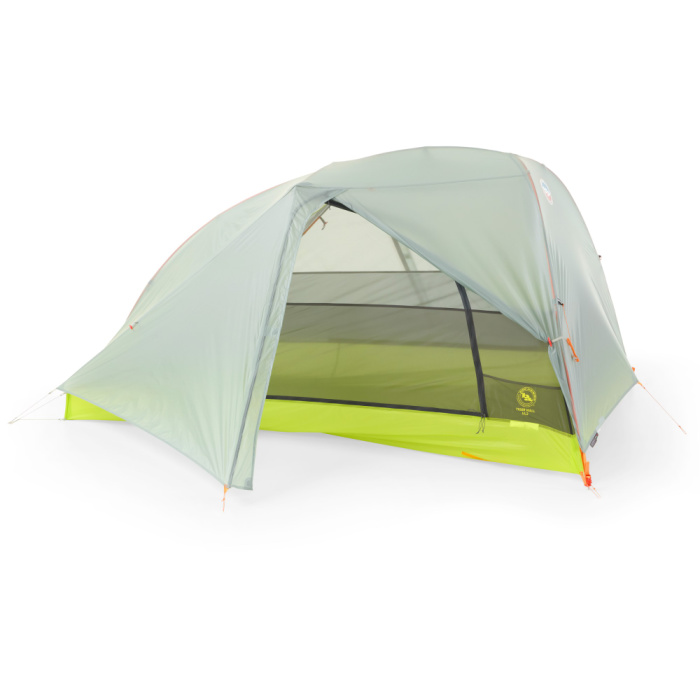
For a traditional pole tent, it’s hard to find a lighter option with two doors and two vestibules than the Big Agnes Tiger Wall UL2. Weighing in at a shocking 35 ounces, it has proven consistently popular on many long-distance trails.
Like many Big Agnes tents, the Tiger Wall feels like a quality piece of gear. Every component is high quality and well-made, even if the materials are thin. Setting it up is easy and straightforward. However, this is a semi-freestanding tent, so you need to stake it out to make it fully secure. The interior also sports an enormous gear storage pocket at the front end — perfect for stuffing a puffy jacket, damp socks, or even an entire sleeping quilt in a pinch.
However, there’s not a ton of room on the inside. Like many two-person tents in this class, it’s frequently used as a one-person tent because two people can feel cramped. It’s not terribly uncomfortable for two, though. During an adventure in the Boundary Waters, we squeezed two people into the interior without issue (when another tent proved to be less mouse-proof than expected!). However, for longer thru-hikes, the lack of space might be problematic.
Additionally, the silnylon fabric sags when wet, and the tent’s lightweight nature doesn’t make it our first choice in stormy weather. We recommend staking it out with guylines in any high winds. The doors offered limited headroom when entering and exiting, and this was even worse when the tent sagged in the rain. All these details, coupled with the relatively high price, make it a tougher sell today than it was years ago — especially with stiff competition from trekking pole tents.
However, for backpackers seeking a lightweight pole tent, the Big Agnes Tiger Wall UL2 should keep you happy for many years to come.
Six Moon Designs Haven
Best Versatile Tarp Net Combo
CleverHiker Rating: 3.9/5.0
Price: $375
Weight: 2 lb. 1.9 oz.
Dimensions (LxWxH): 88 x 44 x 45 in.
Floor Area: 27 sq ft
Pros
- Modular design
- Durable materials
- Lightweight
Cons
- Small interior and pockets
- Difficult pitching with net
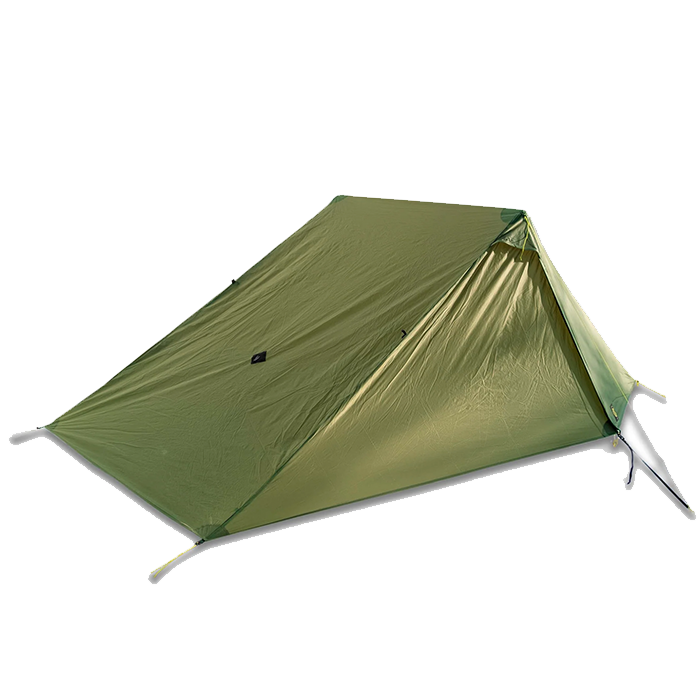
The Six Moons Design Haven offers a unique proposition for backpackers seeking a double-wall shelter. You can combine the Haven Tarp with the Haven NetTent for a fully enclosed, bug-proof, double-walled shelter with a bathtub floor. Or you can leave the net tent at home for significant weight savings, or remove the tarp for excellent stargazing in just the NetTent.
Our gear analyst wasn’t sold on this ultralight tent’s design. For starters, the offset double-wall A-frame design provided more headroom than a symmetrical design, but it also reduced room for the footbox of our tester’s quilt. The NetTent attaches to the tarp at four corners, and two panel pulls with two small pockets where the trekking pole tips rest against the peak of the rainfly. However, there is no attachment for the rainfly, which caused the NetTent to move around more than we preferred during setup. It also requires more precision in the setup process than quickly inserting trekking poles handle-up, which is common with other tents of this style.
We had mixed feelings about the Haven’s livability. Even though we managed to fit two lofty quilts and sleeping pads without any issues, there wasn’t much extra room for individuals around 6 feet tall. The inner NetTent connects to a single point, which also caused the mesh to hang uncomfortably close to our faces. Similarly, the footbox of our quilts didn’t touch the sidewalls, but there wasn’t a comfortable distance, either. In short, comfort was just acceptable.
The large fabric panels also do not instill great confidence in their weather resistance. Even with the panel pulls, this wouldn’t be our top choice of shelter during storms. Still, if you like the tarp-and-inner-net combo and don’t mind the pitching requirements, we believe the Haven could serve as a solid tent.
Gossamer Gear The One
Ridiculously Light One-Person Silnylon Tent
CleverHiker Rating: 3.8/5.0
Price: $315
Weight: 1 lb. 3.5 oz.
Dimensions (LxWxH): 84 x 33/21 x 45 in.
Floor Area: 15.8 sq ft
Pros
- Extremely light for a silnylon shelter
- Easy to pitch
- Great headroom
- Huge peak vent
Cons
- Tiny door and small interior
- Not great for storms
- Thin materials
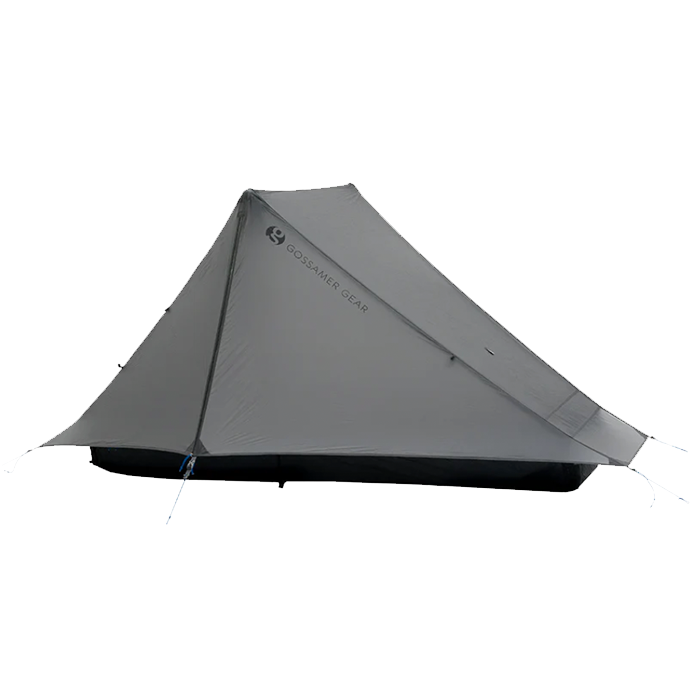
The number one thing that stands out about Gossamer Gear’s The One is its ridiculous weight. We measured ours at 19.5 ounces — unparalleled for a fully enclosed silnylon shelter. If weight matters more than anything to you, this is a compelling reason to choose this tent.
But keep in mind the tradeoffs it took for Gossamer Gear to achieve this weight. The most significant tradeoff is the material choice. Using 10-denier silnylon for both the fly and the floor goes a long way toward explaining why this tent is so light. Other ultralight shelters typically use at least 15-denier and often 20- to 40-denier. This means The One requires extra care to manage its durability limitations.
The second significant tradeoff is comfort, though it’s not entirely negative. Our 5-foot, 11-inch tester encountered issues with headroom and footbox space. With only 15.8 square feet of floor space, the tent’s interior feels cramped. Without much room to spare, a wet footbox is more concerning here than with other tents. The good news is that two trekking poles provide generous side-to-side space, and the 45-inch height means space is decent front to back as well.
Finally, this tent is not designed to withstand severe storms. The lightweight materials give us reason to pause, but it’s the half vestibule on one side that really concerns us. Exposing the vertical side walls means that if the wind shifts direction and hits this tent broadside, it won’t hold up well. This tent isn’t meant for harsh storms, but we’re not worried about it keeping backpackers dry during typical rainstorms.
The One involves many tradeoffs, but its ridiculous weight savings may be worth limitations in durability and living space. Plus, most comparable ultralight tents cost twice as much. This Gossamer Gear tent is best suited for someone who primarily enjoys fair-weather backpacking but desires moderate protection from occasional rain. If you’re comfortable with the tent’s trade-offs, Gossamer Gear’s The One is truly unique in its ultralight tent niche.
Gossamer Gear The Two
Ridiculously Lightweight Two-Person Silnylon Tent
CleverHiker Rating: 3.6/5.0
Price: $375
Weight: 1 lb. 8 oz.
Dimensions (LxWxH): 84 x 48/42 x 43 in.
Floor Area: 26 sq ft
Pros
- Extremely lightweight for a silnylon shelter
- Easy set-up
- Good pockets
Cons
- Small interior and no vents
- Thin materials
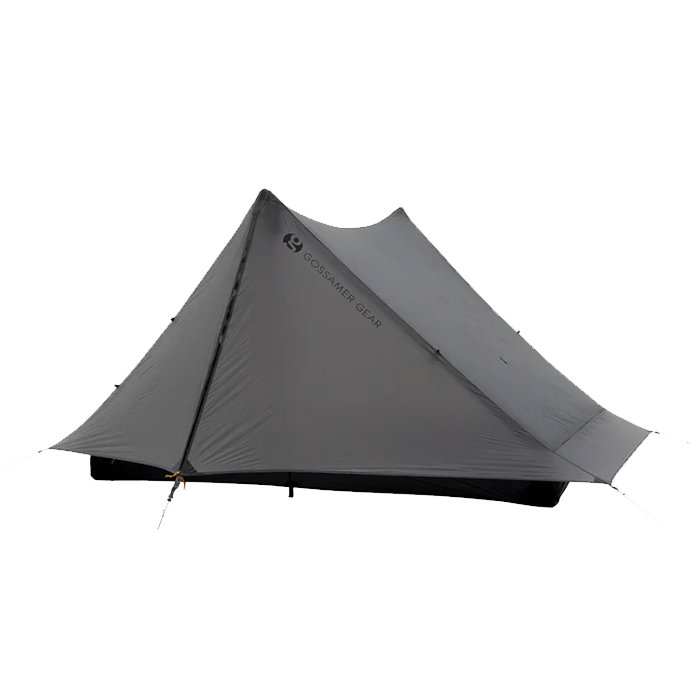
Gossamer Gear’s The Two is a silnylon backpacking shelter with a weight in line with more expensive Dyneema tents. Just 25.3 ounces when we weighed it, The Two is super-light for a two-person shelter, but it comes with some significant design trade-offs you should weigh before pulling the trigger on The Two.
Two factors contribute to this tent’s incredibly light weight. Its smaller A-frame uses trekking poles and a super-thin 10-denier silnylon for both the rainfly and floor. In other words, this is a shelter for ultralighters who know they need to take extra care with thinner, less durable materials than most tents. Despite our durability concerns, this 10-denier fabric allows The Two to pack down smaller than other tents, especially those made of Dyneema Composites.
The smaller A-frame design results in a compact interior. The Two offers only 26 square feet of floor space. In other words, this two-person tent is similar in size to the larger one-person tents we reviewed. In practice, it feels tight. If you’re near 6 feet tall, be prepared to gamble either with limited headroom or a wet footbox.
Another weight-saving design choice is that The Two has no ventilation. The large doors and vestibules help mitigate this on clear nights, but this tent will accumulate more condensation than other tents we tested and reviewed.
When the weather turns stormy enough to close those doors, The Two will also struggle. Since it’s wider than other A-frame style tents, it exposes a substantial amount of flat area to the wind, making it a sail in storms. We’ve had personal experience with this, witnessing one get flattened in a surprise thunderstorm that rolled through the Swiss Alps. That storm also collapsed a few other tents, too, so The Two wasn’t alone in its fate. At the same time, a sturdier trekking pole tent and a freestanding tent managed to survive the same storm.
However, for the right person, these design trade-offs are worth this tent’s unbelievable weight at a reasonable price. If its downsides don’t bother you, The Two can be an ultralight tent that’s worth packing on your next long-distance hike.
Product Comparison Table
| oSort | Product | Price | Weight | Dimensions (LxWxH) | Floor Area | Peak Height (Inches) | Comfort | Weight Score | Ease of Use | Weather Resistance | Durability | 0 |
Durston Gear X-Mid Pro 2+ View at Durston 
|
$719 | 1 lb. 5.8 oz. | 90 x 52 x 49 in. | 32.5 sq ft | 49 | 4.9 | 4.6 | 4.8 | 4.8 | 4.4 | 1 |
Durston Gear X-Mid Pro 1 View at Durston
|
$599 | 1 lb. 1.4 oz. | 90 x 32 x 45 in. | 20 sq ft | 45 | 4.8 | 4.8 | 4.8 | 4.8 | 4.4 | 2 |
Zpacks Pivot Solo View at Zpacks
|
$649 | 1 lb. 0.1 oz. | 84 x 29/42/28 x 52 in. | 21 sq ft | 52 | 4.8 | 4.9 | 3.8 | 4.8 | 4.5 | 3 |
Hyperlite Mountain Gear UltaMid 2 View at Hyperlite Mountain Gear |
$1,098 | 2 lb. 8.7 oz. | 96 x 76 x 64 in. | 50 sq ft | 64 | 4.5 | 3.4 | 4.3 | 5.0 | 5.0 | 4 |
Zpacks Pivot Duo View at Zpacks |
$849 | 1 lb. 5.1 oz. | 84 x 50 x 52 in. | 29.2 sq ft | 52 | 4.7 | 4.6 | 4.7 | 4.6 | 4.4 | 5 |
Six Moon Designs Lunar Solo View at Six Moon Designs View at Amazon 
|
$260 | 1 lb. 10 oz. | 90 x 48 x 49 in. | 26.3 sq ft | 49 | 4.4 | 4.3 | 3.8 | 4.5 | 4.7 | 6 |
3F UL Gear Lanshan 2 Pro View at Amazon
|
$190 | 2 lb. 0.3 oz. | 106 x 47 x 49 in. | 29.7 sq ft | 47 | 4.3 | 3.9 | 4.3 | 4.1 | 4.1 | 7 |
Zpacks Duplex Classic View at Zpacks View at Garage Grown Gear |
$749 | 1 lb. 1.9 oz. | 90 x 45 x 48 in. | 28.1 sq ft | 48 | 3.8 | 4.8 | 4.3 | 4.1 | 4.4 | 8 |
Tarptent Double Rainbow View at Tarptent
|
$299 | 2 lb. 4.5 oz. | 88 x 50 x 42 in. | 30.6 sq ft | 42 | 4.5 | 3.7 | 4.7 | 4.8 | 4.7 | 9 |
Tarptent MesoSpire 2 View at Tarptent |
$299 | 2 lb. 4 oz. | 86 x 52 x 47 in. | 31 sq ft | 47 | 4.6 | 3.7 | 3.9 | 4.5 | 4.7 | 10 |
MSR FreeLite 2 View at Amazon View at REI |
$499 | 2 lb. 0.1 oz. | 84 x 50 x 39 in. | 29 sq ft | 39 | 4.0 | 3.9 | 4.3 | 4.1 | 4.4 | 11 |
Big Agnes Tiger Wall UL2 View at REI View at Amazon |
$500 | 2 lb. 3 oz. | 86 x 52/42 x 39 in. | 28 sq ft | 39 | 4.0 | 3.7 | 4.4 | 4.1 | 4.4 | 12 |
Six Moon Designs Haven View at Six Moon Designs |
$375 | 2 lb. 1.9 oz. | 88 x 44 x 45 in. | 27 sq ft | 45 | 3.8 | 3.8 | 3.6 | 4.1 | 4.7 | 13 |
Gossamer Gear The One View at Gossamer Gear View at Garage Grown Gear |
$315 | 1 lb. 3.5 oz. | 84 x 33/21 x 45 in. | 15.8 sq ft | 45 | 3.8 | 4.7 | 4.3 | 3.4 | 3.7 | 14 |
Gossamer Gear The Two View at Gossamer Gear View at Garage Grown Gear |
$375 | 1 lb. 8 oz. | 84 x 48/42 x 43 in. | 26 sq ft | 43 | 3.6 | 4.3 | 4.3 | 3.4 | 3.7 |
|---|
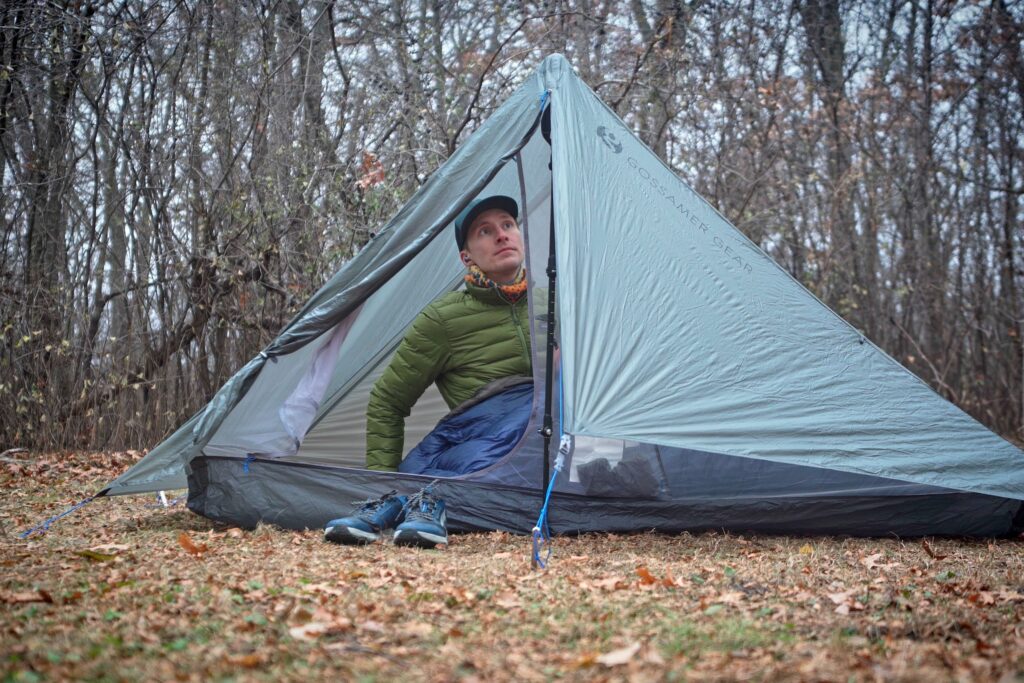
Analysis & Results
What’s the best value in ultralight tents?
Some tents provide more performance per dollar than others. Still, there isn’t a best tent that suits everyone. Each model we evaluated comes with a set of trade-offs compared to other ultralight tents and more traditional tents.
The top option in this metric is our budget pick, the 3F UL Lanshan 2 Pro. It strikes a good balance between livability and ease of use while remaining lightweight, and we were impressed by its performance.
Stepping up in price slightly, the Tarptent Double Rainbow and Gossamer Gear The Two both cost about the same but have vastly different priorities. The Double Rainbow features a unique single-pole design with a clever freestanding mode, delivering excellent comfort, even for taller individuals, with durable materials. In contrast, The Two sacrifices durability, weather resistance, and comfort in pursuit of an incredible weight for a silnylon shelter.
For our one-person shelters, the Six Moon Designs Lunar Solo remains a fantastic option for a reasonably priced tent that delivers impressive performance and surprising interior floor space. At the high end, we’d like to acknowledge our editor’s choice, the Durston Gear X-Mid Pro 2+. While it’s far from affordable, value isn’t about finding the cheapest product; it’s about getting the most for your money. Of all the tents we researched or tested, the X-Mid Pro 2+ consistently performs best and is more reasonably priced than its competitors, making it an excellent investment.
Which Ultralight Tents Have the best comfort?
The easiest way to reduce weight in a shelter is by simply making it smaller and less comfortable. Therefore, finding a livable interior is a tricky balancing act for ultralight tents because every increase in comfort typically comes at the cost of weight. Manufacturers know that the most important metric for prospective buyers is weight, so they strive to maintain just enough comfort to satisfy most users.
The tents that performed the best here include the Durston Gear X-Mid Pro 2 +, Tarptent Double Rainbow, Tarptent MesoSpire 2, and Zpacks Pivot Duo. The X-Mid employs clever offset pole geometry to maximize usable interior volume, while the Pivot Duo uses a third pole at the foot end to increase space. Both strategies work effectively. Tarptent’s MesoSpire is also one of the first tents to employ a four-pole structure that improves livability.
For average comfort, the 3F UL Gear Lanshan 2 Pro scores slightly above the traditional Big Agnes Tiger Wall UL 2 and MSR FreeLite 2. Rounding out the two-person tents, the superbly lightweight Zpacks Duplex Classic, Six Moon Designs Haven, and Gossamer Gear The Two are all a bit small.
In our one-person tents, both the Zpacks Pivot Solo and X-Mid Pro 1 are excellent, offering comfortable interiors that ultimately depend on personal preference regarding which works best for your style. The Six Moon Designs Lunar Solo provides impressive floor space. And behind all of them is the unique Gossamer Gear The One, which features nice headroom but a cramped floor.
What are the lightest ultralight tents?
For the lightest backpacking tents, look for tents made from Dyneema Composite Fabric (DCF). The lightest tent we tested is the Zpacks Pivot Solo. Weighing in at 16.1 ounces on our scale for the standard version, it’s a cleverly designed one-person tent but commands a high price due to its exclusive use of DCF. Not far behind is the Durston Gear X-Mid Pro 1 at 17.4 ounces.
In the two-person category, the lightest option is the classic Zpacks Duplex Classic, which also comes in a lite version that further reduces weight.
The Gossamer Gear The One and The Two are notable for their impressively lightweight design, despite using silnylon fabric. The One weighs 19.5 ounces, and The Two weighs only 25.3 ounces.
Still in the ultralight category, the Big Agnes TigerWall UL2, the MSR FreeLite 2, the affordable 3F UL Gear Lanshan 2 Pro, the Six Moon Designs Haven, and the semi-freestanding Tarptent Double Rainbow are still lighter than most backpacking tents.
which ultralight tents are easiest to use?
Our standout tents in this category were the Durston Gear X-Mid Pro 1p, Durston Gear X-Mid Pro 2p+, Tarptent Double Rainbow, and ZPacks Pivot Duo. All four offered simple setups, along with great doors, vestibules, and features. However, we give the edge to our editors’ choice X-Mid models for slightly better ease of use.
Most of the tents we tested are in the middle of the pack. The MSR FreeLite 2 scores slightly higher than the others due to its nicer doors. Meanwhile, the Big Agnes Tiger Wall UL2 is held back by a somewhat frustrating door design. The Gossamer Gear The Two, Gossamer Gear The One, 3F UL Lanshan 2 Pro, Hyperlite Mountain Gear UltaMid 2, and Zpacks Duplex Classic all rank in the middle due to door designs we didn’t prefer. But they set up easily otherwise.
The remaining tents fall into the “good but with caveats” category. The Six Moon Designs Lunar Solo and Zpacks Pivot Solo are trickier to set up. However, unlike the above tents, they feature great doors. The Lunar Solo has a hexagonal shape that makes achieving a perfect pitch more challenging than in the wider A-frame-style tents. And the Pivot Solo is a genuinely asymmetrical design that requires some practice to master each time. Lastly, the Six Moon Designs Haven ranked the lowest due to the inner not being able to connect to the rainfly at the peaks or to be used with trekking pole tips down.
Which tents have the most weather resistance?
Most of our recommendations would inspire confidence in typical storms encountered in the backcountry. However, one shelter sits in a class of its own. The Hyperlite Mountain Gear UltaMid 2 is a formidable shelter, boasting a pyramidal shape that is ideal for shedding wind from all directions. It features plenty of guyline attachment points and up to eight staking points to ensure it remains secure in all weather conditions. We won’t mince words here: if supreme weather resistance is your top priority, this is your shelter.
Our top picks for ultralight tents should all withstand an average thunderstorm without damage and offer protection from typical winds and rain. For these conditions, the tents that stand out to us are the Durston Gear X-Mid Pro 2+, Durston Gear X-Mid Pro 1, Tarptent Double Rainbow, and Zpacks Pivot Solo.
Scoring in the middle are the Zpacks Pivot Duo, Six Moon Designs Lunar Solo, 3F UL Gear Lanshan 2 Pro, Zpacks Duplex Classic, Six Moon Designs Haven, Big Agnes Tiger Wall UL2, and MSR FreeLite2. All of these tents provide adequate storm resistance for backpacking.
Trailing behind are the two Gossamer Gear models, The Two and The One. They deliver superb weight and price, but the tradeoff is less storm-worthiness. Both tents have a history of surviving long-distance trails, but they wouldn’t be our first choices for storm conditions.
Which Ultralight tents have the best DURABILITY?
Most of our tent selections are designed to last throughout an entire thru-hike of at least 2,500 miles or dozens of nights of use. The tent we trust most for durability is the expensive but robust Hyperlite Mountain Gear UltaMid 2. With a rainfly made from 0.8 oz/sqyd DCF, compared to the more conventional 0.55 oz/sqyd, and a thicker 1.1 oz/sqyd floor, it consists of tougher materials than most DCF tents.
We also appreciated the durability of the Six Moon Designs Lunar Solo, Tarptent Double Rainbow, Tarptent MesoSpire 2, and Six Moon Designs Haven. All utilize silpoly or silnylon at thicknesses of 20- to 30-denier, which is standard for ultralight tents.
All of our DCF options are spec’d with weights that are well-tested in the field and offer similar levels of durability. The Zpacks Pivot Solo in its standard configuration enhances this with tougher DCF. Without further testing, it remains our preference over the Lite version, which uses thinner fabric. The Durston Gear X-Mid Pro 1, Durston Gear X-Mid Pro 2+, Zpacks Pivot Duo, and Zpacks Duplex Classic all provide decent durability for DCF. In line with the standard DCF, we also find two freestanding tents: the Big Agnes Tiger Wall UL2 and MSR FreeLite 2, both using 15-denier silnylon.
As an oddity, the 3F UL Gear Lanshan 2 Pro employs 20-denier silnylon for the fly and 15-denier for the floor. At the lower end, we have cautious durability concerns regarding both of Gossamer Gear’s tents, The One and The Two. They utilize thinner 10-denier silnylon for the rainfly, but even more concerning is the same 10-denier for the floor.
How to Choose an Ultralight Tent
What should you spend on an ultralight tent?
Ultralight tents are expensive, even our budget option.
For those who chase miles and love optimizing weights down to the gram, we believe it’s worth investing in a DCF shelter. Especially for a thru-hike, it can be helpful to consider cost in terms of dollars per night. On a 150-day thru-hike, a $400 tent will cost about $2.67 per day, while a more premium $700 shelter will cost $4.67 per day. That is nearly double the price, but ask yourself whether you’d prefer to spend an extra two dollars a day to carry a much lighter (and sometimes even more livable) tent.
If you’re a hobby backpacker wanting to lighten your pack, consider a conventional ultralight tent made of silnylon or silpoly under $400. While you won’t get the light weight of DCF shelters, many designs are similar and perform comparably.
Everyone has different comfort levels here, and there’s no wrong answer. But there’s a reason many thru-hikers opt for DCF. Additionally, if you purchase a budget tent and decide halfway through a trail to switch to a DCF shelter, you’ll end up spending more than if you had just invested in the DCF from the start.
WEIGHT
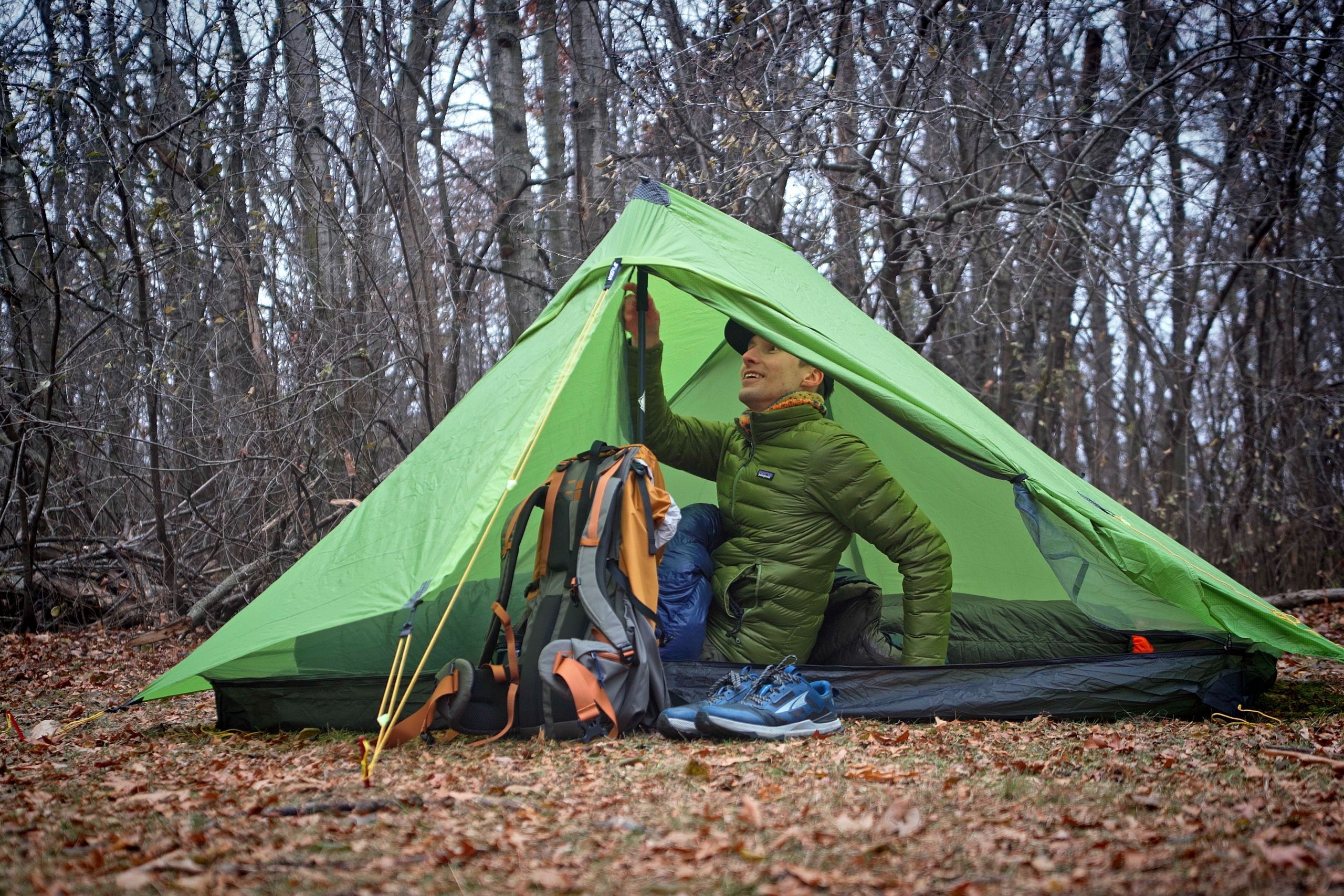
Ultralight tents fall into two weight classes: those made with DCF and those without. This correlates directly to price — spending more generally results in lighter tents.
Dedicated ultralighters often consider the cost per ounce of saved weight. This is a matter of personal preference based on your budget. However, saving $10 per ounce is usually a no-brainer, $20 per ounce is reasonable, and $30 per ounce is typical but somewhat on the edge for general comfort. If you’re considering an upgrade, this approach can help reframe the question, making it easier to decide.
Which ultralight tents have the best interior size?
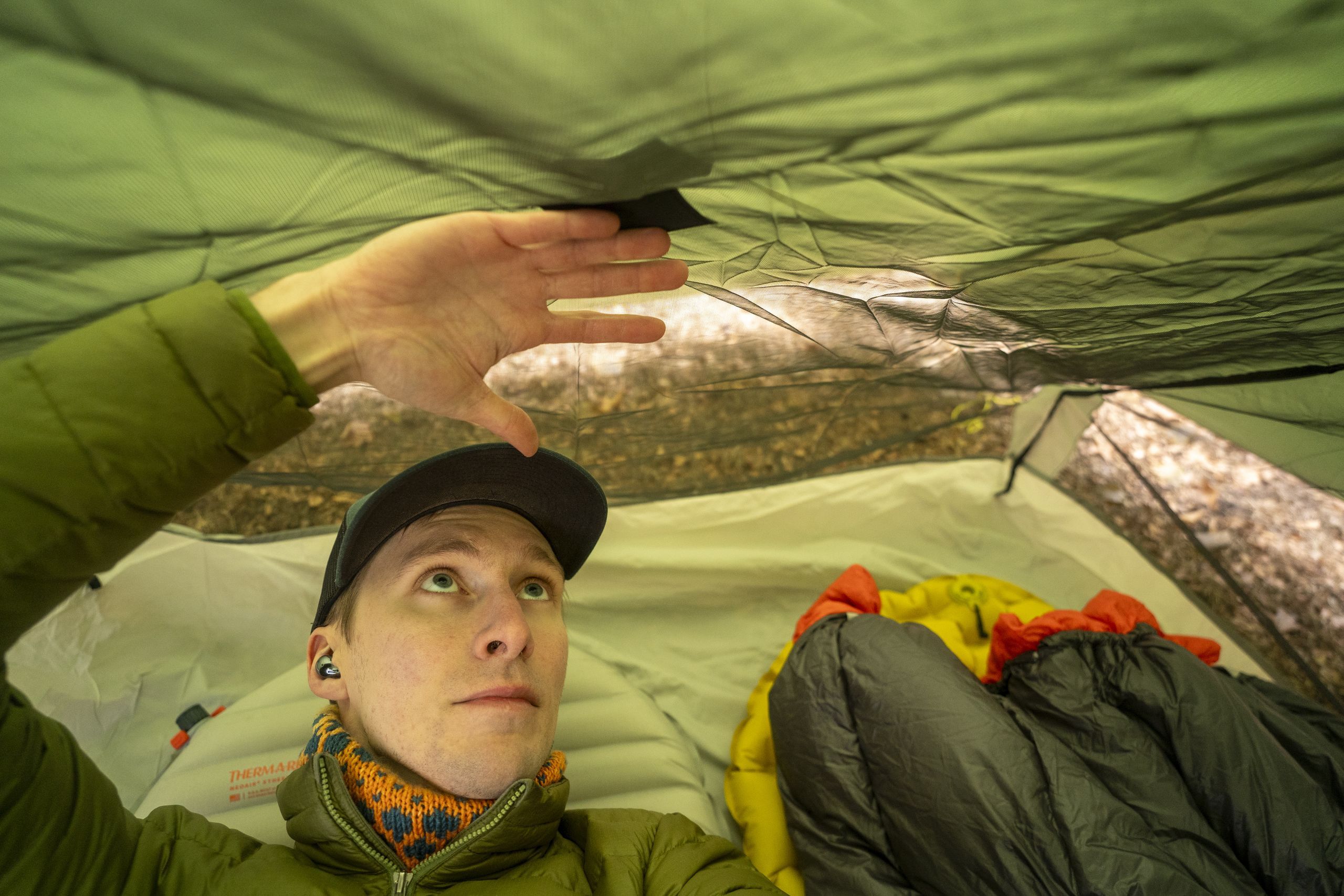
Reading the tech specs of ultralight tents is a starting point for figuring out how much interior room they’ll provide. At the same time, interior length isn’t a perfect indicator of comfort. The wall slope limits space usage without contact. Plus, you need to account for the bulk of your sleeping pad, sleeping bag, and other gear.
In our testing, we aim to indicate whether a tent will be comfortable for individuals around 6 feet tall. The standout options are the two Durston Gear X-Mid Pro models, which provide exceptional sleeping length for taller users and ranked as our most comfortable models.
The two Zpacks models, the Pivot Duo and Pivot Solo, also deliver excellent performance. The Pivot Solo is uniquely designed to eliminate the worry of a wet footbox by incorporating a second pole that places mesh at the foot end. The Tarptent Double Rainbow deserves praise as well. Its single arched pole creates ample usable space at the head and foot areas due to the nearly vertical sidewalls, allowing for a very comfortable sleep experience when used.
FEATURES to consider
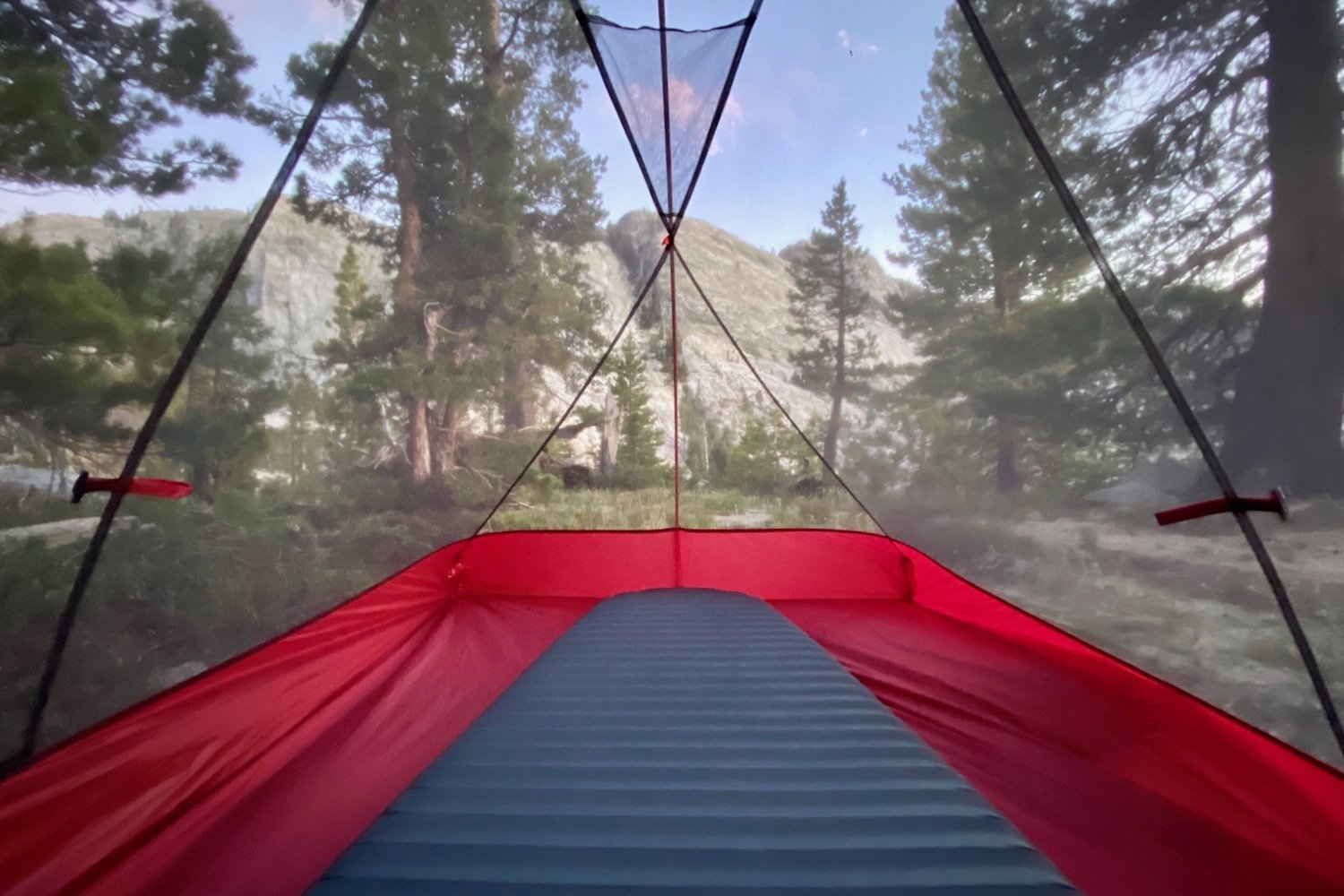
Ultralight tents offer many features, making it hard to choose which to invest in. We focus on what appeals to the most people, but niche options may resonate with you, so consider exploring beyond our picks if something catches your interest.
We focused on key features. Large vestibules are essential for storing backpacks and shoes while sleeping. Having a rain-protected vestibule, even with the main door open for airflow, is beneficial. If you sleep with the doors partly open and it drizzles, your gear remains dry. The size and type of doors are crucial. Cramped doors are uncomfortable to use, especially near condensation-heavy tent walls.
Rainbow-shaped doors work for most conditions, but we prefer L-shaped doors for better bug protection and stability. Generous interior pockets near the doors help keep the tent organized. Peak vents manage condensation. And adding kickstands, stiff rims, or guyline attachments to hold them open is advantageous. We also favor guyline attachments on the peaks and middle for wind resistance during storms.
There are also some unique features that not all tents possess. The Tarptent Double Rainbow allows you to attach trekking poles at the staking corners to convert the tent into freestanding mode, which can greatly assist on trails like the Appalachian Trail, where tent platforms are common. The Double Rainbow also utilizes trekking poles to hold the doors open and create an awning with a hidden flap between the door sections. This is wonderful for those days spent waiting for a rainstorm to pass, as opening the doors helps prevent the tent from feeling too claustrophobic.
The list of tent features goes on and on, and the full list is outside of the scope of this article. So research on your own and explore the wonderful world of ingenious designs that manufacturers have come up with.
DOUBLE VS SINGLE-WALL
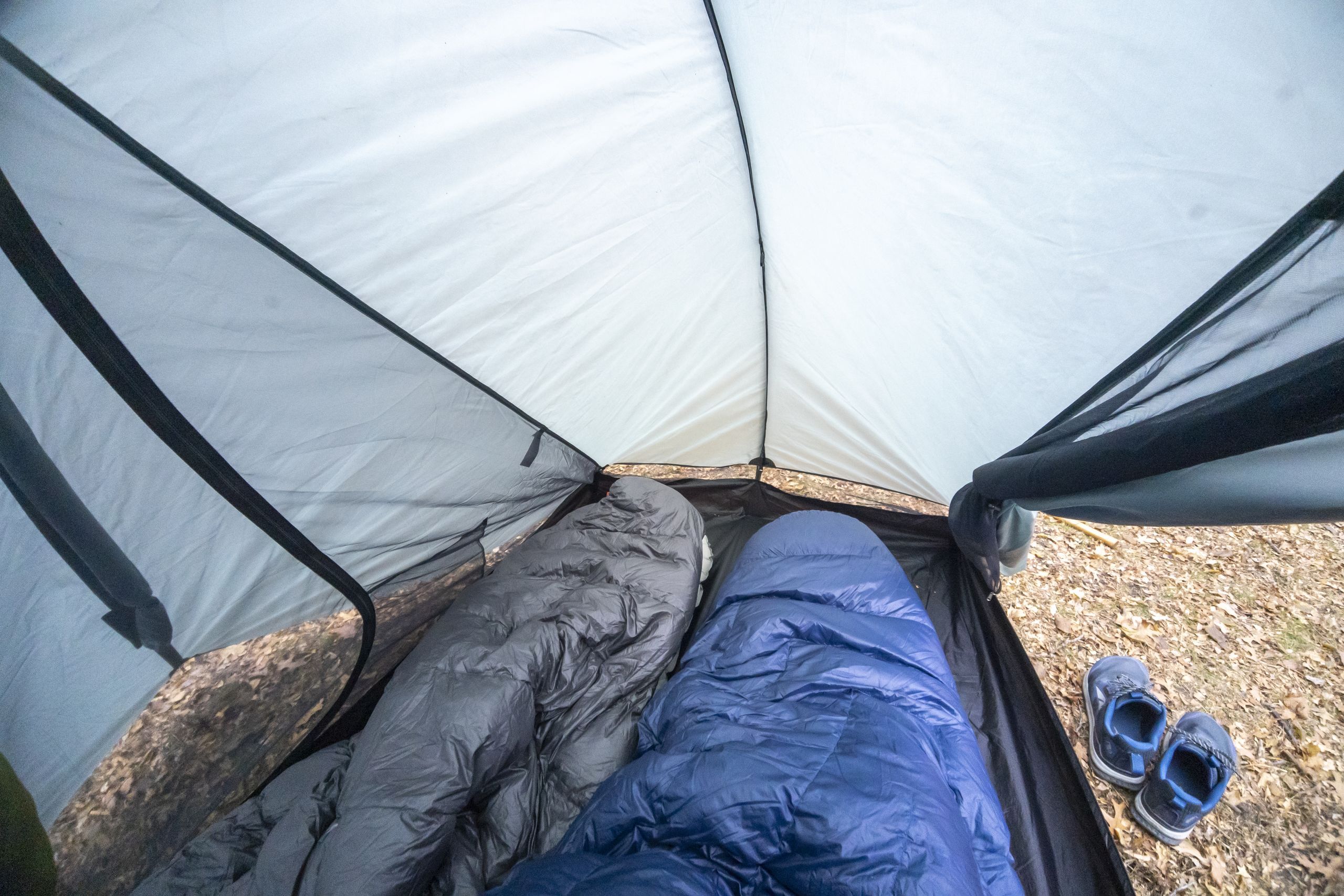
The debate over double versus single-wall designs depends on personal preference. A double-wall features an additional mesh layer between you and the rainfly, providing separation. The mesh clips into the rainfly in trekking pole tents or rests on top in traditional pole tents. Single-wall designs eliminate this mesh, sewing the doors directly to the fabric, resulting in a lighter but less modular option.
We want to address a common misconception about single vs. double-wall tents regarding condensation. While double-wall tents are said to offer better protection, this misleads people into thinking they are inherently more resistant to condensation. Under the same conditions with identical designs and fabrics, both tent types form the same amount of condensation.
A mesh interior doesn’t inherently reduce condensation. While extra mesh may disrupt airflow, it doesn’t block moisture; condensation results from temperature differences and air humidity. We’re not shaming anyone for this belief — it’s among many backpacking myths — but understanding condensation helps make informed tent purchase decisions.
What double-wall construction helps with is preventing you from touching the tent’s wet walls. Your sleeping bag stays in a dry area; your clothes won’t accidentally soak up water when brushing against the walls, and it can also help block some misting. Misting occurs when condensation forms on the tent’s sidewalls, but persistent raindrops and wind knock it off the fabric and onto the interior. It often appears that a tent isn’t actually waterproof because it feels like it’s raining inside your tent. This is an unavoidable symptom of humid weather and rain, and it’s often found at higher elevations when you’re inside the storm clouds themselves.
In general, we believe that single-wall tents — with sufficient space — are the best choice for an ultralight setup. However, this depends heavily on the environment you’re heading into. If you frequently backpack in humid areas — such as Scotland, the Appalachian Trail, or Minnesota’s Boundary Waters — a double-wall tent may provide added comfort.
Additionally, some people appreciate the modularity of pitching only the rainfly or just the net tent for stargazing. However, if you mostly find yourself in less humid conditions — like Colorado, the Pacific Crest Trail (excluding Washington), or any desert — you will likely only encounter condensation occasionally, making a single-wall design worth the weight savings.
Why Trust CleverHiker
CleverHiker gear analysts have spent over 2,000 nights under the stars, many of which were in ultralight tents. Gear analyst Taylor Passofaro has pursued ultralight backpacking adventures for eight years, covering over 3,000 miles in search of beautiful mountains to explore. He has hiked the Pacific Crest Trail, Superior Hiking Trail, Collegiate Loop, Laugavegur and Fimmvörðuháls trek, the Tour du Mont Blanc, among others, along with countless nights spent in the parks and forests of his native Minnesota. His background in medical device design and test engineering ensures that every gear choice is thoroughly researched (and graphed more times than necessary) before testing, resulting in solid gear recommendations for all types of adventures.
How We Test
COMFORT
Staying comfortable on the trail is important to get the most out of your hike, whether it’s an overnight trip or a multi-month adventure. To evaluate tent comfort, we used a representative gear loadout for a typical backpacking setup. This included a 20-degree quilt and a three-season, 2.5-inch thick sleeping pad. For two-person tents, we added a 30-degree quilt and another 2.5-inch sleeping pad. Our tester is 5-feet, 11-inches tall, which is slightly above average and covers 80% of men and 90% of women based on American data.
We positioned the footbox as close as we comfortably could to the end wall without worrying about condensation and laid back to evaluate the remaining headroom. We sat up and moved around to check the available headroom both laterally and from side to side, seeing how easily it would be to change clothes or stretch after a long day.
WEIGHT
This ultralight tent guide focuses primarily on weight, as it is a major consideration for many of these tents. We weighed each tent rather than relying on manufacturers’ claims. The weight includes any necessary poles for the tent’s functionality, but we excluded stakes, as they are often a personal choice for many hikers.
EASE OF USE
Some tents can cut corners with ease of use to achieve a lighter weight, although all the tents we tested performed well in this category. We evaluated door size and function, noting which tents were easy to enter and exit. For two-person tents that allow sleeping orientation in either direction, we observed whether the door was difficult to use from one side and if vestibule access was obstructed.
We assessed the accessibility and size of interior pockets, awarding points for fully functional pockets and deducting points for angled designs prone to items falling out. We set up the tents in sequence to compare how each model performed against its peers.
For trekking pole tents, we examined how much adjustment was necessary to achieve a tight pitch and whether the setup process was intuitive and forgiving of mistakes. We reviewed the manufacturer’s instructions for pitching and used the included stakes to provide as close to a “manufacturer intended” experience as possible.
WEATHER RESISTANCE
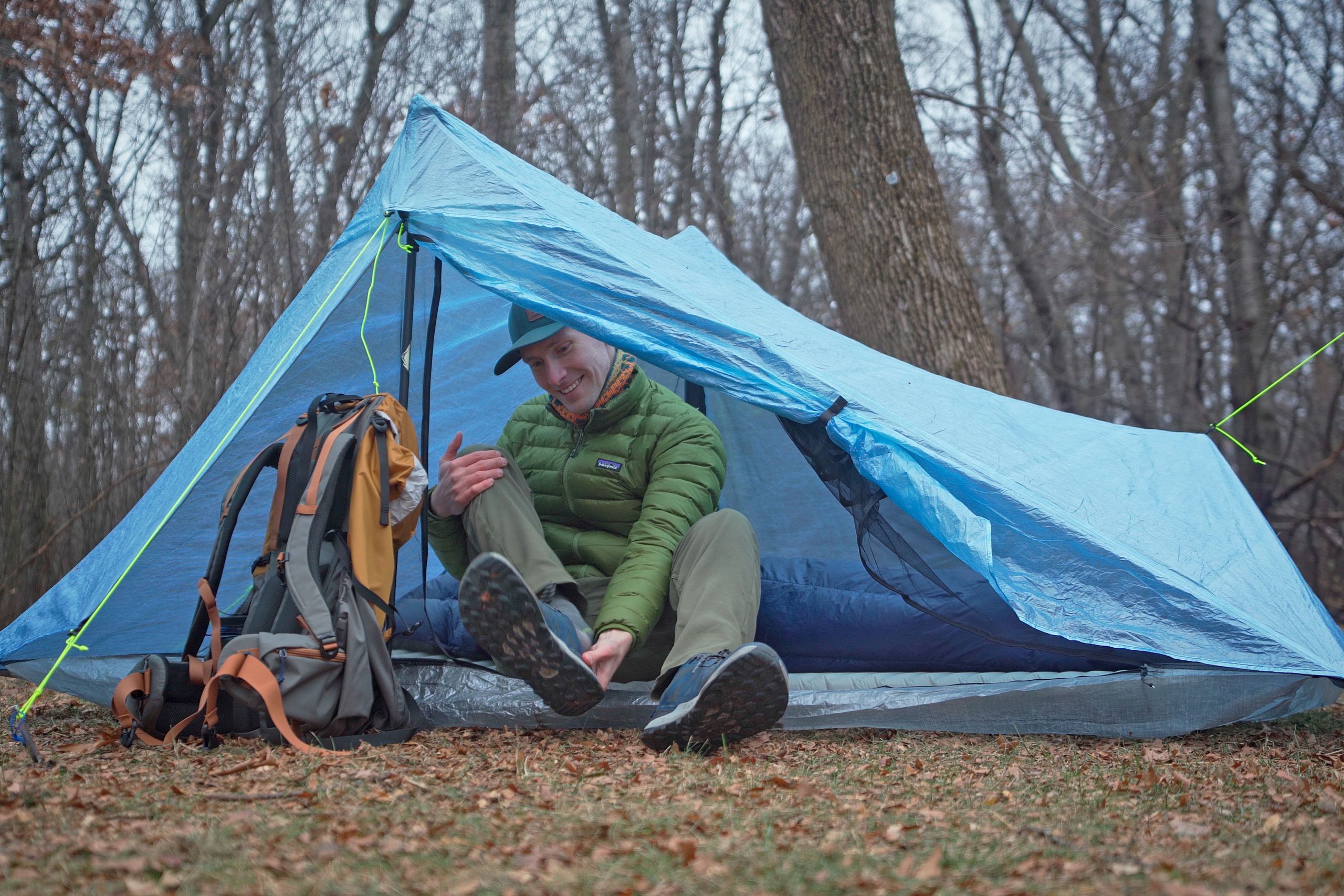
For this edition of the guide, we didn’t cover firsthand weather resistance because we tested during the colder months, and most of these tents aren’t rated for winter storms. We’ll update this guide and the corresponding reviews with appropriate storm testing as it evolves.
For a few tents, we conducted testing on long trails during heavy use, and we’ve included weather-resistance findings from those adventures in their respective reviews. Non-experimental findings from the design evaluation of each tent have been included. This includes checking for large panels of exposed fabric that could catch the wind, evaluating rainfly-to-ground distances for splashback resistance, and examining guyline attachment points for more advanced storm protection.
We noted which orientations each tent would be strongest in the wind and whether they featured any obvious weak orientations that would struggle in a storm.
DURABILITY
An ultralight tent typically comes with the understanding that it may not last as long as other shelters. And we’ve aimed to note which tents are most likely to endure season after season. We closely examined material choices, identifying which ones have been time-tested on trails and which require extra care or a recommendation to use a groundsheet.
Stitching quality and overall manufacturing condition can indicate longevity. We looked for poorly reinforced seams, particularly at high-stress points, and tested them by pulling to see how much the threads stretched.
For all zippers, we noted their sizes and water resistance, and checked the end stops to ensure they were properly reinforced. We also observed the significant differences in fabric hand feel, although without a tensile testing machine, we can’t directly assess tensile strength.
Conclusion
Ultralight tents provide one of the best ways to reduce significant weight from your back while on the trail. This category has evolved from a collection of niche tarp designs to companies offering full backcountry accommodations that surpass the comfort of even traditional backpacking tents. We are dedicated to helping you find the best tent for your needs. And we hope that, regardless of your camping style, this guide has assisted you in achieving good sleep and happy shoulders on any adventure.