
Bottom Line
The Mountain Hardwear Bishop Pass 15 is a down mummy for campers who need real cold-weather capability without carrying the bulk of a frontcountry synthetic bag. Brett Kretzer tested it through snowy Rocky Mountain nights around 15°F with an R-4-plus pad. Its 650-fill down, draft collar, and cinchable hood make a capable shoulder-season system, though testers began feeling chilly below roughly 30°F.
That heat-efficient cut is narrow, especially through the hips, so it won’t suit every side or stomach sleeper. The listed 26°F comfort rating is also distinct from the 15°F model name and the colder field observation. Campers who prefer spacious bedding can accept more weight in the NEMO Disco 15. Find more options in our best camping sleeping bags guide.
How We Tested
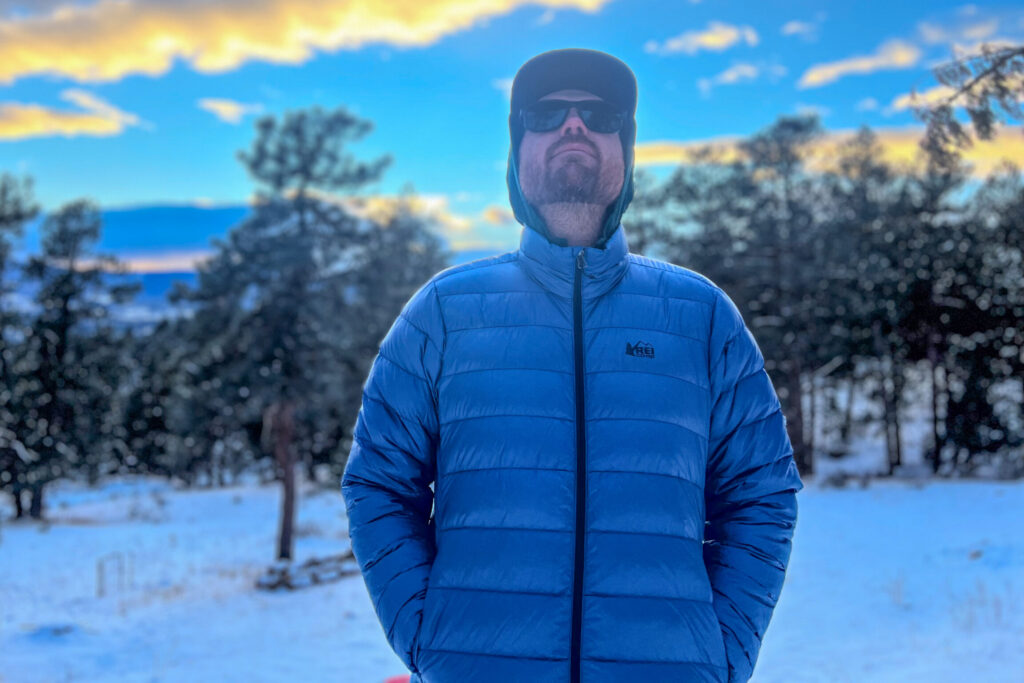
Gear tester Brett Kretzer used the Bishop Pass 15 for weeks as bedding at home and on trail, including snowy winter nights in the Rocky Mountains around 15°F. The test used a sleeping pad with an R-value above 4, an essential context for the temperature observation. Field assessment covered the tapered mummy fit, hood and collar, zipper usability, weight, and down insulation in cold conditions.
Quick Specs
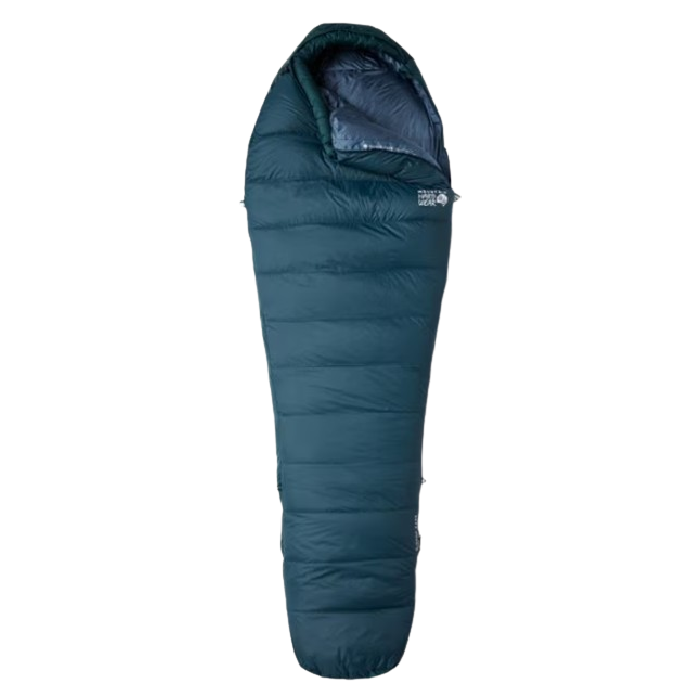
Mountain Hardwear Bishop Pass 15
Best Crossover Sleeping Bag
CleverHiker Rating: 4.2/5.0
Price: $335
Temperature Rating: 15°F
Weight: 2 lb. 5.2 oz.
Fill Type: 650-fill down
Pros
- Comfortable in shoulder-season conditions with warm pad
- Affordable for a cold-weather down mummy
- Smooth webbing-lined anti-snag zipper
- Glow-in-the-dark zipper pull
- Compression sack included
Cons
- Snug cut, especially around the hips
- Heavier than premium ultralight down bags

Comfort
The Bishop Pass provides a reasonable 62-inch shoulder circumference but narrows to about 53 inches at the waist, so it is not designed for sprawling. The shell material feels soft and cozy, the footbox has enough insulation to cushion feet, and the shaped hood and collar help create a snug sleeping environment. The main zipper is long and easy to reach in a tent, with an anti-snag track that behaved well in testing.
The aggressive taper is most noticeable at the hips. People who roll onto their stomach or frequently draw up their knees will be more constrained than in the NEMO Disco. The Bishop Pass prioritizes warmth and lower weight over bedroom-like space, so fit should be a deliberate part of the buying decision.
The bag’s pliable down and soft inner shell add comfort without making it spacious. A broader-shouldered camper may still fit reasonably well through the chest, only to find the waist and hips restrictive after curling onto their side. Pay attention to that mismatch before choosing a size.
Comfort Score: 4.5 / 5.0

Warmth
Cold-weather capability is why the Bishop Pass deserves consideration alongside camping bags. Our reviewer used it in snowy Rocky Mountain conditions down to about 15°F, paired with a sleeping pad rated above R-4. The bag was used on those winter nights, but the published tester also began feeling chilly below about 30°F. Its 650-fill insulation, shoulder collar, and hood provide meaningful protection without making this a guaranteed 15°F comfort bag.
The official comfort rating is 26°F, which is distinct from both the 15°F model name and the colder field experience. Warmth depends on the pad, clothing, and sleeper, so the 15°F night should not be converted into a universal comfort guarantee. Still, this is a more purposeful choice for cold, carry-in camps than a loose rectangular summer bag.
The fill specification helps explain the value. Mountain Hardwear uses 21.2 ounces of 650-fill-power down rather than a smaller amount of expensive 800- or 900-fill down. That keeps cost comparatively accessible but means the bag needs more insulation weight to reach its published rating.
Warmth Score: 4.7 / 5.0

Packed Size
The published backpacking review measures 2 lb. 5.2 oz. for the tested bag. That makes the Bishop Pass more practical for long walks than bulky synthetic car-camping bags, especially when its 650-fill down is compressed into the included sack. Ultralight alternatives weigh less, but often require a higher budget.
The 21.2-ounce down fill makes up a substantial portion of the packed weight, but it compresses far more effectively than thick synthetic insulation. The published compression-sack dimensions are about 10 inches tall and 26.5 inches around. That is manageable for backpacking, even if premium 800-plus-fill bags get much smaller.
The webbing-lined zipper track and glow-in-the-dark pull add small amounts of weight, but they also address repeated annoyances in cold camps. Carrying a few extra ounces is reasonable when those details make getting in and out of the bag easier with numb fingers.
Packed Size Score: 4.8 / 5.0

Features
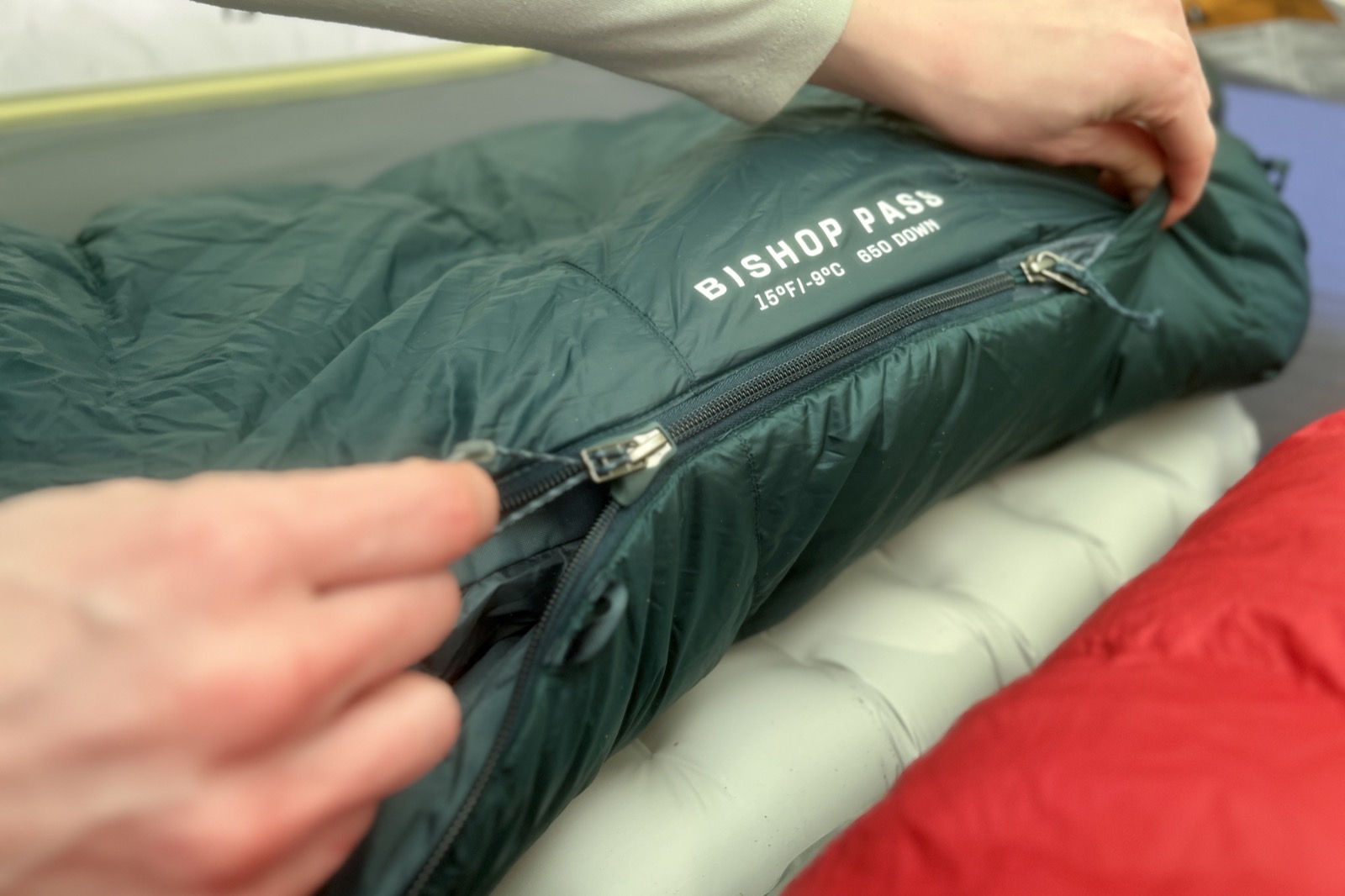
The Bishop Pass excels at small usability details that matter on cold trail nights. Its nearly full-length zipper runs on a webbing-backed track that minimizes snags and can be opened near the feet for ventilation. The pull glows in the dark, so campers can find it without fumbling for a headlamp. A substantial shoulder collar and adjustable hood help keep warm air inside when temperatures drop.
An interior stash pocket has a simple fold-over closure and is better suited to a compact water filter or lip balm than a large smartphone. That compartment is particularly useful for keeping a water filter from freezing overnight. The hood’s drawcord is easy to reach, but its position can occasionally brush against the face. These are restrained, practical features that do not add as much weight as a more elaborate ventilation system.
The glow-in-the-dark zipper pull is a genuinely useful detail when opening the bag in the dark without exposing hands to cold for long. The small fold-over pocket is not secure enough for a large phone, yet it can hold a compact filter close to body heat on a freezing night. Those practical choices suit its backpacking emphasis.
Features Score: 4.2 / 5.0
Should You Buy the Mountain Hardwear Bishop Pass 15?
The Bishop Pass 15 is best for backpackers who need a reasonably priced down bag for cold conditions. The published Rocky Mountain test includes snowy 15°F nights using a well-insulated pad, giving the hood, collar, and mummy cut a credible field basis. At a little over two pounds, it is far easier to carry than most camping-focused synthetic bags.
Skip it if your normal sleep position requires a broad hip area, or if you expect 15°F nights without additional warm clothing and a properly insulated pad. Testing documented use at 15°F, but the tester began getting chilly below roughly 30°F; cold sleepers should plan conservatively. The NEMO Disco 15 offers more room for side sleeping, while an ultralight-focused thru-hiker could pay more to save substantial weight.

What Other Camping Sleeping Bags Should You Consider?
Kelty Cosmic Down 20 Review: The Cosmic provides a less expensive down crossover when the Bishop Pass’s cold-weather specialty exceeds your needs. Our Colorado trips found the Cosmic comfortable around 30°F, and it packs small enough for occasional backpacking. You give up some of the Bishop Pass’s lower-temperature intent and must accept the Cosmic’s narrow mummy fit, but it is a sound value for less demanding three-season use.
Therm-a-Rest Boost 650 Review: Sleepers who don’t need the Bishop Pass’s cold-weather specialty may prefer the Boost’s adjustable fit. Its center expansion zipper and armhole vents provide more freedom for changing positions and regulating warmth, although field testing found it better suited to nights above roughly 40°F. The Bishop Pass remains the stronger choice when freezing conditions and lower carry weight are priorities.