

Bottom Line
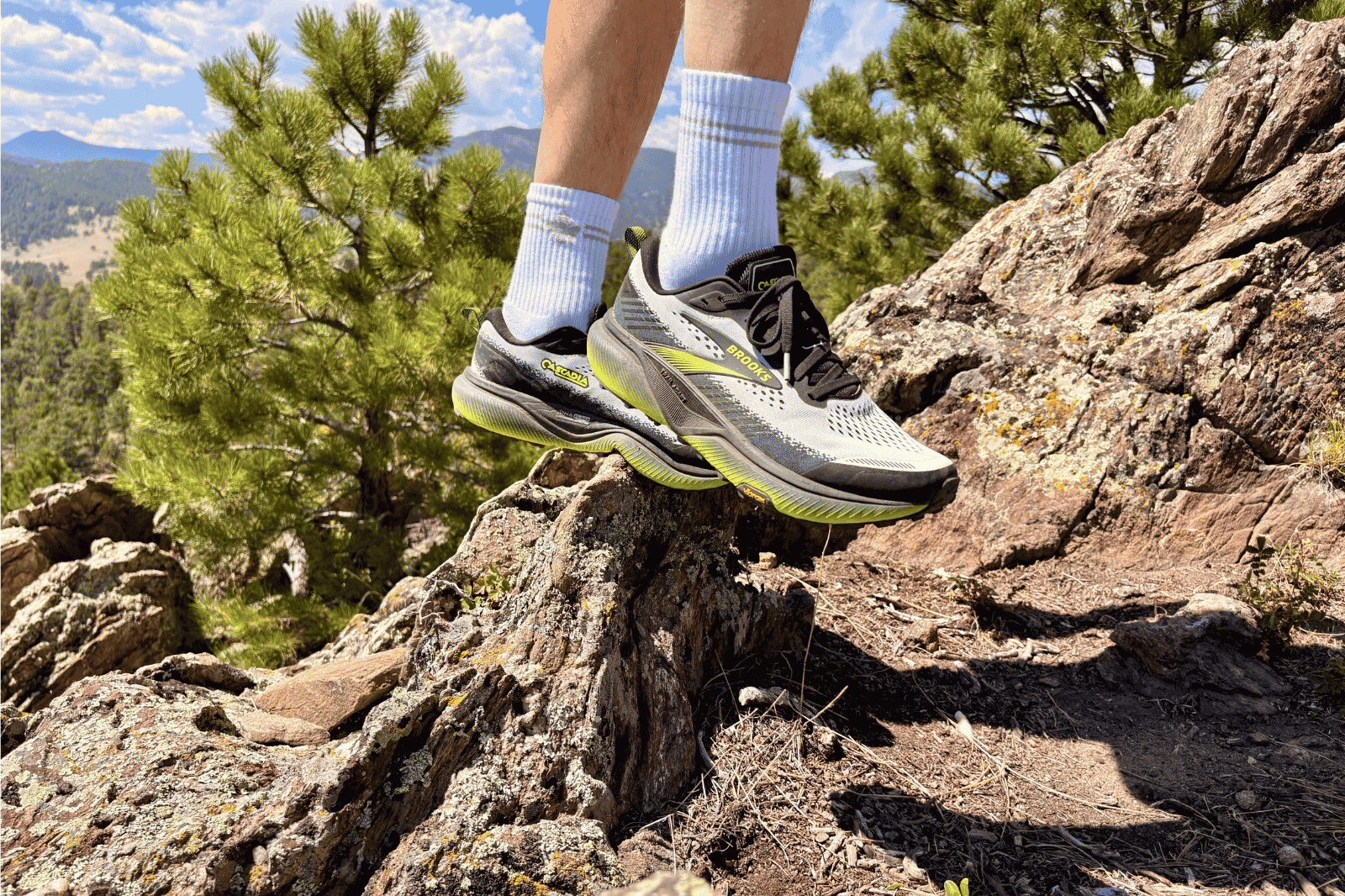
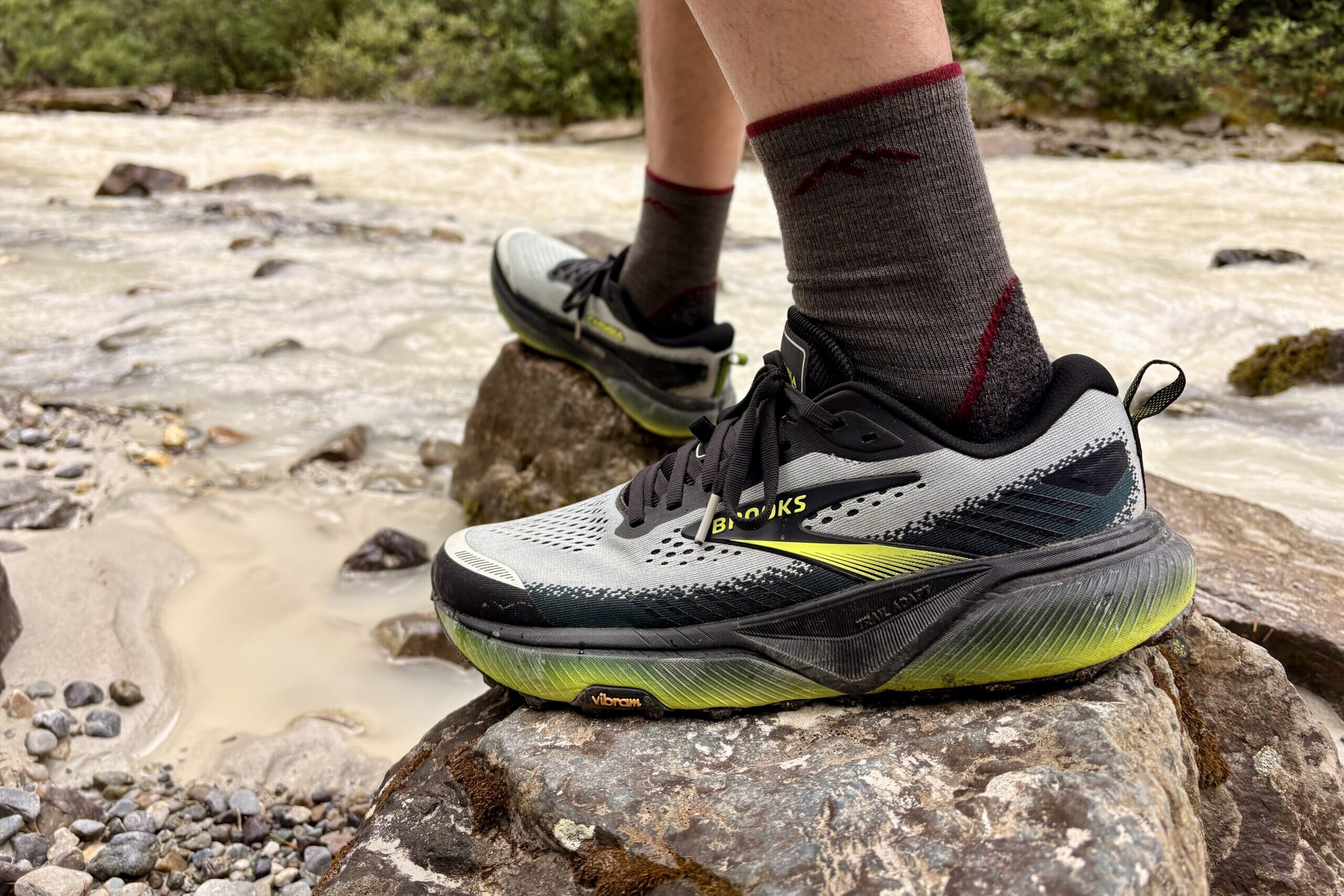
The Brooks Cascadia 20 is a a dependable option in our men’s hiking-shoe guide for hikers who want comfort, support, and versatility without the weight of a traditional hiking shoe. The Cascadia line has been part of CleverHiker’s long-distance footwear rotation for years, with more than 8,000 cumulative trail miles across routes including the PCT, CDT, and Pinhoti Trail.
The current version remains breathable, reasonably light, and comfortable with almost no break-in. Its 6-millimeter drop and supportive platform feel familiar to hikers coming from conventional running shoes, and it works well for maintained backcountry routes.
The tradeoff is durability and technical capability. Mesh uppers and trail-runner construction are more vulnerable than hiking-specific footwear, and the Cascadia offers less ground feel than some competitors. We like it most for high-mileage trail hiking rather than off-trail abuse.
How We Tested
The CleverHiker team has more than 8,000 cumulative miles of Cascadia experience across multiple generations, including thru-hikes of the Pacific Crest Trail, Continental Divide Trail, Pinhoti Trail, and other long-distance routes. The Cascadia 20 assessment reflects that long-term experience plus the current model’s updated design.
Quick Specs
- Best for: Long-distance hiking, thru-hiking, trail running, established trails
- Fit: Average; Wide available
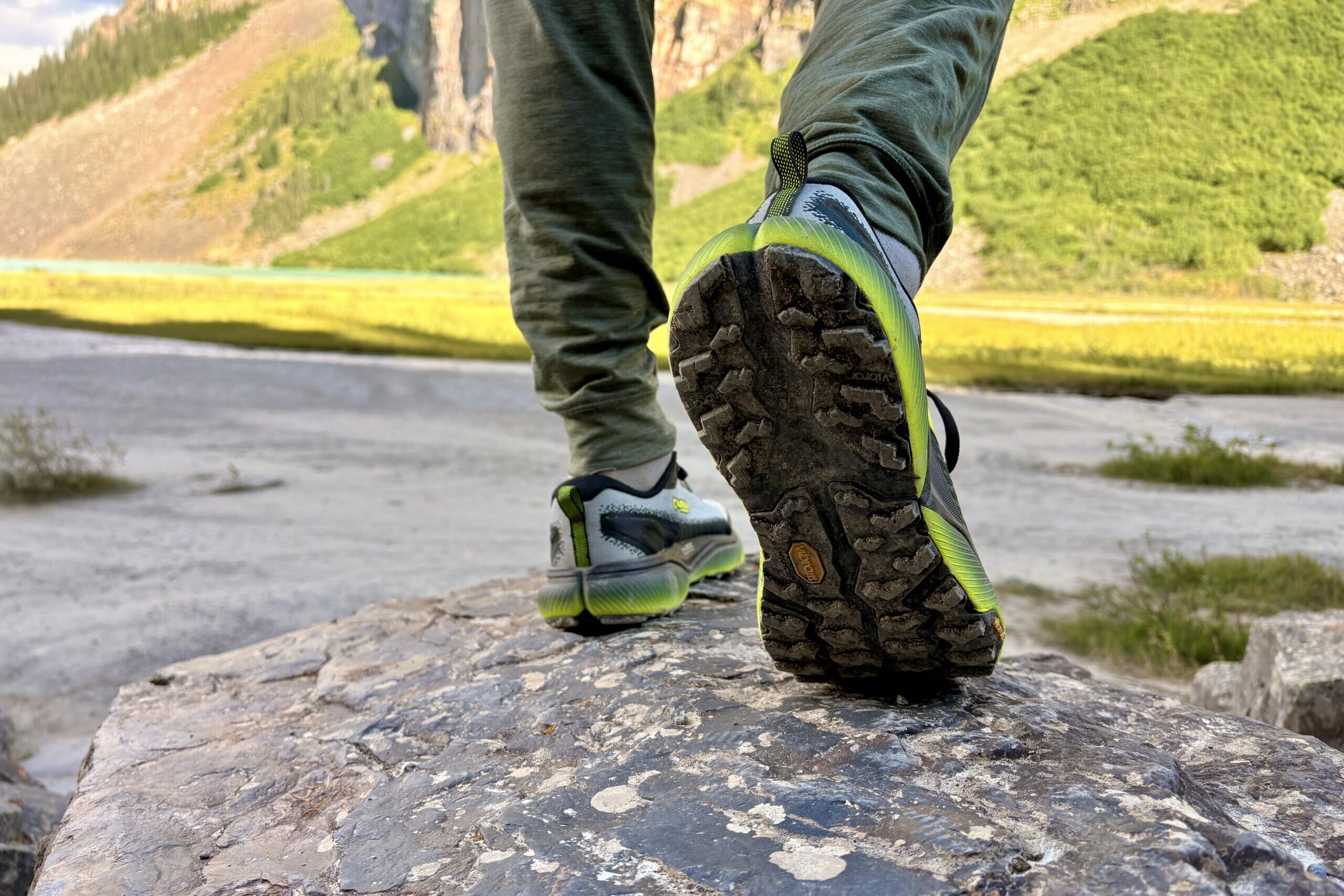
- Outsole: Vibram Megagrip with Traction Lug; 4 mm lugs
- Underfoot protection: TrailAdapt Technology
- Available widths: Medium & Wide
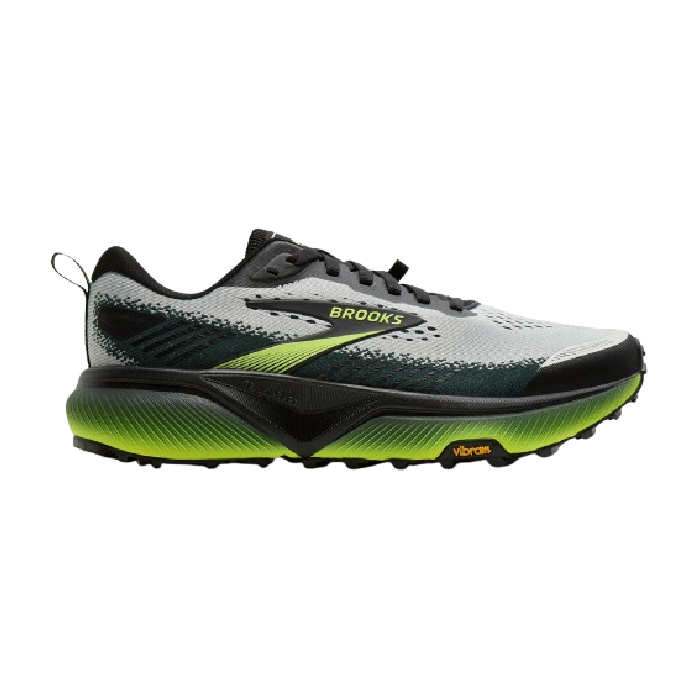
Men’s Brooks Cascadia 20
Supportive & Comfortable Trail Runners for Long Distances
CleverHiker Rating: 4.3/5.0
Price: $160
Weight (Pair): 1 lb. 5.6 oz.
Heel-to-Toe Drop: 6 mm
Pros
- Versatile for road & trail running
- Breathable
- Relatively lightweight
- Flexible upper
- Versatile for road and trail
- Very little break-in
Cons
- Mesh uppers are less durable than hiking shoes
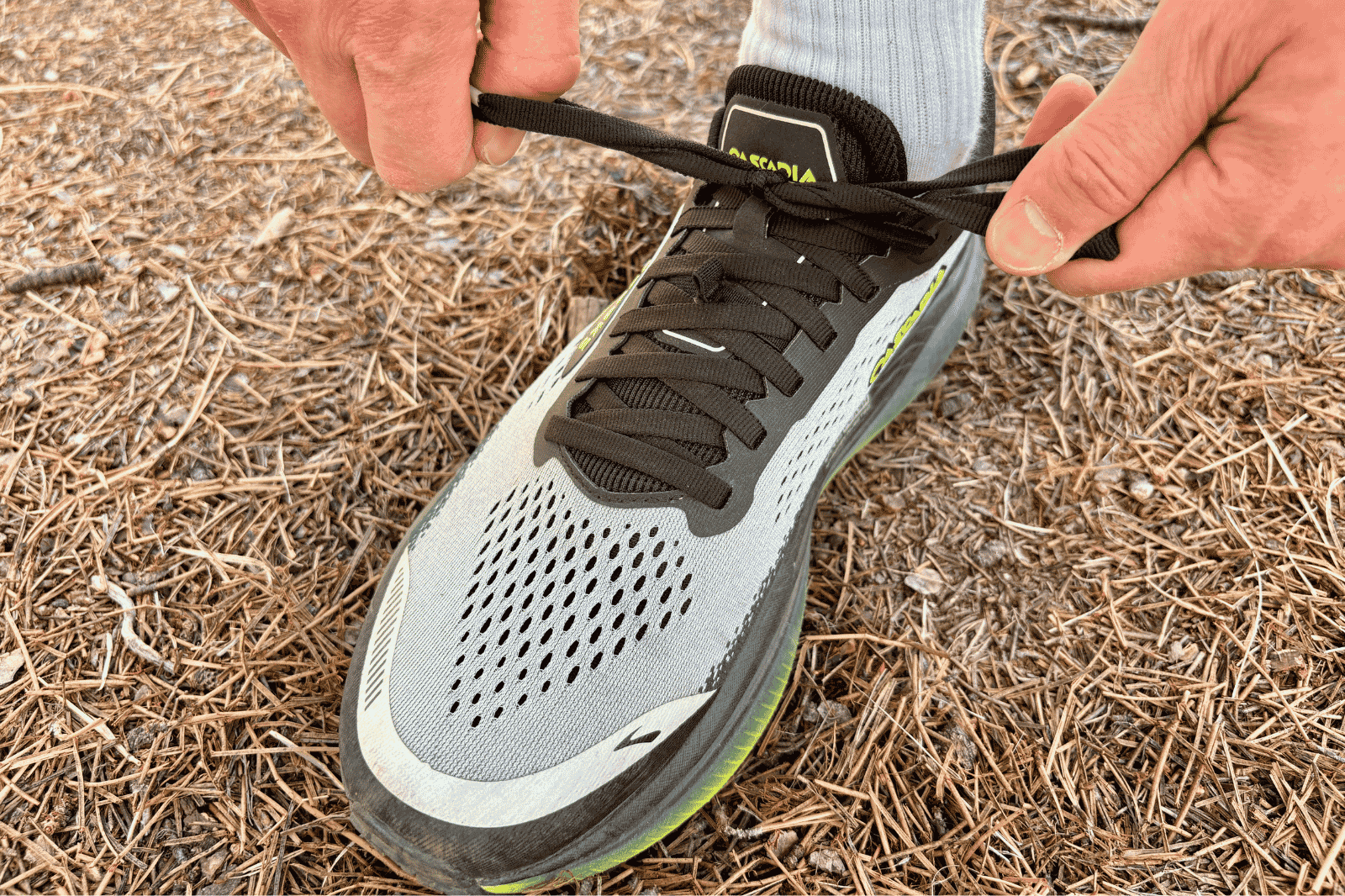
- Laces can loosen
- Less ground feel than some trail runners
- Not designed for sustained off-trail abuse
Comfort
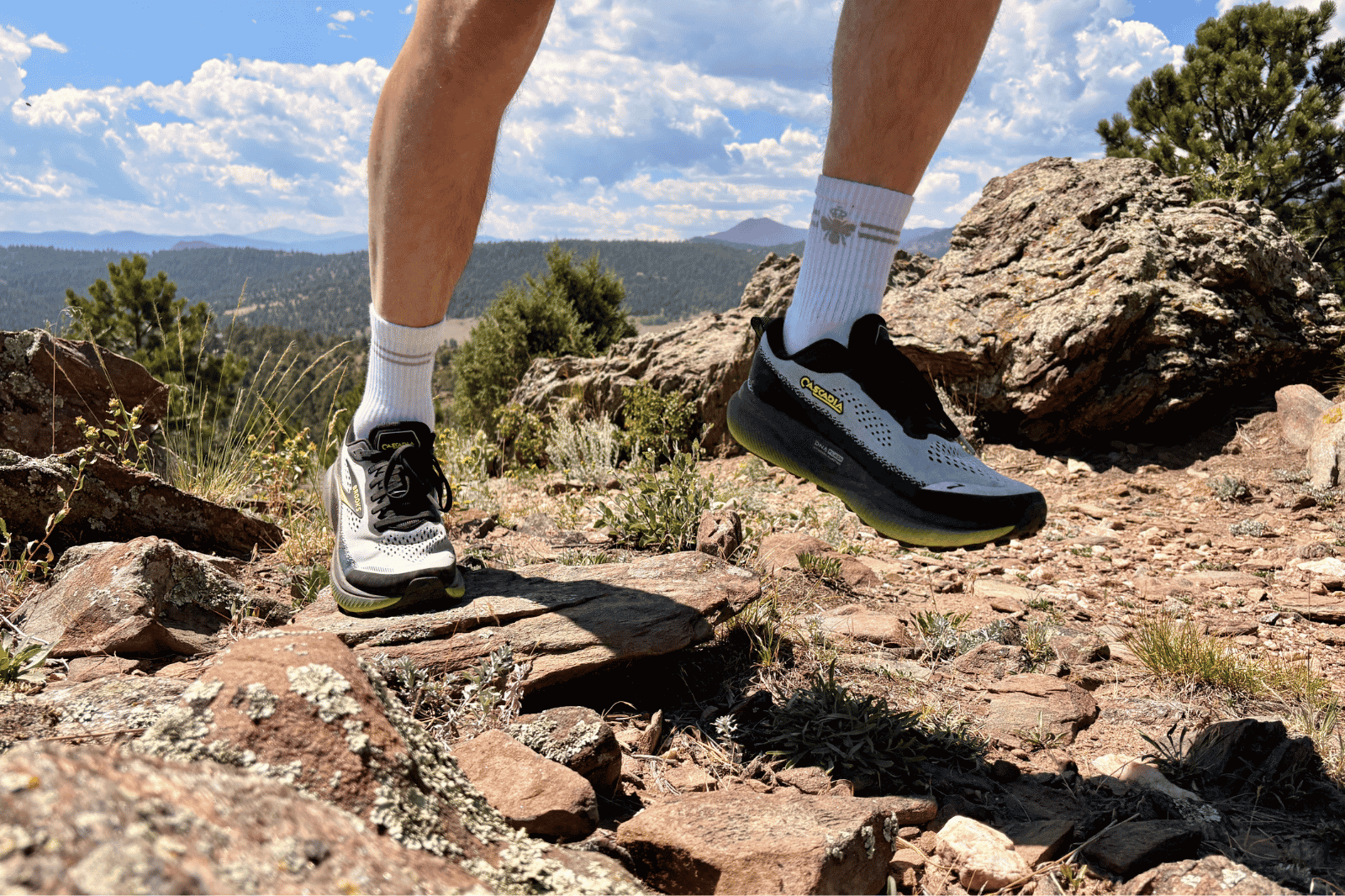
The Cascadia 20 is a comfortable long-distance shoe with a supportive, familiar ride. The midsole absorbs impact well without feeling excessively tall, and the upper flexes naturally as the foot moves.
It needs very little break-in, which makes it easy to put into rotation for hiking or running. Hikers who want maximum plushness may prefer the Speedgoat 7, while people who want more ground feel may prefer the Peregrine 16.
Comfort Score: 4.1 / 5.0
Traction
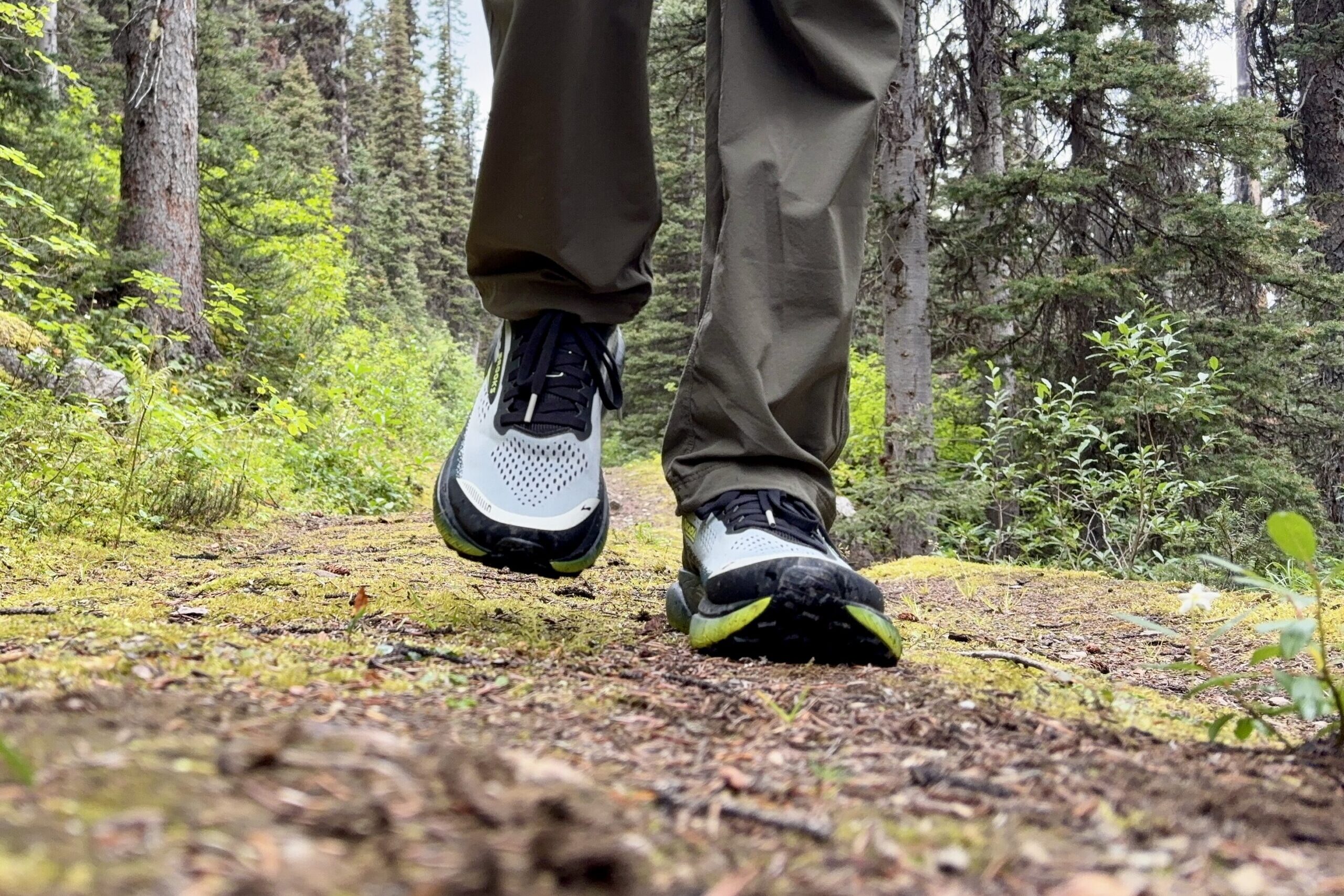
Traction is dependable on maintained dirt, rock, roots, and ordinary mountain trails. The outsole works well for the kind of mixed terrain encountered on long-distance routes.
It is not as aggressive as the Scarpa Ribelle Cross 2 or Ultra Raptor III, so we would not choose the Cascadia specifically for steep mud, scree, or technical off-trail terrain.
Traction Score: 4.2 / 5.0
Weight
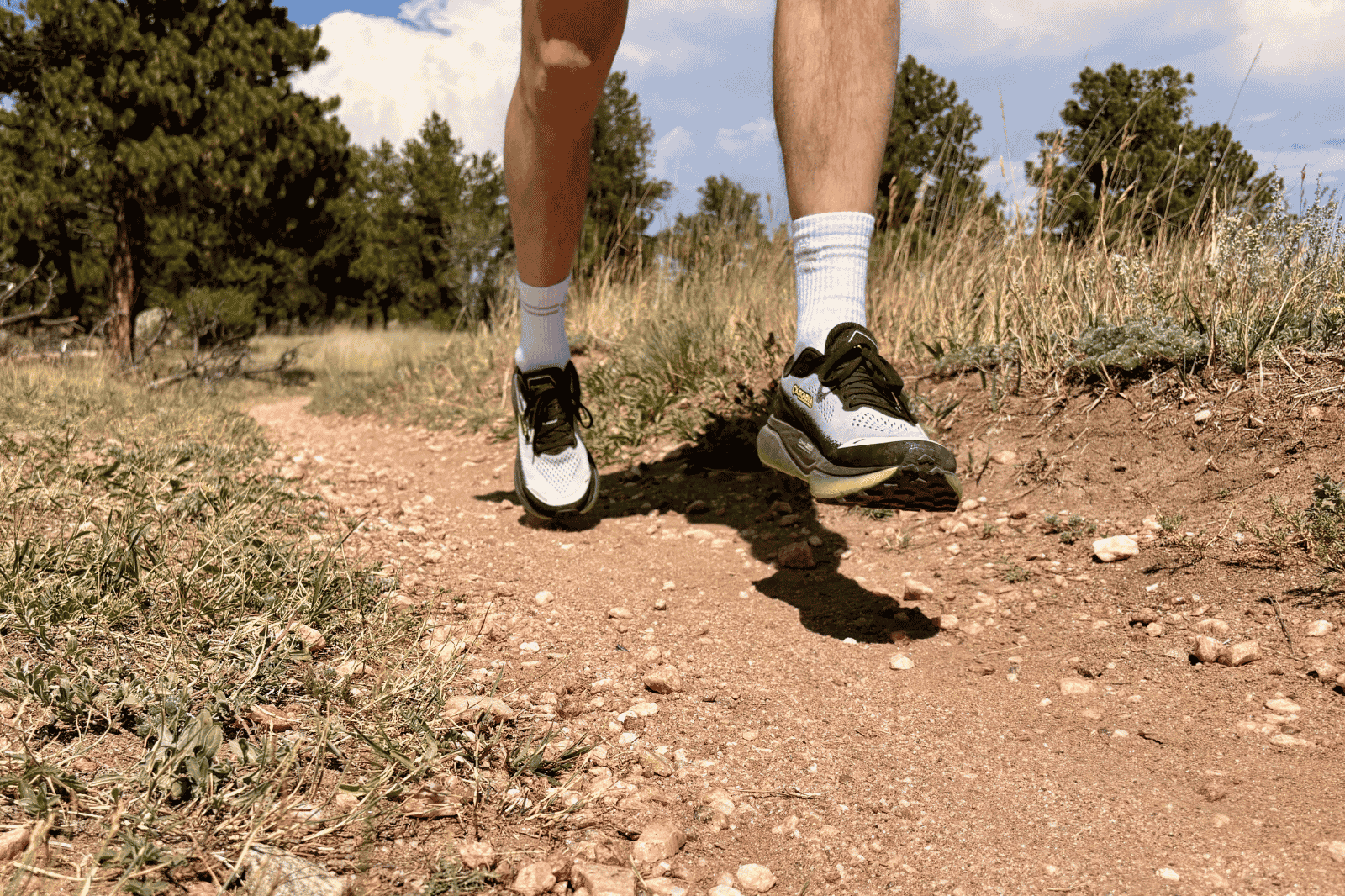
At about 1 pound 5.6 ounces per pair, the Cascadia 20 is lighter than traditional hiking shoes and well suited to high-mileage days. The weight feels efficient without stripping away all cushioning and support.
It is not quite as light as the very lightest options in our lineup, but it offers a useful middle ground for long-distance hikers.
Weight Score: 4.5 / 5.0
Durability
The Cascadia 20 is more robust than some earlier versions, but it remains a trail runner. Mesh uppers are the weak point and will generally wear faster than leather, dense synthetics, or heavily reinforced hiking-shoe uppers.
For thru-hiking, that tradeoff can be acceptable because the shoe is light and comfortable, but hikers should expect a shorter lifespan than with traditional hiking shoes.
Durability Score: 4.1 / 5.0
Weather Resistance
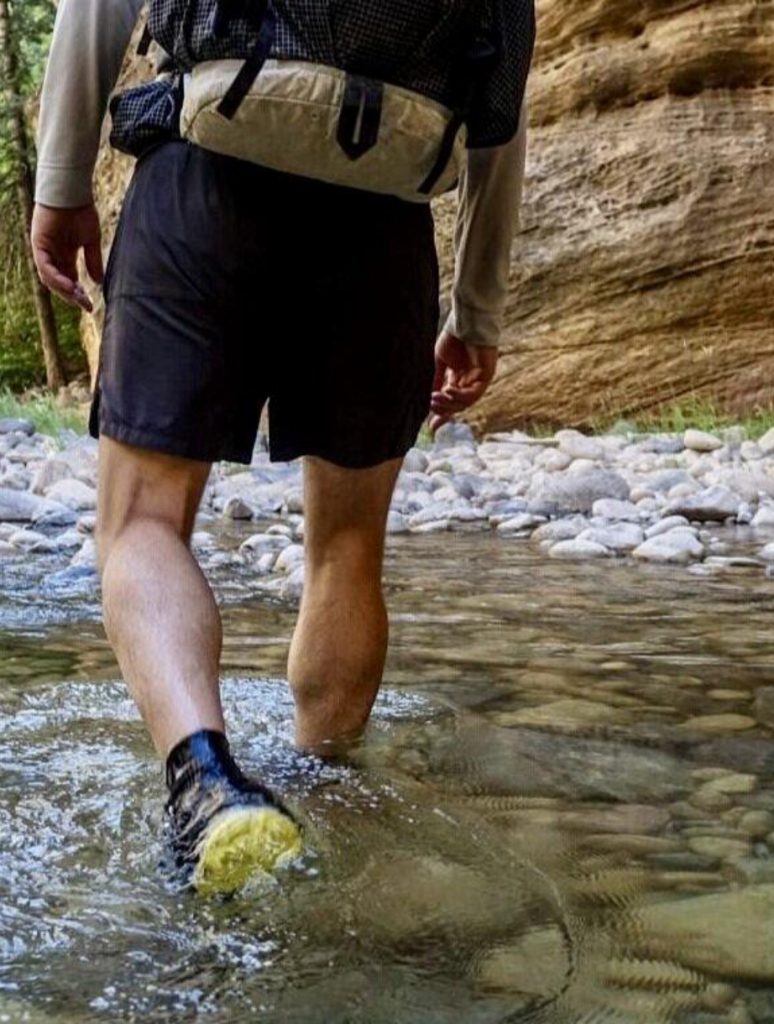
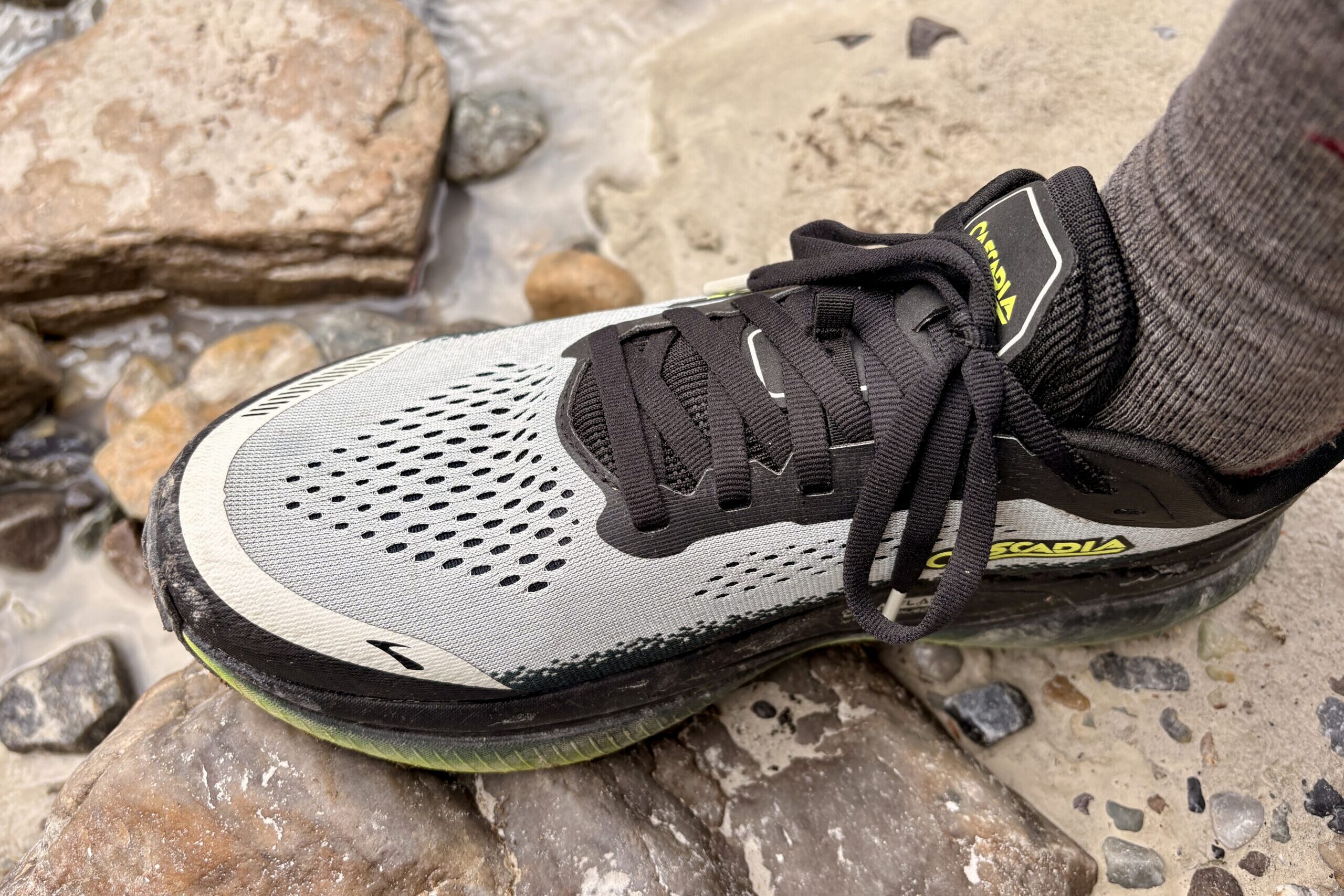
The standard Cascadia 20 is not waterproof. Its breathable upper handles warm conditions well and dries more quickly than heavy waterproof footwear after getting wet.
That is an advantage on many thru-hikes, but a disadvantage in sustained cold rain, snow, or shoulder-season conditions.
Weather Resistance Score: 3.9 / 5.0
Should You Buy the Brooks Cascadia 20?
Yes, if you want a supportive, breathable trail runner for long-distance hiking on established routes. It is a dependable choice for thru-hikers and day hikers who value comfort over maximum protection. Technical off-trail hikers should choose something more durable and aggressive.
What Other Hiking Shoes Should You Consider?
For other options, pop over to our lists of the best hiking shoes for men and best trail running shoes for men for additional trail shoes we recommend.
HOKA Speedgoat 7 Review: Choose the Speedgoat 7 if you want more cushioning and stronger traction for rugged established trails. It is similarly light but has a softer, taller midsole that absorbs impact better over long mileage. We prefer the Cascadia for a more traditional, versatile ride and the Speedgoat for hikers who prioritize plush comfort.
Saucony Peregrine 16 Review: Pick the Peregrine 16 if you want lower weight, more ground feel, and a more agile ride. It feels quicker and more flexible than the Cascadia and offers excellent traction, though with less cushioning and support. The Cascadia is the steadier long-distance option; the Peregrine is better for hikers who like a nimble trail-runner feel.
Merrell Moab 3 Review: Choose the Moab 3 if durability, protection, and a traditional hiking-shoe feel matter more than low weight. It is considerably heavier than the Cascadia but offers a more substantial upper, more structure, and stronger long-term toughness. The Cascadia is better for thru-hiking efficiency; the Moab is better for hikers who want classic support and value.