

Bottom Line
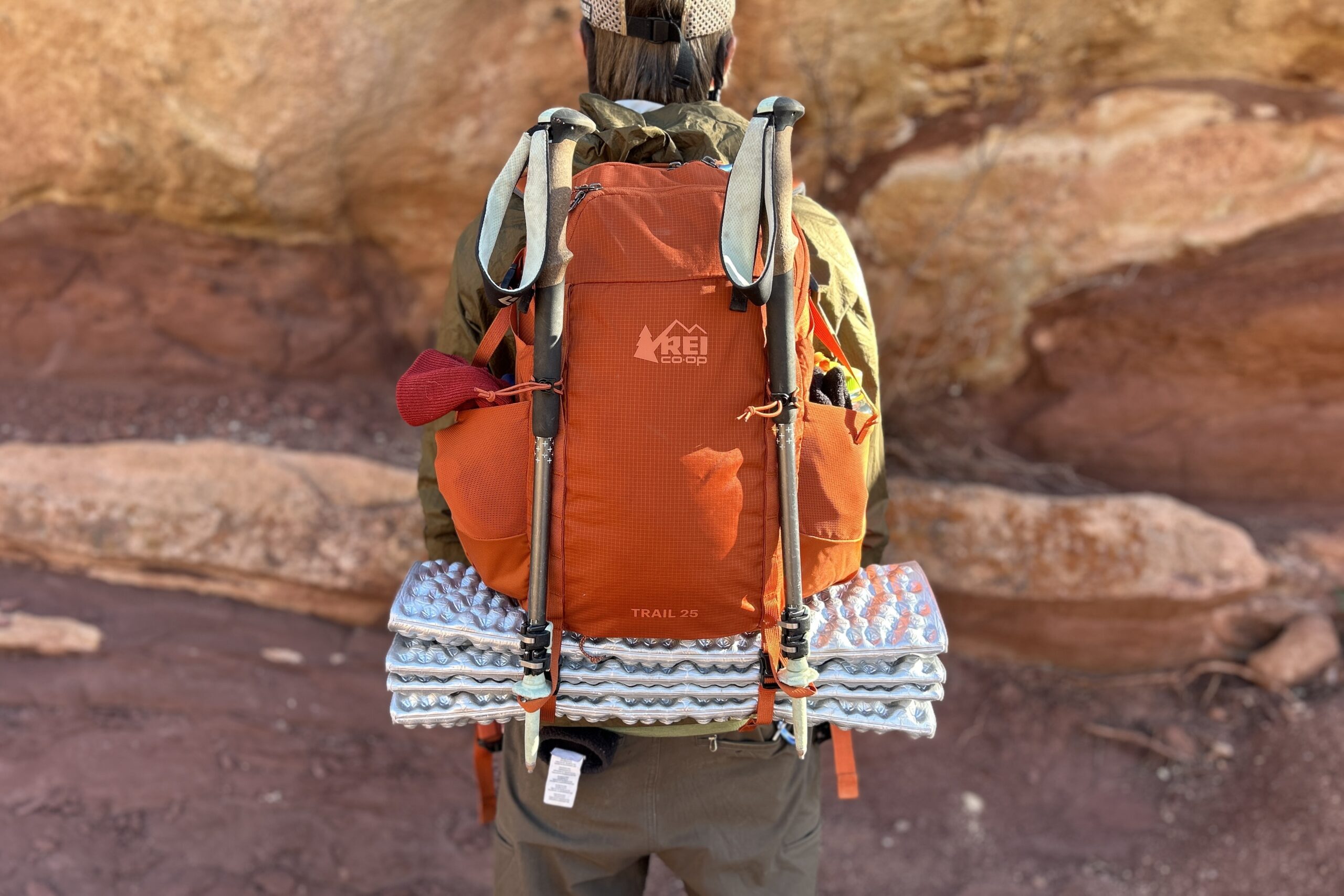
The REI Trail 25 is a budget-friendly daypack that prioritizes cushioning, durability, and straightforward access. Its padded back panel and shoulder straps make it comfortable for long light-to-moderate-load days, and the included rain cover improves overall value.
The huge U-shaped zipper opens most of the front panel, while numerous external lash points provide options for trekking poles, a foam pad, or other bulky gear. Extended sizing also makes the pack accessible to a wider range of hikers.
The weaknesses are ventilation, organization, and support under weight. The main compartment can feel cavernous, on-the-go pocket access is limited, and the minimalist hipbelt does not transfer much load. It is better for casual hiking than gear-heavy objectives. For more options, see our best hiking daypacks guide.
How We Tested
CleverHiker tested the Trail 25 for more than 150 miles across Colorado’s Front Range and Gore Range, including long day hikes, winter conditions, and carries with additional gear. We focused on the plush back panel, shoulder straps, U-shaped opening, exterior lash points, rain cover, framesheet, and how the simple hipbelt handled heavier loads.
Quick Specs
- Best for: Cushy budget hiking
- Material: 200D ripstop nylon / 200D recycled polyester
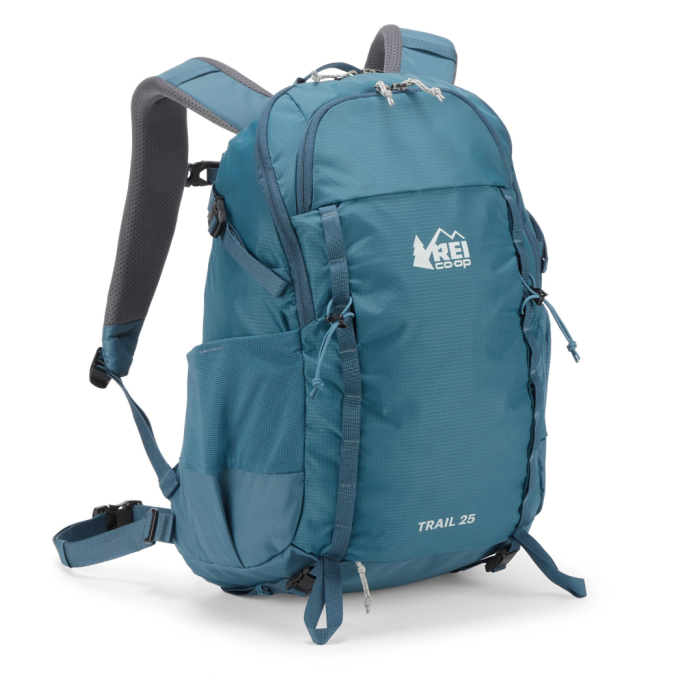
REI Trail 25
Cushy Budget Daypack
CleverHiker Rating: 4.2/5.0
Price: $100
Weight: 1 lb. 13 oz.(XS – XL size)
Capacity: 25 L
Frame: Internal framesheet
Pros
- Cushioned back panel
- Comfortable shoulder pads
- External gear attachments
- U-shaped access to the front panel
- Includes a rain cover
- Extended sizes available
Cons
- Limited ventilation
- Only one external zippered pocket
- Awkward main compartment
- Subpar on-the-go gear access
- Bulky
Comfort
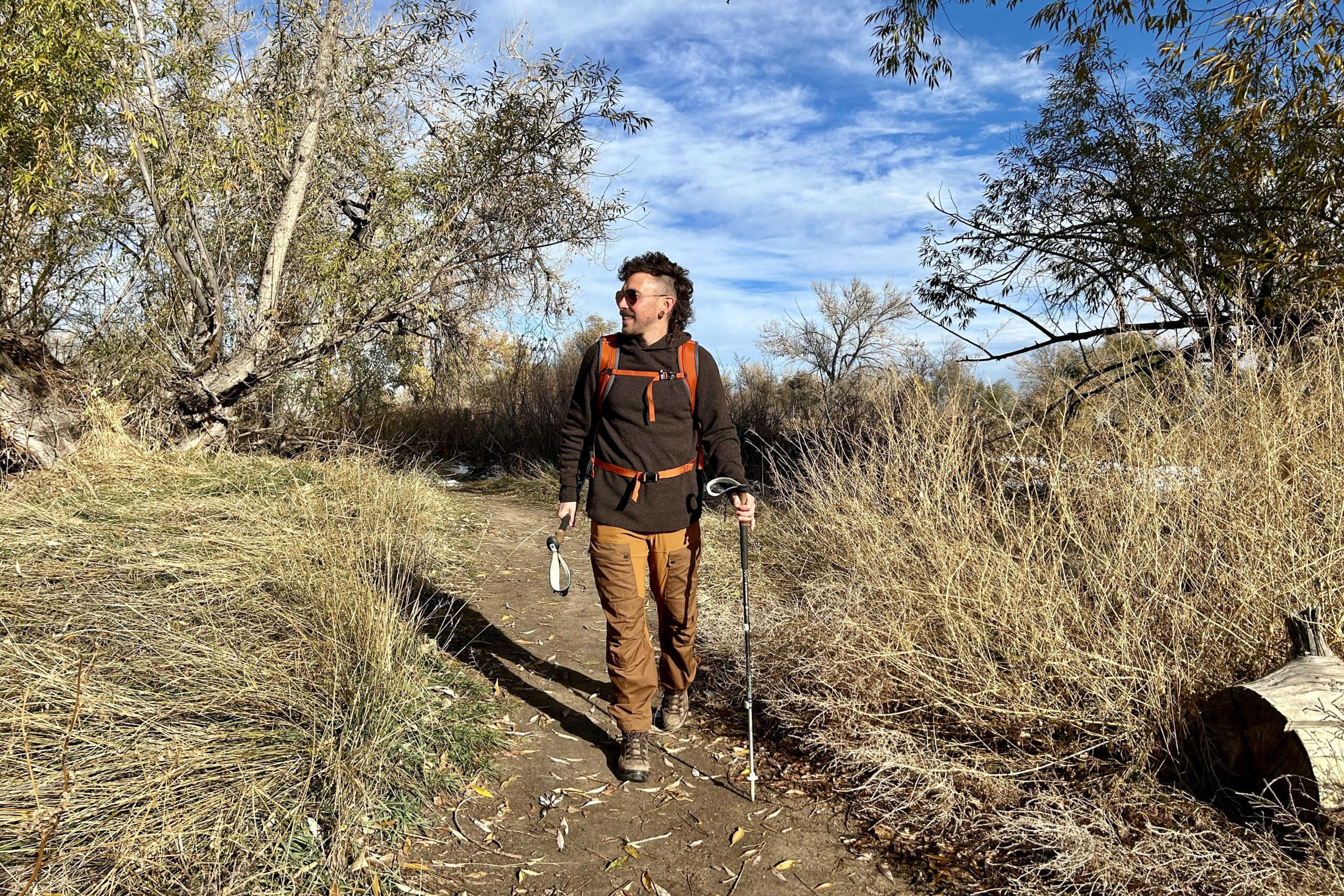
The Trail 25 feels cushy immediately because the back panel and shoulder straps use generous foam compared with most packs at this price. We have worn it on long days in both summer and winter without the straps becoming harsh.
The downside is airflow. The padded back panel sits close to the body and does not create the ventilation channels or suspended gap found on more technical packs. In hot weather, that means a sweatier back.
Comfort also depends on keeping the load reasonable. The padding helps pressure, but it cannot replace a load-bearing frame and hipbelt when weight climbs.
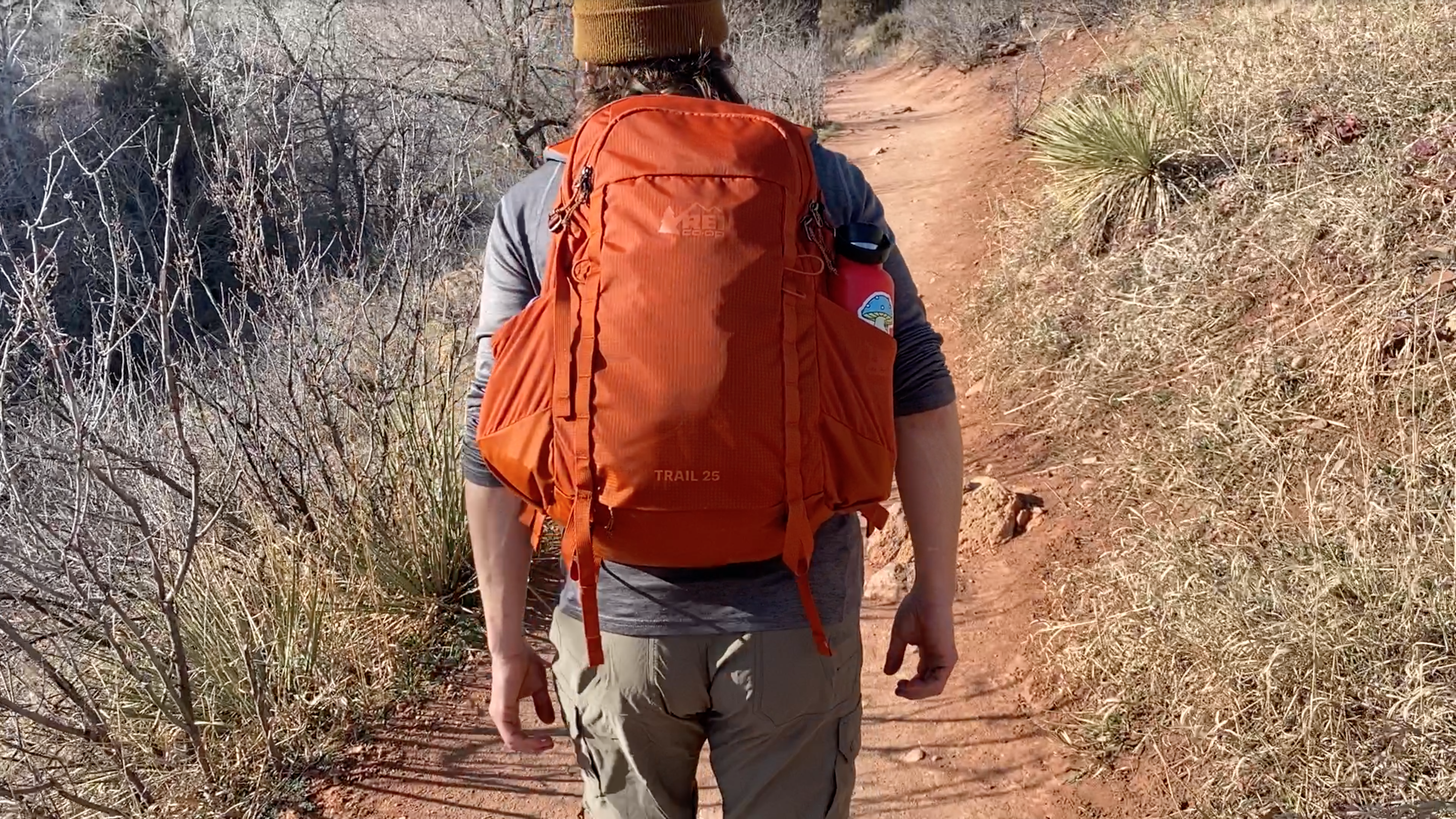
The Trail 25’s thick shoulder and back padding creates immediate cushioning, and the curved shoulder straps spread pressure well across the upper body. Mesh overlays add some breathability, while the flexible framesheet prevents the pack from feeling like a rigid board. The sternum strap also has a long adjustment track, which makes it easier to tune the fit.
We have carried the pack on long summer days and winter outings with extra layers and equipment. It can remain comfortable for many hours when packed carefully, but the thin webbing waist belt becomes a pressure point with a full load and does not carry weight like a padded hipbelt. The pack feels cushy; it is not a true heavy-load suspension.
Comfort Score: 4.3 / 5.0

Organization
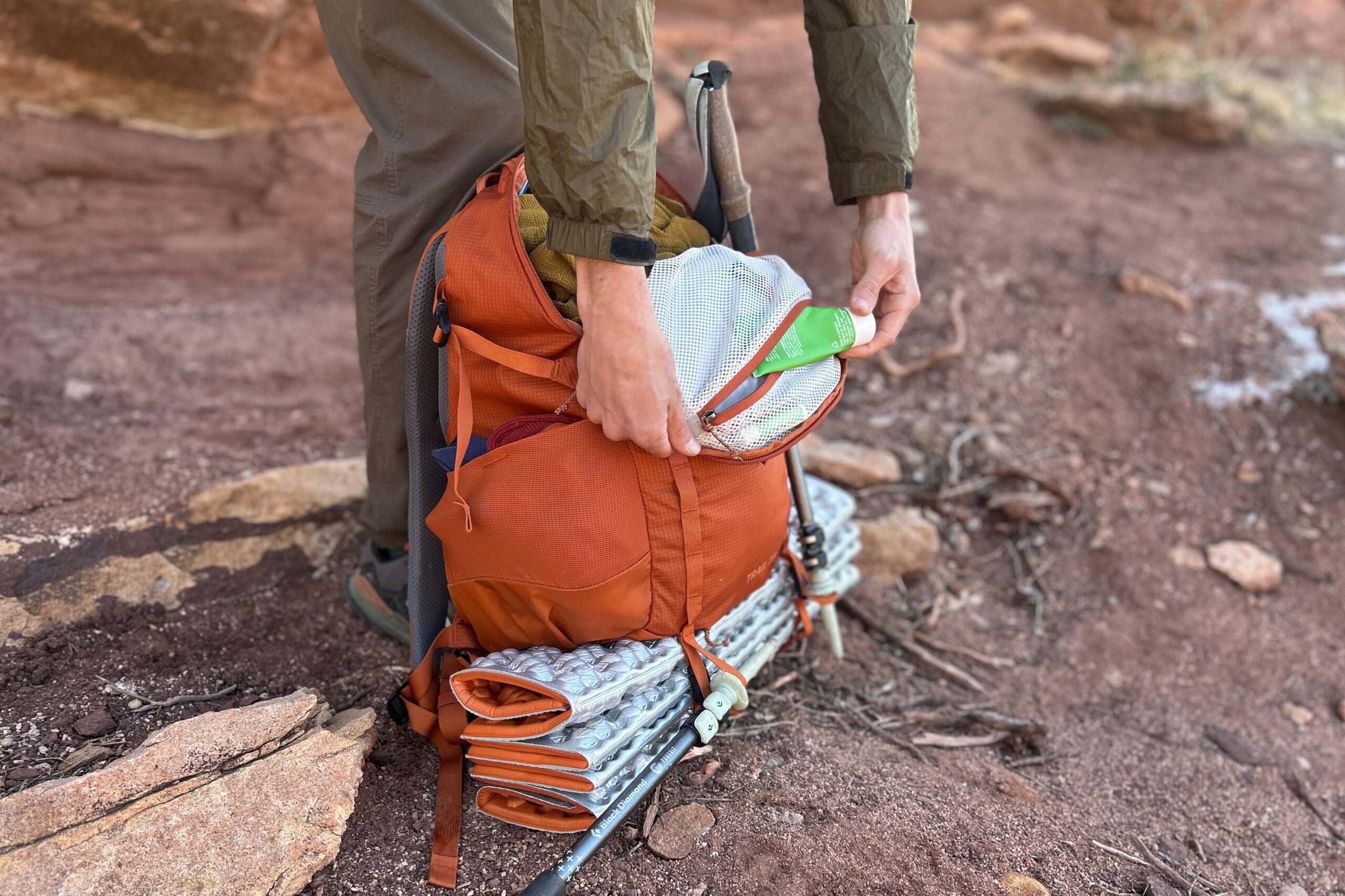
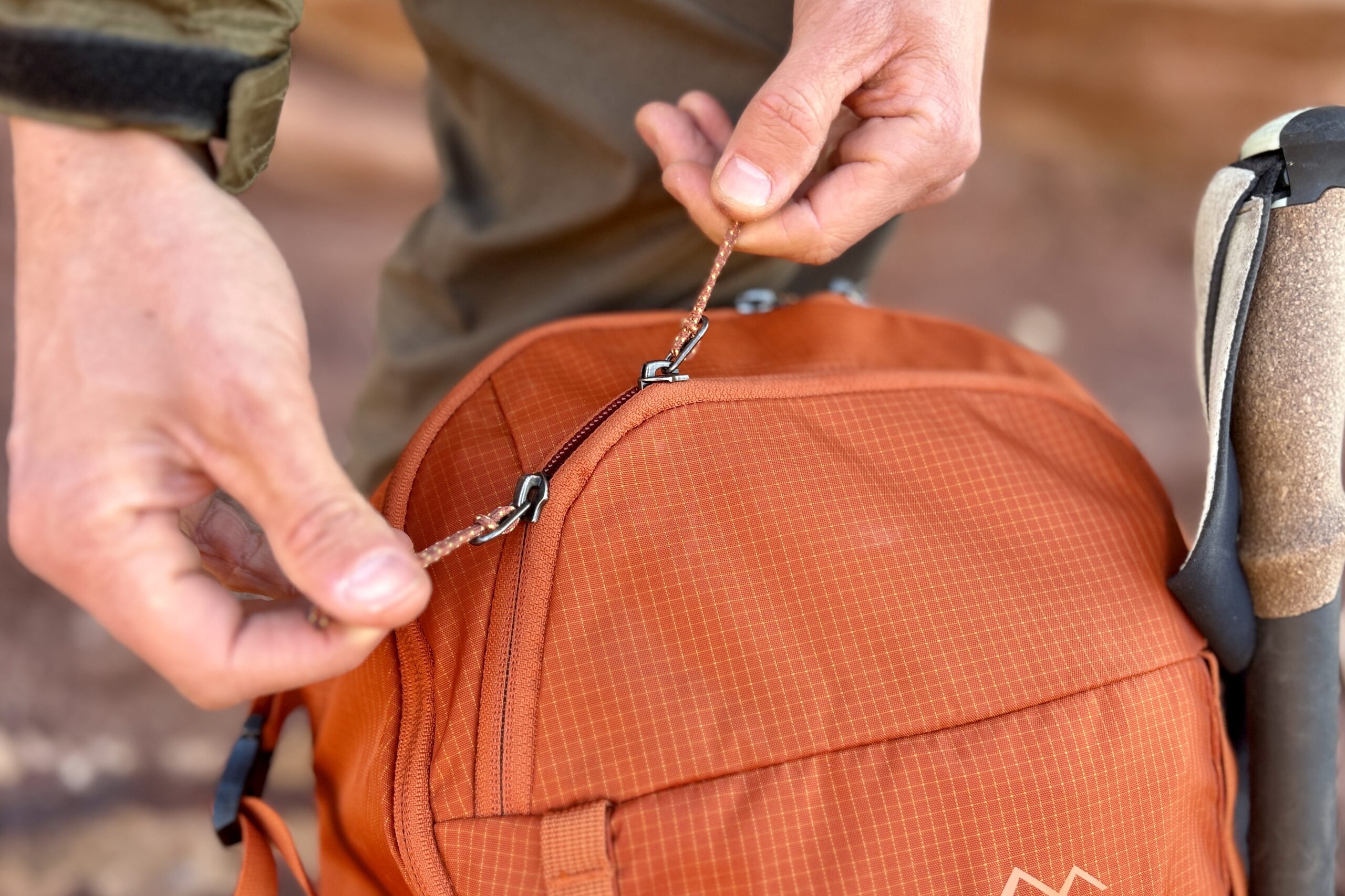
The large U-shaped zipper is the organizational highlight because it opens much farther than a conventional top-loader. That makes it easy to see and retrieve gear instead of unpacking from the top down.
Inside, however, the main compartment has little separation, and there is only one major external zippered pocket. Sixteen exterior lash points offer many ways to strap on gear, but external carry can become cluttered and shift weight away from the body.
The layout works for hikers who value wide access and attachment points more than a large number of dedicated internal pockets.
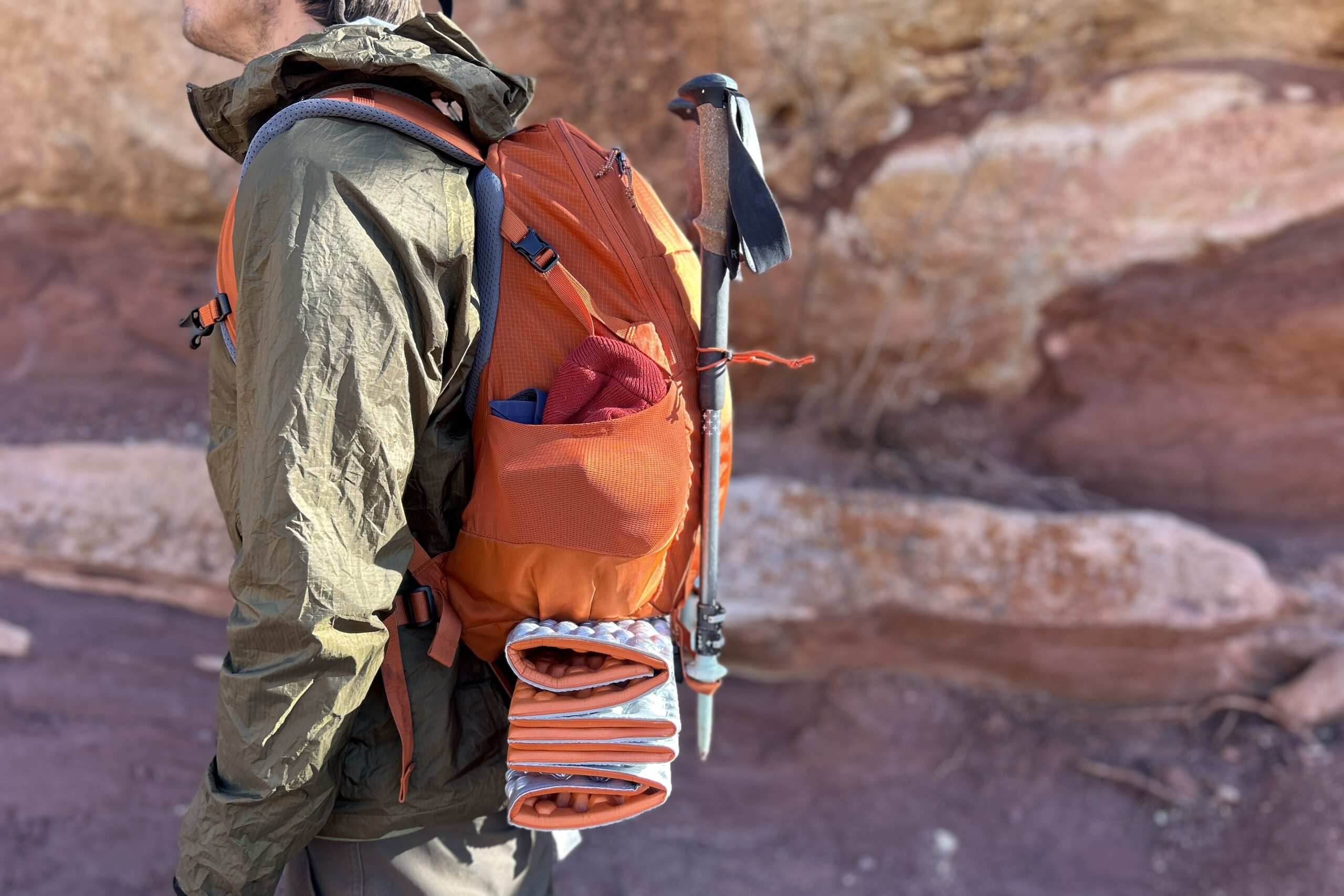
The U-shaped zipper opens roughly two-thirds of the bag, giving much better visibility and access than a narrow top loader. An internal mesh pocket, external zippered pocket, dedicated rain-cover pocket, double trekking-pole attachments, and 16 exterior attachment points create many ways to separate or carry gear. Bottom accessory straps are especially useful for bulky items such as a sit pad, tripod, or collapsible pole.
The layout is less effective for small high-use items. Zippered pockets sit high on the front flap and can make it top-heavy, and there are no shoulder or hipbelt pockets for snacks or a phone. The hydration routing is thoughtful and side pockets handle large bottles, but the cavernous main compartment still requires deliberate packing.
Organization Score: 4.2 / 5.0
Support
A light framesheet gives the Trail 25 some structure, but the thin hipbelt is not designed to carry a large share of the load. As weight increases, the shoulders remain responsible for most of the burden.
That makes the pack less supportive than its bulky appearance suggests. It can handle ordinary day-hiking essentials, but it is not the ideal choice for heavy winter gear or several liters of water.
For budget buyers, the tradeoff is understandable: money goes toward cushioning, durable fabric, a rain cover, and useful access rather than a sophisticated suspension system.
The internal framesheet provides enough structure to keep the Trail 25 from collapsing against the back and helps spread moderate loads across the shoulder harness. That is a meaningful step up from fully frameless budget bags, particularly when the pack is filled with bulky layers or other soft gear.
The thin nylon waist belt is the weak link. It stabilizes the pack but does not transfer much weight to the hips, so heavier winter gear, several liters of water, or dense equipment still ends up loading the shoulders. We have used the pack comfortably on long days, but careful packing matters. Buyers who routinely carry heavy loads should choose a frame and hipbelt designed to bear weight rather than relying on the Trail’s cushioning.
Support Score: 4.0 / 5.0
Weight & Packability
At 1 lb. 13 oz., the Trail 25 is moderate in weight and lighter than the most supportive framed packs, but it feels bulkier than many bags at a similar weight. The padded back panel and broad body do not disappear when empty.
The framesheet is less rigid than a metal frame, so the pack can flatten somewhat for storage, but it is not a natural travel stuffer. Its 25-liter volume also takes up more space than casual 15- to 20-liter options.
The result is respectable rather than exceptional weight efficiency. Buyers get a lot of fabric, cushioning, and included weather protection for the price, but minimalists have better choices.
At 1 lb. 13 oz., the Trail 25 sits in the heavier half of our daypack field and feels bulky for its 25-liter capacity. The extra material buys thick padding, durable fabric, a rain cover, and a framesheet, so the weight is easier to justify for users who want a cushioned, multi-season pack than for minimalists.
Packability is better than the silhouette suggests. The flexible framesheet can bend and can even be removed, and side compression straps slim the profile when the pack is partially loaded. The lack of bulky hipbelt pockets also helps when fitting it into luggage. It will not pack down like a frameless 14-ounce bag, but it is less rigid than metal-frame support specialists.
Weight & Packability Score: 4.4 / 5.0
Should You Buy the REI Trail 25?
Buy it if you want a cushioned, durable, affordable daypack with wide-opening access, lots of attachment points, and an included rain cover. Choose a more technical pack if ventilation, on-the-go organization, or heavy-load support is a priority.
What Other Daypacks Should You Consider?
Osprey Sportlite 20 Review: The Sportlite is the better choice if you want to save weight and improve ventilation. It is smaller and less cushioned than the Trail 25, but its AirScape back panel and lighter build feel more agile on warm-weather hikes. The Trail offers more capacity, a rain cover, and wider-opening access. Choose Osprey for lighter three-season use and REI when you want more room and weather-ready utility.
Osprey Stratos 24 / Sirrus 24 Review: The Stratos/Sirrus is a substantial upgrade in support and ventilation. Its suspended AirSpeed back panel, internal frame, and load-bearing hipbelt carry heavier water and gear more comfortably than the Trail’s light framesheet and webbing belt. It also costs and weighs more. If the Trail feels overloaded on your typical hikes, the Stratos/Sirrus is the more appropriate tool rather than simply packing the REI more carefully.
REI Flash 22 Review: The Flash 22 is the better fit for minimalists who do not need the Trail 25’s cushioning, rain cover, or attachment points. It weighs less than half as much, costs less, and packs down far more easily. The tradeoff is much less structure and load support. Choose the Trail for durability and comfort with a fuller kit; choose the Flash for light, simple hiking and travel.