


Bottom Line
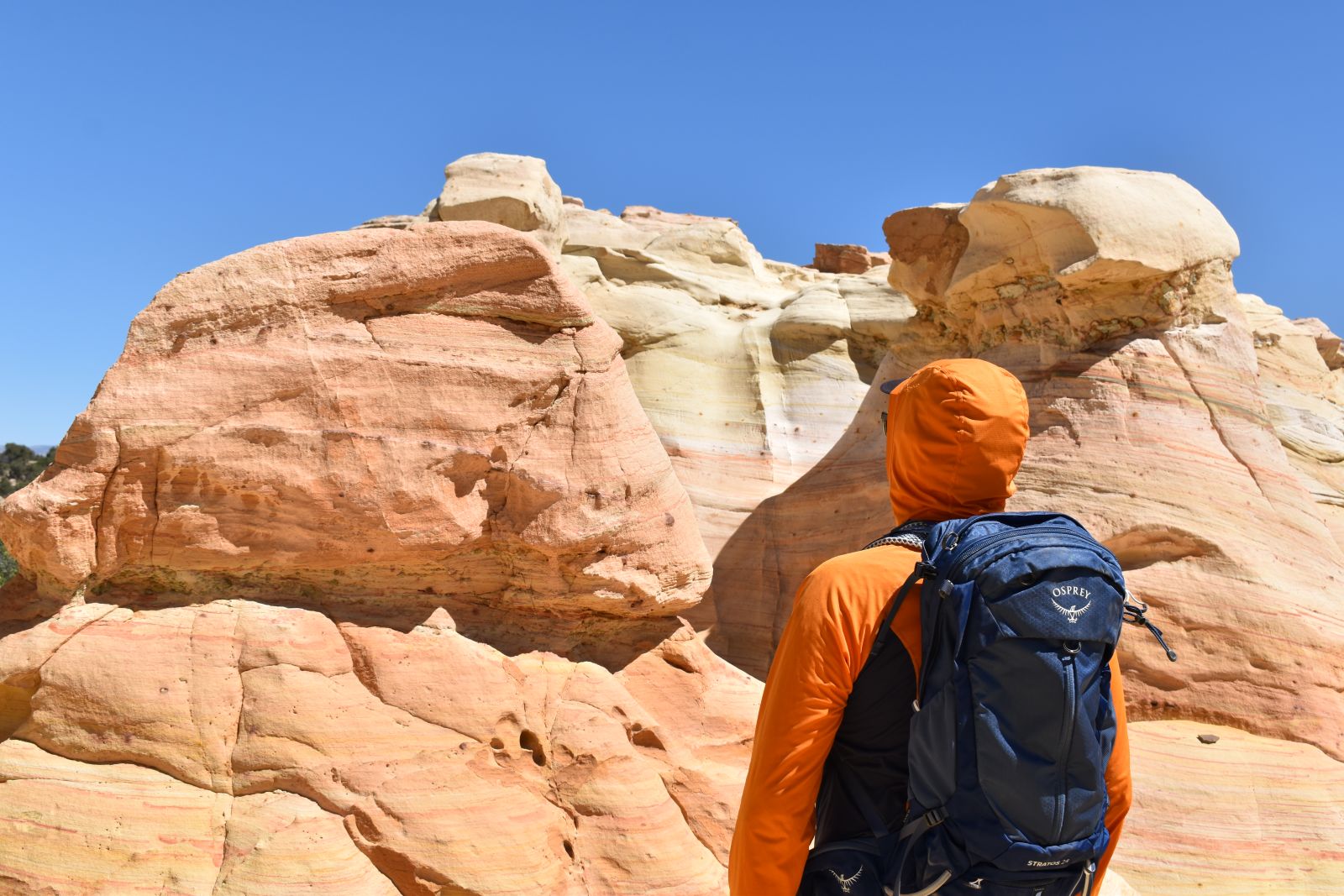
The Osprey Stratos 24 and Sirrus 24 are support and ventilation specialists. Their suspended AirSpeed back panels and internal frames make heavier day-hiking loads feel noticeably more manageable than they do in lightweight frameless packs.
The harness is highly adjustable, the shoulder straps and hipbelt are well cushioned, and the included rain cover adds useful four-season versatility. This is a strong choice for long hikes with extra water, winter layers, or camera gear.
The penalty is weight and bulk. These are among the heaviest packs in our daypack field, and casual hikers may not carry enough to benefit from the extra structure. For gear-intensive days, however, the comfort payoff is substantial.
How We Tested
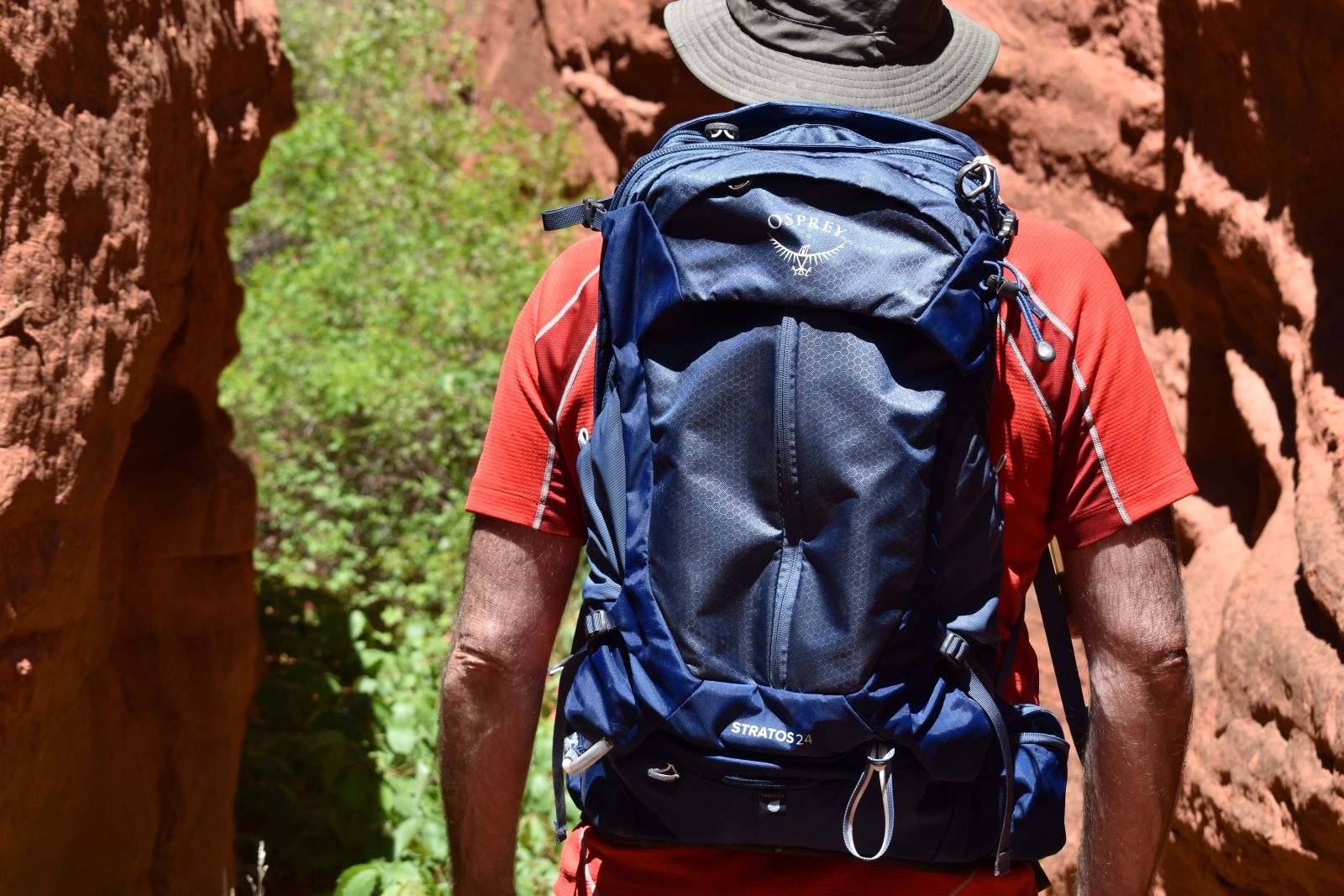
CleverHiker has years of experience with the Stratos/Sirrus platform, including thousands of hiking miles and a recent three-month side-by-side test of the current Stratos 24 against ten other daypacks. We used it for hot desert hikes, winter outings, steep summit terrain, and gear-heavy testing days to evaluate comfort, ventilation, organization, support, and weight.
Quick Specs
- Best for: Four-season and gear-heavy day hiking
- Material: 100D x 210D recycled ripstop nylon with 210D recycled nylon bottom
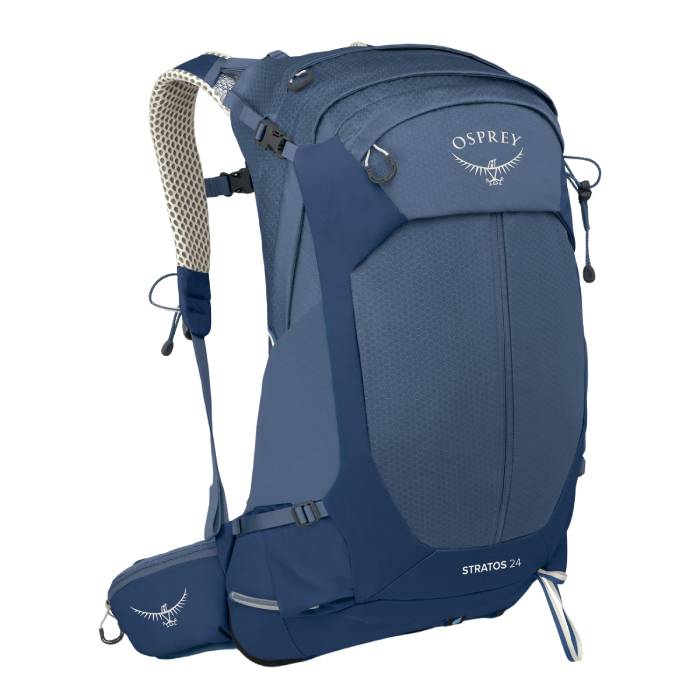
Osprey Stratos 24 / Sirrus 24
Best 4-Season Daypack
CleverHiker Rating: 4.5/5.0
Price: $200
Weight: 2 lb. 15.2 oz. / 2 lb. 13.8 oz.
Capacity: 24 L / 24 L
Frame: Internal frame
Pros
- Highly ventilated back panel
- Adjustable and gender-specific fit
- Cushioned and breathable shoulder straps
- Hipbelt pockets fit smartphones
- Internal frame and harness carry weight well
- Highly durable, eco-friendly materials
- Includes a rain cover
Cons
- On the heavier end
- Less accessible front pocket
- Reservoir isn’t the easiest to access
Comfort
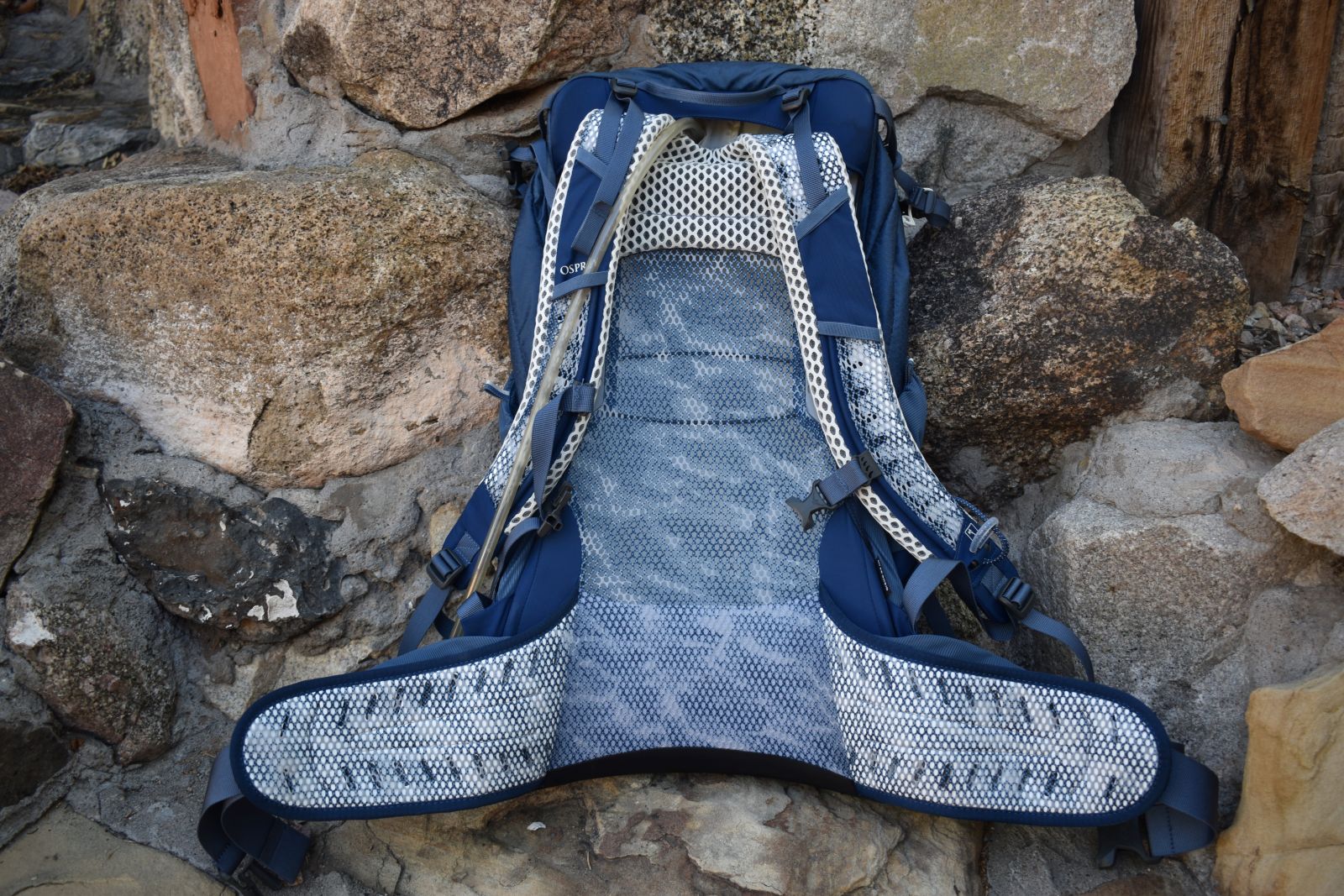
The AirSpeed suspension is one of the most comfortable systems we tested when carrying meaningful weight. A tensioned mesh panel holds the body of the pack away from the back, creating continuous airflow while preventing hard gear from pressing through.
Cushioned shoulder straps and a substantial hipbelt spread pressure effectively, and the adjustable torso lets hikers tune the fit. In hot conditions, the suspended mesh also keeps the back drier than close-contact foam systems.
The pack can feel excessive with a tiny load, but as water and gear increase, its comfort advantage becomes clearer. That is why we reach for it on winter and product-testing hikes.
The suspended AirSpeed panel creates nearly 2 inches of space between the pack body and the back, which is a meaningful difference on hot hikes. The mesh flexes with the torso while keeping hard gear from pressing through, and the padded shoulder straps and hipbelt provide more cushioning than the minimalist harnesses on lighter daypacks. The adjustable torso also helps the same pack fit very different body shapes.
Jory Brass has continued to use versions of the Stratos for years, including hot desert hikes and gear-heavy winter days. That long-term use reinforces the core comfort tradeoff: the pack feels unusually cool and supportive when loaded, but hikers carrying only a light summer kit may notice the bulk and structure more than the comfort benefit.
Comfort Score: 4.7 / 5.0
Organization
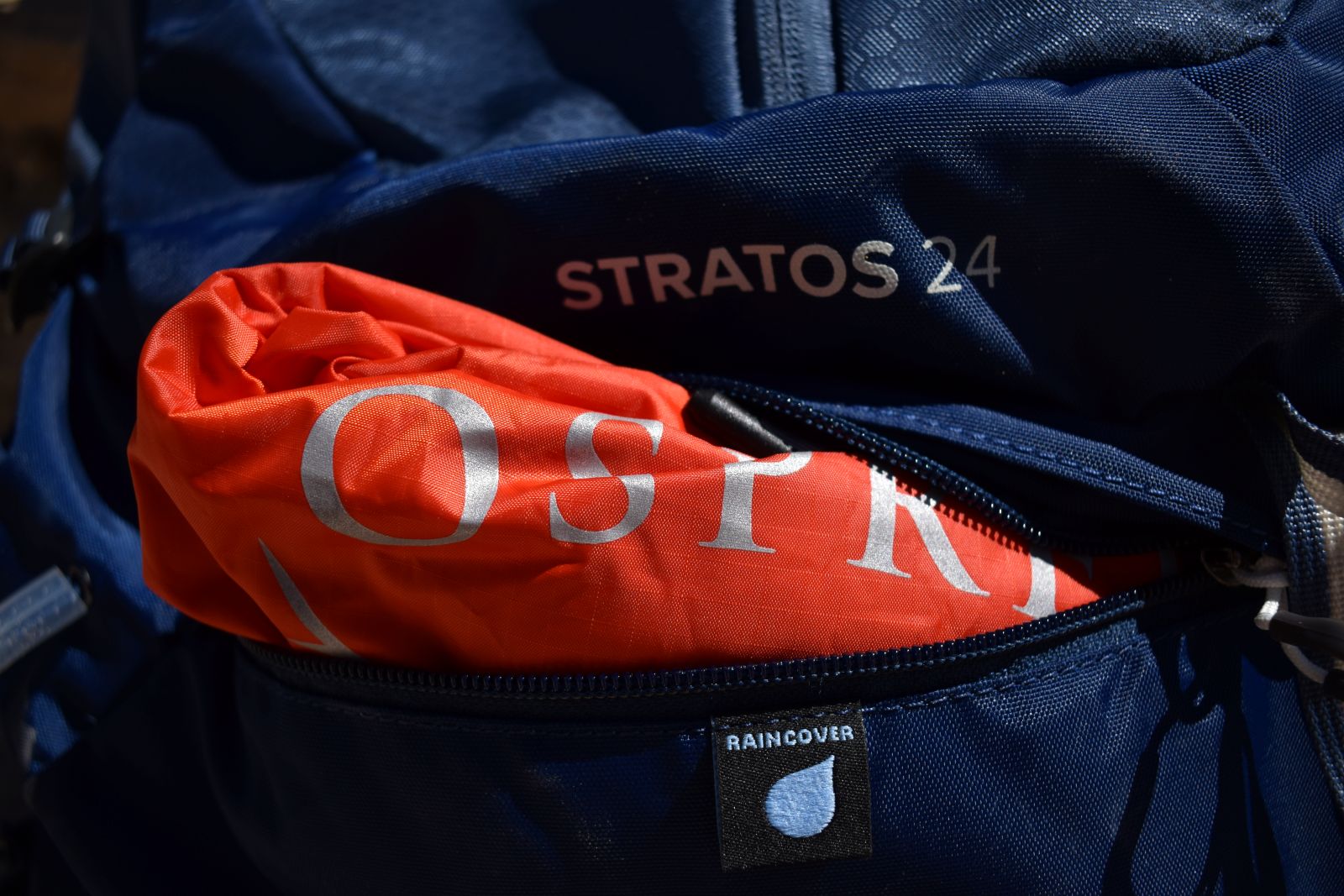
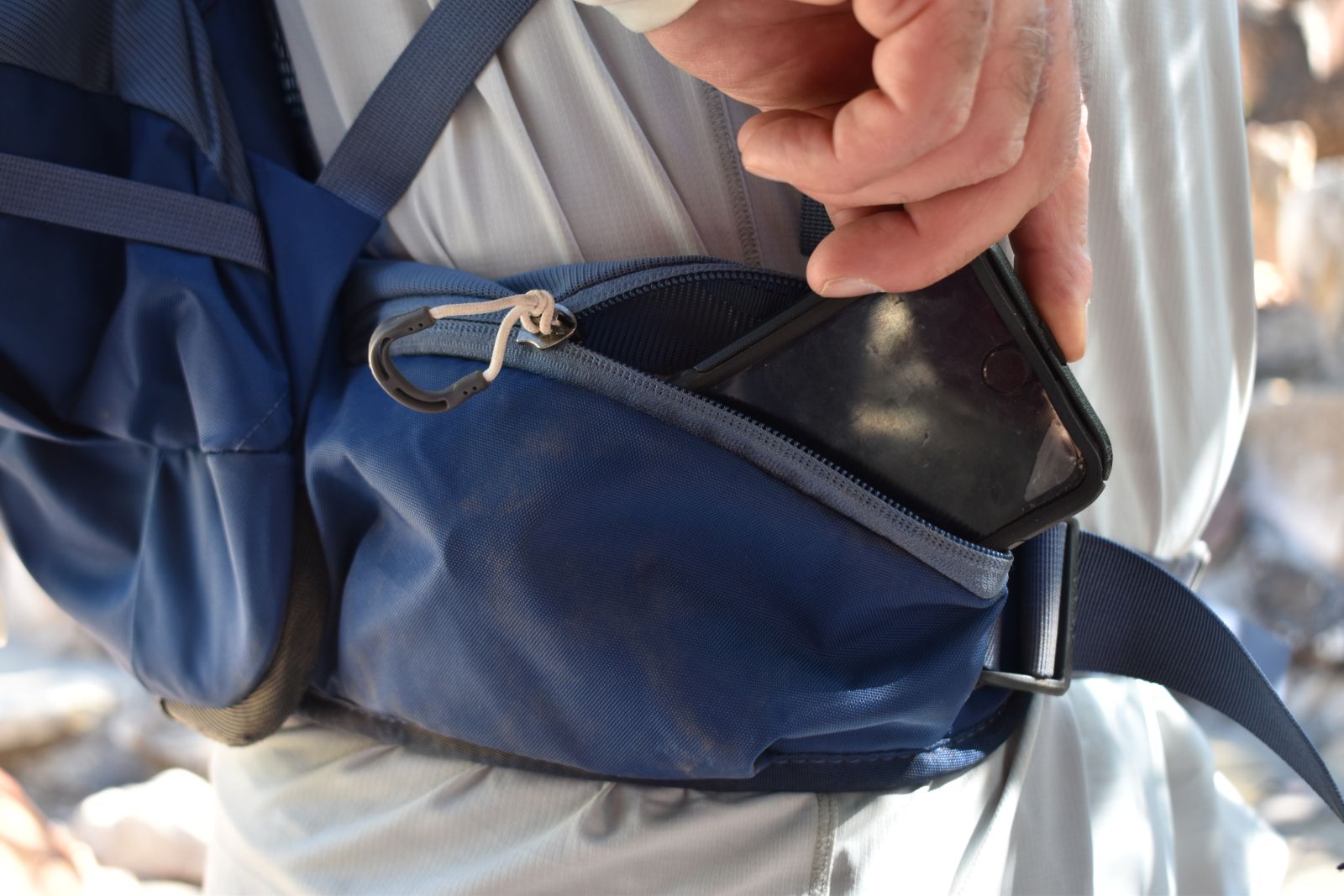
The Stratos/Sirrus offers plenty of pockets and trail-specific attachment points, including large hipbelt pockets that comfortably handle a phone and small snacks. There is also dedicated rain-cover storage and enough separation for layers, water, and essentials.
We do not like the front storage as much as the stretchy shove-it pocket on the Talon, and the reservoir is not especially quick to access. Those details keep it from matching the category’s organization leaders.
Still, the layout works well for hikers carrying more gear than average, and the included rain cover has its own home rather than occupying main-compartment space.
The Stratos/Sirrus provides the storage expected from a technical hiking pack, including large hipbelt pockets, hydration compatibility, rain-cover storage, and external attachment points for common trail gear. The hipbelt pockets are especially useful because they are large enough for a phone and snacks, which reduces the number of times we have to stop and remove the pack.
The front storage is less convenient than the stretchy shove-it pocket on the Talon/Tempest, and the reservoir is not as quick to access as on some hydration-focused designs. Those details make the layout feel more traditional and less fast-moving. Still, the organization suits the pack’s intended user: hikers carrying extra layers, water, and gear who care more about secure storage and support than constant on-the-go access.
Organization Score: 4.4 / 5.0
Support
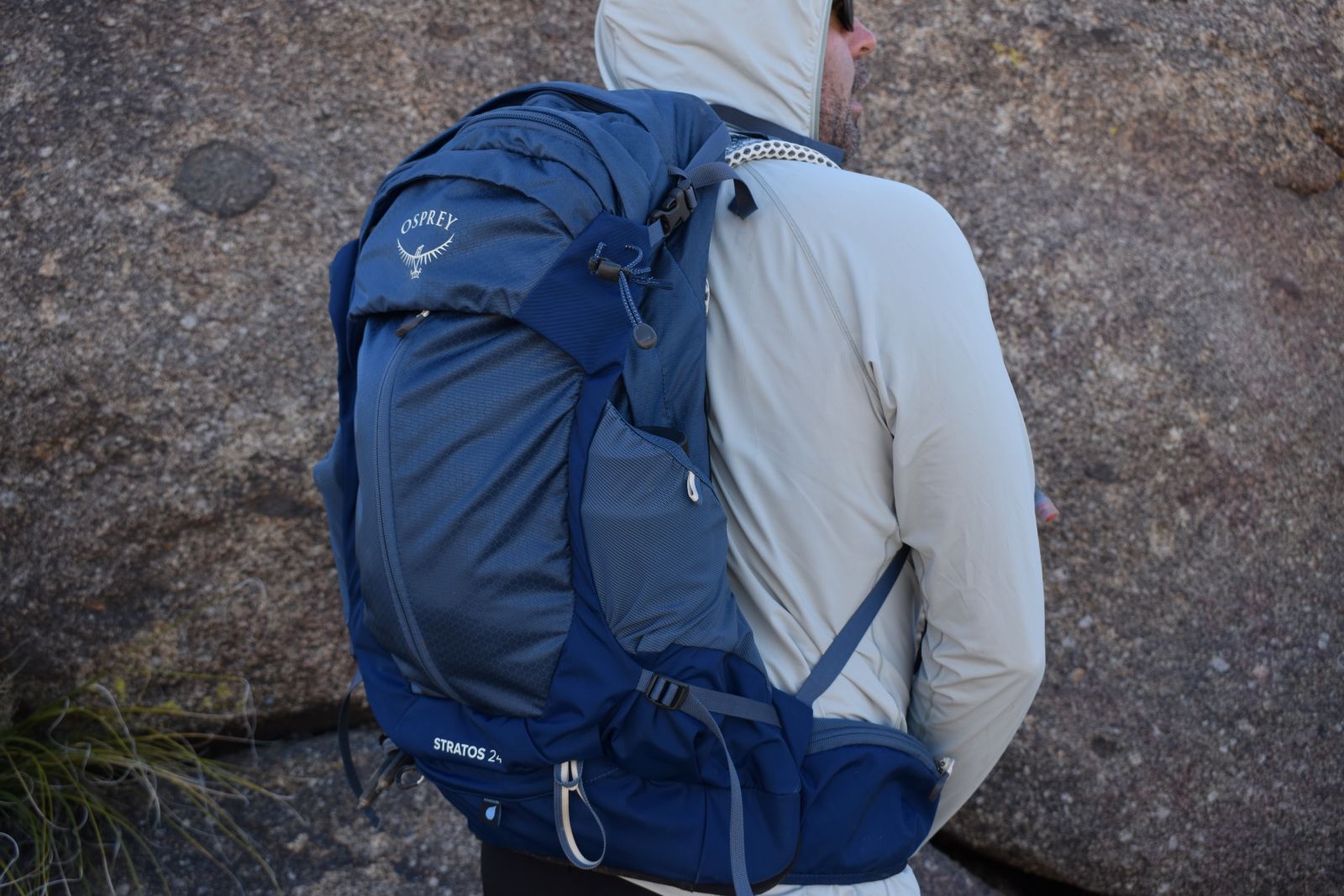
Support is the defining strength. The internal frame, tensioned back panel, padded hipbelt, and adjustable harness work together to distribute weight across the back and transfer a substantial portion to the hips.
When we loaded the pack with water, layers, and testing equipment, it stayed stable and comfortable in a way lighter framesheet packs could not match. The only daypack in our field that clearly exceeds it for heavy hauling is the larger Gregory Zulu.
This support comes with real bulk, but hikers carrying winter equipment, large water loads, or camera gear are precisely the users who benefit from that tradeoff.
The internal wire frame and weight-bearing hipbelt are the key reasons the Stratos/Sirrus carries heavy day-hiking loads so well. When fully loaded, the frame spreads the load across the back and shifts a noticeable share onto the hips instead of leaving the shoulders to do all the work. That is especially useful with several pounds of water, winter layers, or camera equipment.
Jory Brass reaches for the Stratos when he is hauling extra water in the Southwest, bulky cold-weather gear, or a camera and tripod during testing. Those are precisely the situations where the heavier suspension earns its weight. The pack is more supportive than most framesheet models, but hikers carrying only a light summer load may not need the extra structure or the nearly 3-pound base weight.
Support Score: 4.8 / 5.0
Weight & Packability
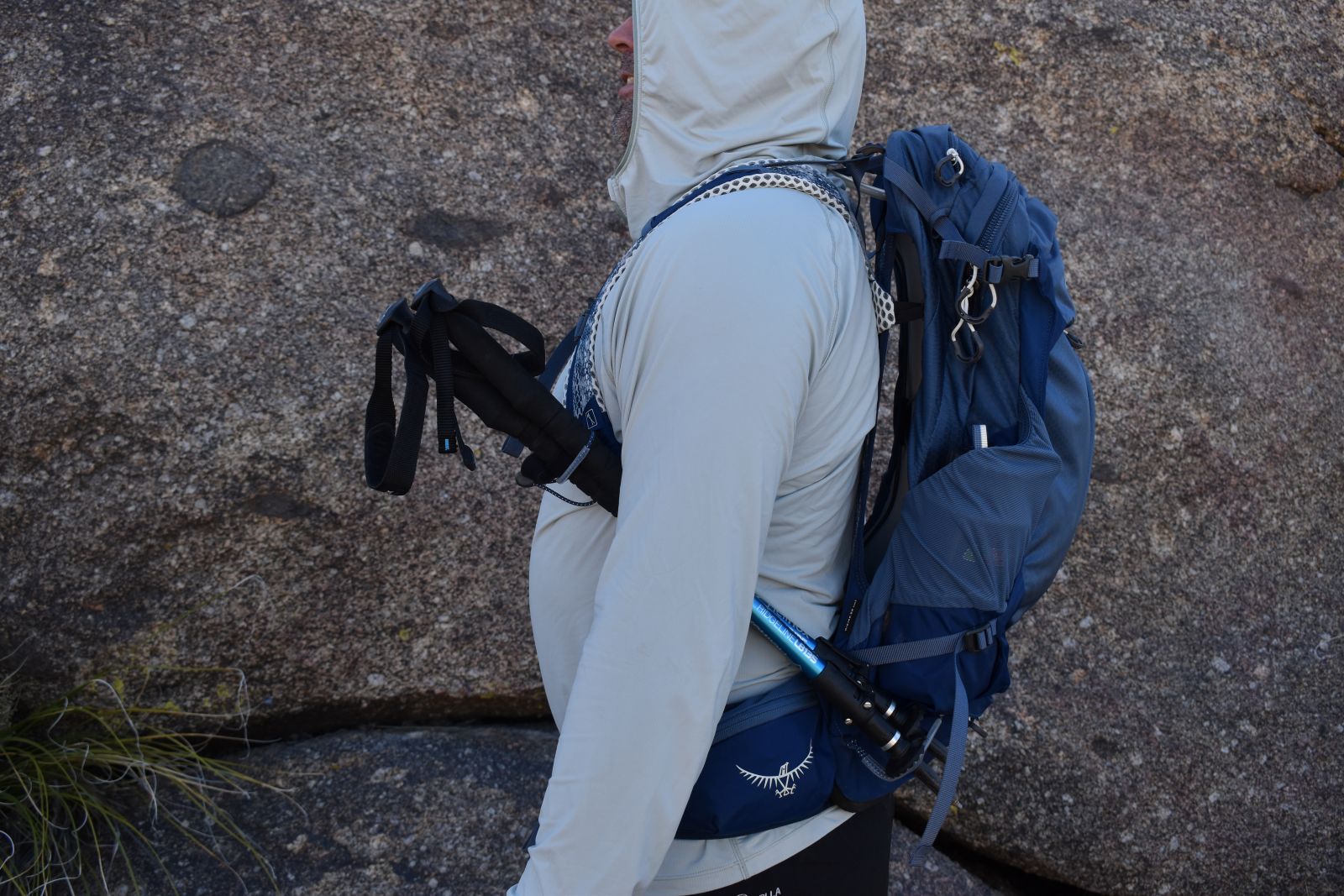
At nearly three pounds, the Stratos/Sirrus is one of the heaviest and least compressible daypacks we tested. The internal frame and suspended mesh panel maintain their shape, so the pack will not fold flat for travel.
That makes it a poor choice for ultralighters and anyone who wants a secondary pack to stash inside luggage. Even lightly loaded, there is simply more structure to carry than with the Sportlite, Flash, or Pursuit.
The weight is functional rather than decorative: it buys ventilation, load transfer, padding, adjustability, and an integrated rain cover. Hikers who need those benefits may find the carry more comfortable overall despite the heavier scale weight.
The Stratos/Sirrus is one of the least packable options in this guide because the internal frame and tensioned mesh back panel are designed to hold their shape. Even when the bag is mostly empty, the suspension occupies the same space, so it is awkward to stuff inside luggage or another backpack.
That bulk is directly tied to the pack’s strengths. The frame, generous padding, adjustable torso, rain cover, and suspended ventilation all add weight, but they also improve comfort and load control on demanding days. We would not choose this pack for ultralight travel or short, lightly loaded hikes. For hikers who regularly carry enough gear to benefit from the suspension, however, the added ounces are functional rather than wasted.
Weight & Packability Score: 3.8 / 5.0

Should You Buy the Osprey Stratos 24 / Sirrus 24?
Buy it if you regularly carry extra water, winter layers, camera gear, or other substantial loads and want maximum ventilation and support. Choose a lighter pack if your typical hike requires little more than water, snacks, and a shell.
What Other Daypacks Should You Consider?
Gregory Zulu 30 / Jade 28 Review: The Zulu/Jade is the logical step up if your day-hiking loads regularly approach small-backpacking-pack territory. Its perimeter frame and FreeFloat suspension transfer more weight to the hips, and the extra capacity works well for winter gear, guide kits, and hut travel. It is even heavier and bulkier than the Stratos/Sirrus, so we only recommend moving up when you will genuinely use the added hauling ability.
Osprey Talon 22 / Tempest 22 Review: The Talon/Tempest is the better everyday option for hikers who want Osprey fit and organization without nearly three pounds of pack. Its AirScape back panel keeps the load closer to the body, which feels more agile on scrambling terrain, and its pocket layout is excellent. You lose some ventilation and heavy-load support, but most three-season hikers will find the lighter package more versatile.
Rab Syclon XP 30L Review: Choose the Syclon when waterproof construction is more important than pocket access. It combines an IPX4-rated body, a suspended mesh back panel, and an internal frame at a surprisingly low weight for 30 liters. The Stratos/Sirrus has more familiar organization and excellent heavy-load comfort, while the Rab is lighter and better suited to wet climates or trips where keeping gear dry is a priority.