

Meal planning is one of the most important considerations for any backpacking trip. The food you choose will depend on taste preference, nutritional value, caloric density of each meal, and how easy it is to cook.
Some hikers opt for dehydrated meals because they’re quick and easy (boil water and wait a few minutes).
Others prepare DIY recipes and use a food dehydrator (check out our favorite DIY backpacking meals and dehydrator tips) to make trail food.
Our approach is usually a mix of both methods, so we’ll outline our general backpacking food strategy and suggest some of our favorites for every meal.
Best Breakfasts
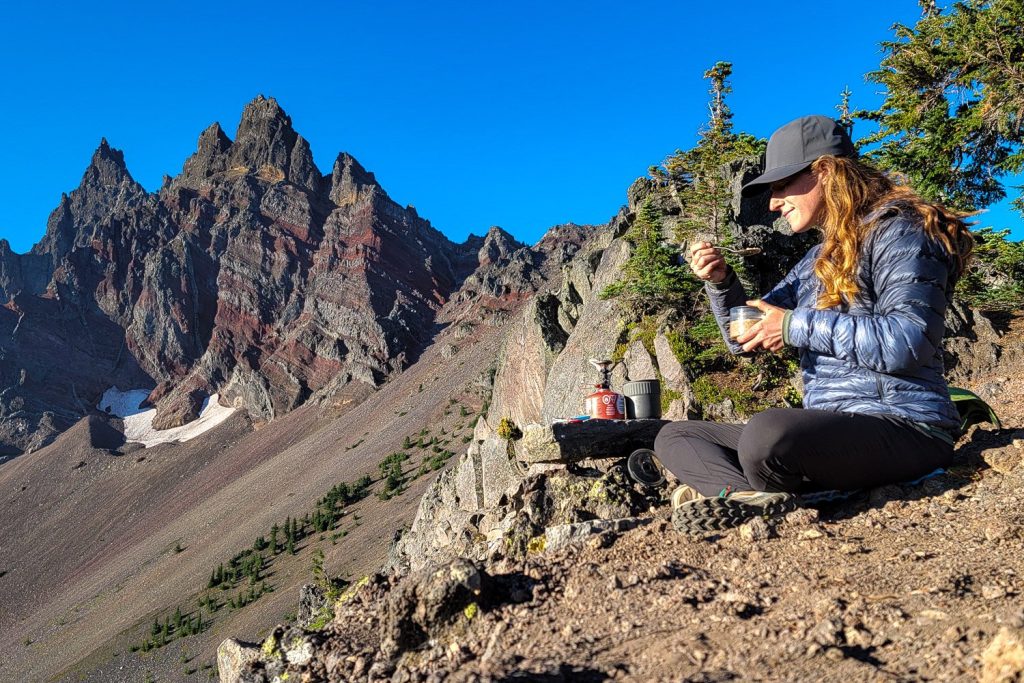
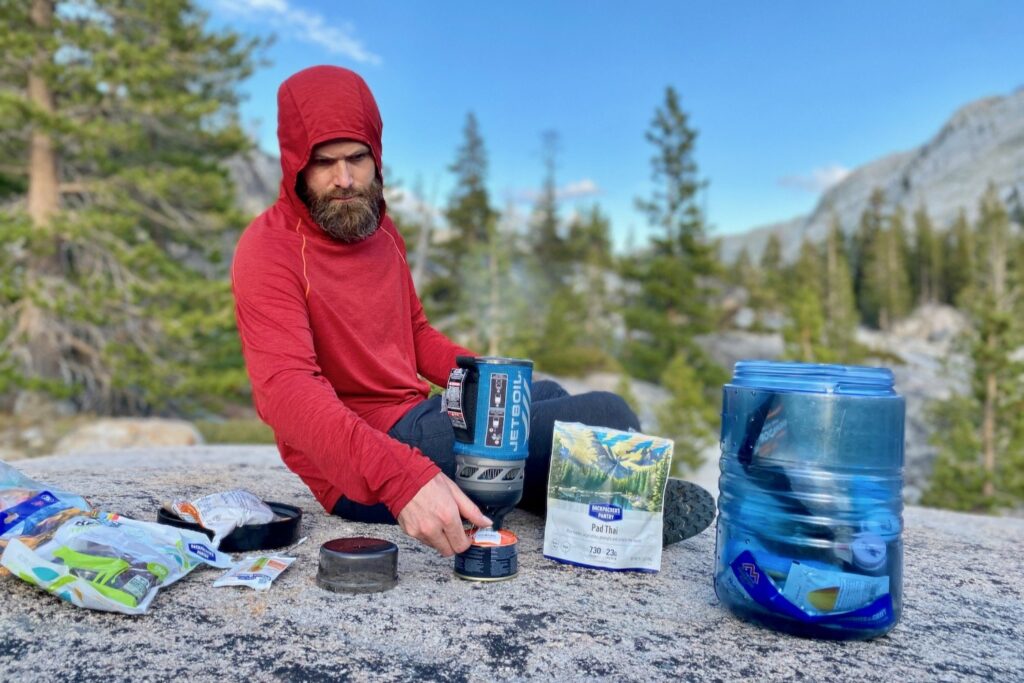
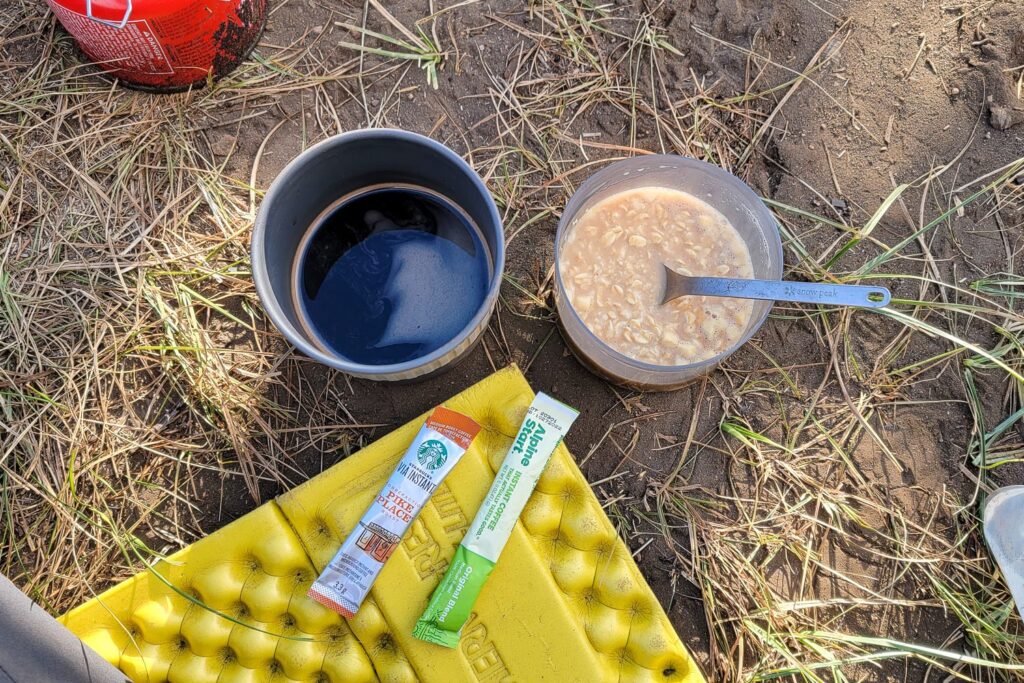
We almost always start our trail mornings off with a warm cup of coffee. After testing many coffee powders, cubes, bags, and brew styles, our favorite option for taste and convenience is Starbucks Via. We usually have a quick, cold breakfast with our coffee and break camp to hit the trail early – mornings in the wilderness are so peaceful. Pairing coffee with a calorically dense bar or two is a good way to get some quick energy in the morning. For additional calories, we may munch on some trail mix or mow a packet of almond butter. On casual, low-mileage trips, we like to enjoy warm breakfasts with friends. We’ll usually pair instant oatmeal with some dried fruits and trail mix. Here’s a list of our go-to breakfast choices with links to our favorites:
- Coffee (Starbucks Via)
- Tea (Celestial Seasonings – Bengal Spice)
- Bars (Larabar, Clif Bar, ProBar, Ivan Bar, Luna, Kind, Bobo’s)
- Pop-Tarts
- Granola & Cereal (Bear Naked)
- Powdered Milk (Nido or Grace Coconut Milk Powder)
- Breakfast Drink Mix Packets (Carnation)
- Trail Mix
- Nuts and Seeds (Almonds, peanuts, etc.)
- Almond Butter Packets (Justin’s)
- Peanut Butter Packets (Justin’s)
- Instant Oatmeal (Quaker)
Best Lunches
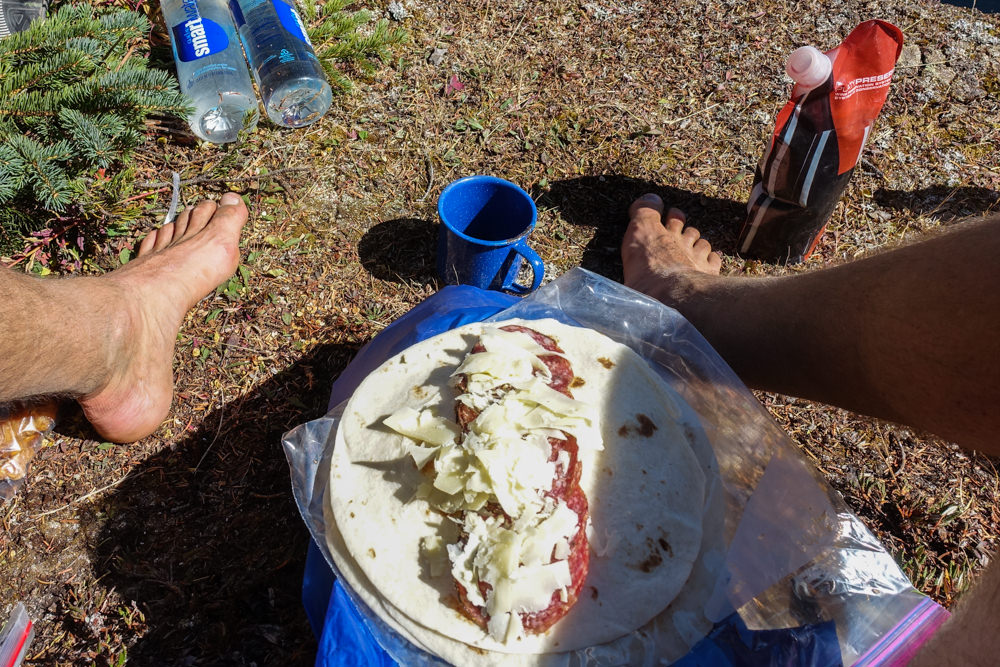
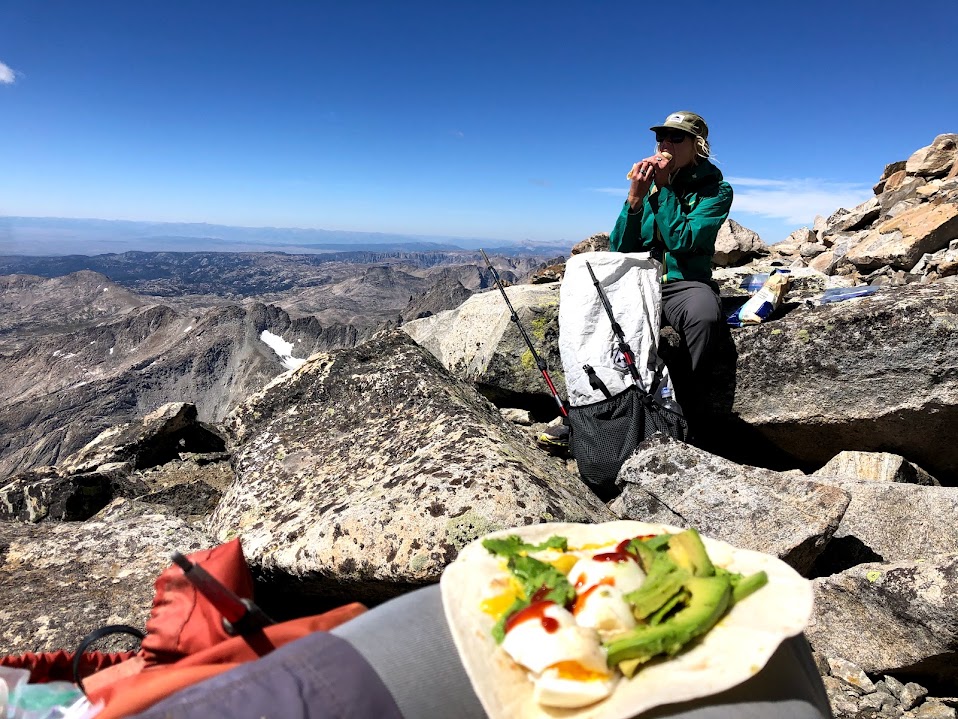
We almost always have a cold lunch on the trail to avoid the time, effort, and fuel required for cooking. We commonly make tortilla or bagel sandwiches with hard meats and cheeses. Bagels and tortillas tend to hold up well on the trail and provide relatively dense calories. Hard meats and cheeses will easily last a few days, though they’re not great choices for hot weather trips. Peanut butter, jelly, honey, and foil packets of tuna or chicken are also good sandwich fillers. With foil packets, we’ll mix up tuna or chicken with fast food condiment packs (mayo, mustard, etc.) and make tuna/chicken salad sandwiches. If we’re still hungry after a sandwich, we munch on some snacks to round out lunch. Here’s a list of our go-to lunch choices with links to our favorites:
- Bagels or Tortillas (Thomas Bagels, Mission Tortillas)
- Hard Meats – Salami, Summer Sausage, etc. (Applegate)
- Hard Cheese – Parmesan, Romano, etc.
- Almond Butter Packets (Justin’s)
- Peanut Butter Packets (Justin’s)
- Jelly or Honey (Nature Nate’s)
- Tuna or Chicken in foil packets (StarKist)
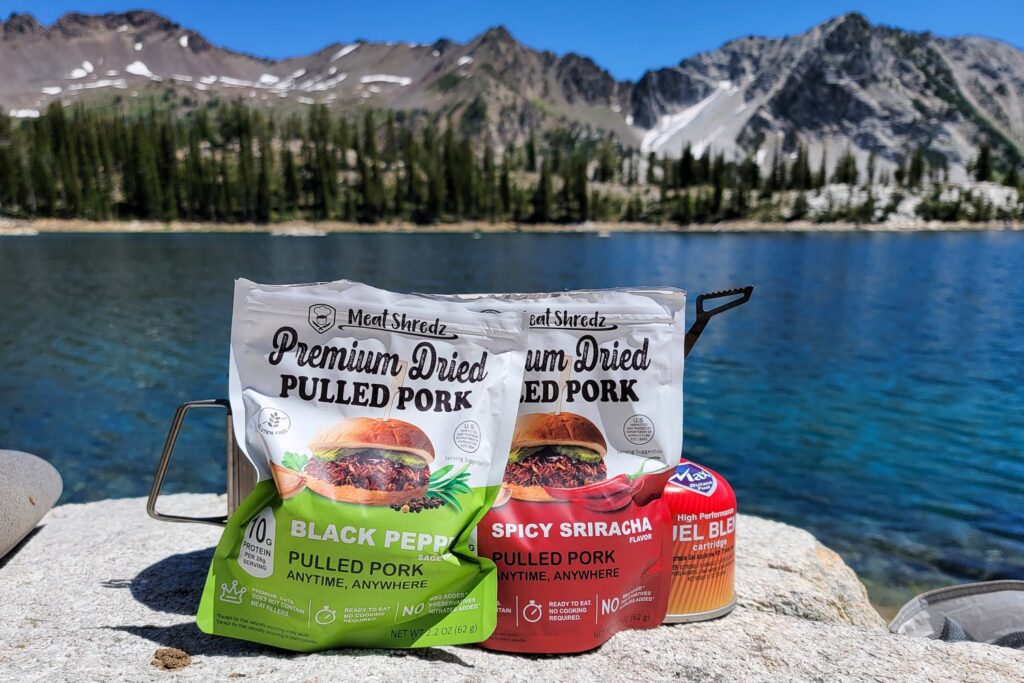
- Dried Pork Packets (Meat Shredz)
- Small Condiment Packets – Mayo, Mustard, Relish, Hot Sauce, etc.
- Supplement with other snacks (more snack info below)
Best Dinners
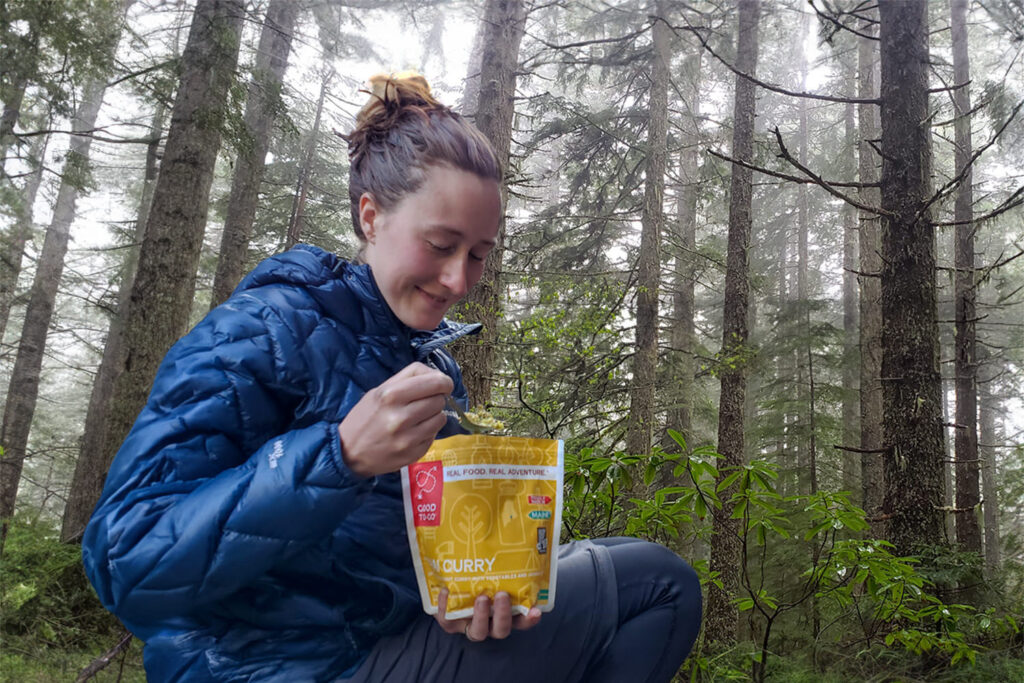
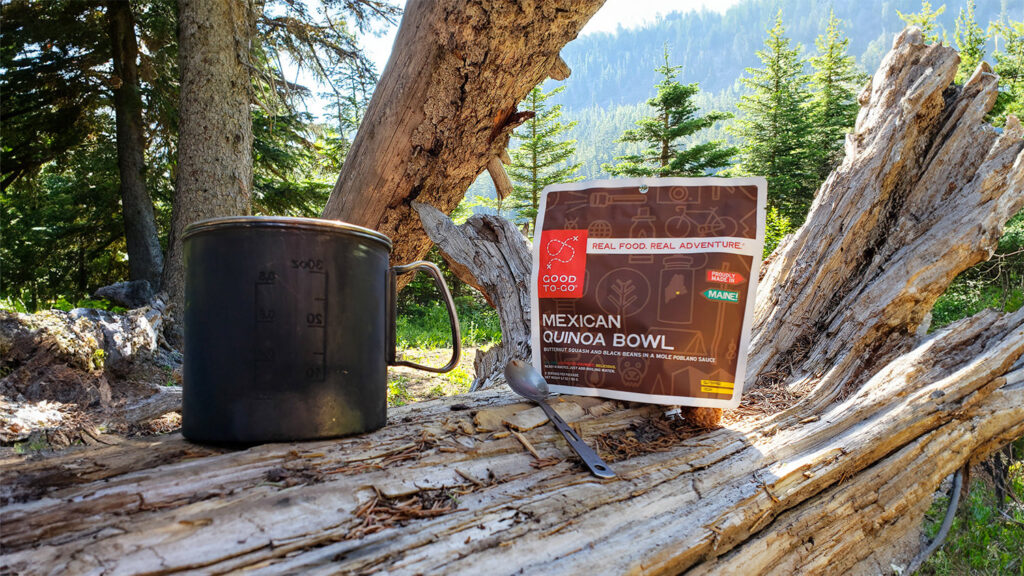
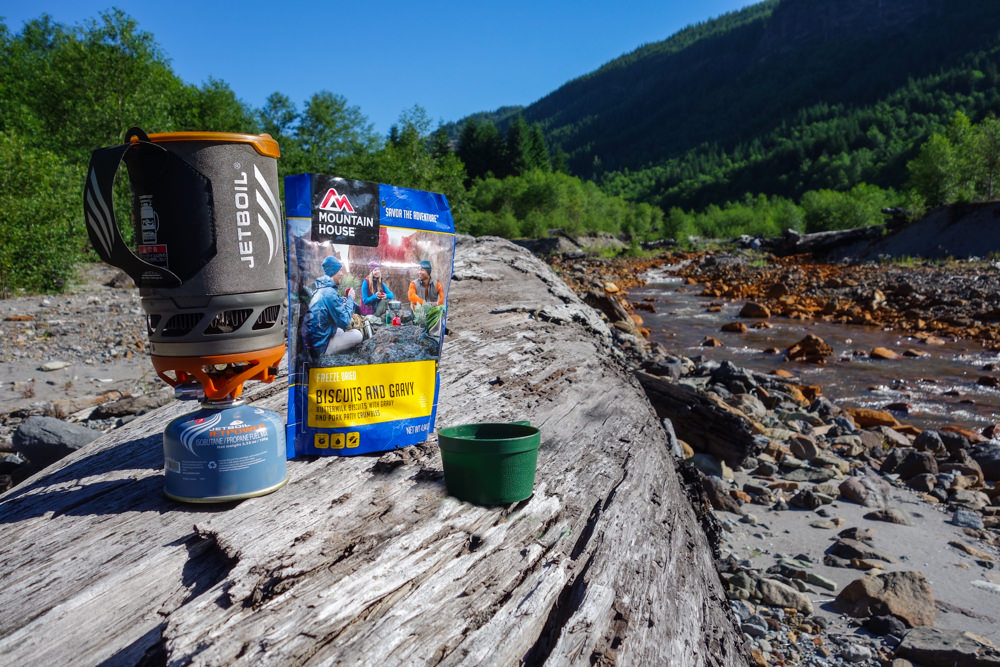
Freeze-dried meal pouches (see our guide to the best dehydrated meals for our favorites) are a convenient, lightweight, and flavorful option for backpacking dinners. When we’re on casual trips with friends, we like to pick a few of our favorites for dinner.
Most freeze-dried meals cost around $7-12 and feed two hikers, though this varies with mileage, speed, elevation, body weight/metabolism, etc. The main downside of freeze-dried meals is that they tend to be much more expensive than making a meal DIY-style. Our detailed guide on our favorite DIY meals ranges from easy toss-it-together ones to complete dehydrated meals. Some CleverHiker staff have even ordered take-out from their favorite restaurants and dehydrated their dinners. Talk about gourmet!
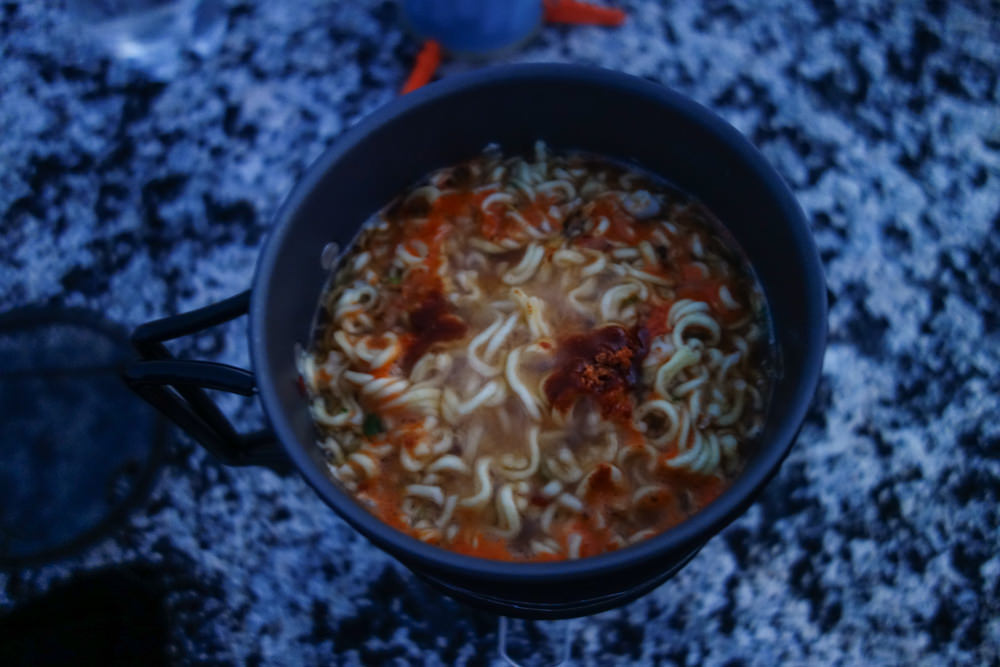
If you’re on the trail a lot (thru-hiking, etc.), the cost of freeze-dried meals will add up quickly. Any supermarket will have other “just add water” options (instant potatoes, ramen, etc.) that cook quickly and cost a fraction of the price.
Here’s a list of our go-to dinner choices with links to our favorites:
- Best Freeze-Dried Dinners
- Best DIY Backpacking Meals and Dehydrator Meal Recipes
- Instant Mashed Potatoes (Idahoan)
- Ramen (Maruchan)
- Instant Soups and Miso
- Box Stuffing
- Instant Mac & Cheese (Annie’s)
- Pasta and Rice Sides (Knorr)
- Couscous
- Chicken and Tuna Packets (StarKist)
- Dried Pork Packets (Meat Shredz)
- Dehydrated Vegetables (Augason Farms)
Best Snacks
Snacks are a critical part of any good trail diet. You’ll be burning a ton of calories on long hiking days, so eating a small snack every hour or two is a good way to keep your engine running.
We always keep a few snacks in our hip belt pockets while we hike for easy access. In hot weather, we try to avoid foods that melt, like granola bars with a chocolate coating.
If you have a Trader Joe’s or discount grocery store like Grocery Outlet, they tend to have delightful and relatively affordable options for backpacking snacks. See our guide to the best energy bars and hydration mixes. Other favorites we like to snack on include:
- Trail Mix (we also like to mix our own)
- Nuts and Seeds
- Coconut Chunks
- Dried Fruit (esp. prunes if you tend to get backed-up backpacking)
- Fruit Leather Strips (like Solely)
- Jerky (like Jack Link’s)
- Pretzels & Hard crackers
- Candy (never underestimate the power of a Snickers)
- Cheddar, string cheese sticks, mini mozzarella, babybells
- Bagged olives
- Corn nuts (for salty cravings)
- Ramen squares (can be eaten raw or cooked if it’s chilly)
- Wasabi Peas (for spice cravings)
How Much Food Do You Need?
CALORIC DENSITY & Intake
Backpackers burn a lot of calories on the trail. On average, hikers usually burn between 3000-4000 calories per day, but thru-hikers hiking 20-30 mile days can easily burn 5000-6000 calories.
It’s crucial to pack enough nutrients to give your body the energy it needs. This important calculation will also depend on your size, weight, age, and activity level. The best advice we can give is to track your calories on days you do a big day hike, then add a few more to account for hauling your pack.
Calorie density is important for keeping your pack weight down and packing in calories. High-fat foods like olive oil, nuts, peanut butter, and chocolate tend to have high calorie-per-ounce ratios. On the other hand, fresh fruits and vegetables tend to have low calorie-per-ounce ratios.
The ideal range is around 120-130 calories-per-ounce total.
FOOD VOLUME
Certain foods will take up a lot more space in your pack than other foods containing the same amount of calories (think bagels vs almonds). This isn’t a big deal on short trips, but on long journeys, and especially when bear canisters are required, you’ll want to pay close attention to how much space your food choices will take up.
Why Overpacking Is Dangerous
Bringing too much food is one of the most common beginner backpacking mistakes. But carrying a bunch of unnecessary weight can quickly dampen spirits on backpacking trips and cause injuries from carrying too much weight. Your total pack weight with food and water should be no more than 20% of your body weight. A little experience and pre-trip calorie calculation will go a long way.
Ultralight Backpacking Food Tips
Ultralight backpacking food is not about starving yourself between frontcountry meals and resupply town stops. It is about calories + nutritional density, limiting necessary cookware, and limiting packaging.
As part of our Lightweight Backpacking Gear Basics video series, we put together the video below on ultralight backpacking food choices. Our specific food preferences have changed over the years, but the basics remain the same.
Backpacking Meal Tips
REPACKAGE FOOD
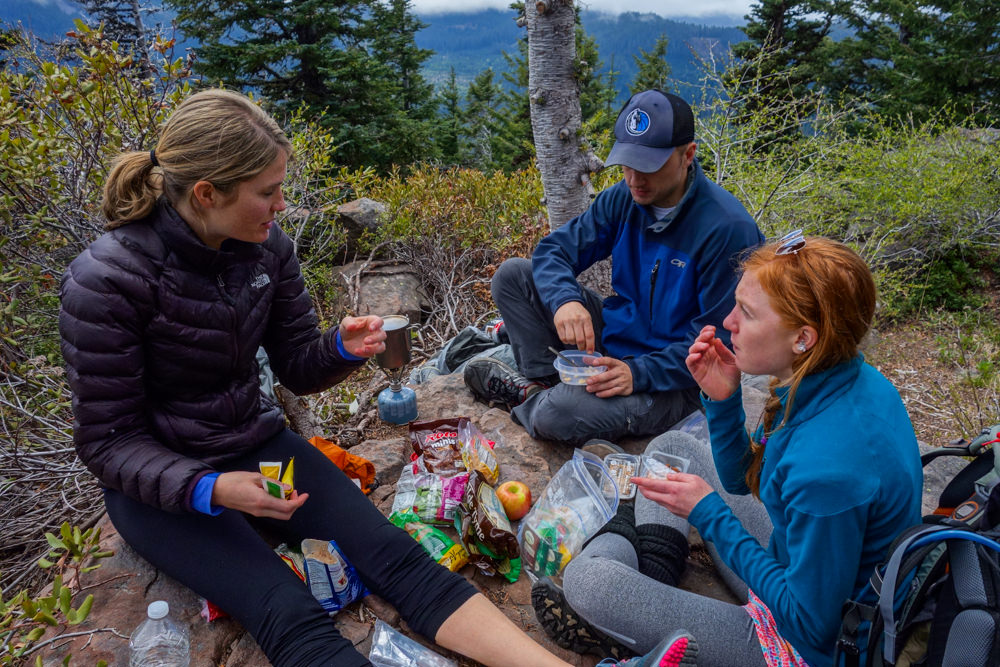
Repackaging food in Ziploc bags reduces bulk and puts unsealed/loose snacks into resealable ones. If you can’t close a food package securely, it’s likely to explode in your pack and make a big mess.
ADD SPICES & CONDIMENTS
Eating too much of the same thing over the course of a 5-day backpacking trip gets old quickly.
Small packets of salt, pepper, olive oil, hot sauce, and fast-food condiments (mayo, mustard, etc.) can elevate your backcountry grub. If you want to get real fancy, put together a lightweight spice kit.
Add FRESH FOODS
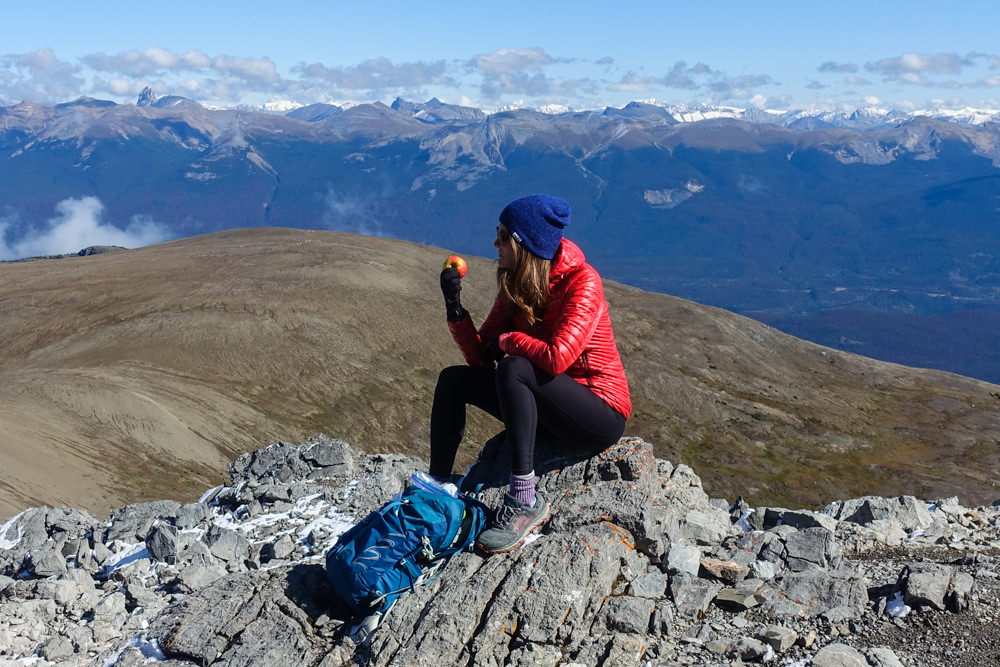
We love bringing a couple pieces of fresh fruit, like apples and oranges, on the trail. Fresh fruits have poor calorie-per-ounce ratios, but they’re a great treat in the backcountry, and we like the added nutritional value. Carrots and snap peas are a nice, healthy treat that will last a couple of days if temperatures aren’t too hot. Pack out all your cores/rinds.
Try Making Your Own DEHYDRATED MEALS
If you have the time and energy, it can be cheaper and more nutritious to make your own trail meals and dehydrate your own snacks. A quality food dehydrator will quickly remove water from fruits, veggies, and meats for some awesome DIY trail grub.
For more information, check out our guide to making your own dehydrated backpacking meals.
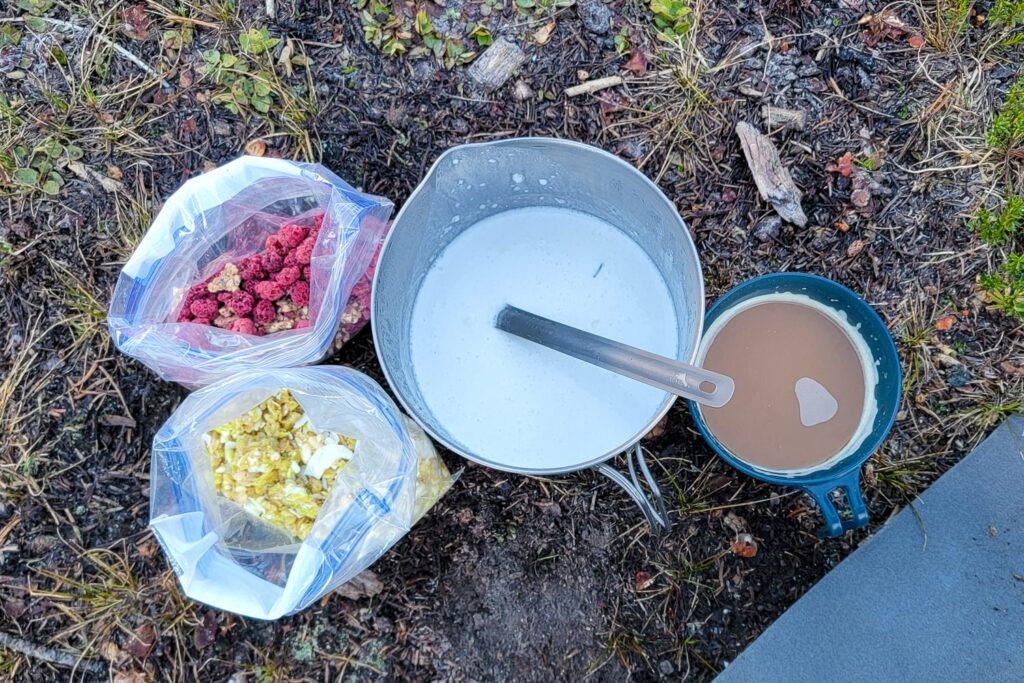
Try HOT DRINKS
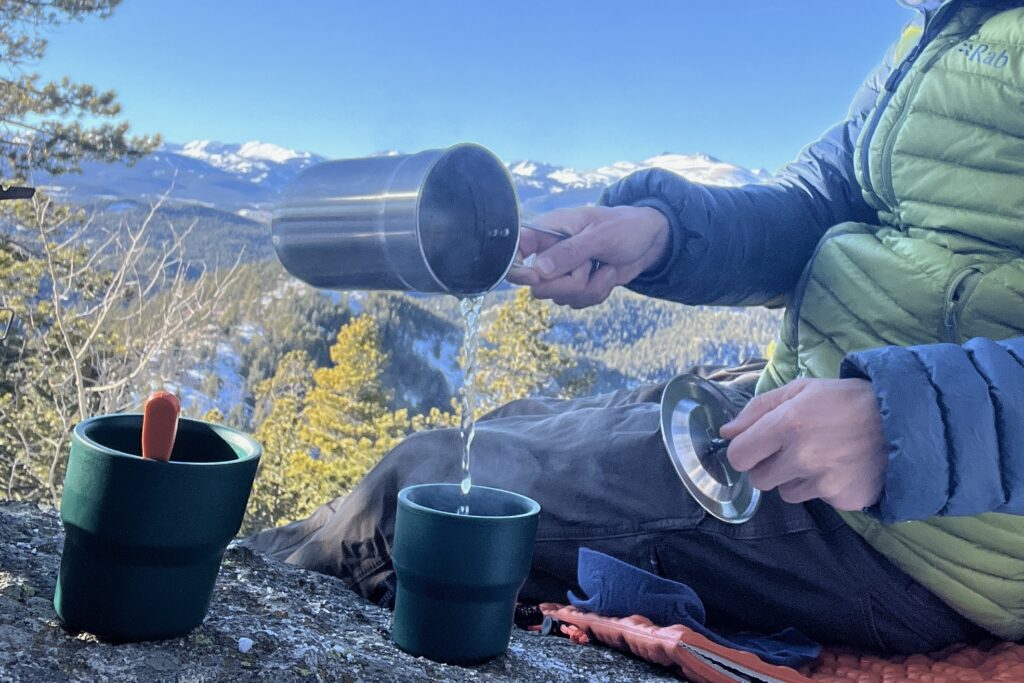
Warm beverages, broths and soups are a really nice treat in the backcountry, especially on chilly trips where it’s harder to stay hydrated. We like to sip on tea, cider, and hot cocoa around camp when the temperature dips.
AVOID CANNED FOODS
We always avoid canned foods because they’re way too heavy, don’t have enough calories, and create bulky trash to pack out.
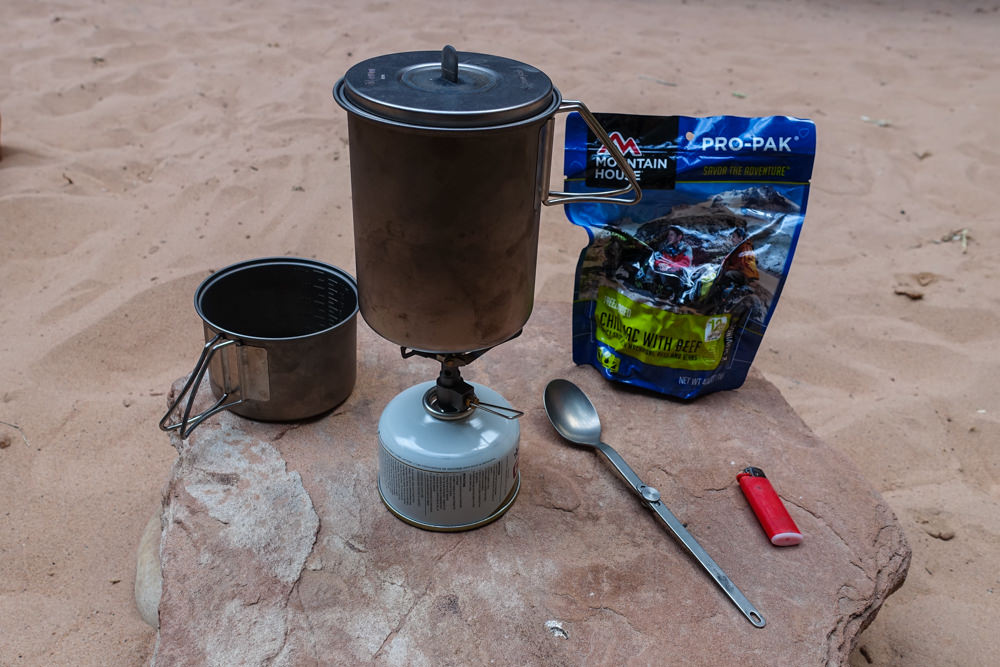
NUTRITION
Good nutrition on the trail is just like eating right at home. You’ll want a balance of fats, proteins, and carbohydrates while getting as much fiber, fruits, and vegetables into your diet as possible.
It’s hard to eat really healthy on the trail because processed foods tend to be much more convenient, but finding a good balance is key. Also, we always load up on fresh, healthy foods the moment we’re back in town.
CONVENIENCE
After a long day of hiking, chances are you won’t want to prepare an elaborate meal. Nor will you want to clean up a bunch of dirty dishes when you’re done eating. So we recommend keeping it simple. For dinners, this means we almost always eat “just add water” meals, and for breakfast, we usually have hot coffee with bars and snacks.
ALCOHOL
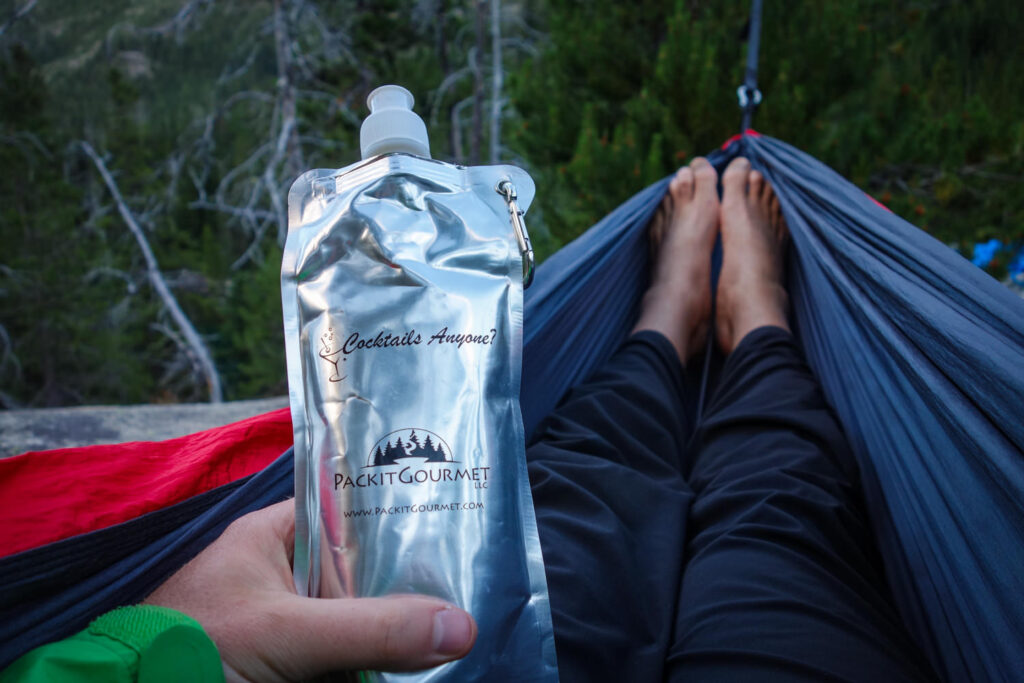
Packing liquids costs a lot of weight and pack space. Plus, we don’t like drinking alcohol right before going to bed. Just one drink can disrupt your sleep cycle, and it’s annoying to wake up and have to use the bathroom more during the night. If you’re anything like some of our staff, you can spend precious Z’s just lying there, avoiding the inevitable exit out of your warm bag to tinkle.
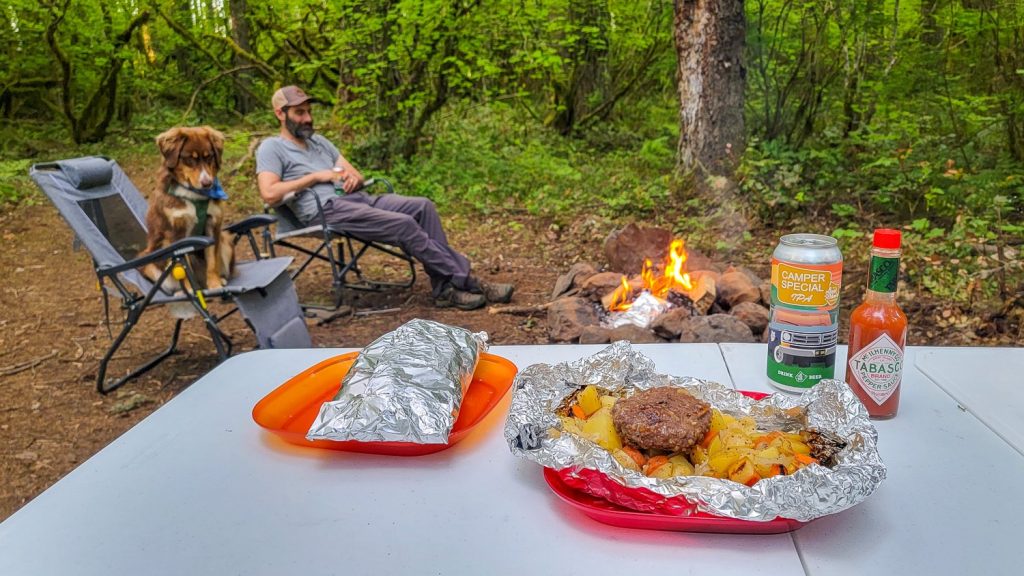
That said, whiskey and wine tend to make our pack lists on short-distance trips, especially on casual treks with friends. We carry them in trusty, lightweight containers like the Platypus Wine Bag and Flask2Go.
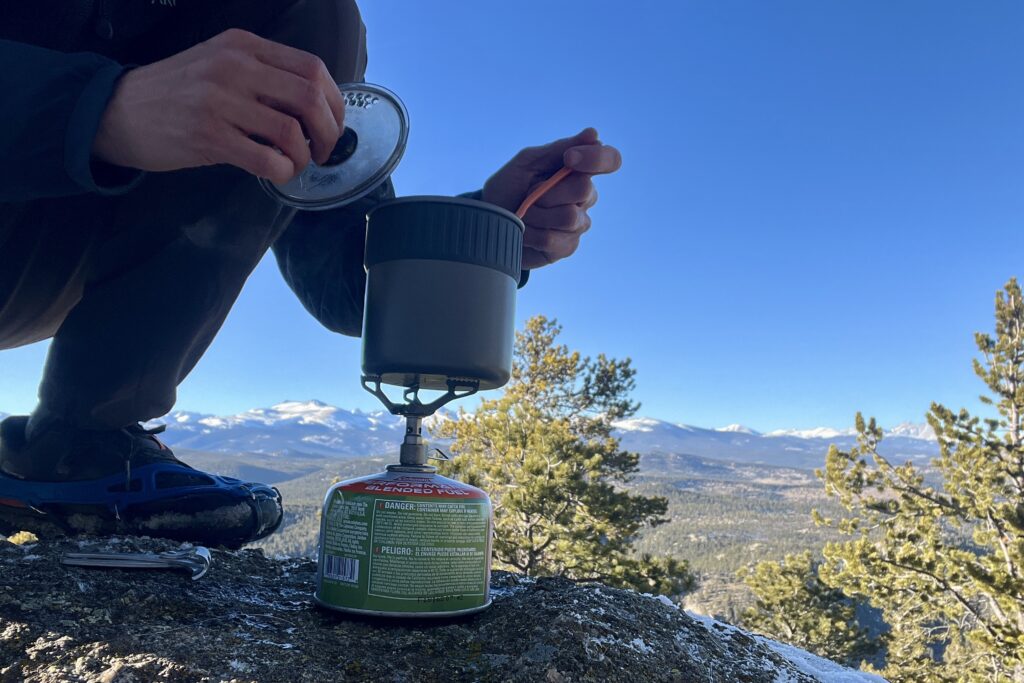
What’s in Our Backpacking Kitchen Kit?
When we head out on backcountry trips, these are the items usually found in our packs. For more information on our favorite gear, check out these gear guides:
Leave No Trace & Storage
You love nature. That’s why you’re out there, and that’s why you’re reading this post. So please, always pack out your trash and any food you don’t eat. Usually, food trash happens not intentionally; it gets stuffed into a pocket and sneaks out, or you forget to do an “idiot check” and sweep your campsite or snack spot for trash/food waste before taking off.
Following LNT rules includes packing out things like spent coffee grounds, orange rinds, and apple cores. Always scan your campsites and lunch spots before hiking on, and if you’re a true LNT rockstar, help pack out trash left behind by other backcountry travelers. Check out our LNT tutorial video for a quick refresher.
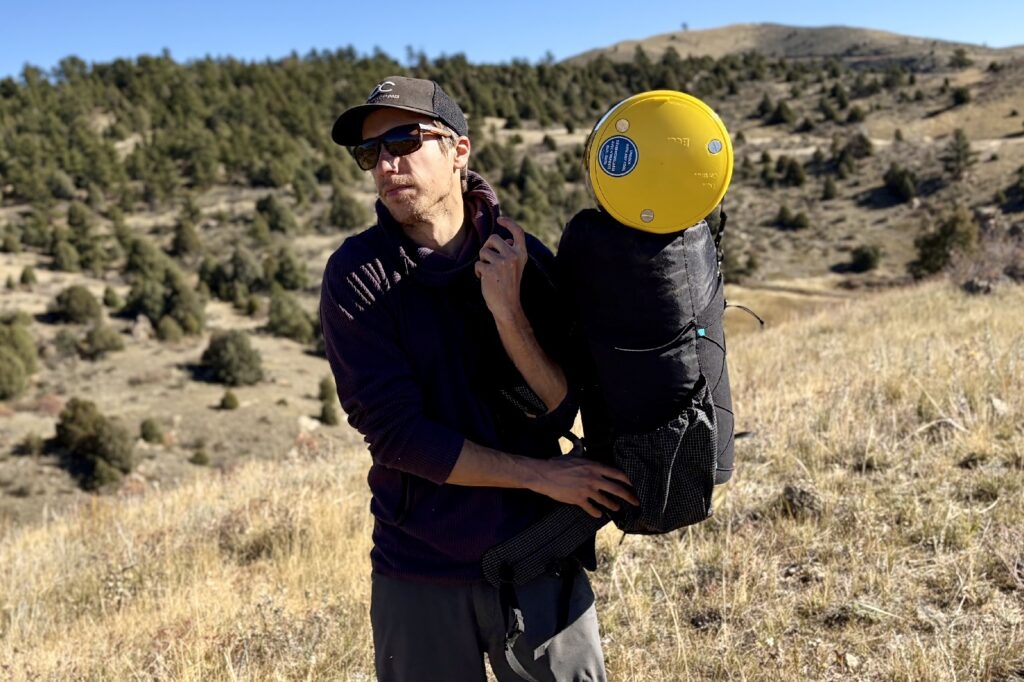
FOOD STORAGE
Proper food storage is incredibly important for protecting wildlife. For example, bears that learn to associate humans with food often need to be trapped and killed. So please, always store your food properly in the backcountry.
We hesitate to even teach proper bear bagging techniques anymore, because most hikers don’t take the time to do it properly. And even if they do, really smart bears can still bring down a good bear hang. Our favorite backcountry food storage systems can be found on our guide to the best bear canisters.
Other Meal Planning Considerations
WATER ACCESS
If your dinners require water for cooking, you’ll want to camp near a water source or make sure to pack plenty of water for a dry camp. If you’re backpacking in an area with scarce water, make sure to plan accordingly.
FUEL
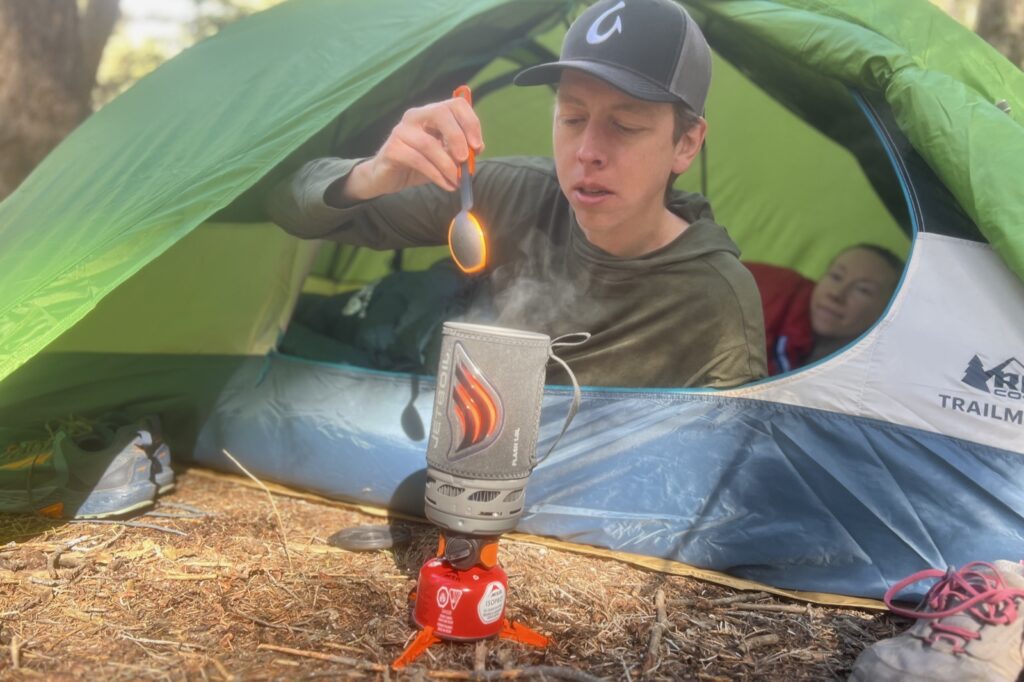
Most backcountry meals require a small stove for cooking – check out our Best Backpacking Stoves list to see our favorites. Plan out how many times you’ll need to cook (including coffee and tea) to calculate how much fuel to bring.
Fuel usage rates vary depending on the stove model, pot size, elevation, and temperature. At higher elevations and in low temperatures, stoves burn more gas.
On an average 5-day, two-person backpacking trip, we usually boil water about 10 times (once for morning coffee and once for dinner), and one small 100 g isobutane fuel canister is usually more than enough.
Hiker Boxes and COST-Saving Tips
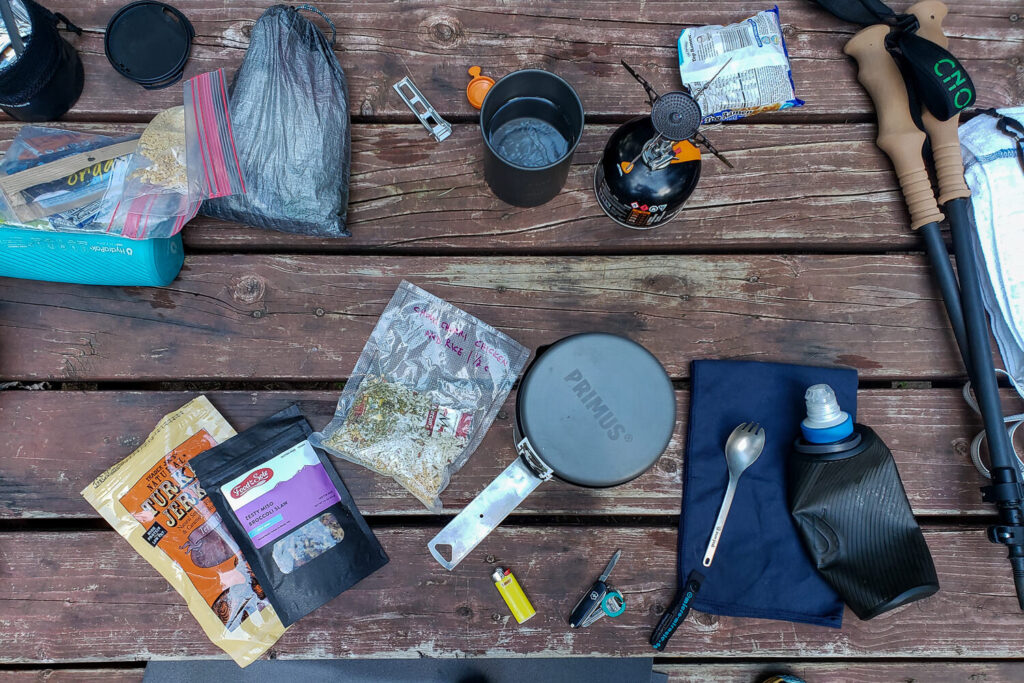
You’ll usually pay for convenience with backpacking food. Freeze-dried meals tend to cost around $7-12 each. Buying package deals is cheaper than buying individual meals. But the cheapest meals are the ones you make yourself.
Hiker boxes can be found at common resupply points where thru-hikers ditch food they can’t fit or can’t stand anymore and trade for something else.
VEGAN & VEGETARIAN MEALS
If you’re looking to spice up your animal-free backpacking food options, don’t miss our list of the Best Vegan and Vegetarian Backpacking Meals.
Conclusion
Food is deeply personal, and it can be stressful being far from any convenient stores, grocers, or your fridge for a number of nights. Keep in mind that once you are out there, your hiker hunger makes you stomach just about anything, and the views and freedom felt by being away from it all are the best nourishment.
Daydreaming about food while backpacking is normal, but keep testing out new meals and recipes to satiate most cravings and, most importantly, stay hydrated so you can be present and enjoy the adventure.
For more information on gear, check out our CleverHiker Gear Guide, where we review our favorite trail-tested gear and apparel.