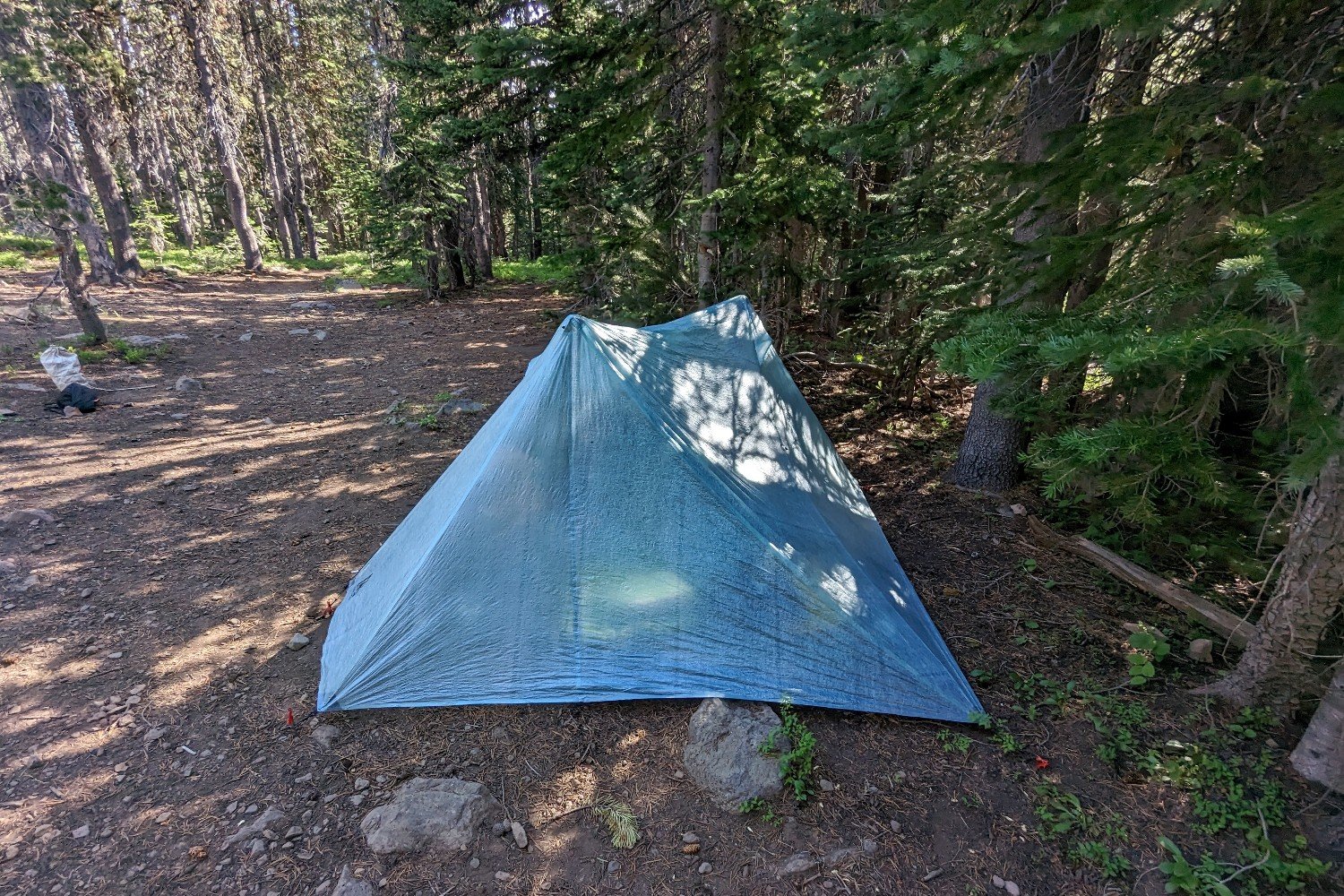

If you’ve been in the ultralight scene for more than a minute, chances are you’ve heard about the Durston X-Mid Pro 2. This unique tent gets a lot of hype in UL circles, but does it live up to the praise? Read on to see our honest thoughts and analysis from field-testing the X-Mid Pro.
Table of contents
Durston X-Mid Pro 2 Tent Review
Last Updated:
January 22, 2026

We independently test everything we recommend.
Buying through links on our site supports our work.
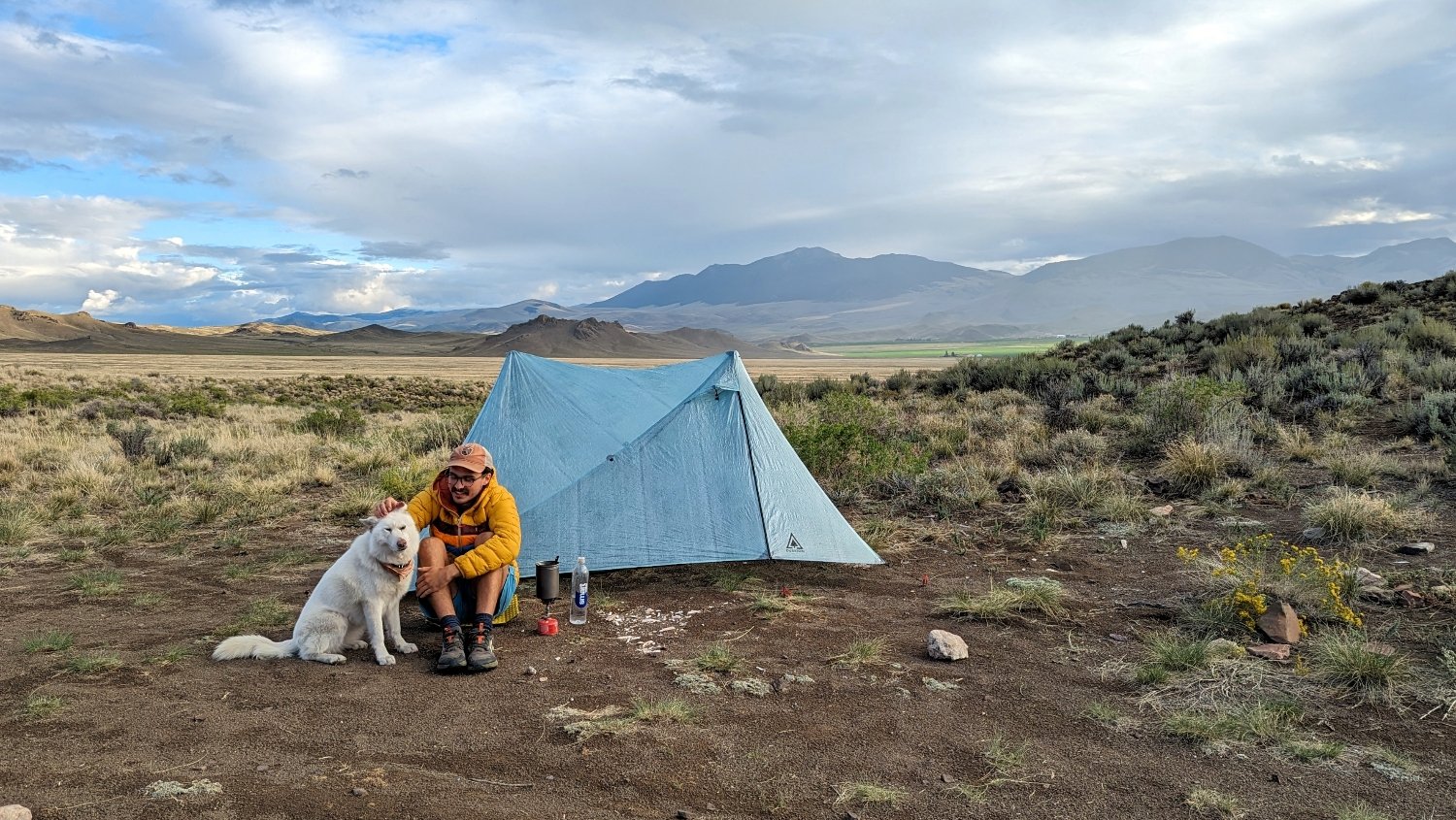
Quick Specs
Durston X-Mid Pro 2
Price: $679
Listed Weight: 1 lb. 3.3 oz.
Measured Weight: 1 lb. 4.7 oz.
Dimensions (LxWxH): 90 x 48 x 48 in.
Pros
- Ultralight
- Excellent ventilation
- Easy to pack
- Packs smaller than other Dyneema tents
- Excellent Protection in wet weather
- Durable fabrics
- Excellent vestibule design
- Spacious interior
- Comes fully waterproof
- High pockets creat less sag
Cons
- Interior shape makes usable space less convenient
- Shape makes it tough to get a perfect pitch
- Large footprint & non-freestanding design can make campsite selection difficult
- Expensive
- 90-degree zippers aren’t everyone’s favorite
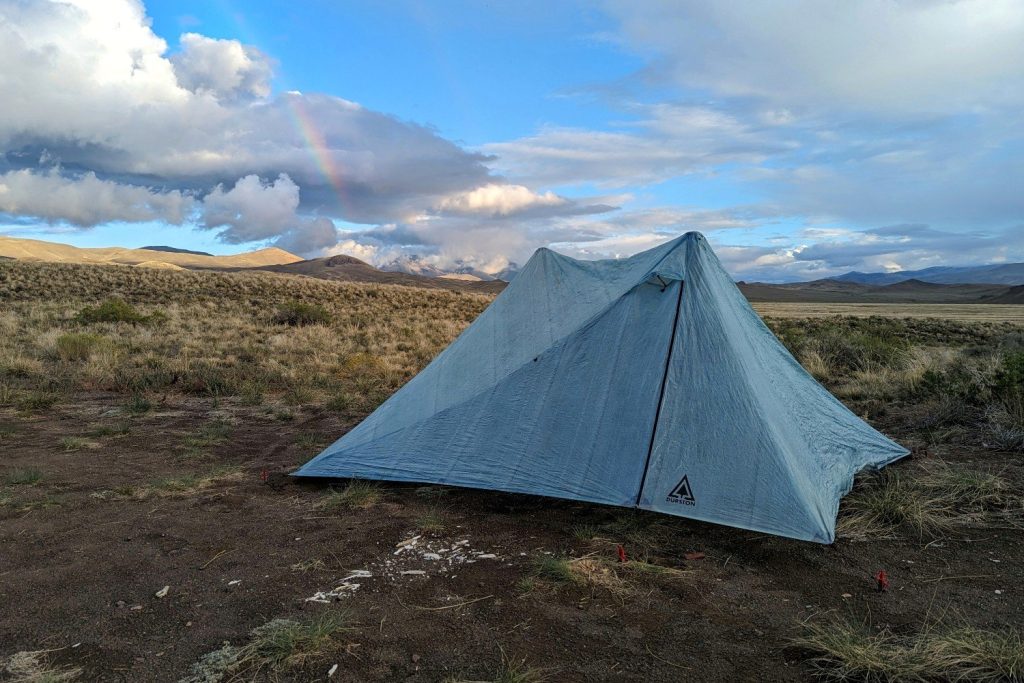
Pros
Ultralight
Durston Gear lists the weight of the X-Mid Pro 2 at 21 ounces with the stuff sack, making the Xmid Pro 2 lighter than many of the 2-person shelters on our list of the Best Ultralight Tents. It’s a fantastic value compared to most on our Best Backpacking Tents. While it no longer ranks on either of those lists – other Durston models have taken the helm since the Pro 2 launched – this is still a solid shelter.
We’ve found that keeping our pack weight down helps us enjoy backpacking adventures more. And one of the items that makes a big impact on your pack weight is your shelter. Using an ultralight tent like the X-Mid Pro 2 will make a huge difference in your comfort when covering long distances or tackling big elevation gains.
Excellent ventilation
One of the biggest things we think the X-Mid Pro 2 gets right over other single-wall shelters is the ventilation. All too often tent makers look to shave ounces by excluding a proper way to hold peak vents open or dropping peak vents altogether. The X-Mid has a peak vent on both vestibules and includes small struts to hold them open. Having these open vents up high will give warm air (like from your breath) a way to escape, ultimately lessening the amount of condensation you experience on the inside.
The X-Mid also makes use of the tried-and-true mesh perimeter design. The Duplex perimeter mesh runs more horizontally to the ground, offering a decent amount of mesh at the head and foot that is continuous with the mesh sidewalls (read as: no breaks in the mesh to disrupt airflow). That means this tent sits horizontally to let any condensation drip out – as long as you pitch it properly.
Easy to pack
Silnylon tents, in combination with Dyneema, pack down very small and can be packed down tight into a stuff sack or the bottom of your pack. You have the option to choose a woven or dyneema floor. Woven floors are more durable against abrasion, pack smaller, and are less expensive. Dyneema floors are lighter, waterproof, and do not absorb water, making them faster to dry and quieter – although you’ll pay quite a bit more for it.
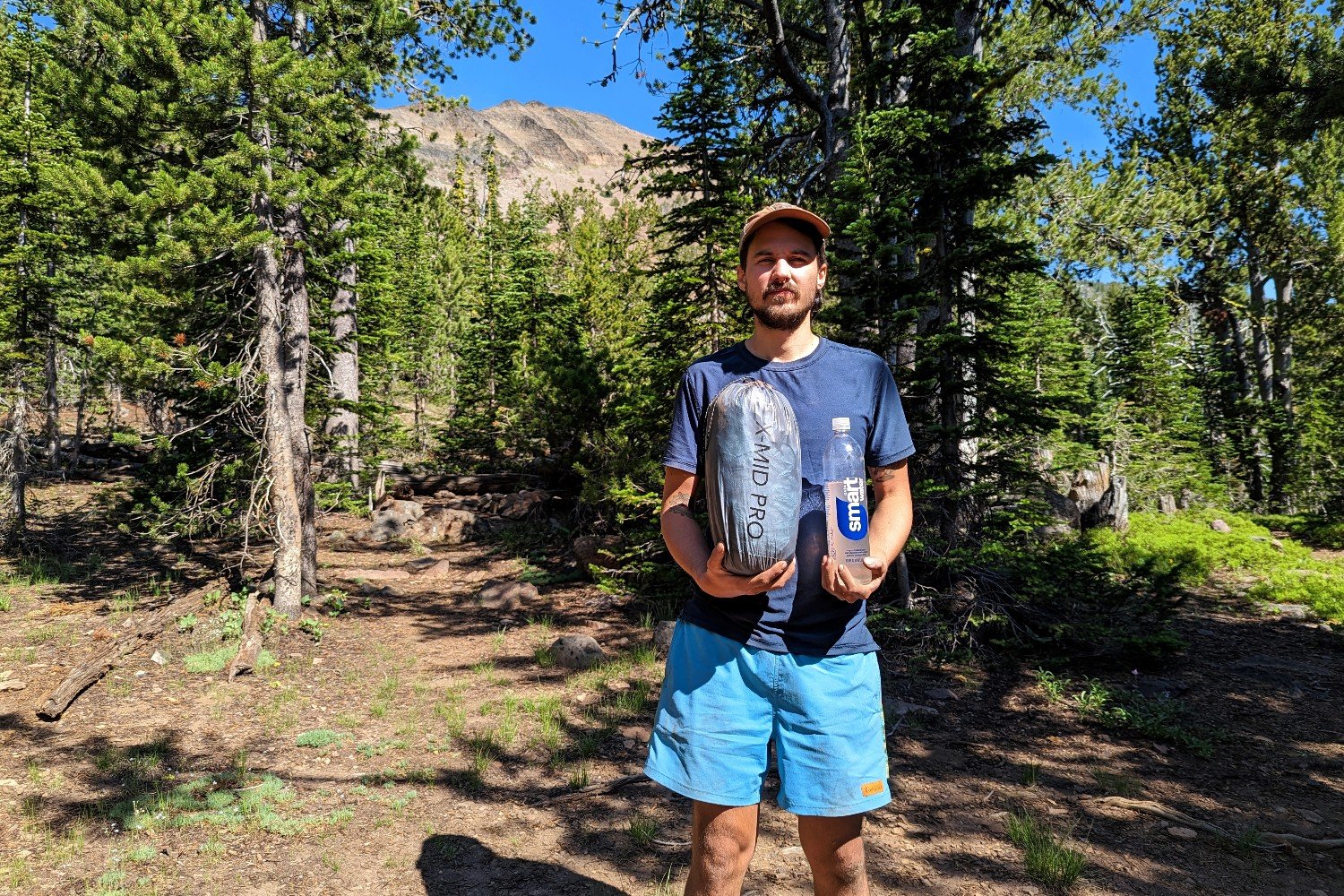
While you still shouldn’t use the stuff method of packing with this tent because of the Dyneema canopy – rolling is best to preserve the fabric integrity – we’re impressed with how small it packs down for a tent of this size.
Excellent Wet Weather protection
The shape of the X-Mid Pro 2 doesn’t leave any horizontal areas where rain/snow could pile up. Tents that shed moisture readily are less likely to have bad condensation issues inside when wet weather hits. The shape and vestibule design also keep the doors protected from drips – even when the vestibules are open – which is particularly nice when you have to take a 2 AM bathroom break in the rain. We’ll talk a bit more about the weather benefits of the vestibules later in this review.
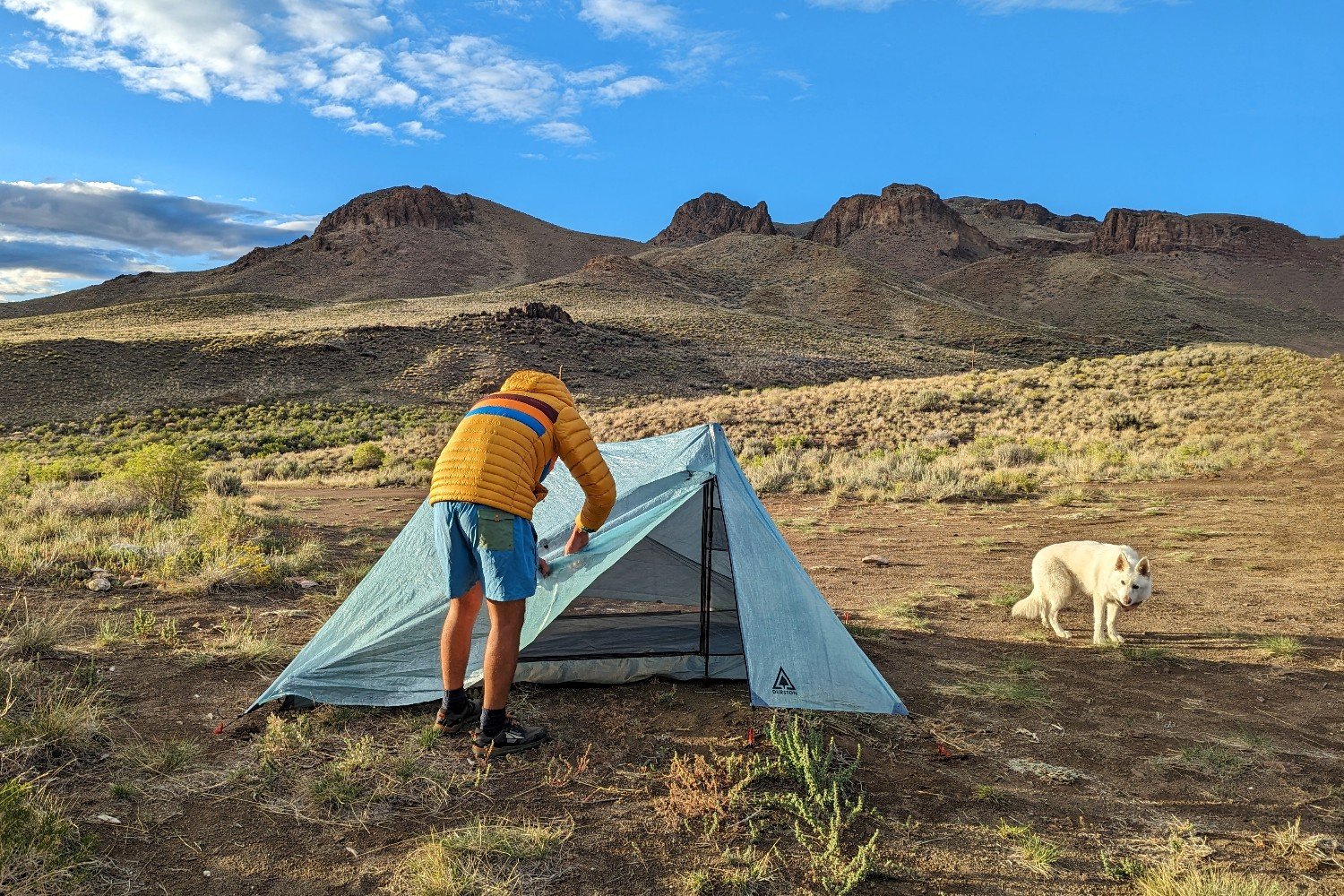
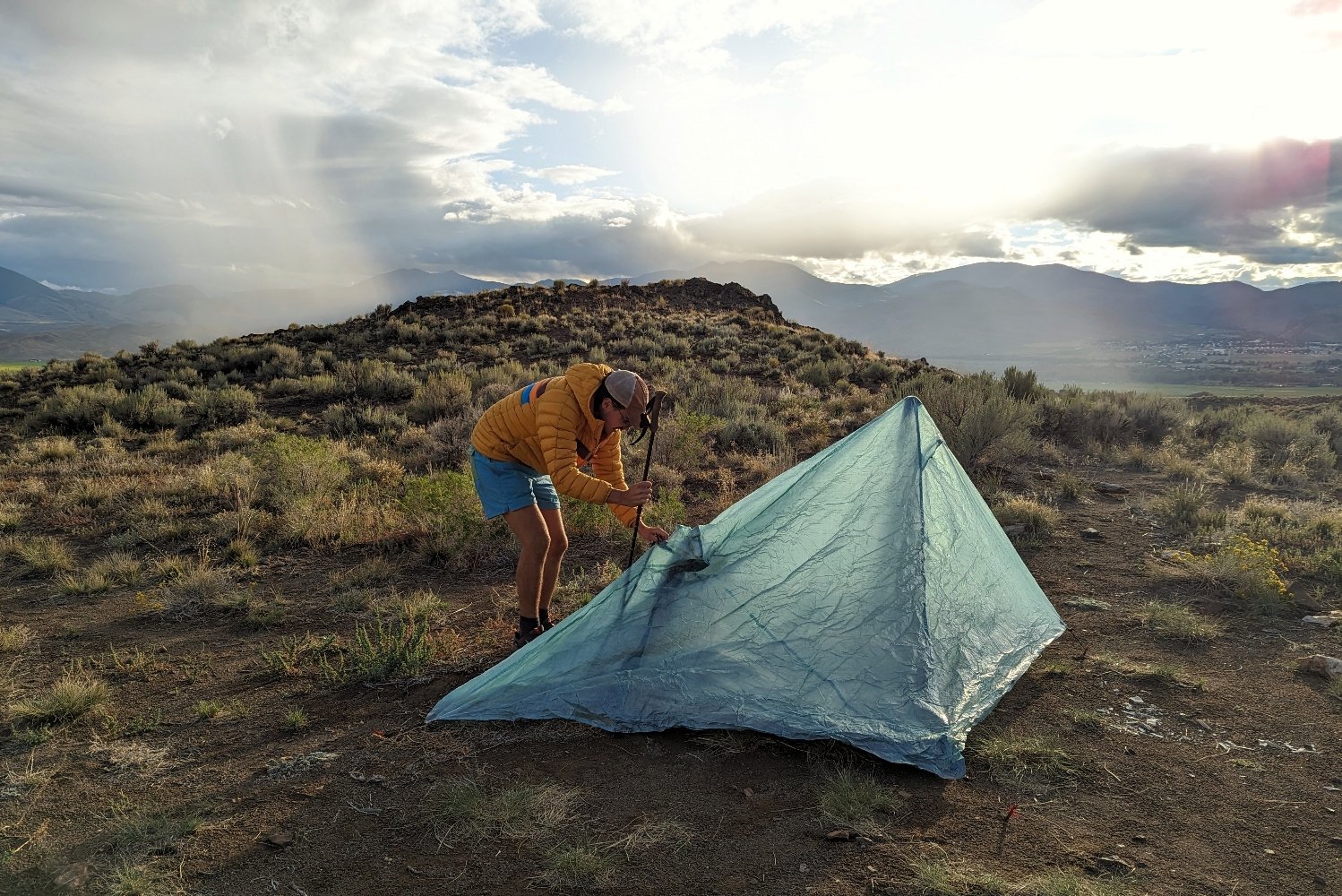
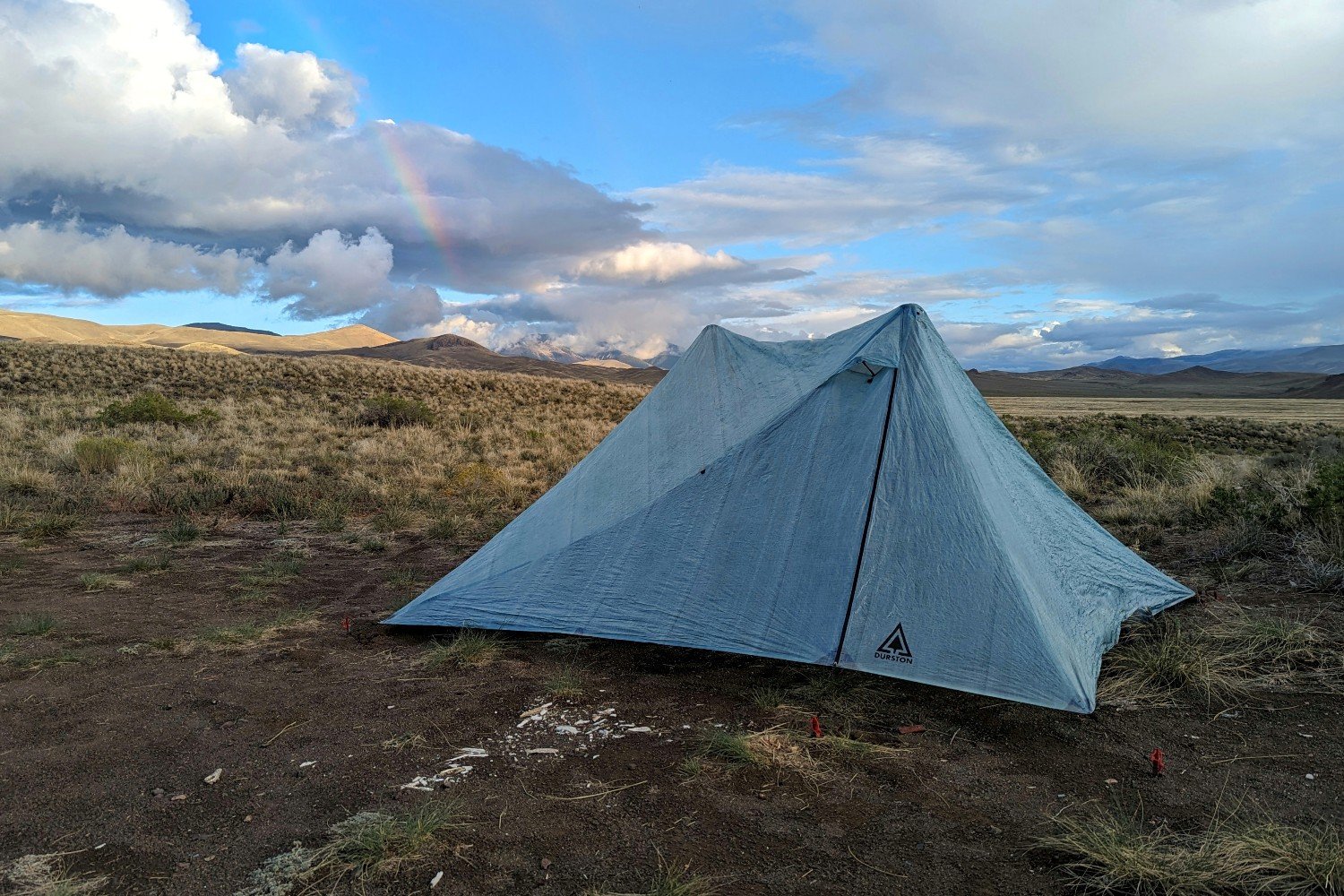
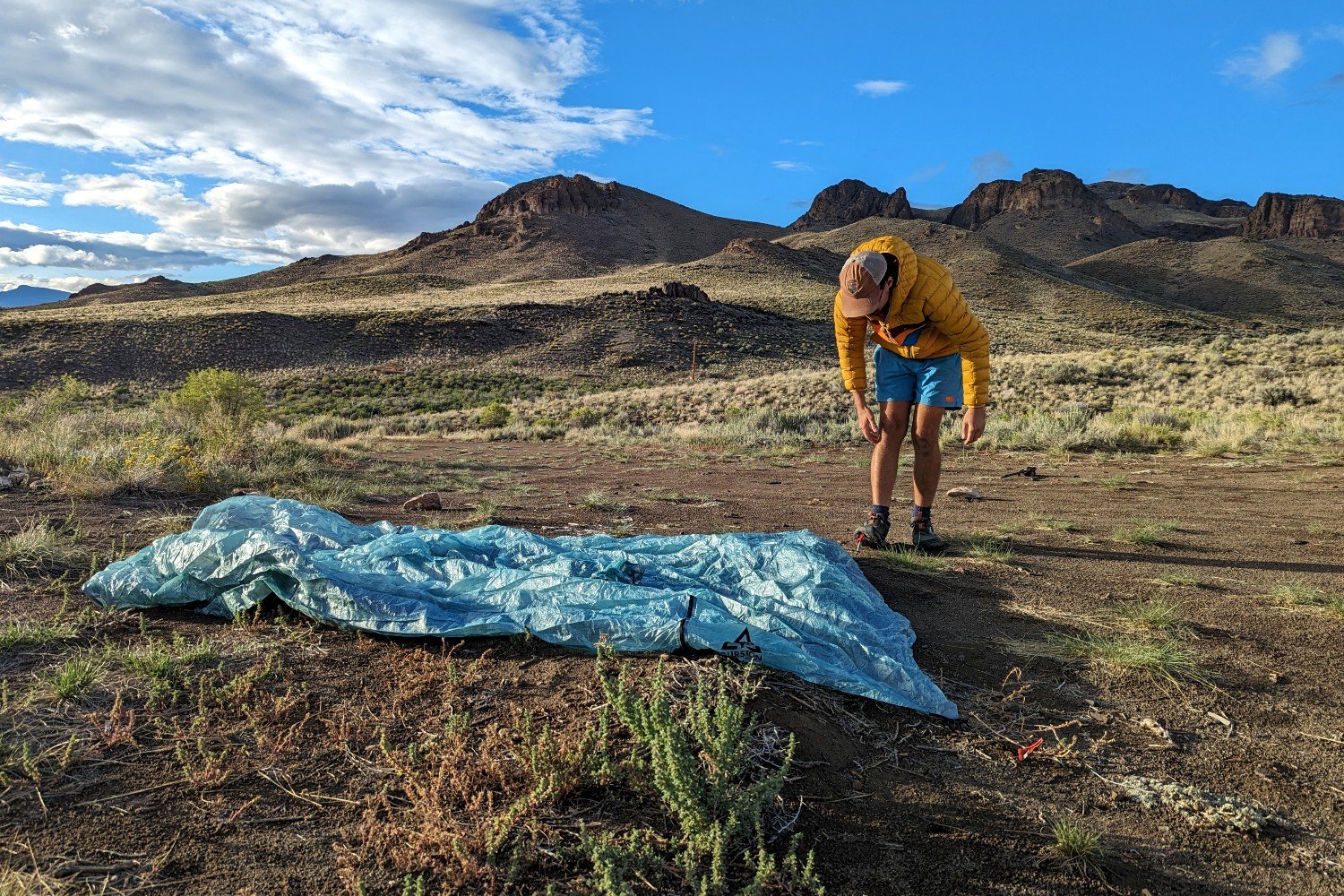
Another very handy design feature (that most other UL shelters are decent at, but not quite at the level of the X-Mid Pro 2) is the fact that you can pitch this tent in the rain without getting the interior mesh walls and floor wet. Because you lay the tent out flat in a square with the vestibules zipped up, stake from there, then place the poles through the peak vents, rain never has a chance to enter your living space in the X-Mid Pro 2.
Durable fabrics
The canopy of the X-Mid Pro 2 is made with .55 oz. Dyneema which is extremely strong for its weight. While the X-Mid Pro hasn’t been on the market long enough for us to speak to its longevity, we can say that we’ve used other tents constructed from .55 oz. Dyneema – like the Zpacks Duplex – for years without issue.
One thing that sets the construction of the X-Mid Pro 2 apart from many other DCF shelters is that the seams are hot-bonded. The panels of most other shelters are sewn or bonded together and then taped. If a seam is sewn, each needle hole is – in theory – creating little weak spots. Seam tape is then used to cover the needle holes so the panels are completely waterproof, and it reinforces the seams to regain most of the original strength of the fabric. You can see an example of this type of seam on the Zpacks Duplex.
When two Dyneema panels are bonded, it’s usually done with a special bonding tape that can create a seamless transition through strong adhesive and pressure. Then the bond is reinforced with Dyneema tape. This type of bonding can become weak in extreme hot or cold temperatures. But it’s unlikely that the average backpacker will run into such conditions.
Hot-bonding – what’s used on the X-Mid Pro 2 – is a process that creates stronger bonds that won’t lose their integrity in harsh conditions. Is this likely to make a difference to the average user? Probably not. Is it more durable? Yes.
Excellent vestibule design
Many ultralight Dyneema shelters pitch with the vestibules raised fairly high off the ground. This can leave the tent occupant vulnerable to splashback from rain and chilly gusts. While we’ve rarely found ourselves in conditions that make the raised vestibules on other ultralight tents a big issue, we know many hikers aren’t fond of this design.
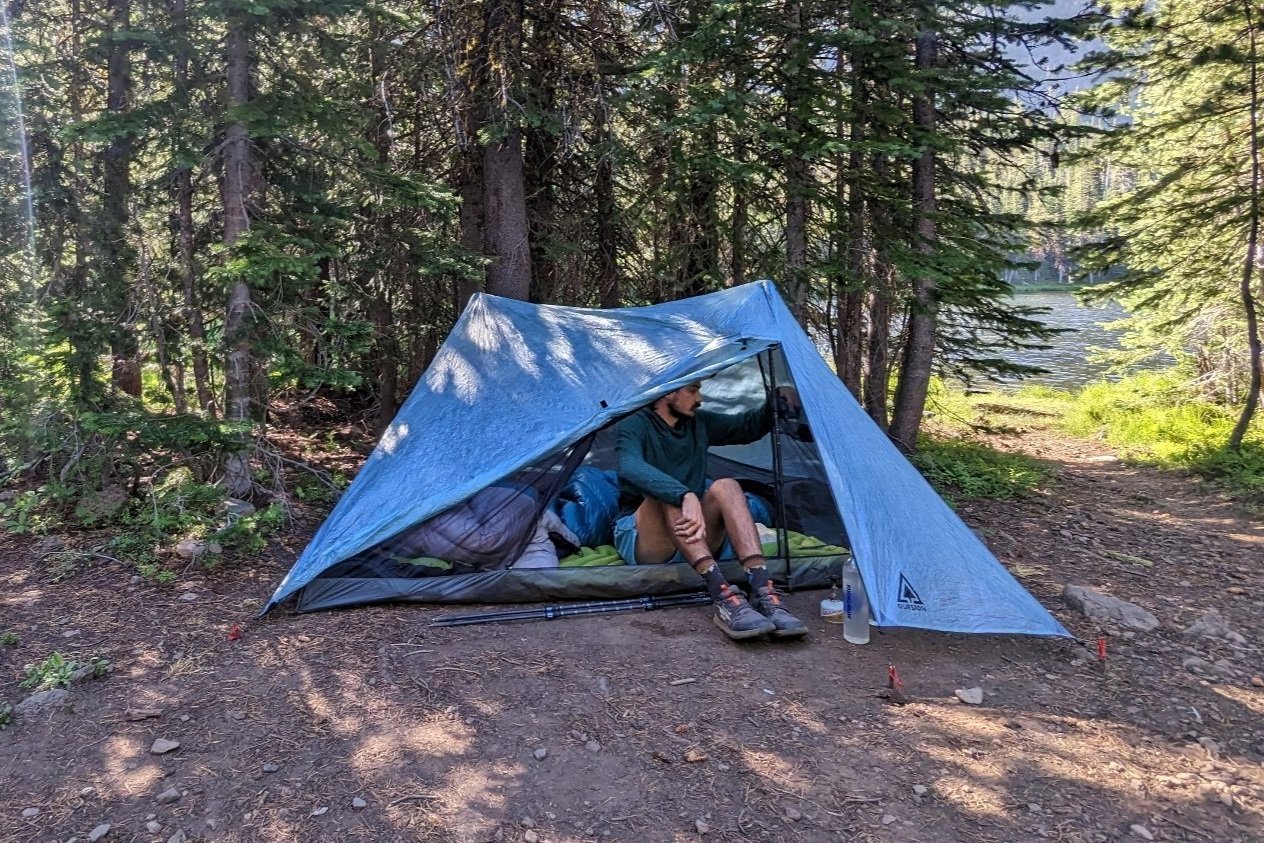
The X-Mid Pro 2 vestibules, in contrast, can be pitched all the way to the ground and offer full protection from the elements when needed. Or you can stake them a bit higher to increase ventilation.
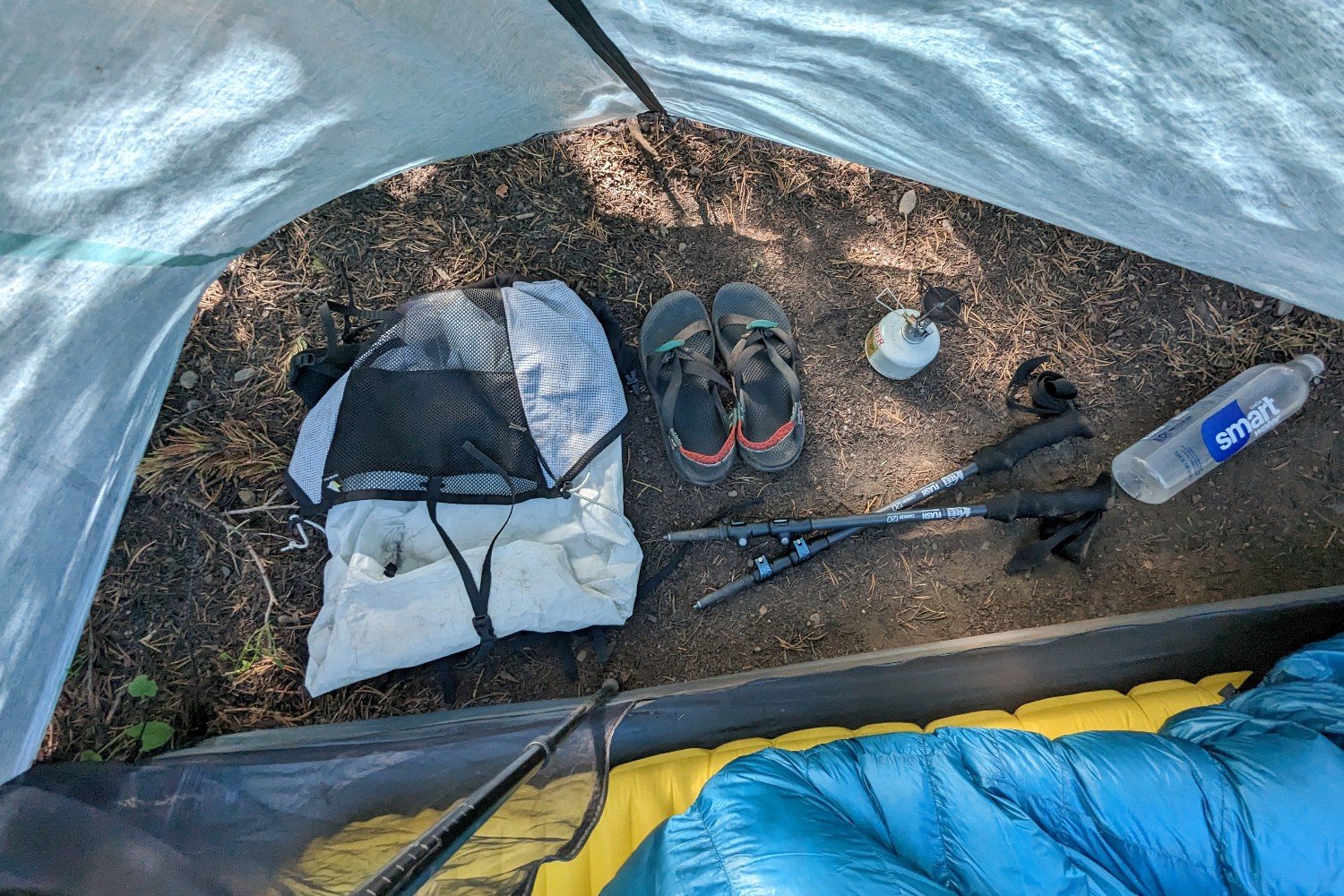
The vestibules are also incredibly spacious. The squared off corner provides much more usable space than the typical triangle vestibule. There’s plenty of room to store all of your gear out of the way of the door, so you’re not having to shuffle things around every time you want to go in or out.
Spacious interior
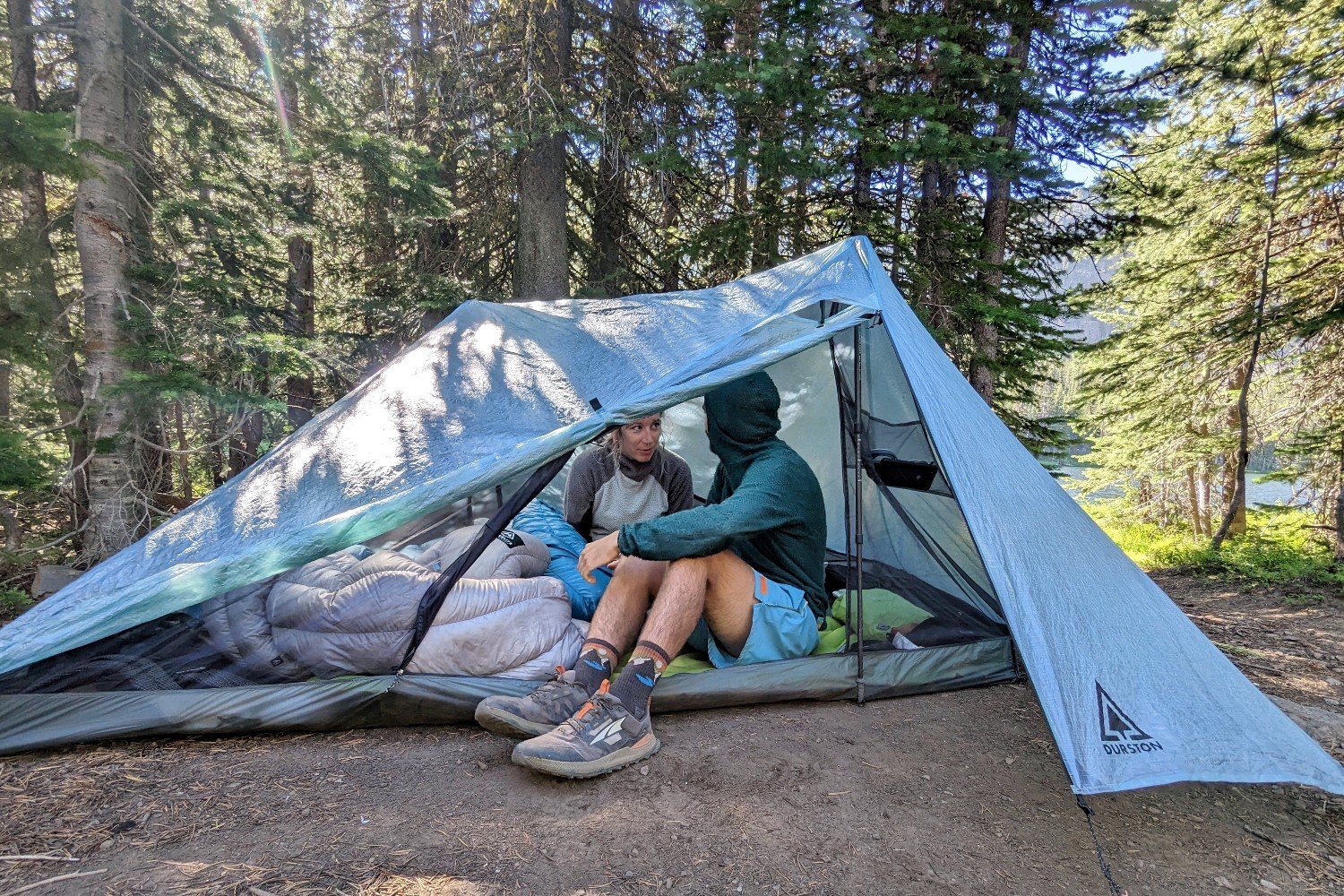
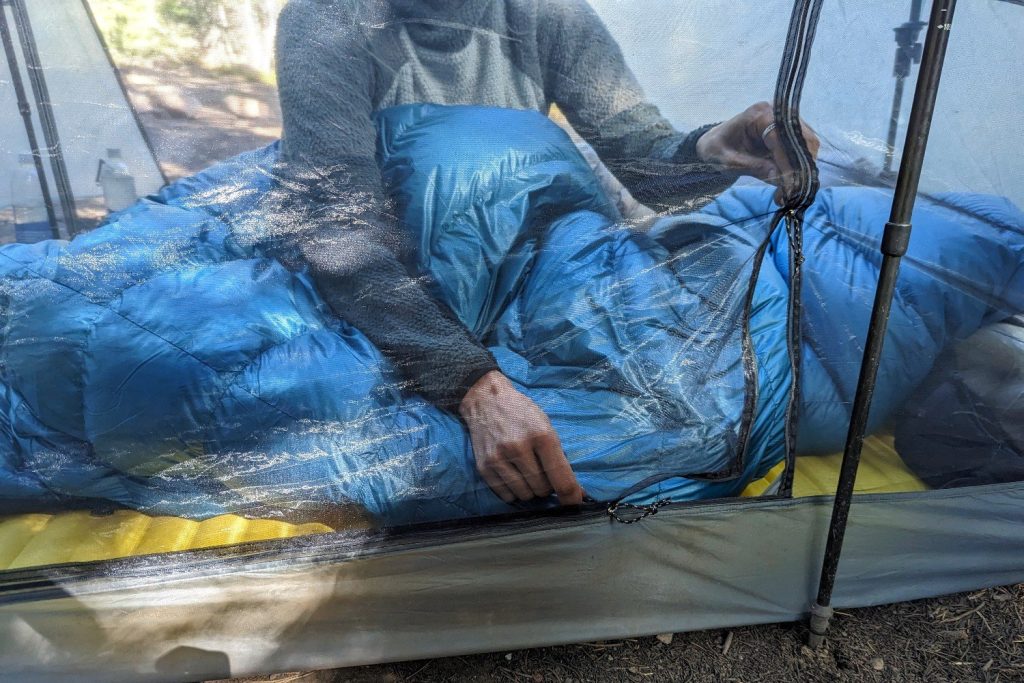
We found the interior floor space of the X-Mid Pro 2 to be more than adequate for two hikers and very spacious for one person. The dual pyramid peaks also provide a good amount of headroom at either end and along the diagonal ridgeline in the center. So if hikers sit at opposite ends of the tent facing each other – say, to wait out a storm – both people have a ton of headroom. That said, we don’t generally recommend sleeping on opposite ends as that’s likely to result in one person’s head on a downhill. This can cause blood to rush to the head and make it difficult to sleep.
This pro comes with a bit of an asterisk – we’ll talk a bit more about the issues we have with the distribution of interior volume a little later in this review.
fully waterproof
It’s not uncommon for ultralight tent makers to charge more for in-house seam-sealing or to require the user to do it themselves. We’ve never really been a fan of this since we feel a tent should arrive fully waterproof and ready to hit the trail.
The X-Mid Pro 2 seams are bonded and fully waterproof from the factory. There’s no need for additional seam-sealing.
High pockets = less sag
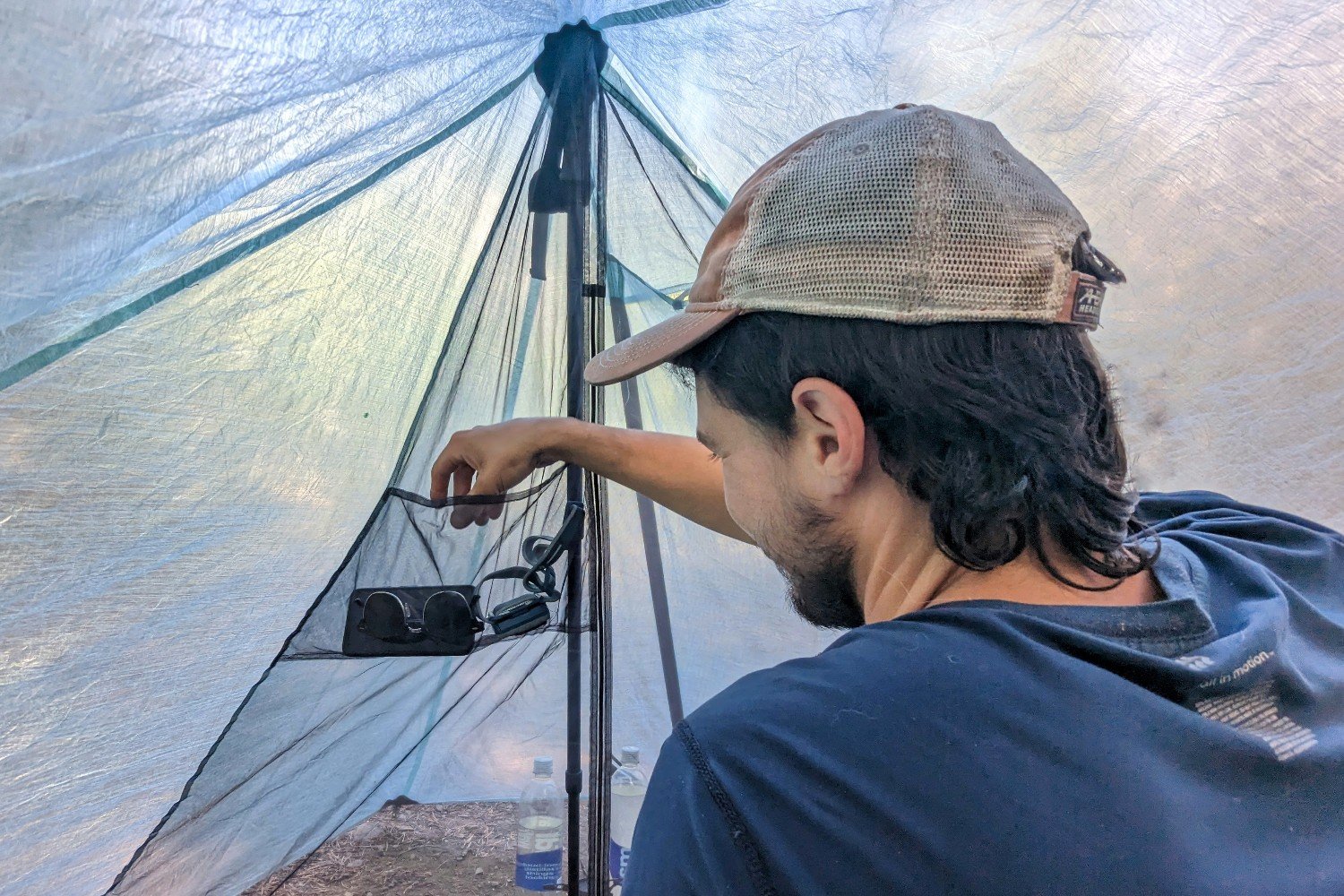
Many tents are constructed with pockets that sit low on the interior wall so they can be easily reached while you’re laying down. While we like the convenience of having small items close at hand, it tends to cause the mesh wall on non-freestanding tents to sag inward. This usually isn’t a big enough gripe to be a dealbreaker, but we definitely appreciate that the higher pockets on the X-Mid Pro 2 don’t encroach on our sleeping area.
Cons
Interior space less convenient
If you’re looking at the X-Mid Pro 2 as a single-person shelter, this point won’t apply to you. We’ve seen many a happy solo hiker living their best life in this model, and we agree that it’s an exceptional tent for one.
But for those who will be sharing this tent with another hiker, it’s not as versatile. This is our biggest gripe with the X-Mid Pro 2 and why it doesn’t always rank the highest. on our lists (including the Pro 2+) for backcountry shelters.
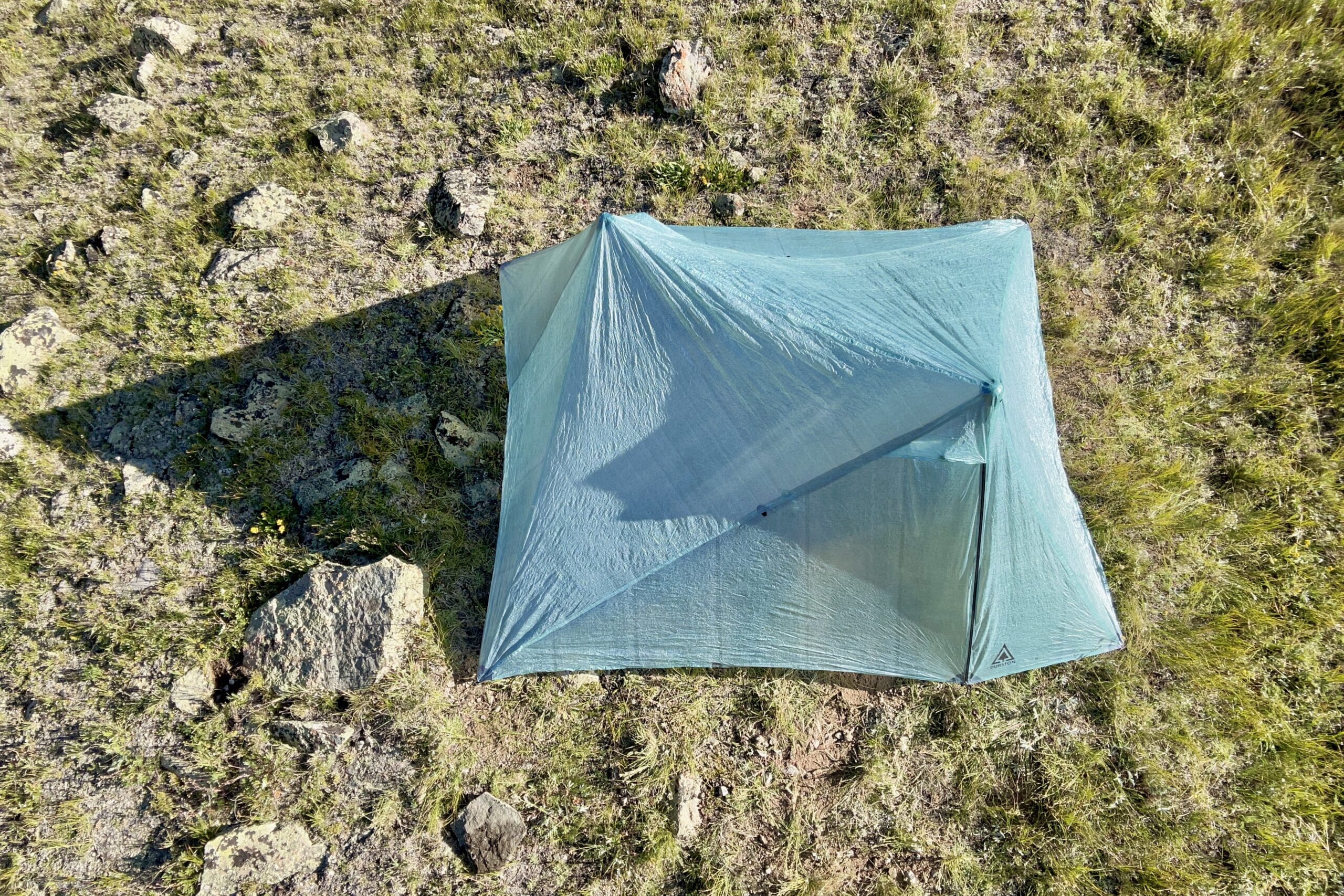
The unique shape of the X-Mid does undeniably provide a lot of headroom, but not where we want it. The interior of this tent is a parallelogram and the poles are offset from one another to create two opposing peaks at either end. This will work well if you want to sleep head-to-foot so that each hiker gets their own end with ample headspace. But that’s not how most people prefer to share a tent, and it’s not how Durston intended the X-Mid to be used.
Sleeping side-by-side, as most hikers do, results in one person having plenty of room to sit up while the other gets a face full of tent wall in the morning. On top of that, the X-Mid is designed so that the person who got the short end of the stick on headroom also sacrifices some convenience when it comes to storage. Their interior pocket is situated at the opposite end of the tent near the other peak.
Are these design choices a dealbreaker? No – the pros still out weight the cons – but after weeks or months on the trail with a partner, it’s impossible not to find issue with.
tough to get perfect pitch
The X-Mid is often praised for its very simple pitch. While the basics of pitching the X-Mid are quite easy – we found getting a taut pitch with no sag or surfaces for water to pool up to be a bit difficult, and takes a meaningful amount of tweaking, adjusting, and time.
To start, lay the tent out flat and stake the corners out in a rectangle. The trouble starts if you don’t stake the corners at almost precisely 90 degrees. You’ll get the trekking poles set only to realize the floor isn’t sitting quite right, the ridgeline is bowed, or a wall is billowing in the wind. You can move the stakes around and improve the pitch, but we find this is often easier said than done. Backcountry campsites hide rocks that impede tent stakes just under the dirt’s surface, and more often the ground isn’t level.
In our experience, A-frame shaped tents are more forgiving when it comes to unideal pitching conditions.
footprint & design makes campsite selection difficult
Non-freestanding tents can pose a challenge when it comes to campsite selection: you need to be able to get stakes in the ground to give the tent structure. This is a potential issue with all non-freestanding tents, not just the X-Mid Pro 2. But where the X-Mid Pro 2 adds an extra layer of difficulty is in its large rectangular footprint.
When looking at its overall dimensions, you’ll see that the X-Mid Pro 2 is a large rectangle. That means you have to find a campsite large enough to accommodate over 55 sq. ft. When you factor in our previous point about the need to pitch the X-Mid with its corners as close to 90° as possible, campsite selection can become a bit challenging.
During testing, we sometimes had to pass up epic campsites because the tent simply wouldn’t fit. We’re not saying this is the only tent that we’ve experienced that with, but we did find it happened more often with the X-Mid.
Expensive
Dyneema shelters always come with a hefty price tag because DCF is an expensive fabric. The X-Mid offers a cheaper floor material as an option (silnylon) that saves some bucks, but it’s still a significant investment.
So why does the X-Mid have a similar price point to tents that are made with more Dyneema? Because the hot-bonding process used on the seams is more costly and time consuming. As we mentioned previously, this process probably won’t make much of a difference to the average user, so we’d rather have the monetary savings from the cheaper material.
You could always get the standard sil-nylon X-Mid 2 for quite a bit less money, but it does weigh almost a pound more (35.4 oz.). That’s still lighter than many tents on our Best Ultralight Tents list , so it could be well worth the monetary savings if you’re willing to carry some extra weight.
Bottom line
The Durston X-Mid Pro 2 is a popular tent in ultralight circles, and we understand why. It’s lightweight, spacious, provides excellent weather protection, and has great ventilation. But for us, the X-Mid Pro 2 misses the mark in a few key areas. We still think it’s a great shelter for solo hikers who want a luxurious amount of space without much weight gain over an ultralight single-person tent, but we’re not quite as keen on this shelter when shared with a partner.
Where we seem to differ in opinion the most from other accounts we’ve read is space. For us, the parallelogram floor shape and the offset poles make the interior awkward to occupy with a partner, as one person will get the short end of the stick when it comes to headroom.
The other key issue is that getting a nice, taut pitch with no sag was harder than we wanted. The large footprint and rectangular shape can also make campsite selection a bit more tedious than with other tents, and we’re not fond of having to struggle with a perfect pitch after a hard day on the trail.
Durston nails many of the details that make for a truly great tent experience, like well-designed vestibules, smart pockets, and outstanding ventilation. But for our two-person adventures, we found that the X-Mid Pro 2 fell a bit short of our high expectations.
For other options that ranked higher, dig into our reviews of the Durston X-Mid Pro 1 and Durston X-Mid Pro 2+, both of which solve some of the issues we had with the regular pro. And, take a look at the other winners on our Best Ultralight Tents Guide and Best Backpacking Tents Guide.