Bottom Line
The Kelty Wireless 6 is one of the best values in our camping-tent lineup. It gives families a huge interior, 74 inches of peak height, two vestibules, and a setup system that is easy to understand without pushing the price into premium-tent territory.
The latest version fixes several annoyances from the older model. Kelty added more mesh, kickstand vents, pre-attached guylines that stash into dedicated pockets, stakes for the guyout points, and nightlight pockets that diffuse a headlamp. Those upgrades make the tent easier to use and more comfortable without changing the uncomplicated character we liked.
It still has limits. Ventilation remains only average on hot, still days, the internal pocket layout is sparse, and nearly 19 pounds makes this strictly a car-camping shelter. For campers who want a lot of livable space without spending $500 or more, those compromises are easy to accept.
How We Tested
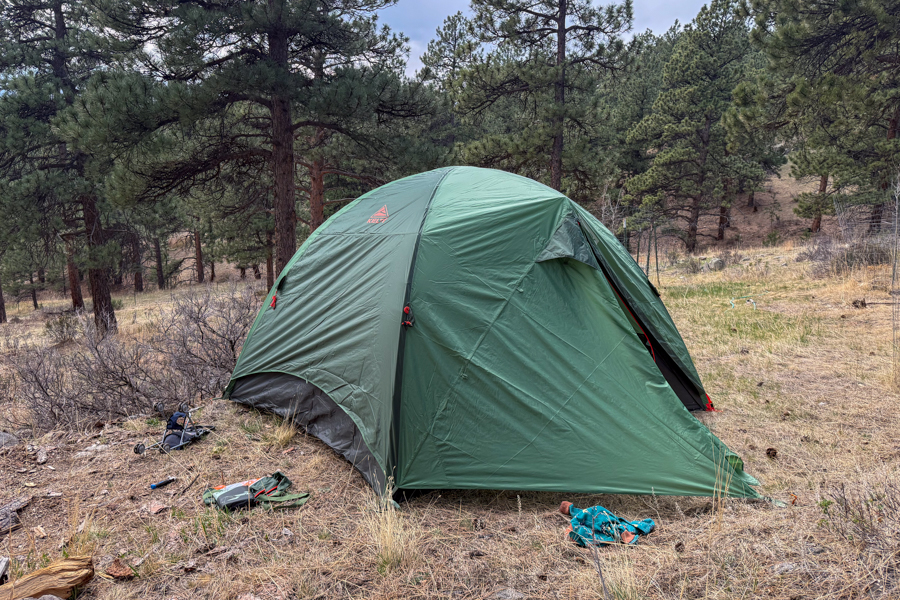
Several Colorado campsites gave us different perspectives on the Wireless 6, including Great Sand Dunes National Park and roadside camping. Over multiple nights, CleverHiker gear analyst Ben Dawson used the Wireless 6 in summer conditions, with and without the fly, and during wet weather. Solo and two-person pitching provided a practical comparison for ventilation, weather resistance, livability, and ease of use.
Quick Specs
- Capacity: 6-person
- Floor area: 86.5 sq. ft.
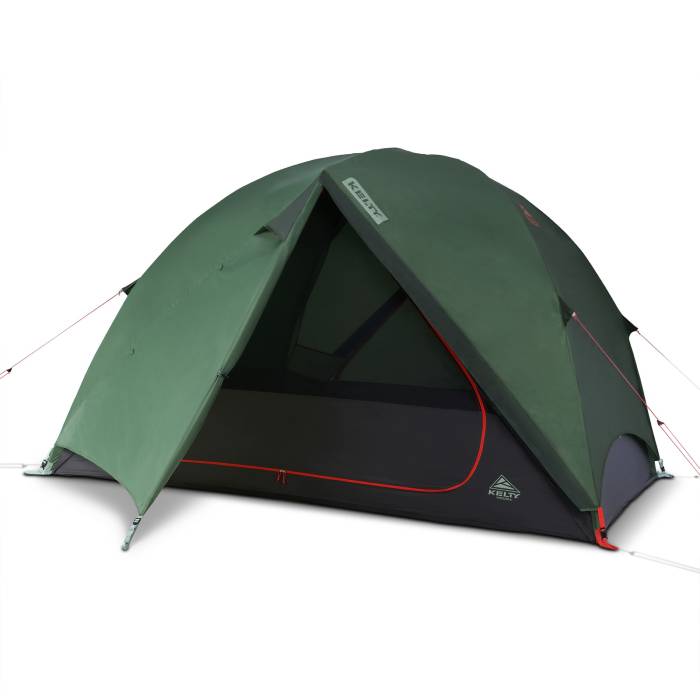
Kelty Wireless 6
Best Bang for Your Buck
CleverHiker Rating: 4.4/5.0
Price: $280
The size we tested feels: Luxurious for 2-3, comfortable for 4, tight for 5
Measured Weight: 18 lb. 15.4 oz.
Dimensions (LxWxH): 118 x 106 x 74 in.
Pros
- Huge interior
- Affordable
- Easy, intuitive setup
- Good standing height
- Pre-attached guylines
- Excellent carry bag
Cons
- Footprint sold separately
- Limited internal storage
- Can feel warm in still weather

Spaciousness & Comfort
The Wireless 6 is one of the roomiest tents in the guide for the money. Its 86.5-square-foot floor gives a family of four enough space to spread out without constantly stepping over sleep systems and gear, and the 74-inch peak height lets many adults stand upright. Our 6-foot-2 tester could move through the center without hunching, which is a meaningful comfort advantage on multi-night trips.
The long brow pole helps the interior feel larger than a simple dome with the same floor dimensions. It pulls the sidewalls more upright, so usable shoulder room extends farther from the center. Kelty labels this a six-person tent, but we consider four people the comfortable target once clothing, bags, and other family gear come inside. Five can work, while six becomes a very full house.
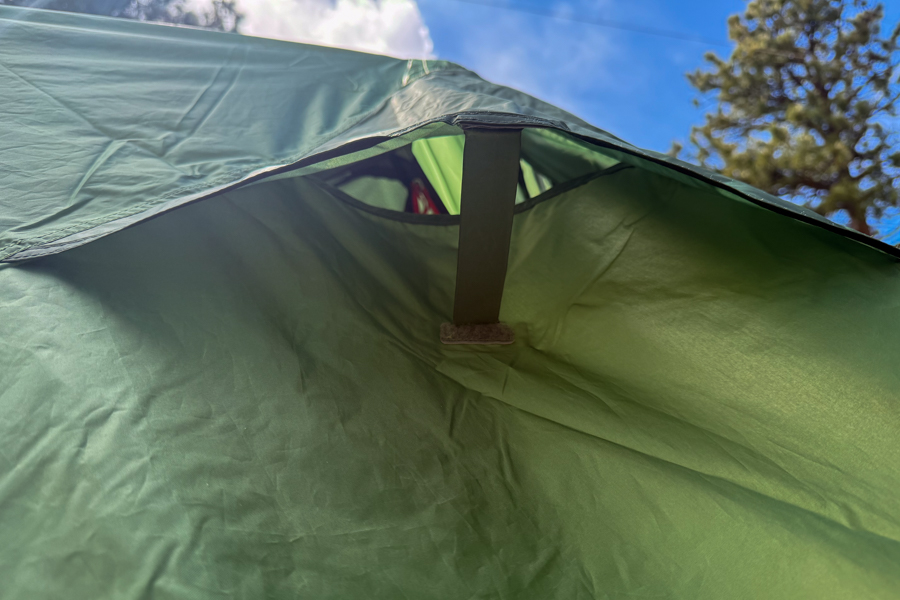
Two vestibules keep some of that gear outside the sleeping area, which helps preserve floor space. Ventilation is also much better than it was on the previous version. Kelty added significantly more mesh to the body and two kickstand vents to the fly. With the fly off, the Wireless feels exceptionally airy; with it on, airflow is more moderate but still noticeably improved.
The main comfort limitation is hot, still weather with full rain coverage. The fly can trap warmth when there is little breeze. For most three-season family trips, though, the combination of standing height, usable floor area, and dual vestibules makes the Wireless feel far more comfortable than its budget-oriented price suggests.
Comfort Score: 4.5 / 5.0
Ease of Setup
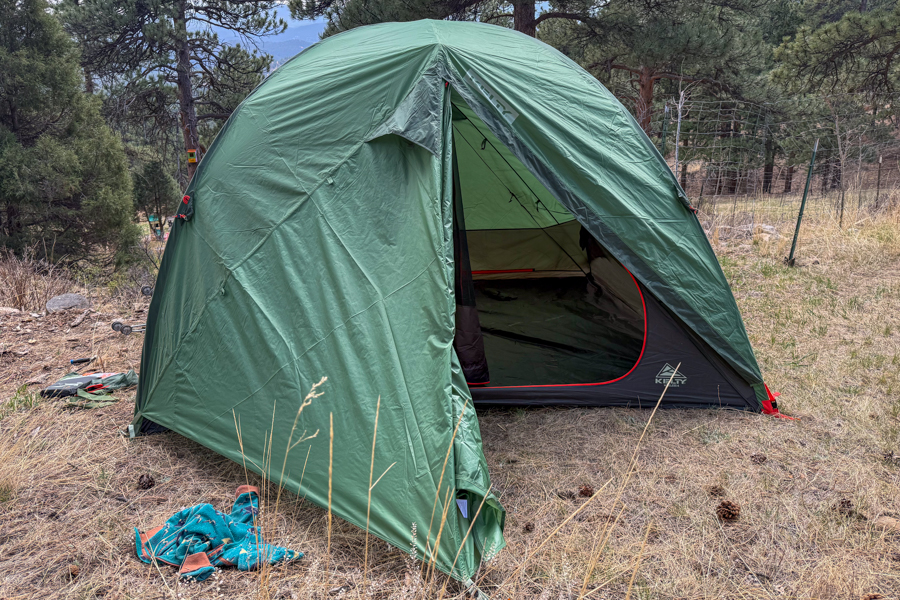
The Wireless 6 uses a familiar family-tent layout that is easy to understand, especially once the body is oriented correctly. Kelty’s corner pole sleeves are simpler to manage than tiny grommet-and-pin connections, and color-coded tabs on the body and fly reduce the chance of rotating a large rainfly the wrong way. Those details make the basic structure intuitive even for campers who do not pitch tents every weekend.
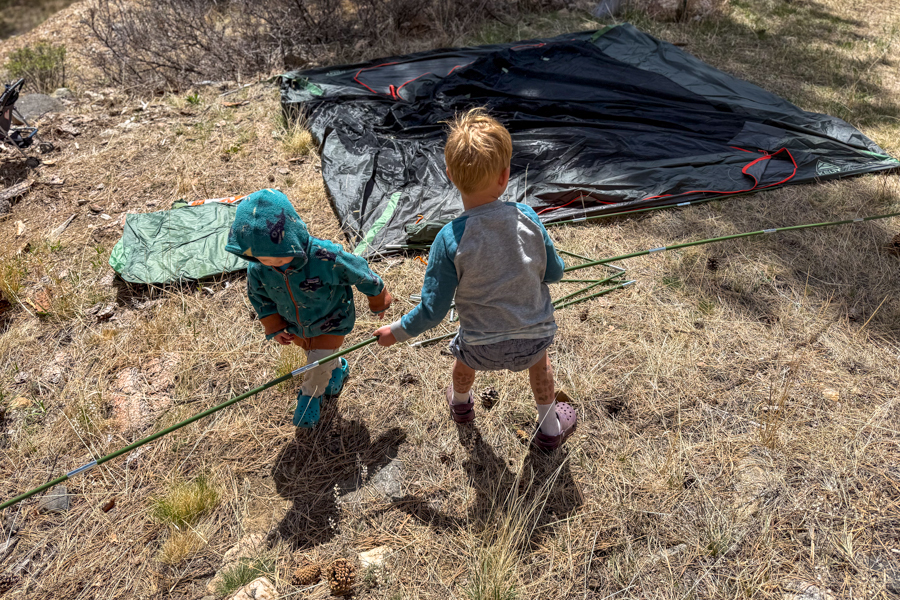
The challenge is height. Once the poles are in place, the upper attachment points and the large fly can be awkward for shorter campers working alone. There is a lot of fabric to lift over a 74-inch structure, and solo setup becomes clumsy when wind catches the fly. With two people, the same design goes up much more smoothly and does not feel especially complicated.
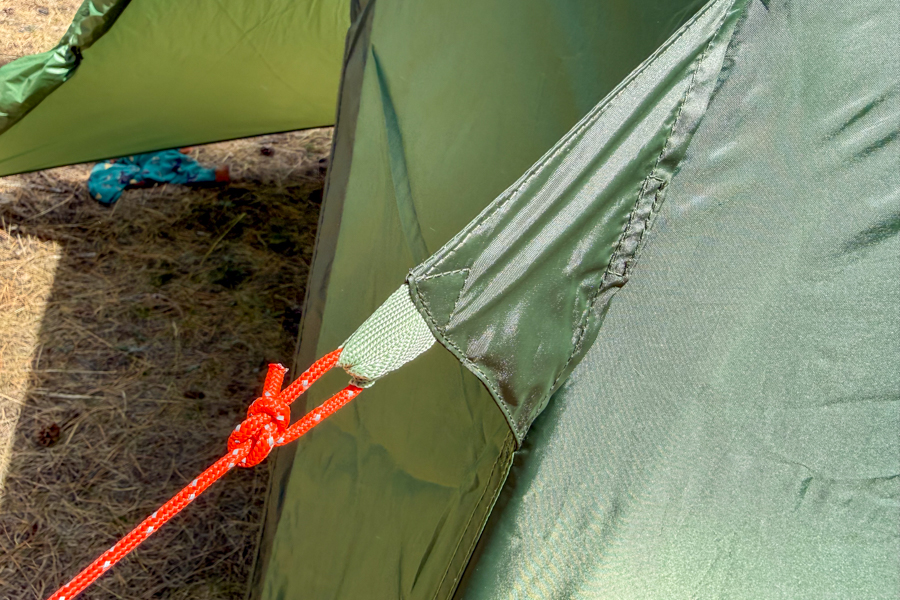
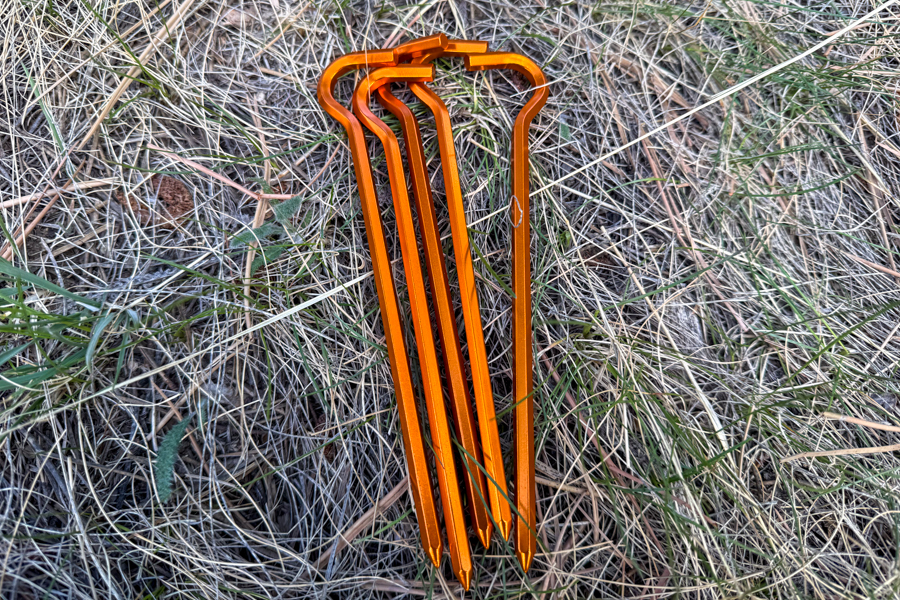
Kelty improved the bad-weather setup process with pre-attached guylines that tuck into dedicated Velcro pockets. Instead of sorting loose cord or attaching lines at camp, you can pull them out only when needed. The current version also includes aluminum stakes for the guyout points, so the tent arrives better prepared for a fully secure pitch.
Breakdown is unusually easy because of the Shark Mouth carry bag. The long zipper opens the bag wide, so there is far less pressure to produce a perfect tight roll before packing. That feature matters after a wet or tiring weekend. Overall, the Wireless is user-friendly rather than effortless: two people will find setup straightforward, while solo campers should expect more work because of the tent’s height and fly size.
Ease of Setup Score: 4.7 / 5.0
Weather Resistance
The Wireless 6 gave us more storm confidence than we expected at this price. We tested it through Colorado thunderstorms with heavy rain and moderate wind, and the tent stayed functional and secure when properly pitched. The full rainfly sheds water well, and the current guyline system makes it easier to stabilize the tall structure before conditions deteriorate.
The floor is the main weather caveat. A footprint is not included, and during our testing we saw some moisture come through the bottom in wet conditions when the tent was used without an added ground layer. Once we paired it with a ground tarp, we did not have the same problem. For that reason, we strongly recommend budgeting for a footprint or using a simple tarp from the beginning.
Wind is another area where expectations should match the design. The Wireless is a tall six-person shelter, so it presents more surface area than a low-profile tent. We would not choose it for consistently exposed or very blustery campsites. When fully guyed, however, it feels substantially more secure than it does in a casual fair-weather pitch. The pre-attached lines and included stakes make that full setup easier than on the prior version.
Ventilation matters in storms too. Added mesh and two kickstand vents reduce the stuffiness we disliked in the older Wireless, although airflow with the fly fully installed is still only moderate. For ordinary three-season family camping, the Wireless offers solid weather protection as long as the floor is protected and the tent is fully anchored when wind is expected.
Weather Resistance Score: 4.4 / 5.0

Durability & Quality
The Wireless 6 delivers respectable materials for its price, but the fiberglass pole set remains the main durability concern. The poles are thick and do not feel flimsy in the hand, yet they lack the long-term confidence we get from the aluminum sets on premium tents. After our twelfth night with the Wireless, one of the pole shock cords broke during teardown. We repaired it and continued using the tent without further trouble, but the failure is important evidence for buyers who expect years of frequent use.
The rest of the shelter is more reassuring. Fabrics feel solid for a budget-minded family tent, seams are fully taped, and the expanded mesh panels feel sturdier than the wispy mesh found on some inexpensive models. We did not see a broader pattern of fabric or stitching problems during testing.
The included stakes are decent rather than exceptional. We bent a couple in rocky Colorado ground, which is common with stock stakes, but we appreciate that Kelty now supplies enough to use the guyline system properly. Treating the fiberglass poles carefully—pushing them through sleeves rather than yanking or sharply bending them—should also help extend their life.
At $280, the Wireless is not trying to match the Wawona or Aurora Highrise in materials. Its quality proposition is value: the tent gives families a large, livable shelter with generally solid fabric construction while accepting a lower-cost pole system. Campers who use a tent only a handful of times each season may find that balance entirely reasonable. Those who camp hard and often should consider paying more for aluminum poles and more premium components.
Durability Score: 3.9 / 5.0

Features
Kelty made the current Wireless 6 much more thoughtful than the older version. Quick Corner sleeves keep pole ends captured while the body is being raised, which reduces the usual frustration of one corner popping free while you work on another. Color-coded webbing and pole tips make orientation obvious and help speed up both body and fly setup.
The pre-attached guyline system is another meaningful upgrade. Each line stores in its own Velcro pocket on the tent body, so cords stay untangled until weather requires them. Kelty also includes enough aluminum stakes to deploy the lines, which is a practical improvement over tents that provide guyout points but not the hardware to use them.
Ventilation improvements are equally important. More mesh in the body and two kickstand vents in the fly make warm nights more tolerable. The new nightlight pockets are a smaller feature we ended up liking more than expected: inserting a headlamp creates a diffused glow rather than shining a harsh beam across the tent.
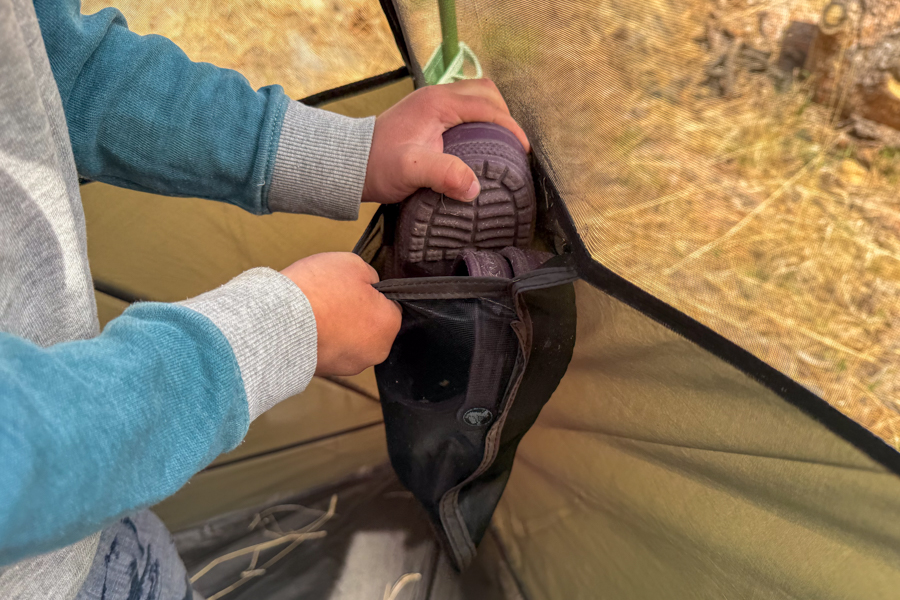
Interior organization is still underdeveloped. Four small pockets do not feel like enough for a tent that is most comfortable with a family of four, and we would like either larger wall pockets or a gear loft. The dual vestibules partially compensate by moving bulky items outside.
The Shark Mouth carry bag remains one of our favorite packing features in the category. Its long zipper lets you place the rolled tent inside instead of forcing it through a narrow opening. Collectively, these details make the Wireless feel easy to live with even though its storage system could be better.
Features Score: 4.4 / 5.0
Should You Buy the Kelty Wireless 6?
The Wireless 6 is for campers who want maximum room and straightforward usability at a moderate price. It is an especially strong family option when standing height and floor area matter more than premium fabrics or advanced storm performance.
Spend more on the Wawona 6 if you want better materials, a huge vestibule, and stronger all-around weather confidence. Choose the Mineral King 3 if you only camp with one other person and would rather have a lighter, more compact shelter.
What Other Camping Tents Should You Consider?
The North Face Wawona 6 Review: Frequent campers who like the Wireless’s roominess but want a more refined shelter should consider the Wawona 6 the meaningful upgrade. Its stronger materials, excellent ventilation, and enormous front vestibule make it a better long-term basecamp, especially when trips include wind or prolonged rain. You pay substantially more and carry a similarly bulky tent, so the Wawona only makes sense if those durability and weather gains matter to you.
REI Westward 6 Review: The Westward 6 targets the same large-family buyer but puts more emphasis on premium comfort and airflow. It has a taller peak, polished materials, and a partial-fly layout that feels especially pleasant on warm, dry trips. The Wireless delivers much of the useful space for far less money, while the Westward is the better choice for campers willing to pay for a more luxurious fair-weather experience.
Kelty Daydreamer 6 Review: The Daydreamer 6 is the more specialized value choice for families whose biggest camping problem is early light. Its Twilight Tech fly noticeably darkens the interior, which we found useful for naps, early bedtimes, and sleepers who wake with the sun. The Wireless is the stronger all-around tent because it vents better and has two vestibules, so we would only favor the Daydreamer when blackout performance is a real priority.