

Bottom Line
The Deuter Aircontact Ultra 50+5 / women’s Aircontact Ultra 45+5 SL stands out because its close-to-body suspension is unusually comfortable for a pack under three pounds. Around a 30-pound test load, the strategically placed foam pads relieved pressure points better than most traditionally padded packs in our field, and the adjustable torso makes it easier to dial in fit. The pack also uses compact, excellent buckles and a clean overall design.
The weaknesses are concentrated in storage: bottle pockets sit high, compression cords interfere with them, hipbelt pockets are floppy, and the mesh-heavy exterior deserves more care around brush. Established-trail backpackers who prioritize fit and close-contact comfort over effortless pocket access are the best match for the Aircontact Ultra.
How We Tested
With loads around 30 pounds on Midwest trails, Taylor Passofaro used the Aircontact Ultra’s close-contact suspension long enough to judge where its separated foam pads relieved pressure and where storage created friction. We also worked through torso adjustment, bottle reach, floppy hipbelt pockets, compact buckles, and the durability implications of the mesh-heavy exterior.
Quick Specs
- Best for: established-trail backpackers who prioritize comfort, adjustable fit, and a clean lightweight design
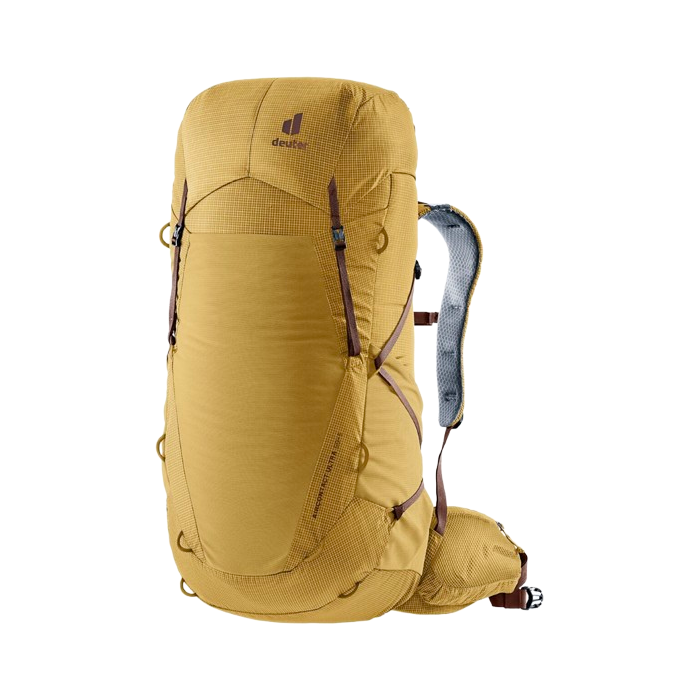
Deuter Aircontact Ultra 50+5 / 45+5 SL
Backpacking Pack with Amazing Comfort & Quality
CleverHiker Rating: 4.1/5.0
Price: $295
Measured Weight: 2 lb. 14.5 oz. / 2 lb. 10 oz.
Volume: 55 L / 50 L
Max Weight Rec.: 33 lb.
Pros
- Adjustable torso
- Comfortable
- Sleek design
- Excellent buckles
Cons
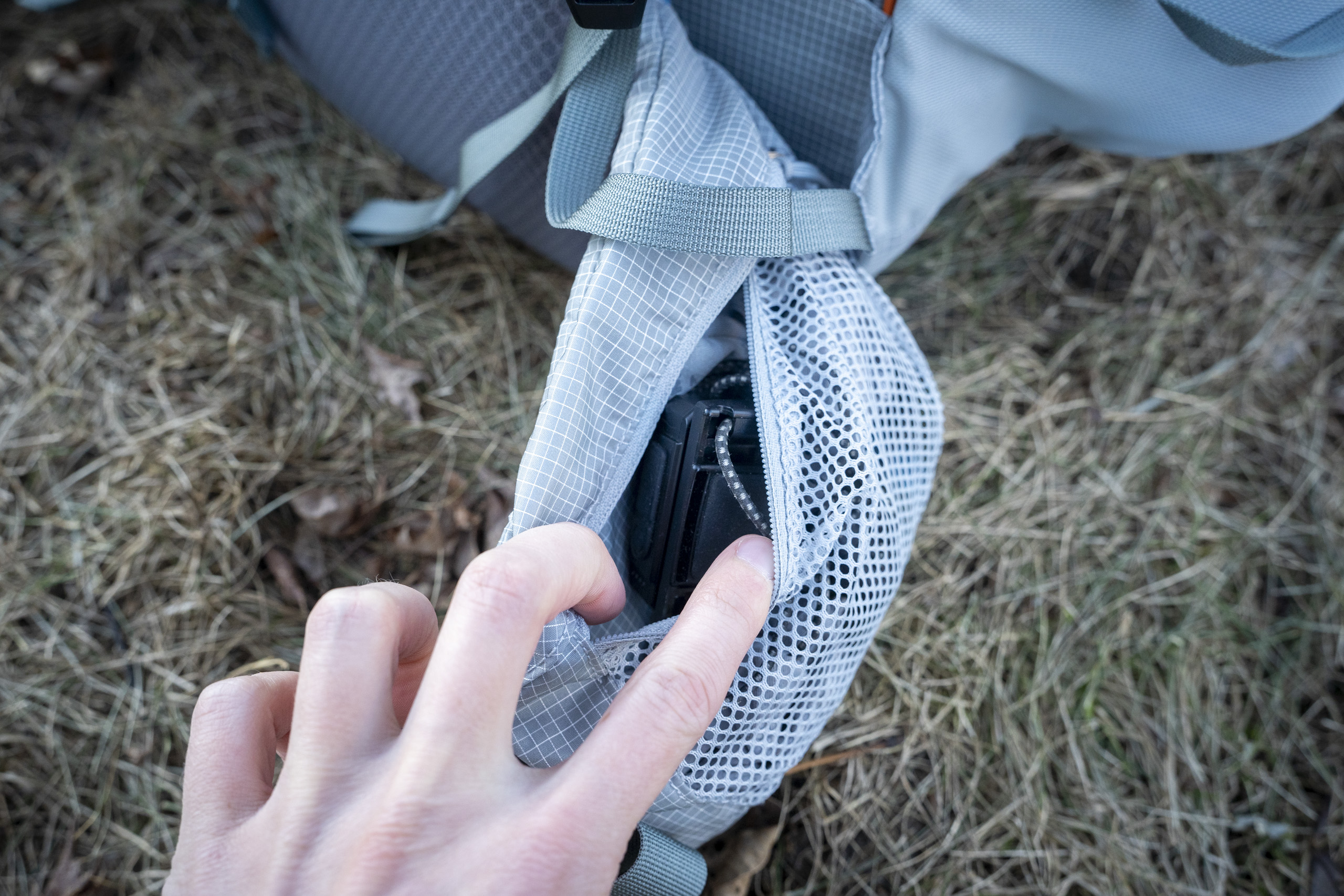
- Floppy hipbelt pockets
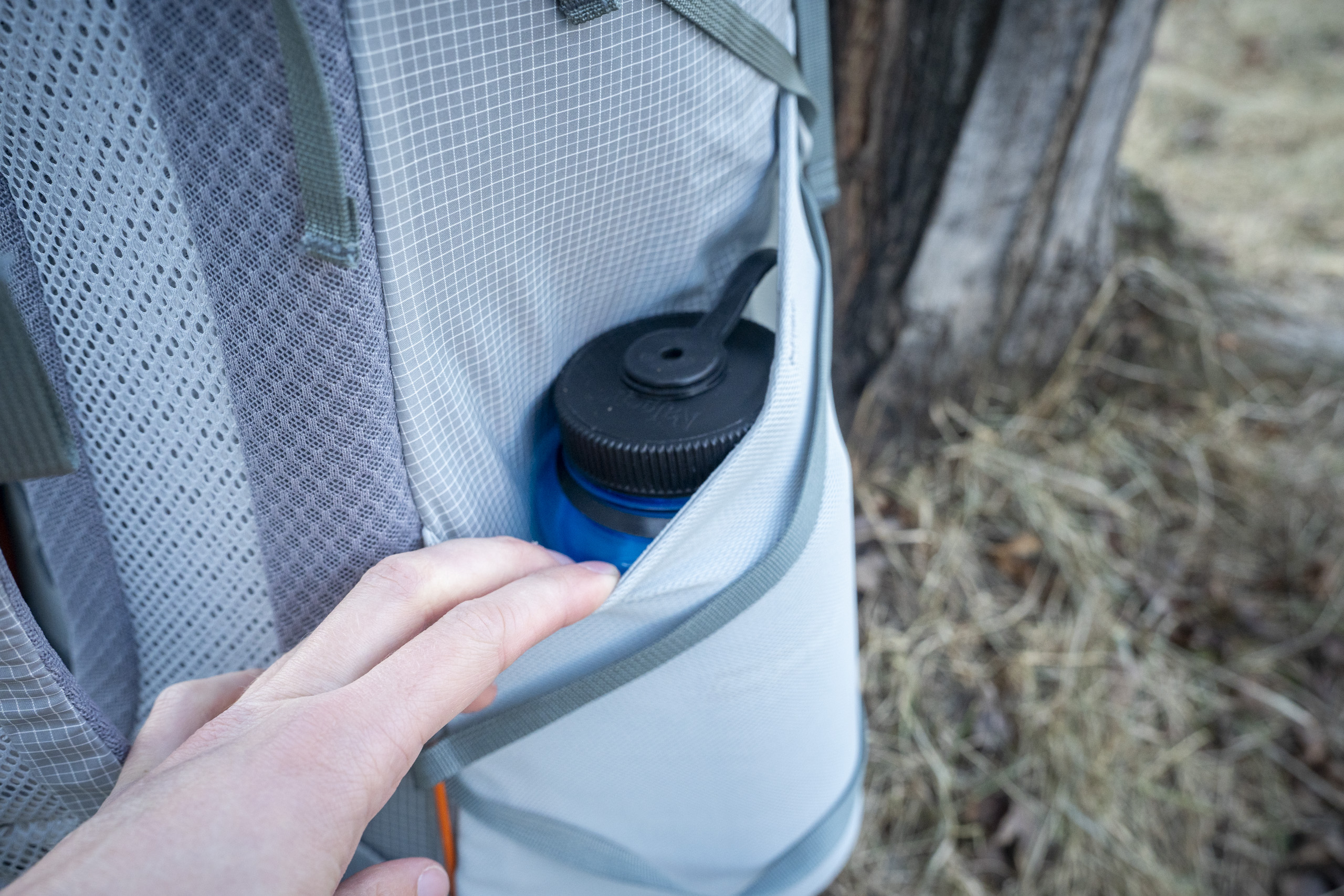
- Water bottles are slightly cumbersome to access
- Lower-durability mesh components

Comfort
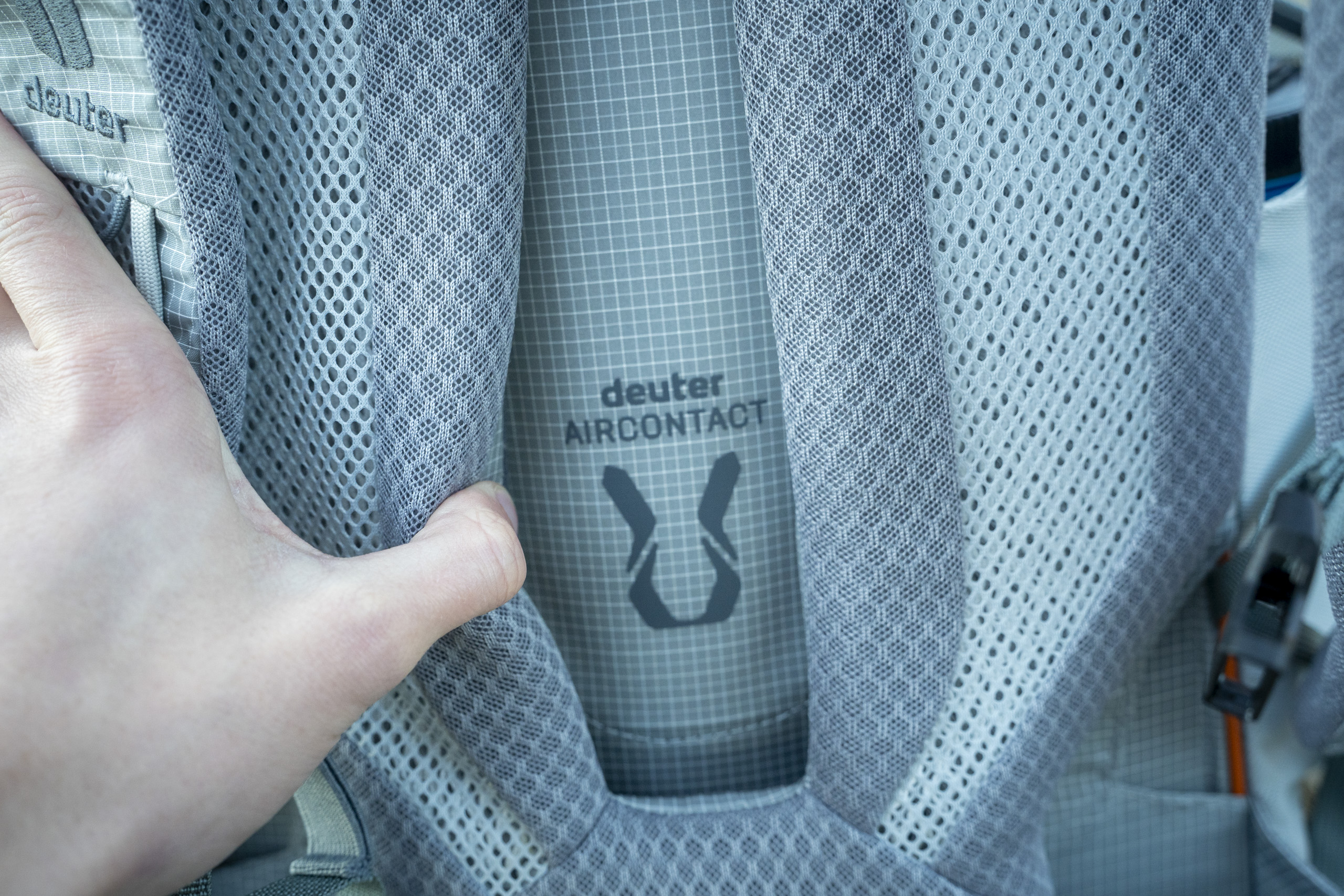
The Aircontact Ultra felt unusually good with roughly 30 pounds because its separated foam pads relieved pressure without pushing the load away from the body. Adjustable torso length adds meaningful fit tuning, and that combination earns a 4.8 comfort score. It cannot match a full suspended-mesh panel for airflow, but hikers who prefer a planted carry may find this setup more natural.
The effect was obvious as soon as we loaded the Aircontact Ultra with roughly 30 pounds: the pack felt lighter on the body than the scale suggested. The separated pads put foam where the back needs support while leaving gaps over areas that are more likely to develop pressure or heat. That arrangement worked particularly well for our tester and is why we rate the Deuter as the most comfortable non-trampoline-style pack in this field.
The adjustable torso adds another layer of fit tuning and makes the pack more adaptable than fixed-length lightweight designs. Winter testing limited how confidently we can judge warm-weather ventilation, but the open space between the pads and the mesh across the back should move more air than a flat sheet of foam. The result is a close-to-body carry that feels stable without creating obvious hot spots, which is a difficult balance for a sub-three-pound framed pack.
Comfort Score: 4.8 / 5.0
Features
Deuter kept several genuinely useful systems while holding the Aircontact Ultra below traditional-pack weight. Adjustable torso length, good lashing, and excellent compact buckles support its 4.5 feature score. Storage is the compromise: floppy hipbelt pockets and compression cords crossing high bottle pockets make on-body access less convenient than the rest of the design.
The feature set is intentionally restrained. Hikers get a floating lid, adjustable torso, side compression, rear stretch storage, hipbelt pockets, and enough external attachment points to carry extra gear without turning the pack into a web of hardware. The absence of a sleeping-bag compartment saves weight and fits the pack’s more streamlined design. The buckles are a small but unusually noticeable strength: they are compact, easy to clip, and easy to release, which matters when cold hands or fatigue make fiddly hardware frustrating.
External straps can also be reconfigured for larger items. The storage weak point is the hipbelt pockets, which are mesh and only partially anchored at the bottom, allowing them to flop instead of holding their shape. They open easily with one hand, but the lack of structure and the high bottle pockets keep this otherwise thoughtful feature set from feeling completely polished.
Features Score: 4.5 / 5.0
Durability
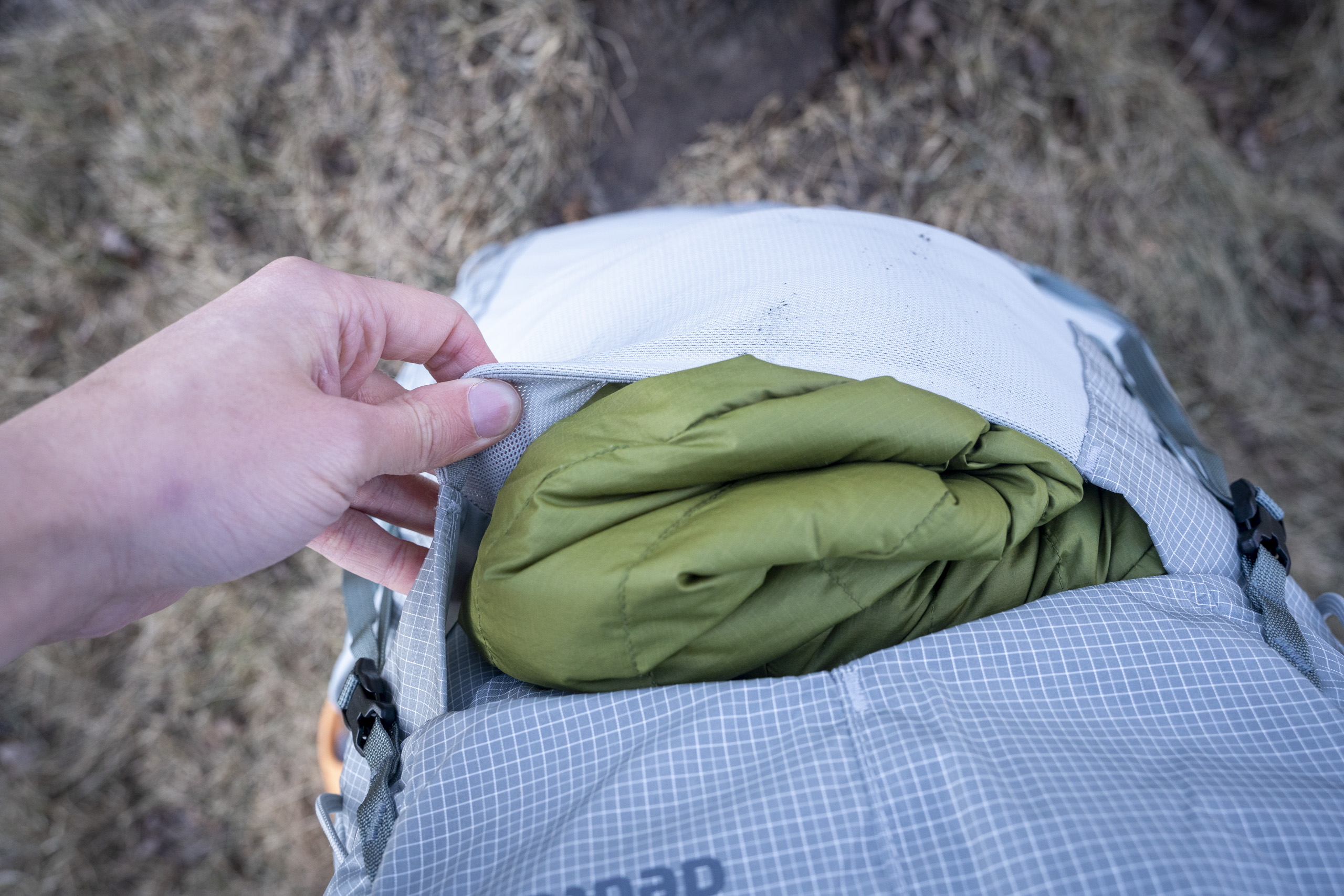
The Aircontact Ultra’s main body and hardware feel more durable than its exterior storage. Exposed mesh in the rear and hipbelt pockets can snag or scrape, so the 4.2 durability score reflects a strong core with more vulnerable accessories. That balance works for established trails but is less appealing for regular brushy travel.
The main pack body uses 175D nylon and feels appropriate for a lightweight framed design, but the Aircontact Ultra exposes more mesh than we prefer in several high-contact zones. The large rear pocket, side storage, and hipbelt pockets are the areas we expect to show wear first, especially on trips that involve brush or repeated contact with rock. The hipbelt pockets are particularly vulnerable because their loose construction allows them to move and rub as well as snag. The body fabric, stitching, buckles, and frame did not raise the same concerns, so the durability limitation is localized rather than a sign of poor overall build quality.
That distinction is important for buyer fit. On established trails, where the mesh mostly carries clothing and bottles, the pack should age reasonably. Hikers who bushwhack frequently or set their pack down on abrasive surfaces will have more reason to prefer a design with solid woven storage.
Durability Score: 4.2 / 5.0
Ease of Use
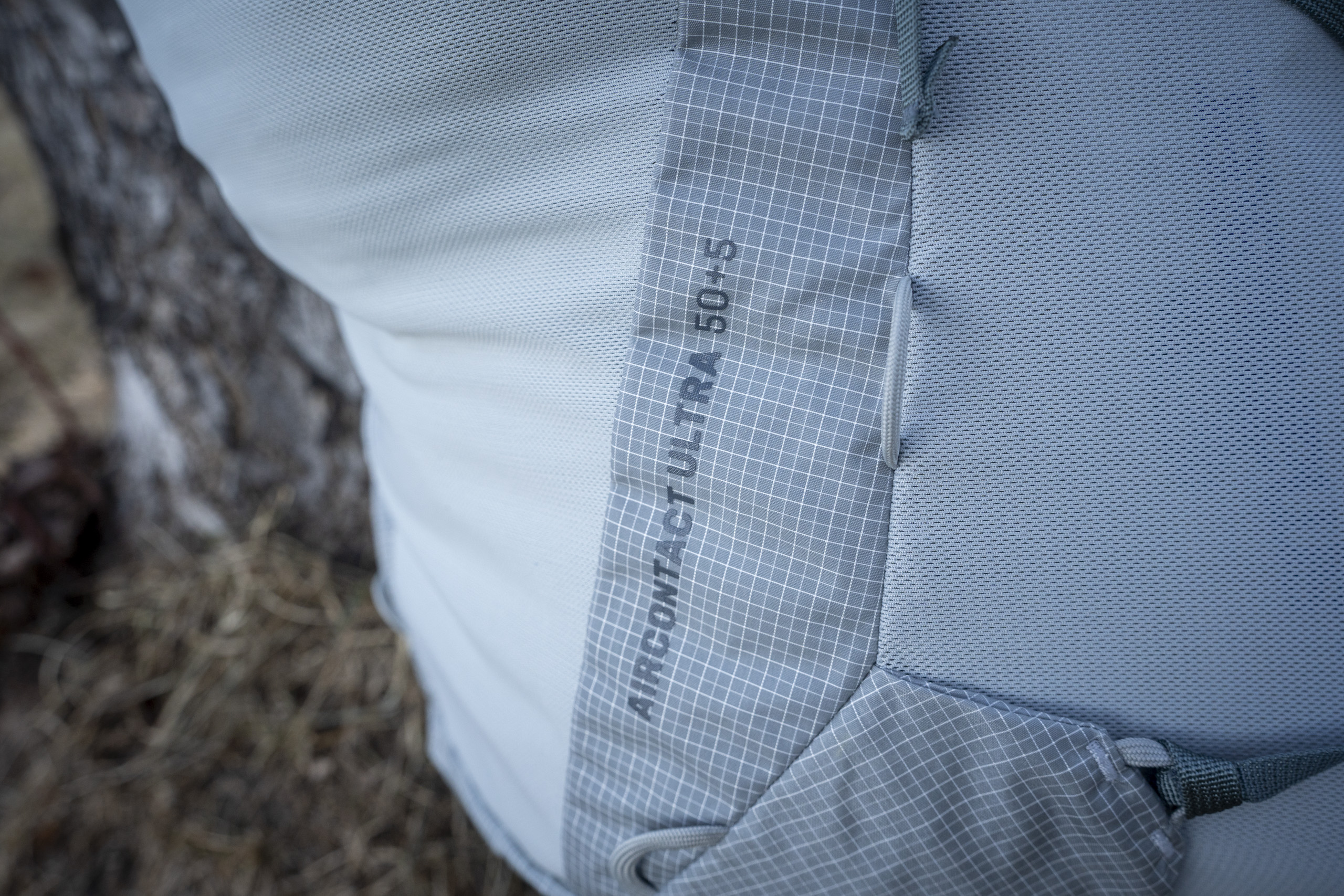
Fit adjustment is not what holds the Aircontact Ultra back in ease of use; storage is. The torso system is straightforward and the buckles are excellent, but high bottle pockets, crossing compression cords, and floppy hipbelt pockets create repeated friction. Those small access issues accumulate enough to pull the score to 3.8.
Fit adjustment and hardware are both straightforward. The torso can be tuned without a complicated sequence, and the compact buckles are some of the easiest we tested to operate repeatedly. External lashing can be reconfigured without much confusion, and the streamlined main body is simple to pack. The frustrating pieces are concentrated around storage access.
Bottle pockets sit high enough that reaching them while walking requires more shoulder movement than we want, and the compression cords run across the same area, adding another obstacle. The hipbelt pockets open easily, but their floppy construction makes it harder to guide a zipper or item with one hand when the pocket is not fully loaded. Those details explain why a pack we like so much for comfort ranks lower for ease of use. The core harness is intuitive; the repeated trail interactions are where the friction appears.
Ease of Use Score: 3.8 / 5.0
Should You Buy the Deuter Aircontact Ultra 50+5 / 45+5 SL?
The Aircontact Ultra is a strong choice if you want a light framed pack with adjustable fit and a close-to-body carry rather than a trampoline-style back panel. Its 4.8 comfort score reflects one of the best padded-back experiences in this field around 30 pounds. Look elsewhere if quick bottle access or structured hipbelt storage matters a lot to your routine, or if you regularly travel through abrasive brush. The Exos is the better ventilated option, while the Paragon offers a more complete traditional feature set.
What Other Backpacking Backpacks Should You Consider?
Osprey Exos 58 Review: Maximum ventilation points toward the Exos rather than the Deuter’s close-contact foam suspension. Its suspended mesh back panel creates more airflow than the Deuter’s close-to-body foam layout, while the Aircontact Ultra feels more planted and compact against the back.
Gregory Paragon 60 Review: More polished bottle access and broader all-around comfort make the Paragon the more complete traditional package when a little extra weight is acceptable. It weighs more than the Deuter, but its suspension and organization make it easier to recommend for backpackers who value a more complete traditional feature set.
ULA Circuit Review: Long-distance hikers gain a deeper durability record and simpler exterior storage with the Circuit, at the expense of the Deuter’s adjustable torso fit. The Deuter is more comfort-focused around moderate loads, while the Circuit has the stronger high-mileage track record.