
Bottom Line
The REI Flash 55 (men’s / women’s) is one of the strongest values in this category because it combines a relatively low pack weight, a supportive frame, and unusually adaptable organization at a midrange price. With about 30 pounds loaded, the contoured hipbelt and foam carried securely without obvious pressure points, and the Packmod system lets hikers move or remove straps and pockets as their kit changes. Bottle access is good, the roll-top body is simple to pack, and the hipbelt pockets work well one-handed.
The compromises are a more basic lumbar feel and less convenient horizontal storage for large bear canisters. That balance makes the Flash our budget pick for backpackers who have already trimmed some gear weight but still want a framed, familiar pack.
How We Tested
Winter testing on Midwest trails gave Taylor Passofaro a close look at the Flash 55’s suspension, Packmod components, exterior storage, materials, and day-to-day handling. Those observations sit alongside CleverHiker’s prior experience with the Flash line; because the test period was cold, we treat warm-weather ventilation as a remaining evidence gap rather than guessing at it.
Quick Specs
Best for: Budget-conscious backpackers who want a light, adaptable framed pack
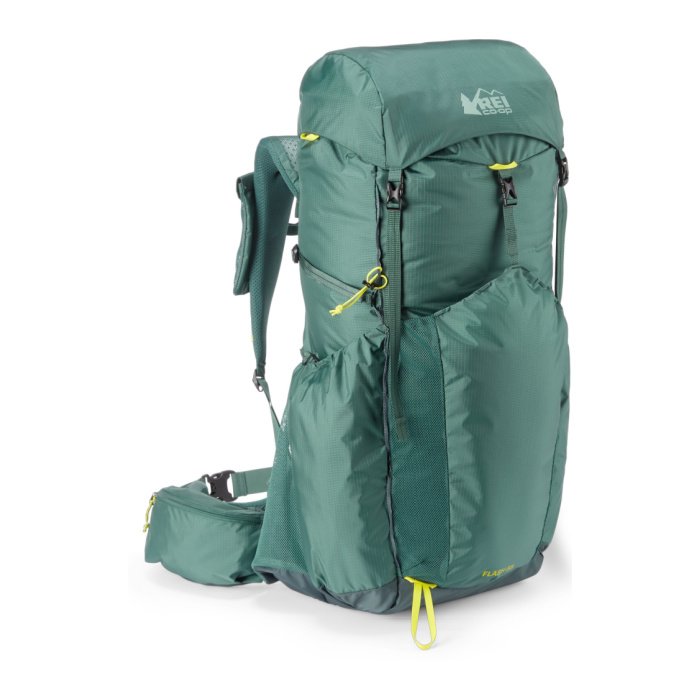
REI Flash 55
Best Budget Backpacking Pack
CleverHiker Rating: 4.7/5.0
Price: $229
Measured Weight: 2 lb. 15 oz.
Volume: 55 L
Max Weight Rec.: 40 lb.
Pros
- Great price and weight
- Supportive frame holds 30 pounds
- Can move strap location and features
Cons
- Lumbar support is average
- Bear canister needs to be stored vertically


Comfort
Nothing about the Flash’s suspension feels plush, but it does the important work at moderate loads. With about 30 pounds aboard, the contoured hipbelt and foam held the pack stable without obvious pressure points, which is enough to support its 4.3 comfort score. The lumbar feel is simpler than premium designs, and winter conditions kept us from overclaiming warm-weather ventilation.
The Flash’s contoured hipbelt and thick foam create a secure feel around the hips, and our 30-pound test load remained stable without obvious pressure points. The frame also felt like it had a little reserve beyond that weight, though we still use the approved 30-pound recommendation rather than treating our impression as a new limit. The back panel uses separated islands of foam with mesh stretched across perforations to encourage airflow.
That layout can distribute pressure differently from person to person, and we would watch for concentrated spots on longer trips even though we did not experience them in winter testing. Warm-weather ventilation is still an evidence gap because our test conditions were cold. What we can say confidently is that the suspension supports moderate loads well and does so at a lower pack weight than most traditional framed designs.
Comfort Score: 4.3 / 5.0

Features
Packmod is what separates the Flash from most packs near its price. The roll-top body, removable lid, adjustable torso, split side pockets, trekking-pole carry, and movable attachment points let owners tune the layout instead of accepting one fixed setup. That adaptability earns a 4.5 for features, even though hikers who prefer a dedicated sleeping-bag compartment will not find one here. The payoff is flexibility without traditional-pack bulk.
The Flash has nearly all of the systems we expect in a lightweight framed pack, including an adjustable torso, removable lid, hipbelt pockets, rear storage, trekking-pole carry, and a roll-top main opening. The roll-top is wide enough for a large bear canister, although the pack shape makes vertical storage more practical than carrying a BV500 horizontally under the lid. The split side-pocket design is especially useful: a forward mesh pocket keeps a water bottle reachable while a second solid-fabric pocket can hold tent poles or even a compact shelter.
REI also adds a shoulder pocket for a phone. Packmod attachment points let hikers move or remove straps and pockets as their setup changes. The missing sleeping-bag compartment is a deliberate weight-saving choice rather than a major omission for the lightweight user this pack targets.
Features Score: 4.5 / 5.0

Durability
REI kept the Flash fairly light without covering it in delicate mesh, and that restraint matters for durability. Recycled ripstop nylon and targeted reinforcement support a 4.3 score for normal trail use, while the mesh hipbelt pocket remains the area we would watch most closely. This is not an abuse-oriented expedition pack, but its vulnerable components are more limited than on many lightweight competitors.
REI uses recycled ripstop nylon and places reinforcement where the pack is most likely to see stress, which is a sensible approach for keeping weight down without making the chassis feel fragile. The Flash also avoids covering every storage area in mesh. Solid fabric on portions of the side storage reduces snag risk, and the modular Packmod approach means some accessory pieces can be replaced or moved if wear develops.
The mesh hipbelt pocket is the most obvious area we would monitor because it sits in a high-contact zone and can rub against rock, branches, or the hiker’s arms. We do not consider the Flash a pack for repeated abrasive off-trail use, but its construction is appropriate for established trails, thru-hiking-style mileage, and normal backpacking care. The durability score reflects that balance rather than heavy-duty overbuilding.
Durability Score: 4.3 / 5.0

Ease of Use
Most of the Flash’s 4.4 ease-of-use score comes from an uncomplicated daily packing routine. The bright, wide roll-top opening exposes the load well, bottle pockets are reachable, and the hipbelt zippers work one-handed; movable compression straps help when the load gets awkward. The exception is a large bear canister, which behaves much better vertically than horizontally under the lid.
The Flash is easy to pack because the main opening is wide, the interior is light enough to see into, and the roll-top closes without a complicated lid sequence. Forward bottle pockets are reachable while walking, and the hipbelt zippers work well with one hand. Repositionable compression straps give hikers flexibility when securing a foam pad, tent, or other awkward load, and the Packmod system lets the user simplify the pack after deciding which accessories they actually use. The main packing quirk is a large bear canister.
A BV500 fits through the opening, but the pack shape does not support horizontal storage cleanly, so vertical placement is usually the practical choice. That requires more attention to load stacking but is not difficult once the user plans around it. Overall, the Flash rewards a simple lightweight packing routine without demanding ultralight-level minimalism.
Ease of Use Score: 4.4 / 5.0

Should You Buy The REI Flash 55?
The Flash is a great fit for backpackers who want to reduce pack weight without giving up a supportive frame or practical organization. Its price-to-weight balance and configurable Packmod system give it more room to grow with a changing gear list than most budget packs. Hikers who prioritize plush comfort should look at the Gregory Paragon, while those who want maximum ventilation may prefer the Osprey Exos. The Flash is strongest as the middle ground: lighter and more adaptable than beginner packs without demanding a fully ultralight system.
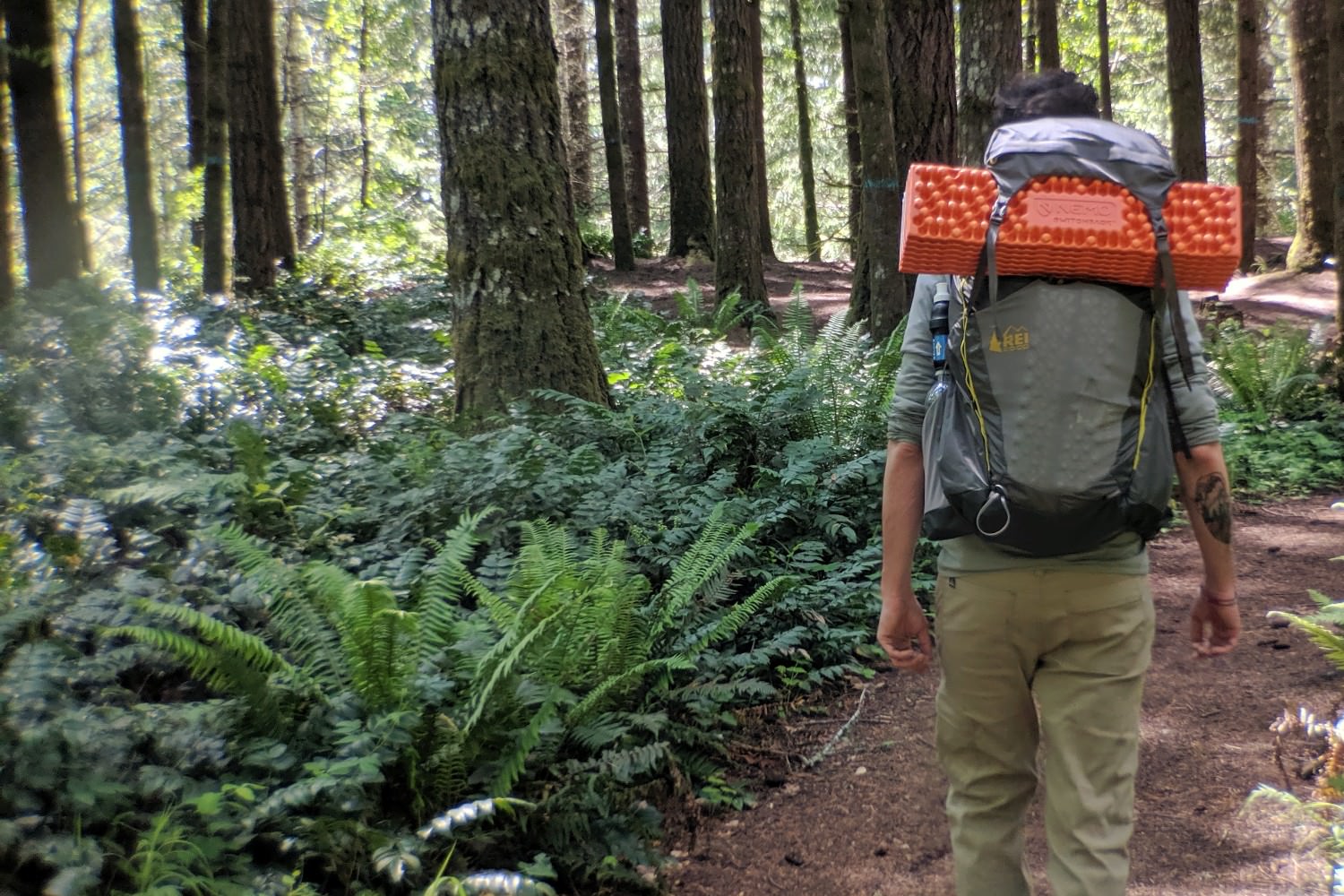
What Other Backpacking Backpacks Should You Consider?
Osprey Exos 58 Review: Pay more for the Exos when suspended-mesh ventilation is worth more to you than the Flash’s value and configurability. The Flash is the stronger value and more adaptable layout, while the Exos feels airier in warm conditions.
Gregory Paragon 60 Review: The Paragon earns its premium for hikers who care more about plush comfort and smoother traditional load transfer than saving ounces or dollars. The Flash is lighter and cheaper, while the Paragon offers the more refined suspension for typical multi-day loads.
Granite Gear Crown3 Review: The Crown3 makes sense if you want more exterior lashing and a pack that can bridge traditional and lightweight systems as your kit evolves. The Flash is easier to use and a stronger overall value, while the Crown3 offers more carry configuration.