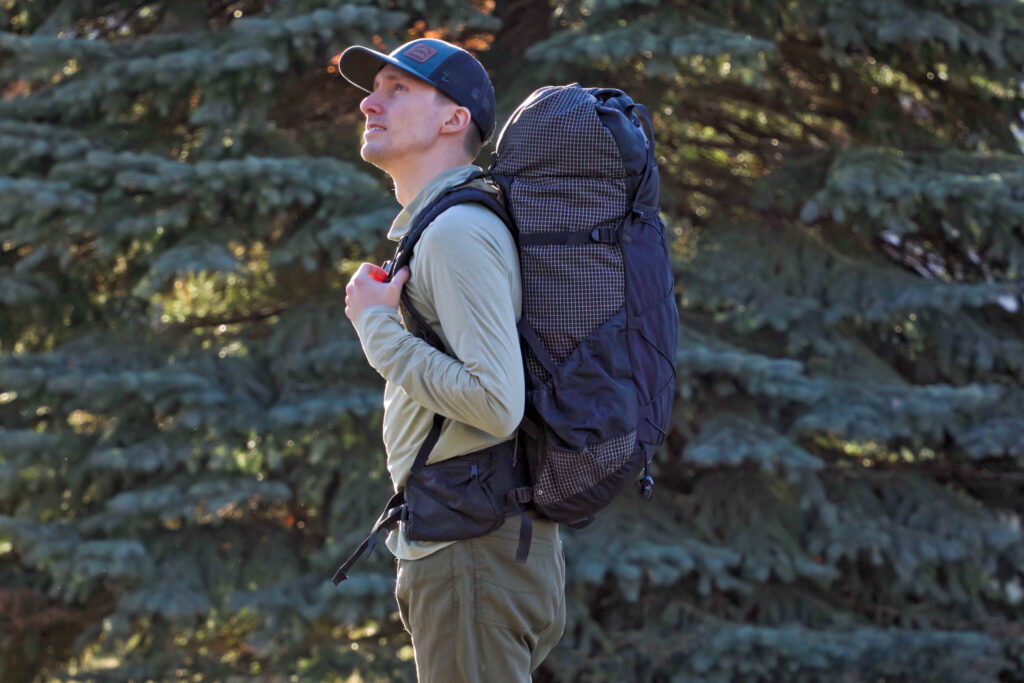
On almost every backpacking trip we take, people stop us to ask how small and light our backpacks look. It’s the best compliment we could get!
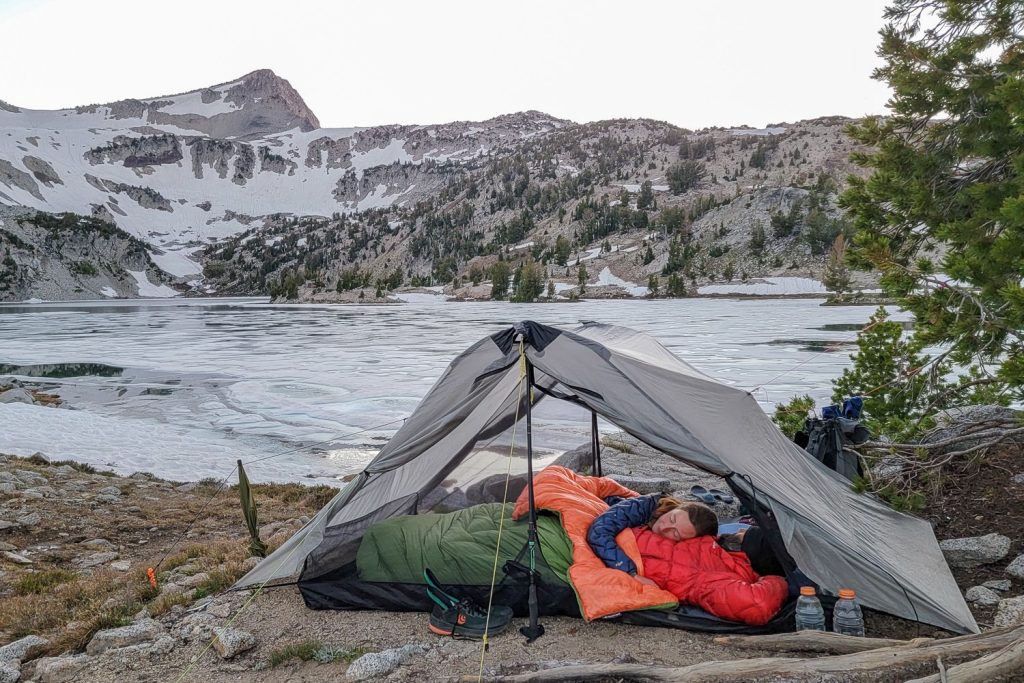
People often assume ultralight backpackers cut out critical pieces of gear, sleep uncomfortably, or even travel unsafely. But the truth is, you can still bring along cushy wide/long sleeping pads, roomy 3-person tents, plush sleeping bags, and even comfortable pillows without breaking your back.
In our ultralight kits, we don’t skimp on warmth, food, or weather protection, and we often have room for a few luxury items like wine or a chair. Backpacking with an ultralight kit allows us to spend less time worrying about aches and pains and more time enjoying side trails and the beautiful scenery around us.
Whether you’re new to backpacking or a traditional backpacker looking to lighten your load, we break down everything you need to know to get started with ultralight backpacking.

How Do We Do It?
So what does it take to go from being a traditional backpacker to an ultralight backpacker? (Hint: It isn’t all about sacrifice)
- Attention to detail
- Investment in quality lightweight gear
- Ingenuity & systems thinking
- Practice
By making thoughtful decisions, tinkering with your equipment to perfect your backpacking setup, and learning what you really need/don’t need through experience, you too can become an ultralight backpacker.
Once you try traveling ultralight, we’re sure you’ll love it so much that you may never go back to your heavy gear again. We’ve heard countless accounts of hikers who find themselves hiking and backpacking more often than they used to because it’s so much easier and more enjoyable. Below, we’ll give you some pointers to help you get started.
Ultralight Backpacking Basics Video
Brand New To Backpacking?
Great! You’re in the right place. Check out our Lightweight Backpacking Foundations video series, which explains what ultralight is and demonstrates options for lightweight shelters, backpacks, sleeping bags, and more. If you like our Foundations videos, you might also enjoy watching our Essential Trail Skills series, which teaches the most critical skills for backpackers of all levels.
We also have a ton of other helpful resources to introduce people to the world of backpacking, including these popular CleverHiker Gear Guides:
- Ultimate Backpacking Checklist
- Best Hiking Shoes for Men / Best Hiking Shoes for Women
- Best Hiking Boots for Men / Best Hiking Boots for Women
- Best Ultralight Backpacking Tents
- Best Backpacking Sleeping Bags & Best Backpacking Quilts
- Best Backpacking Sleeping Pads
- Best Backpacking Backpacks
- Best Backpacking Stoves
- Backpacking Food Planning
- Best Backpacking Water Filters
- Best Rain Jackets
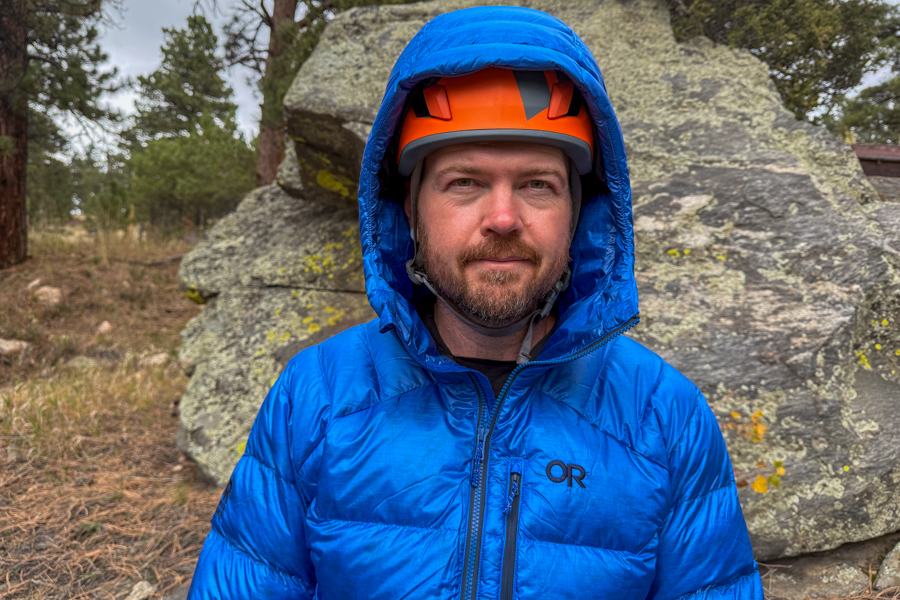
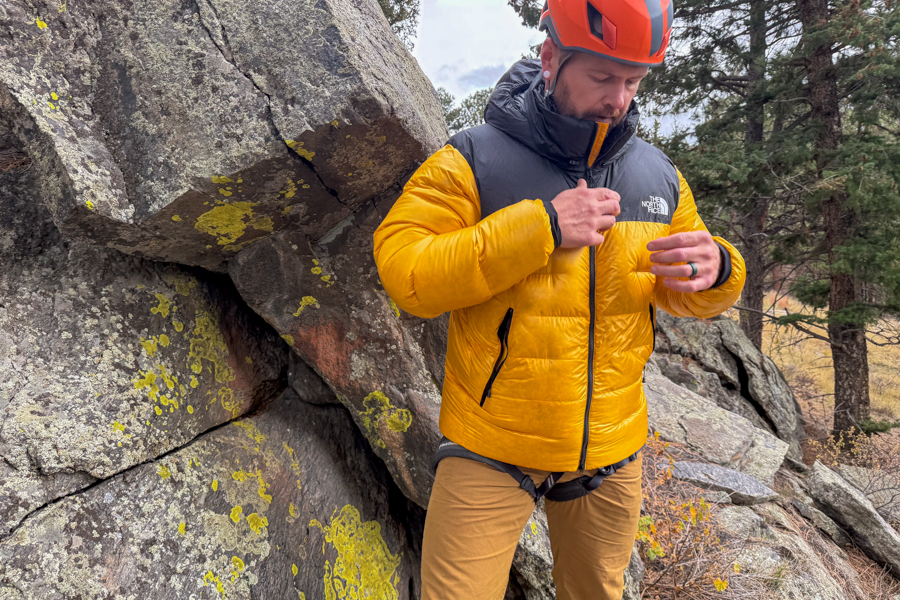
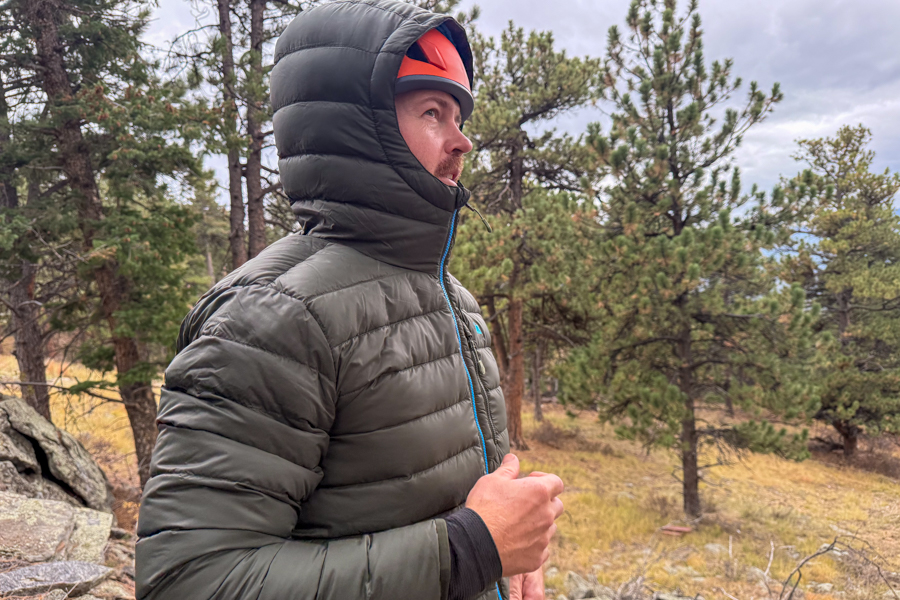
- Best Down Jackets
- And Many More Categories: CleverHiker Gear Guide

Why Are People Obsessed with Being Ultralight?
- More comfortable –With your back straight and head up, you can breathe easier and see more of the nature around you.
- Ability to travel faster and farther using less energy – Less weight on your back means more energy for side trails!
- Greater agility – River crossings, downed trees, and washed out sections of the trail become much easier to pass.
- You may find it easier to tackle more challenging route options – A lighter pack is less of a burden than traditional packs on difficult and steep terrain.
- Fewer injuries – With a lightweight pack on, you’ll be less likely to stumble and fall due to exhausted legs. Your joints and muscles will also thank you for taking some of the pressure off of them.
- Less long-term wear and tear on your body – Over time, your body will be much happier with a lightweight pack – especially your back, knees, and feet.
- Packing up is quicker and easier – The less stuff you carry, the less stuff you have to pack back up in the morning.
- Makes room for luxury items or specialized gear – Ultralight backpacking doesn’t have to mean you don’t bring anything fun. Less weight spent on necessary items means more weight allowance for fun things like a backpacking chair, a flask of wine, or even a game to play in camp.
- Makes backpacking accessible to those with physical challenges or limitations – For some, going lighter may be the only way they can tackle longer or more challenging trips.
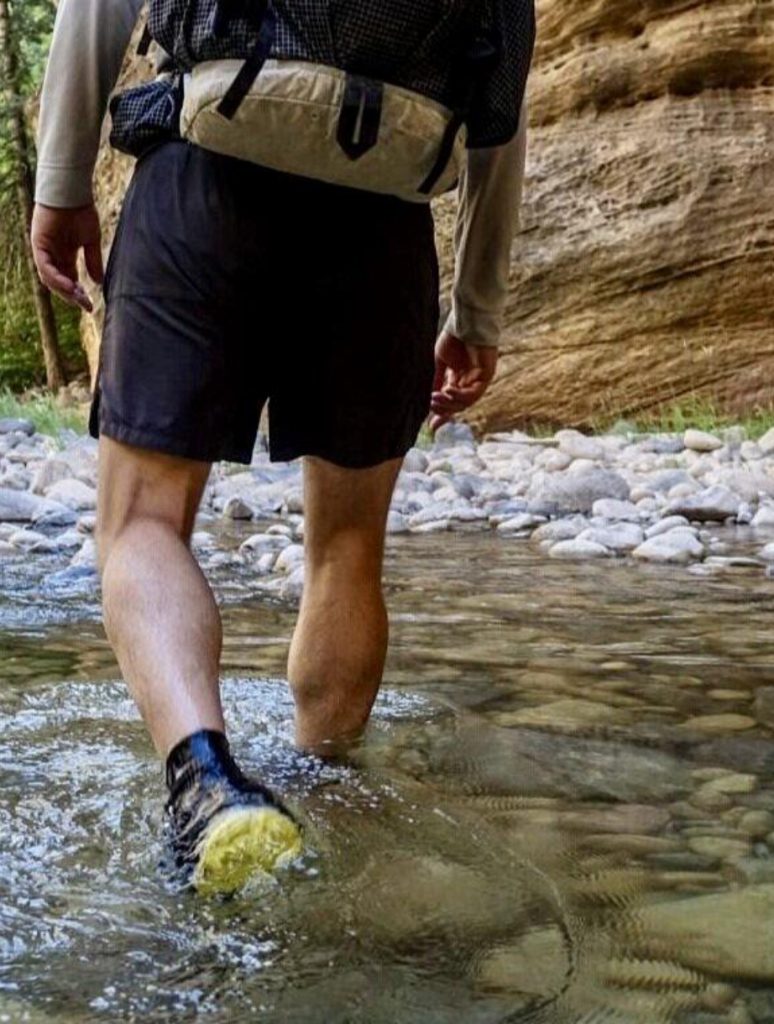
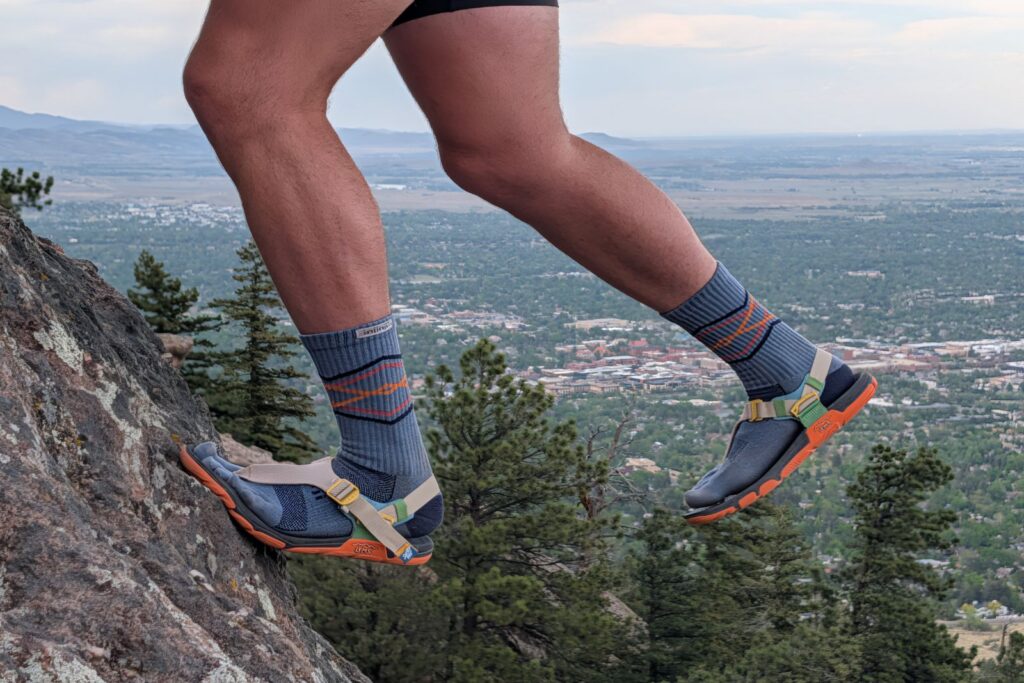
- Ability to wear lighter footwear – Lightweight footwear is more comfortable and saves a ton of energy. Check out our 5 Reasons to Ditch Your Hiking Boots post to see why we love trail runners so much, and our Best Hiking Shoes for Men / Best Hiking Shoes for Women lists for specific recommendations.

Are There Downsides Of UL Backpacking?
- It’s Expensive – UL gear is typically more expensive because it’s higher-tech and made with top-quality materials. We compiled a list of our favorite tips for backpacking on a budget to help get you out there without breaking the bank.
- Your Gear is Less Durable – Lightweight gear can be less durable because it’s typically made with thinner materials, so you might have to replace it sooner or be more cautious with it. That said, with a little care we generally find that our UL gear lasts for hundreds, if not thousands of miles.
- Time – It takes more time to gain experience and develop confidence using UL gear.

What’s the Difference Between Base Weight & Pack Weight?
If you’ve been dabbling in backpacking for some time, you’ve surely heard the words base weight and pack weight thrown around. But what exactly do they mean? We’ll break them down for you.
- Base weight – To calculate gear weight, most ultralight hikers refer to “base weight,” which is the weight of your pack and the items in it that don’t fluctuate during your hike. Food, water, fuel, and other products (like toiletries and sunscreen) you’ll consume during your trip are not counted. Most backpackers consider a base weight between 10 and 20 lbs. to be lightweight. Ultralight would be under 10 lbs. Super Ultralight would be 5 lbs.
- Pack weight – Pack weight refers to the total of your fully-loaded backpack, including food, water, fuel, and everything else except the clothing worn. It’s likely that the longer your trip, the heavier your pack will be starting out at the trailhead.

Do I Try to Keep Consumables Weight Low?
Oftentimes, food and water will be some of the heaviest items in your pack. Because of this, it is crucial to be thoughtful about your strategy around these items.
- Water – Good planning will let you replenish water often instead of hauling it around unnecessarily. Just carry enough water to reach the next reliable water source. Always be a little conservative and take a small amount of extra water. But remember that liquids are among the heaviest items in your pack, so they add substantial strain to your backpack and body. Start out well-hydrated and know how much water you consume on average to get to the next source. For more tips on watering up, check out our 20 Tips for Backpacking in the Desert guide.
- Food – Ultralight backpackers need a variety of foods that are easy to prepare, delicious, nutritious, and reasonably “durable” so they won’t spoil or turn to crumbles during the trip. The lightest option is dehydrated or freeze-dried meals and calorie-dense foods, all in lightweight packaging. Hikers usually need about 1-2 lbs. of food per person per full day on the trail to stay satiated. Reduce as much weight as possible by repackaging foods in Ziploc bags before your trip. Your food bag may start out a bit heavy and bulky, but each day it will get lighter and smaller as you get stronger and faster.
Check out our Best Lightweight Backpacking Food guide to get ideas of foods you can take on your next backpacking trip, or learn about how to make your own dehydrated backpacking meals with our 13 Great Backpacking Meal Recipes & Food Dehydration Tips. No time to make anything? We’ll give you the inside scoop on which store-bought freeze-dried meals are the best in our experience.

How Do I Become an Ultralight Backpacker?
BUY OR REPLACE HEAVY ITEMS WITH UL ONES
The quickest way to shave serious weight off of your kit is to replace your “Big Three”: your backpack, sleep system and shelter. To be considered ultralight, aim for your biggest items to be no more than 1-3 pounds each.
Choosing lightweight, sturdy, and dependable gear can be pricey, but it’ll be well worth it since you’ll use it for years to come. Here are a few of our favorite UL big three items:
- Backpack: Hyperlite Mountain Gear Southwest 2400 (1 lb. 14 oz.)
- Sleeping Bag: REI Co-op Magma 15 & 30 (1 lb 12.2 oz. & 1 lb. 3.8 oz.)
- Sleeping Pad: NEMO Tensor Elite (Reg.: 1 lb., Long: 1 lb 4 oz.)
- Shelter: ZPacks Duplex & Triplex (1 lb. 3.4 oz & 1 lb. 6.5 oz.)
TAKE JUST ENOUGH GEAR TO BE SAFE, COMFORTABLE & CONFIDENT
A big part of traveling light is knowing what NOT to bring. People tend to pack for their fears. Afraid of going hungry? You may bring too much food. Fearful of being cold? You may bring too much clothing or an unnecessarily heavy sleeping bag. Afraid of getting injured? You may bring an unnecessarily beefy first aid kit.
An Ultralight Backpacking Checklist can help keep you on track and determine what’s critical and what’s superfluous. When you’re on the fence with an optional item, ask yourself this: “What would happen if I didn’t have this piece of gear?” Often the answer is, “Eh, I’d be fine.”
KNOW THE ACTUAL WEIGHT OF EACH ITEM
Measuring gear with a digital scale will give you an accurate picture of the weight of your kit. Gear manufacturers tend to understate the weight of their products to make them more attractive, so it’s a good idea to weigh them yourself. Some people like to mark each item’s actual weight with a Sharpie or record it in a notebook. The most useful method, in our opinion, is to create a spreadsheet to calculate your pack weight as you add and subtract items and it can help you analyze your gear piece-by-piece or as a whole.

LOOK FOR ITEMS THAT CAN SERVE MULTIPLE PURPOSES
For example, replace one of your tent stakes with a snow stake that can be used as a spade to dig cat holes as well as an anchor for your shelter. You just eliminated the need to carry a trowel which only has one use.
A simple bandana can also be used as a washcloth, hanky, pot holder, sunglasses case, and sun shield for your neck if placed under a hat. Using your imagination and ingenuity. Explore the options for each item and see if you can do without some things that only have a single purpose.
USE THE SMALLEST ITEMS THAT WILL MEET YOUR NEEDS
Can you replace your heavy pocket knife with a small, lightweight multitool? You should also consider trimming things down whenever possible since even tiny bits of weight add up.
Break off the handle of your toothbrush, trim extra straps from your pack, and remove the cover of that novel you plan to read, then break it into sections you can pack in your resupply boxes. It may not seem like much, but there’s a saying in UL backpacking: ounces equal pounds, and pounds equal pain. Once you start looking at wasted weight or redundant items in your system, you’ll find at least a pound to ditch.

DRESS EFFICIENTLY
As hikers, we expect a lot from our clothing. It has to insulate us from the cold, breathe well, dry quickly, and protect us from the elements. Because of these demands, it’s common to overpack clothing, making backpacks unnecessarily heavy and bulky.
It pays to invest time and money in dialing in your clothing to create a working system you can adjust to meet all your needs in as few garments as possible.
An adequate clothing system for hiking and backpacking is really important for your safety in the backcountry. Essentially, wear versatile clothing and ditch items with a narrow use case. Streamlining your clothing system to make it simple, comfortable, and lightweight will help you enjoy your outdoor experience more.
To get started, check out our backpacking & hiking clothing 101 article where we break down tips for creating the perfect ultralight clothing system.
Watch our ultralight clothing and rain gear video to learn the basics of backpacking clothing, then use our Ultimate Backpacking Checklist to start dialing in your duds.

Share Your UL Hacks!
Training properly before a big hike is also an essential piece in making your pack feel manageable and reduce the chances of injury.
Have fun learning how to dial in your UL system and ask your backpacking friends what their hacks are. Ultimately, you gotta hike your own hike, and your pack ends up feeling like part of your soul after a long thru-hike.
Share with us your experiences with finding the perfect pack weight and gear! Happy trail.