Bottom Line
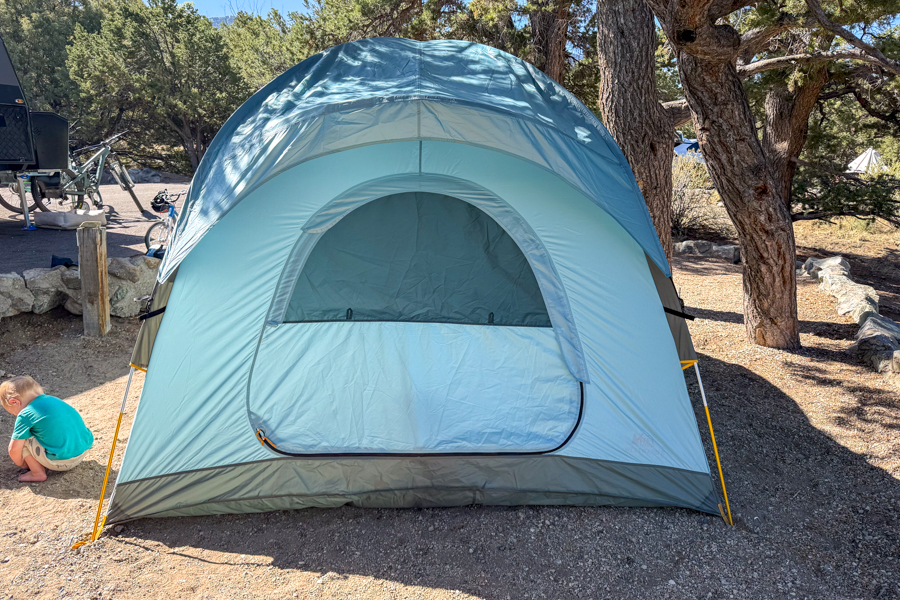
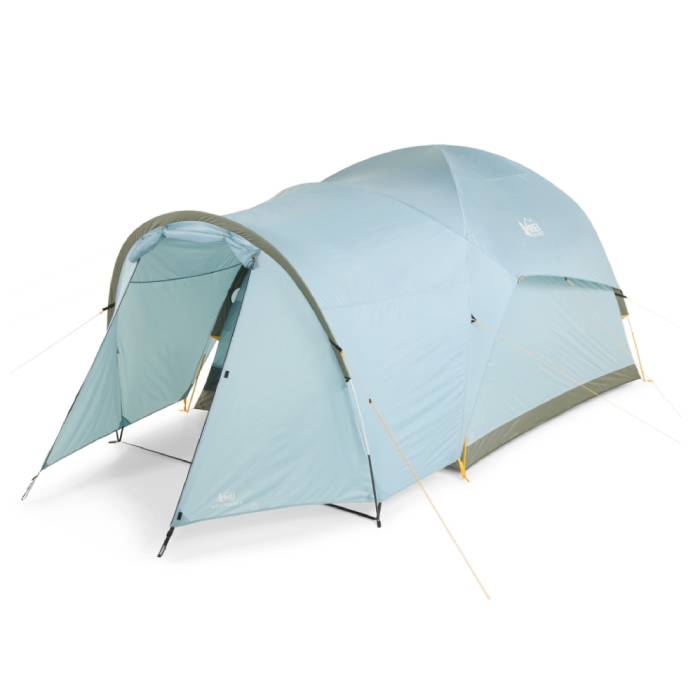
The REI Westward 6 is one of the most comfortable large camping tents in our lineup. Its 77-inch peak height is the tallest we tested, the interior feels open rather than cramped, and the 35.1-square-foot front vestibule adds enough covered space to function as a porch instead of merely a place to stash shoes.
The partial-coverage rainfly is the feature that most clearly defines this tent. In warm weather, it allows more airflow than the fully enclosed six-person tents we tested. Even in direct sun with a breeze, the interior stayed noticeably cooler. The downside is that the Westward gives up some protection in long stretches of wind-driven rain, so it is better suited to mild and moderate three-season conditions than frequent storm camping.
Setup is manageable thanks to color coding and pole sleeves, but the sheer size and height make the fly easier with two people. We like the build quality, doors, windows, and external storage details. For families who want a roomy, polished basecamp and prioritize comfort and airflow, the Westward is a strong alternative to the Wawona 6.
How We Tested
Our Westward 6 test focused on how a tall family tent changes with weather and setup style. Ben Dawson, a CleverHiker gear analyst, put it through multiple Colorado nights, from windy camps at Great Sand Dunes National Park to early-spring foothill conditions and warm summer campground stays. He pitched it both solo and with a partner and ran it with and without the fly, giving us a useful basis for evaluating the full vestibule, ventilation, weather protection, durability, and livability.
Quick Specs
- Capacity: 6-person
- Floor area: 80.8 sq. ft.
- Front vestibule: 35.1 sq. ft.
REI Westward 6
Best Luxury Camping Tent
CleverHiker Rating: 4.6/5.0
Price: $549
The size we tested feels: Luxurious for 2, comfortable for 3-4, manageable for 5-6
Measured Weight: 19 lb. 10 oz.
Dimensions (LxWxH): 120 x 97 x 77 in.
Pros
- Tall, roomy interior
- Huge pole-supported vestibule
- Excellent ventilation
- Large doors
- Color-coded setup
- Useful external storage
Cons
- Partial fly is less protective in prolonged rain
- Fly is awkward to pitch solo
- Carry bag is sloppy
- Guylines are not pre-attached
Spaciousness & Comfort
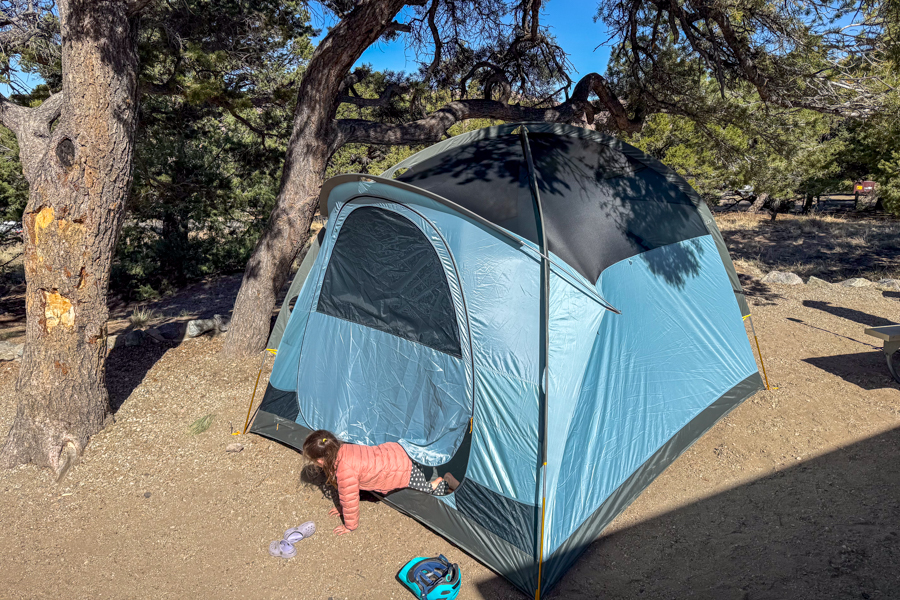
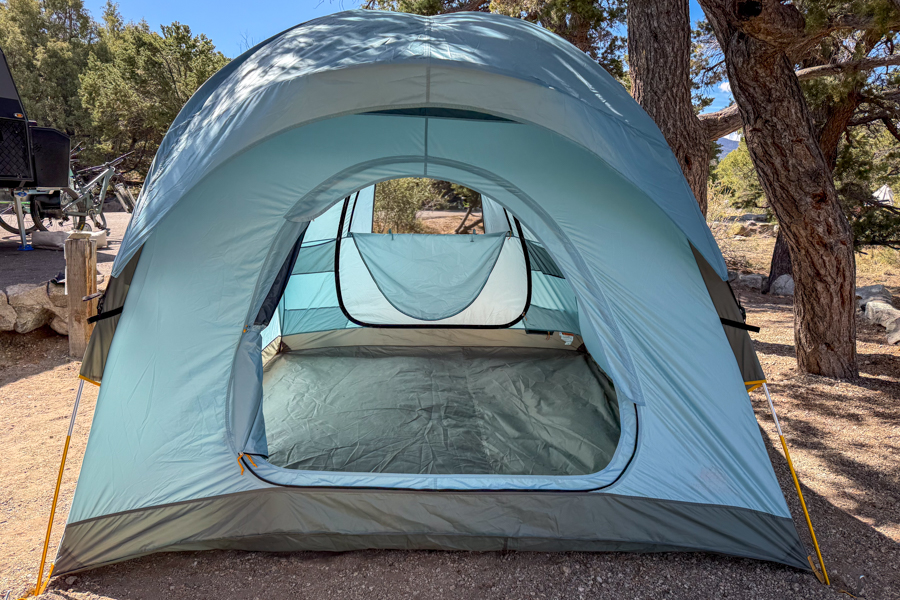
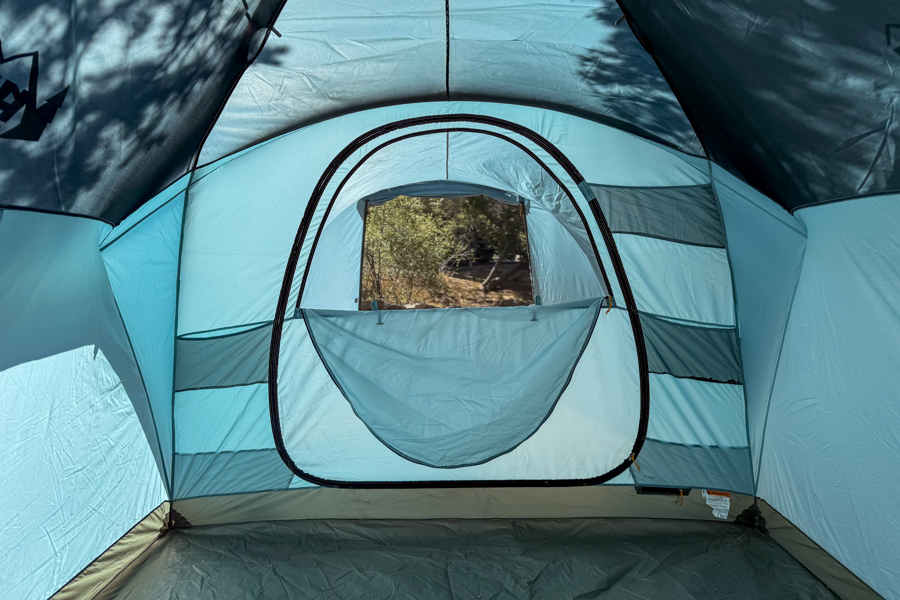
The Westward 6 is one of the most comfortable large tents we tested, especially for tall campers. Its 77-inch peak height is the tallest in our current lineup, and at 6 feet 2 inches our lead tester still had clear headroom near the center. A brow pole pushes the upper walls outward around the front of the tent, so the ceiling does not immediately collapse toward the door. That creates a broader standing and changing area than the peak-height number alone would suggest.
For two people, the Westward feels extremely luxurious. Three or four campers have ample sleeping and gear space, and five or six are manageable if everyone accepts a more crowded setup. The 120-by-97-inch floor provides enough width for family sleeping systems without turning every trip across the tent into an obstacle course.
Warm-weather comfort is a major strength. The partial fly leaves more mesh exposed than a full-coverage storm tent, and we noticed the difference during direct Colorado sun. With a breeze and the windows open, the Westward stayed cooler than many more enclosed six-person shelters. The tradeoff arrives after sunset: that same airflow means it does not retain warmth especially well on cold shoulder-season nights.
The 35.1-square-foot front vestibule expands the livable footprint further. It can hold chairs, bikes, footwear, and bulky gear instead of forcing those items into the sleeping area. Campers who value a tall, airy room and covered porch space will find the Westward exceptionally comfortable; those who camp primarily in cold or prolonged wet weather may prefer the more enclosed Base Camp 6.
Comfort Score: 4.6 / 5.0
Ease of Setup
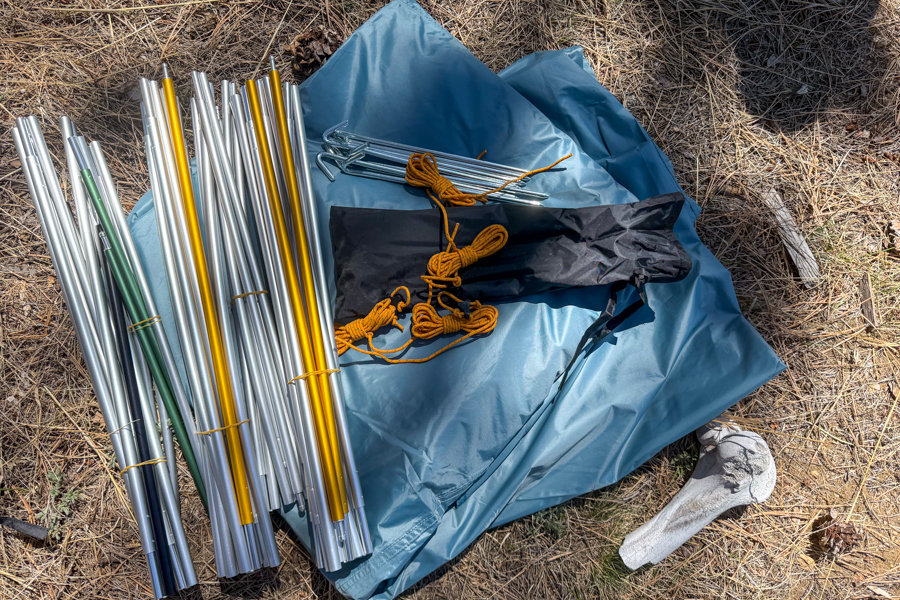
The Westward 6 looks complicated when it is spread across the ground, but the pitching process is more logical than its size suggests. REI color-codes the poles, sleeves, and webbing, which makes orientation straightforward. The main poles feed through sleeves rather than relying only on clips, and once they are seated the structure begins to feel stable quickly. We tested the tent through repeated setup and breakdowns, both solo and with a partner, so we got a good sense of where the process slows down.
Height is the main obstacle. Raising a 77-inch tent and pulling the large fly into position takes more reach and leverage than setting up a smaller dome. Solo pitching is possible, but the fly can become awkward when there is wind because one person has to control a lot of loose fabric above shoulder height. With a partner, the process is much smoother and better suited to the premium family-camping experience the tent is designed to provide.
The large vestibule adds another step because its pole-supported shape needs to be tensioned correctly. Once learned, though, it is not a confusing system. We appreciate that the structure gives clear visual cues when something is misaligned.
Packing is easier than pitching. The carry bag opens wide, which reduces the usual struggle to force a large family tent through a narrow mouth. The closure itself is less refined and can leave the packed bundle looking sloppy. Overall, setup is reasonable for the amount of space delivered, but campers who routinely pitch alone should consider the easier Wireless 6 or a smaller shelter.
Ease of Setup Score: 4.4 / 5.0
Weather Resistance
The Westward 6 is best understood as a warm-weather and moderate-condition tent rather than a storm specialist. Its partial fly is the reason it ventilates so well, but it also leaves more of the tent body exposed than the full-coverage design on the REI Base Camp 6. In normal rain and mixed three-season conditions, the shelter performs as intended. For prolonged wind-driven rain, we would rather have more complete fly coverage.
Wind performance depends heavily on the pitch. We tested the Westward at Great Sand Dunes National Park, where gusty conditions quickly reveal weaknesses in tall tents. Once we took the time to secure the shelter and use the guyout points, the aluminum-pole structure felt stable. The pole sleeves also create continuous support along the frame rather than concentrating every load at a few clips.
The frustrating part is that the guylines are not pre-attached and the tent does not include dedicated stakes for all of them. On a 77-inch-tall shelter, fully anchoring the structure is important enough that we would prefer REI to supply everything needed out of the box. Campers heading somewhere exposed should bring extra stakes and attach the guylines before leaving home.
Temperature management is where the weather trade becomes clearest. Mesh-heavy walls and the partial fly make hot camps more tolerable, but cold air moves through easily on chilly nights. We recommend the Westward for families who mostly camp in mild to warm three-season conditions. If rough-weather security is a higher priority than airflow, the Base Camp 6 is the stronger REI option.
Weather Resistance Score: 4.4 / 5.0
Durability & Quality
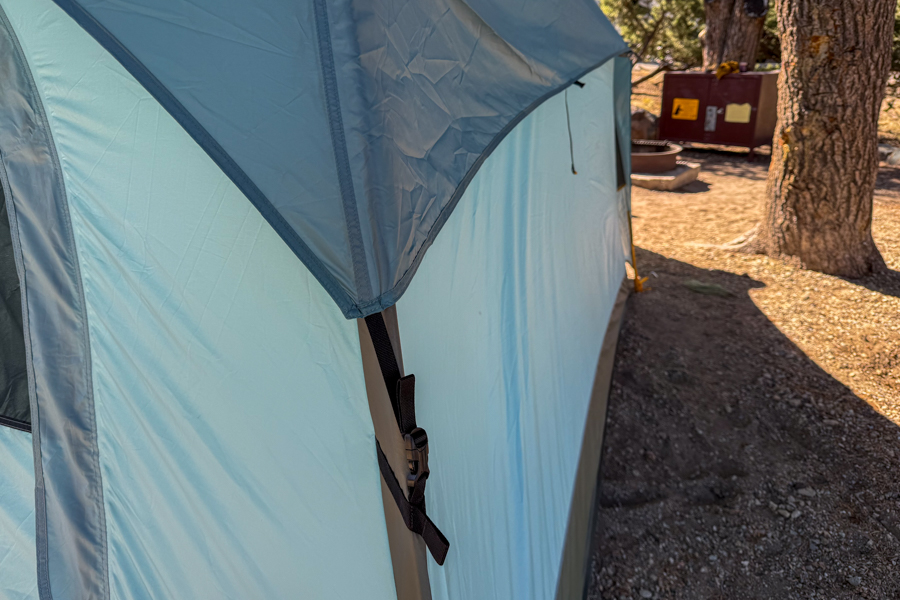
The Westward 6 feels like a premium family tent as soon as you start handling it. The fabrics, webbing, sleeves, and hardware all feel more substantial than what we encounter on many lower-cost six-person shelters. Nothing about the body or fly gave us the impression that the tent was designed only for occasional backyard-style use. For families who camp regularly, that material quality helps justify the higher price.
The aluminum pole set is another important upgrade over the fiberglass frames common in budget tents. Once the Westward is fully tensioned, the poles feel solid and the sleeved architecture distributes loads along longer sections of the frame. At windy Great Sand Dunes camps, we saw how much correct guying matters, but we did not come away concerned about the basic strength of the pole system.
The partial fly is the one durability-related design choice we would watch over years of use. It is not poorly made; rather, it leaves more of the tent body directly exposed to sun and weather than a full-coverage fly. Campers who leave the tent erected for long stretches may see the body take more UV exposure than it would beneath a larger fly.
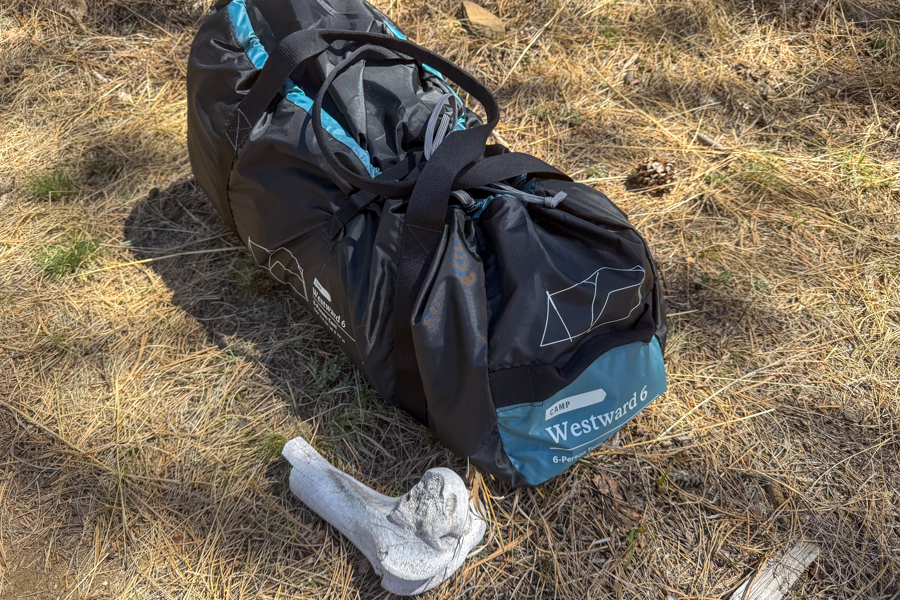
The carry bag is functional but does not match the polish of the tent itself. Its wide opening makes packing easy, while the cinch closure does not compress the load particularly neatly. That is a minor annoyance rather than a durability problem. Overall, the Westward’s core materials and aluminum frame feel appropriate for a tent positioned as a luxury family-camping option.
Durability Score: 4.5 / 5.0
Features
The Westward’s feature set is built around making a large family campsite more functional. The 35.1-square-foot front vestibule is the centerpiece. It is large enough for two camp chairs plus gear, and during testing we also used it to store bikes overnight. Because the vestibule has its own support pole, it holds a useful shape instead of sagging into the entryway. The front panel can also be configured as an awning with trekking poles, adding shade or rain cover when conditions are mild enough.
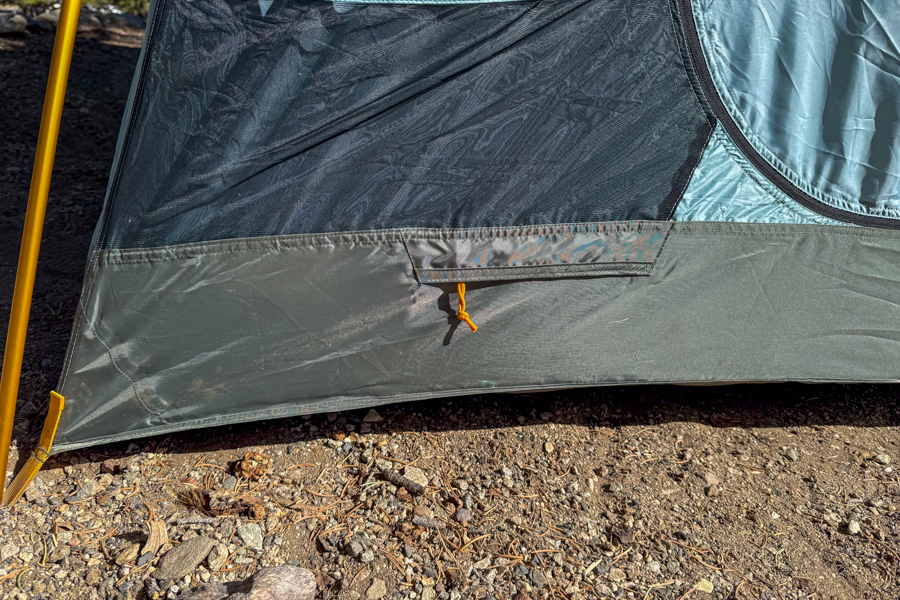
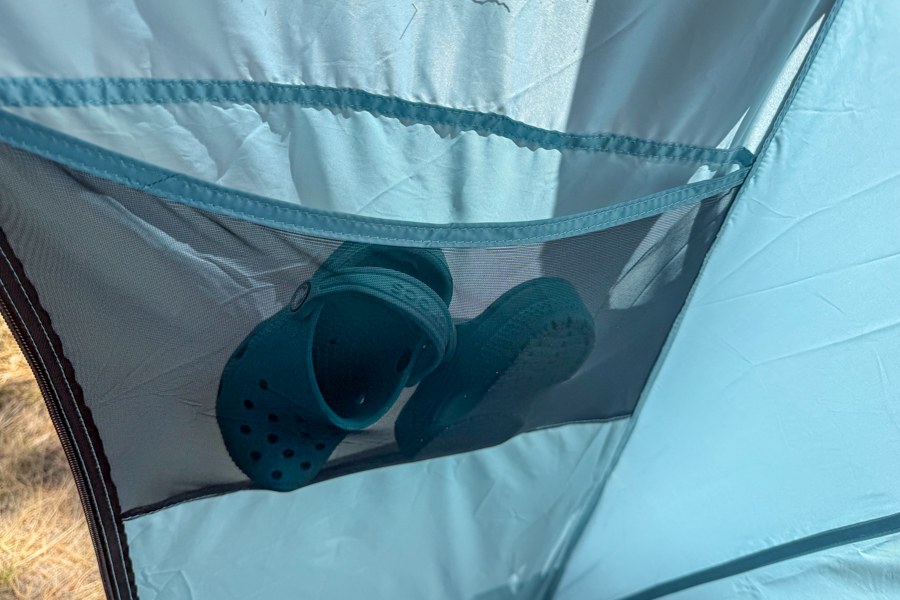
Both doors are large and easy to use, and half-moon zippered windows add another way to control airflow without fully opening the shelter. An external pocket by the main door is useful for items you want to grab without entering the tent. Inside, the open floor plan and tall walls make it easy to use the storage that is provided without creating a cluttered feeling.
Color coding throughout the pole, sleeve, and webbing system is a practical setup feature rather than a cosmetic touch. On a tent this large, quickly knowing which piece belongs where reduces frustration. The pole sleeves themselves also contribute to stability in wind.
We wish the guyline system were more complete. The lines are not pre-attached, and campers need extra stakes to use every anchor point. The carry bag is also less tidy than expected at this price. Those shortcomings do not outweigh the vestibule, windows, airflow, and usable exterior storage, which make the Westward particularly appealing for comfortable multi-night family camps.
Features Score: 4.6 / 5.0
Should You Buy the REI Westward 6?
Choose the Westward 6 if you camp mostly in fair to moderate weather and want a tall, comfortable family tent with excellent airflow and a true covered porch. It is especially appealing for warm-weather trips and multi-night basecamps.
Look elsewhere if storm protection is your top priority. The Base Camp 6 offers better full-coverage weather protection, while the Wawona 6 combines a massive vestibule with a more weather-versatile design.
What Other Camping Tents Should You Consider?
The North Face Wawona 6 Review: The Wawona 6 is our better all-around premium basecamp choice when weather protection and covered living space matter as much as interior comfort. Its enormous front vestibule works as a true sheltered hangout area, and our testing gives us more confidence in sustained rain and wind than the Westward’s partial-fly design. The Westward still has the edge for peak standing height and warm-weather airflow, so mild-climate campers may prefer its more open feel.
REI Base Camp 6 Review: Families who routinely camp in mixed weather and bring enough gear to make organization important should look closely at the Base Camp 6. Its full fly, two vestibules, and extensive pocket system make it easier to keep equipment sorted and protected when conditions deteriorate. The penalty is setup complexity: the Westward is less cumbersome to pitch and feels more inviting in fair weather.
NEMO Aurora Highrise 4 Review: Couples and small families who want premium construction without a giant six-person footprint will find the Aurora Highrise 4 easier to live with. It sets up quickly, still offers true standing height, and feels easier to place on tighter campground pads. You lose the Westward’s expansive floor plan and oversized vestibule, but you gain a shelter that is simpler to manage trip after trip.