

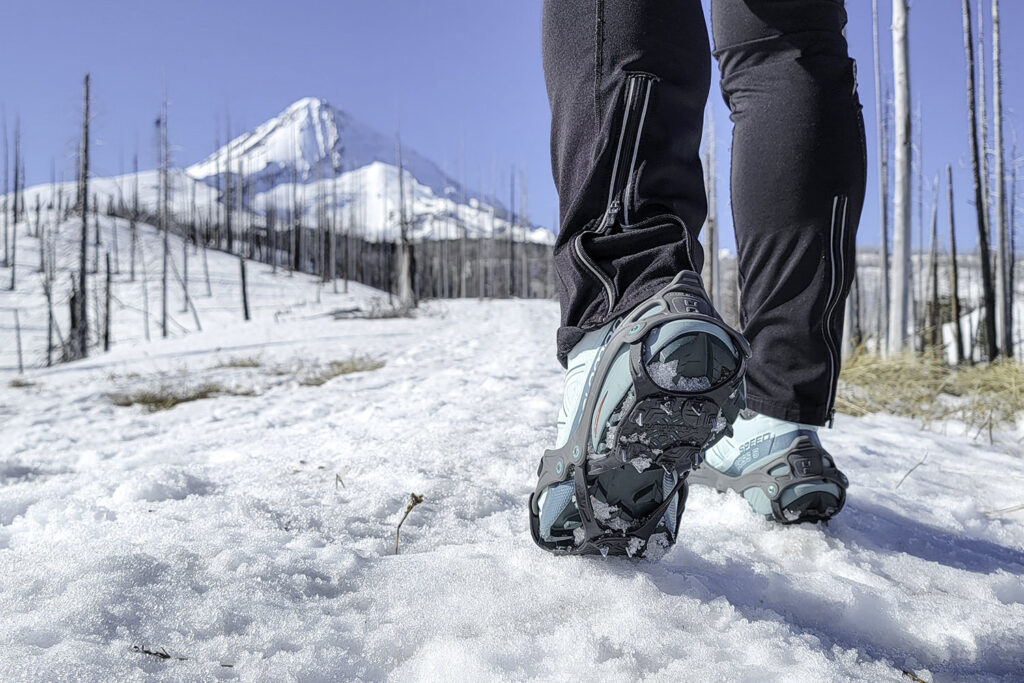
We’ve researched 40 sets of spikes, studs, and chains over the years to find the ones with the best traction, ease of use, durability, and weight. We picked out our favorites and hiked mile after mile on soft snow, hard pack, and urban environments. We even tackled icy, class-four scrambles in the Rocky Mountains. From our extensive testing, we’ve derived recommendations for all conditions.
Featuring traction devices from Black Diamond, Kahtoola, Korkers, Hillsound, and Yaktrax, this guide will point you toward the best ice cleats for your personal needs.
Editor’s Note: We updated this guide on August 6, 2026, to ensure prices and product specs are accurate and to confirm we still stand behind the picks on our list.
How We Test Ice Cleats & Traction Devices
We spent weeks analyzing, hiking, and trail running in each pair of ice cleats to determine the best pair for every application. We evaluated all potential deal-breaking factors, including traction, fit, ease of use, versatility, weight and packability, and durability.
And for more info, check out some of our other most popular gear guides:

#1. Best Ice Cleats Overall
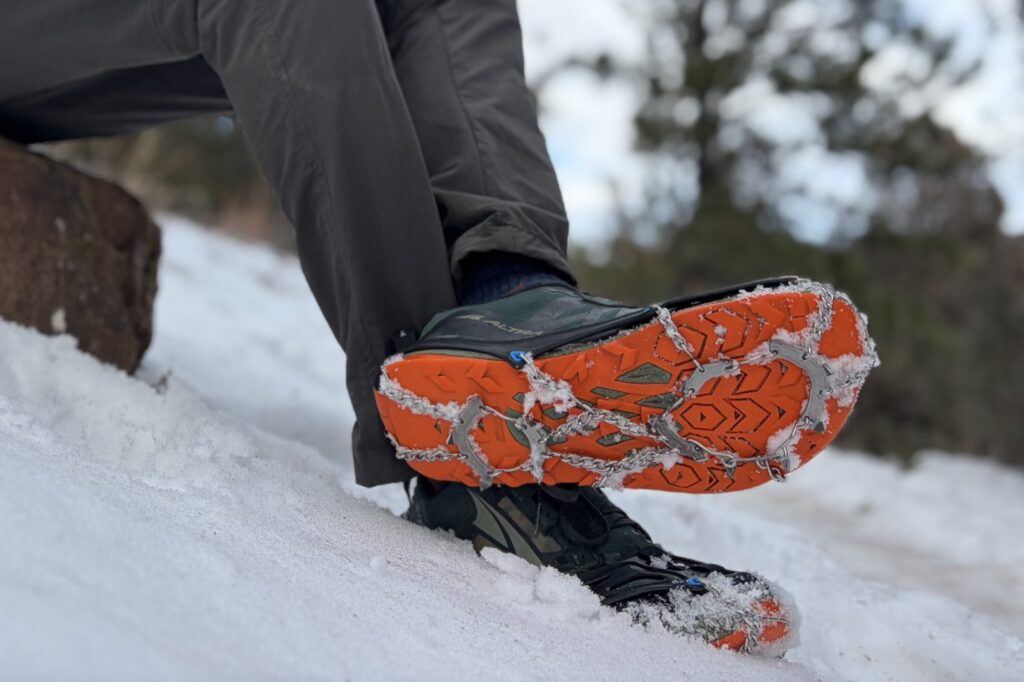
The Black Diamond Access Spike are the top overall thanks to exceptional comfort, aggressive traction, and light weight. The 14 spikes kept us upright all winter long, no matter what outdoor activity we chose.

Quick Picks for Ice Cleats/Winter Traction
Check out this quick list of our favorite traction devices, or continue scrolling to see our full list with in-depth reviews.
1. Best Ice Cleats Overall: Black Diamond Access Spike ($100)
2. Best Hiking Spikes: Kahtoola MICROspikes ($90)
3. Best Running Spikes: Black Diamond Distance Spikes ($120)
4. Most Aggressive Hiking Cleats: Kahtoola EXOspikes ($80)
5. Most Aggressive Hiking Spikes: Hillsound Trail Crampon ($85)
6. Most Secure Fit: Korkers Ice Runner ($70)
7. Best Mild Conditions Running Cleats: Kahtoola NANOspikes ($70)
8. Best Semi-Technical Spikes: Kahtoola K-10 ($120)
9. Best Budget Spikes: Yaktrax Walk ($23)
10. Best at Shedding Snow: Yaktrax Diamond Grip ($60)
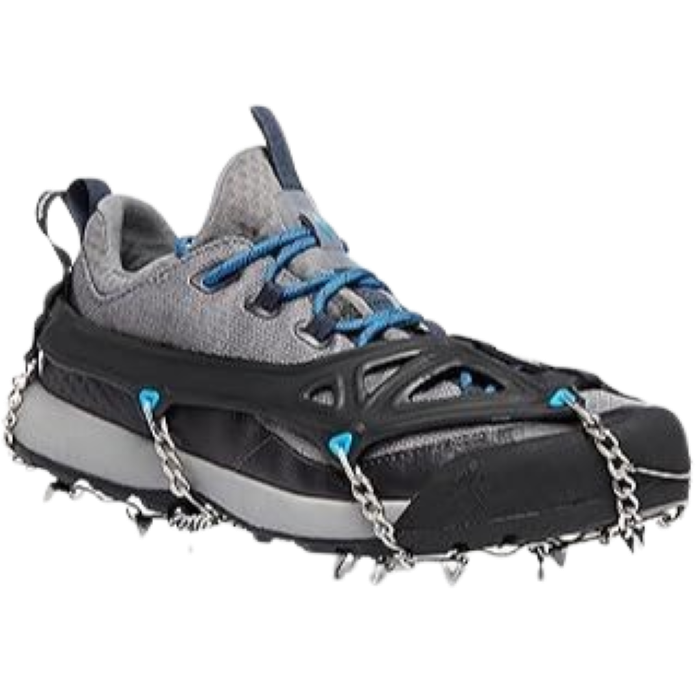
Black Diamond Access Spike
Best Ice Cleats Overall
CleverHiker Rating: 4.8/5.0
Price: $100
Weight: 8.9 oz.
Type: Micro Spikes
Best Use: Non-technical winter hiking
Pros
- Excellent traction
- Secure and comfortable fit
- Lightweight
- Included stuff sack
Cons
- Not as heavy-duty as others
- Overkill for casual use
The Black Diamond Access Spikes are a solid traction device built for winter hikers who want a balance of aggressive traction, weight, and all-day comfort. They grip strongly, feel good, and stay secure on your feet without adding extra bulk.
During our field tests, the 14 stainless steel spikes bit cleanly into firm snow and icy patches, and the toe spikes provided extra purchase on steeper ascents. They’re not made for technical mountaineering or mixed rock travel, but for typical winter hiking, they’re exceptionally capable and confidence-inspiring.
The fit and comfort are equally impressive, thanks to the full-coverage elastomer harness and enclosed toe box. This design hugs the shoe firmly without pressure points or sloppiness — issues that plague other cleats. Even on longer outings, the Access Spikes stayed locked in and comfortable, which is crucial for all-day winter outings.
The spikes are equally refreshing to use and pack away. They go on smoothly, with a clearly defined toe and heel, and the pull tabs help with gearing up when hands are cold. The included stuff sack compresses the cleats down small and helps keep your pack organized. At around 9 ounces for the pair, they’re light enough for most hikers while still delivering aggressive traction.
On the downside, they’re a little awkward on dry ground and not quite as durable as heavier-duty competitors. The Access Spikes’ price point is on par for the category, offering excellent value while masterfully balancing weight, traction, and comfort.

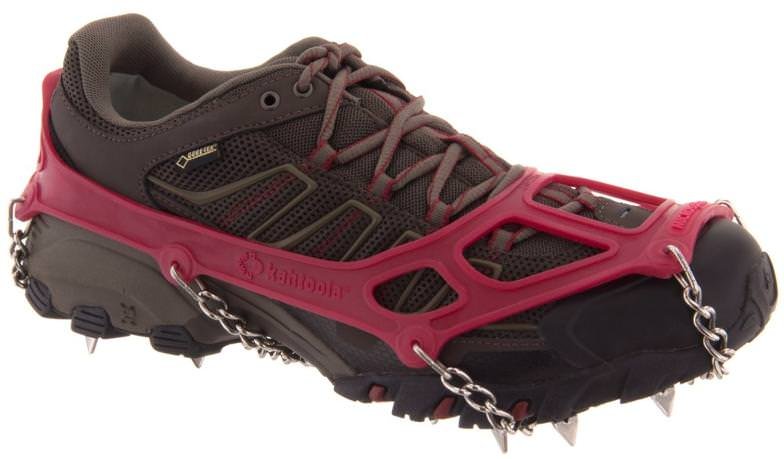
Kahtoola MICROspikes
Best Hiking Spikes
CleverHiker Rating: 4.7/5.0
Price: $90
Weight: 11.9 oz.
Type: Spikes
Best Use: Hiking
Pros
- Aggressive traction
- Good durability
- Relatively compact
Cons
- A bit expensive
- Heavier than some
If you’re having a hard time deciding on one pair of traction devices to do it all, the Kahtoola MICROspikes are our go-to recommendation. They offer the best balance of traction, comfort, weight, and packability, providing a ton of versatility and value.
The 9.5-millimeter spikes are the perfect size to instill confidence on steeper, icy terrain while not being overly clumsy when crossing sections of dry and rocky trail. Though we consider them best suited for ice and packed snow, you won’t often need to remove the spikes to cross dirt, mud, or even the occasional wooden bridge.
Weighing about 169 grams (about 6 ounces) per foot, the MICROspikes are definitely noticeable but light enough not to cause any major foot fatigue. The MICROspikes gave us no trouble on long winter hikes, but we have better recommendations for serious trail runners.
The durable thermoplastic elastic harness remains stretchy even at subzero temperatures and provides a secure, comfortable fit. The attachment points for the stainless steel chains and spikes are reinforced for durable construction that is easy to repair if anything comes loose.
The spikes are straightforward to use, with a clearly marked front to avoid confusion when pulling them on and off. Our only gripe was the occasional need to snug up the heel as it tends to slip down while hiking.
The MICROspikes are a tad more expensive than other options on our list, but we think the value and versatility more than justify the investment.
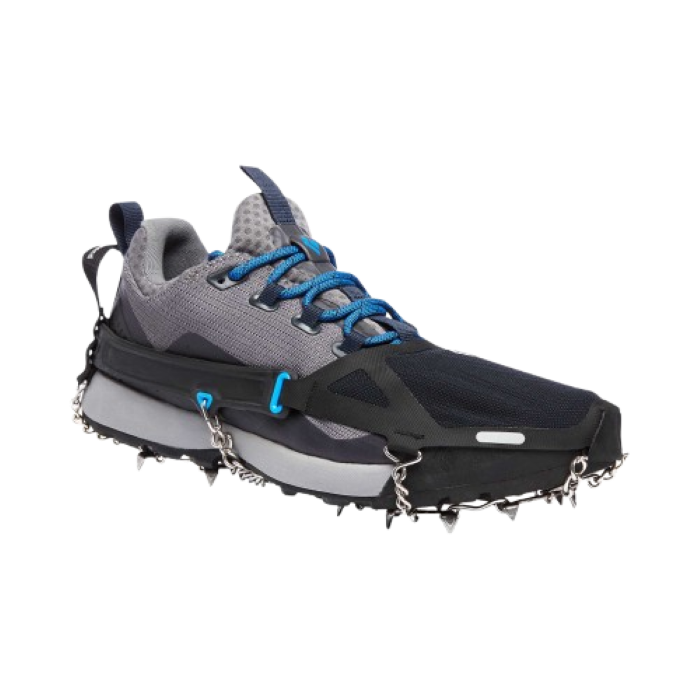
Black Diamond Distance Spikes
Best Running Spikes
CleverHiker Rating: 4.7/5.0
Price: $120
Weight: 4.1 oz.
Best Use: Trail running
Pros
- Very light and packable
- Secure and comfortable fit
- Aggressive traction for running
Cons
- Expensive
- Not the most durable
The Black Diamond Distance Spikes are aggressive trail-running traction devices made to tackle the most challenging winter terrain. The 8-millimeter spikes provide significantly more traction than most trail-running cleats while remaining versatile enough for dry trail surfaces such as dirt and gravel. They seamlessly transition across varied terrain, so you can keep up your pace without having to constantly take the spikes on and off.
The spikes do, however, come on and off quite easily when desired. The thumb loop on the heel allows for quick adjustments, and the front and back are easily identifiable.
The soft shell toe cap is the standout feature of the Distance Spikes, providing a secure, comfortable fit and maximum weight savings. The spikes stayed snug against the bottom of our trail runners even after several miles on trail. They are low-profile enough to avoid unwanted snagging but big enough to provide ample traction.
In addition to their comfortable fit, the mesh toe caps reduce weight. At just 57.5 grams (2 ounces) per foot, the Distance Spikes are the lightest on our list. They also come with a handy stuff sack that takes up minimal valuable pack space.
Although the performance of the Distance Spikes never fails to impress, their durability leaves a bit to be desired, given their premium price point. Budget shoppers or bushwackers venturing off of blazed trails might want to look into other alternatives.
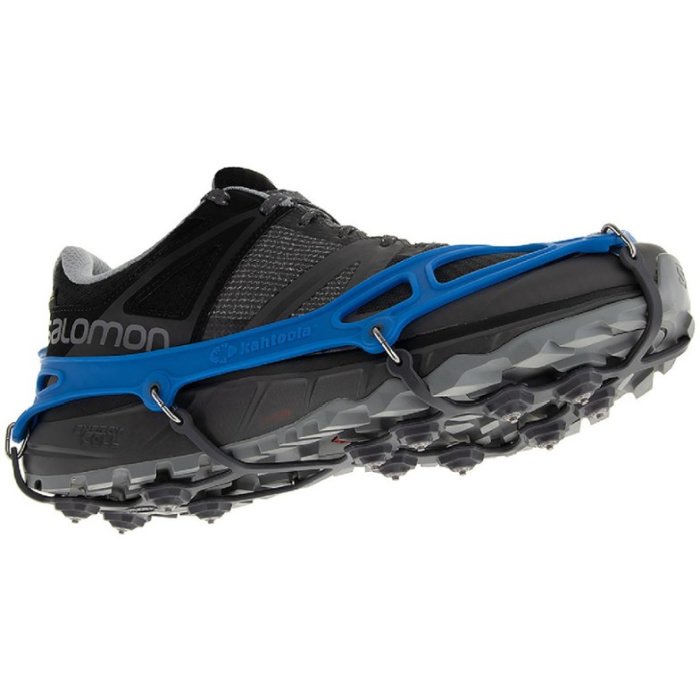
Kahtoola EXOspikes
Best Shoulder Season Cleats
CleverHiker Rating: 4.6/5.0
Price: $80
Weight: 7.3 oz.
Type: Studs
Best Use: Trail running & hiking
Pros
- Versatile and lightweight
- Comfortable
- Excellent value
Cons
- A bit bulkier than some
- Less aggressive traction
We love the versatility, comfort, and construction of the Kahtoola EXOspikes. They aren’t quite as aggressive as spiked devices, but they are the most versatile and effective of all the stud-style devices we tested.
The super-durable, 7.4-millimeter-long tungsten carbide studs feature a concave pattern that grips ice from all angles, and they are raised off the footbed to help in fresh powder. The low-profile design minimizes snagging risks and makes them more manageable on stretches of dry, rocky terrain. The EXOspikes become ineffective in more than an inch or two of fresh snow, but we found them to excel in slick, packed snow.
The fit and user-friendliness of the EXOspikes remains on par with typical Kahtoola construction. The front is clearly marked and the snug, TPE elastic harness stays stretchy even in frigid temperatures. The minimal weight of these spikes allows for all-day comfort with minimal need to remove or readjust.
The overall construction of the EXOspikes suggests considerable longevity. The elastic is thick and durable, attachment points are reinforced and easily repairable, and the tungsten carbide studs are 100 times more abrasion-resistant than steel. The only point of concern is the semi-rigid TPU traction matrix, which could weaken if stressed in the same place over time.
Overall, the EXOspikes impressed us across widely varying terrain. They’re perfect for trail runs at lower elevations where you’ll be encountering patches of slush, snow, and ice. As a versatile and comfortable traction device, the EXOspikes offer a ton of value for their price point.
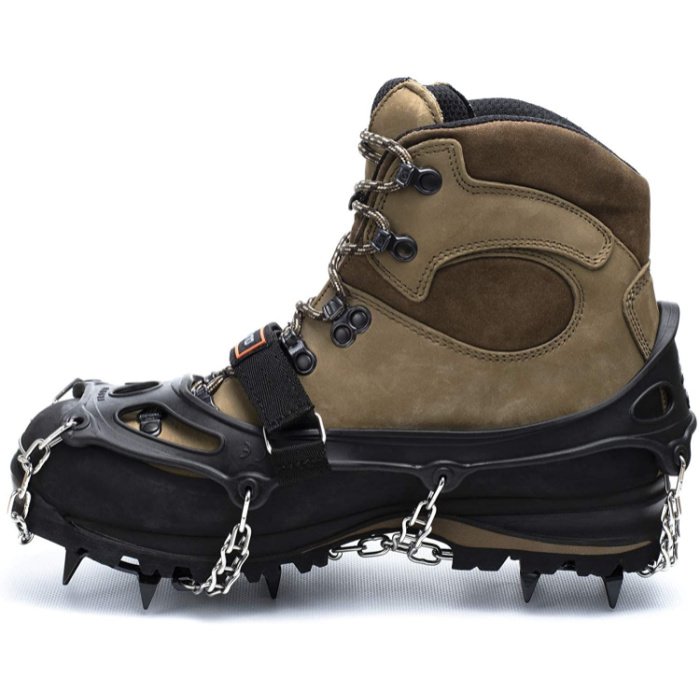
Hillsound Trail Crampon
Most Aggressive Hiking Spikes
CleverHiker Rating: 4.6/5.0
Price: $85
Weight: 1 lb. 0.3 oz.
Type: Spikes
Best Use: Hiking & backpacking; mixed mountain terrain
Pros
- Aggressive traction
- Durable
- Secure fit
Cons
- Take a little longer to put on
- Too aggressive for dry terrain
The Hillsound Trail Crampons effectively bridge the gap between lightweight hiking spikes and true mountaineering crampons. They feature 11 carbon steel spikes, each ⅔ inches long, with very pointy tips. The tips create a ton of extra traction on ice and slick, packed snow, but they’re overkill on dry trails. We even got them stuck in a wooden bridge on one occasion. However, on all other surfaces — from ice to fresh snow — the added traction is much appreciated.
The fit provided by the elastomer harness and Velcro strap is comfortable and secure, especially on hiking and winter boots. The fit can be a little sloppy on trail runners and hiking shoes.
The Trail Crampons aren’t the best for extended, all-day use. They’ll add about a half pound to each foot, or a full pound to your pack weight when not in use. The extra weight is worth noting for extended treks when foot fatigue is a concern. Fortunately, they come with a durable stuff sack that is “puncture proof” to keep the rest of your gear safe from the spikes.
Although they’re one of the burlier options on our list, the Trail Crampons suffer from a few durability flaws. The carbon steel spikes are less wear-resistant and more prone to rust than stainless steel. Plus, the vulnerable attachment points to the elastomer harness are not reinforced. However, the plate design and doubled-up chains help to increase overall robustness.
Ultimately, the Hillsound Trail Crampons work best on fully covered winter trails or when the trail gets particularly spicy. They are some of the more expensive cleats on our list. But with proper care, they should last long enough to get your money’s worth.
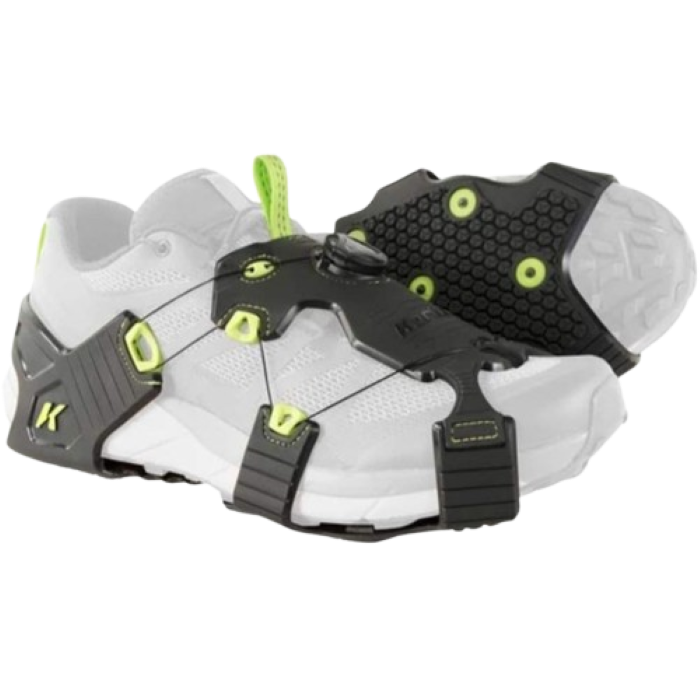
Korkers Ice Runner
Most Secure Fit
CleverHiker Rating: 4.5/5.0
Price: $70
Weight: 11 oz.
Type: Studs
Best Use: Casual, packed snow, ice
Pros
- Super-secure fit
- BOA System
- Durable
- Replaceable studs
Cons
- Traction
- Heavy and bulky
The Korkers Ice Runner is one of the most comfortable ice cleats we’ve tested, excelling on mixed surfaces across flat and rolling terrain. We found the BOA tightening system and wraparound harness to be extremely secure and reliable. Once tightened, the cleats stay firmly in place all day and provide a comfy, close-to-ground feel on both dry and snow-covered ground. The replaceable carbide studs and steel BOA cables provide excellent durability and longevity.
Although BOA is unique, the Ice Runners are simple and easy to use. The harness opens up wide to make putting them on effortless, and the BOA dial is intuitive for quick adjustments throughout the day. Despite their bulk, they feel shoe-like on dry surfaces and don’t interfere with gait.
The main tradeoffs are traction in certain areas and overall weight. The single forward toe spike and the lack of studs beneath the arch create unfortunate weak points and unpredictability. Despite their advertising, the cleats aren’t ideal for running or steep hills. They are also heavier and take up more pack space than ultralight options.
Overall, the Korkers Ice Runner delivers exceptional security, durability, and ease of use for casual winter adventurers. For anyone prioritizing a stable, long-lasting cleat for day trips, walks, or moderate trail use, the Ice Runner is a top contender on our list.
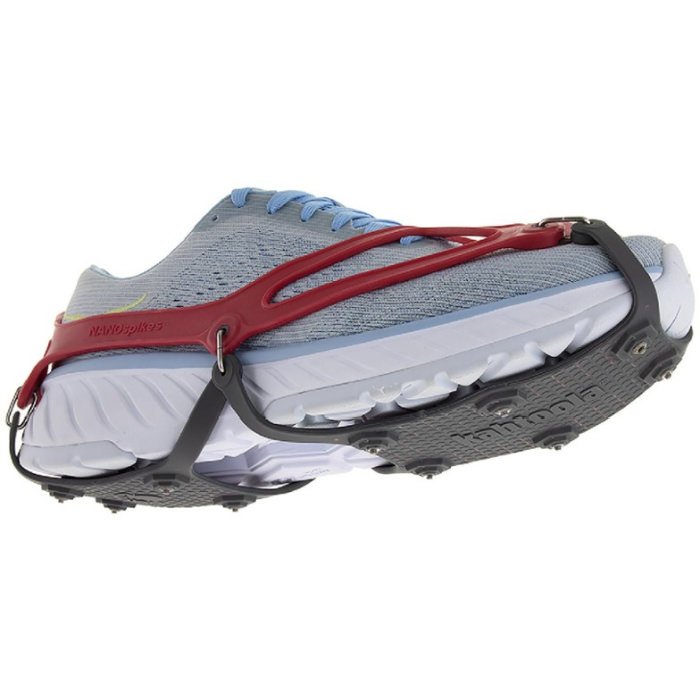
Kahtoola NANOspikes
Great for Running in Mild Conditions
CleverHiker Rating: 4.4/5.0
Price: $70
Weight: 7.4 oz.
Type: Studs
Best Use: Walking, road running, paved trails
Pros
- Lightweight
- Affordable
- Low profile
Cons
- Less aggressive traction
- Not ideal for rugged terrain or inclines
The Kahtoola NANOspikes provide versatile traction that excels on ice and packed snow on gentle to moderate terrain. They are an excellent choice for walkers, hikers, and runners with their super low profile design and comfort over transitional surfaces.
The NANOspikes’ traction is multi-layered from the ultra durable tungsten carbide studs on their raised lugs to the center plate ridges. Even the textured plastic plates, with their hundreds of micro ridges, act as a final layer of defense against hard, slippery surfaces. The terrain where these cleats begin to be less effective is on steep slopes and loose snow.
The ergonomic thermoplastic elastomer harness fits comfortably over running and hiking shoes without creating any harsh pressure points. The toe bail further keeps your foot secure on descents. The NANOspikes aren’t ideal for hiking boots and definitely aren’t compatible with insulated winter boots.
The lightweight construction is optimal for running. At 105 grams (3.7 ounces) per foot, they cause virtually no foot fatigue, and you’ll likely forget you’re even wearing them. In addition, the NANOspikes feature the flattest bottom of any cleats we tested, so they’re neither obtrusive nor awkward on hard and rocky surfaces.
The downsides are their durability and packability. Even though they’re lightweight, they don’t pack down as small as you would think in their included stuff sack. This is a minor gripe, however. The predominantly plastic construction is inherently vulnerable to wear, and the tungsten carbide spikes, although durable, don’t have much material. Luckily, the affordable price helps to offset these downfalls.
Kahtoola K10
Best Semi-Technical Spikes
CleverHiker Rating: 4.4/5.0
Price: $120
Weight: 1 lb. 7.6 oz.
Type: Strap-On Crampon
Best Use: Hiking & non-technical mountaineering
Pros
- Very aggressive traction
- Felxible
- Secure fit
- Easy on/off
Cons
- Expensive
- A bit heavier/bulky
- No stuff sack included
- Overkill for casual use
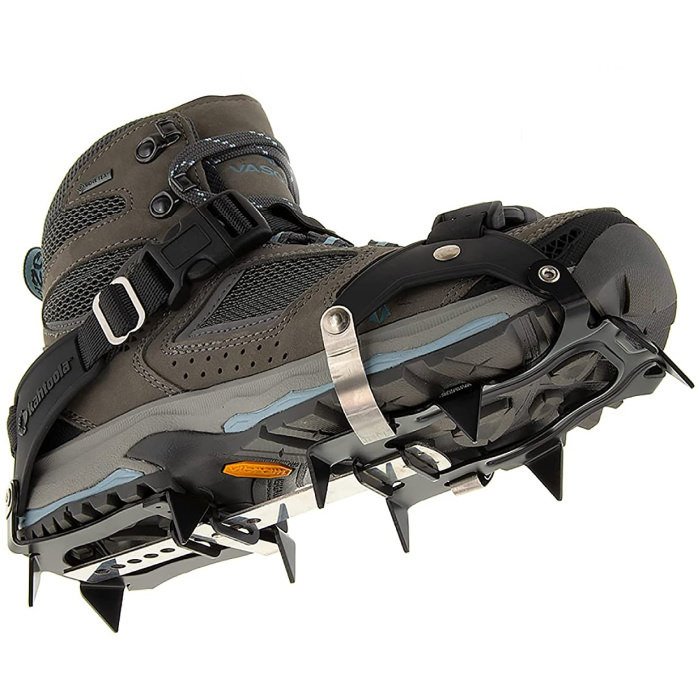
The Kahtoola K10 hiking crampons provide serious traction for the most challenging hikes in all winter conditions. They aren’t true crampons for tackling technical terrain, but they are about as close as it gets. Unlike true crampons, these work with hiking boots without compromising their mobility.
The 10 ¾-inch spikes, made from a super-durable chromoly steel, dig deeply into hard ice and packed snow with ease. They are also significantly more effective in deep snow than any of the other devices on our list. The spikes are strategically placed for optimal stability, with two forward-facing spikes to gain purchase on the steepest ice slopes.
The K-10’s strike a nice balance between rigidity and flexibility. The steel plates on the forefoot and heel provide the rigidity needed for confident footing on steep slopes while the Leafspring Flexbar Technology helps maintain the range of motion of a normal hiking boot. They’re still a little clumsy on dry, rocky trails but are way more nimble than true crampons. The K-10s are suitable for hiking boots and insulated winter boots.
The binding system is a bit tricky to use, but once you get the hang of it, these pseudo crampons stay securely on your feet. We recommend spending some time with them at home to avoid frustration on the trail.
The Kahtoola K-10s are a niche set of trail crampons — definitely not a do-it-all device. They’re best for people who already own a pair of lightweight spikes and want to level up their winter adventures to more challenging terrain. For a niche device, the large price tag is hard to swallow. But when you need that extra traction to keep you safe, the price is a minor concern.
More: Kahtoola K10 Full Review
Yaktrax Walk Traction Device
Best Budget Buy
CleverHiker Rating: 4.2/5.0
Price: $23
Weight: 3.2 oz.
Type: Coils
Best Use: Casual, packed snow
Pros
- Affordable
- Widely available
- Lightweight
Cons
- Light traction
- Durability
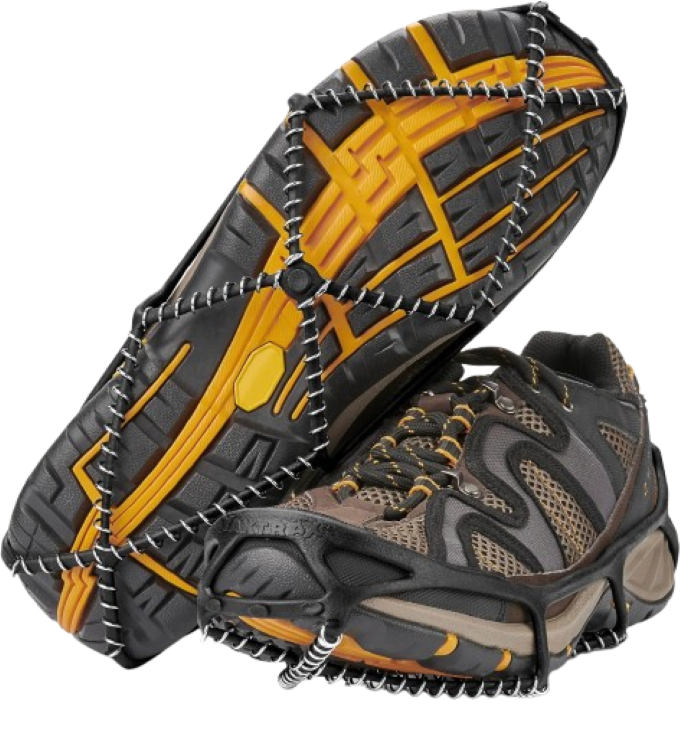
The Yaktrax Walk Traction Device is a lightweight, budget-friendly traction device that shines in casual, around-town winter use, offering decent traction on flat icy sidewalks and packed snow. If you only need a simple, confidence-boosting cleat for daily errands, short walks, or navigating icy parking lots, this is one of the most convenient, widely available options we’ve tested.
What impressed us most during testing was how natural and unobtrusive the Walk feels underfoot. Over multiple winters of use on icy neighborhoods, slushy streets, and mixed terrain, the coils provided a smooth, close-to-ground feel that transitioned easily between dry pavement and slick patches. For users who don’t want the “crunch” or bulk of spikes, the coil design is a great option. They’re also exceptionally light, so light you’ll barely notice them in your pack or on your feet.
The biggest tradeoff is that the Walk simply isn’t built for rugged terrain or heavy use. The elastic harness can shift on uneven ground, and the coils don’t bite into steep or hard ice the way spiked cleats do. They aren’t the most durable option either. Over multiple seasons of testing, we’ve snapped coils and harnesses more than we’d like. The more you use the Walk within its intended scope — walking on gentle paths with predictable winter terrain — the longer they’ll last.
Overall, the Yaktrax Walk is one of the best choices for casual winter traction thanks to its featherweight feel, simplicity, and exceptional affordability. They’re great as a low-cost, low-bulk solution for casual use but not for steep trails or high-mileage adventures.
More: Yaktrax Walk Full Review

Yaktrax Diamond Grip
Best at Shedding Snow
CleverHiker Rating: 4.2/5.0
Price: $60
Weight: 9.7 oz.
Type: Steel beads
Best Use: Walking & light hiking
Pros
- Affordable
- Sheds snow well
Cons
- Not as durable as some
- Less aggressive traction
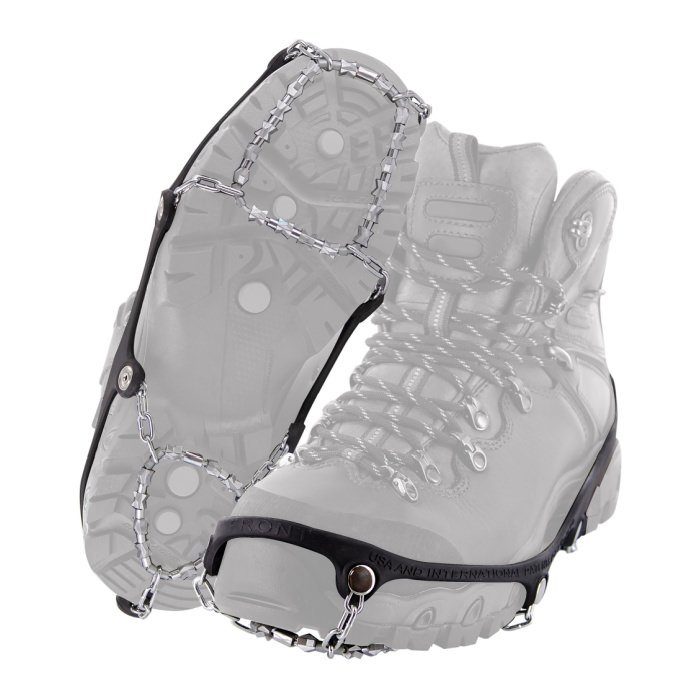
The Yaktrax Diamond Grips are a great budget buy for gentle use around town and on well-maintained trails. The unique design of the patented Diamond Beads makes them well-suited for shedding snow in sticky spring conditions and for transitioning seamlessly across varying hiking surfaces.
The Diamond Grips shine brightest on packed snow, gravel, and dirt. Unlike larger spikes that are clumsy on rocky, dry terrain, the Diamond Grips feel almost like a regular hiking shoe. Although they provide decent grip on ice, the swiveling beads can sometimes backfire on the slipperiest surfaces.
The fit of these cleats is comfortable, secure, and lightweight. At just 137 grams (4.8 ounces) per foot, they are hardly noticeable and create virtually zero foot fatigue. Although they can be a little tricky to put on and take off and require some initial adjustment, they stay comfortable all day long across a wide range of conditions.
The unique design does come with a few caveats, however. The moving parts cause abrasion that can ultimately break the cable over time. The rubber sling, although still elastic at most temperatures, can stiffen and crack in the most frigid environments. The attachment points, however, are incredibly robust.
Ultimately, we recommend the Yaktrax Diamond Grips for casual outings around town and the occasional hike on well-maintained trails. The unique construction presents significant weak points that might not withstand years of aggressive use.
Product Comparison Table
| oSort | Product | Price | Weight | Type | Best Use | Traction | Fit | Ease of Use | Weight & Packability | Durability | 0 |
Black Diamond Access Spike View at Black Diamond View at Amazon |
$100 | 8.9 oz. | Micro Spikes | Non-technical winter hiking | 4.5 | 5.0 | 4.9 | 4.9 | 4.6 | 1 |
Kahtoola MICROspikes View at REI View at Amazon |
$90 | 11.9 oz. | Spikes | Hiking | 4.7 | 4.7 | 4.8 | 4.6 | 4.7 | 2 |
Black Diamond Distance Spikes View at Amazon View at Backcountry |
$120 | 4.1 oz. | Spikes | Trail running | 4.5 | 5.0 | 4.6 | 5.0 | 4.4 | 3 |
Kahtoola EXOspikes View at REI View at Amazon |
$80 | 7.3 oz. | Studs | Trail running & hiking | 4.4 | 5.0 | 4.0 | 4.8 | 4.7 | 4 |
Hillsound Trail Crampon View at REI View at Amazon |
$85 | 1 lb. 0.3 oz. | Spikes | Hiking & backpacking; mixed mountain terrain | 4.8 | 5.0 | 4.0 | 4.4 | 4.6 | 5 |
Korkers Ice Runner View at Korkers View at Amazon |
$70 | 11 oz. | Studs | Casual, packed snow, ice | 3.9 | 4.8 | 4.6 | 4.4 | 4.7 | 6 |
Kahtoola NANOspikes View at REI View at Amazon |
$70 | 7.4 oz. | Studs | Walking, road running, paved trails | 4.0 | 4.9 | 3.8 | 4.8 | 4.6 | 7 |
Kahtoola K10 View at Backcountry View at Amazon |
$120 | 1 lb. 7.6 oz. | Strap-On Crampon | Hiking & non-technical mountaineering | 5.0 | 4.5 | 3.7 | 3.6 | 5.0 | 8 |
Yaktrax Walk Traction Device View at Amazon View at Yaktrax |
$23 | 3.2 oz. | Coils | Casual, packed snow | 4.3 | 4.0 | 3.8 | 5.0 | 3.8 | 9 |
Yaktrax Diamond Grip View at REI View at Amazon |
$60 | 9.7 oz. | Steel beads | Walking & light hiking | 4.1 | 4.5 | 3.8 | 4.5 | 4.3 |
|---|

Analysis & Results
Which Ice Cleats and Traction Devices Have the Best Value?
At CleverHiker, value refers to how well products deliver compared to their cost. Kahtoola never ceases to impress us in the ice cleats category. They consistently make high-quality traction devices at affordable prices, such as the Kahtoola MICROspikes and the Kahtoola EXOspikes. The EXOspikes are closest to the bottom right corner of the graph, indicating a high value and low cost.
The MICROspikes — though more expensive — have the value meter pretty much maxed out. They provide the perfect amount of traction for a wide range of uses, are well-made, and remain lightweight and packable. Their price point is the mean across the whole list, but their performance is well above average.
Kahtoola has, however, recently raised their prices, making the Black Diamond Access Spike a formidable competitor. The design and price are extremely similar, with slight differences in weight and durability.
This is not to say that other devices on the list aren’t worth the money. The Black Diamond Distance Spike is pricey but utilizes premium materials and innovative ideas to create the best running cleats possible. The Kahtoola K-10 is the most expensive option on our list, but it’s also the only one capable of climbing a gentle icefall.
If you’re just looking for something to give you a little more confidence on winter errands and dog walks around town and don’t want to invest significantly in another piece of hiking gear, you can’t go wrong with the Yaktrax Walk. They might not last as long as others or withstand rugged trails, but they add a noticeable edge in icy parking lots at minimal cost.
Which Traction Devices and Ice Cleats Provide the Best Traction?
Traction is not as straightforward as you might think. Although a higher score on this metric generally indicates more aggressive traction, stronger traction is not always better. Sometimes you want versatile, all-around traction while other times you may want specialized traction for a certain type of terrain. So be sure to look into the nuances behind each device’s traction — not just the overall score.
By far the most aggressive traction device on our list is the Kahtoola K-10. The ¾-inch steel spikes will dig deeply into hard ice with a swift kick, and the sheer size of the spikes even helps to stake your foot into deep snow. The next aggressive pair of cleats is the Hillsound Trail Crampons. The Trail Crampons lack the rigid structure of the K-10’s but are more akin to lightweight spikes that pack well and work across a wider range of mountain terrain.
The Kahtoola MICROspikes, Black Diamond Access Spike, and the Black Diamond Distance Spike follow closely behind as we head into more versatile traction territory. Both feature fairly aggressive spikes while beginning to shift priority towards weight savings and versatility. The Kahtoola EXOspikes cover perhaps the widest range of traction needs with their very medium-sized studs.
For fleetfooted, shoulder-season pursuits where fit and comfort take precedence over aggressive traction, you might check out something studded like the Korkers Ice Runner or Kahtoola NANOspikes.
Which Ice Cleats and Traction Devices Have the Best Fit?
For this metric, we evaluated how well each set of cleats fits on different types of footwear — running shoes, hiking shoes, hiking boots, and insulated boots. We took note of how well the cleats stayed on our feet during a hike as well as overall comfort.
Most cleats did well in this metric, but the Black Diamond Distance Spike, Hillsound Trail Crampon, Korkers Ice Runner, and Kahtoola EXOspikes really stood out. The Distance Spike features an innovative softshell toe cap design that keeps the spikes ultralight and comfortably hugs the trail runners. The Hillsound Trail Crampons stay extra secure with their top strap, and the EXOspikes are lightweight and comfortable enough for prolonged use.
The Ice Runners take security and all-day comfort to another level. Although they’re on the heavy side, their wrap-around harness and BOA system hold stronger than any ice cleats we’ve tested.
The Kahtoola MICROspikes and Black Diamond Access Spikes utilize a tried-and-true design that has become the gold standard for ice cleats. The elastomer harness stays secure in almost all situations while balancing a lightweight construction.
Which Traction Devices and Ice Cleats Are Easiest to Use?
The bulk of this metric leans toward versatility — how well each device performs across a wide range of conditions, including dry ground, rocks, ice, packed snow, loose snow, and gradual or steep slopes. We also considered how well each device is designed for user friendliness.
The Kahtoola MICROspikes and Black Diamond Access Spikes came out on top for their excellent versatility, with the Access Spikes earning slightly higher marks for their convenient pull tabs and stuff sack. Both pairs are aggressive when you need them to be, but low-profile enough to handle travel over dry, rocky terrain. The construction features an elastomer harness that is comfortable and easy to use.
New to our list this time around, the Korkers Ice Runner’s convenient BOA system makes dialing in your perfect fit a piece of cake.
The Black Diamond Distance Spike also impressed us with its innovative design, which clearly distinguishes the front from the back and includes thoughtful handles for easy adjustment. Just as user-friendly, although not as versatile, are the Hillsound Trail Crampons and the Kahtoola EXOspikes.
Which Ice Cleats and Traction Devices Have the Best Weight and Packability?
Weight and packability are pretty straightforward. Devices with a lighter weight reduce foot fatigue from wearing them but are usually less grippy. Ice cleats with great packability usually include a stuff sack and collapse down to a conveniently small size.
The lightest, most affordable, and most widely available of any cleats on our list are the Yaktrax Walk. Although they don’t pack down the best and tend to get tangled up, they are barely noticeable in your pack or on your feet.
Thanks largely to their soft shell toe cap, the Black Diamond Distance Spikes are incredibly lightweight and pack down in their stuff sack to about the size of an orange. They add only about two ounces of material to each foot, so you can keep going and going and going.
The Kahtoola NANOspikes and Kahtoola EXOspikes are both slightly heavier — an ounce more per foot — but are almost unnoticeable on the feet. The NANOspikes are geared more towards road running, with their small studs and textured plastic plates. And the EXOspikes are geared more towards trail running with their open design and raised lugs.
Which Traction Devices and Ice Cleats Are the Most Durable?
Determining a product’s long-term durability can be tough without years of use. Luckily, there are some clues in a product’s construction. The most durable traction devices on our list are the Kahtoola K-10’s. Their chromoly steel spikes are incredibly wear-resistant, and there are no rubber components to deteriorate over time. The frame is built on solid steel plates and a flexible steel bar.
The Kahtoola MICROspikes and Kahtoola EXOspikes are also impressively durable. The MICROspikes’ stainless steel spikes are durable enough to withstand a fair amount of rock bashing, and the chain links make for easy repair if one pops loose. The EXOspikes’ traction feature tungsten carbide studs, which are 100 times more wear-resistant than steel. Both pairs feature Kahtoola’s durable Thermoplastic Elastomer harness that retains its elasticity even in the most frigid conditions.
The Korkers Ice Runner is an extremely durable ice cleat, but with a caveat. The steel BOA cables are extremely durable, but not easy to fix in the field if they do break. It’ll likely require sending them back to the manufacturer or taking them to a ski or running shop. On the upside, however, the studs are completely replaceable, increasing the cleats’ lifespan indefinitely.
How to Choose Ice Cleats & Winter Traction Devices
What is a good price for ice cleats and winter traction devices?
You don’t have to spend a lot of money to get a functional pair of traction devices. But we’ve found that you generally get what you pay for in terms of durability. High-end traction devices tend to have more engineering behind them, resulting in a more dialed-in fit and better performance during technical activities like running or backcountry hiking. Budget options are a great choice for casual use around town but won’t hold up as well on rugged mountain terrain.
What type of ice cleats are best for my specific terrain and use?
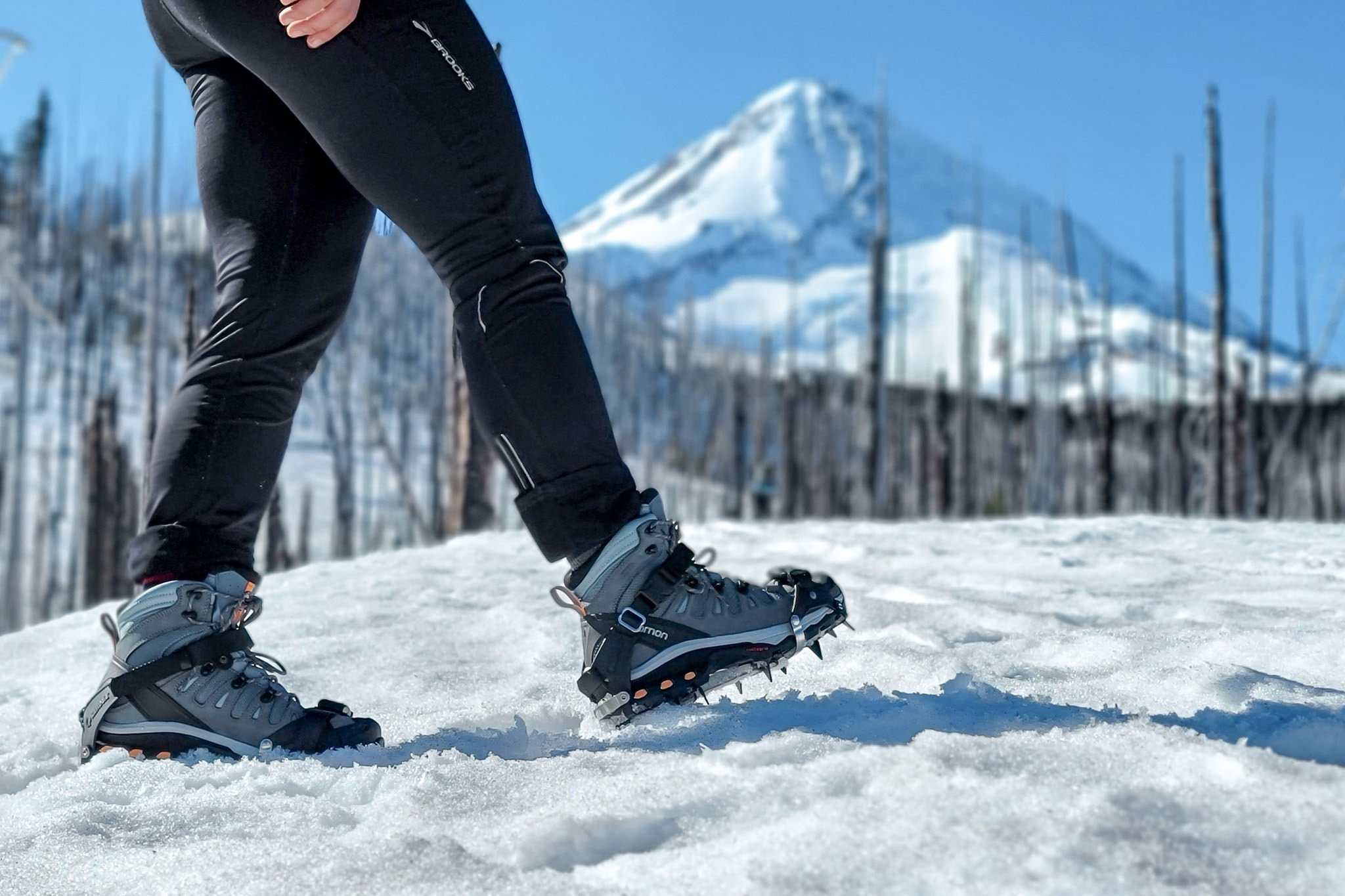
When deciding on a pair of traction devices, it helps to think about the type of terrain you’ll encounter most often. If trail conditions are inconsistent (hard ice, soft snow, rocks, mud), a pair of spikes designed for mixed terrain is your best bet. If you’ll be running or walking on hard-packed surfaces with bare spots (concrete, gravel, etc.), flexible, lightweight traction devices with low-profile spikes will be the most comfortable. For non-technical mountaineering involving steep climbs and glacier travel, you’ll want a pair of hiking crampons with larger spikes and secure bindings.
How important is weight and packability for ice cleats and winter traction devices?
Winter hiking is vigorous exercise, so reducing the weight on your feet can help save energy with every step. Keeping weight and packed size to a minimum is also important if you’ll be carrying your traction devices in a backpack on multi-day trips. Certain situations, like glacier travel or steep ascents, may require burlier traction devices with more aggressive spikes.
Heavier models tend to be more durable because they’re made with more robust chains and harnesses. Although they may add a bit of weight, their reliability and performance in extreme conditions make them the better choice for challenging terrain. Whether you’re tackling steep inclines, navigating glaciers, or exploring other rugged winter landscapes, choosing the right traction device is essential for both safety and energy conservation.
How do I find the right fit for ice cleats and winter traction devices?
Most traction devices are designed to fit a specific style or range of footwear. It’s important to consider which kind you’ll use most with your traction devices. For example, crampons, which are typically designed for more rugged, technical terrain, are generally incompatible with lighter footwear like trail runners or sneakers. They require a full-sized winter boot with a sturdy, rigid structure to securely hold the crampon in place during use.
On the other hand, traction devices that are designed for casual, everyday use are usually intended for lighter shoes like sneakers and feature flexible materials that are easier to slip on and off. Some models try to accommodate a variety of footwear types, but they may not provide the same level of security or performance on more challenging winter terrain.
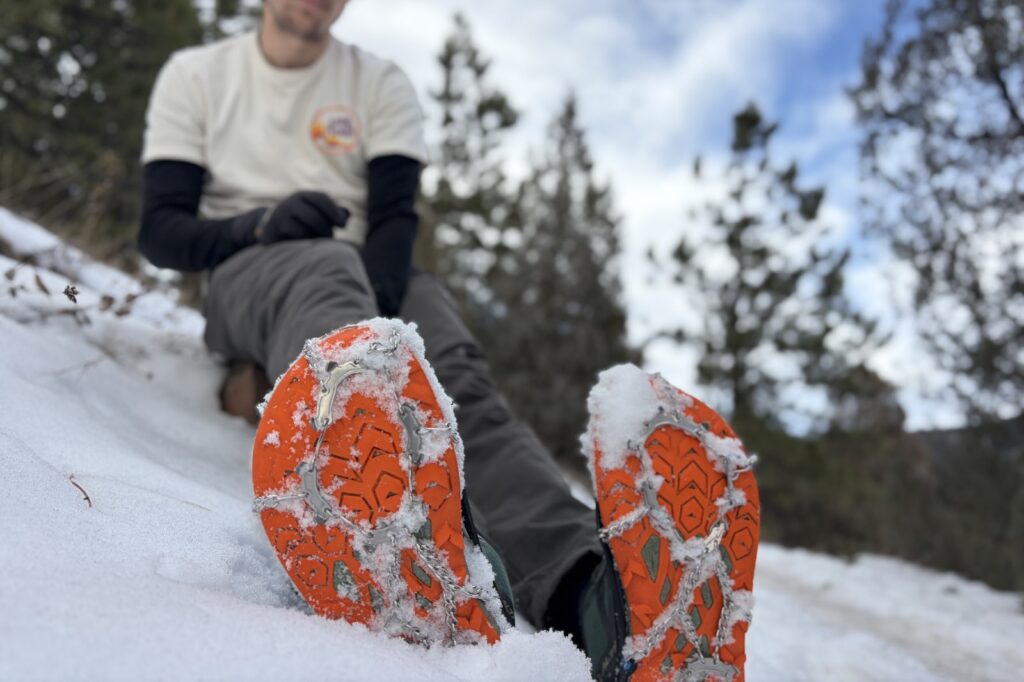
Why Trust CleverHiker
Gear Analyst Brett Kretzer has backpacked thousands of miles all over the world — from the Spanish Pyrenees to the humid forests of Appalachia and the soaring peaks of the Rocky Mountains. He has completed thru-hikes of the Long Trail, Colorado Trail (twice), GR11, and Wonderland Trail, as well as several hundred-mile sections on both the Appalachian Trail and Pacific Crest Trail.
He’s been a professional gear analyst for about five years, giving recommendations to aspiring adventurers, trail-testing mountains of gear, and ruminating on the best alloy for crampons to grip ice. His attention to detail and years of experience with what works in the backcountry (and what doesn’t) make him uniquely qualified to bring you sound gear advice.
Testing Methodology
We spent weeks analyzing, hiking, and trail running in each pair of ice cleats to determine the best pair for every application. We evaluated all potential deal-breaking factors, including traction, fit, ease of use, versatility, weight and packability, and durability.
How we test for traction
We started by noting the length, number, and shape of each device’s spikes, then got out there and put them to the test. We ran, hiked, and scrambled with each set of ice cleats on a variety of terrain and surfaces. We’re lucky to have the Colorado Rocky Mountains as our testing ground — where we can encounter mud, dirt, rocks, slush, packed snow, fresh snow of varying depths, ice, and even mixed ice and rock scrambles. After traveling miles upon miles on each pair of cleats, we judged their traction on construction and overall impression.
How we evaluate fit
A traction device’s fit is determined by the type of footwear it is most compatible with, as well as overall comfort and security. While some cleats are designed to fit a wide range of footwear, others are specifically designed for boots or trail runners.
Regardless of manufacturer recommendations, we hiked with each pair of cleats in every type of hiking footwear we had available (minus the elusive hiking flip-flop). We took note of how well the cleats stayed in place on our feet and if the comfort changed throughout our hikes. Some cleats were perfectly suited to a given shoe, while others fit too tightly or sagged.
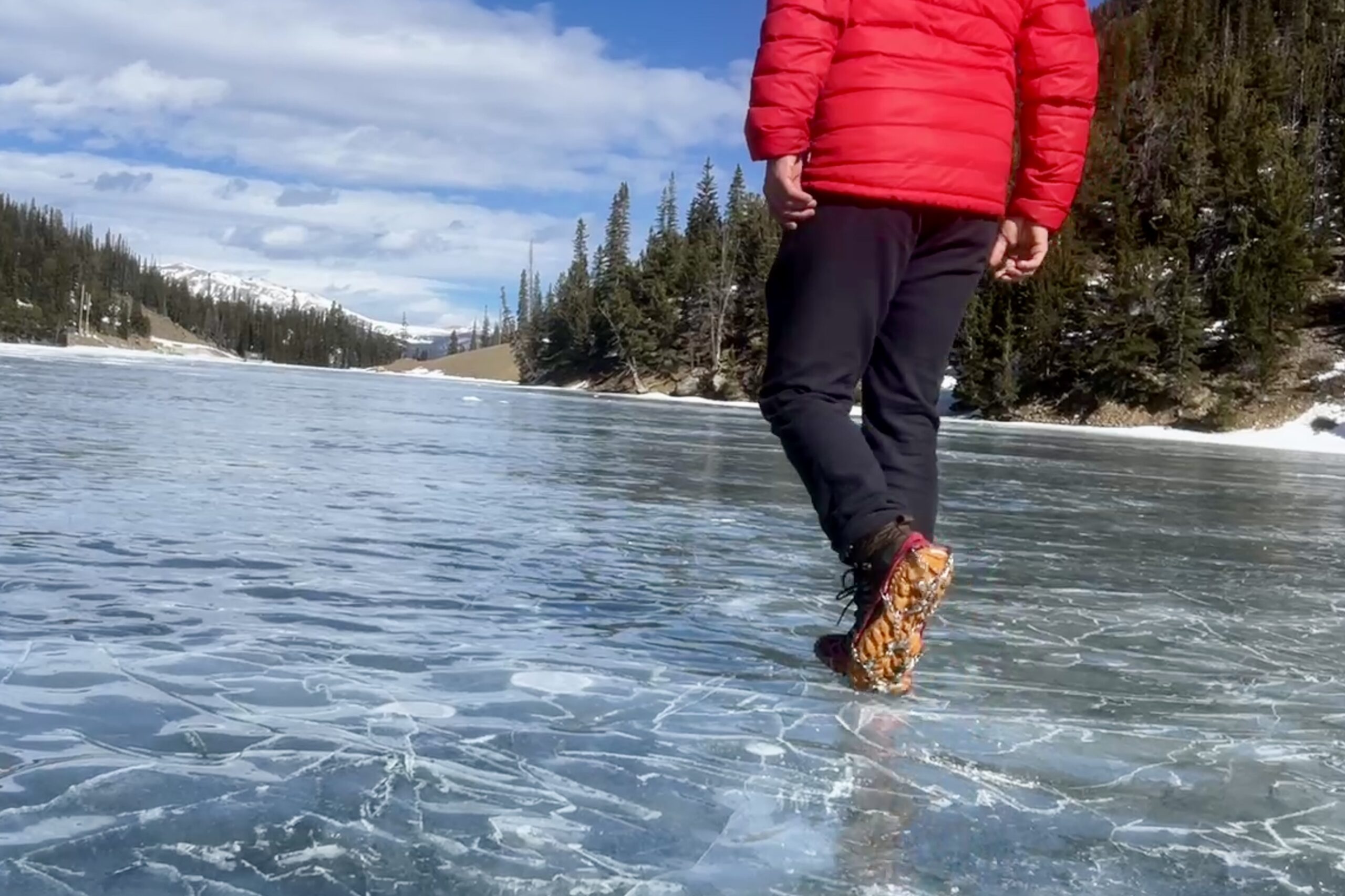
How we measure and evaluate ease of use
It’s nice to have gear that works. For ice cleats, that means elastic that has the right amount of stretch, handles that help pull them on and off, markings that clearly indicate the front from the back, and spikes that don’t clump up with snow. All the cleats on our list are user-friendly, but some rise above the rest for certain applications.
While some traction devices are specifically designed for a particular purpose — such as super-steep, icy mountain terrain, trail running, or casual walks around town — others strive to be the best all-around option. We walked, ran, and hiked with each set of cleats across a wide range of terrain, noting when they felt awkward or began to fail.
How we assess weight and packability
A traction device’s weight and packability are important when considering how much fatigue they’ll add from wearing them all day or how much gear you’ll need to fit in your pack for a given trip.
For more challenging adventures when traction is required above all else, weight is of little concern. Trail runners, on the other hand, will appreciate as much weight savings as possible.
Most of the devices on our list come with a stuff sack, but some require you to improvise and figure out how to hang them on the outside of your pack. An included stuff sack and smaller packed size equals a high score for packability.
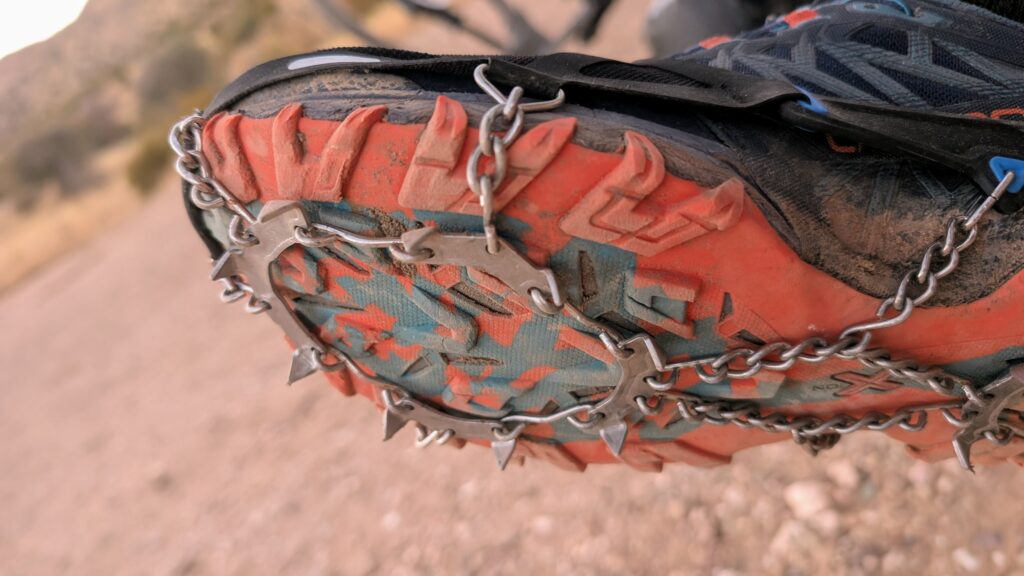
How we measure durability
When you spend hard-earned money on a pair of expensive traction devices, you want them to last a long time. Sometimes a higher investment means greater durability, but that’s not always the case.
We graded durability on the spike’s material, overall construction, and observation after extensive use. We even dug up the most notable user experiences from the web. To test how the rubber holds up in extreme cold, we left the cleats out overnight during an arctic blast in Colorado with temps down to -30ºF.
Spikes include a variety of different metals and alloys. In order from least to most durable, they could be carbon steel, heat-treated stainless steel, case-hardened steel alloy, hardened stainless steel, chromoly steel, or tungsten carbide.
Conclusion
Our favorite ice cleats and traction devices have an excellent blend of durability, packability, lightweight, good fit and traction, and ease of putting on and taking off. We recommend considering which activities you’ll most likely use the traction devices for and matching the correct cleats to those activities. Stay safe and happy Trails!