
Bottom Line
The Black Diamond Pursuit 15 (men’s / women’s) is a specialized daypack for scramblers, peak-baggers, and fastpackers who value a low-profile, body-hugging fit. Its running-vest-inspired harness keeps the load close to the center of gravity and stays out of the way on technical terrain.
The storage is unusually capable for a 15-liter pack. A stretch front pocket handles shed layers, folding trekking poles are easy to reach, and the pack works with reservoirs, bottles, or soft flasks.
The tradeoff is load tolerance. It can carry 3 liters of water plus a day’s gear, but comfort and agility decline when it is fully loaded. Casual hikers may also find the snug fit unnecessary. For more options, see our best hiking daypacks guide.
How We Tested
CleverHiker Editor and gear analyst Jory Brass alternated the Pursuit 15 with other daypacks while hiking nearly 400 miles in New Mexico. Testing included lightly loaded and fully loaded carries, scrambling, casual hiking, and fastpacking, with deliberate attention to bounce, close-to-body stability, hydration options, gear access, and how the vest-style harness felt under different loads.
Quick Specs
- Best for: Scrambling and fastpacking
- Material: 96% recycled nylon, 4% recycled polyester
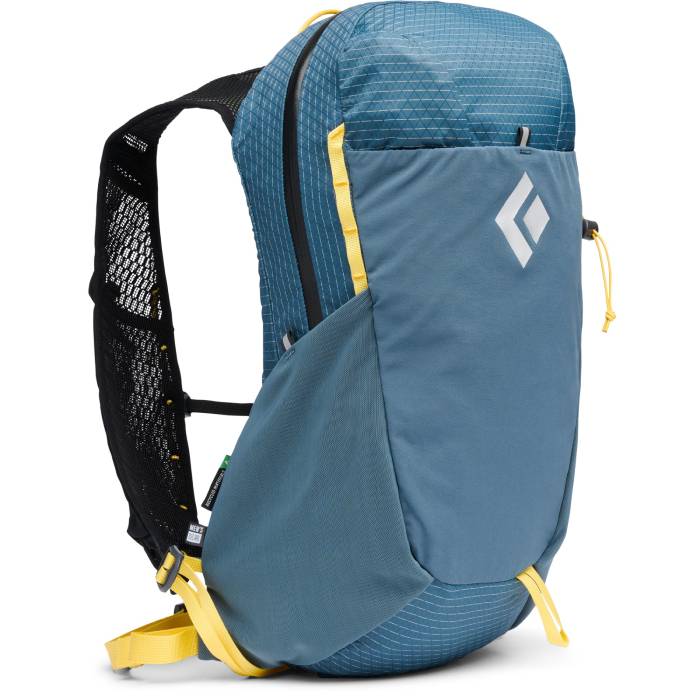
Black Diamond Pursuit 15
Best Scrambling & Fastpacking Daypack
CleverHiker Rating: 4.5/5.0
Price: $180
Weight: 1 lb. 2.1 oz. / 1 lb. 1.8 oz.
Capacity: 15 L / 15 L
Frame: None
Pros
- Running vest-inspired staps
- Ventilated foam back panel
- Close-to-back fit for technical hikes
- Accessible Z-pole attachment
- Convenient stash pocket
- Accommodates a bladder and soft flasks
Cons
- Doesn’t handle weight well
- Snug fit limits casual appeal

Comfort
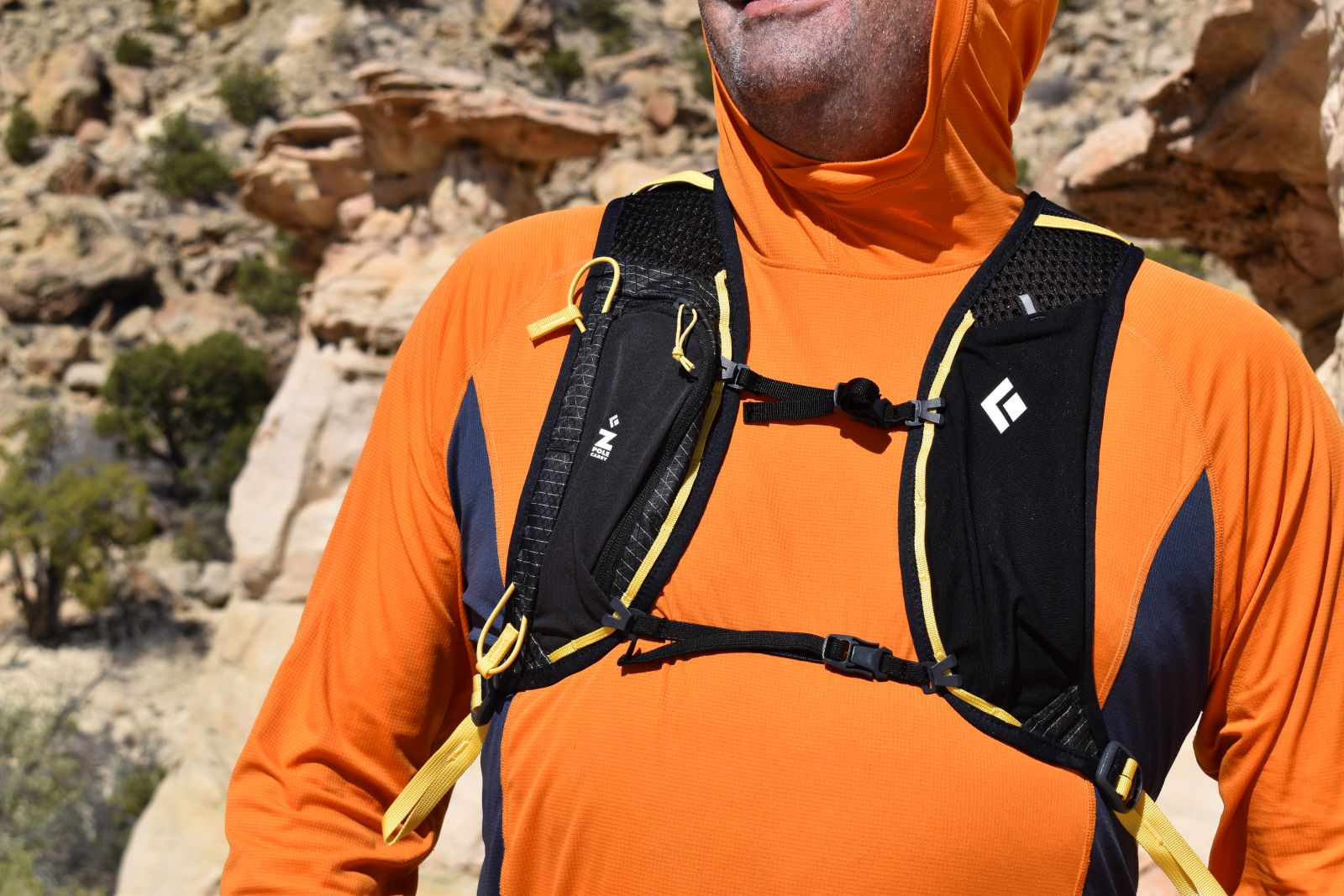
The Pursuit wears more like a large running vest than a conventional daypack. Its broad harness wraps the upper body and uses two sternum straps to keep the load close, which feels secure when scrambling or moving quickly.
Ventilated foam helps manage heat, but the close fit still reduces airflow compared with suspended-mesh packs. We found the harness most comfortable with a light load, when the pack could move with the body instead of pulling backward.
Fully loaded, the lack of a substantial hipbelt becomes more noticeable. This is a comfort system optimized for mobility rather than plush cushioning.
A fully loaded summit setup exposed the limit more clearly. With 3 liters of water, a puffy, rain shell, and snacks, the foam back panel felt firmer against the back and the harness pulled instead of hugging. The minimalist hipbelt also rides high and does little to unload the shoulders.
With a lighter kit, the experience reverses. On fastpacking tests, the vest-style harness reduced bounce while jogging flats and descents, and the close fit made the pack feel more like an extension of the torso. That is the comfort niche the Pursuit serves best: active movement with a compact load rather than plush support for a full day’s worth of bulky gear.
Comfort Score: 4.5 / 5.0

Organization
For only 15 liters, the Pursuit provides excellent quick-access storage. Shoulder and stretch pockets keep small items close, the front stash pocket swallows a layer, and the Z-pole attachment lets hikers stow folding poles without removing the pack.
Hydration flexibility is another strength. We tested it with a bladder, standard bottles, and soft flasks, so users can choose the system that matches their hiking style.
The compact main compartment naturally limits bulky gear, but that is part of the design brief rather than a flaw. The layout is aimed at moving light and keeping essentials accessible.
The shoulder-strap pockets are especially useful for the way this pack is meant to be used. We carried a phone, sunglasses, soft flask, and small energy supplements where they were reachable without stopping. The stretch front pocket also made it easy to stash or retrieve a layer at a windy saddle or summit.
The main compartment is small but more functional than its 15-liter number suggests. We fit a puffy and a substantial lunch inside, and the two main storage areas can separate a midlayer from a rain shell. External daisy-chain points add overflow options, but hanging extra gear works against the Pursuit’s streamlined scrambling profile, so we prefer to keep the load compact.
Organization Score: 4.6 / 5.0

Support
The Pursuit does not transfer weight to the hips like an internal-frame pack, but its vest-style harness spreads the load across the chest, shoulders, and upper back. That creates a different kind of support that works well at lower weights.
On technical terrain, the close fit reduces sway and keeps the load centered, which can improve balance. As total weight increases, however, the shoulders take more of the burden and the pack loses some of its athletic feel.
Hikers carrying heavy water or winter gear should choose a framed pack. Fast movers with compact kits get a stable and effective system here.
The vest-style harness changes how support feels compared with a traditional daypack. Rather than shifting much weight to the hips, it wraps the torso and spreads a light load across the chest, shoulders, and upper back while keeping the center of gravity close. That was effective when jogging, fastpacking, and reaching for holds on scrambles.
The system has a clear ceiling. Once we carried more than about 2 liters of water plus extra layers, the shoulder harness felt more strained and the small hipbelt could not meaningfully help. Hikers who want true load transfer should choose a framed daypack; the Pursuit’s support is about stability and body control, not heavy hauling.
Support Score: 4.2 / 5.0
Weight & Packability
At just over a pound, the Pursuit is the lightest technical daypack in our current field. It is significantly lighter than framed hiking packs while still providing specialized storage and a substantial harness.
Its frameless body compresses more easily than rigid packs, although the vest-style shoulder structure means it will not disappear as completely as a simple sack-style bag.
The weight savings are especially meaningful for fastpacking and summit days, where every ounce matters but loose, floppy carry can be distracting. The Pursuit earns its high score by combining low weight with a purpose-built hiking fit.
The frameless construction makes the Pursuit genuinely easy to compress for transportation. It can be flattened or squeezed into a duffel or suitcase more readily than packs with framesheets or suspended back panels, which is useful for trips built around peak-bagging or fast day missions.
Its vest-style harness prevents it from packing as neatly as a simple sack, though, and the close body-hugging fit is more technical than most travelers want for casual use. The low weight matters most on trail: it preserves the responsive feel that makes the pack attractive for scrambling and fastpacking. Adding more structure would improve heavy-load comfort but undermine the specific reason to choose this model.
Weight & Packability Score: 4.5 / 5.0

Should You Buy the Black Diamond Pursuit 15?
Buy it if you scramble, peak-bag, fastpack, or simply prefer a running-vest-style daypack that stays tight to the body. Avoid it if you carry heavy loads, want maximum back ventilation, or prefer a relaxed traditional daypack fit.

What Other Daypacks Should You Consider?
Deuter Speed Lite Pro 25 / Speed Lite Pro 23 SL Review: The Deuter is a better option if you like the Pursuit’s athletic feel but need more capacity and a slightly more conventional hiking harness. It still uses vest-style shoulder straps and stays stable while moving quickly, but the larger body handles layers and full-day gear more easily. The Pursuit is lighter and more body-hugging for technical movement; the Deuter is the more versatile fast-and-light daypack.
REI Flash 22 Review: The Flash 22 is a cheaper and simpler way to keep pack weight low. It weighs only 14 ounces, has more usable volume than the Pursuit, and packs down easily for travel or summit pushes. It lacks the Pursuit’s vest-style stability, on-the-go pole access, and technical hydration options. We prefer the Flash for minimalist hiking and travel, and the Pursuit for scrambling and fast movement.
Osprey Talon 22 / Tempest 22 Review: The Talon/Tempest is a better fit if you want more support, organization, and everyday versatility. Its framesheet, substantial hipbelt, large pockets, and trekking-pole storage handle moderate loads more comfortably than the frameless Pursuit. The Osprey is heavier and less streamlined, but it works for far more hiking styles. Choose the Pursuit only if the close vest-style fit is a feature you actively want.