
Bottom Line
The Osprey Sportlite 20 is one of the few sub-$100 daypacks in our field that feels designed primarily for hiking rather than commuting or casual use. Its ventilated AirScape back panel and airy shoulder straps are meaningful upgrades over most lifestyle packs.
Organization is simple but practical, with a security pocket, front shove-it storage, bottle pockets, and hydration compatibility. A thin framesheet adds structure without making the pack heavy.
The main limitation is support. The webbing hipbelt stabilizes the pack but does not transfer much weight, and we experienced neck and shoulder discomfort on a fully loaded eight-mile hike. Keep the load moderate and it is a strong value. For more options, see our best hiking daypacks guide.
How We Tested
CleverHiker Editor and gear analyst Jory Brass tested the Osprey Sportlite 20 for 3 months and compared it directly with both entry-level lifestyle packs and higher-priced hiking-specific daypacks. Field testing included light and fully loaded carries, longer hikes, bottle and reservoir use, and repeated checks of the AirScape back panel, one-size harness, pocket access, framesheet support, and travel-friendly packability.
Quick Specs
- Best for: Budget hiking
- Material: 210D recycled ripstop nylon (body), 420D recycled nylon (bottom)
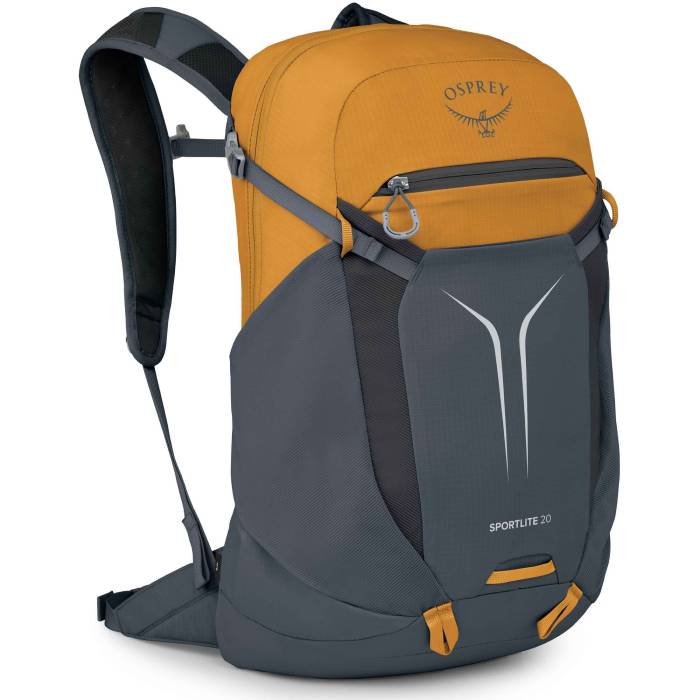
Osprey Sportlite 20
Best Daypack Under $100
CleverHiker Rating: 4.3/5.0
Price: $90
Weight: 1 lb. 5 oz.
Capacity: 20 L
Frame: Internal framesheet
Pros
- Ventilated back panel
- Airy shoulder straps
- Basic organization for hikers
- Framesheet adds light support
- Lightweight
- Durable, eco-friendly materials
Cons
- Hipbelt doesn’t support much weight
- Limited on-the-go gear access
- One-size, unisex fit


Comfort
For the price, the Sportlite offers good trail comfort. The AirScape back panel uses shaped foam and ventilation channels, while porous shoulder straps breathe better than the flat padding found on many inexpensive daypacks.
The one-size unisex fit worked reasonably well across our testers but cannot match the precision of gender-specific or adjustable-torso models. Comfort also drops as load weight increases because the harness lacks a substantial load-bearing hipbelt.
For light to moderate loads, however, the Sportlite feels clearly more hiking-oriented than similarly priced lifestyle bags.
The AirScape back panel is the feature that separates the Sportlite from most inexpensive lifestyle packs. Ventilation channels cut into the foam let some air move behind the back, and the porous shoulder straps shed heat better than flat, dense padding. In hot New Mexico testing, that made the pack noticeably less clammy than similarly priced casual designs.
The one-size harness and light padding still set limits. The fit is less precise than adjustable or gender-specific packs, and the simple belt cannot take much pressure off the shoulders. For a moderate summer load the system is comfortable enough; when the bag is packed heavily for a longer day, the lack of substantial load transfer becomes the bigger issue than the back-panel cushioning.
Comfort Score: 4.3 / 5.0

Organization
The Sportlite keeps storage straightforward and useful. A front shove-it pocket handles a layer, side pockets fit common hiking bottles, and a zippered security pocket with a key clip protects small valuables.
It lacks the abundant hipbelt and shoulder access of premium packs, so hikers need to remove the bag more often to reach certain items. Still, the layout prioritizes trail basics rather than laptop sleeves and office organization.
That focus is why we prefer it to casual packs for actual hiking, even though the total number of pockets is modest.
The front shove-it pocket is the Sportlite’s most useful storage feature. It is large enough for a puffy or rain shell and can even handle a compact camera case when the straps are loosened. A small zippered front pocket with a key clip keeps cards, keys, and a wallet separate from the main compartment.
The 20-liter interior is simple and has no dividers, but it has enough room for lunch and layers on a normal three-season hike. The hydration sleeve accepts reservoirs up to 3 liters, and the side pockets work for bottles. The biggest omission is on-the-go storage: there are no hipbelt pockets, so snacks and other small items often require taking the pack off.
Organization Score: 4.4 / 5.0

Support
A thin internal framesheet gives the Sportlite more structure than a fully frameless daypack. It keeps the bag from collapsing against the back and helps distribute modest loads across the harness.
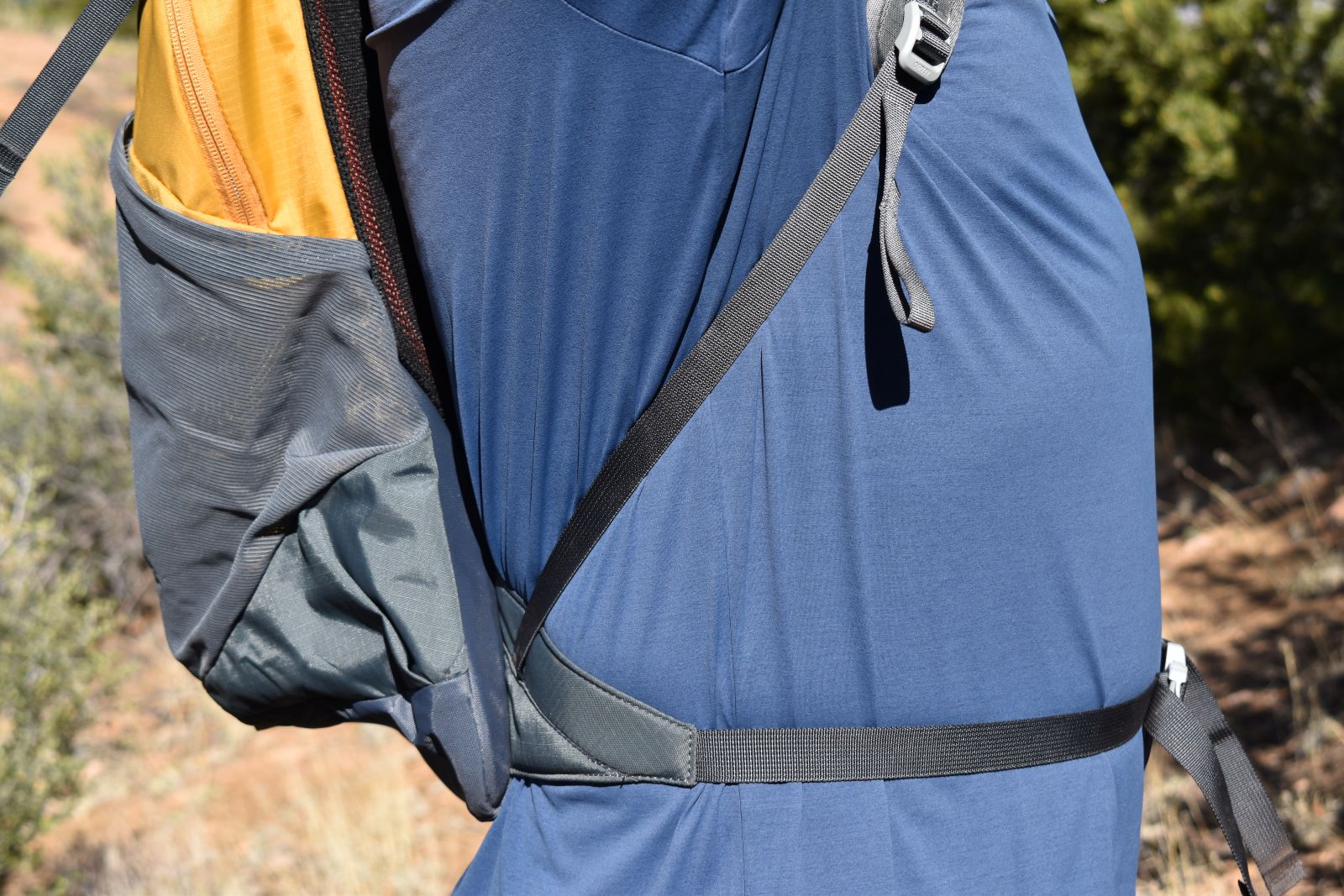
The hipbelt is mainly a stabilizer and does not shift substantial weight to the hips. During a fully loaded eight-mile test, our tester developed tightness in the neck and shoulders that did not appear with more supportive framed packs.
That experience defines the intended load range: the Sportlite is supportive enough for ordinary day-hiking essentials, but not for heavy water, winter gear, or camera equipment.
The thin Atilon framesheet gives the Sportlite more shape than a frameless budget bag and keeps the contents from collapsing directly against the back. That modest structure is useful with a normal day-hiking kit because it helps distribute the load across the harness and keeps the bag from feeling floppy.
The hip fins and webbing belt do not carry meaningful weight. In fully loaded testing, the shoulders and neck absorbed most of the load, and comfort dropped over a longer hike. This is support for light to moderate summer gear, not a substitute for a padded hipbelt and rigid frame. Hikers carrying extra water, winter equipment, or camera gear should move to a more substantial design.
Support Score: 4.0 / 5.0
Weight & Packability
At 1 lb. 5 oz., the Sportlite is light for a hiking-focused pack with a ventilated back panel and framesheet. It is substantially lighter than premium framed options and only modestly heavier than the simplest frameless bags.
The thin structure lets the pack flatten reasonably well for travel, even though it will not roll into a tiny bundle like the Cotopaxi Batac. Its 20-liter capacity also keeps overall bulk manageable.
For hikers who want real trail features without paying a large weight penalty, the Sportlite hits a useful middle ground between ultralight minimalism and full-featured suspension.
At 1 lb. 5 oz., the Sportlite is one of the lighter packs we recommend that still feels purpose-built for hiking. Osprey keeps the weight down with a thin framesheet, pared-back belt, and simple pocket layout rather than eliminating the back panel or structure entirely.
The framesheet means the pack cannot be rolled into a tiny bundle, but it can flatten much more easily than a metal-frame pack. In a suitcase it takes up relatively little room and does not add much to a travel weight limit. That balance is useful for hikers who want one pack for occasional trips: it is not an ultralight summit sack, but it is far less bulky than the premium support specialists.
Weight & Packability Score: 4.5 / 5.0

Should You Buy the Osprey Sportlite 20?
Buy it if you want an affordable, lightweight pack for normal day-hiking loads and prefer hiking-specific features over commuter organization. Avoid it if you routinely carry heavy water or gear and need a load-bearing hipbelt.

What Other Daypacks Should You Consider?
REI Flash 22 Review: The Flash 22 is the better choice if saving weight and money matter more than cushioning or structure. At 14 ounces, it is lighter, more compressible, and easier to stash for travel. The Sportlite’s AirScape back panel, shoulder straps, and framesheet make it noticeably more hiking-focused and comfortable with moderate loads. Minimalists should take the Flash; most casual day hikers will appreciate the Sportlite’s extra structure.
Osprey Daylite Plus Review: The Daylite Plus is a better fit if commuting, travel, and everyday carry matter as much as hiking. Its hydration sleeve doubles as laptop storage, and the frameless body packs easily into luggage. The Sportlite offers better ventilation and more trail-oriented structure, so it is the stronger choice when hiking is the main job. Both are affordable, but they solve slightly different problems.
Osprey Talon 22 / Tempest 22 Review: The Talon/Tempest is a meaningful upgrade if you hike often enough to justify better fit, support, and organization. Its adjustable harness, substantial hipbelt, larger pockets, and trekking-pole storage make long days easier, especially with moderate loads. The Sportlite costs much less and weighs less, but the tradeoff is a one-size fit and minimal load transfer. Frequent hikers will notice the difference.