
Bottom Line
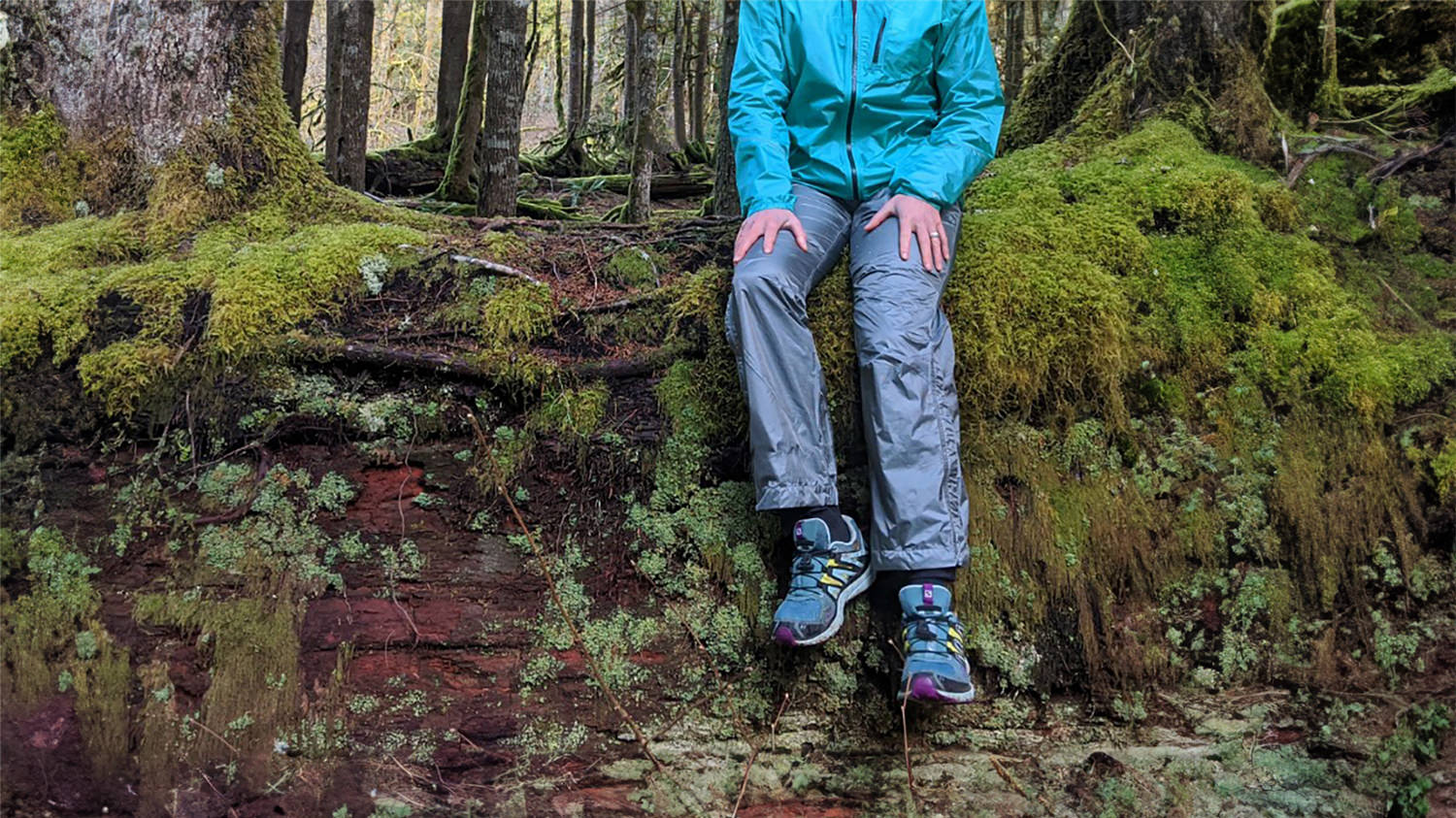
The Outdoor Research Helium (men’s / women’s) is an appealing rain layer for hikers who want protection in a small space rather than an elaborate set of features. Its Pertex Shield Diamond Fuse construction packs easily, and the modest ankle openings and rear pocket add a little functionality without turning it into a heavy shell.
We used the Helium in wet Minnesota conditions and cold Colorado rain over a roughly 60-day test period. It was useful during drizzle and ordinary wet hiking, but felt less comfortable as precipitation and internal condensation persisted. This is an emergency or moderate-weather layer first, not our favorite pant to wear all day in a humid storm.
The Helium’s balance makes particular sense for backpacking and day trips where weight is important. Hikers facing abrasive routes, frequent layer changes, or hard uphill efforts will be better served by a more substantial, better-vented pant. The complete comparison is in our best rain pants guide.
How We Tested
Over 60 days of testing, we used the Helium in damp Minnesota weather and cooler Colorado rain, including day hikes and overnight outings. We assessed how quickly it packed, how it felt over normal hiking layers, whether the ankle closures made changes easier, and the relationship between waterproofness and sweat buildup.
Quick Specs

Outdoor Research Helium
Best Puddle Jumping Rain Pants
CleverHiker Rating: 4.2/5.0
Price: $130
Weight: 5.8 oz. / 5.75 oz.(men’s / women’s)
Zipper Length: Ankle
Pros
- Low weight and small packed size
- Waterproof coverage for passing showers
- Rear pocket and self-storage
- Useful for backpacking
- Resilient fabric for its weight
Cons
- Minimal ventilation
- Less comfortable during prolonged rain
- Short zippers limit adjustments
- Not for repeated abrasive use
Comfort & Mobility
The Helium’s light fabric is easy to move in when walking on ordinary trails. It fits comfortably over lighter hiking clothing, although the tapered legs are less accommodating of bulky insulation, and packs away quickly once conditions improve.
Thicker insulation may be harder to accommodate than in the baggier Foray or Vertice. An elastic waist with Velcro adjustment helps dial in the fit, while the tapered legs reduce flapping when moving quickly along a trail. We would choose it for three-season walking rather than as the main shell over bulky winter clothing.
Comfort & Mobility Score: 4.5/5.0

Weather Resistance
Pertex Shield supplied useful waterproofing in light to moderate rain during our outings. The Helium kept passing showers manageable and made a convenient reserve layer on trips where the forecast was uncertain.
Extended rain and internal moisture accumulation were less comfortable. The important distinction is that waterproofness alone doesn’t guarantee comfort when exertion traps sweat inside the pants. For wet days without a chance to dry out, we prefer a pant with more adjustable ventilation. Our spring Minnesota testing found the shell reassuring in steady drizzle, but the balance shifted as precipitation persisted and sweat accumulated.
Our damp Minnesota walks were especially useful for separating the Helium’s ability to block drizzle from its limitations during prolonged wear. As effort and moisture accumulated, comfort fell even without an obvious failure of the outer barrier. That makes it a sensible shell to carry for uncertain conditions, rather than our first choice when a trip is forecast to involve hours of continuous cold rain.
Weather Resistance Score: 4.4/5.0

Ventilation
Short ankle zippers do not create much active airflow around the thighs. They help with cuffs and some footwear access, but are a poor substitute for the long openings available on the Rainier, Foray, or Fineline.
During sustained activity, heat management depends heavily on pace and layers. The published test also noted that even the ankle zippers often were not large enough to allow changes over boots, which limits their usefulness in fast-changing weather. The Helium is better for cool, lower-output walking or short rain episodes than for hard climbs in mild, humid conditions.
Ventilation Score: 4.3/5.0

Weight
The live comparison table reports 5.8 ounces for men’s and 5.75 for women’s. At those published weights, the Helium is one of the easier shells to keep in a backpack as insurance without devoting much room to rain gear.
The small packed shape matters beyond the number on a scale. The Helium stuffs into its rear pocket, a practical way to keep an emergency layer together without needing a separate bag. We could stow it with the rest of a compact kit without the space penalty of heavier, full-zip pants. It does give up the quick-changing convenience and ventilation hardware of those designs.
Packing into the rear pocket means the Helium is easy to keep together in a small kit and quick to stow after a passing shower. The practical savings are in both weight and storage space, not just the specification on paper. The tradeoff is that short ankle openings cannot reproduce the shoe-on changes and adjustable airflow of the much heavier Rainier or Foray.
Weight Score: 4.7/5.0
Durability
Diamond Fuse fabric aims to improve tear and abrasion resistance without much additional bulk. Our test experience suggests it is more reassuring than some extremely thin emergency shells, but it still isn’t a substitute for a 50-denier three-layer pant.
Carry it for maintained trails, backpacking, and travel. Diamond Fuse improves the resilience of this lightweight shell, but our verdict is relative to other ultralight designs, not thick rain pants made for frequent rock scraping. If the route involves repeated rock scraping, off-trail brush, or extended kneeling, the Torrentshell is a better investment even though it weighs more.
Durability Score: 4.3/5.0

Should You Buy the Outdoor Research Helium Rain Pants?
Choose the Helium when light packed rain coverage matters more than pockets, venting, or maximum storm endurance. It suits backpackers, travelers, and hikers who regularly carry a shell they may only need for part of a day.
Pass if you run hot, expect to wear rain pants for hours, or need a rugged shell for harsh terrain. Other models make their extra weight worthwhile with longer zippers, more secure adjustments, and tougher construction.

What Other Rain Pants Should You Consider?
When considering the Outdoor Research Helium pants, some of our other top picks from our rain pants gear guide might appeal to you as well.
Zpacks Vertice Review: The Vertice goes further in minimizing hardware and packed bulk. Its loose fit accommodates layers but there are no pockets or zips, and the very thin face demands care around branches and rock. Choose it for a minimalist maintained-trail kit rather than convenience.
Outdoor Research Foray / Aspire Review: If wet-weather exposure is frequent, the Foray and Aspire are a major functional upgrade. Their long side openings allow much more useful heat release, and the build is better suited to cold, sloppy trails. They are substantially heavier and more costly, so their advantages matter most when the pants are worn often.
REI Rainier Review: The Rainier provides a budget-conscious way to get long side zippers, two hand pockets, and adjustable cuffs. These features make it much easier to manage changing conditions over hiking footwear. It weighs more than the Helium and occupies noticeably more space in a pack.