

Bottom Line
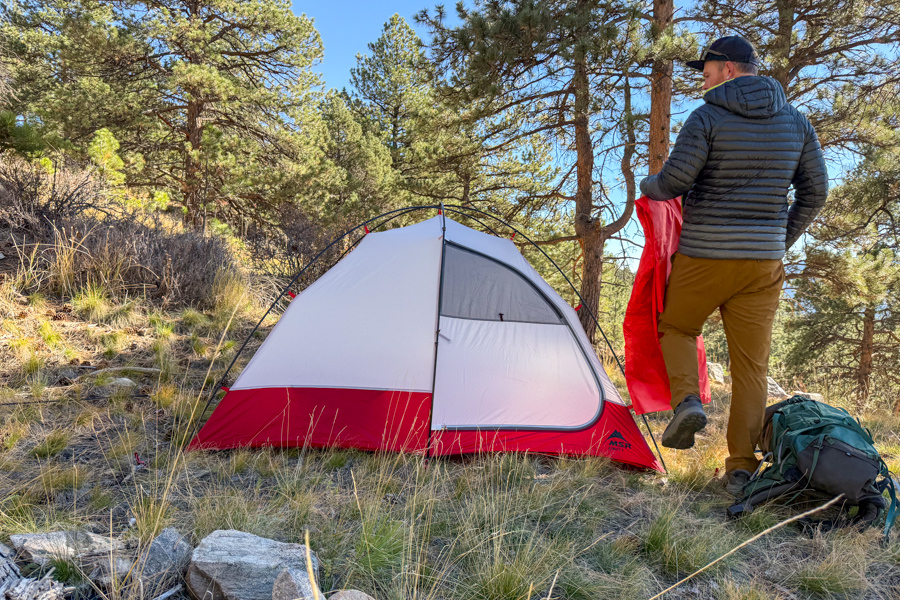
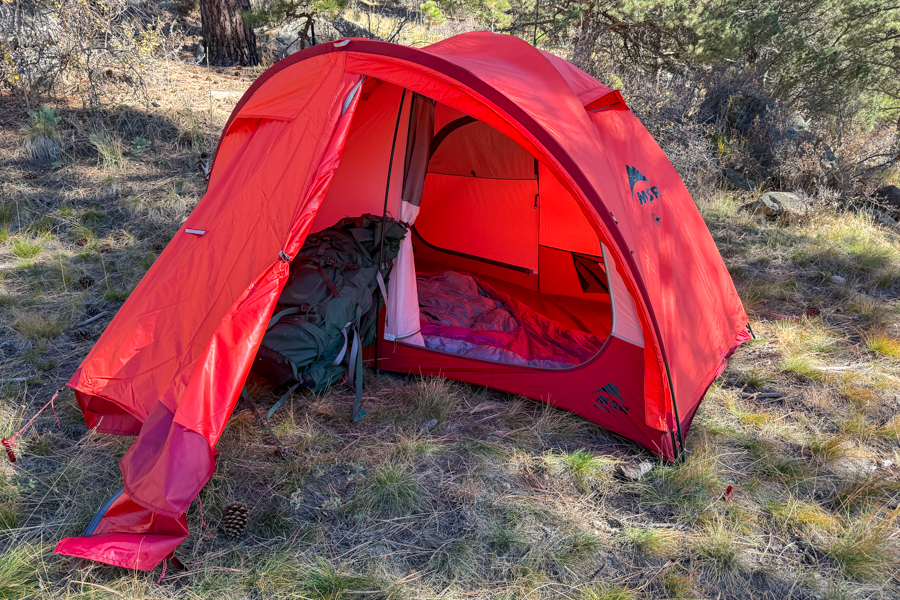
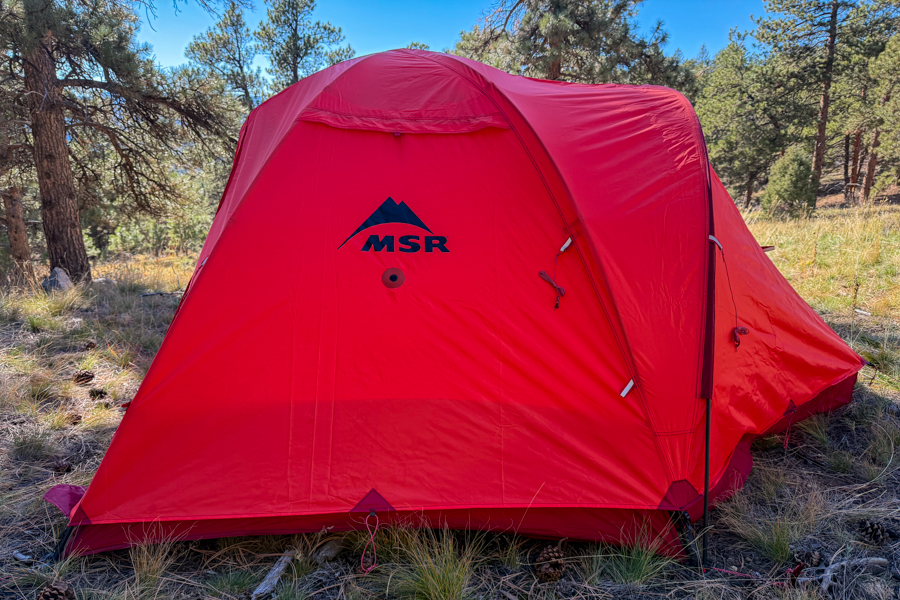
The MSR Remote 2 is a serious four-season shelter for mountaineers who prioritize storm protection, sturdy materials, and room to stash bulky winter gear. We found its connected pole frame straightforward to pitch, and the large, pole-supported front vestibule was especially useful for keeping packs and equipment out of the sleeping area. After several outings in Colorado’s mountains, the tent still looked nearly new.
Its ventilation is an unusually strong point for a winter tent. Four kickstand-style fly vents, two-way vestibule zippers, and adjustable interior openings gave us several ways to move damp air without leaving the shelter. We had relatively little condensation when we used those vents, though the interior got stuffy with the fly shut tight.
At a measured 7 pounds 13 ounces, this is not the tent we’d choose for a fast-and-light trip. The roomy front vestibule also needs a generous pitching site, while two people around six feet tall fit inside with little spare space for equipment. A complete storm-ready pitch calls for additional stakes and suitable snow anchors, not just the nine standard stakes in the package.
For exposed winter camps and gear-heavy mountaineering trips, the Remote 2’s weather-ready construction makes those compromises reasonable. For less demanding outings, lighter tents make more sense. See our best four-season tents guide for the rest of our tested options.
How We Tested
We used the MSR Remote 2 on multiple outings in Colorado’s mountains from early through late fall, including wet and windy conditions. Our testing covered the first pitch and subsequent setups, rainfly alignment, full guy-out options, ventilation, weather performance, interior space for two adults, and repeated packing and takedown.
We used it with two full-length pads, checking fit for campers approximately six feet and six feet two inches tall. We inspected the floor seams, attachment points, vestibules, poles, and included stakes, and we compared the Remote 2’s measured weight and dimensions with other four-season tents in our current test lineup.
Quick Specs
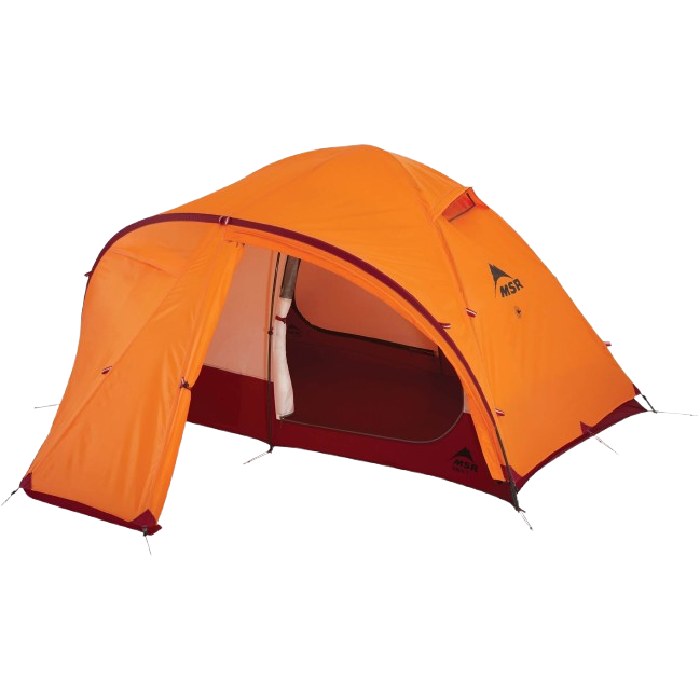
MSR Remote 2
Storm-Ready Mountaineering Tent With Excellent Ventilation
CleverHiker Rating: 4.6/5.0
Price: $860
Weight: 7 lb. 13 oz.
Dimensions (LxWxH): 87 x 55 x 44
Square Footage: 33 sf
Pros
- Strong weather-ready construction
- Excellent ventilation options
- Generous main vestibule
- Easy tent-body setup and pack-up
- Reinforced guy-out points
- Two doors and vestibules
Cons
- Heavy for long approaches
- Fly alignment takes practice
- Needs extra stakes for full guy-out
- Snow-specific anchors not included
- Tight for two tall campers
- Gets hot and stuffy when closed
- Snow flaps only at vestibules
Comfort
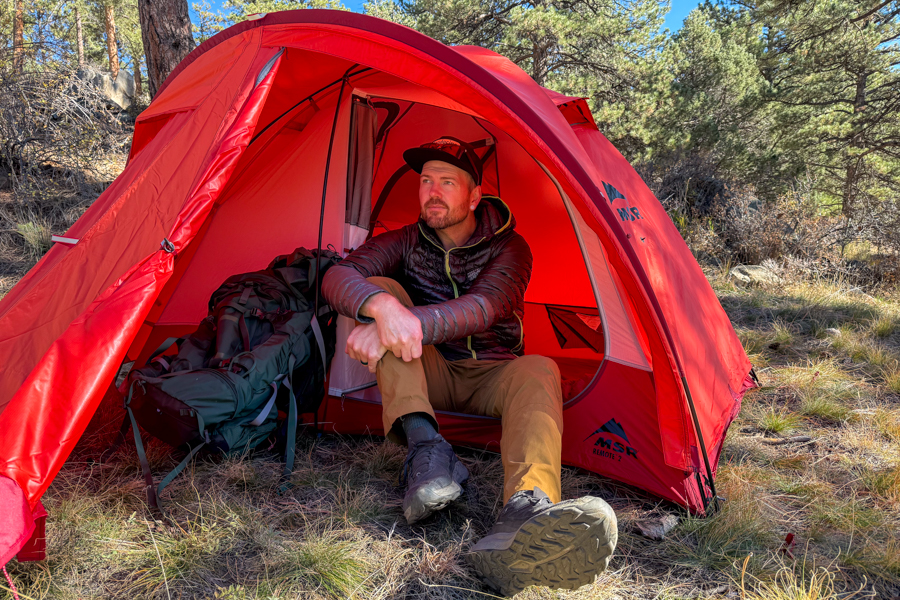
The Remote 2 gives two campers a 33-square-foot floor, a 44-inch peak height, and two doors, but the interior feels snug once both sleeping pads are in place. We fit two full-length pads and two adults around six feet tall without a problem, yet neither of us had much room for extra gear. For two taller mountaineers carrying bulky winter kits, the vestibules aren’t just a convenience; they’re necessary storage space.
The standout is the 22-square-foot front vestibule, which shelters packs and climbing equipment and gives us room to sort gear before entering the tent. A second, smaller vestibule handles boots or a few additional items, and both doors make access easier with a partner. Interior organization is modest by comparison, with only two small pockets and overhead loops where a makeshift clothesline could be rigged.
We especially appreciated being able to control airflow from within the shelter. Two-way vestibule zippers, small door windows, and accessible roof vents let us fine-tune ventilation without repeatedly going outside in bad conditions. The tent can still feel warm and close on sunny days, so its livability is best judged as a winter shelter rather than a summer backpacking tent.
Comfort Score: 4.5 / 5.0
Weight & Packed Size
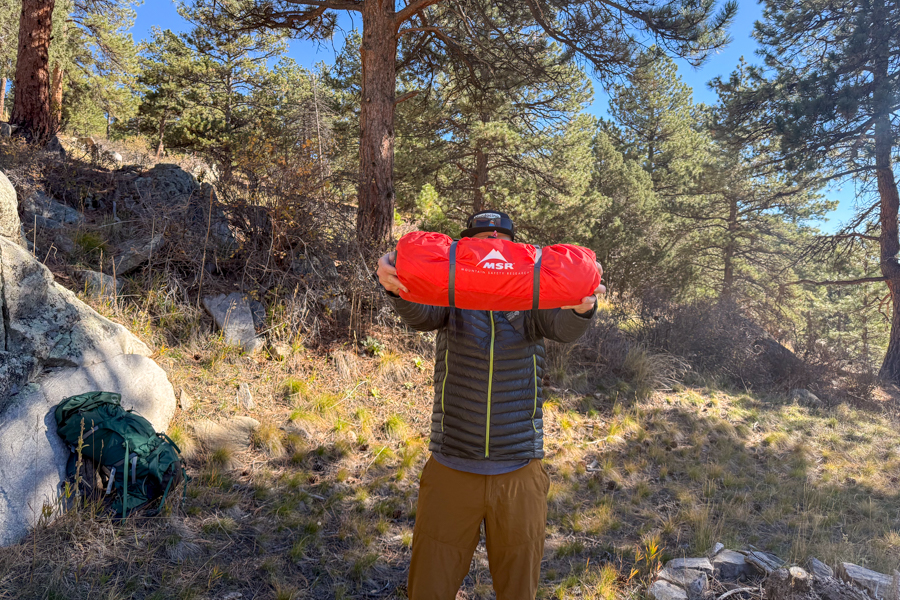
At a measured 7 pounds 13 ounces, the Remote 2 sits toward the heavy end of our four-season lineup. It’s lighter than the Mountain Hardwear Trango 2 and The North Face Mountain 25, but several equally winter-oriented shelters are substantially easier to carry. This is a tent we’d rather haul into a basecamp than carry on a long, mileage-focused approach.
MSR lists a 20-by-7-inch packed size, and we found the wide-mouth storage sack refreshingly easy to fill after breaking down camp. The tent body and fly went back in without a fight, which matters when conditions are deteriorating. Still, the large vestibule pole, robust fabric, and extra stakes needed for exposed pitches add up to more packed bulk than a minimalist winter shelter.
Weight & Packed Size Score: 3.8 / 5.0
Weather Resistance
The Remote 2 handled rain well during our Colorado outings, and its Easton Syclone pole structure felt stable in the wind. The connected central frame, short cross pole, and numerous guy-out points give the shelter a reassuring shape when tensioned properly. We would add guy points at an exposed alpine site rather than rely on the minimum pitch.
The thick fly, taped floor seams, reinforced corners, and pole-attachment points inspire confidence in wet and windy weather. MSR designed the steep walls to shed accumulating snow, but we published this review before winter hit, so we will update the review once we get a good dump. The snow flaps cover the vestibules rather than the full perimeter, leaving an opening along the main body where wind-driven precipitation could get underneath.
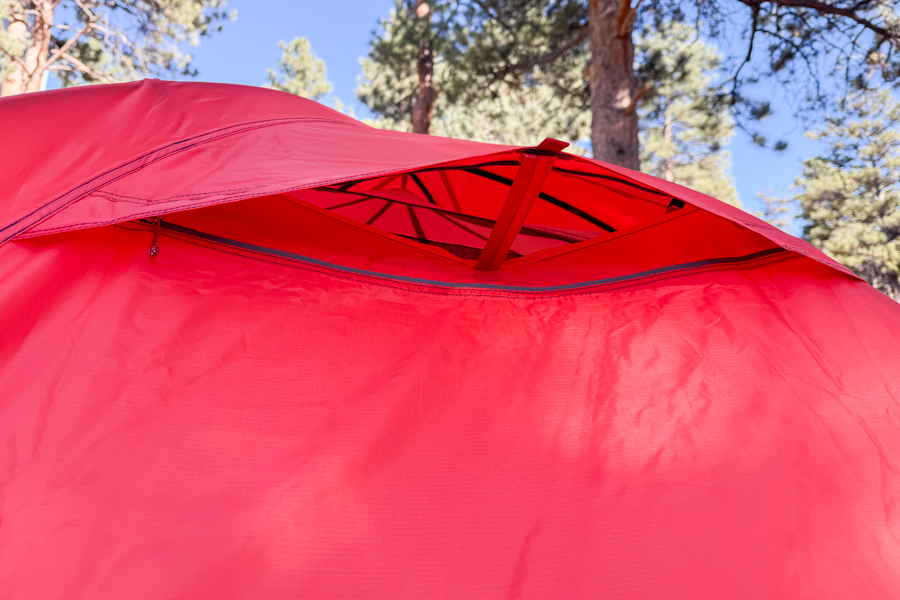
Condensation was manageable when we opened the vents. We counted four kickstand-style fly vents, including vents over the body and vestibules, and could reach the roof ventilation controls from inside. Close everything up and the relatively heavy fabric traps moisture and warmth more readily; deliberate airflow is important, especially with two sleepers. The nine supplied Groundhog stakes work well in ordinary soil, but snow pitching calls for purpose-built anchors, and a full high-wind guy-out needs more than the included stakes.
Weather Resistance Score: 4.7 / 5.0
Ease of Setup
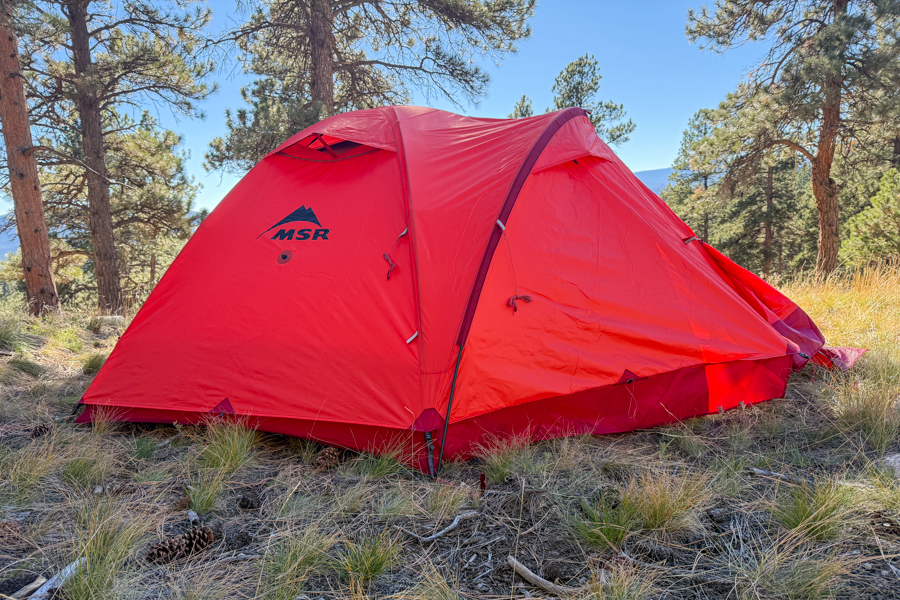
The main tent body is easy to pitch thanks to a connected pole assembly with a central hub and a separate cross pole. We quickly understood the body structure on our first attempt, and the clips and reinforced attachment points made the frame feel straightforward. That simplicity is useful when cold hands or incoming weather make complicated tent construction less appealing.
The rainfly took more work at first. Its orientation isn’t obvious until you distinguish the big, pole-supported front vestibule from the smaller rear vestibule; installing that vestibule pole first made the rest of the setup more intuitive. After a few pitches, we no longer struggled to line up the doors and attachment points.
Breaking camp was easier still. The poles and fabric came down quickly and fit back into the wide-mouth stuff sack without a fight. The extra care comes at the staking stage: a fully tensioned storm pitch has many potential guy-out points, and snow conditions require anchors that don’t come standard with the tent.
Ease of Setup Score: 4.5 / 5.0
Durability
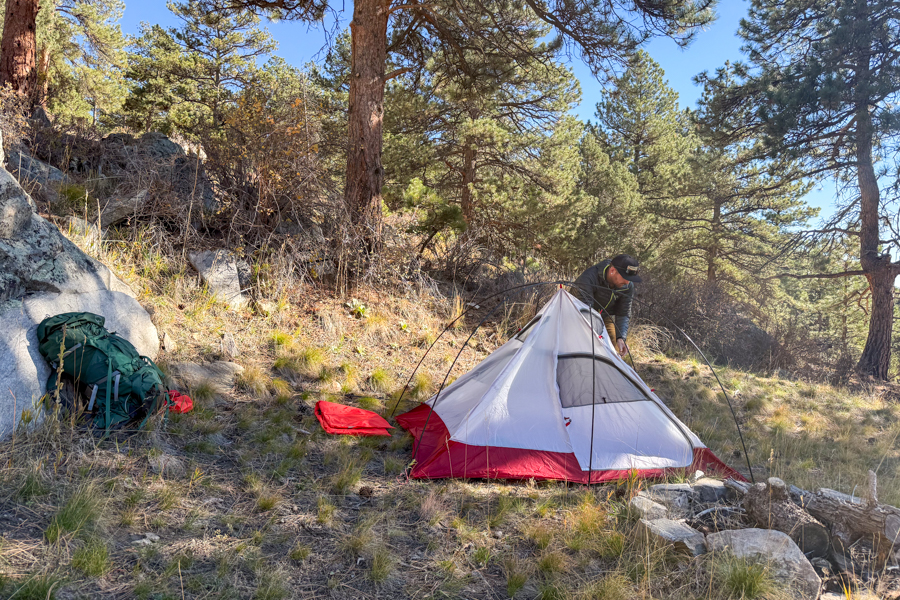
This is one of the more substantial-feeling tents we’ve handled in the category. The 68-denier ripstop polyester fly and 40-denier ripstop nylon floor, as specified by MSR, offer greater protection than the lightweight fabrics used in many shoulder-season shelters. The corners and pole contact points are reinforced, and the factory-taped floor seams looked carefully finished during our inspection.
We also liked the reinforced guy attachments and the way the fly can fasten to the poles for added stability. The Easton Syclone poles are made to flex under load, but we wouldn’t leave the thin sections unsupported in strong wind when extra guying is available. After several field uses, we saw no obvious wear, though a handful of fall trips can’t show how the tent will age over years of expedition use.
Durability Score: 4.6 / 5.0
Versatility
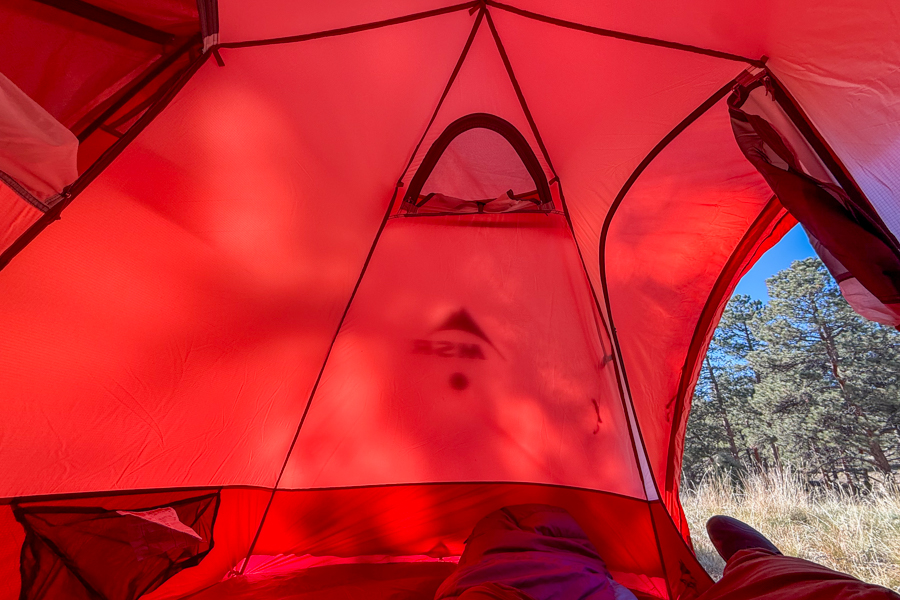
For mountaineering, winter basecamps, and gear-heavy cold-weather trips, the Remote 2 has a lot going for it. Two doors, a generous gear vestibule, and accessible vents make the tent more pleasant to live in than its heavy-duty materials might suggest. We could open different sections of the fly and interior doors to control airflow while keeping most of the shelter protected.
Its limits become clear when conditions turn mild or mileage matters. Even with the vents open, the tent heats up quickly in direct sun, and an almost eight-pound shelter is more than most backpackers need for an ordinary overnight. The large vestibule also demands more campsite space than the compact MSR Access 2, which can be inconvenient on narrow or rocky alpine platforms.
The Remote 2’s strongest versatility is in cold-weather travel, like flying to a remote glacier camp or towing it on a tabagon, not across all four seasons of recreational backpacking. If we expected repeated time at a sheltered winter camp, we’d happily accept the extra weight for the usable exterior space and sturdier build. If the route involved long approaches, frequent camp moves, or warmer weather, we’d choose a lighter and more adaptable tent.
Versatility Score: 4.4 / 5.0
Should You Buy the MSR Remote 2?
Choose the MSR Remote 2 if you’re setting up a winter basecamp, hauling bulky mountaineering equipment, or prioritizing a protective double-wall shelter over a low pack weight. The expansive front vestibule and multiple adjustable vents are the features we kept appreciating in the field, and the tent held up well in the rainy and windy conditions we encountered.
Look elsewhere if your main objective is fast winter travel or if you’ll regularly camp in warm conditions. For a lighter ski-touring shelter, the MSR Access 2 makes more sense, especially if you split the gear or haul it on a sled. For an expedition-style tent with more interior room, consider the Mountain Hardwear Trango 2.
What Other Four-Season Tents Should You Consider?
For more options in this category, check out the winter-ready models in our guide to the best four-season tents.
MSR Access 2 Review: The Access 2 weighs 4 pounds 1 ounce in our current test lineup, making it much easier to carry on ski tours and long winter approaches. It’s better suited to below-treeline and milder winter trips, though, with less robust materials and more condensation trouble in our testing than the heavier Remote 2.
SlingFin CrossBow 2 Review: The CrossBow 2 offers another route to strong weather resistance with a substantially lower measured weight and a design that works across a wider range of trips. It’s a more practical choice when you’re changing camps frequently, while the Remote 2 concentrates gear storage in its particularly large 22-square-foot front vestibule.
Mountain Hardwear Trango 2 Review: The Trango 2 is the stronger match if your priority is a traditional expedition basecamp with generous interior room and reliable protection in sustained winter weather. It is considerably heavier than the Remote 2, so the MSR makes more sense when you want big vestibule storage without hauling the full weight of the Trango.