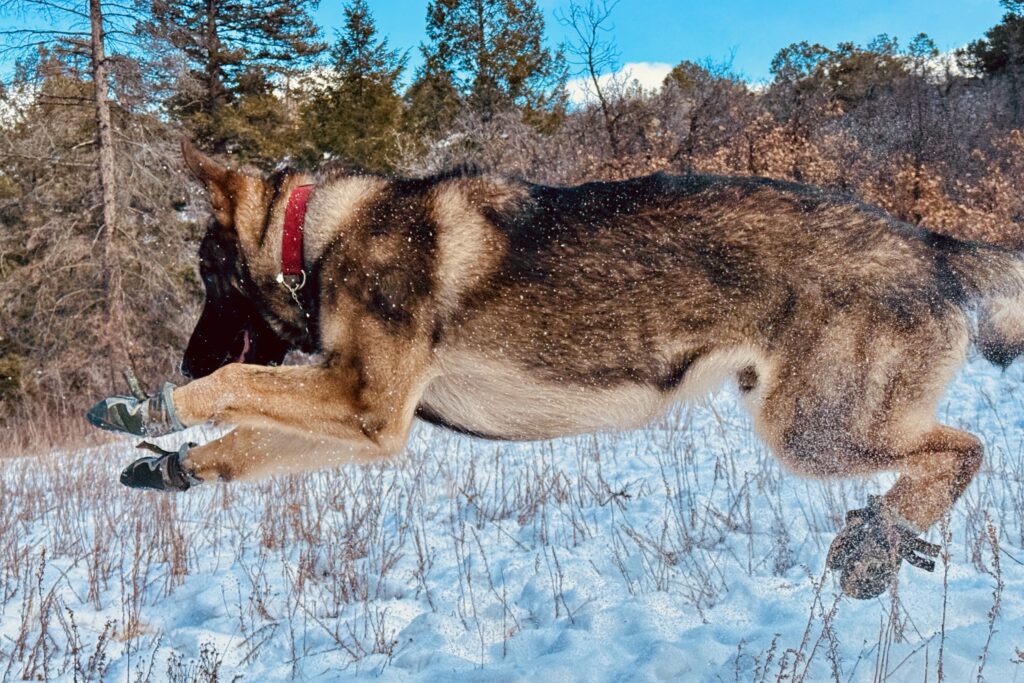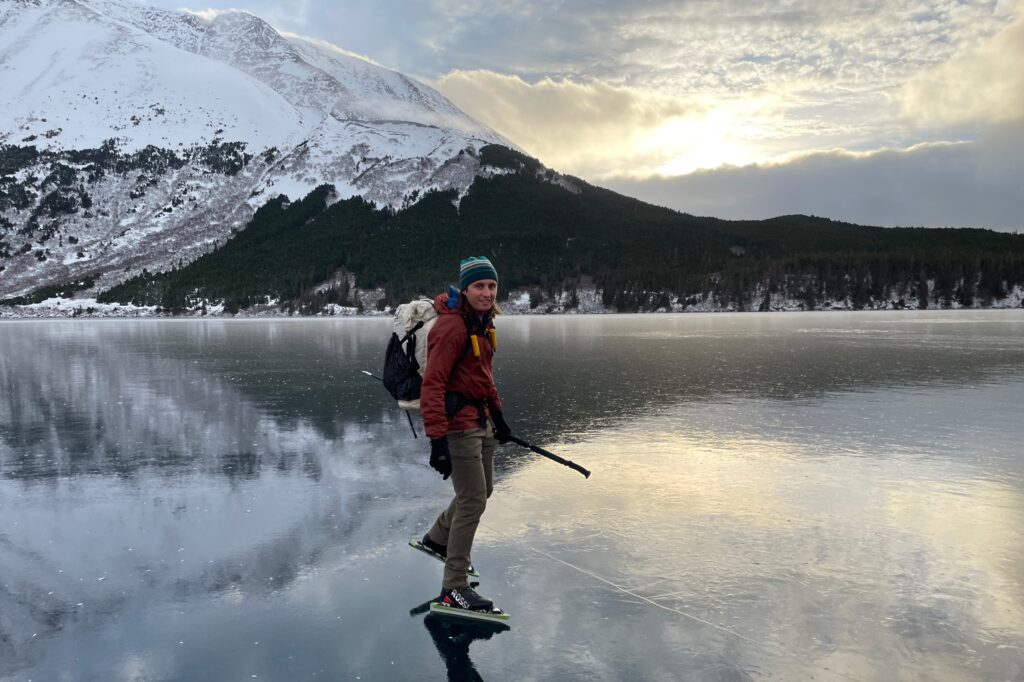



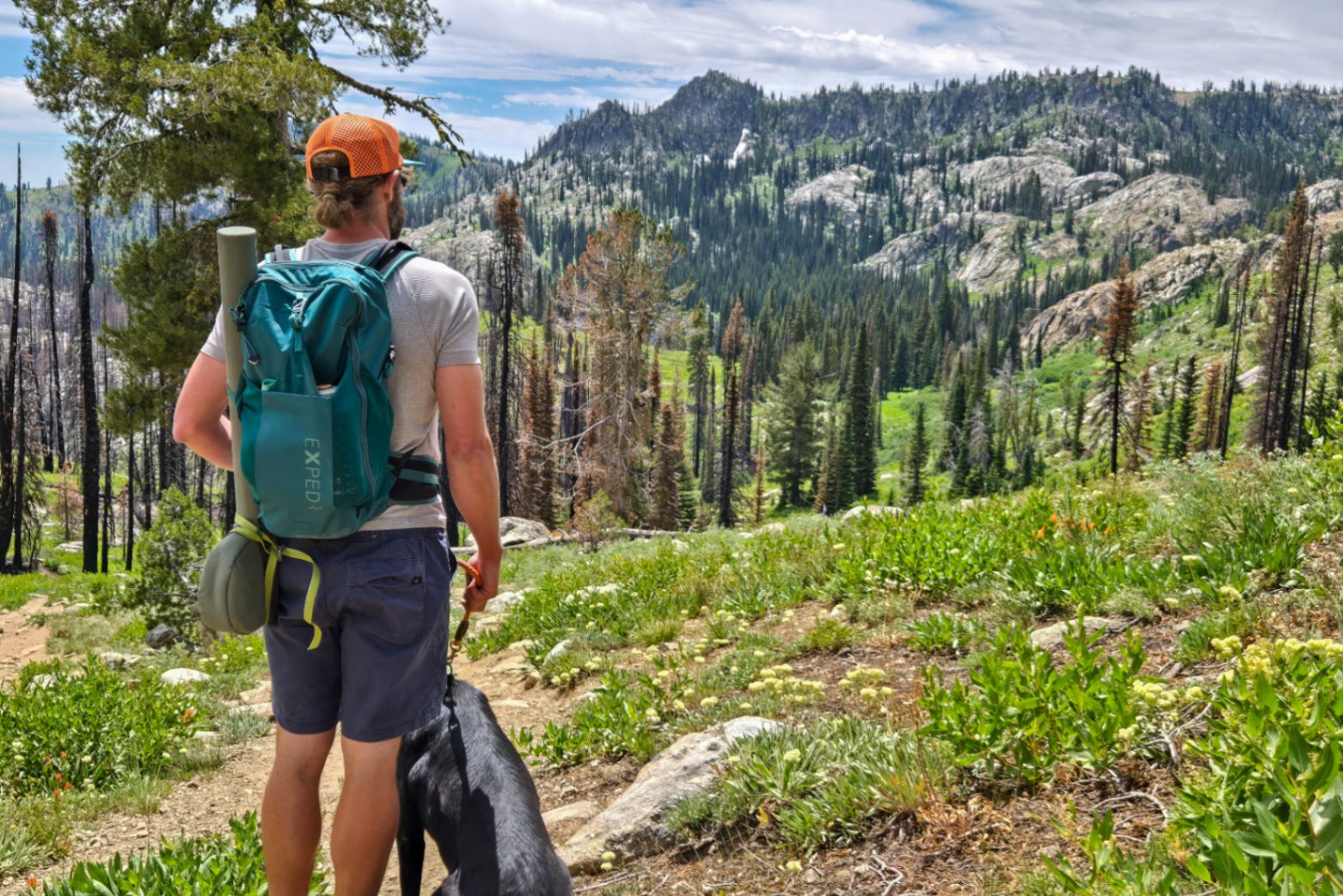
Over the past decade, CleverHiker gear analysts have researched more than 250 daypacks from Osprey, Rab, Gregory, and other top brands. We’ve gotten to know the best daypacks by hiking more than 5,000 miles and summiting over 800 mountains. Our latest list includes 14 daypacks that we tested side by side in Colorado, Canada, Idaho, and New Mexico.
Editor’s Note: We updated this guide on June 3, 2026, to add a few standouts from recent testing: the Black Diamond Pursuit, Rab Syclon, and Osprey Sportlite. We also updated our coverage on the Osprey Stratos/Sirrus.
How We Test Daypacks
Our analysts took these daypacks out on a series of hikes to compare their comfort, organization, support, weight, and packability. We tested each pack with both light loads and heavy loads on easy to difficult trails, fastpacking adventures, and stints of scrambling – even summiting 14ers and 13ers.
And for more info, check out some of our other popular gear guides:

#1. Best Daypack for Hiking Overall
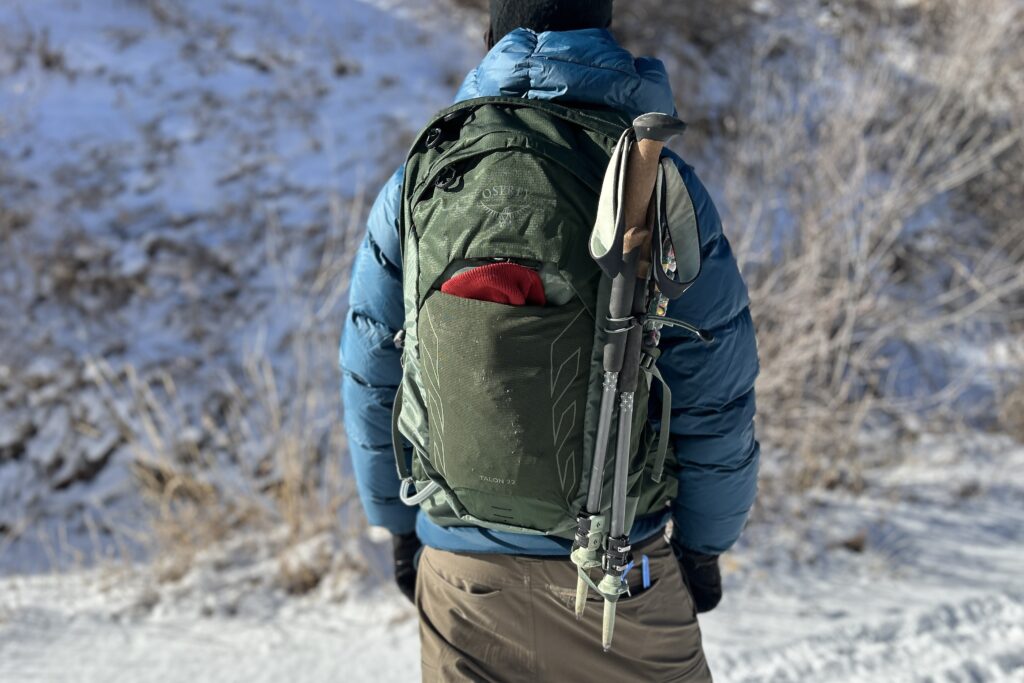
We own plenty of daypacks but reach for the Osprey Talon (men’s) and Tempest (women’s) more often than not. This pack is the total package, from its ventilated back panel to its accessible pockets, thoughtful support, and durable, bluesign-approved materials.
Quick Picks for Daypacks
Check out this quick list of the best daypacks or continue scrolling to see our full list of favorites with in-depth reviews.
1. Best Daypack Overall: Osprey Talon 22 / Tempest 22 – Men’s / Women’s ($175)
2. Best Fast & Light Daypack: Deuter Speed Lite Pro 25 / 23 SL – Men’s / Women’s ($140)
3. Best Hydration Daypack: Gregory Citro 24 H2O / Juno 24 H2O – Men’s / Women’s ($180)
4. Best Do-It-All Daypack: Rab Protium 27L ($190)
5. Best 4-Season Daypack: Osprey Stratos 24 / Sirrus 24 – Men’s / Women’s ($200)
6. Best Scrambling & Fastpacking Daypack: Black Diamond Pursuit 15 – Men’s / Women’s ($180)
7. Best Waterproof Daypack: Rab Syclon XP 30L ($200)
8. Best Heavy-Hauler Daypack: Gregory Zulu 30 / Jade 28 – Men’s / Women’s ($200)
9. Best Daypack Under $100: Osprey Sportlite 20 ($90)
10. Light Yet Durable Daypack: EXPED Skyline 20 ($160)
11. Hikeable Commuter Daypack: Osprey Daylite Plus ($80)
12. Best Budget Daypack for Minimalists: REI Flash 22 ($60)
13. Cushy Budget Daypack: REI Trail 25 ($100)
14. Colorful Casual Daypack: Cotopaxi Batac 16L ($70)
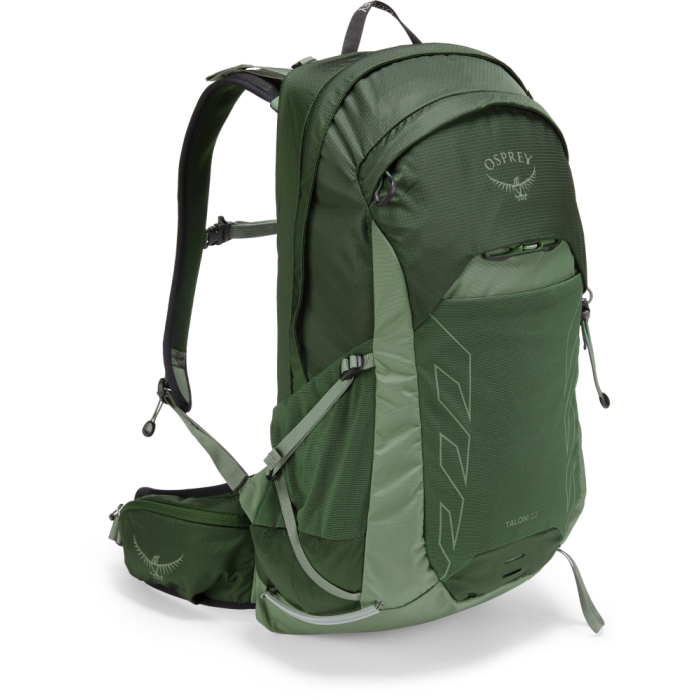
Osprey Talon 22 / Tempest 22
Best Daypack Overall
CleverHiker Rating: 4.7/5.0
Price: $175
Weight: 2 lb. 6.1 oz. / 2 lb. 4.3 oz.(men’s / women’s)
Capacity: 22 L / 22 L
Frame: Internal framesheet
Pros
- Great balance of weight savings and support
- Ventilated back panel
- Stretch-mesh front pocket
- Hipbelt pockets fit smartphones
- Adjustable and gender-specific fit
- Accessible trekking-pole carry
- Durable
Cons
- Narrow hydration sleeve
- Side pockets fit Nalgenes better than Smartwater bottles
The Osprey Talon 22 (men’s) and Tempest 22 (women’s) win our best overall title for scoring high across the board.
Our team appreciates Osprey’s AirScape back panel, which alternates foam and ventilation channels to keep your back cooler and less sweaty. It’s not as ventilated as a suspended mesh design (like Osprey’s AirSpeed design), but it’s one of the most comfortable close-to-back fits we’ve worn in the field.
This pack also offers gender-specific styles for men (Talon) and women (Tempest) – plus an adjustable back panel. Our testers achieved a better fit with the Talon / Tempest than they did with most other packs on this list.
The Talon / Tempest probably has our favorite set of pockets across the hiking daypacks we’ve tested. We got heaps of use out of the front shove-it pocket, zippered hipbelt pockets, and zippered security pocket. If you hike with telescoping trekking poles, you can access them on the go using the left shoulder strap bungee and rear gear loop.
This sturdy pack carries moderate weight well while being lighter than most internal-framed daypacks we tested. It’s meant to be worn – not stuffed in a suitcase or travel pack. Our lead tester has hiked thousands of miles in this daypack without any durability issues cropping up. If they did, Osprey’s All Mighty Guarantee covers these packs for life.
Osprey didn’t skimp on any features with Talon / Tempest – there’s a pocket, strap, and zipper for almost any adjustment or storage you might want. If you’re looking for a versatile daypack, this one works for almost every style of day hiking (as well as mountain biking).
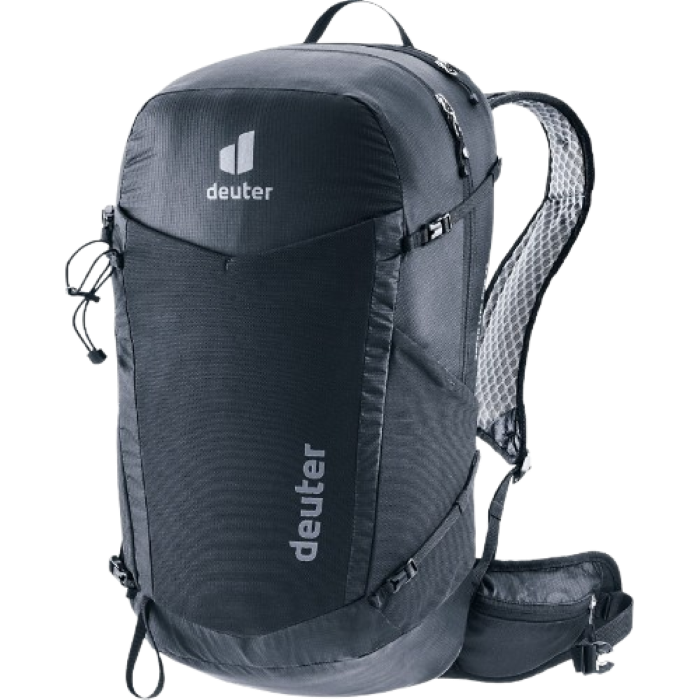
Deuter Speed Lite Pro 25 / Speed Lite SL 23
Best Fast & Light Daypack
CleverHiker Rating: 4.6/5.0
Price: $140
Weight: 1 lb. 8 oz. / 1 lb. 6.6 oz.(men’s / women’s)
Capacity: 25 L / 23 L
Frame: Internal frame
Pros
- Comfortable and flexible back panel
- Women’s-specific SL model for petite bodies
- Vest-style shoulder straps
- Ample pockets
- Close, performance-ready fit
Cons
- Limited separation in the main compartment
- Not the best for heavy loads
The Deuter Speed Lite Pro 25 (men’s) and Speed Lite Pro 23 SL (women’s) is a high-performance daypack built to cover miles and gain elevation. We tested the slightly smaller 23 SL version (designed for women and more petite frames), but the overall design, materials, and features are consistent across both models. The SL fit includes contoured, S-shaped shoulder straps and a well-placed sternum strap that avoids chest pressure, making it one of the most comfortable packs our female tester has worn.
Designed with climbers, fastpackers, and serious day hikers in mind, the Speed Lite Pro is a breathable and stable daypack loaded with features. The vest-style shoulder straps are a standout feature, offering excellent on-the-go storage and a snug fit. The flexible mesh waist belt adds stability without excess padding, and the deep U-zipper offers quick access to buried gear. Materials feel premium, and the layout is dialed – everything has a place, from trekking poles to hydration.
That said, it may be overbuilt for casual hikers. There’s minimal internal organization in the main compartment, it doesn’t fit a laptop, and the hydration hose routes across the chest, which can be mildly annoying. But these are small trade-offs for a pack that performs exceptionally well in active, high-output settings.
If you like to move fast in the mountains and are looking for a pack that balances comfort, technical capability, and durability, the Speed Lite Pro is a stellar choice. For casual trails or everyday use, it might be more pack than you need, but for serious pursuits, it’s worth the investment.
Gregory Citro 24 H2O / Juno 24 H2O
Best Hydration Daypack
CleverHiker Rating: 4.6/5.0
Price: $180
Weight: 2 lb. 0.3 oz. / 1 lb. 14.9 oz.(men’s / women’s)
Capacity: 24 L / 24 L
Frame: Perimeter wire
Pros
- Hydration bladder included
- Very comfortable
- Good internal structure
- Transfers weight to the hips well
- Good organization
- Large and convenient opening for the main compartment
- Durable
- Plus size available
Cons
- Heavier than some
- Expensive
- Side pockets are tight for wide bottles
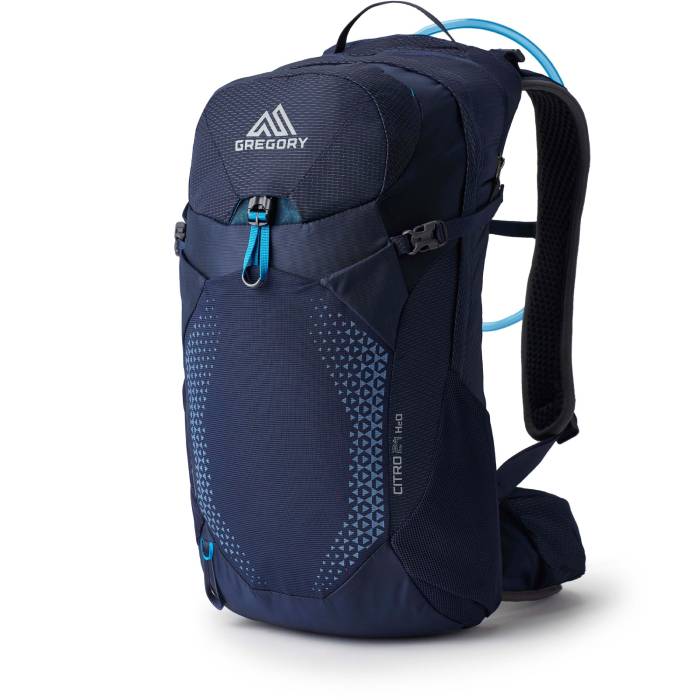
The Gregory Citro 24 H2O (men’s) and Juno 24 H2O (women’s) are our favorite hydration packs. These bags feature simple, strong frames that offer just enough support to transfer weight to your hips for a very comfortable carry. With the 3-liter reservoir and all pockets full, these bags are more agile and streamlined than other daypacks with a similar capacity and weight.
The Citro and Juno have a ton of useful pockets, including large and small zippered compartments, hipbelt pockets, and a stretchy front mesh pocket for stashing your hat or jacket. We appreciate the small pocket at the top with a divider for keys, Chapstick, and more. Daypacks with zippered main compartments like this – as opposed to backpacks with the drawstring and top-lid design – are often quicker and easier to get in and out of.
The included 3D Hydro reservoir is one of our favorites. We’re big fans of this reservoir because it’s durable, functional, and exceptionally easy to keep clean. These bags are built around the 3D Hydro design, including adjustable clips to mount the mouthpiece on the shoulder straps, a ventilated mesh back to increase airflow, and a thick internal clip to keep the reservoir upright.
The reservoir is included, so you’ll pay a bit more for the Citro and Juno, but these durable, made-for-the-trail bags will pay you back over and over. They are a bit on the heavy and bulky side, though, so if you like a sleek, small daypack, these may be a bit much.
If you don’t need the bladder, we also love the regular Citro 24 and Juno 24, which cost less. But for hikers who want comfort, storage, and one of the best hydration systems on the market all in one bag, we highly recommend the H2O models.
Rab Protium 27L
Best Do-It-All Daypack
CleverHiker Rating: 4.5/5.0
Price: $190
Weight: 2 lb. 5 oz.
Capacity: 27 L
Frame: Internal frame
Pros
- Highly customizable fit
- Comfortable shoulder and waist straps
- Excellent pocket organization
- Included rain cover with dedicated pocket
- Breathable
Cons
- Narrow hydration reservoir pocket
- Generous capacity for gear-intensive day hikes
- Shoulders straps could use more padding
- Technical features are overkill for simple hikes
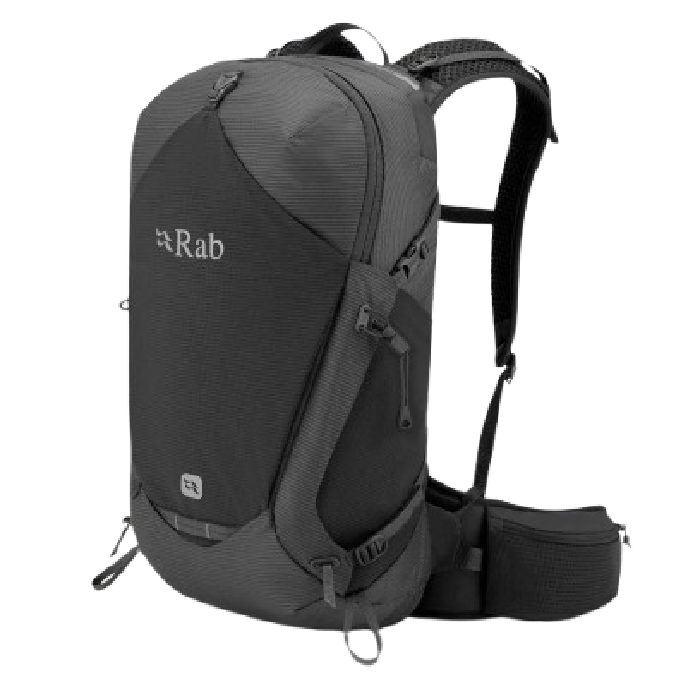
The Rab Protium 27L is a rugged and versatile bag with plenty of storage, technical features, and outstanding comfort. It performed well during 200+ miles of testing in rough landscapes across Colorado and Utah.
The Protium 27L is comfortable thanks to an ultra-customizable mesh back panel that works for different torso lengths and body shapes. The breathable back panel helped us dump sweat on hot days, while the wide and cushioned waist straps kept us comfy from 20 to 90 degrees Fahrenheit. We did find that the shoulder straps felt a bit thin and uncomfortable with loads over 25 pounds, but this was a minor issue for most hikes.
With a 27-liter capacity, the Protium carries weight well thanks to a ton of smart storage. We found a place for everything we wanted in winter and summer conditions thanks to the huge main compartment, deep side mesh pockets, and top zippered compartment for valuables. This is the only pack on our list with an external hydration pocket. Although it’s a bit tight for sliding bladders in and out, it still works with most reservoirs.
We put this thing through the wringer on outings from brambly, rocky desert trails to frigid and snowy mountain passes, and it held up exceptionally well. A rain cover is included for wet-weather protection. The sturdy build makes the Protium a bit bulkier and heavier than some bags on this list, but when you need a durable, reliable option for brutal conditions, we keep reaching for this one.
This pack may be overkill for casual hikes and shorter distances and comes with a high price point. But you get what you pay for. The Protium 27L is a long-lasting and top-performing daypack for hiking year-round in almost any conditions. If you need a roomy and versatile pack that can keep up on your next adventure, this one’s worth a closer look.
Osprey Stratos 24 / Sirrus 24
Best 4-Season Daypack
CleverHiker Rating: 4.5/5.0
Price: $200
Weight: 2 lb. 15.2 oz. / 2 lb. 13.8 oz.(men’s / women’s)
Capacity: 24 L / 24 L
Frame: Internal frame
Pros
- Highly ventilated back panel
- Adjustable and gender-specific fit
- Cushioned and breathable shoulder straps
- Hipbelt pockets fit smartphones
- Internal frame and harness carry weight well
- Highly durable, eco-friendly materials
- Includes a rain cover
Cons
- On the heavier end
- Less accessible front pocket
- Reservoir isn’t the easiest to access
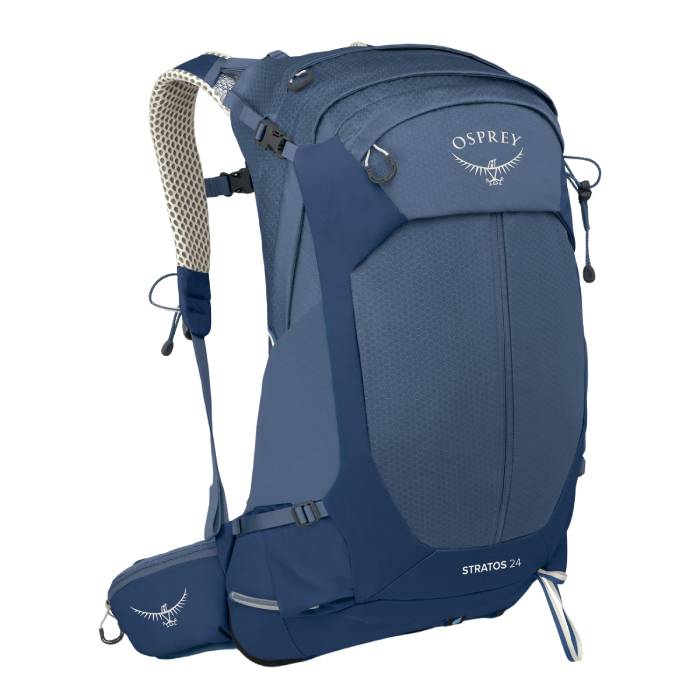
Featuring Osprey’s popular AirSpeed suspension system, the Osprey Stratos 24 (men’s) and Sirrus 24 (women’s) are exceptionally comfortable and well-ventilated daypacks for gear-heavy hikes. This is analyst Jory Brass’ go-to for winter day hikes and product-testing hikes when he’s carrying extra gear plus a camera and tripod.
When we tested daypacks fully loaded with water, layers, and gear, the Stratos and Sirrus stood out for their support and comfort. Though most of today’s daypacks lack an internal frame and skimp on cushioning, the Stratos and Sirrus feature an internal wire frame and padded shoulder straps. This distributes weight evenly across your back, takes pressure off your shoulders, and drops the load to your hips – where it’s safer and more comfortable to carry.
These perennial bestsellers also stand out for their suspended mesh back panels. If you hate a sweaty back, the Stratos / Sirrus should be on your short list. We also appreciate the included rain cover, which adds to overall value.
We prefer the organization of other Osprey packs, but the Stratos / Sirrus have plenty of bulk storage and more specialized pockets. We especially liked the convenience of the large hipbelt pockets, which kept our iPhones, lip balm, and small snacks easily accessible.
These traditional daypacks are on the heavy side. Minimalists won’t like the heft and bulk, and casual hikers won’t benefit as much from the superior support and comfort features. But this daypack excels for serious hikers who want to carry water, layers, and gear more comfortably as they tackle tougher terrain and longer distances.
Black Diamond Pursuit 15
Best Scrambling & Fastpacking Daypack
CleverHiker Rating: 4.5/5.0
Price: $180
Weight: 1 lb. 2.1 oz. / 1 lb. 1.8 oz.(men’s / women’s)
Capacity: 15 L / 15 L
Frame: None
Pros
- Running vest-inspired staps
- Ventilated foam back panel
- Close-to-back fit for technical hikes
- Accessible Z-pole attachment
- Convenient stash pocket
- Accommodates a bladder and soft flasks
Cons
- Doesn’t handle weight well
- Snug fit limits casual appeal
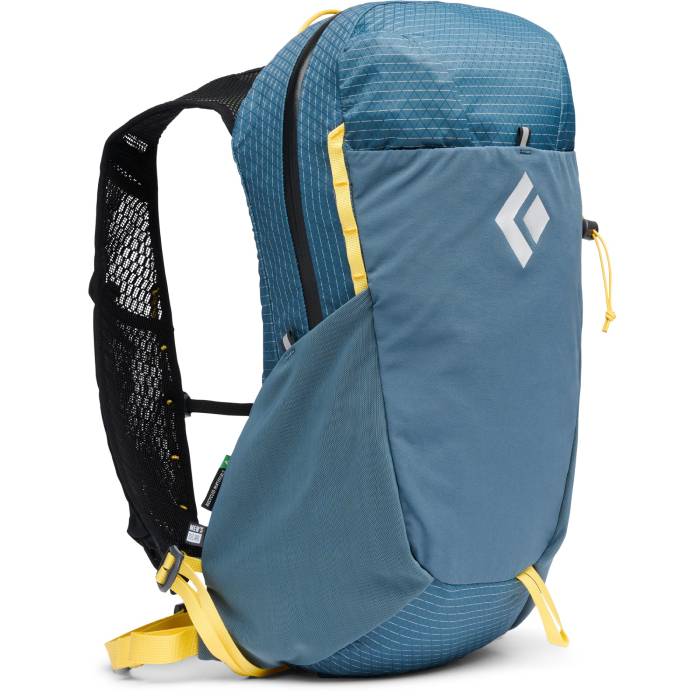
The Black Diamond Pursuit 15 (men’s / women’s) isn’t for casual hikers – it’s a body-hugging, low-profile daypack for scrambling, peak-bagging, and fastpacking.
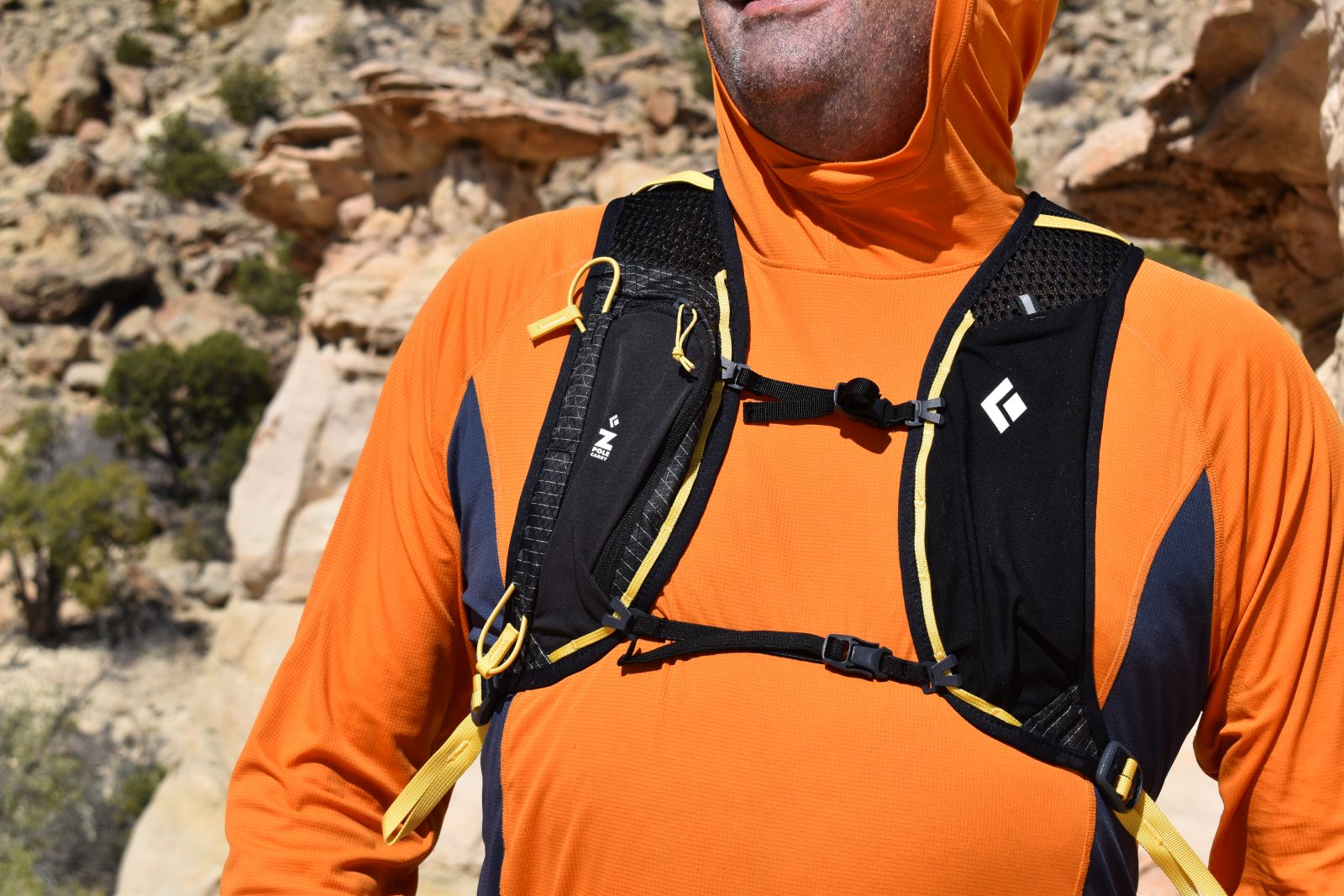
If you’re into those more pursuit-oriented hiking styles, you’ll probably find this pack comfortable. During our hikes in New Mexico, its lightweight harness – inspired by trail running vests – hugged our torsos properly while spreading the load across our backs and chests.
That said, we found the Pursuit much more comfortable with a light load. It can pull off 3 liters of water and enough layers for an all-day summit push, but it’s not as comfortable or athletic when fully loaded. It reduced (but did not eliminate) bounce as we jogged some flats and descents while fastpacking Bear Canyon and the Pino Trail outside Albuquerque.
The Pursuit 15’s organization suits serious hikers who want a lightweight yet organized pack. We appreciated the accessible stretch-mesh pocket for stashing our shed layers and on-the-go access to trekking poles (as long as they’re folding, not telescoping). Despite the pack’s low volume, we had enough storage for a midlayer and rain shell. Plus, the Pursuit can carry fluids any way you drink them: water bladders, Nalgenes, Smartwater bottles, and soft flasks.
It’s not the most feathery daypack on our list, but the Pursuit 15 is competitively lightweight for such a technical design. Whereas other lightweight daypacks will bounce around, this one stays out of your way, maintaining your mobility and a good center of gravity for more technical scrambling.
If you’re mostly chilling or meandering through the woods, you probably don’t want to wear this snug-fitting running vest/hiking pack hybrid. Black Diamond recommends it for peak-baggers, but we also like it for fast-and-light hikers who prefer a low-profile, body-hugging daypack.
Rab Syclon XP 30L
Best Waterproof Daypack
CleverHiker Rating: 4.4/5.0
Price: $200
Weight: 1 lb. 12.5 oz.
Capacity: 30 L
Frame: Internal frame
Pros
- IPX4 waterproof rating
- Suspended mesh back panel
- Lightweight
- Compatible with a bladder and flasks
- Carries weight well
Cons
- Less accessible storage
- Only available in higher volumes
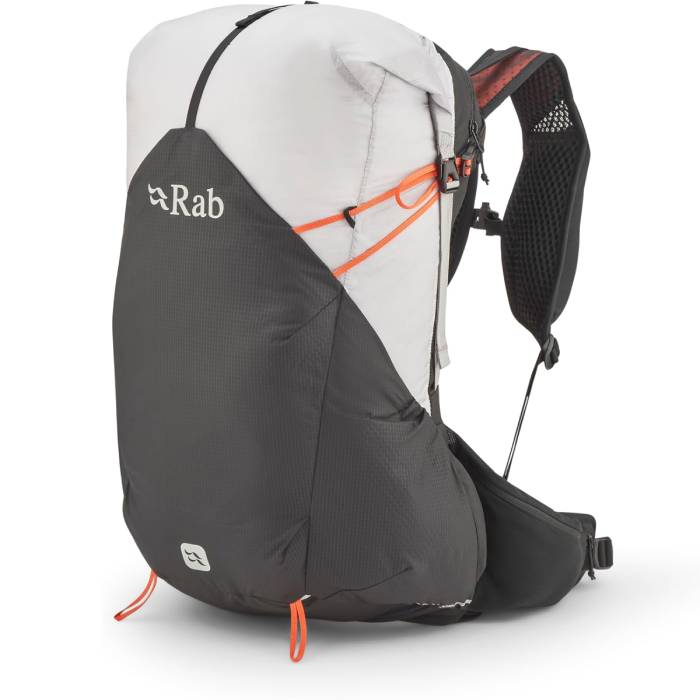
Rab gives hikers two great reasons to choose the Syclon XP 30L: It’s fully waterproof and has one of the most comfortable suspension systems of any pack we’ve tested.
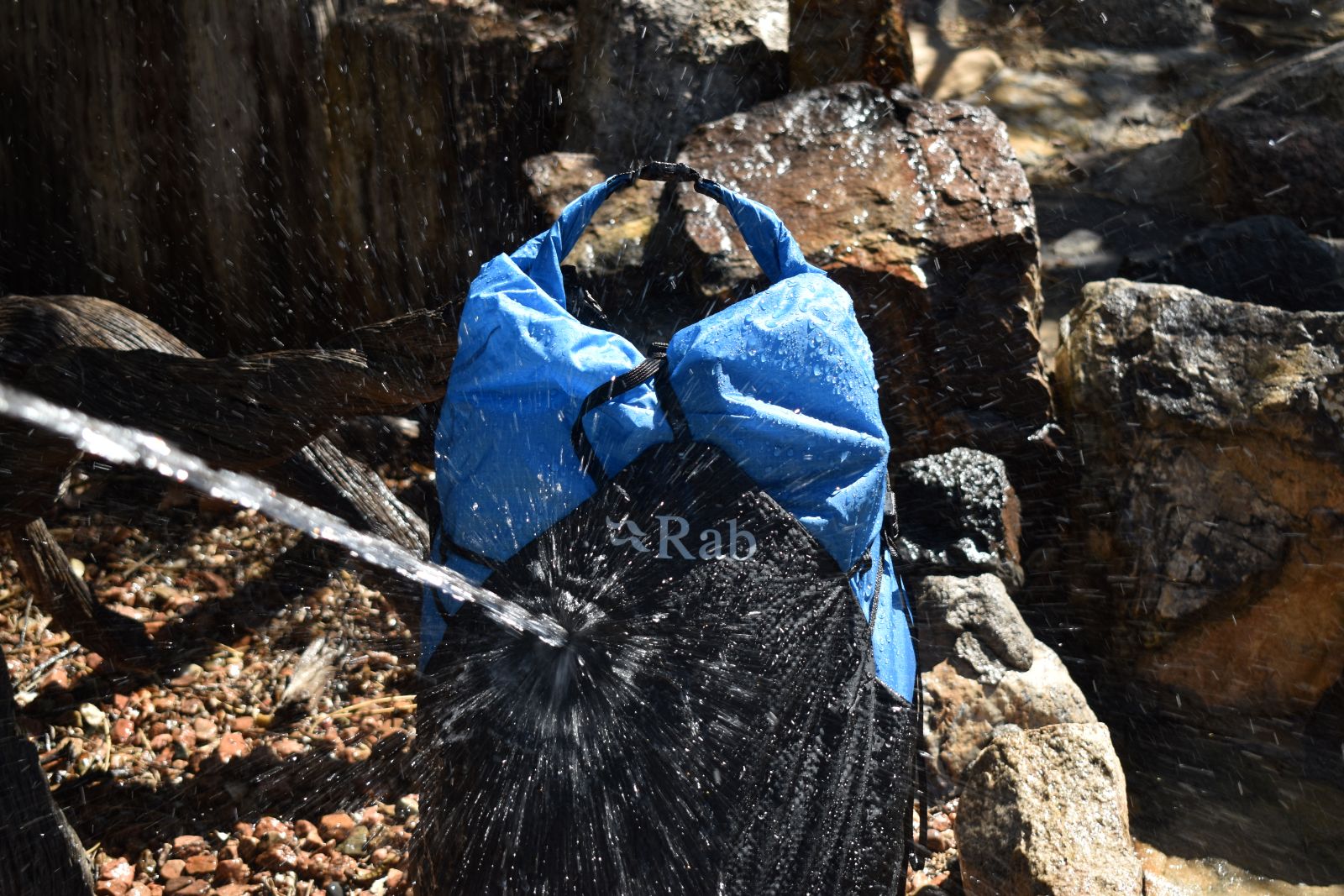
If you’re looking for a waterproof daypack, the Rab Syclon XP has an IPX4 rating, which offers assurance against splashing water, light rain, and heavy sweat. It’s not submersible, but we trust it to protect against rain and snow – it passed our gear analyst’s shower test without issue.
You don’t need to hike in a cyclone to enjoy the Syclon. We also picked it for dry desert hikes because its suspended mesh back panel has so much give and ventilation. This daypack minimizes back sweat with its airy, off-the-back fit.
We also found the Syclon surprisingly supportive for a 30-liter pack that weighs less than 2 pounds. The internal metal frame carried a full load well without feeling overly rigid. It’s impressive that Rab managed to pull this off for around a pound less than many other internal-frame packs.
That said, the Syclon’s biggest selling point is that it’s waterproof – no need to drop an extra $40 to $50 on a rain cover or dry bags. We recommend this stellar pack for day hikers who don’t mind braving the elements or adventure travelers who want to protect their clothes and toys on hut-to-hut hikes.
Gregory Zulu 30 / Jade 28
Best Heavy-Hauler Daypack
CleverHiker Rating: 4.4/5.0
Price: $200
Weight: 3 lb. 1.9 oz. / 3 lb. 0.8 oz.(men’s / women’s)
Capacity: 30 L / 28 L
Frame: Perimeter wire
Pros
- Suspended mesh back panel
- Padded shoulder straps
- Adjustable torso
- Fully featured
- Carries weight well
- Stretch-mesh front pocket
- Zippered hipbelt pockets
Cons
- Heavy and not compressible
- Overkill for light loads
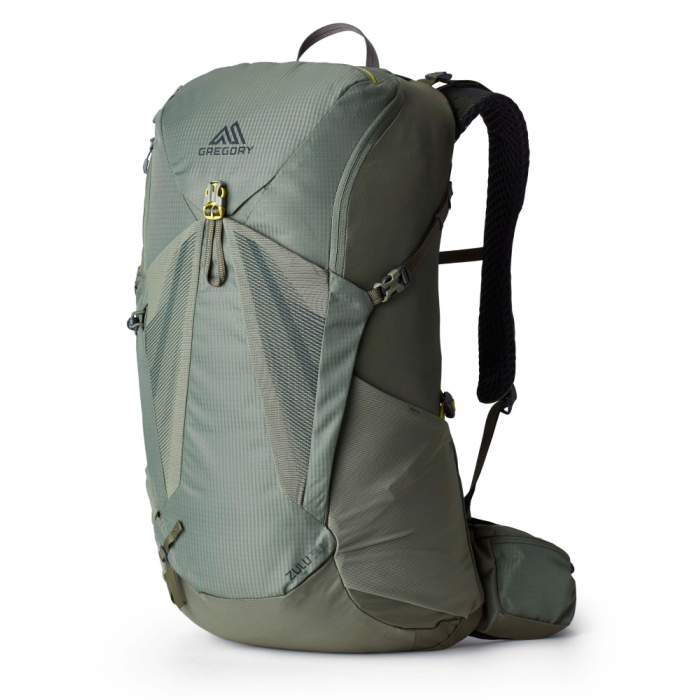
The Gregory Zulu 30 (men’s) and Jade 28 (women’s) hits the mark when it comes to hauling heavier loads, carrying bulky gear, or hiking longer days. That’s why tester Jory Brass chose it for his 10-day, hut-to-hut trip: the Tour du Mont Blanc.
The Zulu 30 features Gregory’s FreeFloat suspension system, which many backpackers consider the most comfortable on the market. It features a suspended mesh back panel that maximizes ventilation, a lightweight perimeter wire to carry weight safely, and tons of padding on the hipbelt and shoulder pads – which move with you as you walk. We’ve hauled heaps of gear in the Zulu, and it carries weight more comfortably than any other daypack on this list.
The downside to the Zulu’s extra support and comfort is weight. With its backpack-style suspension, it weighs more than 3 pounds – the heaviest daypack on our list. This pack is probably overkill for the average day hiker. It’s more for those carrying extra water, winter layers, and heavy gear.
This fully featured pack has lots of pockets, including seven on the outside alone. Its giant U-zip at the top allows the bag to open wide for quick and easy access to the interior and features another zippered compartment for stashing all your small items. A dedicated water bladder pocket and hook are compatible with most 2- to 3-liter hydration bladders.
The Zulu is a worthy choice for those who want a roomy, comfortable, and highly ventilated daypack – and don’t mind a bit of extra weight. This pack’s a nightmare for minimalists and fast-and-light day hikers. But it’s a comfort standout for day hikers, guides, and hut-to-hut travelers who need to haul extra water, food, and heavy gear over longer distances.
Osprey Sportlite 20
Best Daypack Under $100
CleverHiker Rating: 4.3/5.0
Price: $90
Weight: 1 lb. 5 oz.
Capacity: 20 L
Frame: Internal framesheet
Pros
- Ventilated back panel
- Airy shoulder straps
- Basic organization for hikers
- Framesheet adds light support
- Lightweight
- Durable, eco-friendly materials
Cons
- Hipbelt doesn’t support much weight
- Limited on-the-go gear access
- One-size, unisex fit
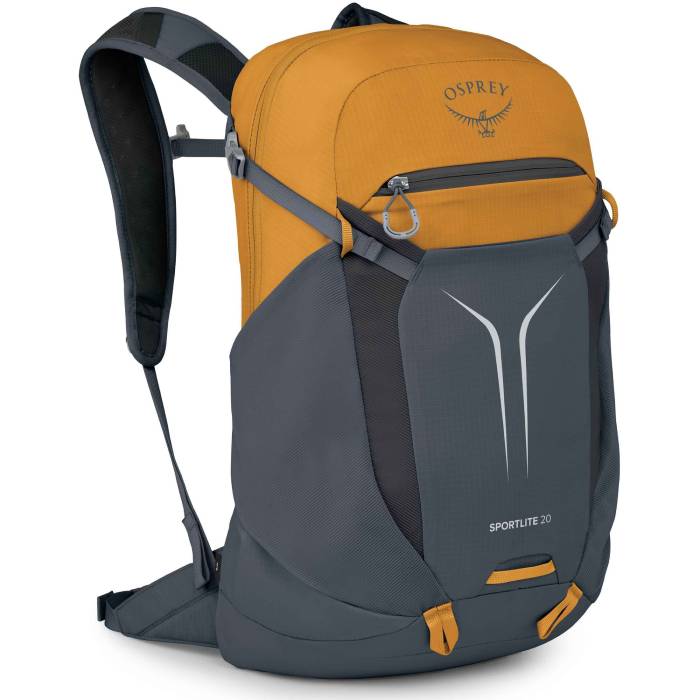
The Osprey Sportlite 20 is a lightweight, entry-level daypack that’s actually made for hiking – not casual, everyday use. This separates it from most packs in its price range.
The Sportlite’s comfort is good considering its price. During our field tests, we appreciated its ventilated AirScape back panel and porous foam shoulder straps. They’re a step up from the outdoor lifestyle packs we recommend, although not as comfortable as premium hiking daypacks. This is especially true if you’re carrying more weight like water, food, layers, cameras, etc.
The Sportlite fit our testers better than other one-size daypacks. Even so, we missed the gender-specific styles, multiple torso lengths, and adjustability of more expensive packs.
This pack’s organization is basic but clearly geared towards hikers – not commuters (like the Osprey Daylite Plus and Cotopaxi Batac below). We regularly used the zippered security pocket to clip in our keys and keep our cards and wallet safe and easy to find. The front shove-it pocket was convenient for a layer, although we wish it were made of stretchy mesh. Our Nalgenes and Smartwater bottles both fit fine in the side bottle pockets.
The Sportlite 20 has a thin framesheet, which adds a little support. However, this lightweight, entry-level daypack doesn’t carry weight as well as more premium options. Its hipbelt prevents the pack from flopping but doesn’t support weight transfer to your hips. When testing the Sportlite fully loaded, our tester’s neck and shoulders got tight on an eight-mile hike, which ended in a headache. We didn’t have this problem hiking the same trail with more supportive daypacks.
The Sportlite is light and packs down flat if you want to slip it into a travel pack or suitcase. However, its cousin, the Osprey Daylite Plus below, is better suited for traveling.
At this price point, hikers should expect several performance trade-offs. But the Sportlite 20 still has several comfort, organization, support, and weight advantages, especially when you compare it with the everyday packs in this price range.
EXPED Skyline 20
Light Yet Durable Daypack
CleverHiker Rating: 4.3/5.0
Price: $160
Weight: 1 lb. 14 oz.(S / M size)
Capacity: 20 L
Frame: Internal framesheet
Pros
- Ventilated back panel
- Adjustable fit
- Stretch-mesh front pocket
- Highly durable materials
- Includes a rain cover
Cons
- We had mixed feelings on comfort
- Limited internal organization
- Firmer foam back panel
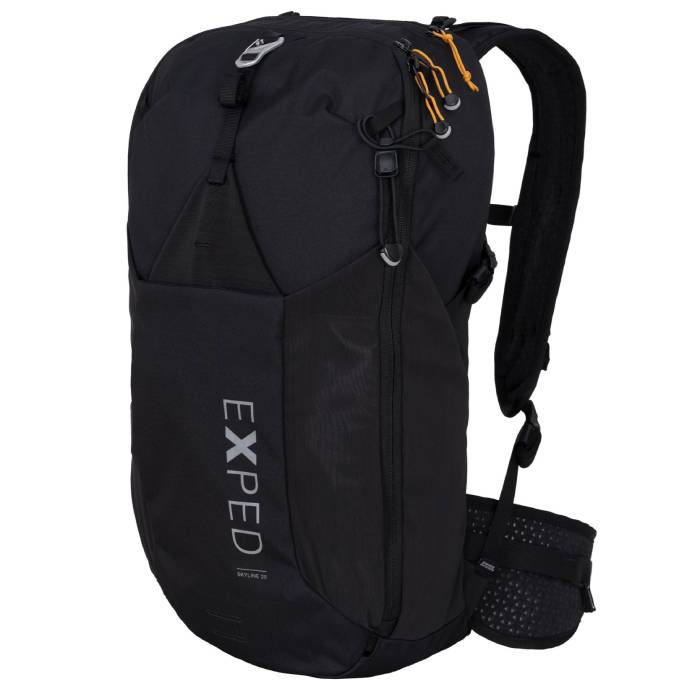
The EXPED Skyline 20 is a rugged daypack with a ventilated and supportive back panel. This pack is versatile with a range of external attachment points.
Our testers had mixed views of the Skyline’s comfort. One found it extremely comfortable but its frame a bit long for her compact torso. Another has owned a larger version of the Skyline for two years but rarely wears it because its back panel isn’t as plush or as ventilated as others on this list. Plus, its thin shape doesn’t pair well with his broad shoulders.
Dual stretch side pockets, a roomy top pocket, and an internal zippered mesh pouch keep essentials accessible. During testing, we liked how the hydration bladder sleeve was accessible from the outside, making refills easier. Small design touches like hook-and-loop strap wraps, glow-in-the-dark zipper pulls, and a built-in rain cover highlight EXPED’s attention to detail.
This daypack has an extremely durable face fabric. Still, despite its technical features, the Skyline 20L doesn’t scream “gearhead.” It’s built for hiking, but one of our testers also liked it for travel and casual use. Its muted colors, clean lines, and removable/stashable straps lend a surprisingly sleek aesthetic.
If you’re after something you can take from the forest to the farmer’s market – and everywhere in between – this one’s a solid pick.
Osprey Daylite Plus
Hikeable Commuter Daypack
CleverHiker Rating: 4.3/5.0
Price: $80
Weight: 1 lb. 4.6 oz.
Capacity: 20 L
Frame: None
Pros
- Can be worn around town or on the trail
- Compatible with bottles and bladders
- Removable hipbelt
- Durable, eco-conscious materials
- Light and compressible
- Laptop-compatible
Cons
- Better for casual use
- Limited support
- Less ventilated than most Osprey packs
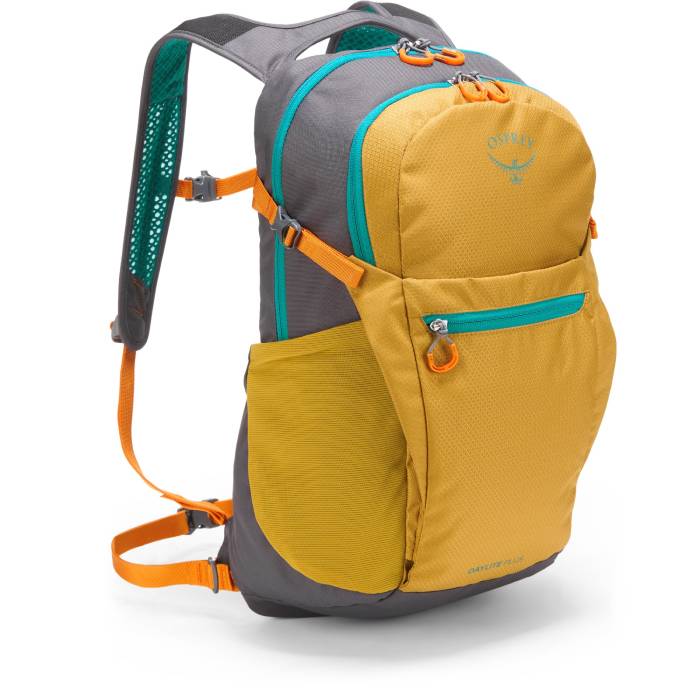
The Osprey Daylite Plus is an everyday pack – not a true hiking pack. But if you’re looking for a casual commuter pack that you can throw on your back for the occasional day hike, it’s a versatile option. CleverHiker analyst Jory Brass has hiked hundreds of miles in the Daylite Plus, but it’s clocked even more time at the coffee shop over the past six years.
The Daylite Plus is a lightweight, frameless pack, so its harness can’t carry too much water or gear without sagging from your shoulders. At the same time, the back panel features a little cushioning and ventilation – a step up from other outdoor lifestyle packs in its price range. It’s also equipped to carry a water bladder or water bottles.
Through years of use, we’ve found the Daylite Plus’ organization favors commuters or travelers more than hikers. Its pockets include slots for office supplies, a tablet, and enough space in the hydration sleeve for a small to medium-sized laptop. The Daylite’s handle also doubles as a luggage pass-through point. Plus, this lightweight pack can be packed into a suitcase or attached to larger Osprey backpacks and travel bags.
If you like this commuting-traveling-hiking versatility, the Osprey Daylite Plus makes sense. However, if you mostly want a daypack for hiking, we recommend several Osprey hiking packs (including the Talon and Sportlite above) over this outdoor lifestyle pack.

REI Flash 22
Best Budget Daypack for Minimalists
CleverHiker Rating: 4.2/5.0
Price: $60
Weight: 14 oz.
Capacity: 22 L
Frame: None
Pros
- Affordable
- Light and packable
- Trail-to-town versatility
- Internal organization for small items
- Includes a removable sit pad
Cons
- Limited cushioning and ventilation
- Floppy when empty
- Doesn’t carry weight well
- Awkward top access
The less you demand from your daypack, the more you’ll like the REI Flash 22. Senior editor Ian Krammer has summited over 600 peaks in the Colorado Rockies with this pack, and he rarely needs more than it delivers.
For minimalists, the Flash 22 is a real treat. It sits light on the back, which can be a comfort plus. There’s plenty of room to stash extra layers, and the organization is intuitive and simple. We’ve used the Flash for almost everything – from short hikes that require minimal gear to 40-mile fastpacking adventures.
If you’re not a minimalist, however, the budget-oriented Flash 22 falls short in comfort, support, and performance compared to many of the options above. The back panel lacks cushioning and ventilation, and so do the shoulder straps. The Flash’s frameless design and wimpy hipbelt are not made to distribute weight evenly across your back and drop the load down your hips. This means you’ll feel more weight on your back and shoulders.
If you prefer a clean look, you’ll appreciate the Flash 22. If you want a fully featured pack or easy access to your gear on the go, you’ll likely be disappointed. This one’s missing our favorite pockets – especially an accessible stash pocket and hipbelt pockets. This Flash 22 has decent storage, but you need to take the pack off to access your poles and do some unbuckling, uncinching, and unzipping to get to food, layers, a phone, etc.
All that said, the Flash 22 is one of the lightest packs on our list. It’s inexpensive and even includes a sit pad. If you prefer a light and simple daypack and don’t need to carry much, we like the Flash 22 as a budget pick.
More: REI Flash 22 Full Review
REI Trail 25
Cushy Budget Daypack
CleverHiker Rating: 4.2/5.0
Price: $100
Weight: 1 lb. 13 oz.(XS – XL size)
Capacity: 25 L
Frame: Internal framesheet
Pros
- Cushioned back panel
- Comfortable shoulder pads
- External gear attachments
- U-shaped access to the front panel
- Includes a rain cover
- Extended sizes available
Cons
- Limited ventilation
- Only one external zippered pocket
- Awkward main compartment
- Subpar on-the-go gear access
- Bulky
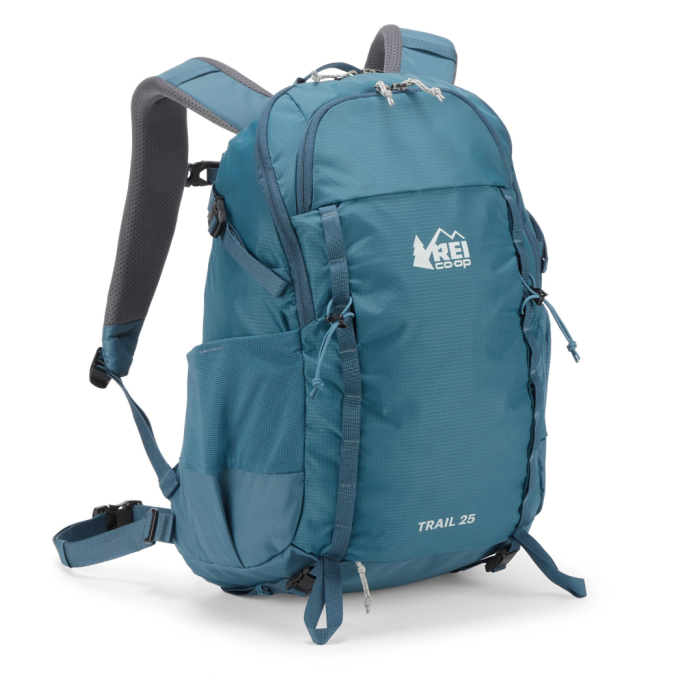
The REI Trail 25 is a budget-friendly daypack with plenty of cushioning and external attachments to strap on extra gear. It even includes a rain cover for a boost in value.
The padded, mesh-covered straps and plush foam back panel make this pack easy to carry all day. The light framesheet provides a more casual, less technical fit on the back. However, there’s little ventilation in the back panel or shoulder straps, which leads to sweatier hiking.
Like other entry-level daypacks, the Trail 25 is not made to carry much weight, either. The minimalist framesheet and hipbelt don’t transfer weight to your hips, so this pack isn’t particularly supportive – even though it’s bulky.
Organizationally, the U-shaped opening provides easy access to the front panel. It extends almost to the bottom of the bag, making it easy to pack and access items when traveling or hiking. The pack also includes 16 total external lash points for strapping on extra gear. However, many experienced hikers prefer internal storage to avoid flopping gear and adding weight and bulk away from the body.
The Trail 25 is a bit bulky for most casual day hikes. We also wish this daypack had improved ventilation, more accessible pockets, and better support. That said, this is a budget pack made for more casual hikes and general use – not serious day hikes.
More: REI Trail 25 Full Review
Cotopaxi Batac 16L
Colorful Casual Daypack
CleverHiker Rating: 3.6/5.0
Price: $70
Weight: 12 oz.
Capacity: 16 L
Frame: None
Pros
- Lightweight and packable
- Wide, breathable mesh straps
- Casual design
- One-of-a-kind colorways
Cons
- Not reservoir-compatible
- Minimal padding
- Not well ventilated or hardwearing
- No load support
- More casual than hiking-focused
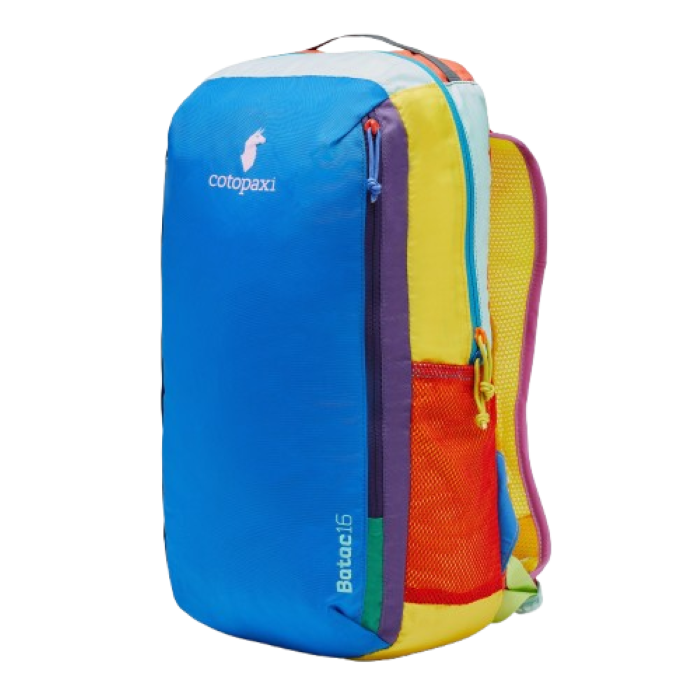
The Cotopaxi Batac 16L shines as a lightweight, colorful, and ultra-packable daypack for travel, everyday use, and the occasional short hike.
For short adventures or casual carry, the Batac gets a lot right. The internal organization is simple but effective, and the sternum strap stands out for having excellent adjustability. We appreciated how easy it was to roll up and stash away the pack when empty. Cotopaxi’s vibrant Del Día color schemes add a splash of fun to any outing.
To be clear, this is a casual daypack, not a hiking daypack. The back panel is unstructured and unpadded, making it awkward and uncomfortable to carry more than small essentials. The lack of ventilation means a sweatier back and shoulders. There’s no frame or hipbelt to carry weight, limited storage for the 10 hiking essentials, and subpar access to hydration – whether you use a reservoir or bottles.
If you’re looking for a daypack for hiking, this isn’t it. But if you’re looking for a cute pack for casual use, travel, or a stash pack, the Cotopaxi Batac 16L could fit the bill.
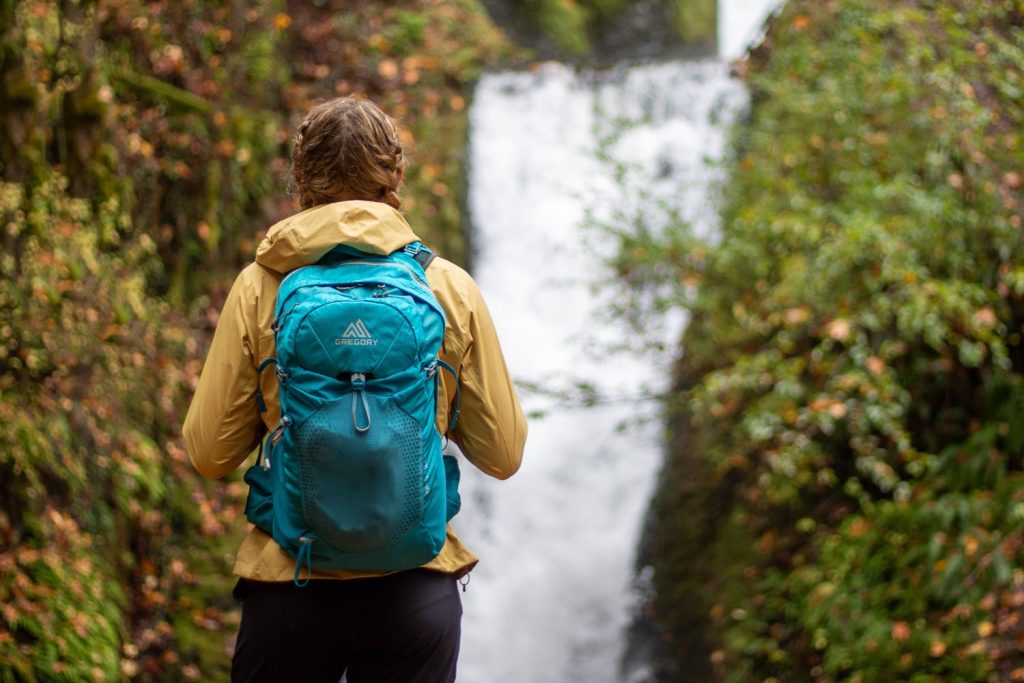
Product Comparison Table
| oSort | Product | Price | Weight | Capacity | Frame | Comfort | Organization | Support | Weight & Packability | 0 |
Osprey Talon 22 / Tempest 22 View Men's View Women's 
|
$175 | 2 lb. 6.1 oz. / 2 lb. 4.3 oz. (men’s / women’s) | 22 L / 22 L | Internal framesheet | 4.5 | 4.9 | 4.5 | 4.3 | 1 |
Deuter Speed Lite Pro 25 / Speed Lite SL 23 View Men's View Women's
|
$140 | 1 lb. 8 oz. / 1 lb. 6.6 oz. (men’s / women’s) | 25 L / 23 L | Internal frame | 4.7 | 4.7 | 4.3 | 4.6 | 2 |
Gregory Citro 24 H2O / Juno 24 H2O View Men's View Women's |
$180 | 2 lb. 0.3 oz. / 1 lb. 14.9 oz. (men’s / women’s) | 24 L / 24 L | Perimeter wire | 4.7 | 4.7 | 4.7 | 4.2 | 3 |
Rab Protium 27L View at Amazon View at Rab |
$190 | 2 lb. 5 oz. | 27 L | Internal frame | 4.5 | 4.6 | 4.4 | 4.0 | 4 |
Osprey Stratos 24 / Sirrus 24 View Men's View Women's |
$200 | 2 lb. 15.2 oz. / 2 lb. 13.8 oz. (men’s / women’s) | 24 L / 24 L | Internal frame | 4.7 | 4.4 | 4.8 | 3.8 | 5 |
Black Diamond Pursuit 15 View Men's View Women's |
$180 | 1 lb. 2.1 oz. / 1 lb. 1.8 oz. (men’s / women’s) | 15 L / 15 L | None | 4.5 | 4.6 | 4.2 | 4.5 | 6 |
Rab Syclon XP 30L View at Amazon View at Rab |
$200 | 1 lb. 12.5 oz. | 30 L | Internal frame | 4.9 | 4.1 | 4.6 | 4.0 | 7 |
Gregory Zulu 30 / Jade 28 View Men's View Women's |
$200 | 3 lb. 1.9 oz. / 3 lb. 0.8 oz. (men’s / women’s) | 30 L / 28 L | Perimeter wire | 4.6 | 4.6 | 4.9 | 3.3 | 8 |
Osprey Sportlite 20 View at REI View at Amazon 
|
$90 | 1 lb. 5 oz. | 20 L | Internal framesheet | 4.3 | 4.4 | 4.0 | 4.5 | 9 |
EXPED Skyline 20 View at REI View at EXPED |
$160 | 1 lb. 14 oz. (S / M size) | 20 L | Internal framesheet | 4.2 | 4.2 | 4.5 | 4.4 | 10 |
Osprey Daylite Plus View at REI View at Amazon |
$80 | 1 lb. 4.6 oz. | 20 L | None | 4.3 | 4.6 | 3.9 | 4.5 | 11 |
REI Flash 22 View at REI
|
$60 | 14 oz. | 22 L | None | 4.2 | 3.8 | 3.5 | 4.9 | 12 |
REI Trail 25 View at REI |
$100 | 1 lb. 13 oz. (XS – XL size) | 25 L | Internal framesheet | 4.3 | 4.2 | 4.0 | 4.4 | 13 |
Cotopaxi Batac 16L View at REI View at Amazon |
$70 | 12 oz. | 16 L | None | 3.6 | 4.1 | 3.0 | 5.0 |
|---|
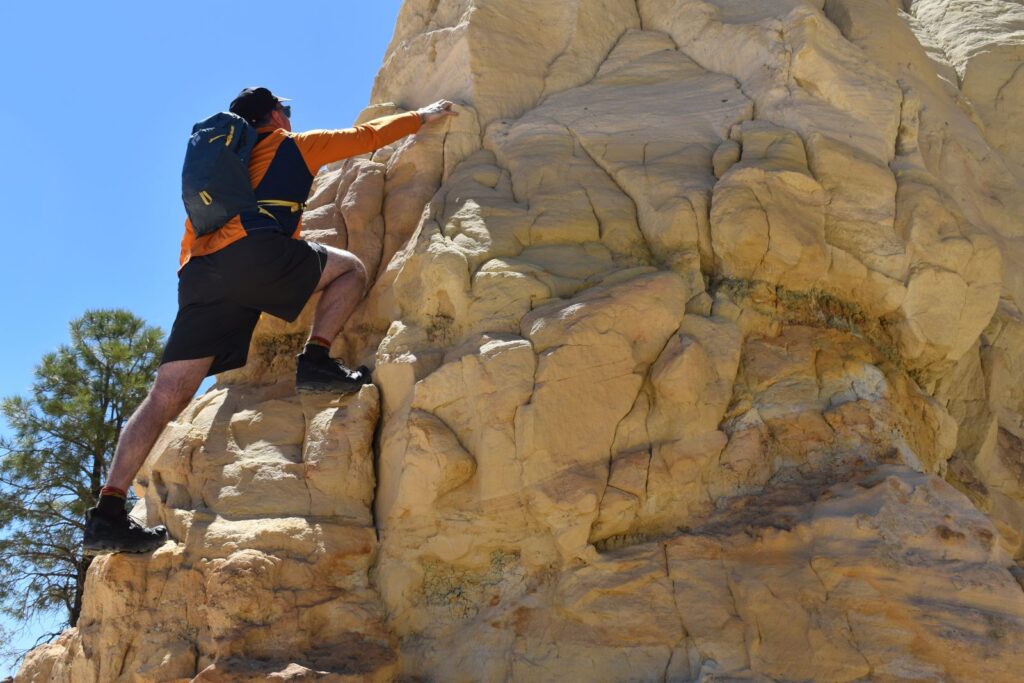
Analysis & Results
Which Daypack is the Best Value?
The best way to get your money’s worth is to buy the daypack you need for the type of hiking you’ll do most of the time. So don’t shy away from the more expensive packs on our list if they have exactly what you need or want. Trust us: It’s cheaper to buy the right product the first time. Likewise, don’t feel pressure to drop serious coin on a premium daypack if you’re not a serious hiker.
CleverHiker compares performance with price to highlight value picks. If you’re looking to spend less without sacrificing too much in the way of performance, we recommend the Osprey Sportlite 20 or REI Flash 22. The Sportlite includes many of the features we look for in a quality, hiking-focused pack, including Osprey’s well-ventilated AirScape back panel. The Flash 22 is more of a casual, outdoor lifestyle pack, which may work for easygoing hikers who keep their kits light.
The best value isn’t necessarily the cheapest product. Our top pick, the Osprey Talon 22, is also a solid choice. For a more premium price, day hikers get premium features like a ventilated back panel and shoulder straps, accessible pockets, and on-the-go access to a phone, hiking poles, etc.
Finally, several of the more expensive daypacks on our list include a hydration reservoir (Gregory Citro) or rain cover (Osprey Stratos/Sirrus, Rab Protium, EXPED Skyline, REI Trail), both of which add to all-around value. If you’ll need a reservoir or rain cover, it’s often cheaper to buy a daypack that includes it versus buying that accessory separately.
Which Daypack is the Most Comfortable?
Generally speaking, the heaviest daypacks are the most comfortable daypacks because lightweight packs cut many comfort features. We’re also fans of suspended mesh back panels to keep our backs cooler and drier.
Based on our side-by-side testing, the most comfortable daypacks were the Rab Syclon, Gregory Citro, Osprey Stratos, and Gregory Zulu. On top of their superior ventilation, these packs feature more cushioning and better support for carrying weight comfortably.
Some hikers prefer the comfort of a lighter setup. In this category, we really liked the Deuter Speed Lite Pro. It’s lightweight but still has a ventilated back panel and ergonomic harness that rides well and carries moderate weight comfortably. If you prefer an even lighter, less technical pack and don’t care about cushioning or ventilation, the REI Flash 22 is popular among beginners, minimalists, and budget buyers.
If you need a more technical daypack with a close-to-body fit for scrambling, fastpacking, or multi-sport versatility, we enjoyed the AirScape back panel on the Osprey Talon, the similarly built Rab Protium, and the running vest-inspired fit of the Black Diamond Pursuit 15. The remaining packs on our list are fine for lighter loads and less taxing types of hiking.
Which Daypack has the Best Organization?
Everyone has their organizational preferences. We’ve been using the Osprey Talon/Tempest for years and love its layout, from the stretch-mesh shove-it pocket to the hipbelt pockets, zippered security pocket and key clip, and on-the-go trekking pole storage.
The Gregory Citro, Deuter Speed Lite Pro, Gregory Zulu, and Rab Protium are more fully featured. If you like a plethora of pockets, bungees, and dedicated storage places, these packs are a good place to start. If you’re more of a minimalist, the REI Flash might be your best bet – regardless of our rating.
Which Daypack is the Most Supportive?
The Gregory Zulu, Osprey Stratos, Gregory Citro, and Rab Sylon XP are the most supportive daypacks for hiking. Each of these daypacks has an internal frame and weight-bearing hipbelt. This combination distributes weight evenly across your back while dropping the load to your hips – where the human body best supports it.
The moderately supportive daypacks we tested include the Osprey Talon, EXPED Skyline, Rab Protium, and Deuter Speed Lite Pro. These four daypacks have internal framesheets (made of foam or plastic) or pared-down internal frames paired with mid-thickness hipbelts. Their harnesses provide hikers with some load support, but not as much as the ultra-supportive packs listed above.
Among the lightweight packs we reviewed, the Black Diamond Pursuit’s running vest-inspired harness helps distribute weight across hikers’ backs and chests (without dropping it to the hips). This is a different type of support.
The frameless, budget, and casual outdoor lifestyle packs on our list are not designed to carry much weight: the Osprey Sportlite, Osprey Daylite Plus, REI Trail, REI Flash, and Cotopaxi Batac. You should steer clear of these daypacks if you want a supportive pack that can carry significant weight safely and comfortably.
Which Daypack is the Lightest & Most Compressible?
For the most part, the lightest daypacks on our list are made for more casual uses and travel – not hiking specifically. The Cotopaxi Batac and REI Flash both weigh less than a pound. The Batac 16L (12 ounces) is light and compressible if you’re looking for a simple travel pack or suitcase stuffer. The Flash 22 (14 ounces) is more hikeable than the Batac and also works as a packable travel pack.
The lightest technical daypack on our list is the Black Diamond Pursuit. It’s specifically made for rock scrambling, peak-bagging, and fastpacking while checking in at a very respectable 1 pound, 2.1 ounces. If you’re down with its vest-style harness, the Pursuit is a lightweight and compressible daypack for more serious hikers.
The Osprey Daylite Plus (1 pound, 4.6 ounces) and Osprey Sportlite 20 (1 pound, 5 ounces) are the next-lightest packs we tested and reviewed. These look and feel similar, but the Sportlite is better for hiking, while the Daylite is designed for commuting, travel, and everyday use.
Among the premium hiking daypacks we tested, the Deuter Speed Lite Pro, EXPED Skyline, and Rab Syclon XP offer higher performance at lower weights. The Rab Protium and Osprey Talon/Tempest strike a nice balance among weight savings, comfort, and support but will seem heavy to ultralighters and beginners not familiar with technical hiking daypacks.
The Gregory Zulu and Osprey Stratos/Sirrus are the heaviest, least compressible daypacks on our list. Their internal frames and robust suspension systems cost them in the weight department (while paying off in comfort and support).
How to Choose a Hiking Daypack
What Size Daypack Do You Need?
The best size daypack to buy varies by the amount of gear you’re carrying, the season, and the distance and difficulty of your hikes.
A 15- to 20-liter daypack works for shorter hikes in mild or hot weather. This size should be big enough to swallow your water, phone, keys, wallet or cards, and perhaps a small snack, windbreaker, or rain jacket.
A 20- to 25-liter daypack is the most popular size for longer day hikes in spring, summer, and early fall. That’s a good capacity to carry adequate water, lunch and snacks, light layers, maps, and the 10 essentials on hikes that don’t require cold-weather gear.
A 25- to 35-liter daypack is best for cold-weather hikes and hut-to-hut hiking trips. If you hike in winter or at high elevations (where wintry weather is a threat in all seasons), this volume accommodates bulkier winter layers and traction devices along with food, water, and alpine safety gear.
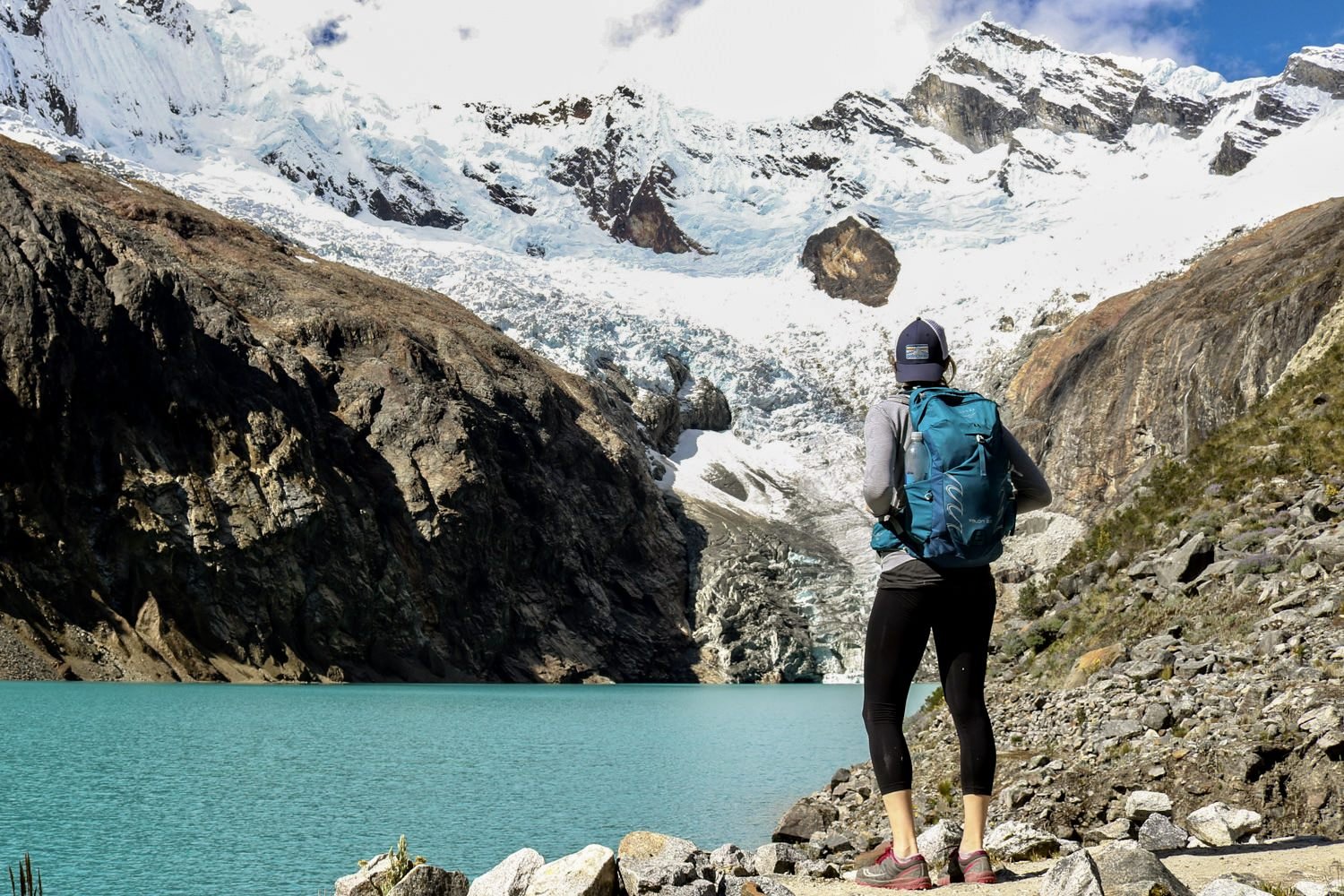
What Should You Look for in a Back Panel Design?
We generally recommend a daypack with a ventilated back panel to keep your back cooler and drier – especially in hot weather.
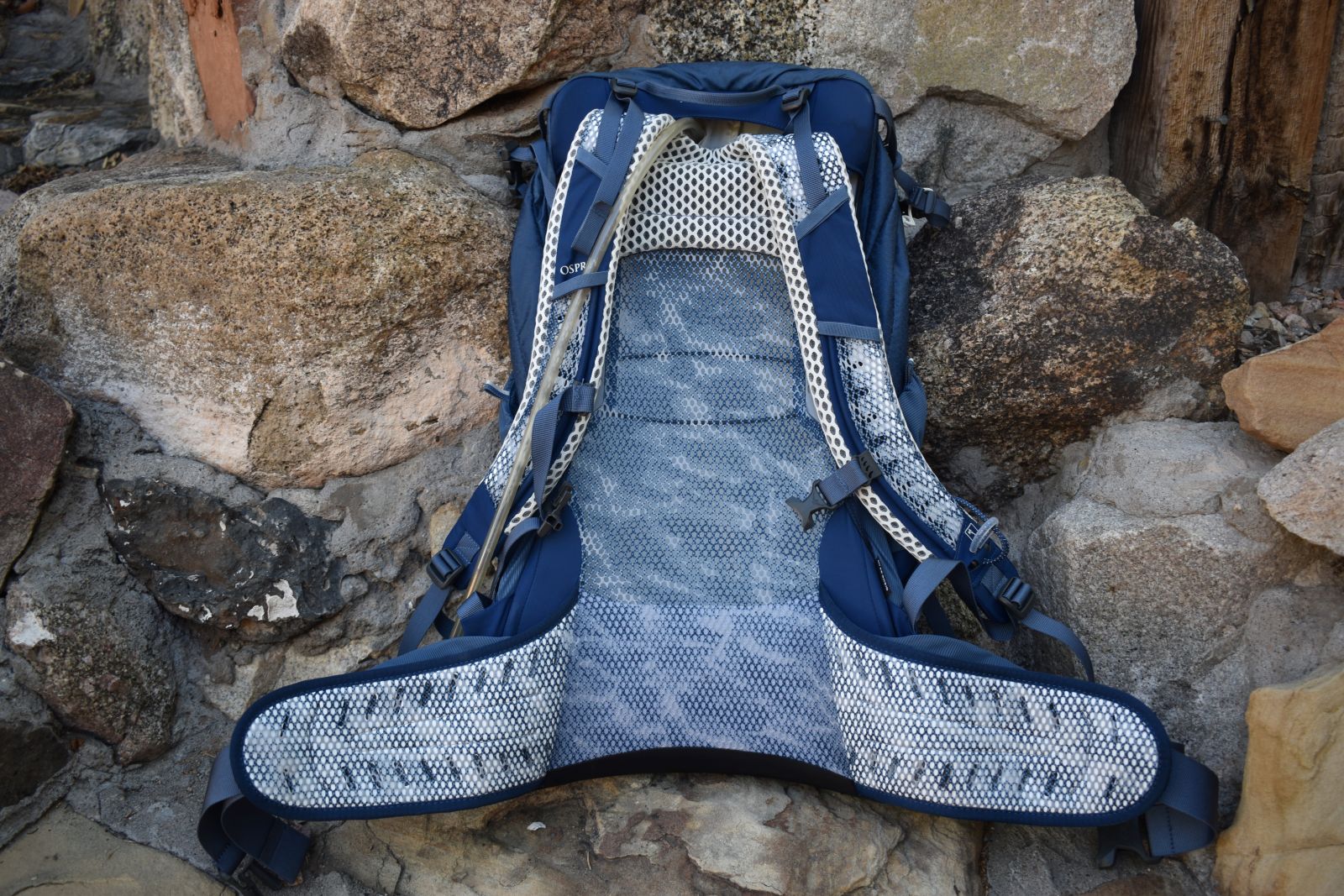
Daypacks with suspended mesh back panels are generally the most comfortable because their off-the-back fit leaves room for air to flow between your back and the pack. Based on years of experience, our favorite suspended mesh systems are Osprey’s AirSpeed, Gregory’s FreeFloat, and Rab’s AEROFIT.
However, some hikers prefer an on-the-back fit, where the daypack sits snug to your back. This sort of closer fit improves mobility, reduces bounce, and helps hikers maintain better balance and a safer center of gravity while scrambling, climbing, or crossing exposed ledges. This fit generally wears warmer and increases sweat, so we prefer back panels with ventilation channels, such as Osprey AirScape’s system or Rab’s Air Contour.
Which Type of Frame is Best for Hiking?
Choose a daypack with a steel alloy or aluminum wire frame if you want a supportive daypack to carry weight more comfortably. Internal frames distribute weight across your back while transferring most of the load from your shoulders to your hips. Daypacks with internal frames are most popular among hikers who need to carry more water or gear over longer distances.
Daypacks with an internal framesheet (made of foam or thermoplastic) balance support with weight savings. These foam/plastic sheets are not as supportive as internal frames, but some hikers prefer them because they weigh less and flex more on their backs. These usually work well for the average day hiker.
Some hikers prefer frameless daypacks because they’re lighter, more flexible, and fit snugly to your back. The downsides are that frameless packs don’t transfer weight from your shoulders to your hips and make your back hotter and sweatier. Frameless daypacks are most popular with minimalists and day hikers carrying little weight over shorter distances.
Which Style of Shoulder Straps is Best?
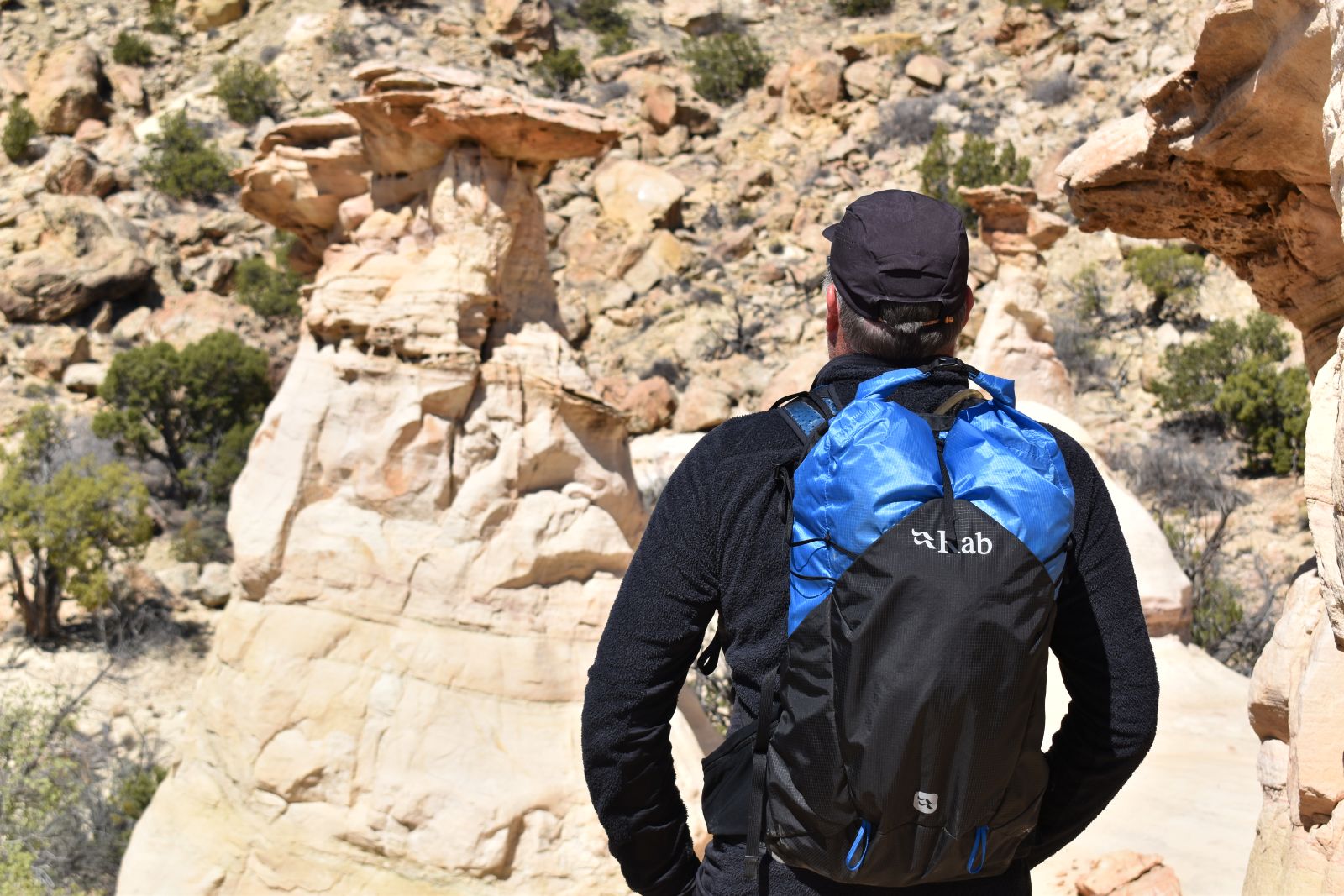
Obviously, your back is the main point of contact with your backpack. However, shoulder straps also contribute to a hiking daypack’s comfort and support. Budget daypacks often have cheap shoulder straps that are only comfortable for short distances. Better hiking daypacks often use one or more of the following designs to make shoulder straps more comfortable:
Padded shoulder straps take some pressure off the shoulders, which increases comfort, especially if you’re carrying extra weight and/or wearing a less supportive daypack. The trade-off is that cushier shoulder straps can be hotter and sweatier in the field.
Ventilated shoulder straps use mesh or die-cut foam channels to promote air circulation. They’re not as cushioned, which can be uncomfortable if you’re carrying weight, but they’re cooler and drier, especially in hot weather.
Vest-style straps are thinner and fit comparatively snugly. However, they help distribute weight across a wider surface, which can be a plus for comfort and support.
How Important is the Hipbelt on a Daypack?
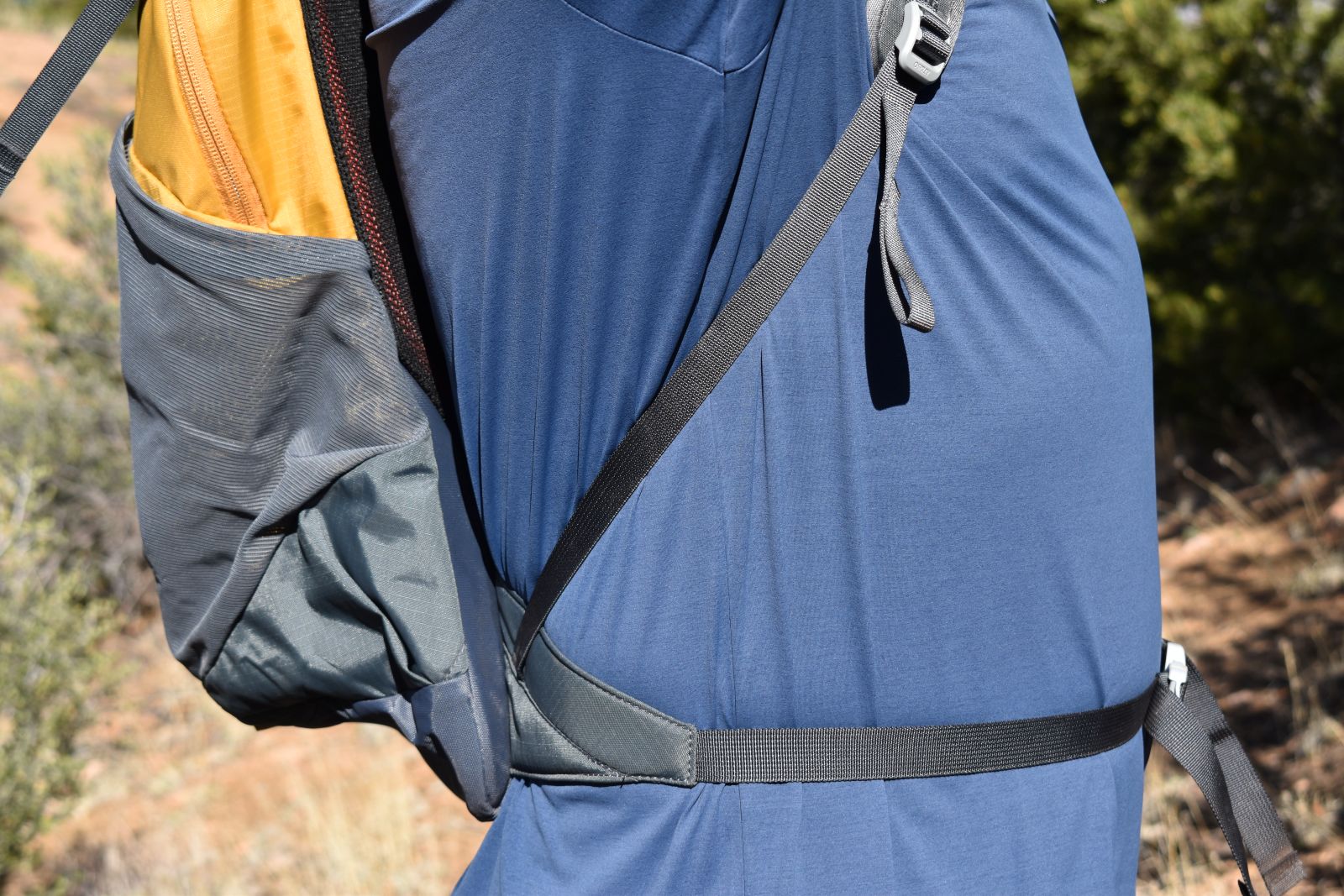
A hipbelt can be quite helpful – or nearly worthless – depending on the daypack and the amount of weight you’re carrying:
Traditional hiking daypacks often pair an internal frame or framesheet with a substantial hipbelt to transfer weight from your shoulders to your hips. This requires a sturdier hipbelt with fins that wrap around your waist to support the weight.
However, many daypacks only have a thin hipbelt that’s not made to bear weight. It’s there to reduce how much the pack flops or bounces as you hike, run, or ride. The budget and everyday packs on our list feature these thin hipbelts that don’t support weight.
How Much Should You Spend on a Hiking Daypack?
The packs on our list include true hiking daypacks as well as outdoor lifestyle packs – less expensive, casual daypacks not specifically made for hiking. How much to spend on a daypack depends on your budget and your hiking style.
If you don’t have a ton of gear money and/or don’t carry much water or equipment on your hikes, you may be happy with a less expensive daypack. The biggest day hikers on the CleverHiker team – Ian Krammer and Jory Brass – have hiked more than 10,000 miles in light, inexpensive daypacks.
At the same time, buying a more expensive daypack can be a good investment if you regularly carry extra weight or hike for more than a couple of hours. You can cut down on back sweat, sore shoulders, wet gear, and awkward access by spending up.
As much as we hike, we’re happy to spend extra for features largely missing from cheaper outdoor lifestyle packs: ventilated back panels, cushioned shoulder pads, load-bearing hipbelts and hip fins, rain covers, and easier access to our water, phones, trekking poles, snacks, gels, lip balm, and layers.
Why Trust CleverHiker
Our team has covered tens of thousands of trail miles and spent more than 3,000 days testing daypacks. Gear analyst and senior editor Ian Krammer has carried packs on this list while summiting more than 700 Colorado peaks over 12,000 feet, including every 14,000 foot mountain in the state. Abigail Taylor brings thousands of field days as a former Outward Bound instructor and lifelong outdoor enthusiast. She evaluated daypacks during a packrafting trip near Twin Falls, Idaho; a multi-sport climb in British Columbia; and hikes in Idaho’s Payette National Forest and Monmouth Canyon.
Gear analyst Jory Brass has hiked 17,000 miles in the past 15 years. For the most recent update to this guide, he hiked 400 miles on New Mexico trails. His evaluations also draw upon his professional training in outdoor gear and apparel, especially his years at Backcountry, where he served as a Gearhead Expert and the company’s primary copywriter for hiking daypacks.
Testing Methodology
How Do We Test Comfort?
We took each daypack out on a series of test hikes to evaluate key comfort considerations for day hikers: ventilation (especially the back panel); padding on the shoulder straps and hipbelt; adjustability and fit; and pressure / rubbing points.
Our test hikes varied in speed and difficulty so we could identify comfort differences for specific hiking styles: casual hiking, fastpacking, rock scrambling, and summiting larger mountains. We hiked the same trails in each backpack to compare their comfort side by side in the same testing conditions. Immediately after each test hike, we recorded comfort pros and cons in our trusty CleverHiker testing notebooks. Our notes included comfort differences when carrying both lighter and heavier loads.
How Do We Assess Organization?
To evaluate the organization of each daypack we tested, we noted the size and placement of key pockets; the location and access to hydration; the accessibility of larger storage; and the number and layout of external attachment points (especially for trekking poles). We also considered purpose-built storage for common items like keys, sunglasses, and cellphones.
Our gear analysts made a point of squeezing their personal gear into all of the daypack’s nooks and crannies to evaluate its organizational pros and cons. Rather than judging each pack’s organization by our own personal preferences, we considered which types of hikers would – and would not – appreciate each pack’s pockets, organizational features, and design trade-offs.
How Do We Test Support?
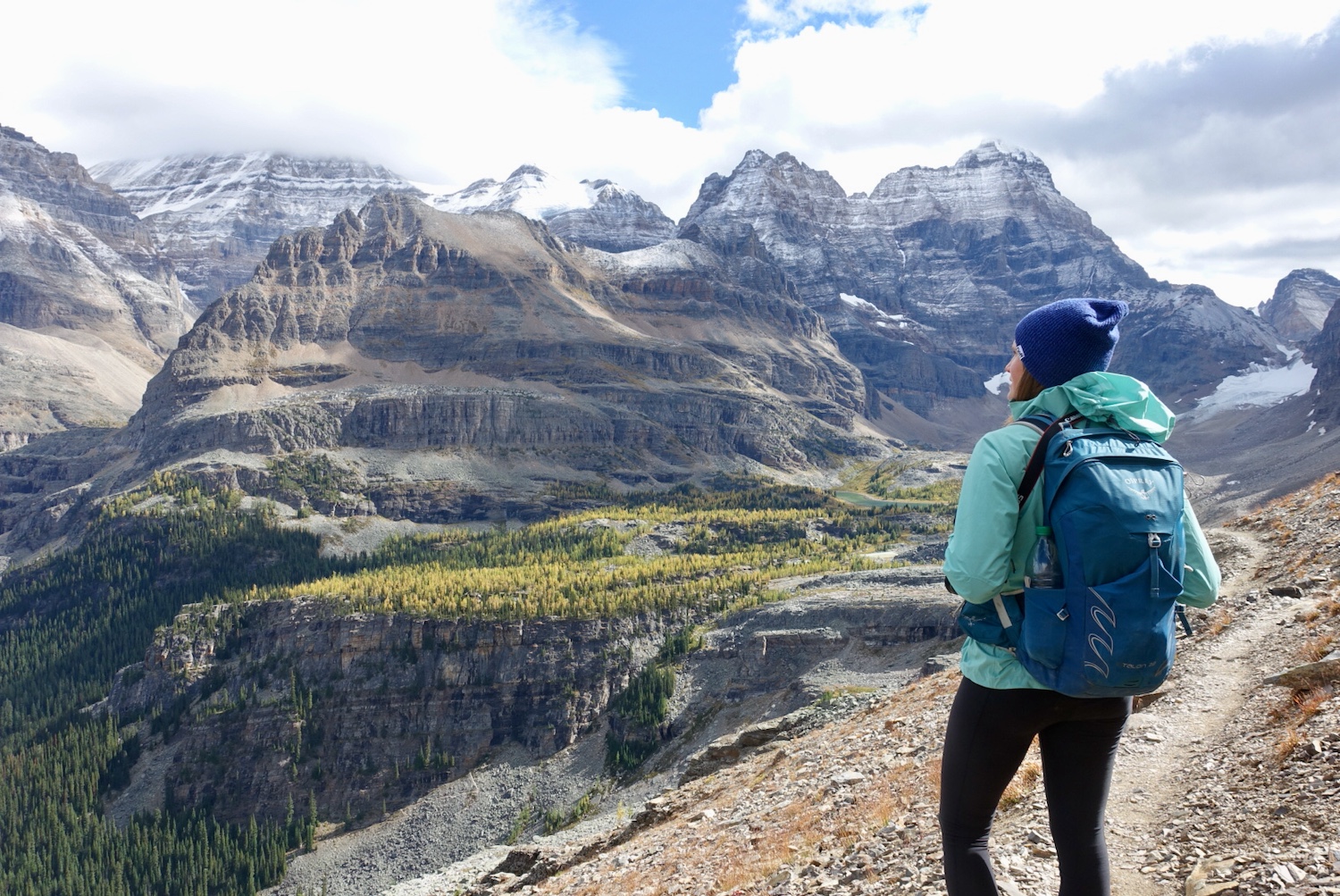
For some of our test hikes, we filled each daypack to capacity to evaluate how well it carried weight and distributed the load to the hips. While carrying extra weight – 3 liters of water, camera and tripod, winter layers, traction devices, food, etc. – we hiked five-mile and 12-mile trails to evaluate the support of the harness (frame/back panel, shoulder straps, and hipbelt).
We noted each pack’s frame type (frameless, foam sheet, metal frame) and evaluated how well its harness system shifted weight from the shoulders to the hips. Our support tests focused on non-comfort aspects of the back panel, frame, straps, and hipbelt – especially when carrying enough gear for winter treks and all-day hikes. We took notes of neck pain, stiff shoulders, and headaches versus not noticing the load on our backs or actually feeling the weight on our hips.
How Do We Measure Weight & Compressibility?
We verified the manufacturer’s weight specs by weighing each pack on our kitchen scale. On our test hikes, we took qualitative notes on how light or heavy a pack actually felt in the field.
Our gear analysts also judged the packs on how well they compressed and packed down. Packability doesn’t matter for the typical day hiker. Still, it can be useful if you’re traveling or stuffing a small daypack in your backpacking pack for short-term summit trips and side quests.
Conclusion
The best daypacks for hiking will carry a day’s worth of gear while keeping your back drier, shifting weight from your shoulders to your hips, and keeping your water and essentials secure but accessible. Thanks to CleverHiker’s side-by-side testing, this gear guide will steer you towards the most comfortable, organized, supportive, and lightweight packs for your day hikes.