
Bottom Line
The Gregory Citro 24 H2O and Juno 24 H2O are our favorite hydration-focused daypacks because the included 3-liter reservoir is integrated into a comfortable, supportive hiking pack rather than added as an afterthought.
The perimeter frame and ventilated suspension transfer weight well, while the large main opening, hipbelt pockets, front stretch storage, and small-item organization make the pack easy to live with on long days.
The main downsides are price and weight. Hikers who do not need the included reservoir can spend less or carry a lighter pack, but those who want hydration, support, and storage in one package get a well-rounded system.
How We Tested
CleverHiker has tested the Citro/Juno H2O platform over hundreds of trail miles with the included 3D Hydro reservoir full and the pack loaded with normal day-hiking gear. We assessed how the perimeter frame, ventilated suspension, hipbelt, pocket layout, and hydration hardware worked under realistic loads and compared them with both lighter minimalist packs and more heavily framed daypacks.
Quick Specs
- Best for: Hydration-focused day hiking
- Material: 210D ripstop nylon with 420D high-density nylon reinforcement
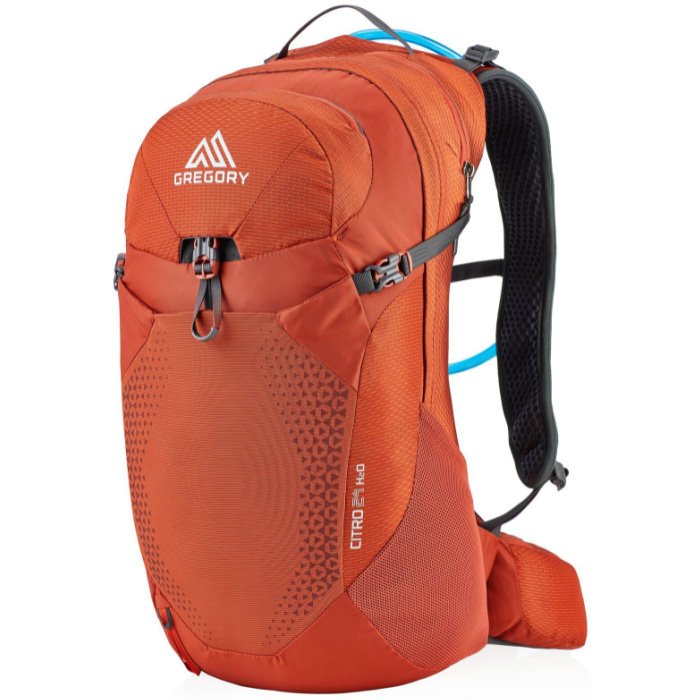
Gregory Citro 24 H2O / Juno 24 H2O
Best Hydration Pack Overall
CleverHiker Rating: 4.8/5.0
Price: $180
Capacity: 24L
Weight: 2 lb. 0.3 oz. / 1 lb. 14.9 oz.(Citro/Juno)
Pros
- Hydration bladder included
- Very comfortable
- Good internal structure
- Transfers weight to the hips well
- Good organization
- Large and convenient opening for the main compartment
- Durable
- Plus size available
Cons
- Heavier than some
- Expensive
- Side pockets are tight for wide bottles


Comfort
Comfort is a major strength. The ventilated suspension keeps the load off the hottest part of the back, while padded shoulder straps and a substantial hipbelt spread pressure over a large area.
With the 3-liter reservoir full, the pack remains composed instead of sagging from the shoulders. That matters because water is often the heaviest single item in a day-hiking load.
The Citro/Juno is not as light as minimalist packs, but its structure makes the carried weight feel more manageable, especially on longer hikes.
Comfort Score: 4.7 / 5.0

Organization
The layout is built around hydration without sacrificing general storage. A dedicated reservoir area, easy hose management, large main access, hipbelt pockets, a front stretch pocket, and smaller security storage give most trail essentials an obvious place.
We especially like that refilling or accessing the bladder does not require completely dismantling the rest of the pack. The main compartment also opens widely enough to reach layers and food quickly.
The tight side pockets are less friendly to wide bottles, but bottle storage matters less here because the reservoir system is the primary hydration method.
Organization Score: 4.7 / 5.0

Support
A perimeter wire and load-bearing hipbelt give the Citro/Juno substantially more support than frameless budget packs. The system shifts a meaningful share of the load toward the hips and keeps the reservoir from pulling the pack backward.
That support is especially useful when the bladder is full or when the hike requires extra layers, food, and emergency gear. The pack remains stable without feeling as bulky as the Gregory Zulu.
For hikers who rarely carry more than a few pounds, the frame can be more structure than necessary. For normal full-day loads, however, it is one of the strongest support systems in the category.
Support Score: 4.7 / 5.0

Weight & Packability
The Citro/Juno is moderately heavy for a 24-liter daypack, but part of that weight comes from features that replace separate purchases: the reservoir, structured suspension, hipbelt, and extensive organization.
The perimeter frame also means the pack does not collapse or roll down for travel the way frameless models do. It is better viewed as a dedicated hiking pack than a secondary bag for stuffing into luggage.
If packability is the priority, the Flash 22 or Batac is easier to carry as a spare. If carrying comfort with water is the priority, the Citro/Juno justifies the additional bulk.
Weight & Packability Score: 4.2 / 5.0

Should You Buy the Gregory Citro 24 H2O / Juno 24 H2O?
Buy it if you want an integrated hydration system and expect to carry enough water and gear to benefit from real support. It is less compelling for minimalists, travelers, or hikers who already own a reservoir and prefer a simpler, lighter daypack.

What Other Daypacks Should You Consider?
Osprey Stratos 24 / Sirrus 24 Review: The Stratos/Sirrus is a strong alternative if you want maximum ventilation and heavy-load support but do not need an included reservoir. Its suspended AirSpeed back panel creates a larger air gap than the Citro/Juno, and the internal frame and padded hipbelt handle bulky loads well. It is heavier and does not include the hydration system, so the Citro/Juno remains the more integrated choice for hikers who primarily drink from a bladder.
Osprey Talon 22 / Tempest 22 Review: The Talon/Tempest offers a lighter, more versatile package with some of the best organization in the category. It keeps water, layers, snacks, poles, and small essentials easy to reach, and its close-to-body fit feels agile on technical terrain. It does not include a reservoir and provides slightly less heavy-load support, but it is a better fit if hydration is only one part of what you want from the pack.
REI Flash 22 Review: The Flash 22 makes sense if your priorities are low weight, low cost, and packability rather than hydration integration. It weighs only 14 ounces and folds down easily for travel or summit pushes. You give up the Citro/Juno’s supportive frame, substantial hipbelt, ventilation, and included reservoir. For experienced minimalists carrying a small load, that simpler setup can be a better value.