
Bottom Line
The Coleman Brazos 30 is a low-cost option for occasional summer campers who want a spacious, straightforward rectangular bag. Ian Krammer stayed warm during three 40°F nights near Lake City, Colorado, and found its synthetic fill retained warmth even when the bag became damp with dew. The L-shaped zipper also opens the bag into a blanket or joins two compatible bags.
The tradeoffs are real: its tricot liner attracts dirt, pet hair, and static; the zipper can snag; and the supplied stuff sack is frustratingly tight. We don’t recommend it below 40°F because the hoodless opening and thin draft tube let heat escape. The North Face Wawona Bed 20 is a more polished summer upgrade. Browse our best camping sleeping bags for the full comparison.
How We Tested
Senior Gear Analyst Ian Krammer tested the Brazos 30 through mild and freezing Colorado camps, including three 40°F nights near Lake City, a dew-soaked outing in the Lost Creek Wilderness, and nights around 32°F that required substantial clothing and an insulated sleeping pad. He evaluated the tricot lining’s tendency to collect debris, zipper and blanket conversion, warmth, packed size, and the awkward Quick Cord storage system.
Quick Specs
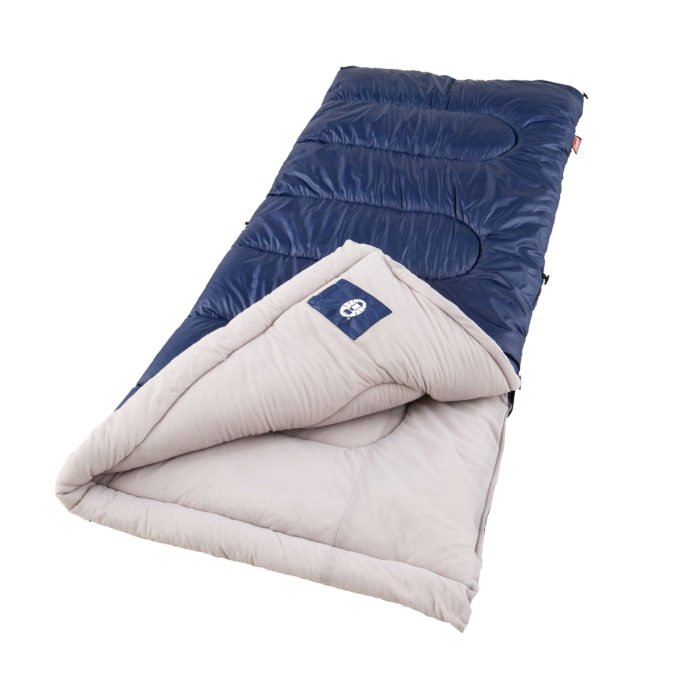
Coleman Brazos 30
Best Budget Camping Sleeping Bag
CleverHiker Rating: 3.7/5.0
Price: $54
Temperature Rating: 30ºF
Weight: 6 lb. 14.4 oz.
Fill Type: Synthetic
Pros
- Very low price for occasional campers
- Soft tricot liner
- Rectangular cut allows free movement
- Interior pocket for small essentials
- Unzips fully into a blanket
- Can connect two bags
Cons
- Bulky and difficult to repack
- Tricot attracts debris and clings to clothing
- No hood or cinching mechanism
- Weak draft protection near freezing
- Shell is not water-resistant


Comfort
The Brazos is surprisingly accommodating for a low-price rectangular bag. Ian could roll among sleeping positions without feeling restricted, and the warm tricot liner feels soft on first contact. Unzipping the bottom and side transforms it into a blanket, while two compatible bags can be zipped together for shared sleeping space.
The tricot is also its largest comfort flaw. It picked up twigs and dirt immediately when placed on the ground during setup and clung to dog hair; base layers can snag or build static against it. It is machine washable in a large front-loading machine, but campers who dislike clingy fabric should consider the smoother liner of the REI Siesta Hooded 20.
Comfort Score: 3.8 / 5.0

Warmth
This is a practical 40–70°F sleeping bag, despite its nominal 30°F label. Ian stayed comfortable during three 40°F nights near Lake City, Colorado. On a freezing 32°F outing, he needed base and midlayers plus a very warm pad, confirming that the bag’s missing hood and narrow zipper draft protection limit its cold-weather performance.
The synthetic fill continued to insulate even after the shell absorbed heavy dew in Colorado’s Lost Creek Wilderness, and the bag dried in about two to three hours. That resilience is useful in damp summer conditions. However, the outer fabric is not water-resistant, so protect it from moisture rather than assuming the bag is weatherproof.
Warmth Score: 4.0 / 5.0
Packed Size
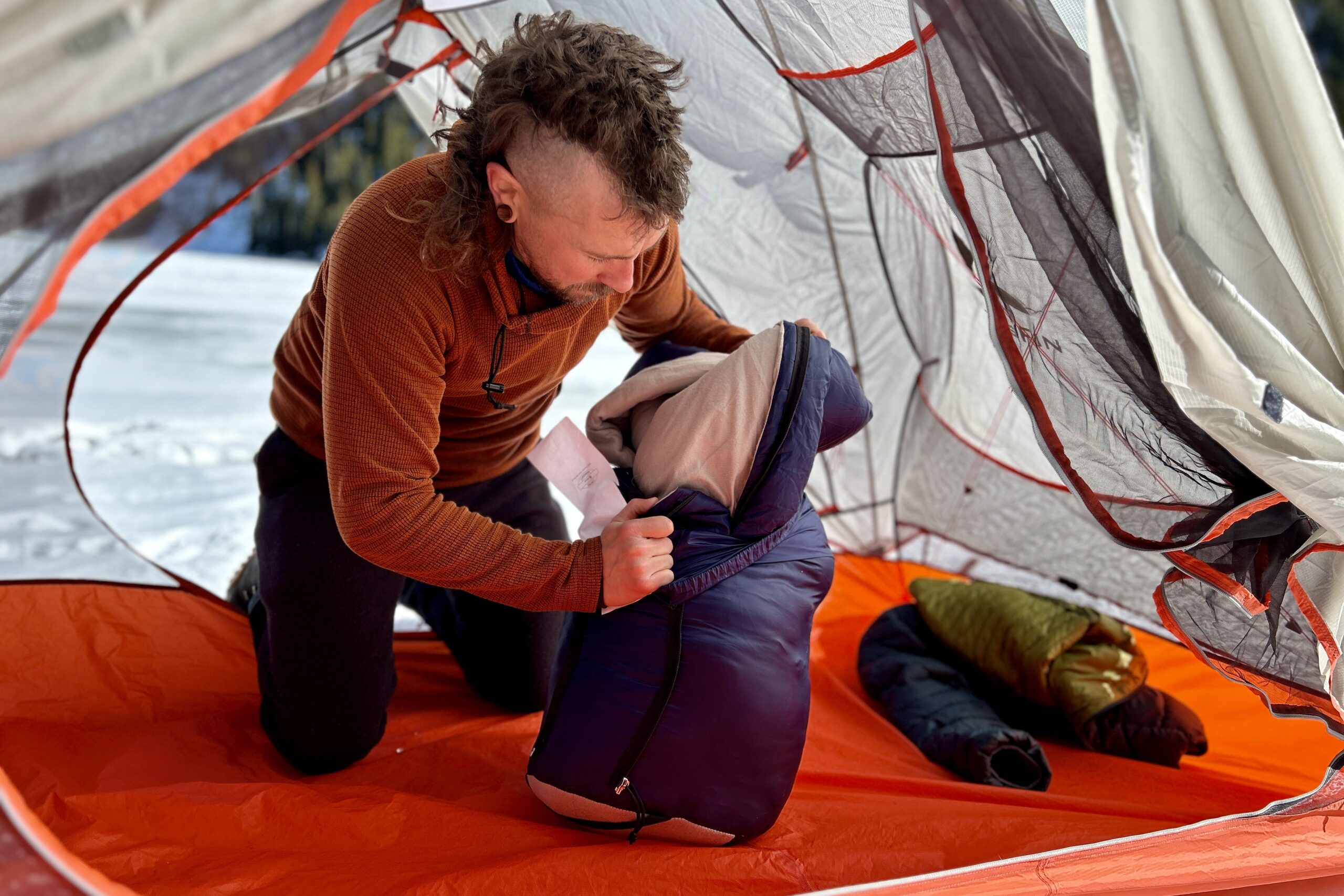
The Brazos takes up roughly 12 by 19 inches when packed, a lot of cargo space for a fair-weather bag. At 6 lb. 14.4 oz. according to the ranking spreadsheet, it is considerably heavier than typical backpacking bags. Don’t choose it for a hike-in campsite: it’s made to ride in the car.
Packing is the bigger frustration. The included sack is tight, the compression zipper is difficult to close, and Coleman’s Quick Cord arrangement doesn’t solve the bulk. A cheap large mesh laundry bag is a practical way to store it between trips.
Packed Size Score: 3.4 / 5.0

Features
The full L-shaped zipper makes the Brazos surprisingly adaptable. Opening the foot end provides ventilation, unzipping completely turns it into a blanket, and two compatible bags can be connected for shared sleeping space. A hook-and-loop inner pocket holds a headlamp or keys, although larger phones won’t fit.
It lacks a hood, neck cinch, and zipper garage, while the narrow draft tube provides limited protection. The zipper also catches the lining at times. Those flaws are acceptable for occasional fair-weather trips, but matter more if you spend many nights outdoors.
Features Score: 3.9 / 5.0

Should You Buy the Coleman Brazos 30?
Choose the Brazos if your camping is occasional, your nights are mild, and price is the dominant concern. It was comfortable on 40°F Colorado nights, and the roomy rectangle and blanket conversion are useful for a beginner or as spare family bedding. The synthetic insulation also retained some warmth during heavy dew exposure.
Avoid it if you regularly expect freezing temperatures, dislike tricot clinging to clothing, or want easy packing. The Wawona Bed 20 offers smoother everyday operation and softer fleece near the collar for more money. The Teton Sports Celsius XXL is better suited to low-temperature car camping, although dramatically bulkier.

What Other Camping Sleeping Bags Should You Consider?
REI Siesta Hooded 20 Review: Campers who venture out more than a few times each season will get more from the Siesta’s soft rectangular liner, insulated collar, oversized hood, and easier zipper. It is a bulkier investment than the Brazos, but our field comfort range begins in the mid-30s rather than around 40°F. Choose it when comfort and quality matter more than the lowest purchase price.
The North Face Wawona Bed 20 Review: The Wawona’s fleece-lined upper edge and smooth zipper make it much more pleasant for regular summer camping than the Brazos, whose tricot traps debris and static. Both lack a hood and belong mostly on mild nights. Spend more for the Wawona if you’d rather avoid the Brazos’s sticky fabric and difficult stuff sack.