
Bottom Line
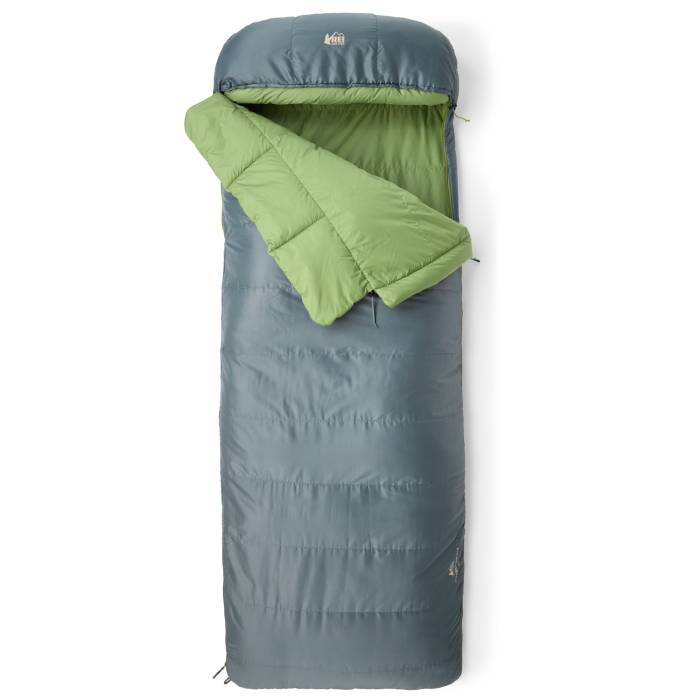
The REI HunkerDown 20 gives car campers the stretch-out comfort of a rectangular bag with the more compact packing of 600-fill down. Marion Tucker appreciated its wide body, soft liner, pillow-friendly hood, and wraparound zipper that turns it into a quilt. It makes sense for campers who want a comfortable three-season bed without the huge bundle of a synthetic rectangle.
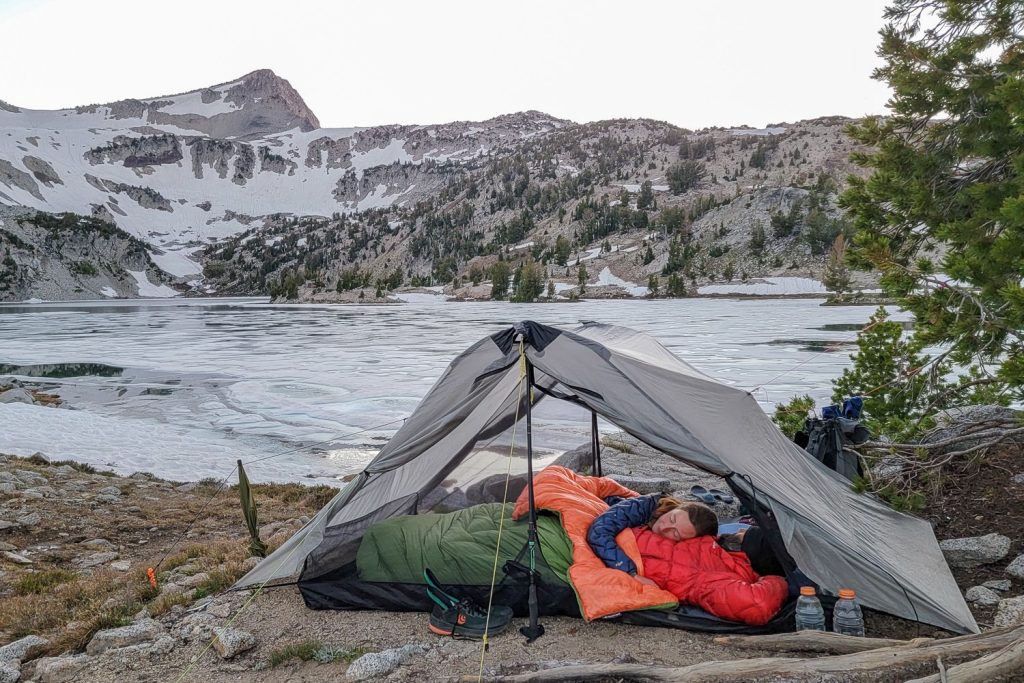
Its 20°F label is optimistic. During a low-30s night in California’s Inyo National Forest, our tester felt chilly, so we recommend it mainly for the mid-30s and warmer. At over three pounds it also isn’t a technical backpacking choice. For colder or more weight-sensitive trips, a fitted mummy makes more sense. See our best camping sleeping bags guide for other options.
How We Tested
Marion Tucker tested the HunkerDown on campground nights, including a low-30s outing in California’s Inyo National Forest. The review records feeling chilly on that night despite the down fill, and compares the bag’s soft fabric, pillow-compatible hood, blanket conversion, zipper, and packability with other camping bags.
Quick Specs
REI HunkerDown 20
Best Flexible Comfort in a Down Sleeping Bag
CleverHiker Rating: 4.5/5.0
Price: $219
Temperature Rating: 20°F
Weight: 3 lb. 6.3 oz.(Medium)
Fill Type: 600-fill down
Pros
- Wide rectangular cut suits different sleep positions
- Down fill packs smaller than synthetic options
- Insulated hood fits a regular pillow
- Converts completely into a quilt
- Includes stuff sack and mesh storage bag
Cons
- Chilly in low-30s field use
- Still too heavy for backpacking
- Down requires special washing care

Comfort
The HunkerDown’s wide rectangular cut is a welcome change from snug mummy bags, especially for people who alternate between back and side sleeping. Marion Tucker found there was space to stretch arms and legs without pulling the whole bag around. Four size options help different body types get that relaxed fit.
The interior fabric also struck a good balance: smooth against the skin without the slippery feeling found in some camping bags. An oversized hood accommodates a regular bed pillow, while the blanket conversion makes it easy to spread out or sit around camp wrapped in insulation. That bedding-like comfort is its primary advantage over narrower down crossovers.
A partial zipper opposite the main opening lets campers fold the top over like a comforter without fully opening the bag. That is a particularly useful way to cool the upper body on mild nights. The generous hood also secures a familiar bed pillow, making this a more convincing car-camping upgrade than its down fill alone suggests.
Comfort Score: 4.5 / 5.0

Warmth
The HunkerDown’s 600-fill down and broad rectangular shell provide comfortable three-season insulation, but its 20°F label overpromises for cold sleepers. Marion Tucker felt chilly on a night in the low 30s in California’s Inyo National Forest. We consider the mid-30s and warmer a more realistic comfort range, rather than relying on the number printed on the bag.
A substantial collar, insulated hood, and wraparound zipper help retain heat when everything is closed, while DWR treatment on the shell, liner, and down offers protection around moisture. The shape still leaves more air to warm than a fitted mummy, so consider a lower-volume bag for sustained subfreezing trips.
Horizontal baffles keep the 600-fill down distributed through the rectangular body. Its full-length zipper has a substantial draft tube that also wraps around the foot end, a vulnerable area when sleeping bags unzip into quilts. These thoughtful seals help, but they don’t make up for the lower warmth efficiency of the wide cut in freezing conditions.
Warmth Score: 4.3 / 5.0

Packed Size
The down fill makes this one considerably less bulky than the REI Siesta Hooded 20, despite their similarly roomy designs. The published review reports a roughly 12-by-8-inch stuffed size and finds that an aftermarket compression sack can reduce it further. A mesh storage bag is also included to keep the down lofted between outings.
At the 3 lb. 6.3 oz. medium weight stated in the product card, HunkerDown isn’t a lightweight trail bag. The 600-fill down still saves significant bulk relative to the synthetic Siesta, whose weight is over five pounds. It’s a practical choice when a crowded trunk or home storage makes packed volume more important than trail-ready ounces.
The included stuff sack helps in transit, but the separate mesh storage sack is a better long-term home for down insulation. Compression improves packing for a crowded vehicle, not the underlying carry weight. Buyers making occasional walk-in campground trips may appreciate its small bundle, while someone backpacking for days should choose a lighter mummy.
Packed Size Score: 4.5 / 5.0

Features
The HunkerDown’s wraparound zipper turns the bag into a quilt, which makes this heavier down bag useful well beyond cold nights. REI adds a strip beside the zipper to reduce fabric snags, an interior pocket for small items, a substantial collar, and a hood big enough to hold a regular pillow. Those are practical luxuries at a fixed campsite.
The included stuff sack and mesh storage bag solve two separate needs: transporting the bag compactly and preserving loft during storage. DWR-treated down, shell, and liner provide some moisture protection. None of this makes the HunkerDown a technical backpacking bag, but the features improve ease of use at camp.
The opposite-side partial zipper makes a fold-down top possible without disturbing the main zipper, giving warm sleepers another venting option. That complements the insulated hood and collar for cooler nights. REI’s internal stash pocket is sized for a phone, leaving small essentials close at hand without extra camping gadgets.
Features Score: 4.5 / 5.0

Should You Buy the REI Hunkerdown 20?
Consider the HunkerDown if you spend most nights at vehicle-access campgrounds, want down’s manageable packed volume, and dislike narrow sleeping bags. Its soft lining, pillow-sized hood, full quilt conversion, and generous width are good reasons to choose it over a stripped-down mummy, provided most trips are in the mid-30s or warmer.
It is not our pick for low-20s comfort, despite the temperature rating, and the medium weight is still heavy for backpacking. The Kelty Cosmic Down 20 or Mountain Hardwear Bishop Pass 15 makes more sense for regular trail carries; the synthetic Siesta may be the better value if compact packing is irrelevant.

What Other Camping Sleeping Bags Should You Consider?
Kelty Cosmic Down 20 Review: The Cosmic is a stronger option if the HunkerDown’s roomy rectangle takes up too much space on a walk-in trip. A close mummy cut and 550-fill down kept Ian Krammer warm around 30°F, with less weight than the HunkerDown. It does feel restrictive for sleepers who sprawl, making it more appropriate for carrying in a backpack than lounging at a campsite.
REI Siesta Hooded 20 Review: The Siesta gives vehicle campers a comparably wide, pillow-friendly bag at a lower cost, with an insulated collar, soft liner, and blanket conversion. Its synthetic insulation takes up considerably more volume than the HunkerDown’s down, making it less convenient when storage or trunk space is limited. For fixed campgrounds, that tradeoff may be worthwhile.