

Bottom Line
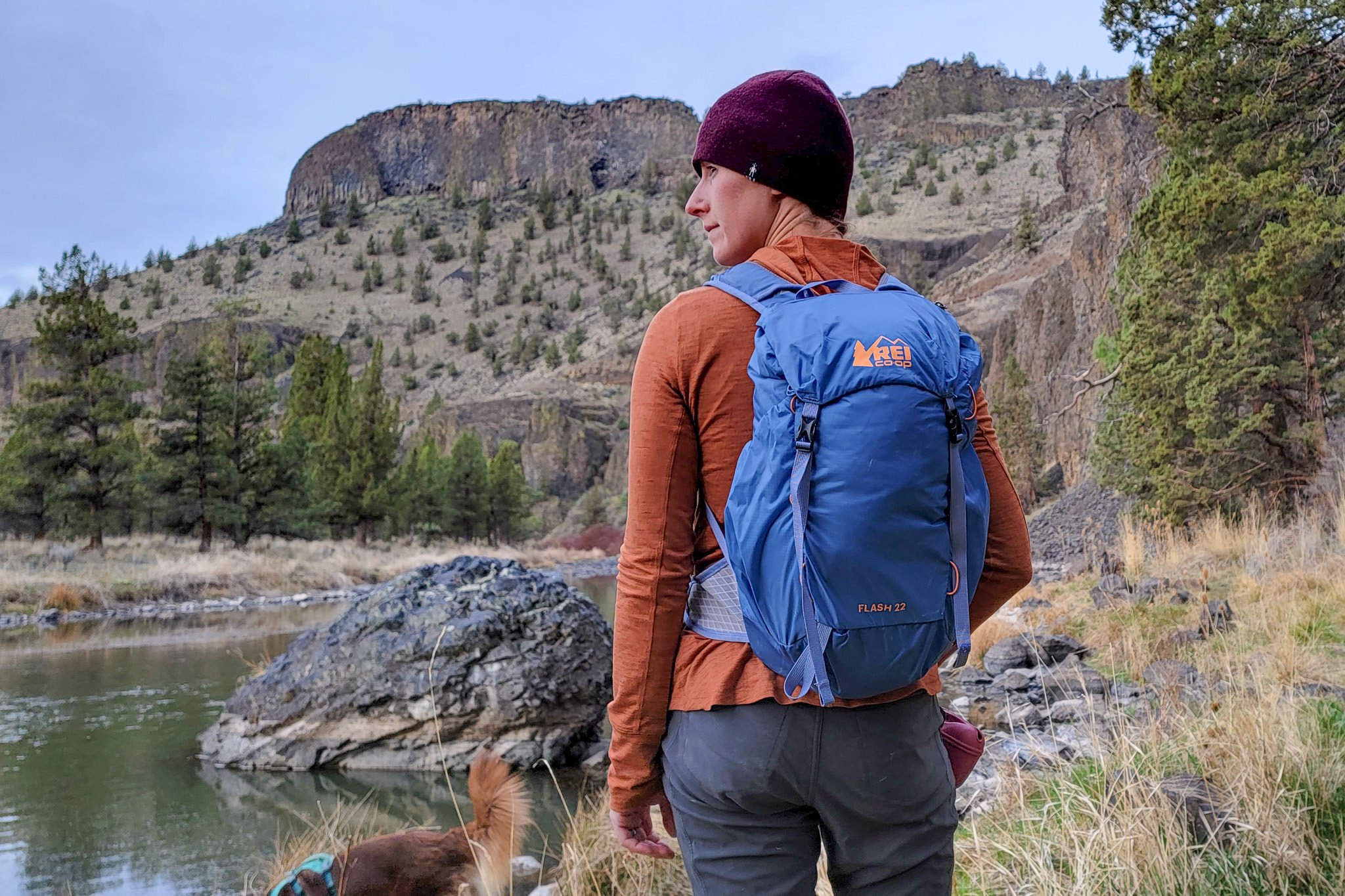
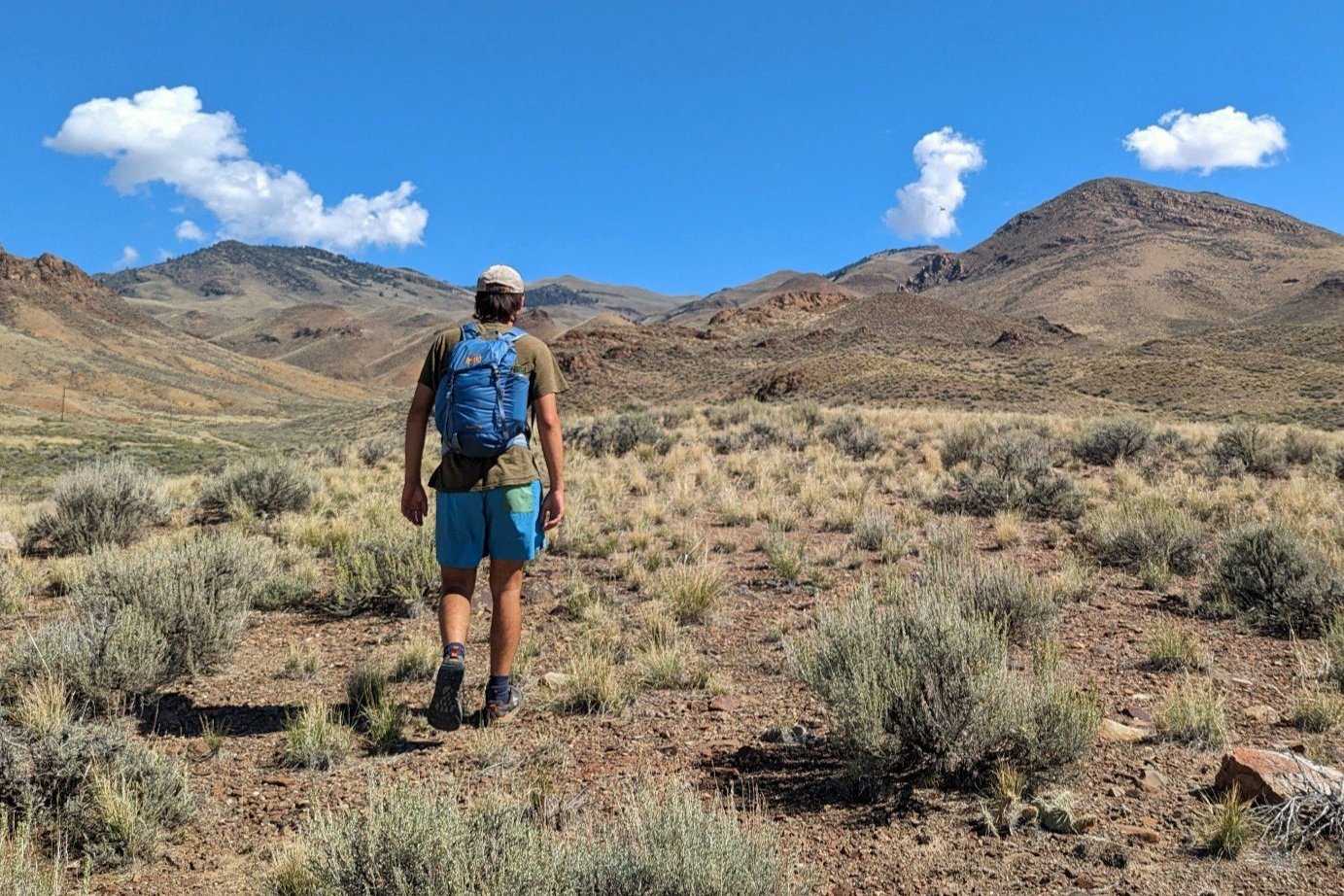
The REI Flash 22 is one of our favorite minimalist daypacks because it costs little, weighs only 14 ounces, and carries a basic hiking kit without unnecessary structure. It is especially appealing to experienced hikers who know how little they actually need.
The simple organization works for layers, snacks, water, and small essentials, and the removable sit pad adds real utility for breaks. The pack also compresses easily for travel or summit side trips.
The compromises are comfort and support. Padding and ventilation are limited, the frameless body can feel floppy, and heavier loads pull directly on the shoulders. If you keep your kit light, those tradeoffs are easy to accept. For more options, see our best hiking daypacks guide.
How We Tested
CleverHiker has used the Flash 22 for years on everything from short hikes to summit days and long fastpacking efforts, including hundreds of high-elevation mountain outings. We compared it with heavier framed packs and other lightweight designs to evaluate how its frameless construction, removable sit pad, simple storage, and 14-ounce weight affect comfort, organization, support, and packability.
Quick Specs
- Best for: Budget minimalism
- Material: 70D recycled ripstop nylon

REI Flash 22
Best Budget Daypack for Minimalists
CleverHiker Rating: 4.2/5.0
Price: $60
Weight: 14 oz.
Capacity: 22 L
Frame: None
Pros
- Affordable
- Light and packable
- Trail-to-town versatility
- Internal organization for small items
- Includes a removable sit pad
Cons
- Limited cushioning and ventilation
- Floppy when empty
- Doesn’t carry weight well
- Awkward top access

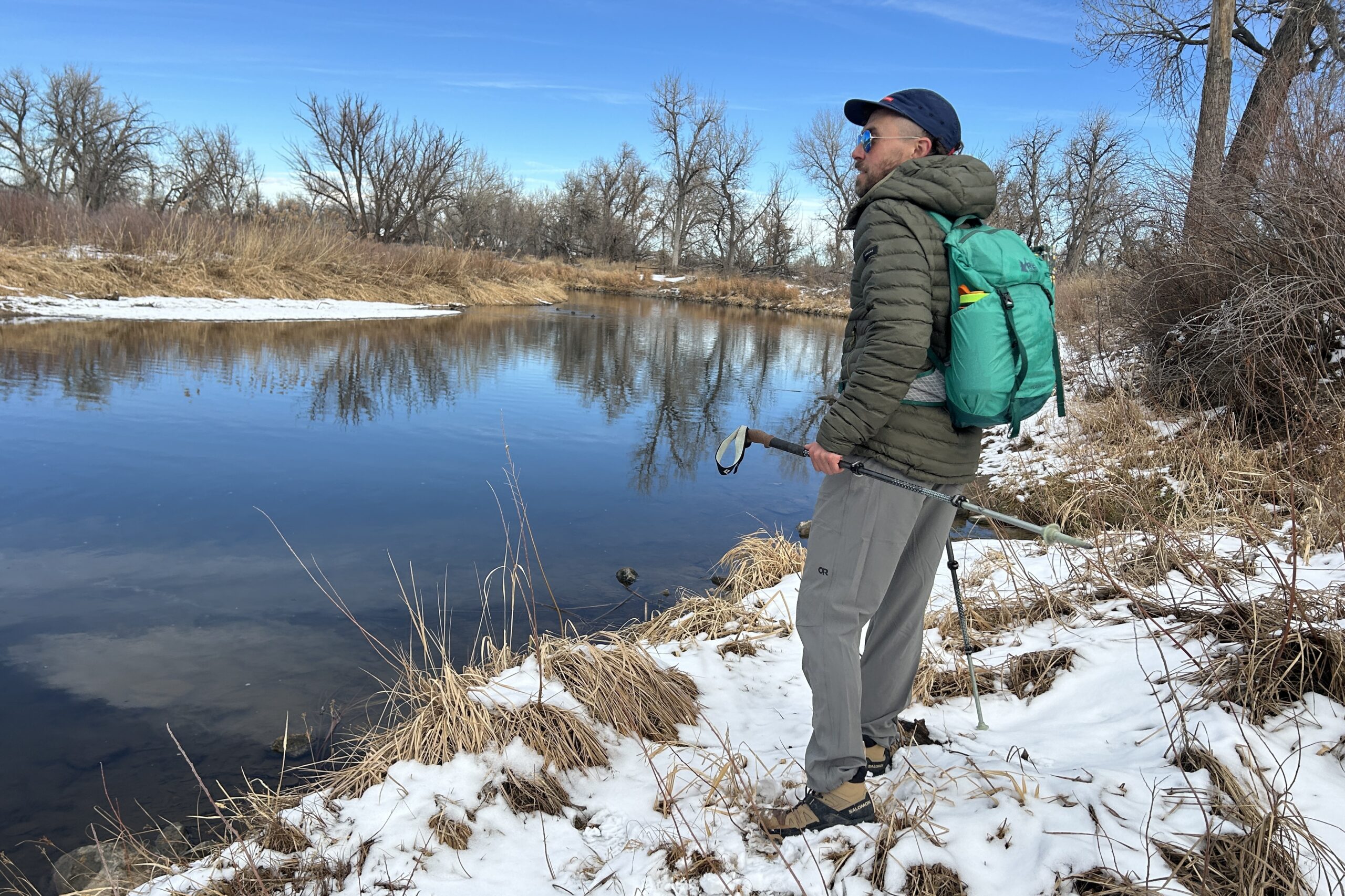
Comfort
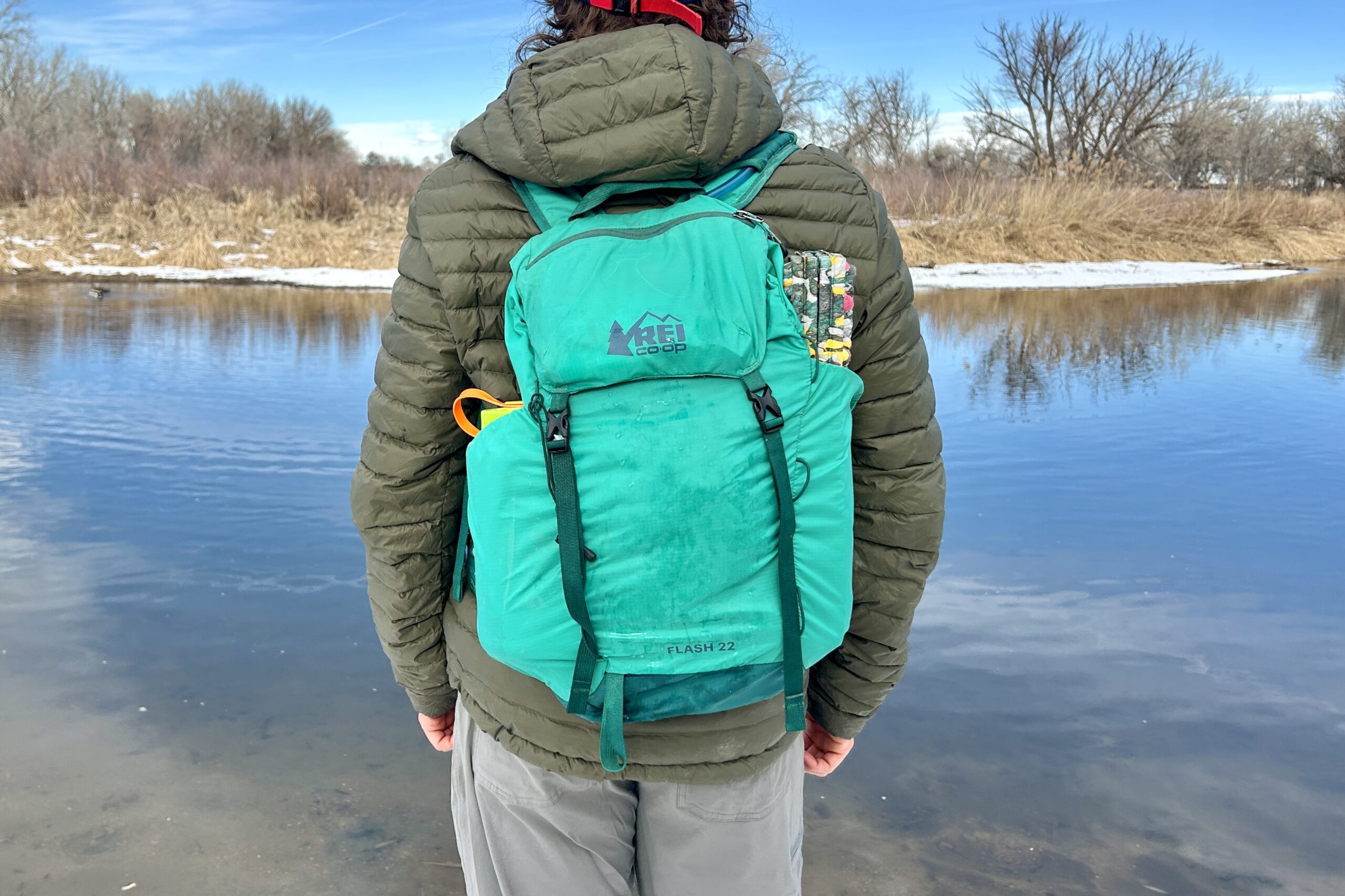
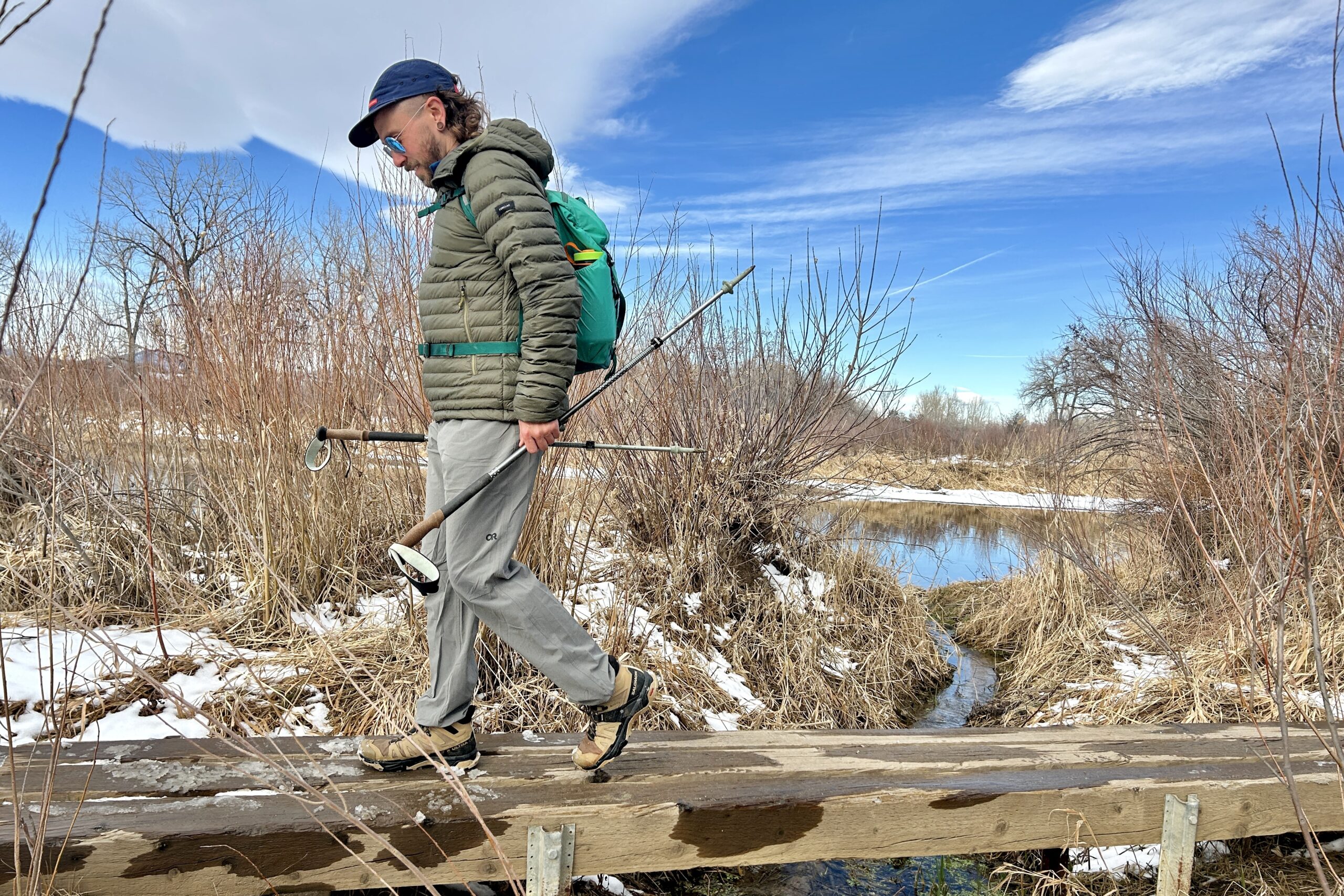
The Flash 22 proves that low weight can itself be a comfort feature. With a light kit, there is little pack mass pulling on the shoulders, and the flexible body moves naturally rather than forcing the hiker into a rigid posture.
The back panel and shoulder straps use only modest padding, and ventilation is limited compared with dedicated suspended or channeled systems. On hot days or with denser loads, users will notice more pressure and sweat.
For minimalists carrying only the essentials, the simplicity is comfortable. Hikers expecting plush cushioning or a highly structured harness will prefer a heavier design.
The removable foam sit pad is a meaningful comfort feature because it doubles as the only real back-panel structure. With it installed, the pack has enough padding to keep normal soft gear from pressing directly into the back; on breaks, it provides a dry, insulated place to sit. Mesh pads on the back panel and lightweight shoulder straps also help reduce heat buildup.
Heavy or hard-sided equipment quickly exposes the minimalist design. When we carried binoculars and a tripod, those items were easier to feel through the back, and the frameless bag had no substantial hipbelt or load lifters to redistribute the pressure. The Flash is comfortable for a light, well-packed kit, but the comfort advantage comes from carrying less rather than from a sophisticated suspension.
Comfort Score: 4.2 / 5.0
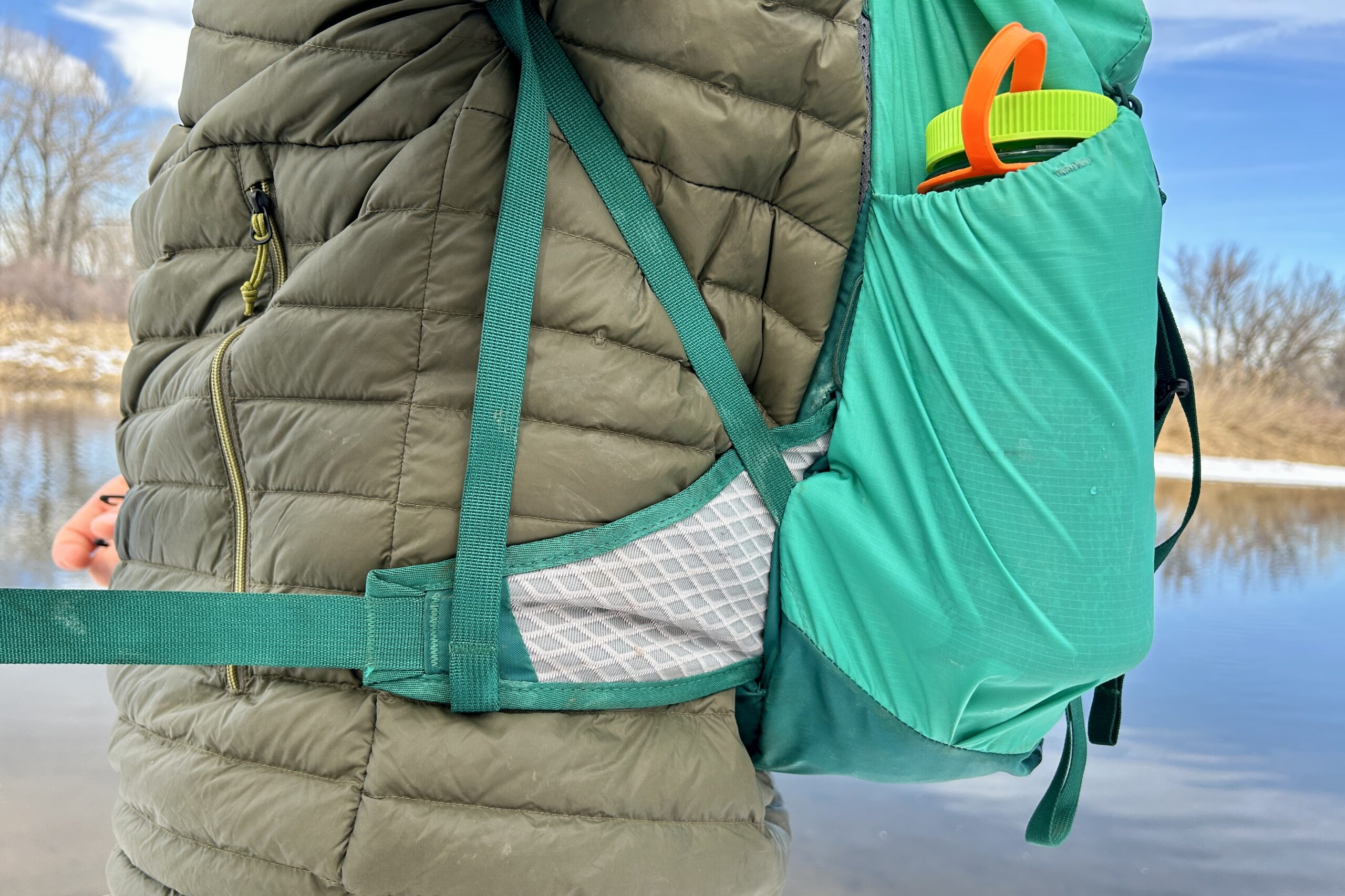
Organization
The Flash uses a simple top-loading layout with a few small-item storage options rather than an elaborate pocket system. That keeps weight low and makes the 22-liter interior flexible for layers and food.
The downside is access. Reaching buried items often requires opening and loosening the top closure, and there are no substantial hipbelt pockets or premium on-the-go storage features.
Experienced minimalists may appreciate having fewer compartments to manage. Hikers who want a dedicated place for every item will find the Talon, Speed Lite Pro, or Zulu packs more intuitive.
The interior is simple but more organized than a basic stuff sack. Two small internal pockets separate little essentials, a top zippered pocket handles quick-access items, and the hydration sleeve works with common reservoirs. The 22-liter main body is large enough for layers, food, and a basic first-aid kit without encouraging the kind of overpacking that overwhelms the suspension.
Several details are less polished. The vertical side pocket is narrow and awkward to reach, the dual-clip top closure takes more effort than a single buckle, and there is no key clip. Ten lash points add flexibility, but the frameless construction limits how much weight should be strapped outside. The organization works best for minimalists who already pack deliberately.
Organization Score: 3.8 / 5.0
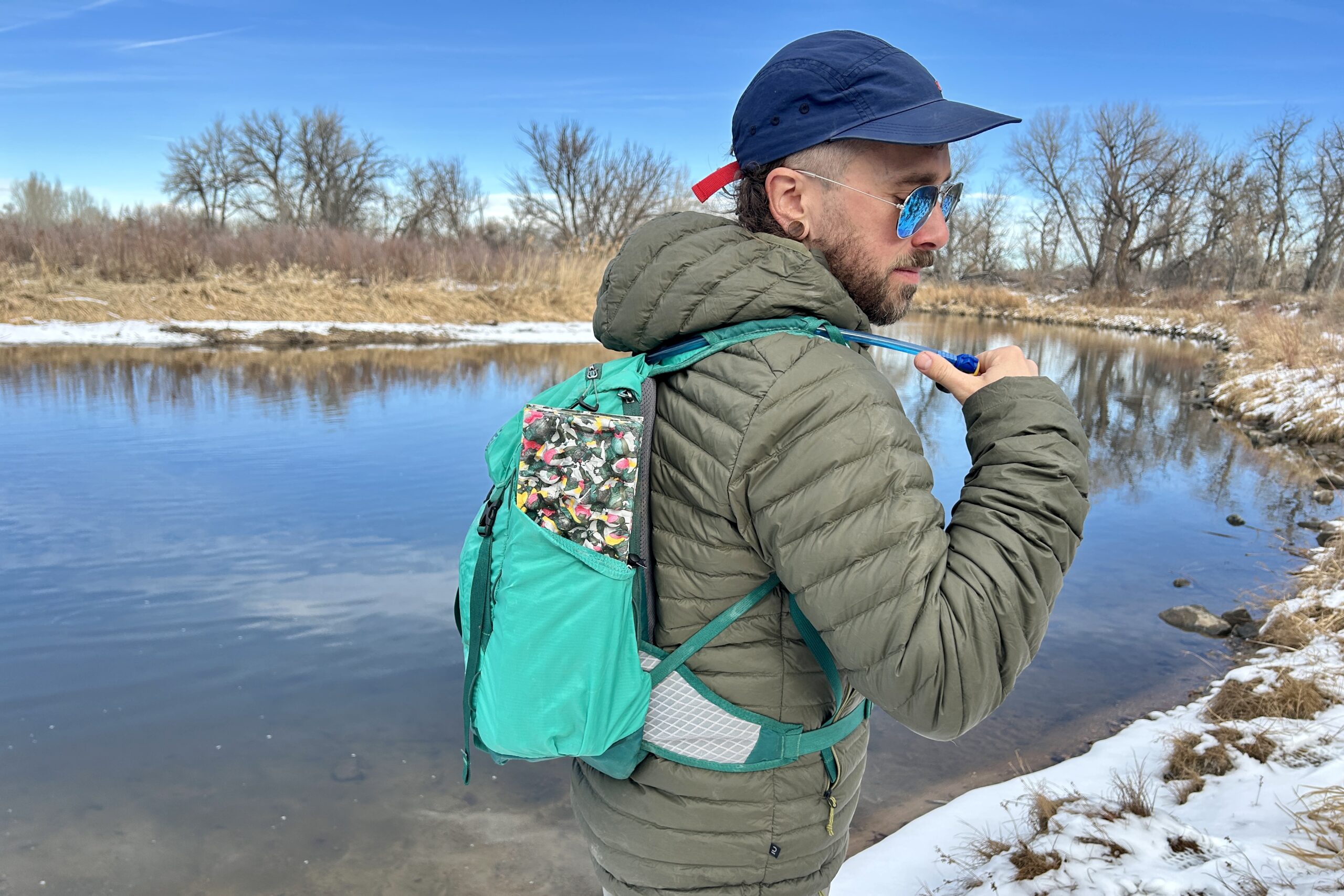
Support
Support is the Flash 22’s weakest area. With no frame and only a light hipbelt, nearly all meaningful load weight rides on the shoulders. Packing technique matters because hard or irregular items can also influence how the bag sits against the back.
That is acceptable with a small kit and becomes increasingly uncomfortable as water and gear add up. The pack is not designed to transfer a heavy load to the hips or maintain a rigid shape.
The Flash works best when paired with a minimalist hiking style. If your normal day load is heavy, a framed or framesheet pack is worth the added weight.
The Flash 22 has no frame, load lifters, or substantial hipbelt, so its support comes almost entirely from the shoulder straps, sternum strap, and how the load is packed. The removable sit pad adds a little shape but does not create meaningful load transfer to the hips. With light gear, that simplicity feels agile rather than underbuilt.
The design becomes less stable as weight increases. Dense items can shift inside the main compartment, and heavy exterior gear puts extra stress on the shoulder connections because there is no frame to spread the load. This is why we like the Flash for long days with a disciplined ultralight kit but not for camera gear, winter equipment, or large water carries.
Support Score: 3.5 / 5.0
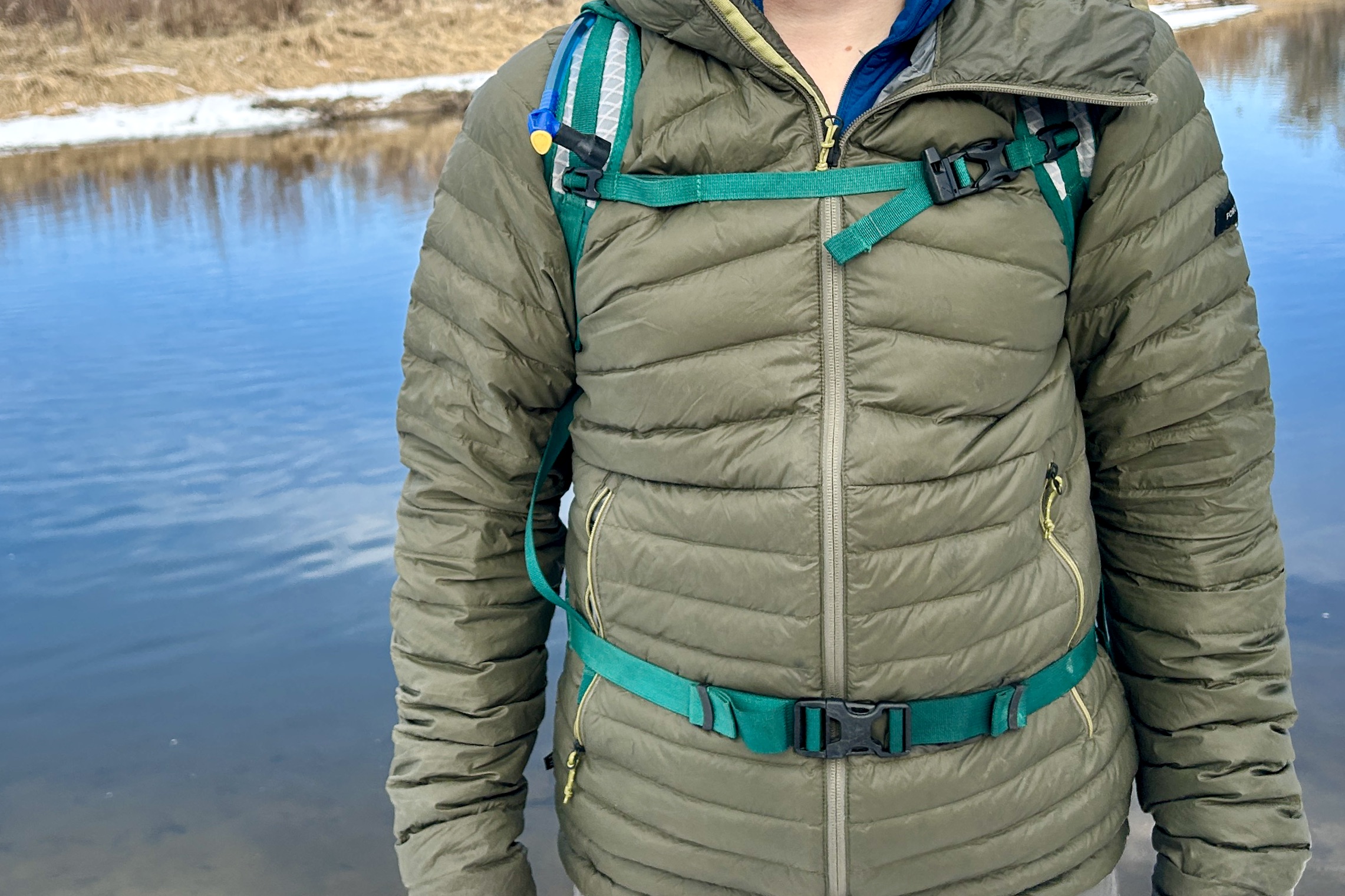
Weight & Packability
At 14 ounces, the Flash 22 is one of the lightest packs in the entire category and the strongest performer in our weight-and-packability metric among hiking-focused options. It can fold or flatten easily for travel, summit pushes, or storage inside a larger backpack.
The removable sit pad provides a little structure when installed but can be taken out to reduce bulk. The light ripstop body also makes the pack quick to compress when empty.
This is the clearest reason to choose the Flash over more feature-rich competitors: if low weight and packability matter more than support, ventilation, and quick-access organization, few packs offer as much utility for so little mass.
The Flash 22 weighs only 14 ounces, and that low weight is central to its appeal. REI gets there with 70D fabric, small hardware, a simple harness, and the removable foam sit pad instead of a rigid frame. Hikers who want to trim even more bulk can remove the pad when they do not need the extra back protection.
Because the pack is frameless, it can be rolled, folded, or flattened to roughly the size of a water bottle. That makes it especially useful as a secondary bag carried inside a backpacking pack for summit pushes or side trips. The tradeoff is straightforward: the same missing structure that makes it exceptionally packable also limits heavy-load comfort and durability under repeated dense carries.
Weight & Packability Score: 4.9 / 5.0
Should You Buy the REI Flash 22?
Buy it if you hike with a light kit, want a low-cost pack, or need a secondary daypack that compresses easily for travel. Choose something more structured if you carry heavy water, winter layers, or equipment and expect the hipbelt to share the load.
What Other Daypacks Should You Consider?
Osprey Sportlite 20 Review: The Sportlite is the better option if you want a little more structure and ventilation without moving into a heavy premium pack. Its AirScape back panel, porous shoulder straps, and framesheet handle moderate loads more comfortably than the frameless Flash. The Flash remains lighter, cheaper, and more compressible. Choose REI for minimalism; choose Osprey if a pound of extra structure would make your normal hikes more comfortable.
Cotopaxi Batac 16L Review: The Batac is even lighter and more packable, with a casual design that works especially well for travel, town use, and easy outdoor days. It gives up the Flash’s larger volume, removable sit pad, and more hiking-oriented layout, and it has no hydration hose port. We prefer the Batac as a stashable secondary bag and the Flash as the more capable minimalist hiking pack.
Osprey Talon 22 / Tempest 22 Review: The Talon/Tempest sits at the opposite end of the spectrum. It is much heavier and higher-priced, but the adjustable fit, framesheet, hipbelt, ventilation, and excellent organization make it far more comfortable with moderate loads. The Flash is ideal when you know how to keep your kit small. If heavy water, winter layers, or camera equipment are common, the Osprey is worth the extra weight.