


Bottom Line
Aquamira offers a low-cost way to chemically purify water when viruses are a concern or you want a backup to a microfilter. The small two-bottle kit covers many treatments and cannot clog. Mixing and waiting are unavoidable, though, and it leaves grit in the container. It suits patient, weight-conscious hikers better than anyone who wants to drink immediately.
On longer outings, the low cost per treated liter is a meaningful reason to choose drops over individually wrapped tablets. We have to allow the initial mixing period and the full contact time, including longer intervals for resistant organisms. Because the solution doesn’t strain out grit, a bandana or other simple prefilter can make muddy sources much more palatable.
Weigh other low-bulk purification methods and filters in the best backpacking water filters guide.
How We Tested
We carried Aquamira on long trips and compared the process with tablets and mechanical filters, including use around livestock-affected water sources.
Quick Specs
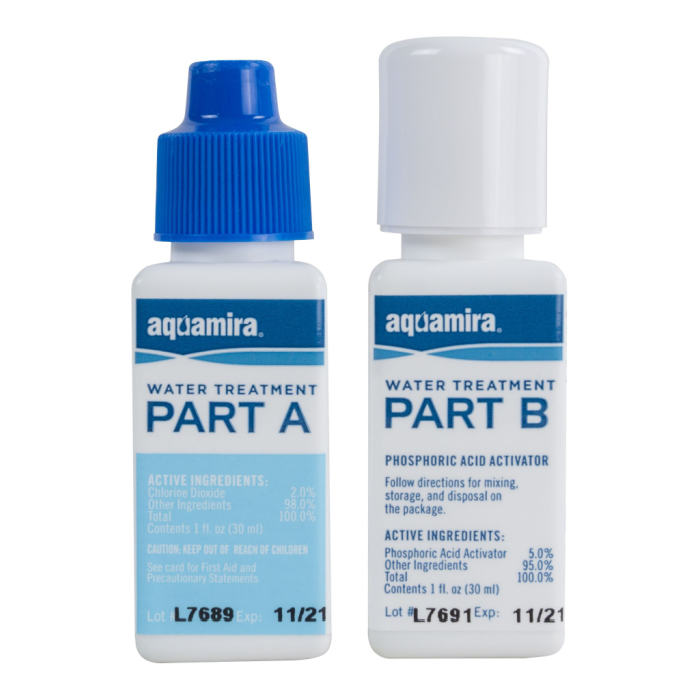
Aquamira
Best Chlorine-Dioxide Drop Purification
CleverHiker Rating: 4.4/5.0
CleverHiker Rating: 4.4
Price: $15
Weight: 3 oz.
Flow Rate: N/A
Filter Pore Size: N/A
Lifetime Volume: 114 L


Water Quality
The activated chlorine dioxide treats microorganisms, including viruses, when used correctly and given adequate contact time. It does not take silt or suspended particles out of the water. We generally find the taste less pronounced than with some tablets, but a chemical flavor remains possible.
The treated water retains the source’s cloudiness and suspended grit. We prefilter visible debris with cloth when necessary, then allow the full chemical contact time. Compared with Micropur tablets, we often notice a slightly milder treatment flavor, although that varies by source and taste preference.
Water Quality Score: 3.9/5.0

Ease of Use
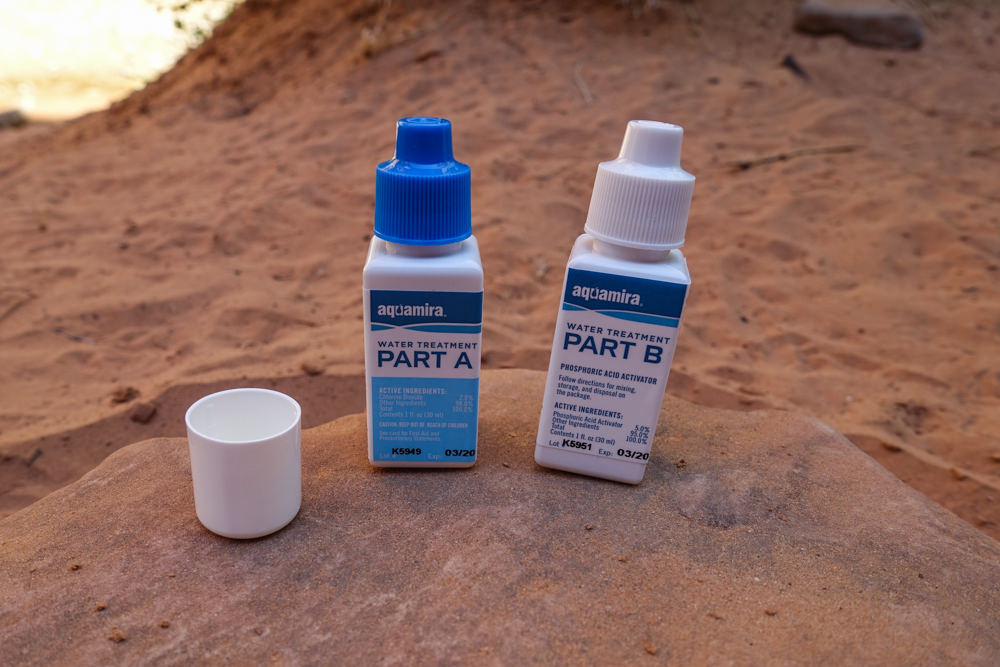
Aquamira takes a little more attention than a one-step treatment. We combine the instructed drops from Parts A and B in the mixing cap, allow the reaction to develop, then add the activated mixture to a bottle of water. The process becomes familiar after a few stops, but misplacing one bottle or forgetting the preparation period makes it less convenient than individually wrapped Micropur tablets.
The dropper bottles are compact and easy to portion for a long trip. We appreciate not having to pump a filter or protect delicate hollow fibers from freezing. The tradeoff is that treated water still contains grit and suspended sediment, so we select clean-looking moving water and strain debris when needed.
Ease of Use Score: 4.4/5.0

Treatment Time
Preparing the two components adds about five minutes before the treatment can begin. Contact time varies with water conditions and the targeted organisms; resistant Cryptosporidium can require the full four hours. We work these delays into a day’s water plan instead of relying on a quick drink at a stream.
The separate components need their own activation interval before the mixture goes into drinking water. A quick standard wait does not establish protection from all organisms under all conditions. Resistant Cryptosporidium and cold or turbid water require special attention to current product instructions, so we plan ahead.
Treatment Time Score: 3.9/5.0

Weight
At around three ounces, the complete kit is compact compared with traditional pumps and covers many liters. It is heavier than a few emergency Micropur packets, but their per-liter cost is higher. The weight of the dropper kit gradually decreases as liquid is used.
At three ounces, the full treatment kit is considerably lighter than traditional pumps. It treats far more water than a few emergency tablets, but the per-liter chemicals and two bottles are still consumable. Over a long trek, its comparatively low treatment cost can justify carrying both parts.
Weight Score: 4.6/5.0

Maintenance & Longevity
No membrane needs backflushing, and no battery needs charging. However, an opened chemical product has a finite useful life, so check date and storage guidance. A depleted or old kit is not a reliable emergency treatment simply because the bottles are still in your pack.
There is no membrane to rupture or battery to fail, which makes chemical drops an appealing backup. Storage and freshness are the important maintenance issues. We check dates and keep both bottles secured; carrying only one component makes the entire system unusable.
Maintenance & Longevity Score: 5.0/5.0

Should you Buy Aquamira Water Purification Drops?
Aquamira is a solid primary or backup choice when you prioritize virus-capable treatment and low cost over speed. Choose Micropur if each dose needs to be individually packed. Pick a Sawyer Squeeze for quick everyday backcountry filtration when viral contamination is not the main concern.

What other Water Treatment Systems Should You Consider?
Here’s a few great alternatives to consider that work just as great as Aquamira.
Katadyn Micropur Review: Micropur’s individually sealed tablets are easier to count, pack, and use when purification is occasional or an emergency. For routine treatment over a long trek, Aquamira’s drops can be more economical, though both require adequate contact time.
Katadyn Steripen Ultra Review: Steripen Ultra makes more sense when you want immediate clear-water purification without chlorine-dioxide flavor. The pen’s battery and glass lamp introduce failure points, while Aquamira avoids electronics altogether.
Katadyn BeFree Review: A BeFree filter is convenient for typical mountain water because you can drink through the included flask without waiting for chemicals. It doesn’t purify viruses, so we wouldn’t substitute it for Aquamira where viral contamination is plausible.