Bottom Line
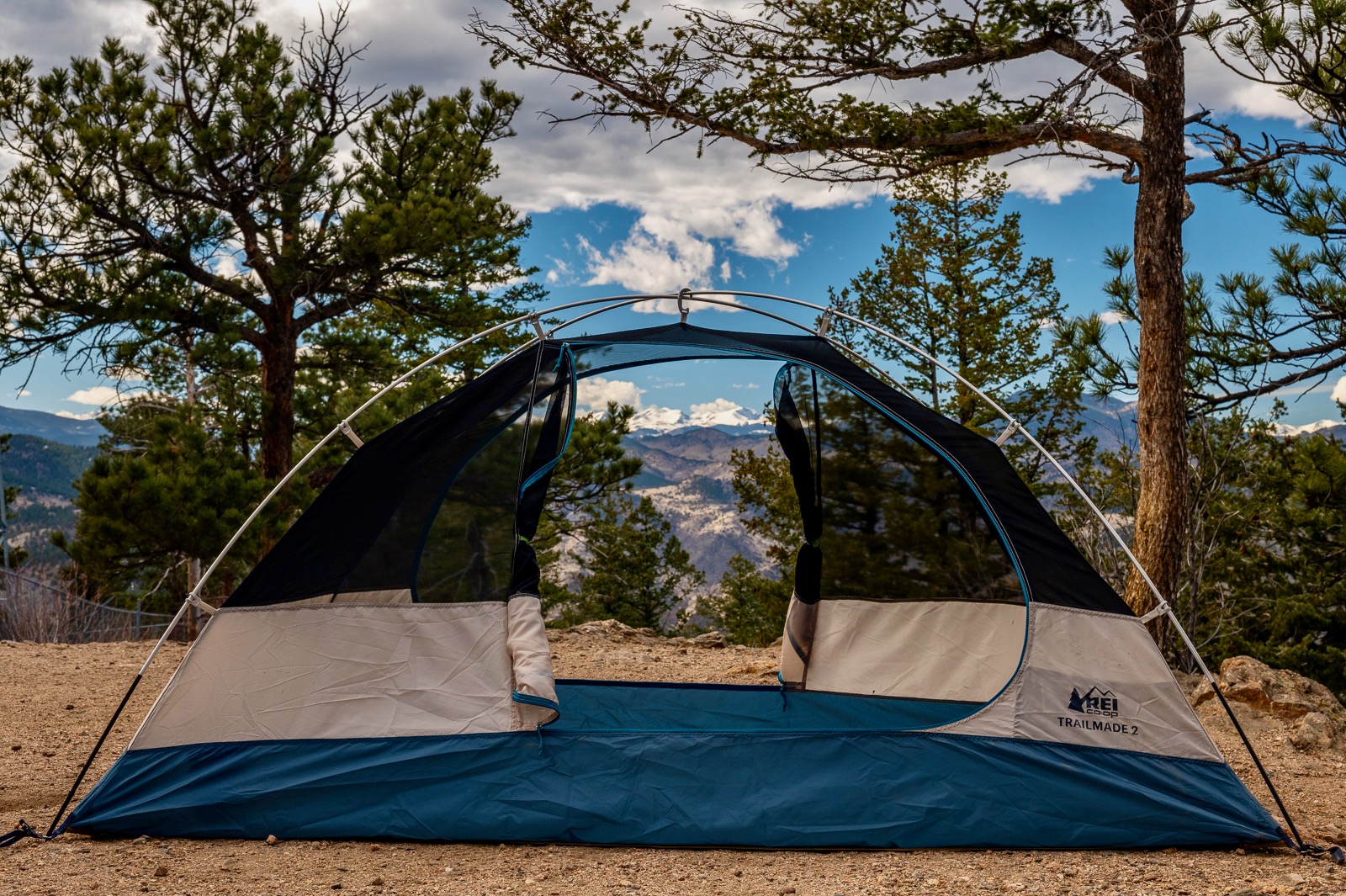
The REI Trailmade 2 is our most affordable backpacking-tent pick as the lowest-cost entry point in the lineup.
The symmetrical freestanding structure is one of the easiest tents in our lineup to pitch, and the thicker fabrics, straightforward hardware, and included footprint make it especially appealing for beginners or occasional backpackers.
Its downside is obvious: at 5 pounds, 7 ounces packed in our measurement, it is heavy and bulky. We think it makes the most sense for short trips, couples who can split the load, and people who want one inexpensive tent for both backpacking and car camping.
How We Tested
We evaluated the Trailmade 2 in our current backpacking-tent lineup against the Half Dome 2 Plus and higher-priced freestanding tents, focusing on comfort, measured packed weight, weather resistance, setup, and durability.
Quick Specs
- Best for: Budget backpackers, beginners, short trips, and crossover car camping
- Floor area: 31.8 sq. ft.
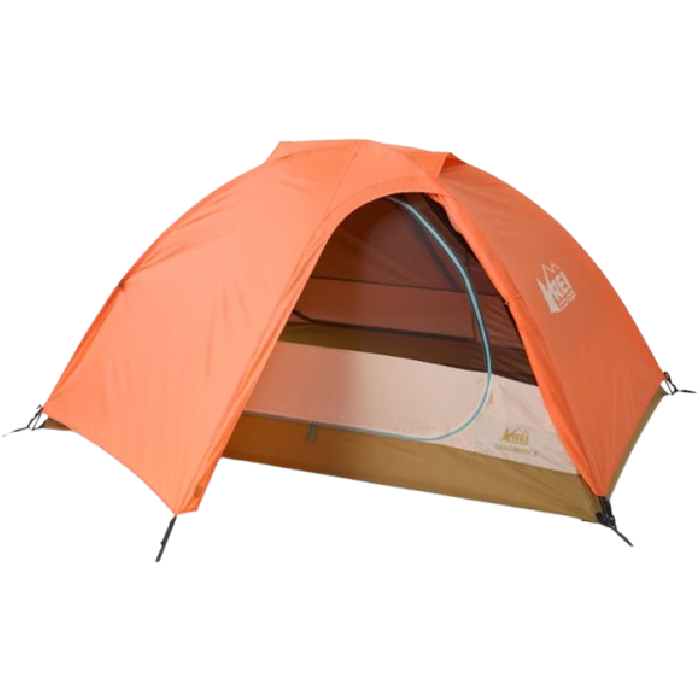
REI Trailmade 2
Most Affordable Backpacking Tent
CleverHiker Rating: 4.4/5.0
Price: $199
Packed Weight: 5 lb. 7 oz. including footprint
Dimensions (LxWxH): 88 x 52 x 40 in.
Type: Freestanding
Pros
- Low price
- Durable
- Very easy to set up
- Footprint included
Cons
- Heavy
- Bulky
- Limited headroom and comfort features

Comfort
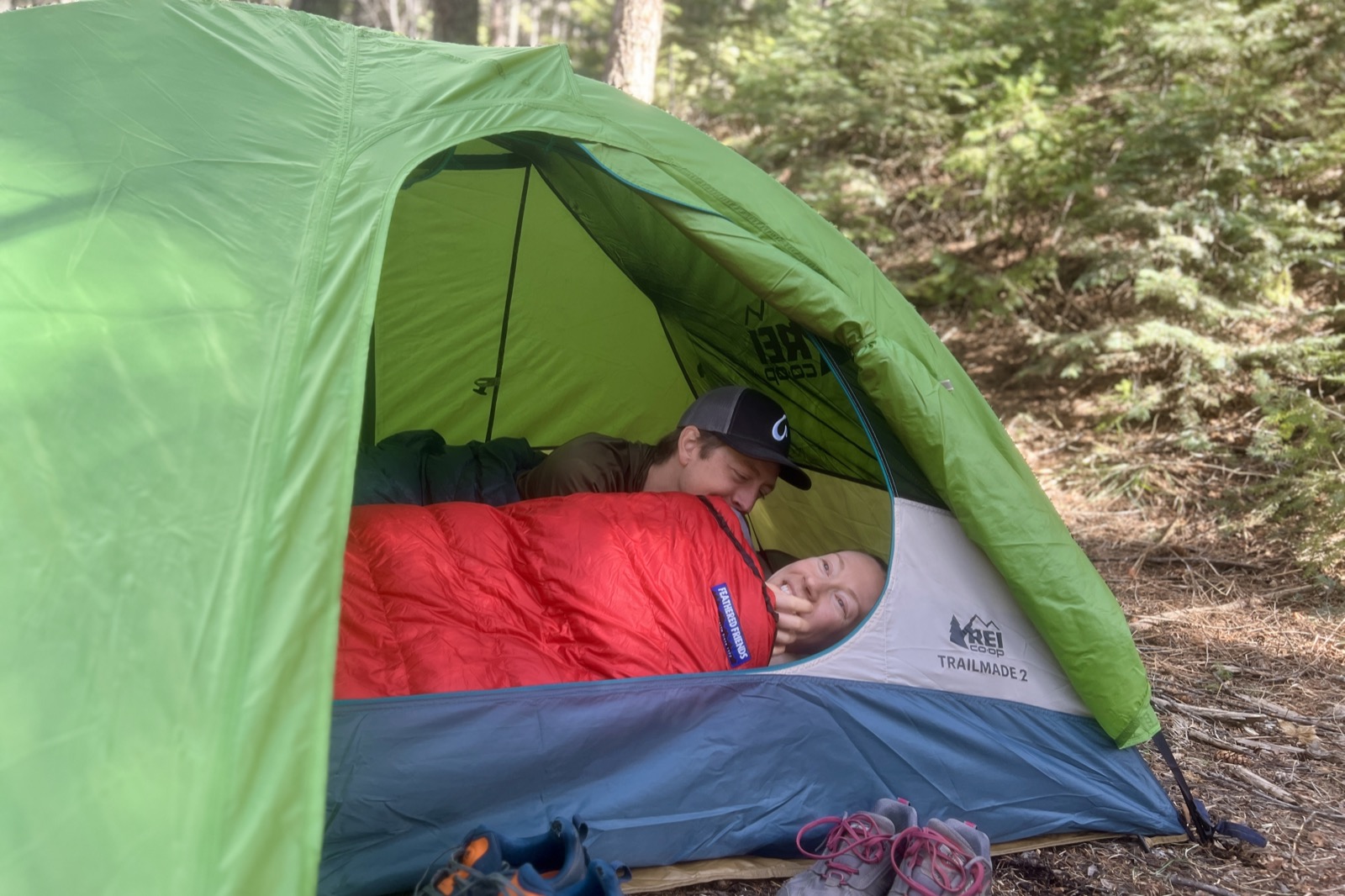
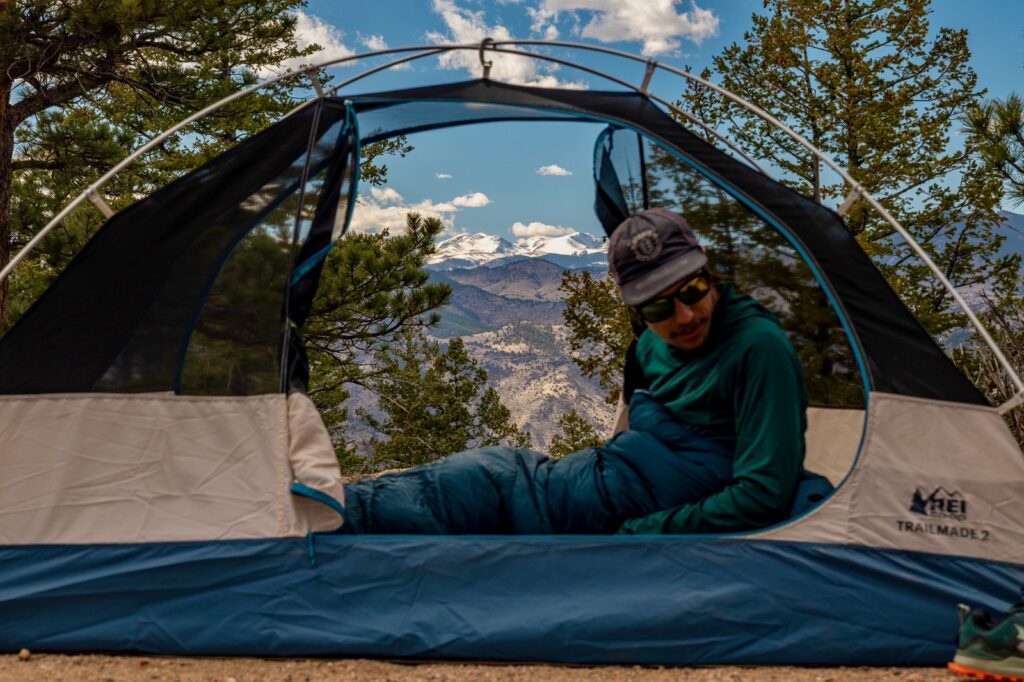
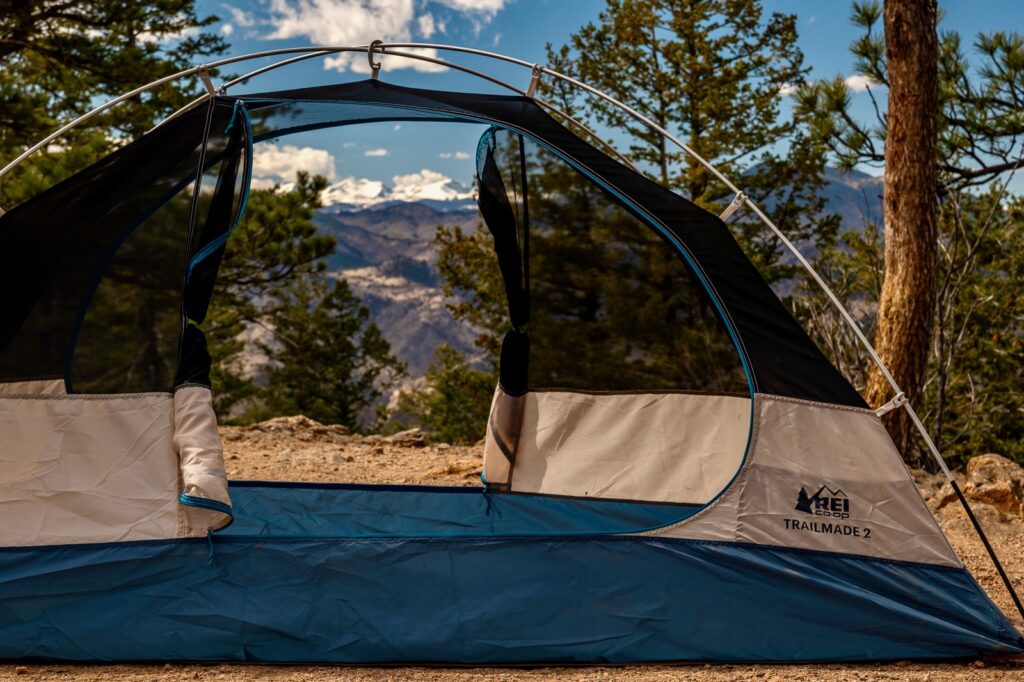
The Trailmade 2 provides enough floor space for two backpackers, and its two large D-shaped doors make entry and exit easy. The 31.8-square-foot floor is generous for the price, so two regular pads fit without the extreme taper found in many ultralight tents. For short trips, the basic layout is comfortable and uncomplicated.
The biggest comfort limitation is headroom. The simple crossed-pole structure lacks a ridge or brow pole to pull the sidewalls outward, so the ceiling narrows quickly as you move away from the center. Two tall hikers will notice that more than a solo user, especially when changing clothes or sitting through bad weather.
Interior storage is also basic compared with premium backpacking tents. The Trailmade has enough pockets for essentials, but not the extensive gear lofts and wall storage that keep small items off the floor in more expensive models. Its strength is straightforward usable space rather than luxury features.
The Trailmade’s comfort is best understood as functional rather than luxurious. The floor is large enough for two standard pads and the dual-door layout avoids the inconvenience of climbing over a partner, but the simple pole architecture creates less shoulder room than more sculpted premium tents. For occasional trips, that compromise is reasonable given the low purchase price.
Comfort Score: 4.4 / 5.0
Weight & Packability
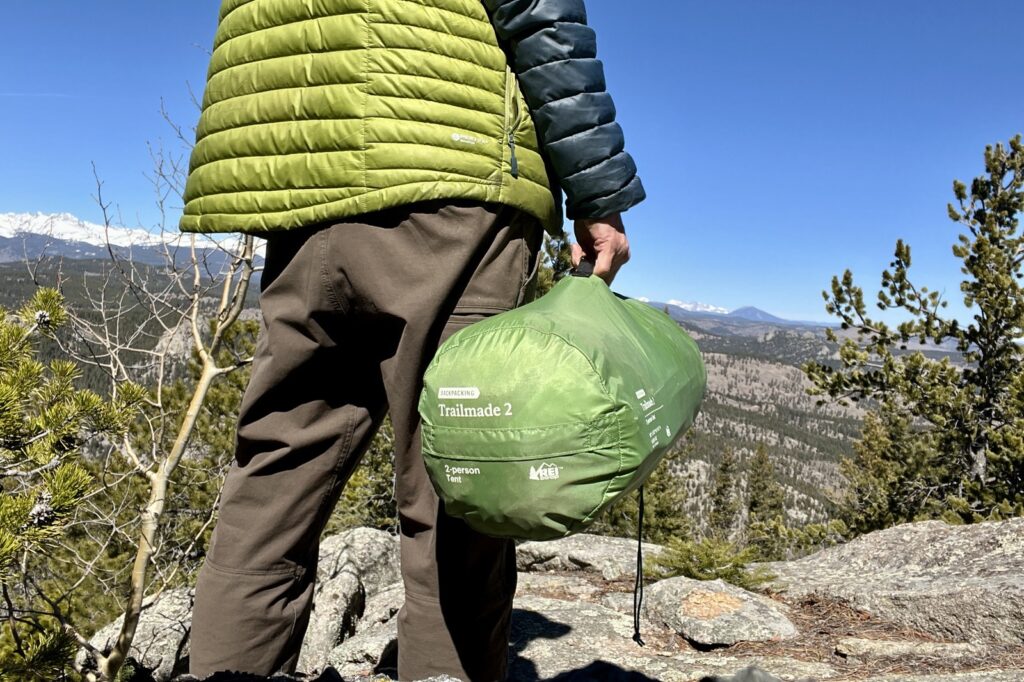
At a CleverHiker-measured 5 pounds, 7 ounces including the footprint, the Trailmade 2 is heavy by modern backpacking standards. Leaving the footprint at home trims some weight, and splitting the body, fly, and poles between two hikers makes short trips much more reasonable. We do not recommend carrying the full package solo for long distances.
The packed size is also substantial, with a long pole bundle and thick fabrics that take up noticeably more room than lightweight alternatives. It fits best in a larger backpack or with the tent components divided between partners. That bulk is one reason we see the Trailmade as a crossover shelter rather than a high-mileage specialist.
The weight buys real benefits: thick materials, low cost, and durability that beginners do not need to baby. Backpackers who only take a few short trips each year may prefer that value over paying hundreds more to save pounds. Frequent long-distance hikers will feel the weight penalty much more strongly.
This is where the Trailmade separates most sharply from the higher-ranked backpacking tents. Its weight and packed size are manageable for short trips, beginners, or partners who can divide components, but they are difficult to justify for high-mileage travel. The included footprint adds useful protection and value, though it also contributes to the substantial packed package.
Weight & Packability Score: 3.6 / 5.0
Weather Resistance
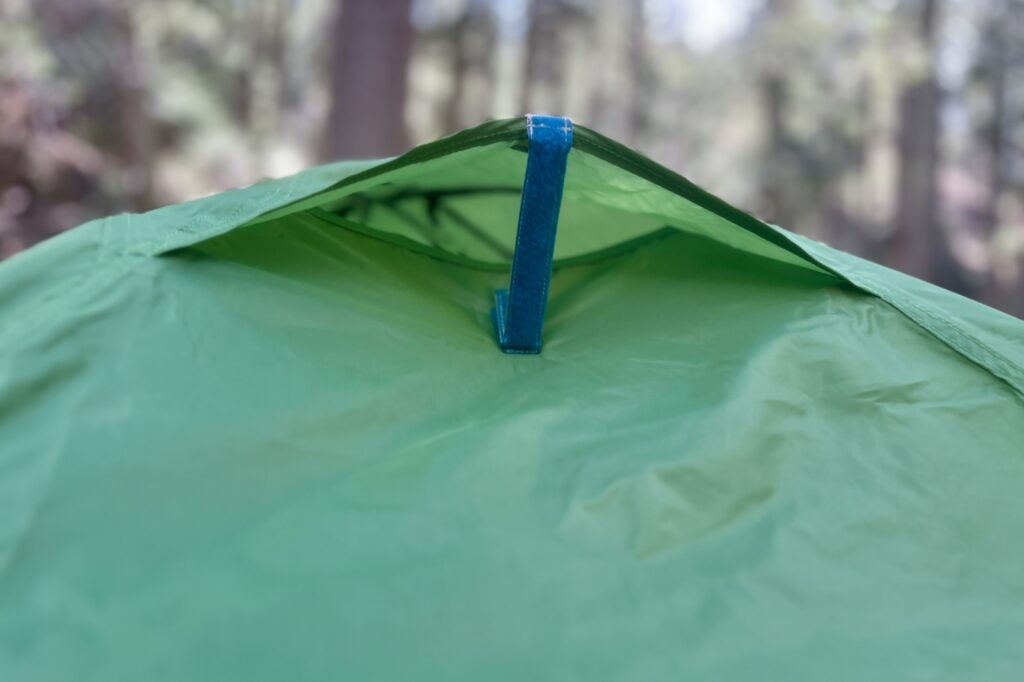
The Trailmade 2 performs far better in bad weather than its budget price suggests. Its coated polyester fly handles sustained rain well, and CleverHiker testing has included very long downpours without water reaching the sleeping area. The substantial bathtub floor and full fly coverage add useful protection from splash and wet ground.
The sturdy fabrics and straightforward dome shape also provide reassuring wind performance when the tent is properly staked and guyed. Because the materials are heavier than those on ultralight tents, the fly does not feel especially fragile when conditions deteriorate. Polyester also absorbs less water than many nylon fabrics.
Ventilation is adequate rather than exceptional. The simpler architecture gives you fewer sophisticated venting controls than premium tents, so humid weather can require opening doors strategically when rain allows. Even so, we have much more confidence in its rain protection than the price might imply.
For typical three-season camps, the Trailmade’s straightforward fly-and-floor system provides the kind of protection most beginners need. Its heavier materials are less delicate than many ultralight fabrics, and the full fly keeps the inner tent covered in sustained rain. The design is not intended to compete with storm-focused shelters, but it offers dependable basic weather protection for its price.
Weather Resistance Score: 4.7 / 5.0
Ease of Setup
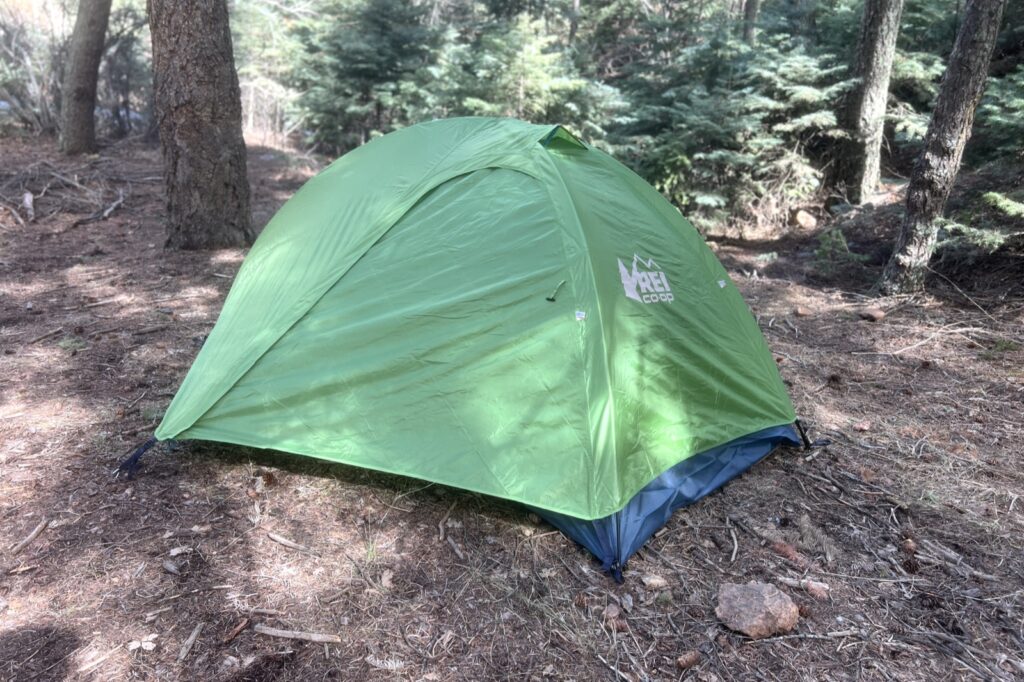
The Trailmade 2 is one of the easiest tents in this guide to pitch. Two identical poles cross in the center of a rectangular floor, the tent body clips directly to them, and the symmetrical layout makes it difficult to orient anything incorrectly. A beginner can understand the system almost immediately.
The freestanding body is especially convenient at awkward campsites because you can lift and reposition the tent after it is assembled. That lets you avoid roots, rocks, or a subtle slope without dismantling the shelter. The fly and vestibules then stake out in a familiar, straightforward way.
There are fewer specialized parts or tensioning tricks than on almost any ultralight shelter. That simplicity is a major reason we recommend the Trailmade to new backpackers. The only real setup penalty is handling a heavier, bulkier package than more minimalist tents.
That simplicity is one of the Trailmade’s biggest advantages for new backpackers. The familiar two-pole crossing pattern is easy to understand visually, and the freestanding body can be repositioned before final staking. There are fewer pitch-specific details to remember than with semi-freestanding or trekking-pole tents, so setup stays predictable even when arriving at camp tired.
That predictability is particularly useful on first trips, when a simple pitch leaves more time to focus on campsite selection and other basic backpacking routines.
Ease of Setup Score: 4.9 / 5.0
Durability
Durability is one of the Trailmade 2’s biggest advantages. Thick 75-denier polyester fabric, robust mesh, sturdy poles, double-stitched seams, burly zippers, and simple hardware are all built to tolerate repeated use. This is a tent that can handle beginner mistakes and rougher campsites better than most ultralight models.
The included footprint adds another layer of protection for the floor when camping on abrasive ground. Because the tent is inexpensive, users are also less likely to feel that every scrape or dirt mark threatens a major investment. That makes it well suited to group trips, loaner use, and mixed car-camping and backpacking duty.
The obvious cost is weight. Much of what makes the Trailmade durable also makes it cumbersome to carry, so the tent is not efficient for high-mileage objectives. For buyers who prioritize lifespan and low purchase price over ounces, however, the construction is an excellent value.
The heavier 75-denier fabrics give the Trailmade a clear durability advantage over many lighter tents in this guide. That makes it well suited to beginners, loaner use, and campsites where abrasion is harder to avoid. The included footprint further reduces floor wear, and the overall construction requires less careful handling than the ultralight shelters that trade material thickness for lower weight.
Durability Score: 4.9 / 5.0
Should You Buy the REI Trailmade 2?
Buy the Trailmade 2 if your budget is tight and you care more about durability, simplicity, and price than carrying a light pack.
Spend more for the Half Dome or a lighter premium tent if you expect to backpack frequently or cover long distances.
What Other Backpacking Tents Should You Consider?
REI Half Dome 2 Plus Review: The Half Dome 2 Plus costs more and is even heavier, but it is dramatically roomier and more comfortable for two people. Its ridge-pole architecture creates more usable headroom and the storage system is much more refined. The Trailmade is the better entry price; the Half Dome is the better budget crossover if comfort matters more.
NEMO Dagger OSMO 2 Review: The Dagger OSMO 2 is a substantially lighter and more polished crossover tent. It adds bigger vestibules, better interior organization, premium weather-resistant fabric, and a more spacious upper canopy. The Trailmade costs a fraction as much, while the Dagger is easier to justify for backpackers who will carry it often.
Big Agnes Copper Spur UL2 Review: The Copper Spur UL2 is the premium upgrade for hikers who want to cut several pounds while gaining headroom, storage, and overall trail efficiency. It remains fully freestanding and just as intuitive to pitch, so the weight savings do not require a more technical setup. The Trailmade is about affordability and durability; the Copper Spur is about performance.
More REI Trailmade 2 Photos
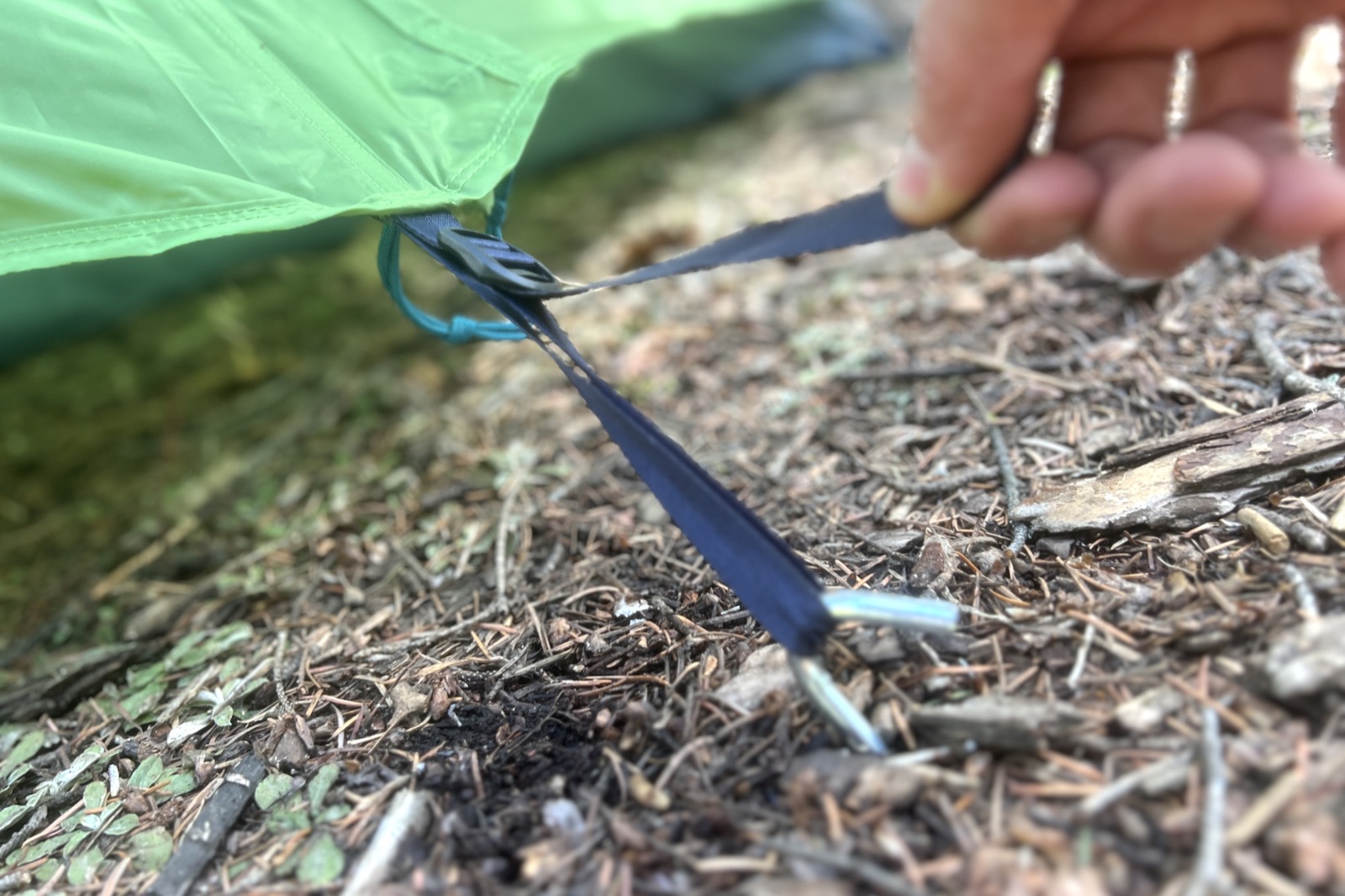
Setting up the REI Trailmade 2 tent. – Photo Credit: Brett Kretzer (CleverHIker.com)
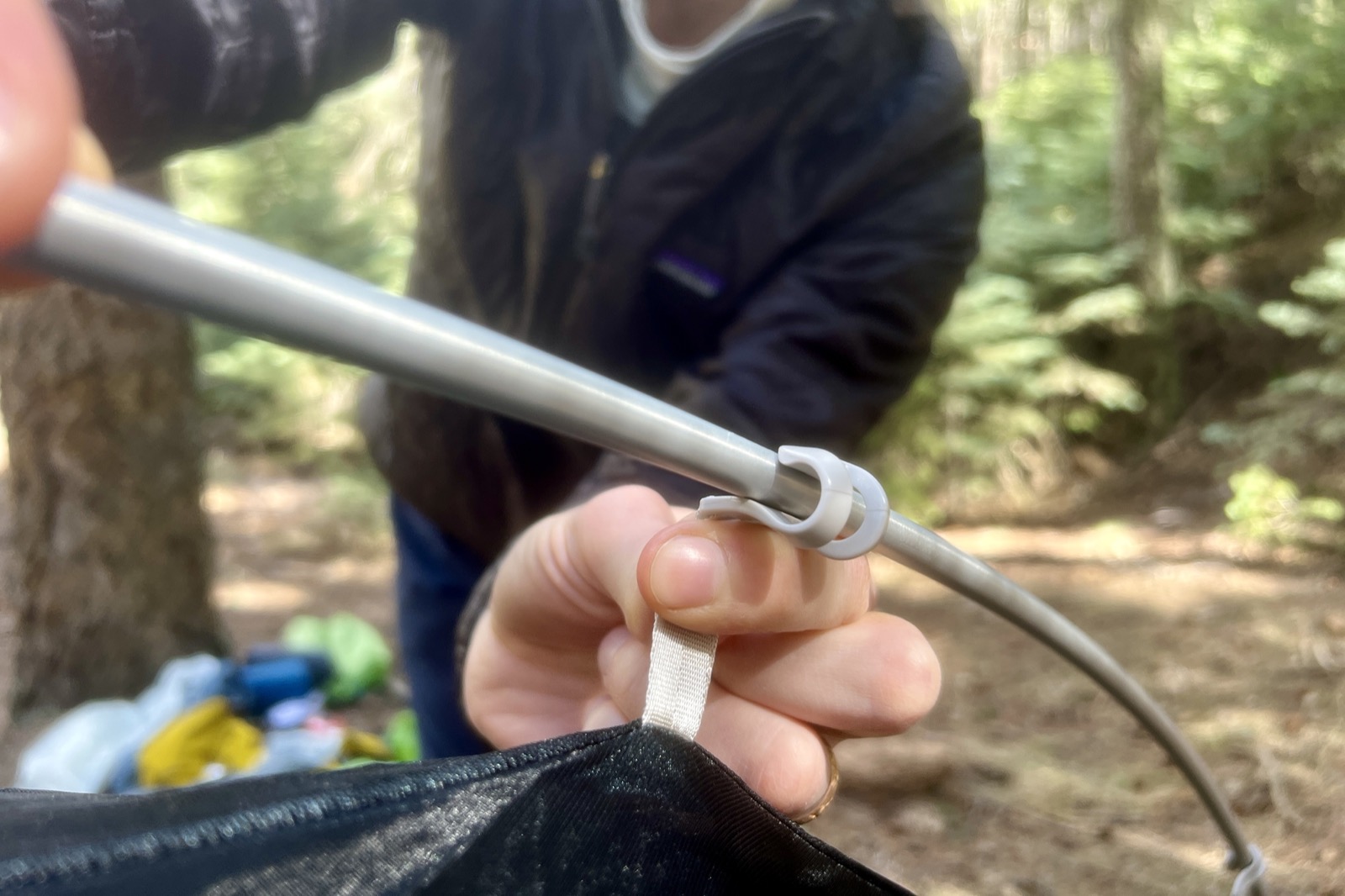
The pole attachments are familiar and intuitive. – Photo Credit: Brett Kretzer (CleverHIker.com)
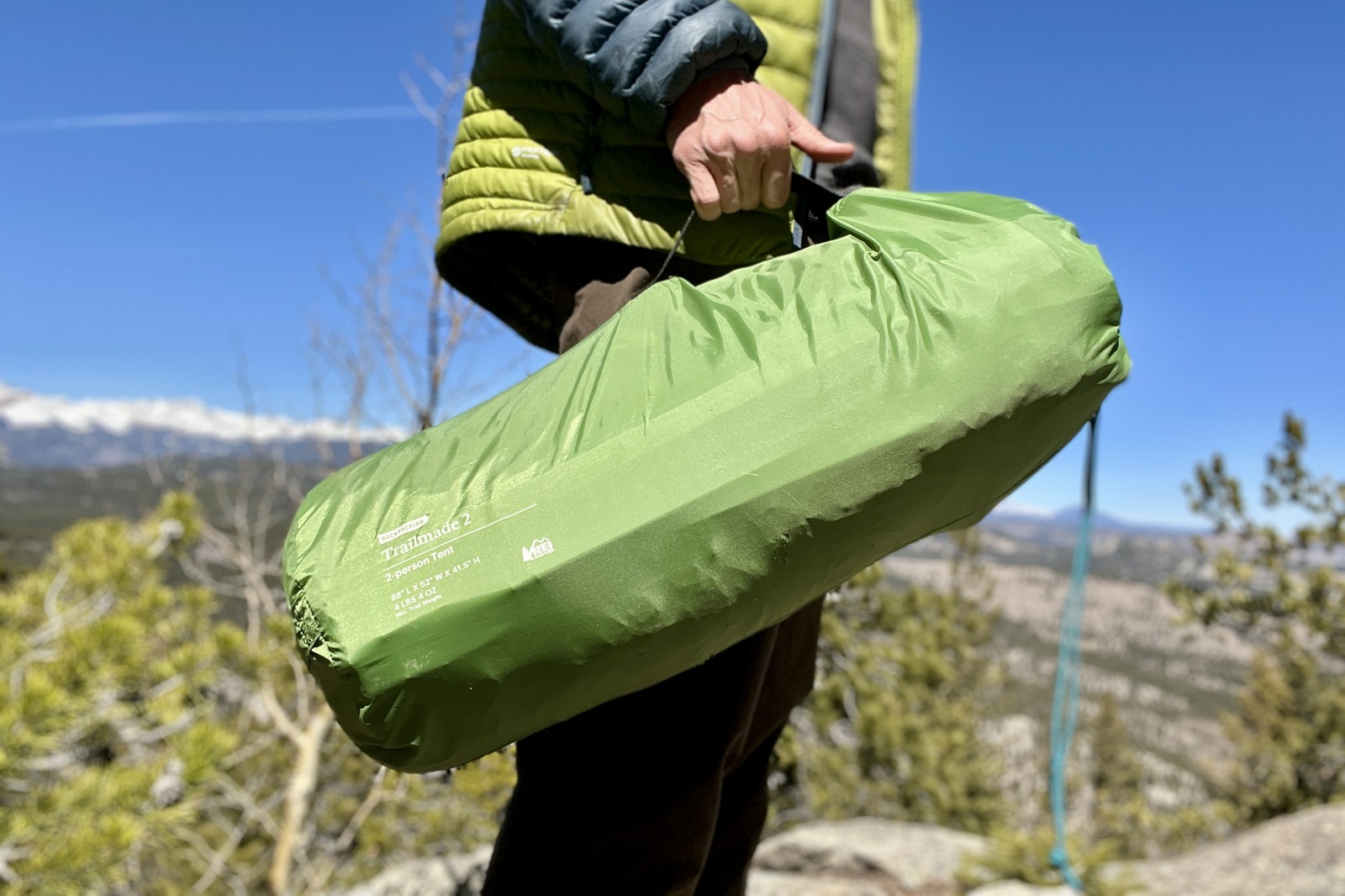
It’s not the lightest or smallest, but it packs away nicely. – Photo Credit: Brett Kretzer (CleverHIker.com)
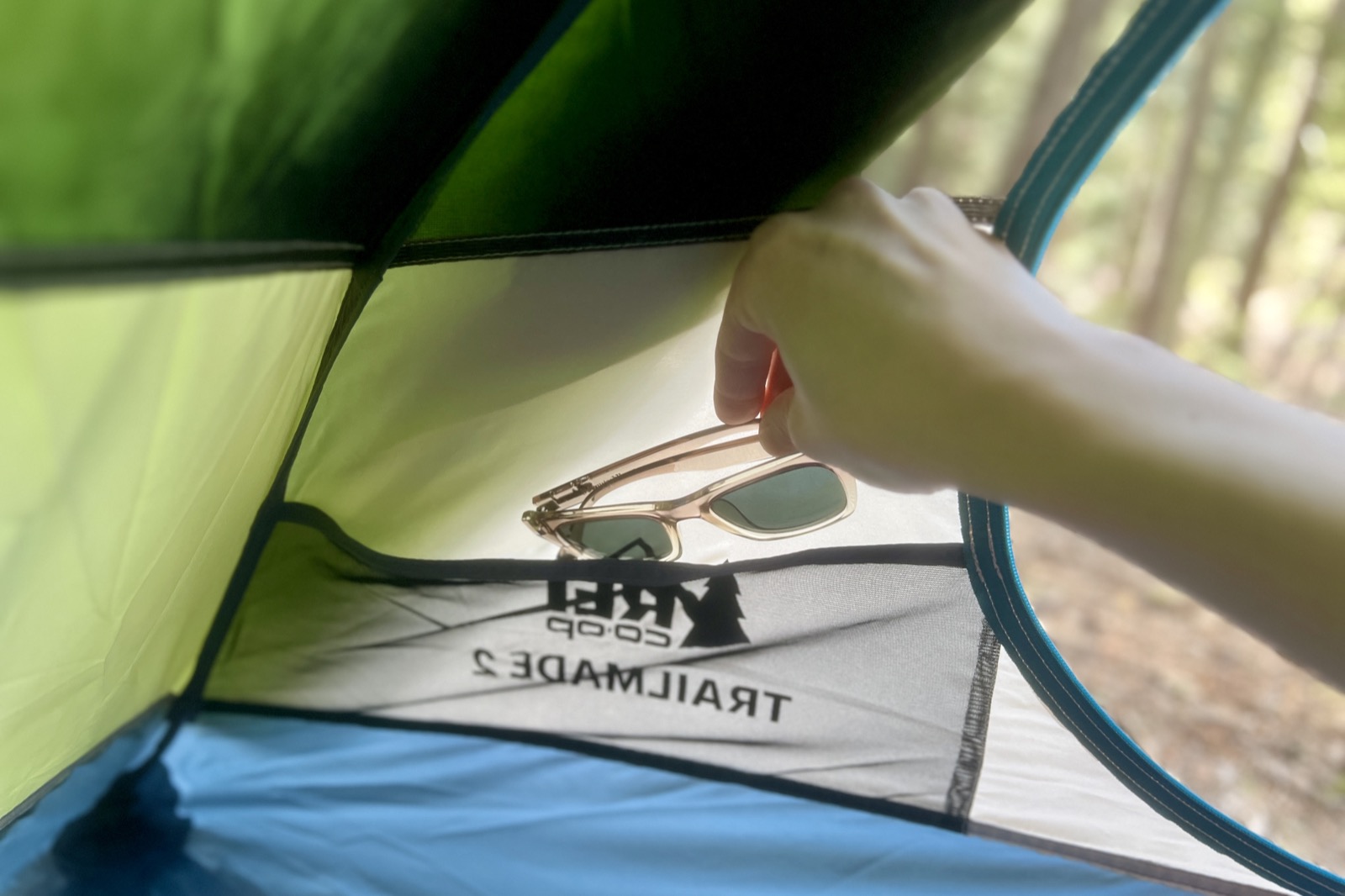
There’s adequate space for stashing small essentials out of the way. – Photo Credit: Brett Kretzer (CleverHIker.com)