We tested camping mattresses across more than 800 nights of desert, mountain, vehicle, and campground use to find better sleep away from home. The best choice depends less on a single thickness number than on how much cushioning you like, how cold the ground gets, whether you share a bed, and how much space you can dedicate to a rolled mattress.
Editor’s Note: This guide was updated on October 12, 2026 for clarity and to confirm pricing for the lineup.
How We Test
Our testers used mattresses on trips in Colorado, New Mexico, Utah, and other camping areas, then compared comfort and operation side by side at home. We assessed pressure-point relief, changes in firmness, valve behavior, inflation and deflation, warmth relative to rated R-value, and how easily each mattress fits into typical car-camping storage. Comfort carries particular weight because the point of a camp mattress is to wake rested, but practical drawbacks can change a recommendation.

#1. Best Camping Mattress Overall

The HEST Foamy is our best overall camping mattress for sleepers who put pressure-relieving comfort first. Its all-foam construction and instant setup impressed us over dozens of nights, including bitterly cold outings. The price of that plushness is a large, heavy roll and fixed firmness; campers who need a smaller or adjustable bed should compare our luxury self-inflating picks.
Quick Picks for Camping Mattresses
Check out this quick list of our favorites if you’re in a hurry, or continue scrolling to see our full list with in-depth reviews.
1. Best Camping Mattress Overall: HEST Foamy ($379 – Wide)
2. Softest Self-Inflating Sleeping Pad: Sea to Summit Comfort Deluxe ($319 – Large)
3. Thickest Luxury Camping Mattress: Big Agnes Captain Comfort Deluxe ($280 – Medium Wide)
4. Second Thickest Luxury Camping Mattress: Therm-a-Rest MondoKing 3D ($290 – XXL)
5. Classic Luxury Camping Mattress: Exped MegaMat ($280 – Long, Extra-Wide)
6. Most Luxurious Camping Mattress for Two: NEMO Roamer Double ($400)
7. Best Custom-Fit Vehicle Mattress: Luno AIR Pro Vehicle Mattress ($350)
8. Best Low-Profile Camping Mattress: Therm-a-Rest LuxuryMap ($250 – XL)
9. Best Mid-Range Camping Mattress: NEMO Flyer Cloud ($190 – Regular Wide)
10. Best Camping Mattress for $100: Sea to Summit Camp Plus ($99 – Regular Mummy)
11. Best Entry-Level Camping Mattress: REI Co-op Campwell ($159 – XL)
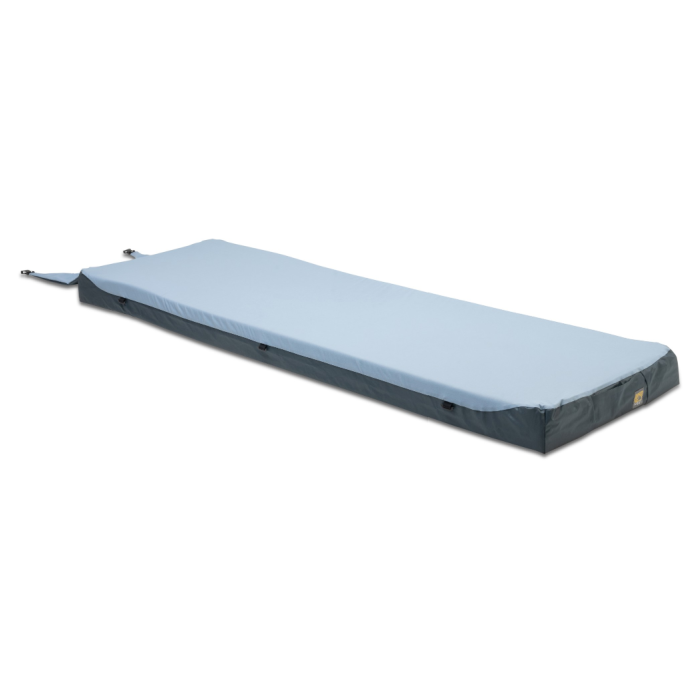
HEST Foamy – Wide
Best Camping Mattress Overall
CleverHiker Rating: 4.7/5.0
Price: $379
Dimensions (LxWxH): 78 x 30 x 4 in.
Weight: 13 lb.
Style: Memory Foam (no inflation)
R-Value: 8.8
Pros
- Exceptional two-layer foam support
- Virtually instant setup
- Outstanding insulation
- Soft sleeping surface
Cons
- Extremely bulky when packed
- Heavy
- Fixed firmness
- Premium price
There is no waiting for the HEST Foamy to inflate: unroll it and sleep on a forgiving, layered foam bed. After more than 60 nights, including frigid Colorado outings, Ian Krammer still favored its pressure-point relief and steady support. For campers who judge a mattress primarily by how rested they feel, its combination of cushioning and R-8.8 insulation earns our top overall recommendation.
That convenience ends at packing time. The Foamy weighs 13 pounds and turns into a substantial 30-by-12-inch roll, making it hard to justify in a small car or cramped gear closet. You also can’t fine-tune the firmness. Compared with the self-inflating Captain Comfort Deluxe or Comfort Deluxe, it trades a more adaptable and transportable setup for exceptional instant comfort.
Choose it for basecamps, repeated car-camping nights, or a semi-permanent guest bed where storage isn’t a concern. If space matters more than mattress-like softness, a compact air-and-foam design will serve you better.
More: HEST Foamy Full Review
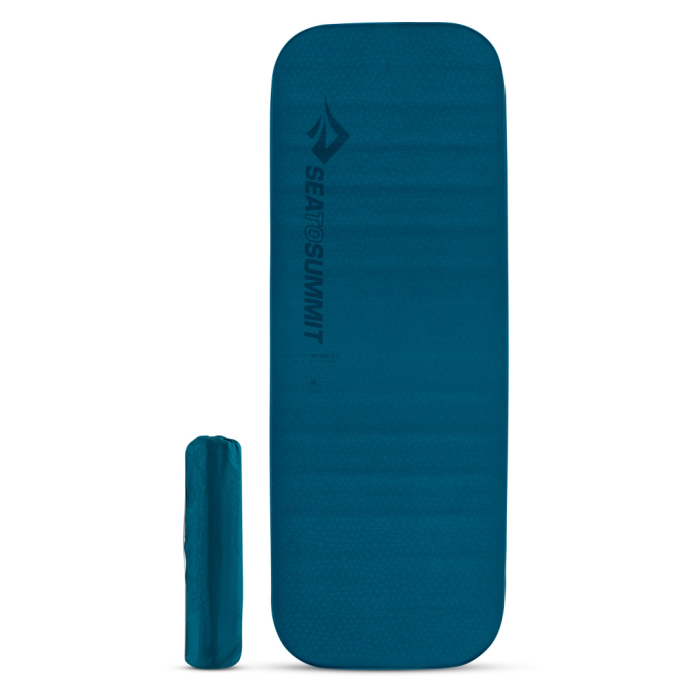
Sea to Summit Comfort Deluxe
Softest Self-Inflating Camping Mattress
CleverHiker Rating: 4.7/5.0
Price: $319
Dimensions (LxWxH): 79 x 29 x 3.9 in.
Weight: 5 lb. 3.3 oz.
Style: Self-inflating
R-Value: 7.7
Pros
- Especially gentle sleeping fabric
- Comfortable air-cell support
- Substantial insulation
- Hybrid stuff sack/pump sack
- Hybrid stuff sack-pump sack
Cons
- Needs manual inflation to top off
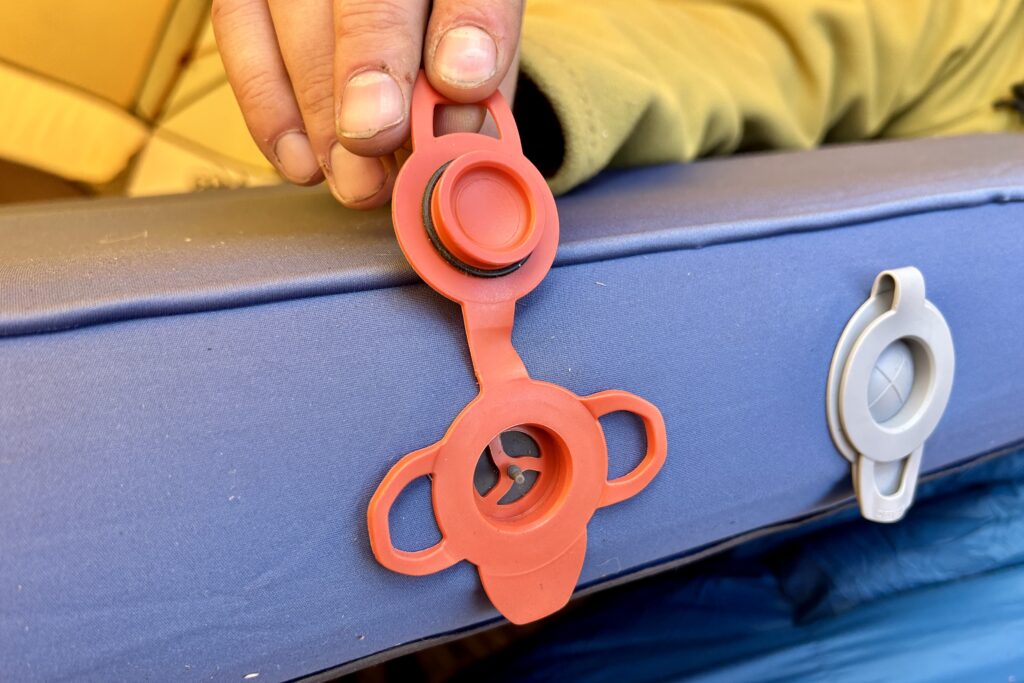
- Occasional valve frustrations
- High cost
Some pads look luxurious on paper but feel slippery against skin and clothing. The Sea to Summit Comfort Deluxe won over our testers with an especially gentle face fabric and cushioned air-and-foam support through camping trips, festivals, and guest-bed use. It’s a compelling alternative to the HEST for anyone who wants softness but also values adjustable firmness.
At nearly four inches thick with R-7.7 insulation, it makes a versatile three-season and cold-weather car-camping bed when combined with appropriate bedding. Our experience with the valve, however, was less convincing: self-inflation didn’t finish the job, and fine-tuning could be fussy. The current package includes a hybrid stuff sack/pump sack, which differs from some of our earlier field-test equipment.
Pick it when tactile comfort tops your list and you’re willing to invest some extra time during setup. Campers who want the deepest cushion should also compare the five-inch Big Agnes Captain Comfort Deluxe.
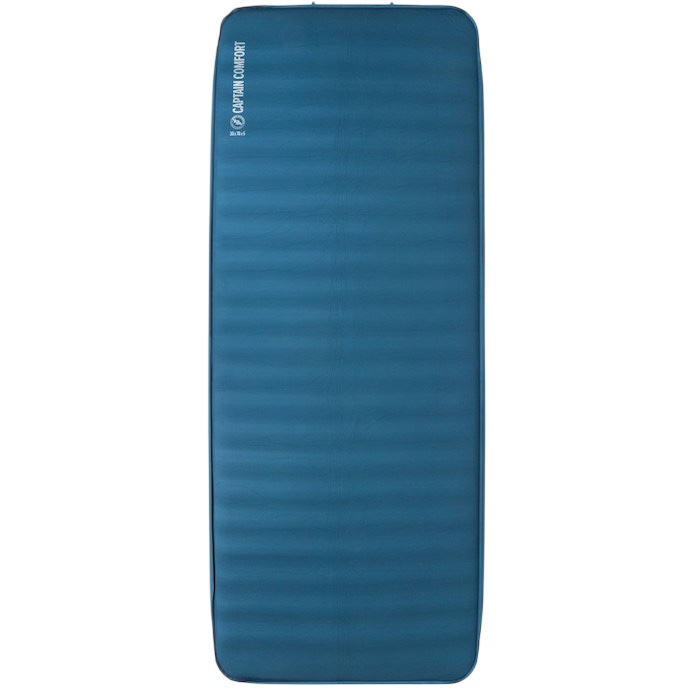
Big Agnes Captain Comfort Deluxe
Thickest Luxury Camping Mattress
CleverHiker Rating: 4.7/5.0
Price: $280
Dimensions (LxWxH): 78 x 30 x 5 in.
Weight: 6 lb. 6 oz.
Style: Self-inflating
R-Value: 8.3+
Pros
- Five-inch sleep surface
- Supportive & soft
- Two inflation valves
- Very high insulation rating
Cons
- Hard to compress completely
- Bulky & heavy
- Pump sack can detach
Five inches of adjustable loft is the Big Agnes Captain Comfort Deluxe‘s defining advantage. During nights near White Sands National Park and side-by-side tests at home, that deep cushion supported several sleeping positions particularly well. It offers a softer landing for shoulders and hips than many of the lower-profile mattresses in this guide.
Two inflation valves help with setup, and the high insulation rating makes the Captain appealing when the ground is cold. The downside shows up in the morning: extracting enough air from all that foam often takes repeated rolling. Our pump sack also occasionally detached, so the process wasn’t always smooth.
It’s the right investment for car campers and side sleepers who want a thick, adjustable bed and can tolerate a bigger packing routine. If fast breakdown matters more than an additional inch or two of cushion, consider the MegaMat or a slimmer alternative.
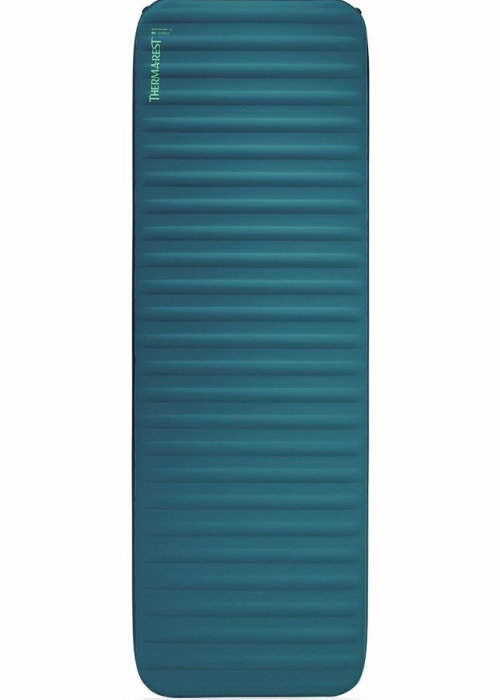
Therm-a-Rest MondoKing 3D XXL
Second Thickest Luxury Camping Mattress
CleverHiker Rating: 4.6/5.0
Price: $290
Dimensions (LxWxH): 80 x 30 x 4.25 in.
Weight: 5 lb. 8 oz.
Style: Self-inflating
R-Value: 7
Pros
- Extra-long XXL dimensions
- Thick supportive comfort
- Soft & quiet surface
- High R-value
Cons
- Pump sack connection slips
- Large packed roll
- Often needs two packing passes
Tall campers don’t need to accept dangling feet to get a soft night’s sleep. The Therm-a-Rest MondoKing 3D XXL stretches to 80 inches while retaining a wide 30-inch surface and more than four inches of loft. After over 20 testing nights, we valued its quiet fabric, forgiving foam, and generous room as much as the dimensions themselves.
R-7 insulation supports use on chilly ground, while firmness remains adjustable by valve. But our pump sack attachment sometimes slipped, and we frequently needed a second compression pass before the large roll fit cleanly in its storage bag. Those quirks are worth considering if you’re moving camp every day.
This is a particularly strong pick for taller sleepers who have struggled with shorter premium pads. The Captain is thicker, but the MondoKing’s additional length will be more important to some buyers than maximum loft.
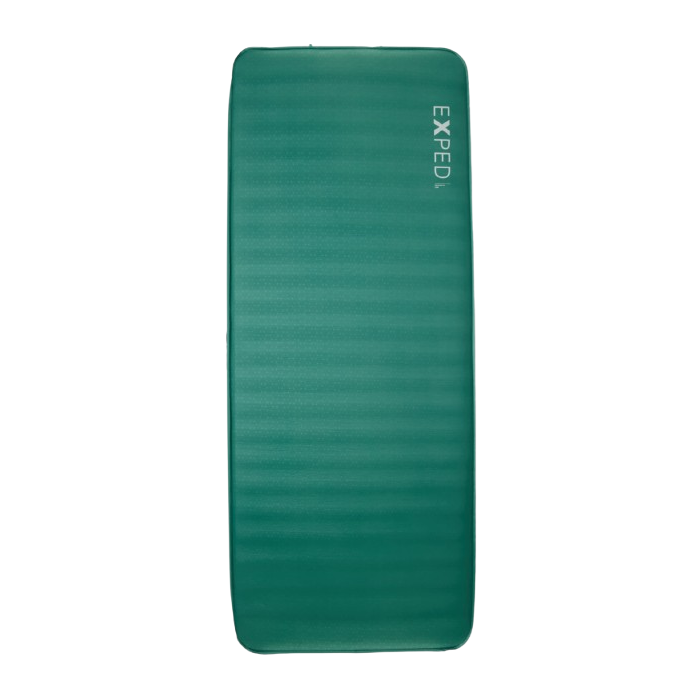
Exped MegaMat
Classic Luxury Camping Mattress
CleverHiker Rating: 4.6/5.0
Price: $280
Dimensions (LxWxH): 77.6 x 30.3 x 4 in.
Weight: 5 lb. 11.7 oz.
Style: Self-Inflating
R-Value: 8.1
Pros
- Spacious rectangular sleep area
- Comfortable four-inch cushion
- Very strong insulation
- Well-executed valves
Cons
- Long packed bundle
- Costs considerably more than budget mattresses
- Some newer beds offer softer cushioning
The Exped MegaMat LXW remains a benchmark for adjustable car-camping comfort, even as newer mattresses have surpassed it in particular side-by-side tests. Its squared-off shape makes the whole width useful, the foam is consistently supportive, and the valves are easy to operate. Our team has relied on the design for years, including extensive use as a guest bed.
Its R-8.1 insulation and four-inch profile offer a balanced mix of warmth and support without the elaborate feel of some deeper mattresses. You pay for that versatility, and a long rolled package still occupies considerable vehicle space. For those prioritizing softness above all else, the HEST Foamy and Comfort Deluxe have the edge in our testing.
A proven option for repeat campers who want dependable comfort without unusual setup steps, it earns its place even below higher-ranked luxury beds. Budget shoppers, though, may be content with the spacious but thinner REI Campwell XL.
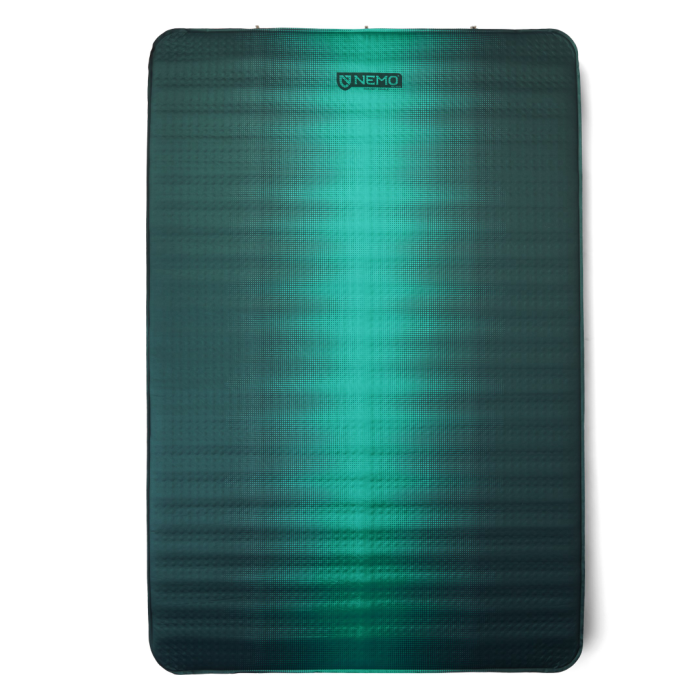
NEMO Roamer Double
Most Luxurious Camping Mattress for Two
CleverHiker Rating: 4.7/5.0
Price: $400
Dimensions (LxWxH): 78 x 52 x 4 in.
Weight: 6 lb. 9 oz.
Style: Self-inflating
R-Value: 7
Pros
- Continuous two-person sleeping area
- Comfortable four-inch support
- Limited partner movement transfer
- Strong insulation
Cons
- High price
- Large packed package
- Slow to fully deflate
The NEMO Roamer Double‘s uninterrupted cushion can make a substantial difference when two people share a campsite. Over more than 30 nights with Roamer versions, our team found its supportive four-inch construction comfortable for couples and campers with a dog; in a direct comparison, we gave it a slight comfort advantage over the Exped MegaMat Duo.
The Double’s manufacturer-listed dimensions are 78 by 40 inches, so shoppers seeking an especially wide family-style mattress should check the separate Double Wide rather than assuming the two sizes are interchangeable. R-7 insulation increases its reach into colder outings, but packing a broad foam-and-air bed takes time and the $400 price is substantial.
Choose the Roamer Double to avoid the gap between two singles and minimize the movement that disturbs a partner. Separate pads are smarter if each sleeper wants different firmness or if carrying one large roll is impractical.
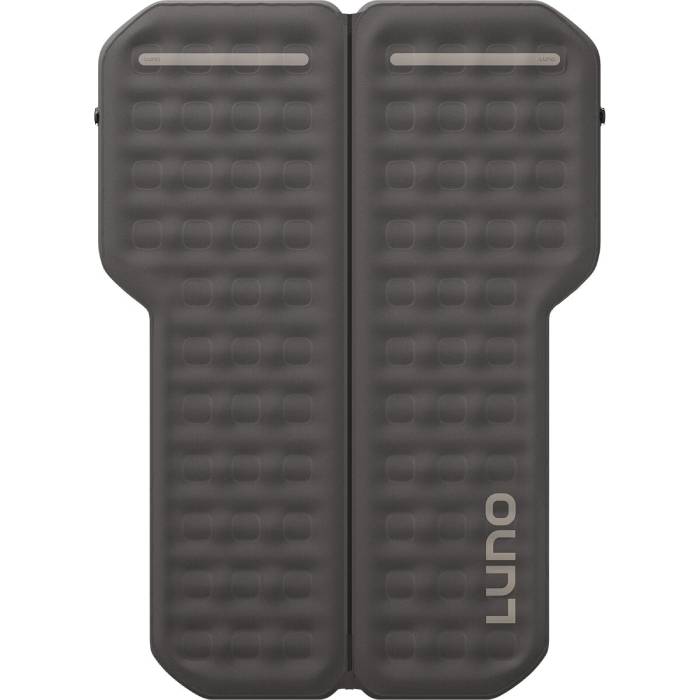
Luno AIR Pro Vehicle Mattress
Best Custom-Fit Vehicle Mattress
CleverHiker Rating: 4.4/5.0
Price: $350
Dimensions (LxWxH): Varies by vehicle
Weight: 13 lb.
Style: Vehicle Mattress
R-Value: 1.5
Pros
- Vehicle-specific fit for compatible models
- Quick setup with included 12V electric pump
- Independent adjustment of the two sides
- Durable, pet-friendly surface
Cons
- Poor insulation in freezing conditions
- Firmer feel than thick foam-core mattresses
- Requires a compatible vehicle
- Inflated mattress consumes substantial vehicle storage
The original Luno AIR allowed us to turn compatible vehicles into enclosed sleeping spaces without unfolding a tent. During more than a year of Southwest road trips, Jory Brass found the included 12V pump and vehicle-shaped design especially useful for arrivals after dark. Two independently adjustable sides made it easier to accommodate different sleepers.
Unlike thick foam-filled campground mattresses, this all-air design felt firmer and wasn’t suitable on its own for freezing nights. Its original R-1.5 rating is the critical limitation; the inflated bed also displaced luggage in the cargo area. Vehicle compatibility matters as much as comfort here, so don’t purchase without checking the fit.
Our testing and the figures above describe the original Luno AIR, while the current shopping option is the newer AIR Pro; their specifications should not be assumed to match. For temperate-weather road trips the original format was liberating, but anyone planning cold-weather vehicle camping should prioritize insulation first.
More: Luno AIR Full Review
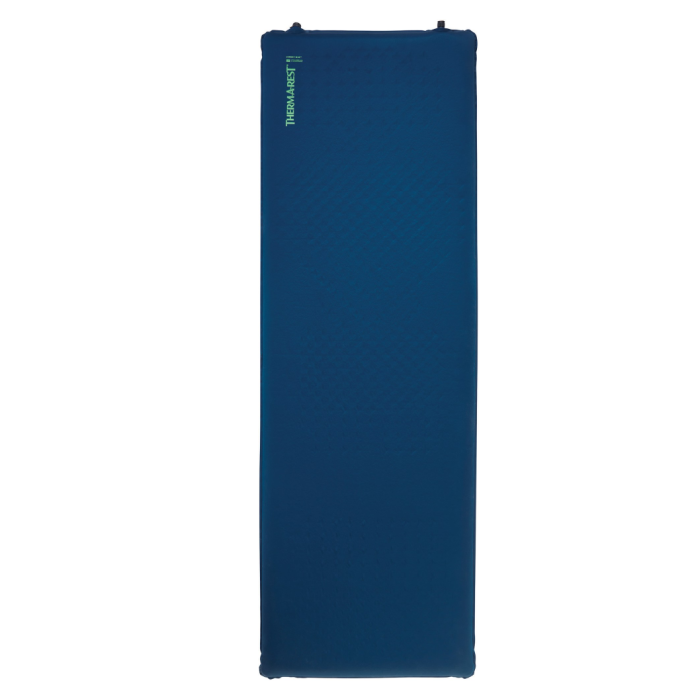
Therm-A-Rest LuxuryMap XL
Best Low-Profile Camping Mattress
CleverHiker Rating: 4.4/5.0
Price: $250
Dimensions (LxWxH): 77 x 30 x 3 in.
Weight: 5 lb. 2 oz.
Style: Self-inflating
R-Value: 6
Pros
- Supportive pressure distribution
- Wide XL floor
- Useful insulation
- Straightforward operation
Cons
- Tapered edges reduce usable support
- Surface can be noisy
- Bulky when rolled
- Pump not included
Not every camper prefers a deep, pillowy surface. The Therm-a-Rest LuxuryMap XL offers a flatter, supportive three-inch profile that Ian Krammer evaluated over more than 30 nights. Its mapped foam felt especially well suited to people who value stability over maximum sinking-in softness.
The wide XL footprint is appealing, though the tapered edges reduce usable support near the perimeter. A big deflation valve makes packing relatively straightforward, but the surface can be noisy and no pump is included. Even at three inches thick, it rolls into a sizable bundle, so low profile doesn’t equal small packed size.
Back and stomach sleepers who prefer firm support may find it a better match than higher-ranked plush mattresses. Side sleepers pressing near the edges should look at the MondoKing or another thicker, squarer option.
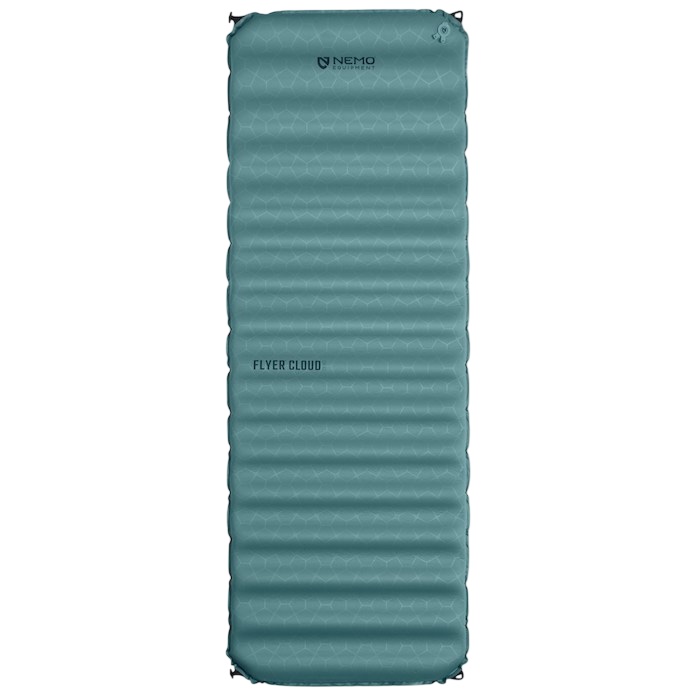
NEMO Flyer Cloud
Best Mid-Range Camping Mattress
CleverHiker Rating: 4.3/5.0
Price: $190
Dimensions (LxWxH): 72 x 25 x 3 in.
Weight: 2 lb. 9 oz.
Style: Self-inflating
R-Value: 5.1
Pros
- Comparatively light and packable
- Rippled texture
- Included stuff/pump sack is also a dry bag
- Insulated for four-season camping
- Eco-friendly (bluesign-approved)
Cons
- The texture is not for everybody
- Lower loft at 3 inches
The NEMO Flyer Cloud closes much of the gap between compact sleeping pads and bulky campground beds. Our tester carried it to campsites in New Mexico’s Gila Wilderness and appreciated a 12-by-8-inch packed bundle, multifunction sack, and R-5.1 insulation. Those advantages make it realistic for campers managing smaller trunks and gear closets.
Comfort is less universally appealing. The distinctive patterned surface felt fine to some testers but uneven to others, and its three-inch profile can’t replicate the flat luxury of larger foam mattresses. At $190 it also costs considerably more than the Camp Plus, which is a tough comparison if you only want a basic compact pad.
Choose it when easier storage and reasonable warmth outweigh plushness. If you’re sensitive to surface contours, try it before committing or budget for a smoother four-inch model.
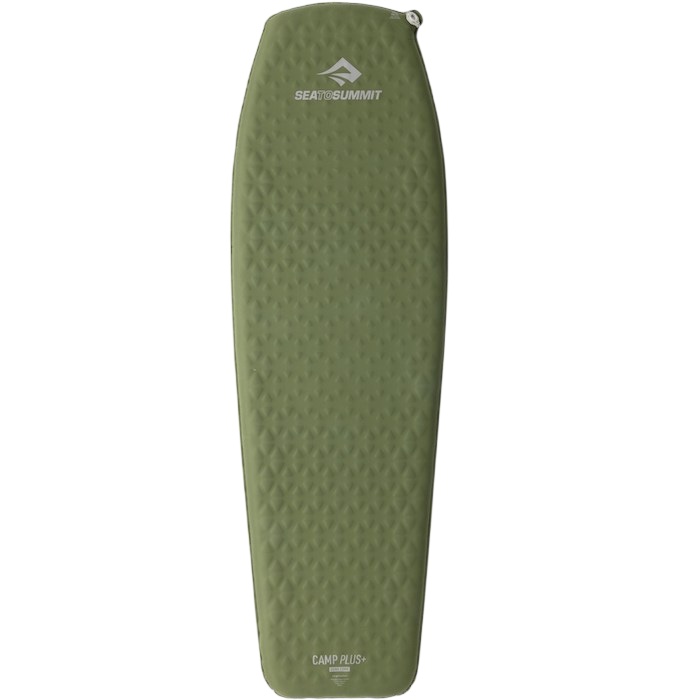
Sea to Summit Camp Plus
Best Budget Camping Mattress
CleverHiker Rating: 4.2/5.0
Price: $99
Dimensions (LxWxH): 72 x 22 x 2.8 in.
Weight: 2 lb. 5 oz.
Style: Self-inflating
R-Value: 5.3
Pros
- Excellent value
- Very compact packed shape
- Reasonable 2.8-inch cushioning
- Self-inflating
- Useful insulation
Cons
- Narrow mummy profile
- Less cushioned than luxury beds
- Not ideal for sprawling sleepers
A $99 mattress doesn’t need to compete on luxury to make sense. The Sea to Summit Camp Plus provides 2.8 inches of support and R-5.3 insulation in the smallest package of the reviewed field. Our field testing in the Gila Wilderness found it a worthwhile step up from thin budget pads, especially when space and purchase price were tight.
Its regular mummy cut is only 22 inches wide and leaves little room for tossing and turning. It also isn’t a replacement for a four- or five-inch car-camping bed on long trips. The two biggest reasons to pay more are room to move and cushion under hips and shoulders.
For occasional car camping and compact setups, the Camp Plus may be a smarter buy than a much higher-ranked premium pad. Campers who can spare more trunk room should weigh its limited width against the REI Campwell XL‘s generous footprint.

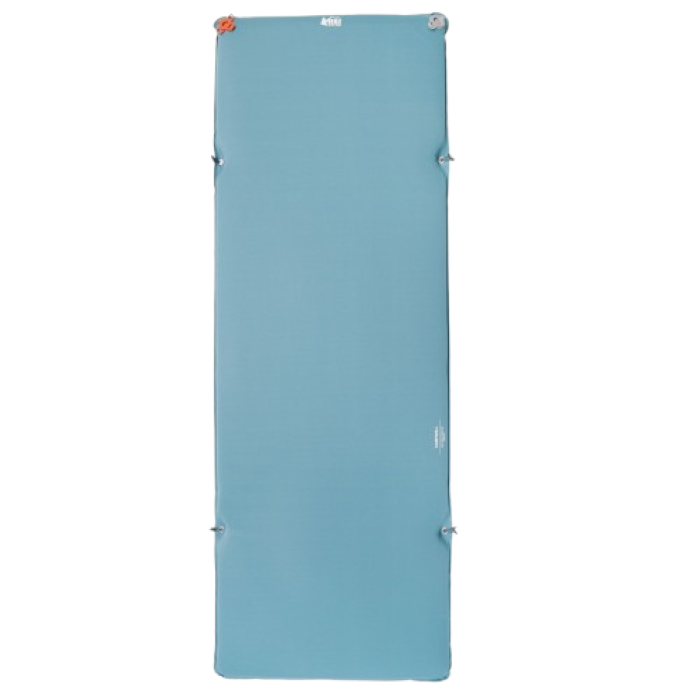
REI Campwell XL
Best Entry-Level Camping Mattress
CleverHiker Rating: 4.2/5.0
Price: $140
Dimensions (LxWxH): 78 x 30 x 2.5 in.
Weight: 4 lb. 8 oz.
Style: Self-inflating
R-Value: 7
Pros
- Generous XL sleeping floor
- Insulated for cold-ground camping
- Substantially less expensive than luxury models
- Simple self-inflating design
Cons
- Modest 2.5-inch cushioning
- Valves can pop open during the night
- No included pump sack
- Our original test pad developed a seam puncture
A wide sleeping area and meaningful cold-ground insulation don’t have to cost luxury-mattress money. At $159, the REI Campwell XL provides a 78-by-30-inch footprint and R-7 rating, giving beginners more shoulder room than the narrower Camp Plus. It has real appeal for occasional campers who don’t require a pillow-top feel.
That width comes with only 2.5 inches of cushion. During testing, the valve caps sometimes popped open and our first sample developed a small side-seam puncture—candid durability and usability concerns to weigh against the savings. The Campwell also rolls much larger than the Camp Plus and doesn’t come with a pump sack.
Buy it for affordable width and warmth, not because it feels like a premium guest bed. If you’re regularly uncomfortable on thin pads, saving for the MegaMat or another four-inch model is your best long-term bet.
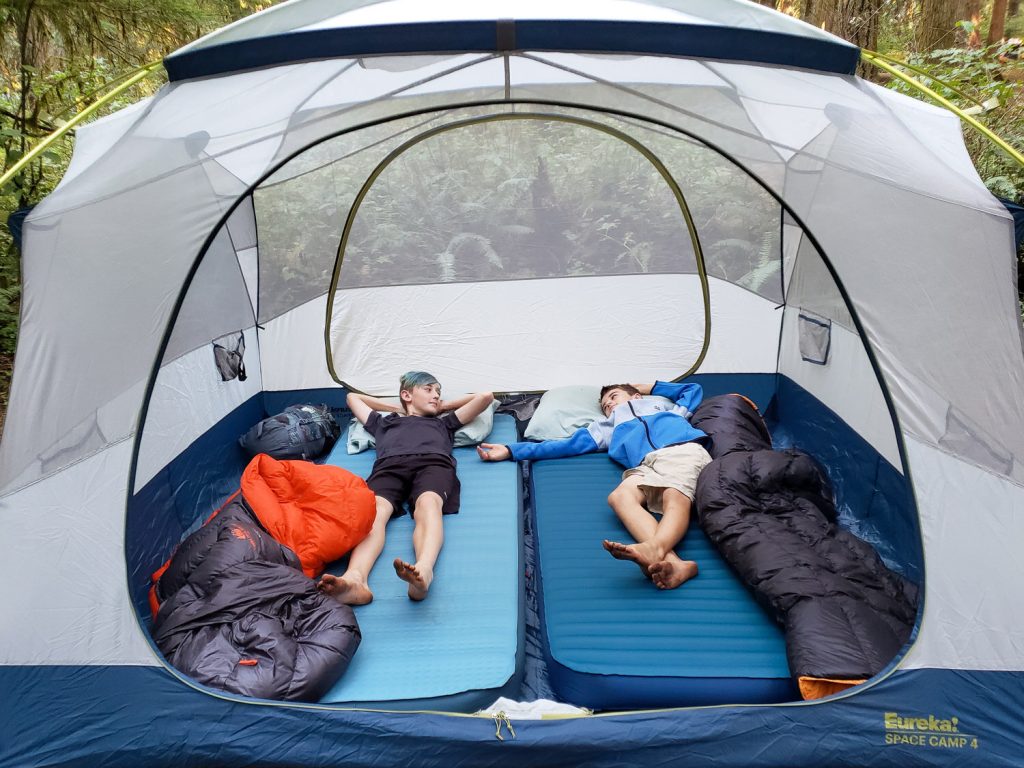
Product Comparison Table
| oSort | Product | CleverHiker Rating | Price | Dimensions (LxWxH) | Weight | Style | R-Value | Comfort | Ease of Use | Warmth | Packed Size | 0 |
HEST Foamy – Wide View at REI View at Amazon 
|
4.7/5.0 | $379 | 78 x 30 x 4 in. | 13 lb. | Memory Foam (no inflation) | 8.8 | 4.9 | 4.9 | 5.0 | 3.0 | 1 |
Sea to Summit Comfort Deluxe View at REI View at Amazon
|
4.7/5.0 | $319 | 79 x 29 x 3.9 in. | 5 lb. 3.3 oz. | Self-inflating | 7.7 | 4.7 | 4.4 | 5.0 | 3.8 | 2 |
Big Agnes Captain Comfort Deluxe View at REI View at Amazon |
4.7/5.0 | $280 | 78 x 30 x 5 in. | 6 lb. 6 oz. | Self-inflating | 8.3+ | 4.8 | 4.5 | 5.0 | 4.0 | 3 |
Therm-a-Rest MondoKing 3D XXL View at REI View at Amazon |
4.6/5.0 | $290 | 80 x 30 x 4.25 in. | 5 lb. 8 oz. | Self-inflating | 7 | 4.7 | 4.7 | 5.0 | 3.3 | 4 |
Exped MegaMat View at REI View at Amazon |
4.6/5.0 | $280 | 77.6 x 30.3 x 4 in. | 5 lb. 11.7 oz. | Self-Inflating | 8.1 | 4.6 | 4.8 | 5.0 | 3.5 | 5 |
NEMO Roamer Double View at REI |
4.7/5.0 | $400 | 78 x 52 x 4 in. | 6 lb. 9 oz. | Self-inflating | 7 | 4.7 | 4.6 | 5.0 | 4.0 | 6 |
Luno AIR Pro Vehicle Mattress View at Luno View at Backcountry |
4.4/5.0 | $350 | Varies by vehicle | 13 lb. | Vehicle Mattress | 1.5 | 4.5 | 4.5 | 3.5 | 4.0 | 7 |
Therm-A-Rest LuxuryMap XL View at REI View at Amazon |
4.4/5.0 | $250 | 77 x 30 x 3 in. | 5 lb. 2 oz. | Self-inflating | 6 | 4.4 | 4.5 | 5.0 | 3.5 | 8 |
NEMO Flyer Cloud View at REI View at Amazon |
4.3/5.0 | $190 | 72 x 25 x 3 in. | 2 lb. 9 oz. | Self-inflating | 5.1 | 4.2 | 4.5 | 4.5 | 4.5 | 9 |
Sea to Summit Camp Plus View at REI View at Amazon 
|
4.2/5.0 | $99 | 72 x 22 x 2.8 in. | 2 lb. 5 oz. | Self-inflating | 5.3 | 4.0 | 4.5 | 4.5 | 4.6 | 10 |
REI Campwell XL View at REI |
4.2/5.0 | $140 | 78 x 30 x 2.5 in. | 4 lb. 8 oz. | Self-inflating | 7 | 4.0 | 4.7 | 5.0 | 4.0 |
|---|

Analysis & Results
Which camping mattress is the best value?
The $99 Camp Plus wins on initial cost and compact storage, but its narrow mummy shape limits comfort for sleepers who need to spread out. The $159 Campwell XL provides substantially more width and R-7 insulation at the expense of bulk and cushioning depth. These two budget options answer different questions: minimum price and packed volume versus affordable space and warmth.
In the luxury group, the MegaMat and Captain Comfort Deluxe share a $280 price yet serve different priorities: dependable four-inch support and straightforward valves versus an extra inch of cushioning with more involved pack-up. The HEST costs more and stores worse, but its unusually plush, instant-ready foam can justify the premium when space is abundant. High rank doesn’t automatically mean best value for every camper.
Which Camping mattresses are the most comfortable?
Foam-rich mattresses dominate our comfort comparisons, but not in identical ways. The HEST feels the most like a portable bed and holds its cushioning without an air chamber; the Sea to Summit Comfort Deluxe has the gentlest face fabric among the self-inflating choices. Big Agnes emphasizes depth, whereas the MondoKing adds length that makes its less-than-maximum loft an excellent trade for taller bodies.
The MegaMat offers familiar, stable support rather than the absolute softest feel, and the Roamer Double removes the middle gap for partners. The LuxuryMap’s mapped foam makes a different case for firmer, lower-profile support. At the compact end, the Flyer Cloud’s textured surface divided testers; neither it nor the narrow Camp Plus should be mistaken for a luxury bed.
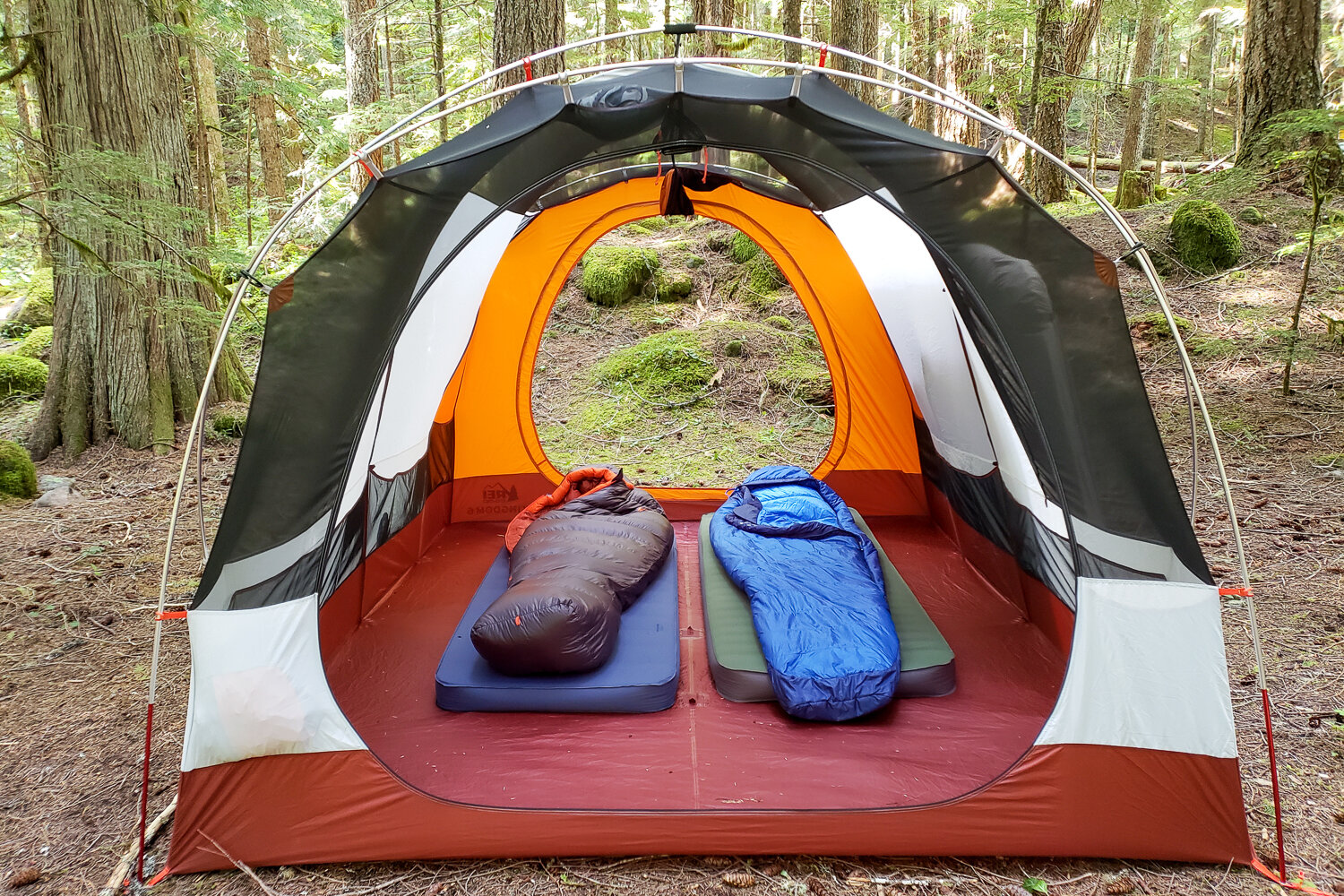
Which camping mattresses are easiest to use?
The HEST is almost effortless at arrival: there is no valve or pump. That same foam becomes the hardest volume to store later. The MegaMat’s straightforward valves feel dependable through repeated use, while the Captain Comfort Deluxe and MondoKing can require extra rolling and careful pump-sack connections.
The vehicle-specific Luno setup was fast with its included 12V pump, provided the vehicle fit and outlet worked for the trip. The Sea to Summit Comfort Deluxe needed manual finishing inflation and occasionally fiddly valve adjustments. For frequent campsite moves, the Flyer Cloud and Camp Plus are much easier to pack into crowded gear loads than the wide luxury models.
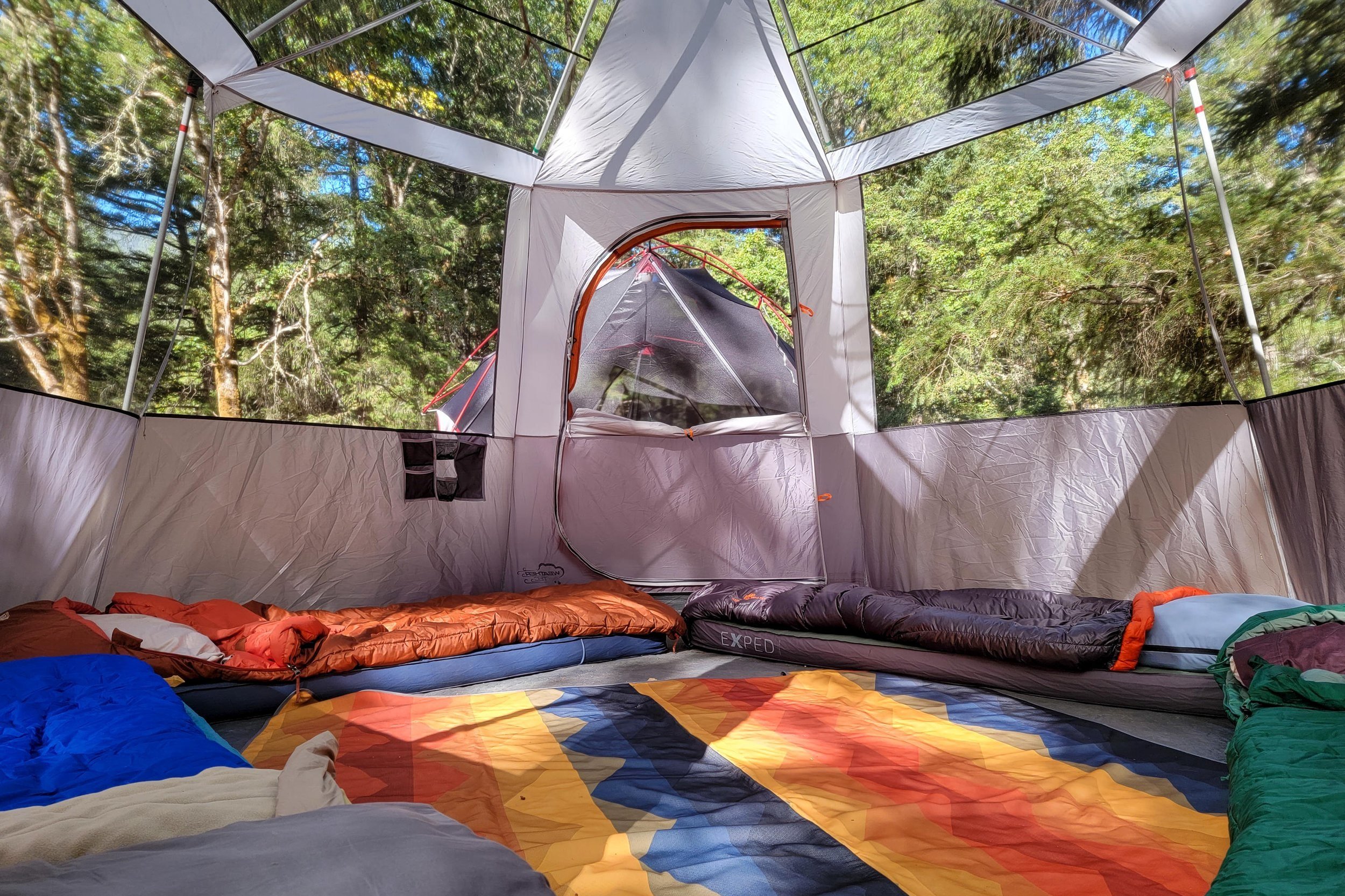
Which camping mattresses Provide the Most insulation?
The highest R-values in this field belong to the HEST (8.8), Captain Comfort Deluxe (8.3+), and MegaMat (8.1), making them compelling for cold ground when paired with an appropriate sleeping bag and clothing. The Sea to Summit Comfort Deluxe (7.7), MondoKing, Roamer Double, and Campwell XL (all R-7) also provide substantial insulation; the Campwell is especially notable at its lower price.
The LuxuryMap (R-6), Camp Plus (R-5.3), and Flyer Cloud (R-5.1) cover many cool-weather needs at lower height or volume. The original Luno AIR’s R-1.5 rating is a major departure, and our cold-night testing showed why it should not be treated as an insulated winter car bed.
Which Mattresses Pack Down the Smallest?
The contrast in storage demand is stark. The Camp Plus rolls to roughly 11 by 6.3 inches and the Flyer Cloud to about 12 by 8 inches, fitting into gear arrangements that cannot reasonably accommodate a 30-inch-long luxury mattress. Neither gives the same smooth, thick bed surface as the bulky leaders.
The Captain’s 17-by-11-inch package is relatively short for a deep pad but still takes work to compress. The HEST’s 30-by-12-inch foam roll is the clearest storage penalty, with the MegaMat, MondoKing, Campwell XL, and LuxuryMap also demanding real trunk space. For two sleepers, one Roamer roll may simplify setup even if it isn’t easier to stow than separate singles.

How to Choose a Camping Mattress
How Much Cushioning Do I need?
Side sleepers and anyone sensitive to pressure points often benefit from thicker, forgiving construction, but thickness alone doesn’t guarantee a preferred feel. Evaluate how the surface supports hips and shoulders and whether the firmness is adjustable. A flatter, supportive pad can feel better than a plush one to back or stomach sleepers.
What R-value should I look for?
R-value describes resistance to heat loss through the mattress. Higher numbers matter more as the ground gets colder, but they don’t replace an appropriate sleeping bag, dry clothing, or a safe campsite. Think about the coldest expected ground and choose insulation with a comfortable margin rather than relying only on the mattress’s advertised season.
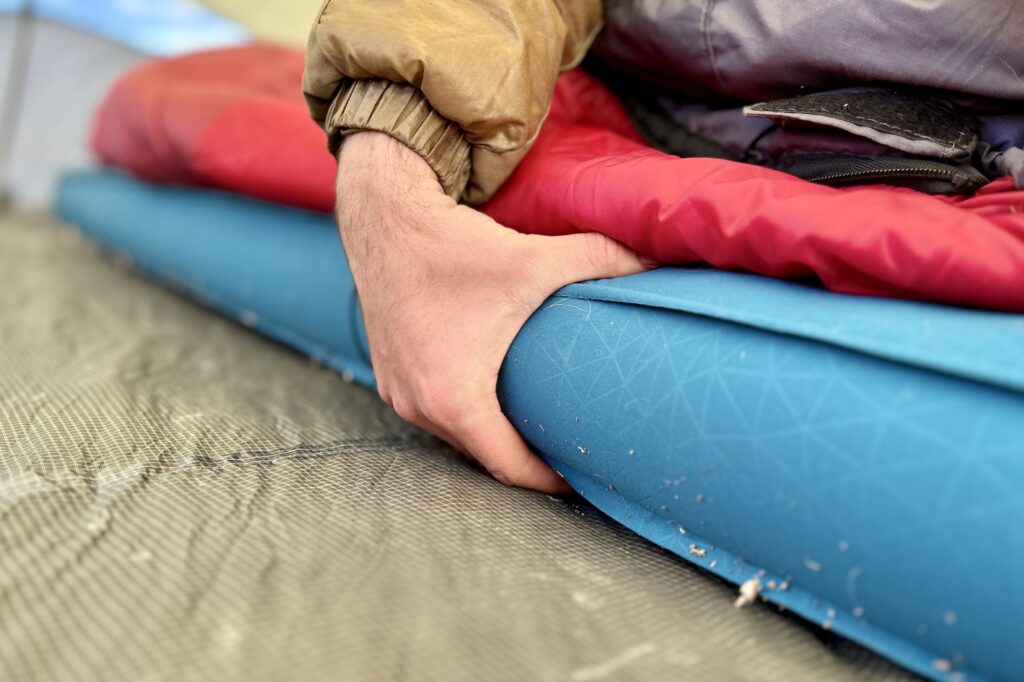
Should I choose foam, self-inflating, or air-only?
Solid foam is quick to deploy and reliably cushioned but difficult to compress and cannot be adjusted. Self-inflating foam-and-air mattresses balance warmth, firmness adjustment, and packed volume, though some require extra breaths or pump-sack work. Air-only designs can fit unusual spaces but may provide much less insulation, depending on their construction.
How wide should my camping mattress be?
Measure the tent floor or vehicle sleeping platform before choosing a size. Wider rectangular pads suit restless sleepers and prevent elbows from slipping off tapered edges. Shared mattresses eliminate the gap between two singles, while separate pads let partners choose different firmness and accommodate different storage needs.

How do I compare packed sizes?
Compare both the rolled length and diameter rather than weight alone; a long roll may be the hardest dimension to fit into a vehicle. Consider the effort required to expel air and whether a pump sack or storage bag comes included. Leave room for bedding and other camp essentials, not just the mattress.
Why Trust CleverHiker
CleverHiker’s recommendations are built from repeated field use rather than specs alone. Our testers spend nights on the products, compare them in consistent setups, and retain candid notes about annoyances such as valves, noise, pressure points, and packing difficulty. Products earn recommendations for particular campers rather than through a one-size-fits-all definition of luxury.

How We Test & Methodology
We sleep on each mattress through varied camping conditions and compare it against others in the category. At home and in the field, we examine pressure distribution, usability, inflation and deflation behavior, insulation needs, portability, and cost. We distinguish field-measured figures from manufacturer and retailer listings and do not infer real-world comfort from an R-value or depth specification alone.

Conclusion
The best camping mattress is the one that gives you restful sleep without creating new problems for the way you camp. Start with the firmness and cushioning you prefer, then choose enough insulation for your conditions and a shape that fits the sleeping space. Finally, be realistic about what you’re willing to carry, roll, and store. A mattress that excels at one of those jobs but frustrates you at another is rarely the right long-term purchase.