

Bottom Line
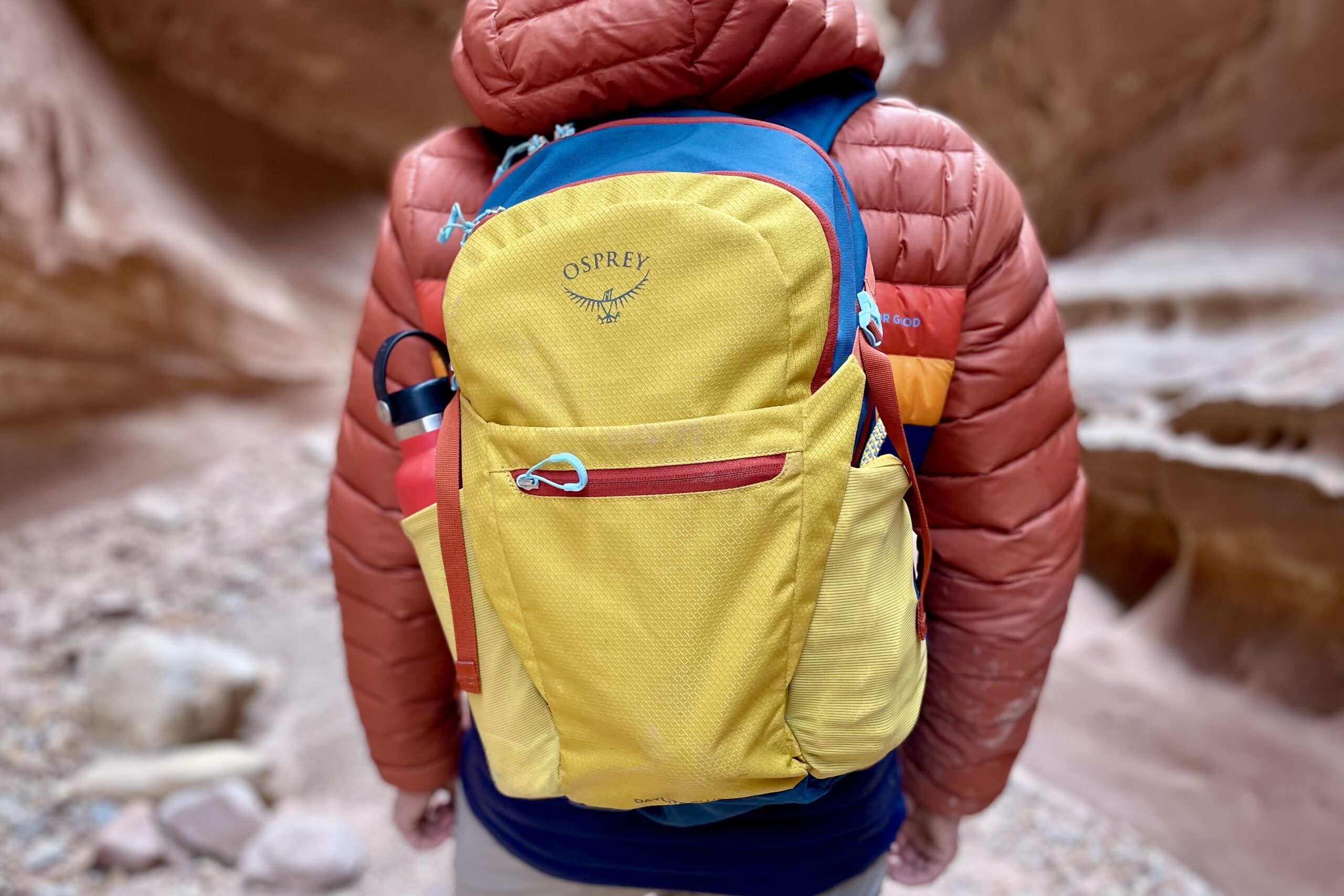
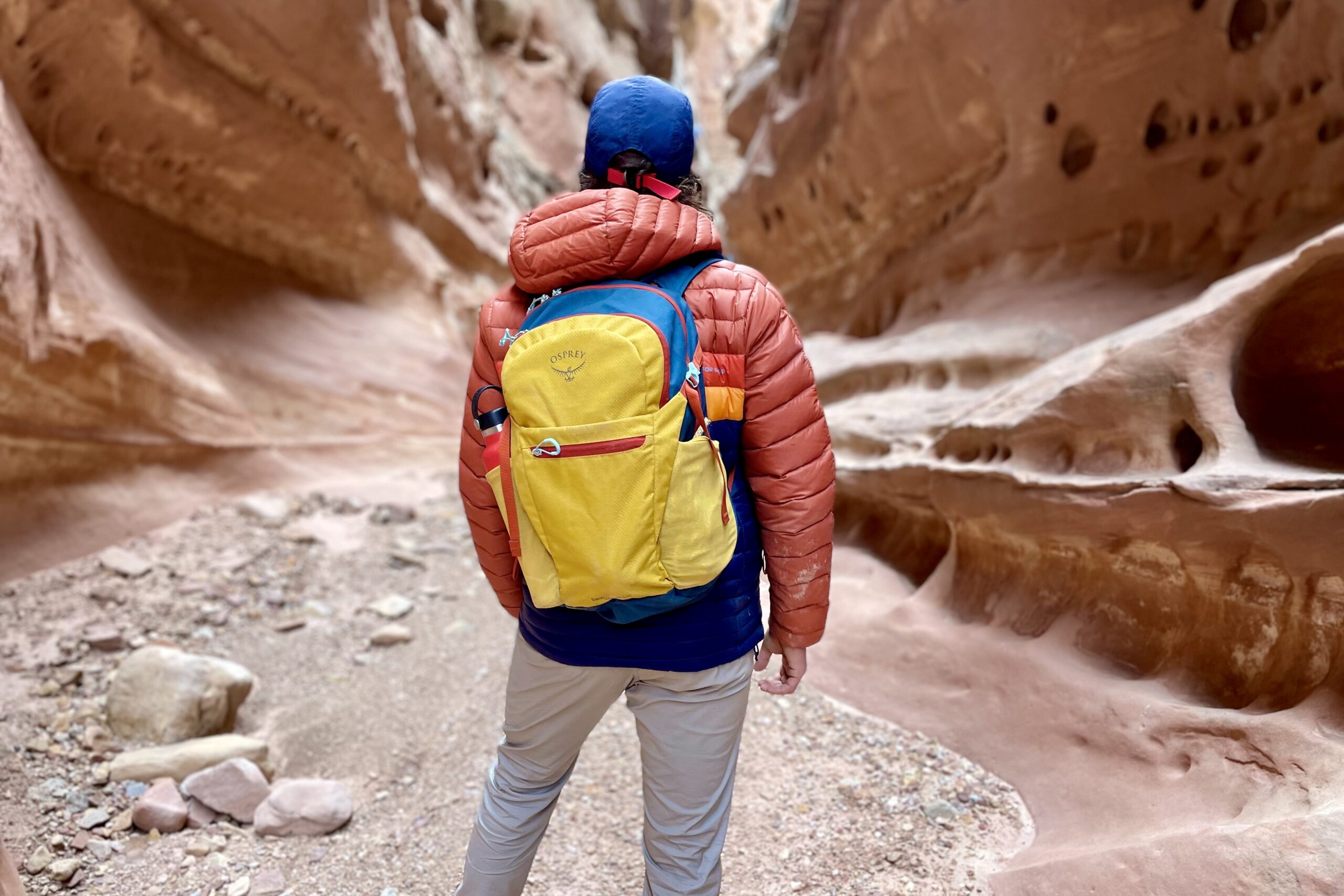
The Osprey Daylite Plus is an everyday pack that can hike, rather than a dedicated hiking pack that happens to commute. That distinction makes it a strong choice for travelers and daily users who want one lightweight bag for town and occasional trails.
Its organization is versatile: the hydration sleeve can also hold a laptop, the main compartment is easy to use, and smaller pockets handle work or travel essentials. Bottle and bladder compatibility keep it functional on hikes.
The tradeoff is support. The frameless body and simple hipbelt do little to transfer weight, and ventilation is more limited than on Osprey’s hiking-focused packs. Keep the load modest and its versatility is the main appeal. For more options, see our best hiking daypacks guide.
How We Tested
CleverHiker Editor and gear analyst Jory Brass has hiked hundreds of miles with the Daylite Plus and has also used it extensively for commuting, travel, and everyday carry. Our testing includes normal day-hiking loads, reservoir carries, laptops, and travel gear, with attention to the frameless harness, ventilation, organization, hydration compatibility, and packability.
Quick Specs
- Best for: Trail-to-town versatility
- Material: 300D recycled ripstop polyester with reinforced accent and bottom fabrics
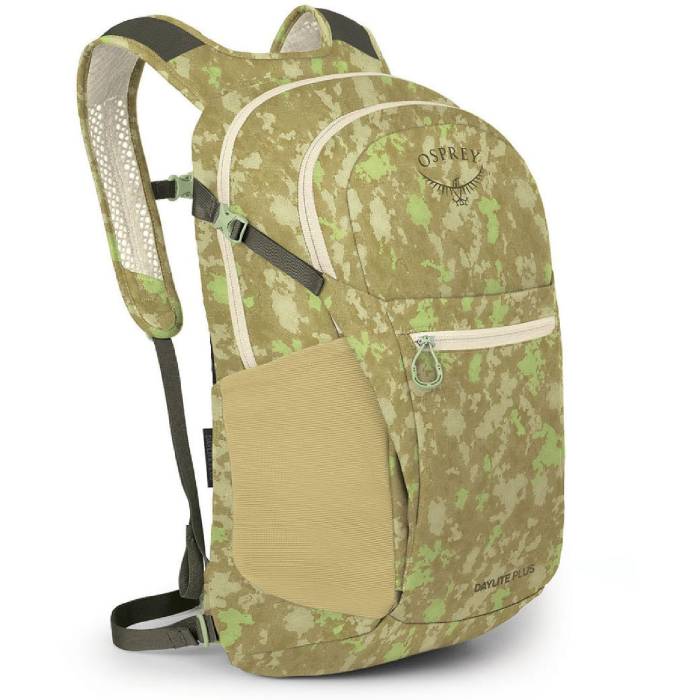
Osprey Daylite Plus
Hikeable Commuter Daypack
CleverHiker Rating: 4.3/5.0
Price: $80
Weight: 1 lb. 4.6 oz.
Capacity: 20 L
Frame: None
Pros
- Can be worn around town or on the trail
- Compatible with bottles and bladders
- Removable hipbelt
- Durable, eco-conscious materials
- Light and compressible
- Laptop-compatible
Cons
- Better for casual use
- Limited support
- Less ventilated than most Osprey packs
Comfort
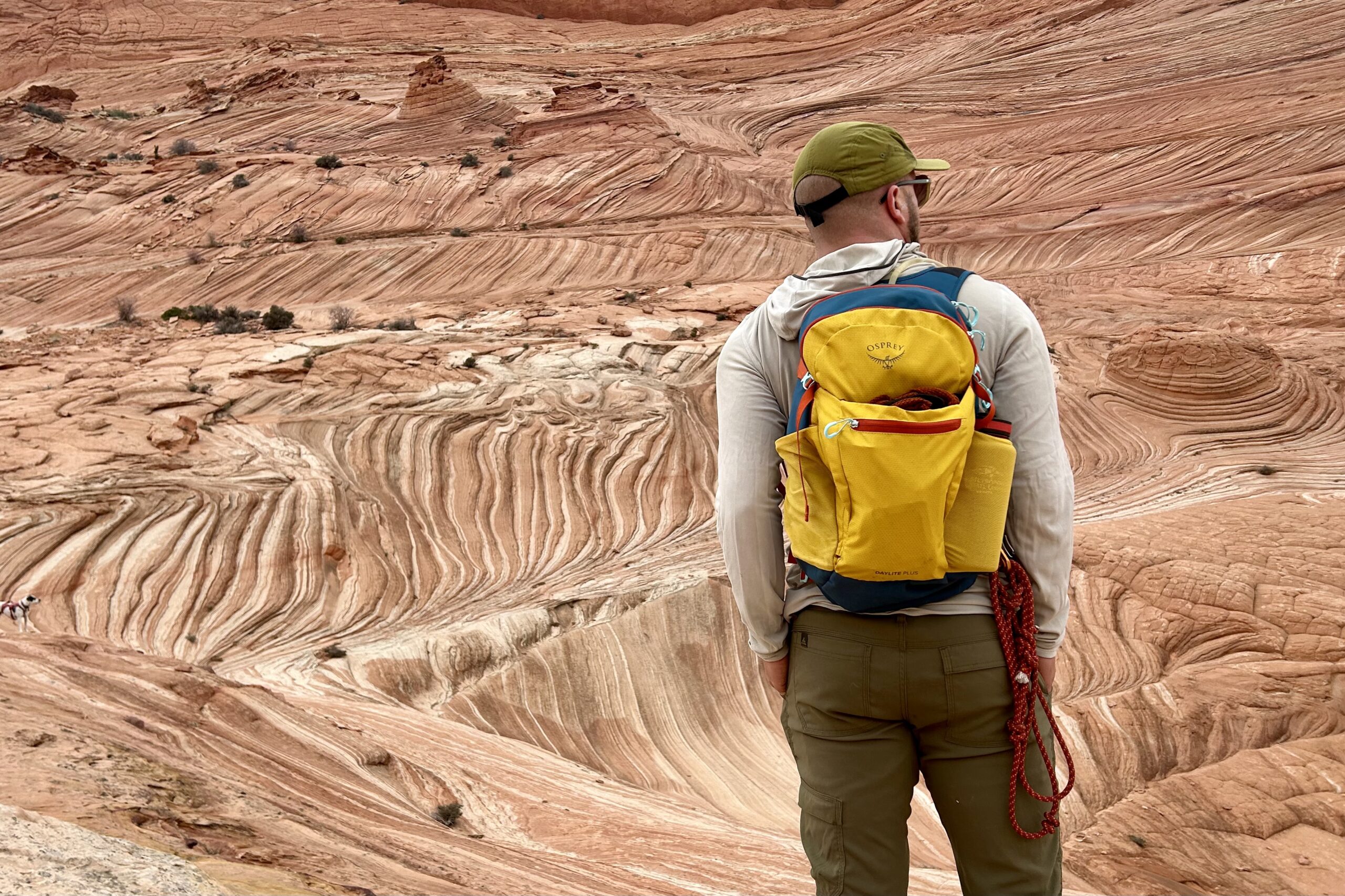
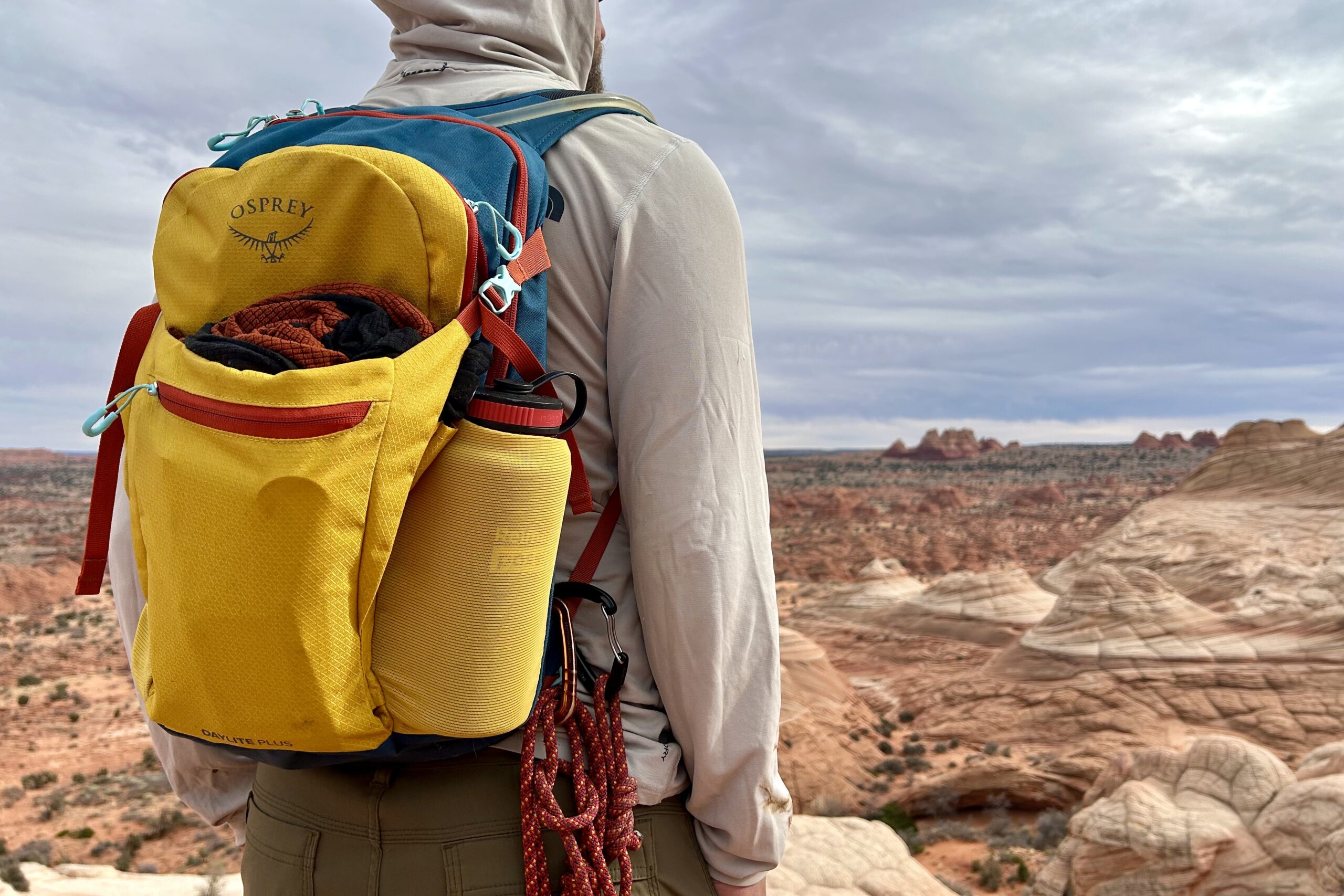
The Daylite Plus is comfortable when lightly loaded because there is simply not much pack on the back. The shoulder straps provide enough cushioning for daily carry, and the back panel adds some structure without becoming rigid.
Ventilation is only moderate. Compared with Osprey’s AirScape and AirSpeed hiking systems, more of the bag sits directly against the body, so hot-weather hikers may notice additional sweat.
As load weight rises, the lack of a true frame or load-bearing hipbelt matters more. This is best viewed as a light-duty comfort system for modest day-hiking or commuting loads.
Longer, heavier carries reveal the Daylite Plus’s comfort ceiling. On a 6-hour group hike with a full reservoir, lunch, and day gear, one tester developed enough shoulder strain that we swapped packs. The thin waist strap could not take meaningful weight, and the absence of load lifters left few ways to improve the carry once the load became uncomfortable.
With lighter loads, the same simplicity works well. Foam ridges on the back panel add cushioning and create some airflow, and the pack has handled dog walks, errands, and shorter desert hikes without feeling cumbersome. This is comfortable everyday carry that can hike—not a suspension built for repeated heavy trail loads.
Comfort Score: 4.3 / 5.0
Organization
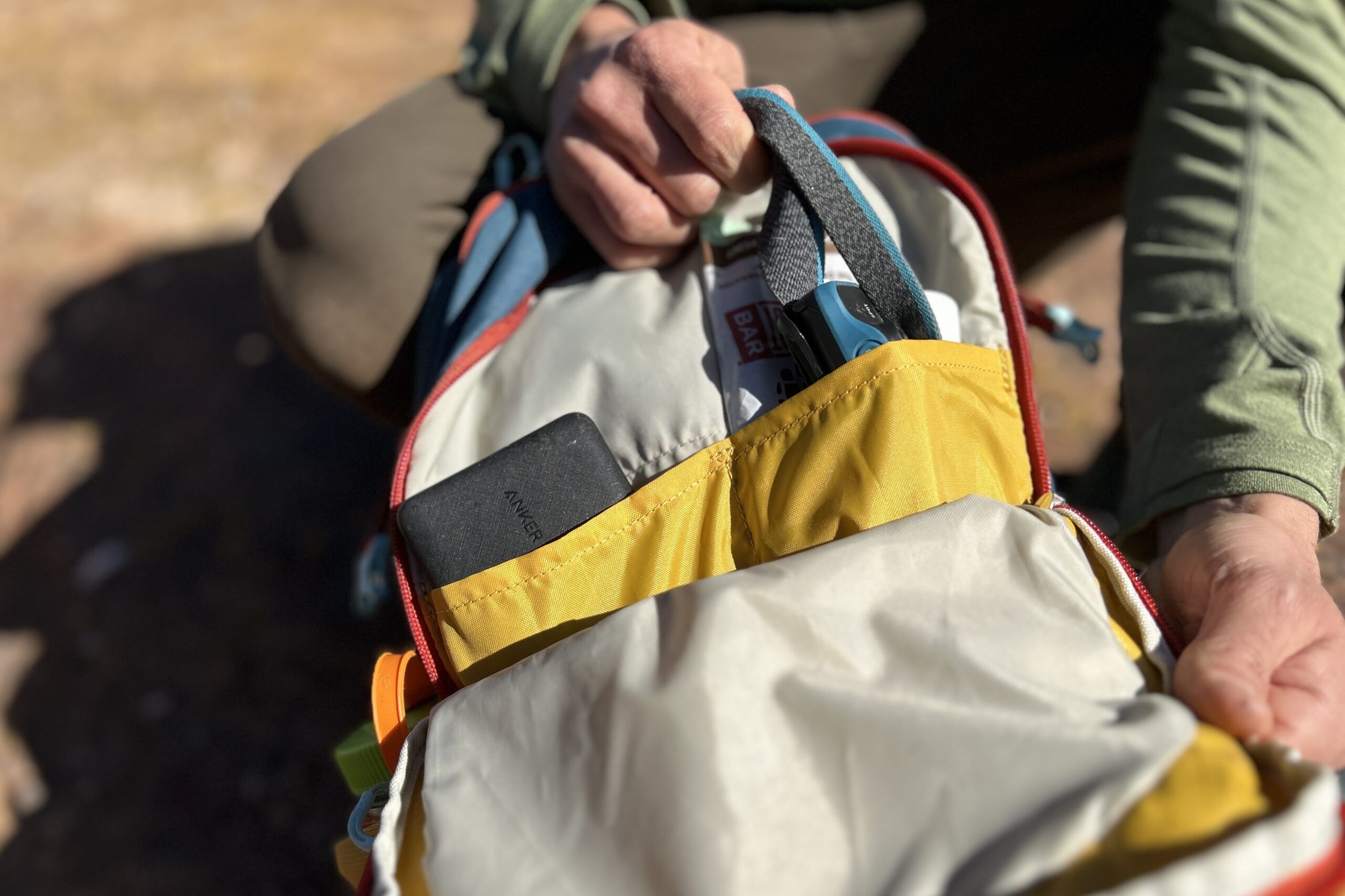
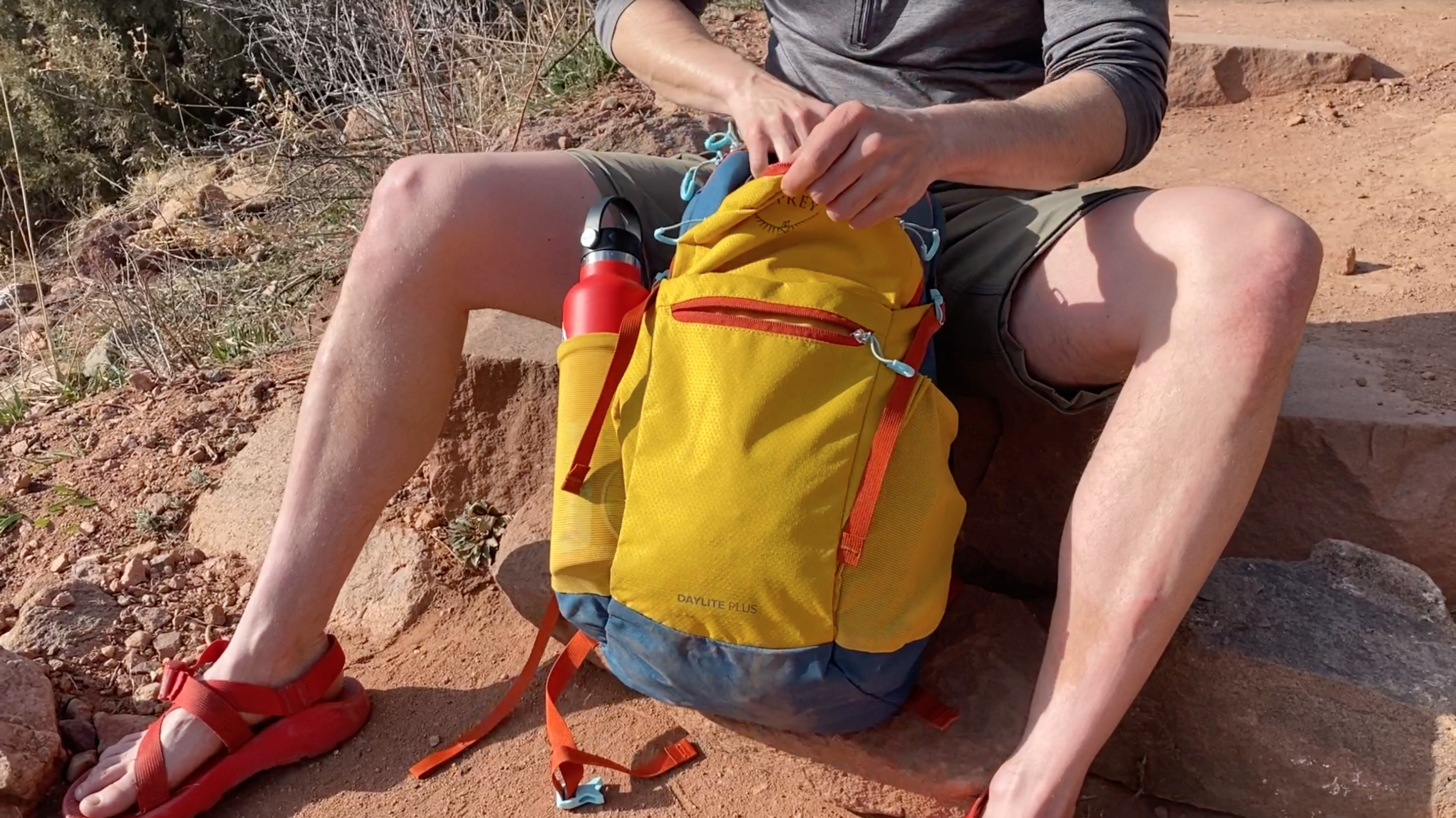
Organization is one of the Daylite Plus’s strongest qualities because it serves both outdoor and everyday use. The hydration sleeve doubles as laptop storage, while the main compartment and smaller pockets work for layers, chargers, notebooks, or travel accessories.
The layout is less hiking-specific than the Talon or Sportlite, but that is an advantage for users who spend as much time in airports and coffee shops as on trails. The luggage-friendly design also integrates well with larger Osprey bags.
For a true day-hiking kit, there are fewer on-the-go pockets and technical attachment points than premium hiking packs, but general-purpose storage is excellent.
Five exterior pockets give the Daylite Plus useful everyday flexibility. Deep side pockets handle wide or narrow bottles, and the front stuff pocket is convenient for gloves or other small bulky items. Inside, a half-length organizer includes small dividers, while the hydration sleeve can hold a 3-liter reservoir or a 13-inch laptop.
The layout is less efficient for technical hiking. There are no hipbelt pockets for snacks or a phone, few exterior lash points, and no trekking-pole attachment. The front stuff pocket is solid fabric rather than stretch mesh, so it is less forgiving with a puffy or irregular layer. Those limitations matter on long trail days but are less important for commuting and travel.
Organization Score: 4.6 / 5.0
Support
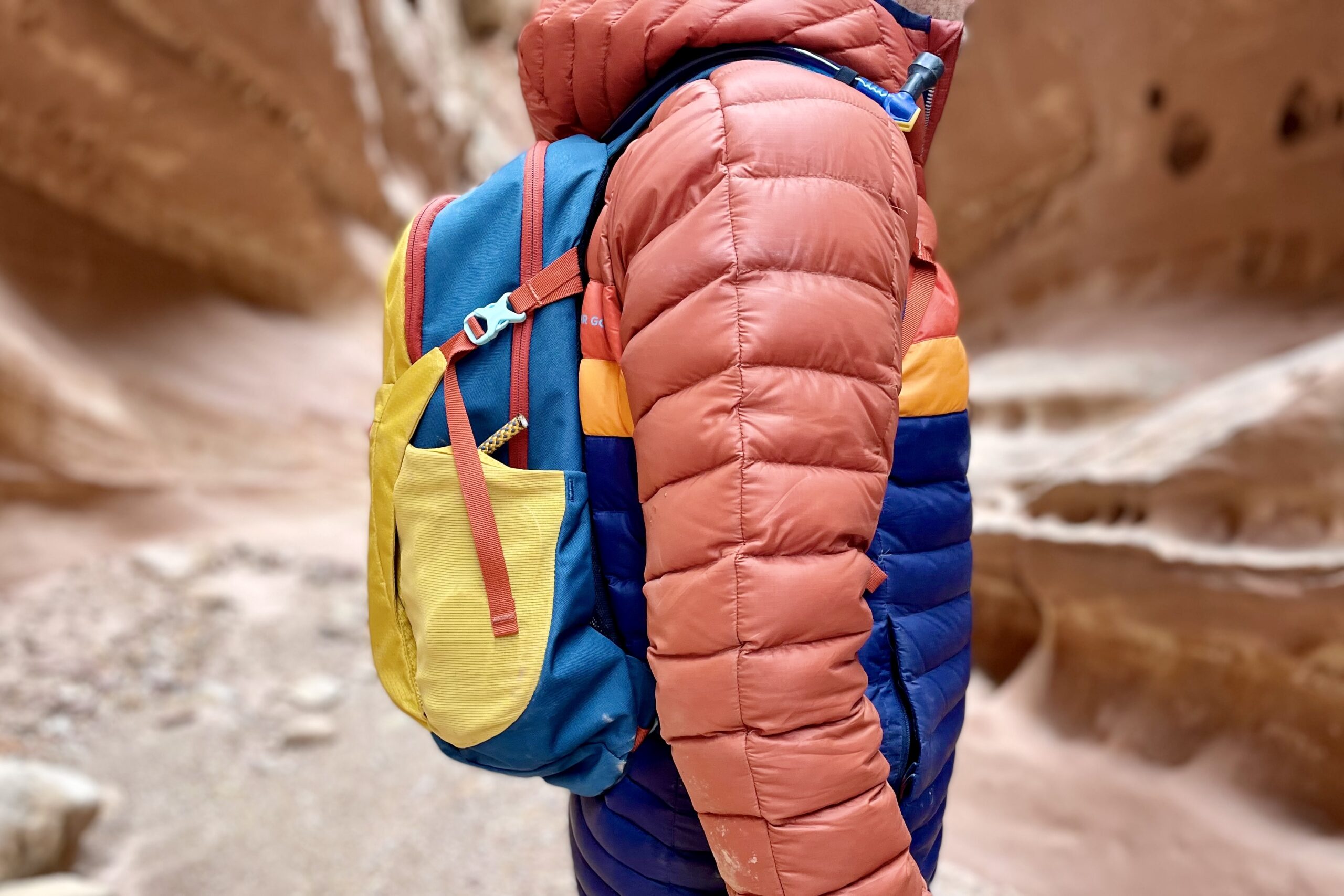
The frameless Daylite Plus provides limited load support. Its back panel gives the bag some shape, but it does not transfer meaningful weight to the hips, and the removable webbing hipbelt is primarily for stability.
With water, food, and a light layer, the carry is adequate. Add heavier camera gear, large water loads, or winter equipment and the shoulders absorb most of the burden.
That makes the Daylite Plus less appropriate than the Talon, Stratos, or Gregory Zulu for serious hiking. Its strength is versatility and simplicity, not load hauling.
The Daylite Plus relies on a soft back panel and shoulder harness rather than a true frame. That keeps the pack light and flexible, but it also means the waist strap is mainly a stabilizer. Once the bag is full, most of the load stays on the shoulders because there is no rigid structure to transfer weight downward.
That distinction became obvious with a full reservoir and several hours of hiking, when shoulder fatigue increased even though the pack still felt stable. For commuting, travel, and short hikes with modest gear, the support is adequate. Hikers carrying winter layers, several liters of water, or dense equipment should choose a framesheet or internal-frame pack instead.
Support Score: 3.9 / 5.0
Weight & Packability
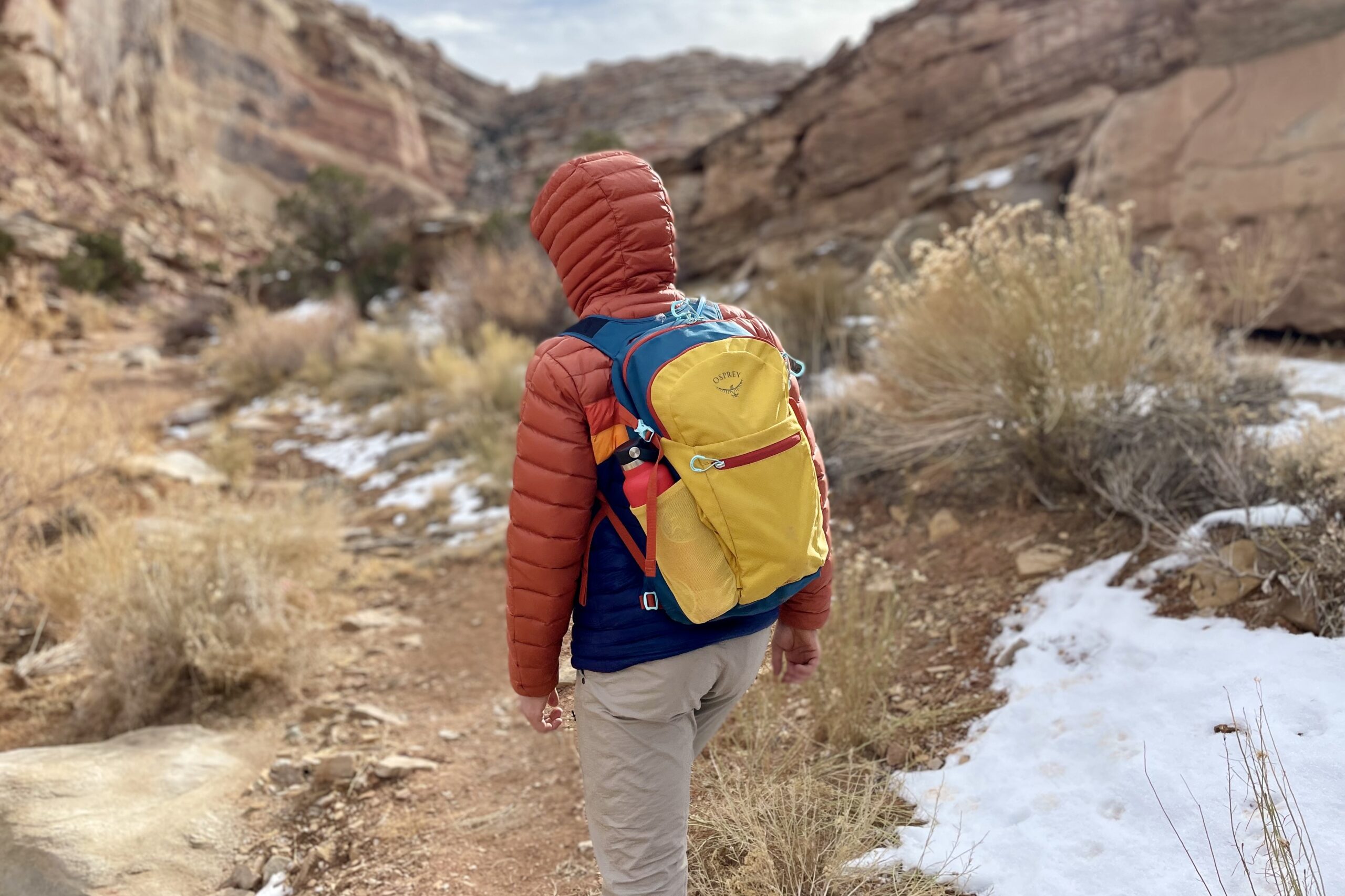
At about 1 lb. 4.6 oz., the Daylite Plus is one of the lighter packs in our current daypack field. The frameless construction also lets it flatten and compress much more easily than structured hiking models.
Those traits make it useful for travel, where it can ride inside a larger suitcase or attach to compatible Osprey travel packs. The 20-liter capacity is large enough for everyday carry without creating excessive bulk.
Ultralight specialists such as the Flash 22 and Cotopaxi Batac are lighter still, but the Daylite Plus offers more structure and commuter-friendly organization while remaining easy to pack.
At about 1 lb. 4.6 oz., the Daylite Plus sits near the light end of the category while keeping more structure than the softest frameless sacks. Its pliable foam back panel adds shape and a little airflow without turning the bag into a rigid hiking pack.
That foam keeps it from compressing to the size of the REI Flash 22, but the Daylite can still be folded or rolled and packs much slimmer than models with metal frames, bulky hipbelts, or suspended mesh panels. This middle ground suits its trail-to-town role: light enough to travel with, structured enough for a laptop or daily load, and still easy to store when empty.
Weight & Packability Score: 4.5 / 5.0
Should You Buy the Osprey Daylite Plus?
Buy it if you want one affordable pack for commuting, travel, and occasional hiking. Choose a dedicated hiking daypack if trail comfort, ventilation, technical storage, or support under heavier loads matters more than everyday versatility.
What Other Daypacks Should You Consider?
Osprey Sportlite 20 Review: The Sportlite is the better choice if hiking is the main use. It has a more ventilated back panel, a light framesheet for structure, and trail-focused pockets that make it feel more capable with water, layers, and normal hiking essentials. The Daylite Plus is more useful for laptops, commuting, and travel. Both are light and affordable, but the Sportlite is the more purpose-built hiking tool.
REI Flash 22 Review: The Flash 22 is even lighter and more minimalist than the Daylite Plus. It costs less, weighs only 14 ounces, and compresses easily for travel or use as a secondary summit pack. The Daylite Plus offers better everyday organization and laptop compatibility, while the Flash is more hiking-oriented in its simplicity. Pick based on whether daily life or minimal trail weight matters more.
Osprey Talon 22 / Tempest 22 Review: The Talon/Tempest is the clear upgrade for hikers who want real load support and technical organization. Its adjustable harness, framesheet, substantial hipbelt, front stretch pocket, and trekking-pole carry make longer days more comfortable and efficient. The Daylite Plus is lighter, cheaper, and better around town, but it struggles once the load becomes heavy. Frequent hikers will get more from the Talon/Tempest.