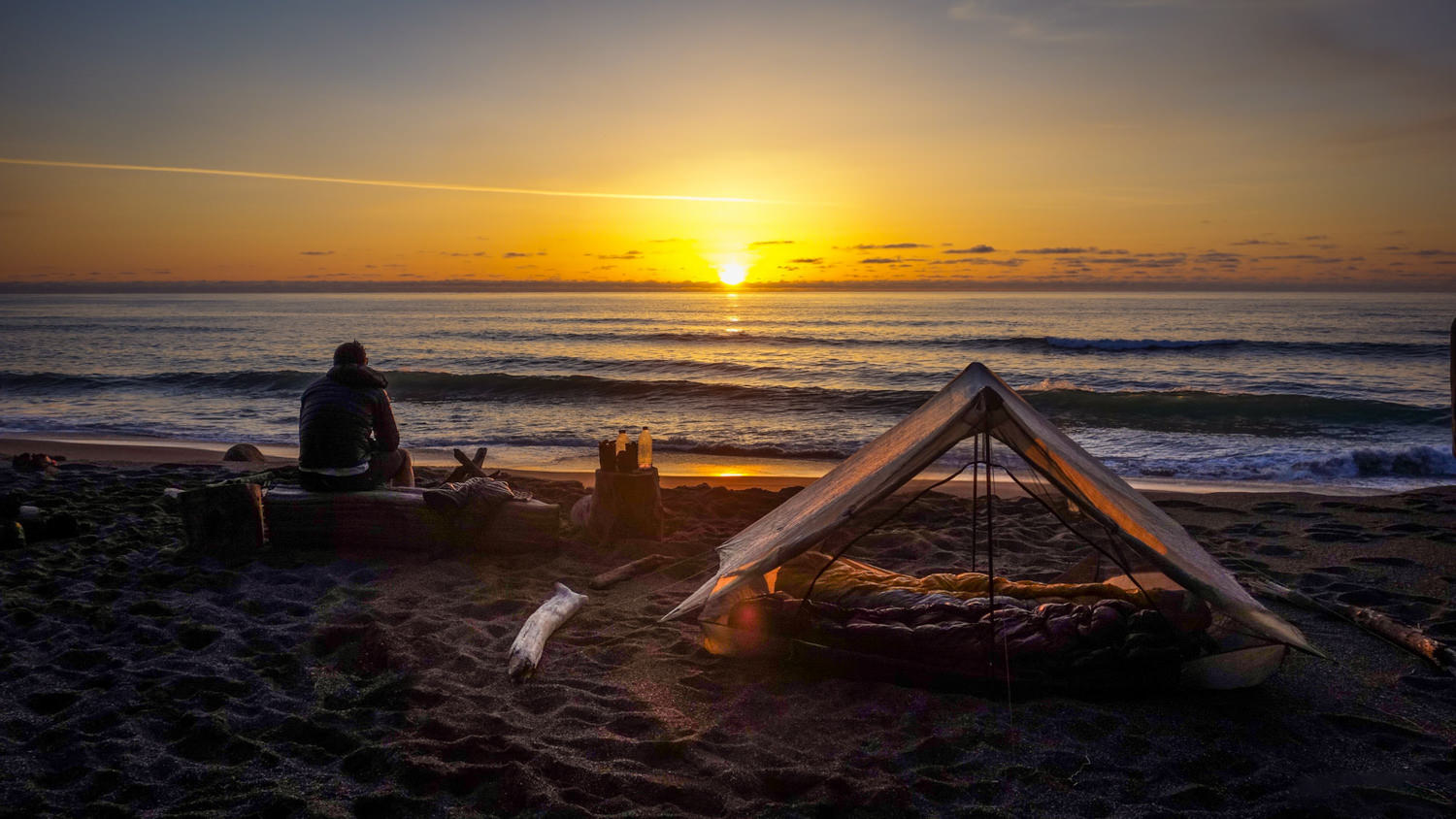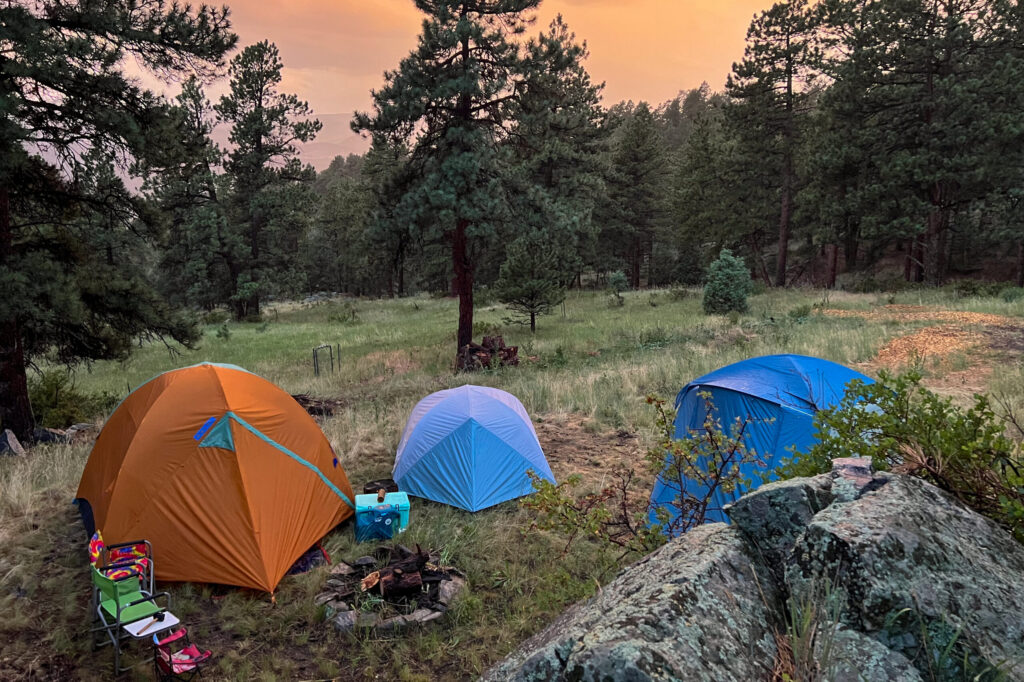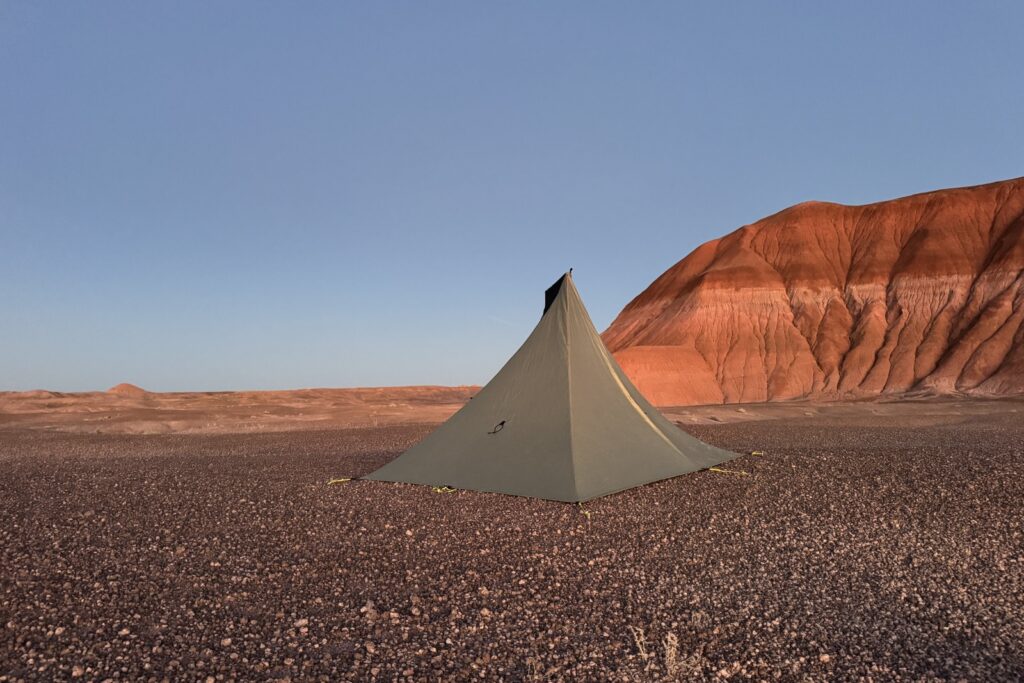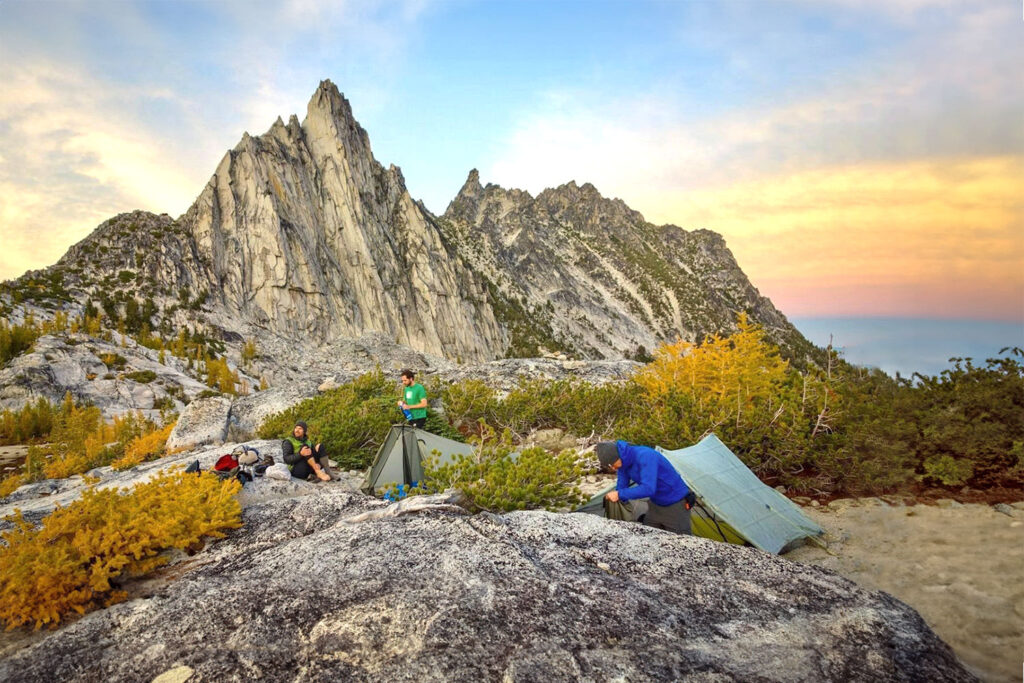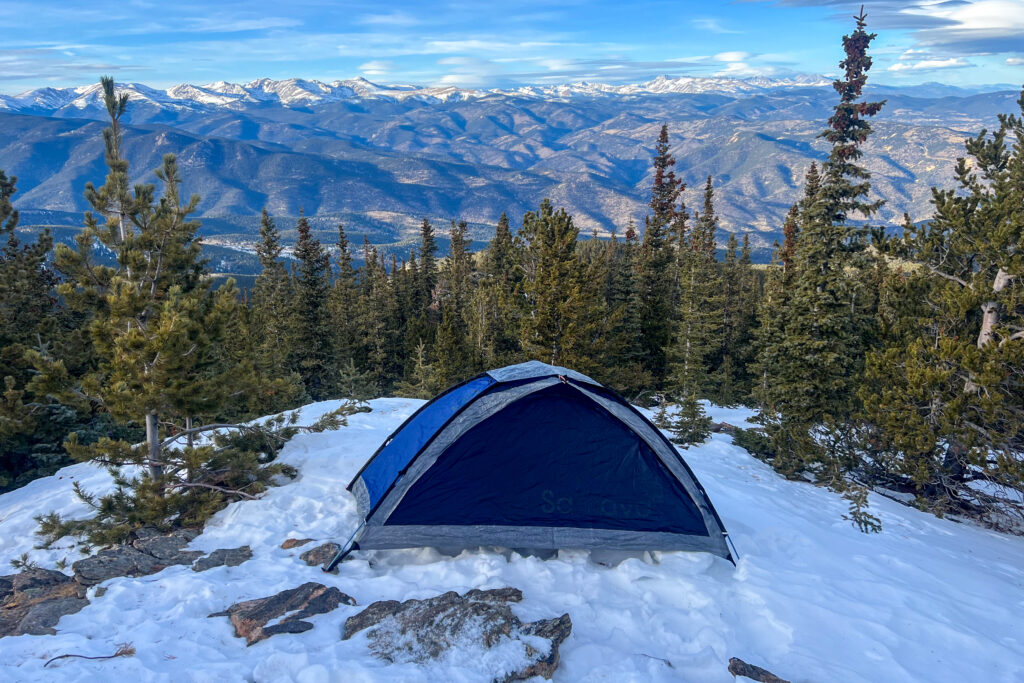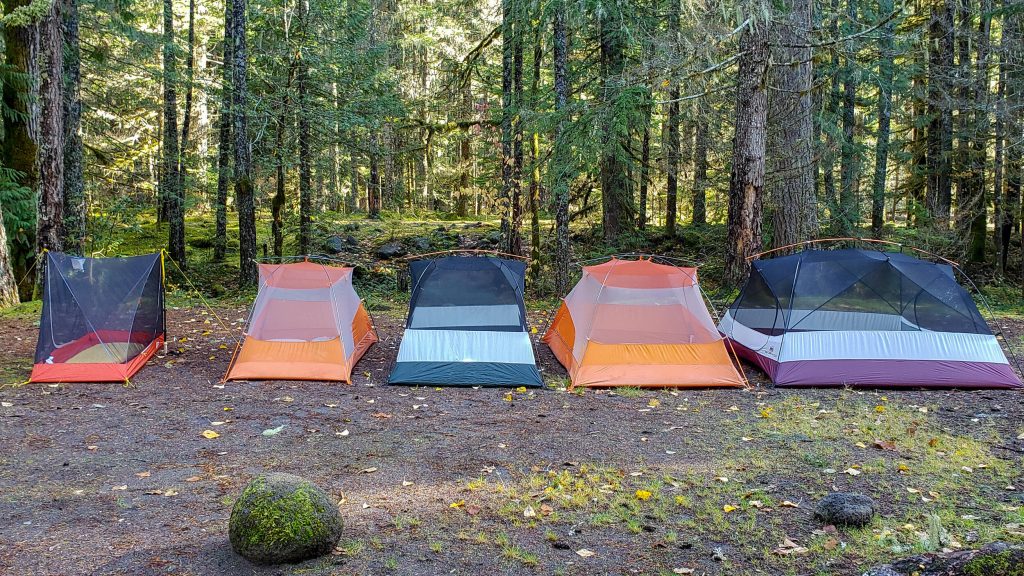


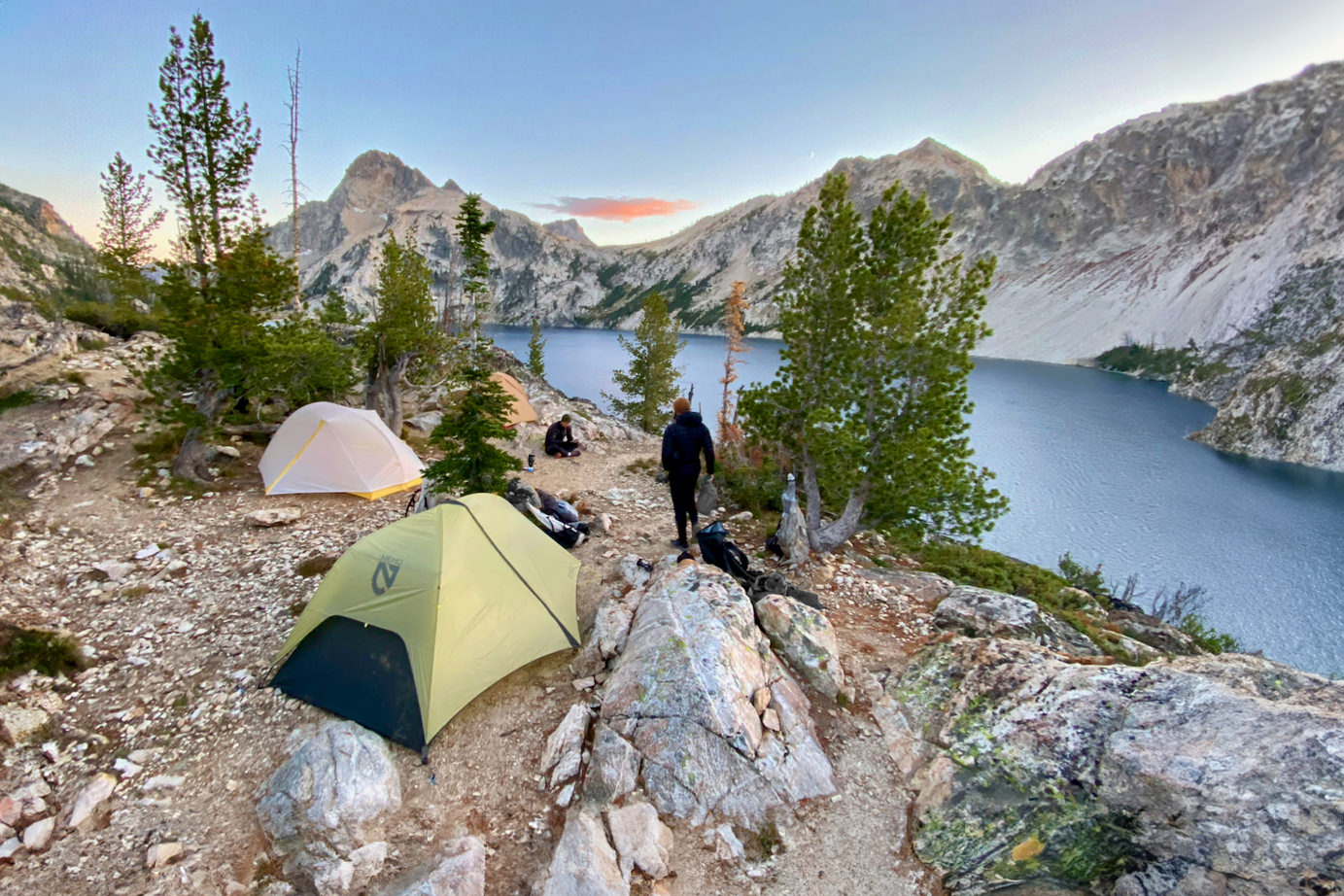
Our team of gear experts has tested more than 140 backpacking tents over the years. Our experience spans dry deserts, humid forests, exposed alpine terrain, long-distance thru-hikes, and casual weekend trips.
From Big Agnes, SlingFin, NEMO, MSR, Hyperlite Mountain Gear, Durston, Zpacks, and REI, we’ve carried these shelters for thousands of miles and spent dozens to hundreds of nights in many of them.
Editor’s Note: We updated this guide on October 1 2026, after revamping all 12 individual reviews, reviewing specifications for accuracy, and reconciling the product cards with our backpacking tent rankings and testing notes.
How We Test Backpacking Tents
We have hiked more than 100,000 miles on trails around the world, including the PCT, CDT, AT, Colorado Trail, Long Trail, GR11 in the Spanish Pyrenees, and the O Trek in Patagonia. As a team, we have spent more than 5,000 nights in the wilderness.
For this guide, we compare every tent on the same five core metrics: comfort, weight and packed size, weather resistance, ease of setup, and durability. We use CleverHiker-measured packed weights when available and preserve the distinction between our measurements and manufacturer-listed specs.
And for more info, check out some of our other most popular gear guides:

#1. Best Backpacking Tent Overall
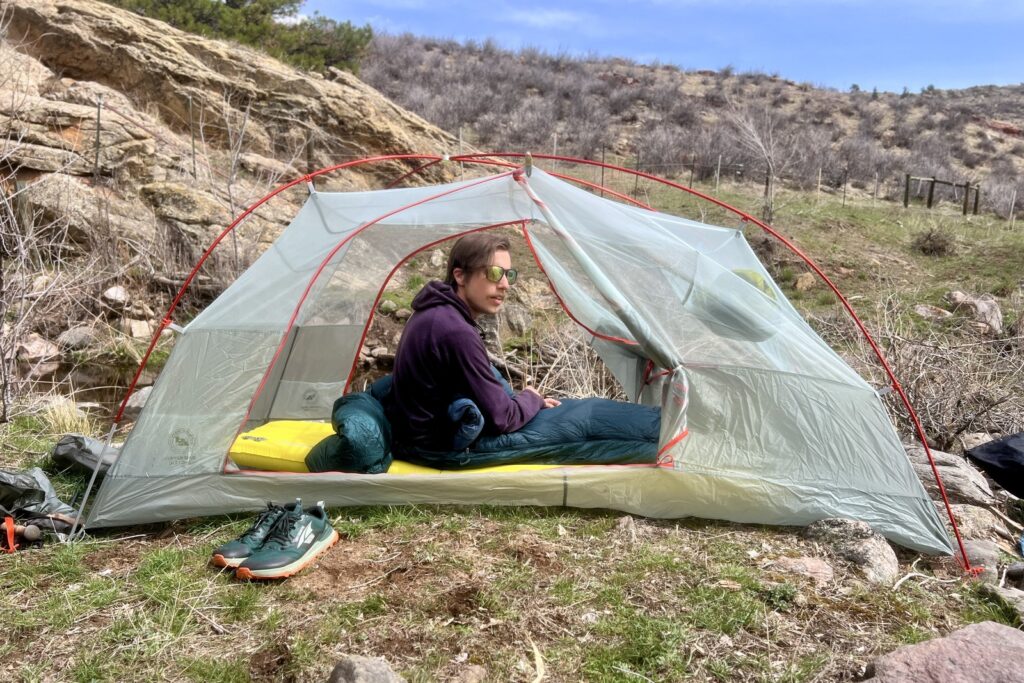
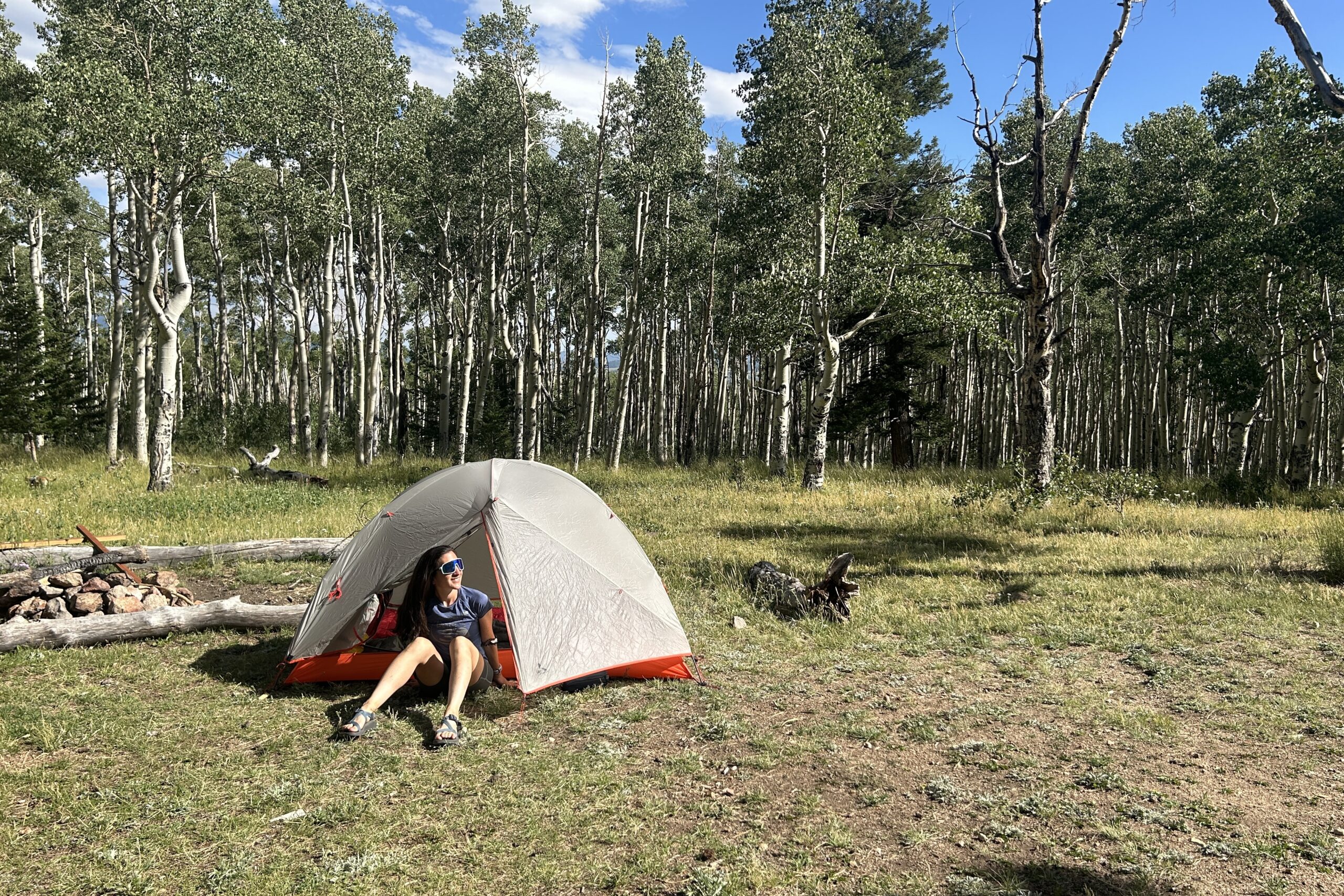
The Big Agnes Copper Spur UL2’s balance of comfort, weight, durability, weather protection, and intuitive design is hard to beat. After hundreds of nights with the Copper Spur line, it remains our best overall choice for most backpacking trips.

Quick Picks for Backpacking Tents
Check out this quick list of the best backpacking tents, or continue scrolling to see our full list of favorites with in-depth reviews.
1. Best Backpacking Tent Overall: Big Agnes Copper Spur UL2 ($600)
2. Best Backpacking Tent for Harsh Conditions: SlingFin Portal 2 ($610)
3. Best Car & Backpacking Crossover Tent: NEMO Dagger OSMO 2 ($600)
4. Best One-and-a-Half-Person Backpacking Tent: NEMO Hornet OSMO 2 ($480)
5. Best Semi-Freestanding Backpacking Tent: Big Agnes Tiger Wall UL2 ($500)
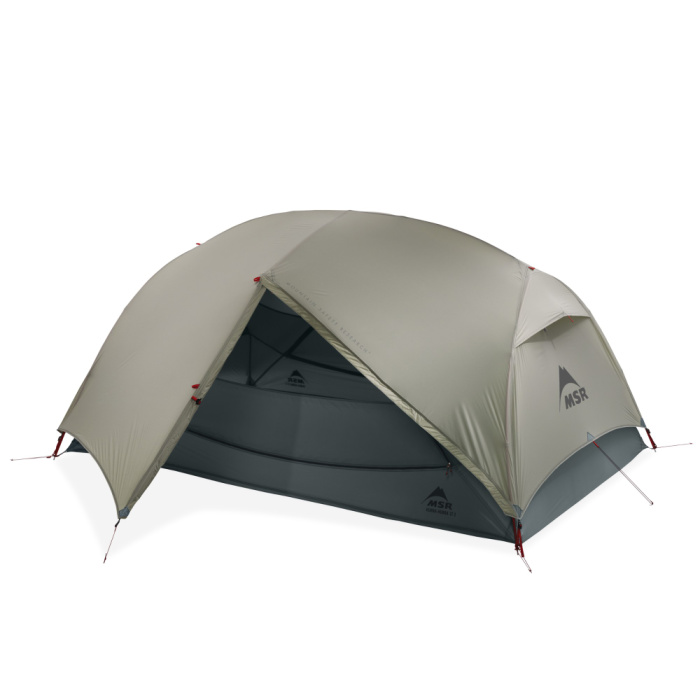
6. Best Lightweight Backpacking Tent for Two: MSR Hubba Hubba LT 2 ($550)
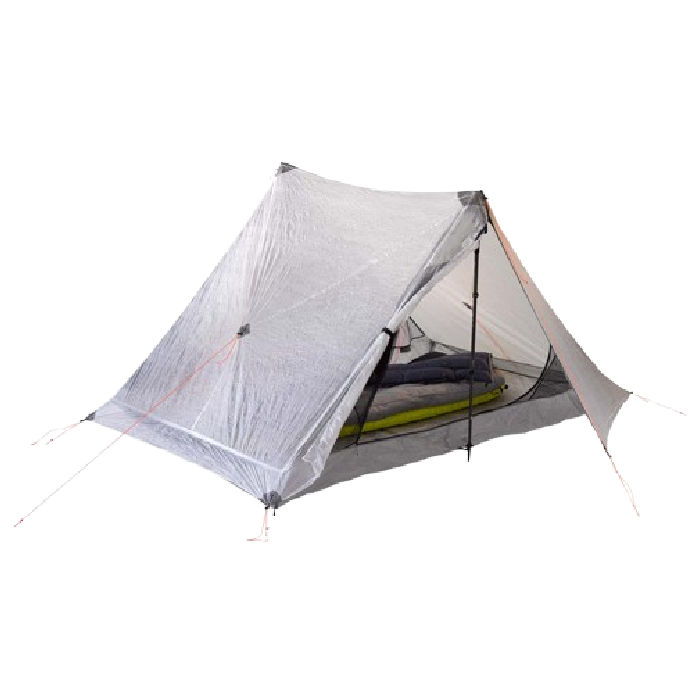
7. Best Ultralight Backpacking Tent: Hyperlite Mountain Gear Unbound 2 ($795)
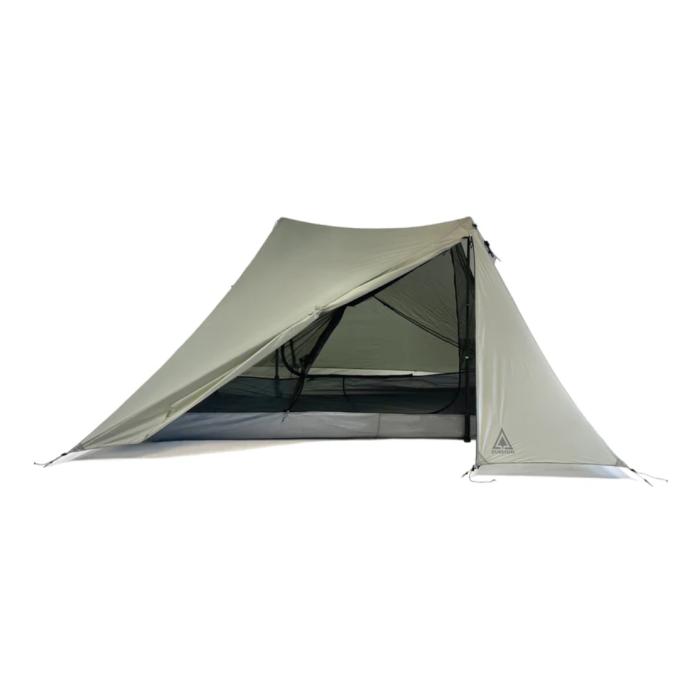
8. Best Hybrid Backpacking Tent: Durston X-Mid 2 ($319)
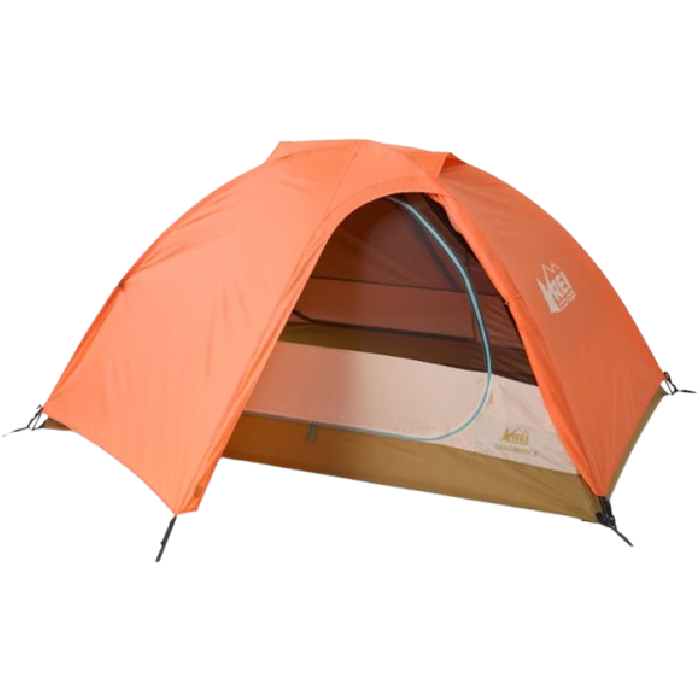
9. Most Affordable Backpacking Tent: REI Trailmade 2 ($199)
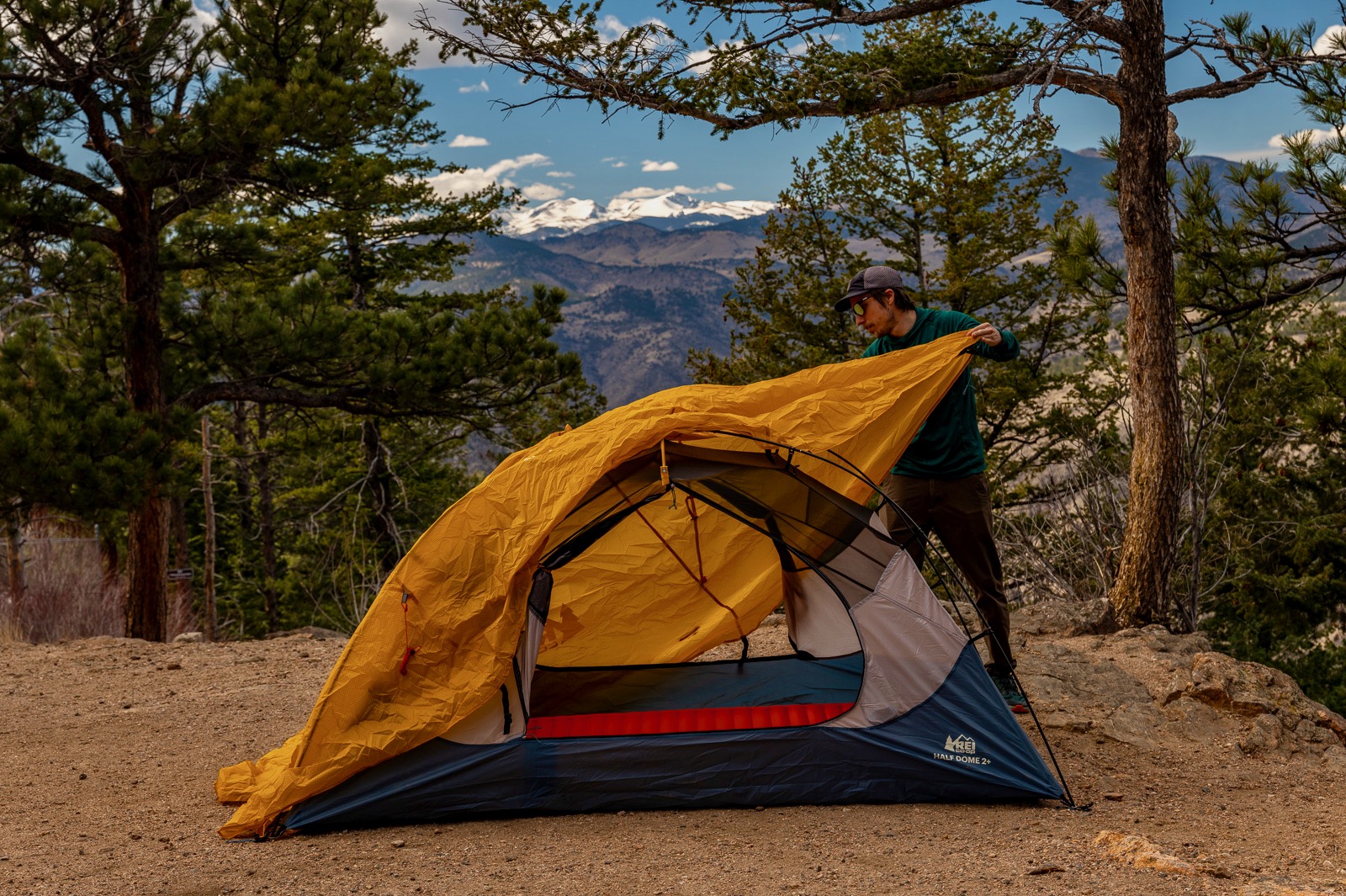
10. Best Budget Backpacking Tent: REI Half Dome 2 Plus ($369)
11. Ultralight Backpacking Tent With a Huge Following: Zpacks Duplex Classic ($749)
12. Roomy, Lightweight Backpacking Tent for Solo Hikers: MSR FreeLite 2 ($500)
Big Agnes Copper Spur UL2
Best Backpacking Tent Overall
CleverHiker Rating: 4.8/5.0
Price: $600
Packed Weight: 3 lb.
Dimensions (LxWxH): 88 x 52/42 x 40 in.
Type: Freestanding
Pros
- Lightweight for a freestanding tent
- Quick and easy to set up
- Ample headroom
- Excellent features and storage
- Quality construction and materials
Cons
- Expensive
- Rainfly zippers can snag
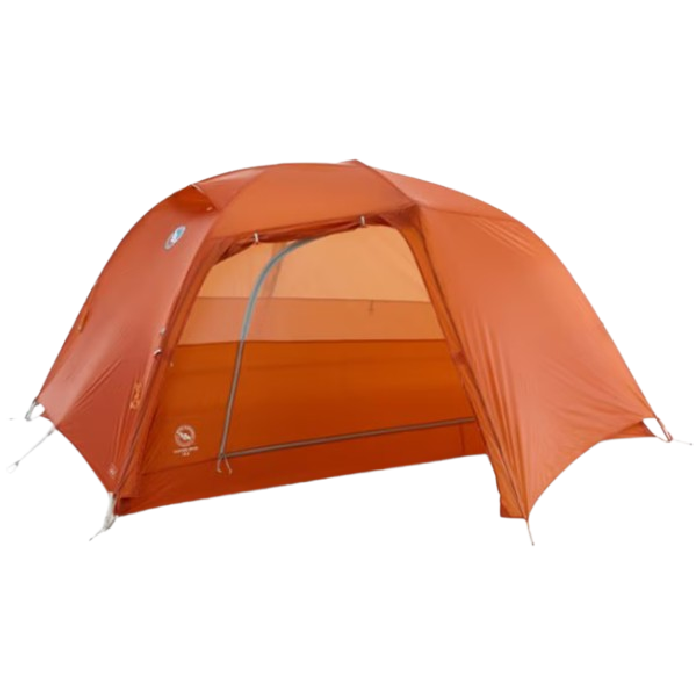
The Big Agnes Copper Spur UL2 remains our best overall backpacking tent because it combines low weight, excellent livability, easy setup, and dependable three-season weather protection without forcing a major compromise in any one area. Our team has spent roughly 300 nights in the Copper Spur line on routes including the PCT, CDT, and AT, and that long-term experience is a big reason we trust it as an all-around recommendation. The current UL2 keeps the freestanding layout, dual doors and vestibules, generous storage, and high-volume pole architecture that have made the line so successful.
At a CleverHiker-measured 3 pounds packed, it is impressively light for a fully freestanding two-person shelter with this much usable interior structure. The broad upper walls, ridge pole, and thoughtful pocket layout make it comfortable for two, while the full-coverage fly, bathtub floor, and multiple guy points give it strong storm performance for the weight. Setup is intuitive, and the ability to pick up and reposition the assembled tent makes awkward campsites much easier to manage.
The main drawbacks are price and the need to treat the lightweight fabrics and zippers with normal backpacking care. But for hikers who want one premium tent for high-mileage trips, weekend outings, and a wide range of three-season conditions, the Copper Spur is still the easiest recommendation in the category. The Copper Spur offers the best overall balance in this lineup.

SlingFin Portal 2
Best Backpacking Tent for Harsh Conditions
CleverHiker Rating: 4.7/5.0
Price: $610
Packed Weight: 3 lb. 5 oz.
Dimensions (LxWxH): 85 x 51/42 x 44 in.
Type: Freestanding
Pros
- Excellent weather protection
- Lightweight for its strength
- Roomy interior
- Useful pockets
- Quality construction and materials
- Large doors and vestibules
Cons
- Expensive
- Rainfly zippers can snag
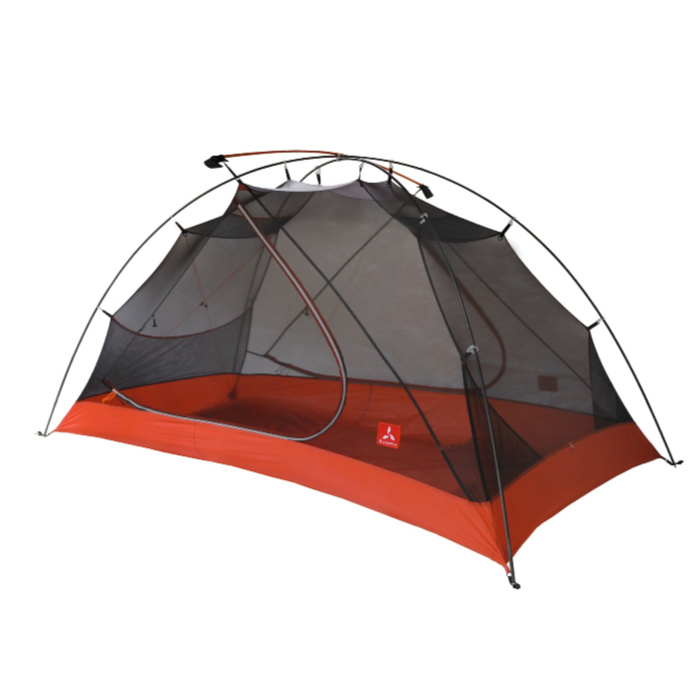
The SlingFin Portal 2 is our favorite backpacking tent for harsh conditions because it provides much more structural margin than a typical lightweight three-season shelter without carrying the weight of an expedition tent. Its stout pole architecture, internal guylines, multiple external guy points, high bathtub floor, and optional trekking-pole reinforcement give it a level of storm readiness that stands out in this category. We have used the Portal in high wind, driving rain, and snowy shoulder-season conditions with excellent results.
That weather focus does not make it unpleasant to live in. A 44-inch peak height, steep sidewalls, a wide crossbar, two large doors, and generous interior storage make the modest 27.45-square-foot floor feel more spacious than the number suggests. At a CleverHiker-measured 3 pounds, 5 ounces, its strength-to-weight ratio is one of the best in the guide. The standard freestanding pitch is straightforward, while the more advanced storm features can stay out of the way until conditions call for them.
The Portal is expensive, and hikers who spend most nights below treeline in mild summer weather can go lighter for less money. Its tapered floor is also less ideal for two very wide pads than roomier rectangular tents. But if exposed camps, wind, wet weather, or shoulder-season travel are common parts of your trips, the added storm margin is the reason to choose it.
NEMO Dagger OSMO 2
Best Car & Backpacking Crossover Tent
CleverHiker Rating: 4.6/5.0
Price: $600
Packed Weight: 3 lb. 15 oz.
Dimensions (LxWxH): 88 x 50 x 43 in.
Type: Freestanding
Pros
- Spacious with large vestibules
- Freestanding design is quick and easy to set up
- Durable
- High-quality materials and construction
- Highly weather resistant
Cons
- Expensive
- Heavy
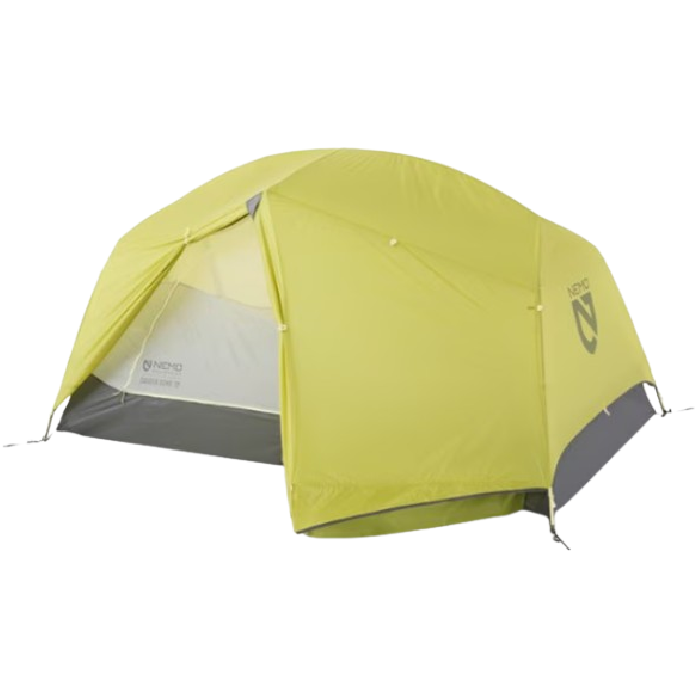
The NEMO Dagger OSMO 2 is our favorite car-and-backpacking crossover tent because it prioritizes two-person comfort and versatility without becoming so heavy that it stops making sense on the trail. Its rectangular 30.6-square-foot floor, nearly vertical walls, 43-inch peak, two large doors, and generous vestibules give partners noticeably more room to sleep, change clothes, and organize gear than most lighter backpacking tents. That extra living space is the Dagger’s defining advantage.
The freestanding pole structure is quick and forgiving to pitch, and NEMO’s OSMO fly resists the wet-weather stretch and sag that can affect traditional silnylon after hours of rain. Multiple guy points, useful ventilation, and a sturdy materials package also give the Dagger strong three-season weather performance. Its CleverHiker-measured packed weight is 3 pounds, 15 ounces, which is substantial compared with ultralight and semi-freestanding options, but much of that weight goes directly toward more room, larger vestibules, stronger materials, and easier day-to-day use.
This is not the tent we would choose for a solo hiker counting every ounce or for a pair focused primarily on long-mileage days. But for couples who split the load, weekend backpackers who value camp comfort, or people who want one shelter that works well for both backpacking and car camping, the Dagger’s comfort-to-versatility tradeoff is easy to justify.
NEMO Hornet OSMO 2
Best One-and-a-Half-Person Backpacking Tent
CleverHiker Rating: 4.6/5.0
Price: $480
Packed Weight: 2 lb. 8 oz.
Dimensions (LxWxH): 85 x 51/43 x 39 in.
Type: Semi-freestanding
Pros
- Ultralight
- Well-priced for the specs
- Very roomy for one
- Convenient pockets
- High-quality materials and construction
- Good ventilation
- Packs down small
Cons
- Expensive
- Small for two
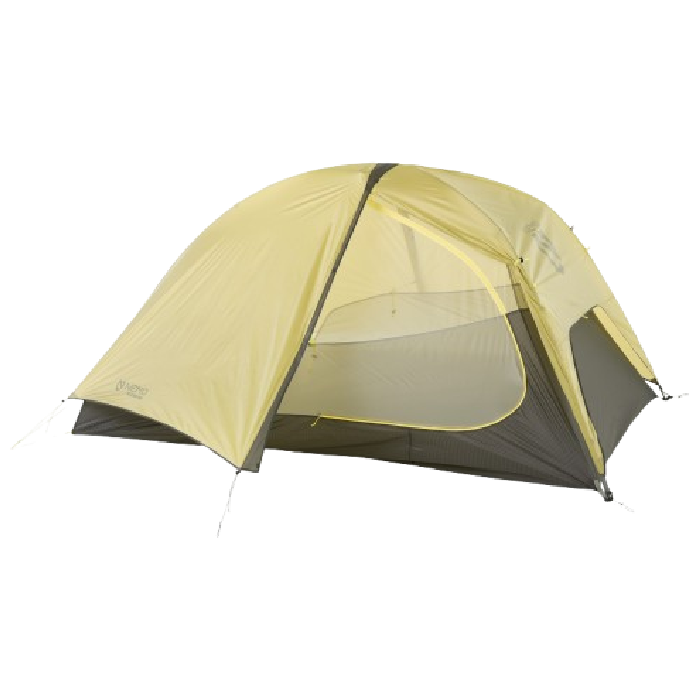
The NEMO Hornet OSMO 2 is our favorite one-and-a-half-person backpacking tent because it gives a solo hiker a very comfortable amount of space at a genuinely low weight. CleverHiker has tested Hornet tents over multiple generations and thousands of trail miles across mountain, forest, and desert environments. The current OSMO version keeps the simple semi-freestanding architecture, two doors, useful interior pockets, and compact packing while adding a fly fabric that resists wet-weather sag better than traditional silnylon.
At a CleverHiker-measured 2 pounds, 8 ounces, the Hornet is light enough for long-distance trips while still providing dedicated poles, a separate inner, and two vestibules. Its 27.7-square-foot floor is especially comfortable for one person, and features like the Nightlight Pocket and Divvy stuff sack make the limited space work efficiently. For solo use, the space-to-weight balance is excellent.
The main limitation is that this is a two-person tent on paper more than in spirit. Two adults can fit, but the tapered floor, lower-volume foot end, and modest peak height make it noticeably tighter than roomier freestanding options. The foot corners also need solid stakes for a proper pitch. If you want a spacious solo shelter that stays light and compact without moving to a trekking-pole design, the Hornet is one of the easiest ultralight-style tents to live with.
Big Agnes Tiger Wall UL2
Best Semi-Freestanding Backpacking Tent
CleverHiker Rating: 4.6/5.0
Price: $500
Packed Weight: 2 lb. 8 oz.
Dimensions (LxWxH): 86 x 52/42 x 39 in.
Type: Semi-freestanding
Pros
- Ultralight
- Very useful pocket layout
- Quality construction and materials
- Roomy for one
Cons
- A bit tight for two
- Lower durability than heavier tents
- No rainfly vents
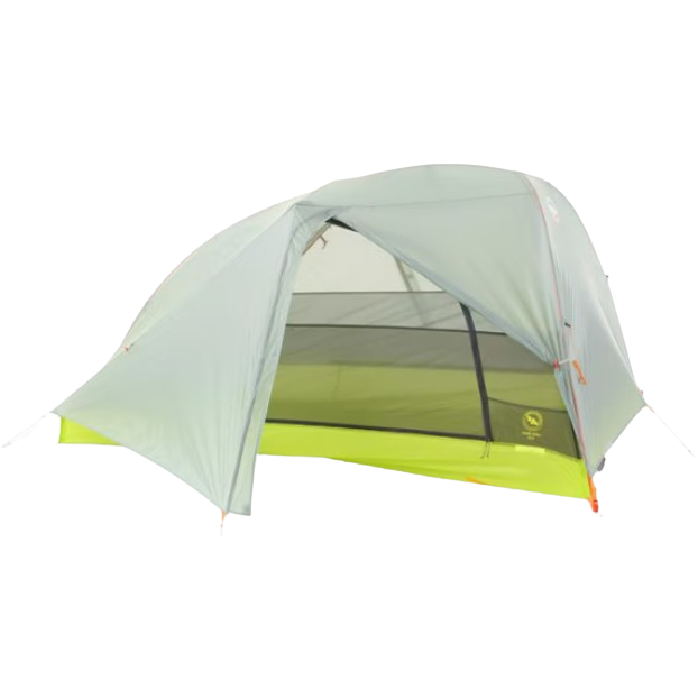
The Big Agnes Tiger Wall UL2 is our favorite semi-freestanding backpacking tent because it cuts a meaningful amount of weight while preserving many of the features that make a conventional two-person tent pleasant to use. CleverHiker’s Tiger Wall testing spans thousands of miles, and the current version keeps the dual-door layout, broad brow pole, excellent storage, and lightweight dedicated-pole system while moving to Big Agnes’ newer HyperBead fabric.
At a CleverHiker-measured 2 pounds, 8 ounces, the Tiger Wall is exceptionally light for a double-wall tent with two doors and its own pole structure. The long brow pole creates useful shoulder room, the storage layout is among the best in this weight class, and the tent is especially comfortable for one person who wants more room than a typical 1P shelter. It gets surprisingly close to trekking-pole-tent weight without requiring trekking poles for support.
The tradeoffs come from the same choices that keep it light. The foot end must be staked to create the full shape, two adults will find the interior fairly snug, and the thin materials need more careful handling than heavier freestanding tents. It also lacks dedicated fly vents. For solo hikers and weight-conscious pairs who want a familiar double-wall shelter without carrying a three-plus-pound tent, the Tiger Wall strikes one of the best weight-to-convenience balances in the category.
MSR Hubba Hubba LT 2
Best Lightweight Backpacking Tent for Two
CleverHiker Rating: 4.5/5.0
Price: $550
Packed Weight: 3 lb. 6 oz.
Dimensions (LxWxH): 88 x 52 x 40 in.
Type: Freestanding
Pros
- Great weather protection
- Freestanding design is easy to set up
- Durable
- Lightweight for the weather-worthiness
- Spacious
- Good pocket layout
Cons
- Expensive
- Heavier than ultralight tents
The MSR Hubba Hubba LT 2 is our favorite lightweight backpacking tent for two because it gives couples a roomy, weather-ready, fully freestanding shelter without crossing into heavy crossover-tent territory. Its true rectangular 32-square-foot floor works especially well with modern rectangular sleeping pads, and the broad upper canopy provides useful shoulder room instead of concentrating all of the headspace at one narrow peak. Two doors, two vestibules, and a good pocket layout make it easy for partners to share.
At a CleverHiker-measured 3 pounds, 6 ounces, the Hubba Hubba LT is heavier than the ultralight semi-freestanding and trekking-pole shelters in this guide, but the extra weight buys stronger materials, a more forgiving pitch, and excellent weather confidence. A full-coverage fly, taped seams, sturdy poles, useful ventilation, and multiple guy points make it a dependable option for regular three-season use. The symmetrical freestanding frame is also one of the easiest setups in the category.
Hikers who prioritize the lowest possible base weight can go much lighter, and solo backpackers may not need this much structure. But for two people who want a tent that is comfortable enough to share, durable enough for frequent use, and simple enough to pitch almost anywhere, the Hubba Hubba LT delivers an unusually complete package at a still-reasonable trail weight.
Hyperlite Mountain Gear Unbound 2
Best Ultralight Backpacking Tent
CleverHiker Rating: 4.5/5.0
Price: $795
Packed Weight: 1 lb. 5.8 oz.
Dimensions (LxWxH): 90 x 48 x 48 in.
Type: Non-freestanding
Pros
- Ultralight
- Spacious
- Durable for the weight
Cons
- Non-freestanding setup has a learning curve
- Collects condensation
- Very expensive
The Hyperlite Mountain Gear Unbound 2 is our current Best Ultralight Backpacking Tent for experienced hikers who want an exceptionally light shelter without giving up useful two-person space. At a CleverHiker-measured 1 pound, 5.8 ounces, it is dramatically lighter than conventional freestanding tents, and its 90-by-48-inch floor with a 48-inch peak gives one person abundant space and makes the shelter workable for two regular-width pads. Its combination of very low weight and usable interior volume is the main reason it ranks so highly.
The Unbound uses Dyneema Composite Fabric and trekking poles for structure, so it does not absorb water or sag when wet. Fully taped seams and a tall bathtub floor provide strong rain protection, while the simplified single-wall architecture keeps the system light. DCF also gives it excellent strength for its weight and is straightforward to patch in the field.
The tradeoffs are the standard ones for this style of shelter. Setup depends on secure stakes, balanced tension, and some practice; condensation requires more active management than in a double-wall tent; interior storage is minimal; and the $795 price is among the highest in the category. The Zpacks Duplex is lighter in our measurements, but the Unbound carries a slightly higher overall CleverHiker rating. For hikers already comfortable with trekking-pole shelters, the Unbound is our strongest overall ultralight package rather than simply the absolute lightest tent.
Durston X-Mid 2
Best Hybrid Backpacking Tent
CleverHiker Rating: 4.5/5.0
Price: $319
Packed Weight: 2 lb. 6.4 oz.
Dimensions (LxWxH): 92 x 52 x 48 in.
Type: Non-freestanding
Pros
- Ultralight
- Excellent ventilation
- Easy to pack
- Excellent vestibule design
- Spacious interior
- Affordable
Cons
- Shape is tricky to pitch at first
- Large footprint and non-freestanding design can complicate campsite selection
- 90-degree zippers are not the most user-friendly
The Durston X-Mid 2 is our favorite hybrid backpacking tent because it combines the low-weight structure of a trekking-pole shelter with the condensation management and separation of a true double-wall design. Its offset geometry creates steep walls, two 48-inch peaks, huge vestibules, and excellent usable space without dedicated tent poles. At $319, it also costs far less than most premium ultralight shelters, making value one of its biggest strengths.
At a CleverHiker-measured 2 pounds, 6.4 ounces, the X-Mid is impressively light for this much room and weather protection. The polyester fly does not stretch and sag like typical nylon when wet, the fly-first pitch helps keep the inner dry during setup in rain, and ventilation is excellent. Few tents in this guide combine this much space, low weight, and price so effectively.
The biggest compromise is campsite flexibility. The rectangular footprint is large, the corners need to be placed accurately, and the shelter is less forgiving on rocky, root-filled, or cramped sites than a freestanding dome. The 90-degree door zippers also take some getting used to. For backpackers comfortable with trekking poles and a little extra pitch technique, especially those who value ventilation and budget as much as low weight, the X-Mid is one of the strongest overall values in the category.

REI Trailmade 2
Most Affordable Backpacking Tent
CleverHiker Rating: 4.4/5.0
Price: $199
Packed Weight: 5 lb. 7 oz. including footprint
Dimensions (LxWxH): 88 x 52 x 40 in.
Type: Freestanding
Pros
- Low price
- Durable
- Very easy to set up
- Footprint included
Cons
- Heavy
- Bulky
- Limited headroom and comfort features
The REI Trailmade 2 is our Most Affordable Backpacking Tent at $199, and it earns that designation by being simple, durable, and genuinely functional in the backcountry at a much lower price than premium lightweight shelters. Its 31.8-square-foot floor has enough space for two regular pads, two large D-shaped doors make entry easy, and the basic crossed-pole structure is one of the most intuitive pitches in this guide. The included footprint also adds value and protects the already durable floor.
The Trailmade’s heavier materials are a major reason it scores so well for durability and weather resistance. Its coated polyester fly, substantial bathtub floor, sturdy poles, and 75-denier fabric package have handled sustained rain and routine campsite abuse well in our testing. For beginners, occasional backpackers, and people who are hard on gear, that simplicity and toughness are real advantages.
The downside is weight and bulk. Our measured packed weight is 5 pounds, 7 ounces including the footprint, so this is not a good choice for solo hikers or people covering long distances. It also has less headroom and refinement than the roomier Half Dome 2 Plus. The Half Dome remains our Best Budget pick for buyers willing to spend and carry more for comfort, while the Trailmade is the right choice when the lowest entry price matters most.
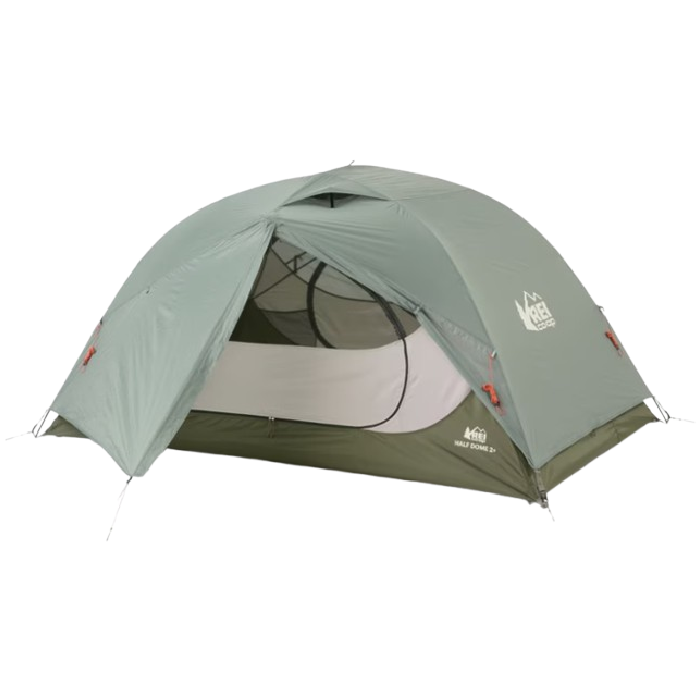
REI Half Dome 2 Plus
Best Budget Backpacking Tent
CleverHiker Rating: 4.4/5.0
Price: $369
Packed Weight: 6 lb. 3.6 oz. including footprint
Dimensions (LxWxH): 92 x 56 x 42 in.
Type: Freestanding
Pros
- Good value
- Very roomy interior
- Durable
- Quick and easy setup
- Footprint included
Cons
- Heavy
- Bulky
The REI Half Dome 2 Plus is our Best Budget Backpacking Tent because it delivers exceptional two-person space, durability, weather protection, and ease of use for $369. Its 92-by-56-inch floor provides 35.8 square feet of space—the largest floor area in our current lineup—and the ridge-pole architecture keeps the upper walls much more vertical than a basic dome. Two wide sleeping pads fit easily, and generous storage plus dual doors make it especially comfortable for couples.
The Half Dome also uses much more substantial materials than most lightweight backpacking tents. A full rainfly, high bathtub floor, sturdy hubbed aluminum poles, robust hardware, and an included footprint all contribute to excellent durability and unusually high weather confidence for the price. Setup remains straightforward because the tent is fully freestanding, color-coded, and easy to reposition before final staking.
The major drawback is weight. Our measured packed weight is 6 pounds, 3.6 ounces including the footprint, making it the heaviest tent in this guide. We strongly prefer splitting the components between two people, and high-mileage backpackers will be happier with a lighter premium shelter. The cheaper Trailmade remains our Most Affordable pick, but if you are willing to carry more for significantly better comfort and refinement, the Half Dome offers the best budget combination of livability, durability, and value.
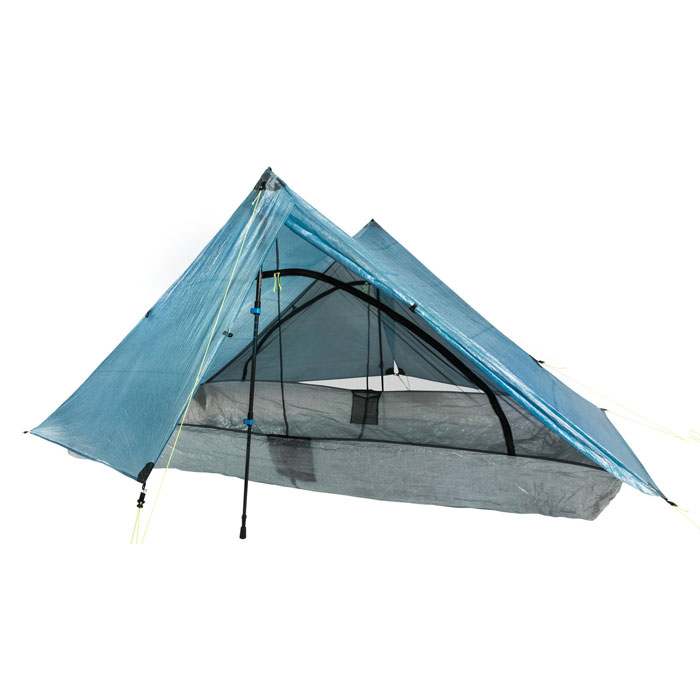
Zpacks Duplex Classic
Ultralight Backpacking Tent With a Huge Following
CleverHiker Rating: 4.4/5.0
Price: $749
Packed Weight: 1 lb. 1.9 oz.
Dimensions (LxWxH): 90 x 45 x 48 in.
Type: Non-freestanding
Pros
- Ultralight
- Very durable for the weight
- Spacious
- Ample headroom
- DCF will not sag when wet
- Large doors and vestibules
- Uses trekking poles instead of dedicated tent poles
Cons
- Expensive
- Collects condensation
- Non-freestanding design has a learning curve
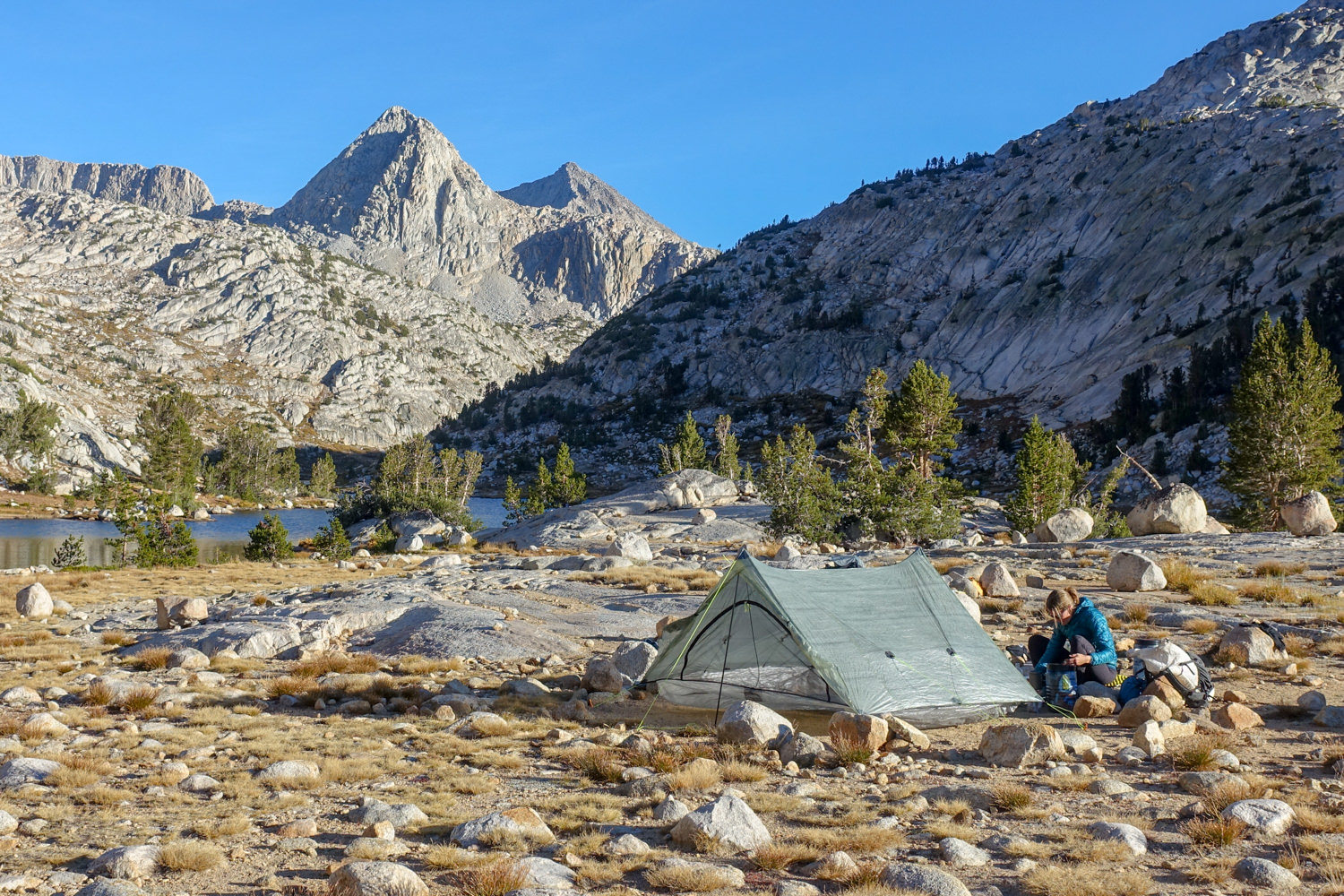
The Zpacks Duplex Classic is the lightest tent in our measured lineup and remains one of our favorite shelters for thru-hiking and long-distance backpacking. At just 1 pound, 1.9 ounces packed, it saves a remarkable amount of weight while still providing a 90-by-45-inch floor, a 48-inch peak, two doors, and two vestibules. For one person it is exceptionally roomy, and experienced lightweight pairs can make good use of the two-person floor.
Dyneema Composite Fabric is a major part of the appeal. It is waterproof, does not absorb water, and does not sag when wet, so the canopy maintains its shape through long storms. Trekking poles replace a dedicated pole set, and field repairs with compatible DCF tape are straightforward. If your priority is reducing shelter weight as far as practical while retaining real living space, the Duplex is hard to beat.
The tradeoffs are equally clear. The single-wall design requires active condensation management, the non-freestanding pitch depends on good stake placement and even tension, DCF is bulkier in a pack than its scale weight suggests, and the $749 price is substantial. The HMG Unbound 2 carries a slightly higher overall CleverHiker rating and our current Best Ultralight designation, while the Duplex remains lighter. Choose the Duplex when absolute measured weight is the priority and you are comfortable with trekking-pole-tent technique.
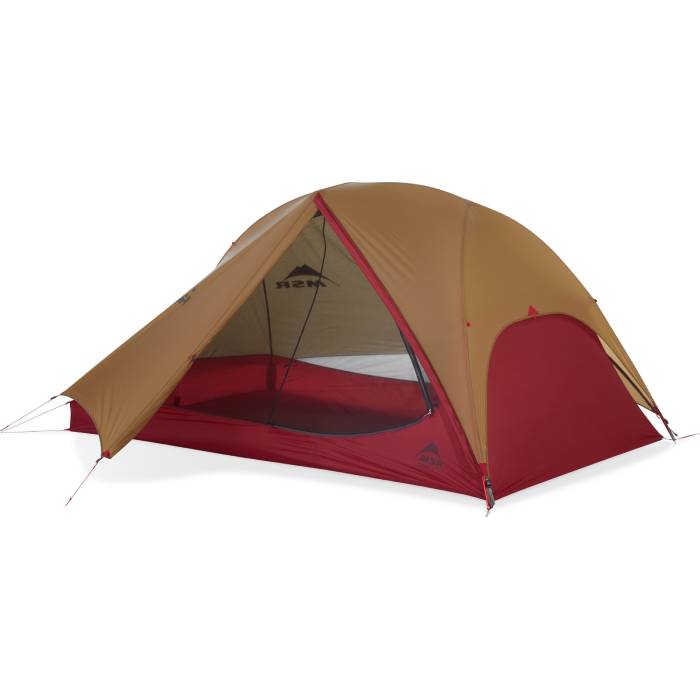
MSR FreeLite 2
Roomy, Lightweight Backpacking Tent for Solo Hikers
CleverHiker Rating: 4.2/5.0
Price: $500
Packed Weight: 2 lb. 5 oz.
Dimensions (LxWxH): 84 x 50 x 39 in.
Type: Semi-freestanding
Pros
- Ultralight
- Roomy for one
- Two doors and vestibules
- Convenient pockets
- Rainfly gutter helps prevent drippy entry
Cons
- Tight for two
The MSR FreeLite 2 is a strong choice for solo backpackers who want a roomy double-wall shelter at very low weight without switching to a trekking-pole tent. Its true rectangular 84-by-50-inch floor, two doors, two vestibules, simple Y-shaped pole structure, and useful rainfly gutters make it practical for day-to-day trail use. For one person, the space feels generous, and the conventional inner-and-fly layout keeps the sleeping area separated from condensation.
At a CleverHiker-measured 2 pounds, 5 ounces, the FreeLite is one of the lightest double-wall tents with dedicated poles in our lineup. The semi-freestanding frame removes weight without making setup especially technical, and the narrow packed shape is easy to fit inside a lightweight backpack. Its biggest strength is giving solo hikers true two-person floor space without a typical two-person weight penalty.
The main compromise is shared livability. Two adults fit, but the 39-inch peak, steep canopy, and 50-inch width feel tight compared with roomier two-person tents, especially with wide pads. The thin 15-denier fabrics also require normal ultralight care, and the nylon fly may need re-tensioning in cold or wet conditions.
We like the FreeLite most as a spacious solo shelter or for minimalist pairs who value weight over interior volume. For that use case, it offers an excellent blend of low weight, familiar setup, and double-wall comfort.
Product Comparison Table
| oSort | Product | Price | Packed Weight | Dimensions (LxWxH) | Type | Comfort | Weight & Packability | Weather Resistance | Ease of Setup | Durability | 0 |
Big Agnes Copper Spur UL2 View at REI View at Amazon 
|
$600 | 3 lb. | 88 x 52/42 x 40 in. | Freestanding | 4.6 | 4.3 | 4.5 | 4.7 | 4.3 | 1 |
SlingFin Portal 2 View at SlingFin
|
$610 | 3 lb. 5 oz. | 85 x 51/42 x 44 in. | Freestanding | 4.5 | 4.2 | 4.7 | 4.5 | 4.5 | 2 |
NEMO Dagger OSMO 2 View at REI View at Amazon |
$600 | 3 lb. 15 oz. | 88 x 50 x 43 in. | Freestanding | 4.7 | 4.0 | 4.6 | 4.7 | 4.5 | 3 |
NEMO Hornet OSMO 2 View At REI View At Amazon |
$480 | 2 lb. 8 oz. | 85 x 51/43 x 39 in. | Semi-freestanding | 4.4 | 4.6 | 4.3 | 4.5 | 4.2 | 4 |
Big Agnes Tiger Wall UL2 View at REI View at Amazon
|
$500 | 2 lb. 8 oz. | 86 x 52/42 x 39 in. | Semi-freestanding | 4.4 | 4.6 | 4.4 | 4.4 | 4.1 | 5 |
MSR Hubba Hubba LT 2 View at REI View at Amazon |
$550 | 3 lb. 6 oz. | 88 x 52 x 40 in. | Freestanding | 4.6 | 4.2 | 4.6 | 4.7 | 4.4 | 6 |
Hyperlite Mountain Gear Unbound 2 View at Hyperlite Mountain Gear View at Garage Grown Gear
|
$795 | 1 lb. 5.8 oz. | 90 x 48 x 48 in. | Non-freestanding | 4.3 | 5.0 | 4.5 | 4.1 | 4.6 | 7 |
Durston X-Mid 2 View at Durston 
|
$319 | 2 lb. 6.4 oz. | 92 x 52 x 48 in. | Non-freestanding | 4.5 | 4.7 | 4.2 | 4.0 | 3.9 | 8 |
REI Trailmade 2 View at REI
|
$199 | 5 lb. 7 oz. including footprint | 88 x 52 x 40 in. | Freestanding | 4.4 | 3.6 | 4.7 | 4.9 | 4.9 | 9 |
REI Half Dome 2 Plus View at REI
|
$369 | 6 lb. 3.6 oz. including footprint | 92 x 56 x 42 in. | Freestanding | 4.9 | 3.5 | 4.7 | 4.8 | 4.8 | 10 |
Zpacks Duplex Classic View at Zpacks View at Garage Grown Gear |
$749 | 1 lb. 1.9 oz. | 90 x 45 x 48 in. | Non-freestanding | 4.3 | 5.0 | 4.4 | 4.0 | 4.6 | 11 |
MSR FreeLite 2 View at REI View at Amazon |
$500 | 2 lb. 5 oz. | 84 x 50 x 39 in. | Semi-freestanding | 4.2 | 4.6 | 4.2 | 4.4 | 4.2 |
|---|
Analysis & Results
We rank tents based on five metrics: comfort, weight and packed size, weather resistance, ease of setup, and durability. The comparisons below explain where the strongest performers separate themselves.
What Backpacking Tent is the Best Value?
The REI Half Dome 2 Plus and REI Trailmade 2 are our clearest budget standouts. The Half Dome offers far more interior space and comfort, while the Trailmade costs less and has one of the simplest pitches in the category.
The Durston X-Mid 2 is another exceptional value for experienced backpackers. It costs much less than most premium ultralight shelters while delivering low weight, a double-wall design, large vestibules, and excellent ventilation.
If you are willing to spend more, the Big Agnes Copper Spur UL2 remains our favorite overall because it hits the best balance of trail weight, comfort, weather protection, and ease of use.
Which Backpacking Tent is the Most Comfortable?
The REI Half Dome 2 Plus leads our comfort scoring with a 4.9. Its 56-inch width, long floor, and generous headroom make it the easiest tent here for two people who want room to spread out.
The NEMO Dagger OSMO 2, Big Agnes Copper Spur UL2, and MSR Hubba Hubba LT 2 are the strongest lighter freestanding alternatives. Each gives two people useful space without the Half Dome’s six-plus-pound packed weight.
Among trekking-pole shelters, the Durston X-Mid 2 stands out for near-vertical walls, a tall peak, and huge vestibules, though its offset geometry is less ideal for sharing than a symmetrical dome.
Which Backpacking Tent is the Lightest & Most Packable?
The Zpacks Duplex Classic is the lightest tent in our measured lineup at 1 pound, 1.9 ounces, followed closely by the Hyperlite Mountain Gear Unbound 2 at 1 pound, 5.8 ounces.
The Durston X-Mid 2 is heavier at 2 pounds, 6.4 ounces, but still exceptionally light for a roomy double-wall shelter. The MSR FreeLite 2 is our lightest semi-freestanding model at 2 pounds, 5 ounces.
The Big Agnes Tiger Wall UL2 and NEMO Hornet OSMO 2 both measure 2 pounds, 8 ounces packed and strike an excellent balance between double-wall convenience and low weight.
Which Backpacking Tent is the Most Weather-Resistant?
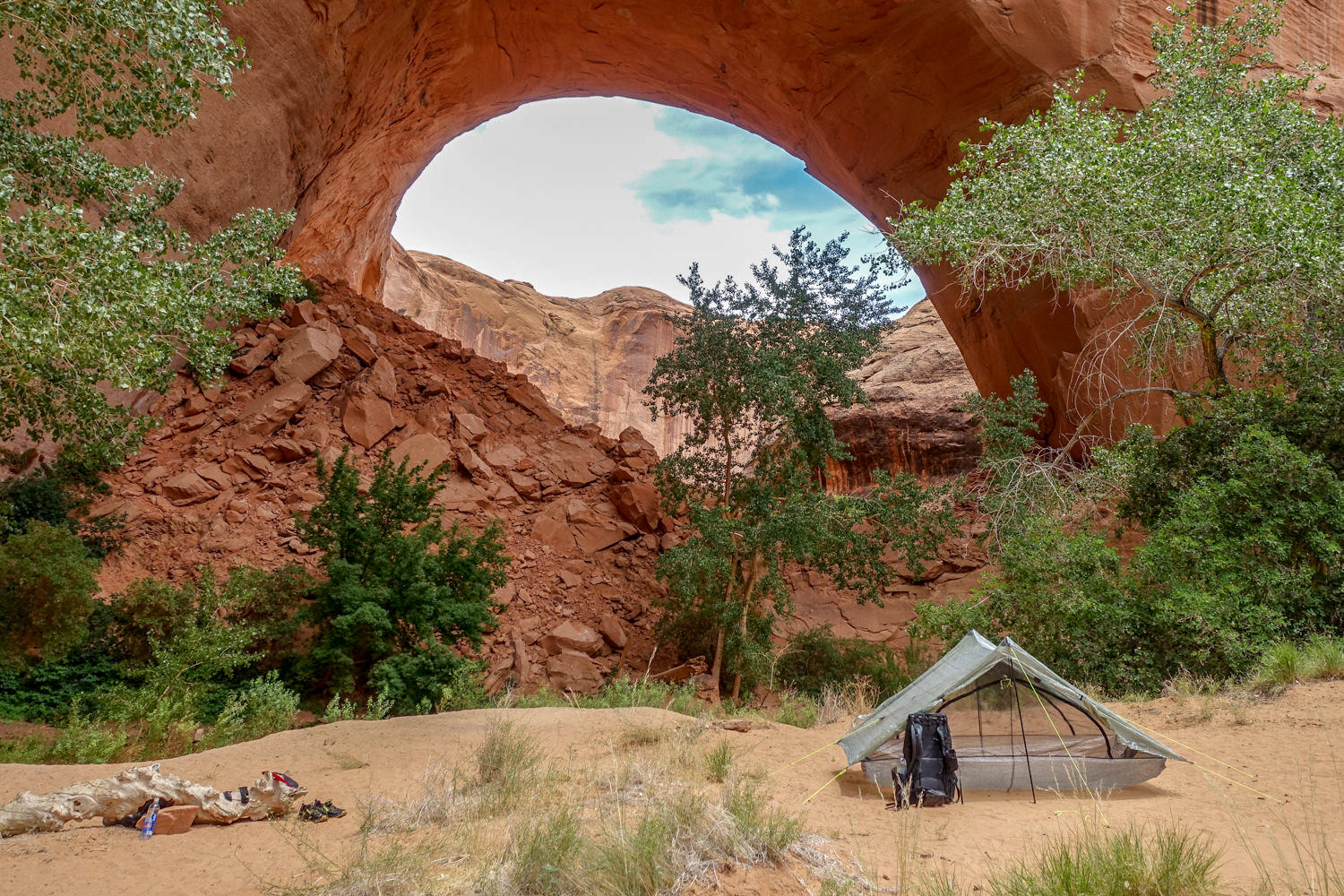
The SlingFin Portal 2 earns our highest weather-resistance score at 4.7. Its pole structure, internal tensioning, multiple guy points, and trekking-pole reinforcement option give it more storm margin than most three-season tents.
The REI Half Dome 2 Plus and REI Trailmade 2 also score 4.7 thanks to substantial fabrics, full fly coverage, and high bathtub floors. The NEMO Dagger OSMO 2 and MSR Hubba Hubba LT 2 follow closely at 4.6.
The DCF canopies on the Zpacks Duplex Classic and HMG Unbound 2 do not absorb water or sag when wet, but their single-wall construction demands more condensation management. The Big Agnes Tiger Wall UL2 is one of the stronger weather performers among the ultralight semi-freestanding tents.
Which Backpacking Tent is the Easiest to Set Up?
The REI Trailmade 2 has the highest setup score at 4.9. Its simple symmetrical X-pole structure is intuitive and forgiving, even for first-time backpackers.
The REI Half Dome 2 Plus, NEMO Dagger OSMO 2, MSR Hubba Hubba LT 2, SlingFin Portal 2, and Big Agnes Copper Spur UL2 are all straightforward freestanding designs that require less precision than trekking-pole shelters.
The Durston X-Mid 2, Zpacks Duplex Classic, and HMG Unbound 2 require more attention to stake placement and campsite geometry. They become faster with practice, but they are less forgiving on rocky or uneven terrain.
Which Backpacking Tent is the Most Durable?
The REI Trailmade 2 and REI Half Dome 2 Plus top our durability scores at 4.9 and 4.8. Their heavier-duty fabrics tolerate abrasion and everyday mistakes better than most ultralight shelters.
The Zpacks Duplex Classic and HMG Unbound 2 also score very well because DCF delivers excellent tensile strength and waterproof performance at extremely low weight. It can still puncture and develop wear at repeated fold points, so it is not indestructible.
The SlingFin Portal 2 and NEMO Dagger OSMO 2 pair premium components with strong structures, while the lowest durability scores in this lineup belong to lighter shelters that ask more care from the user.
How to Choose a Backpacking Tent
What is a Good Price for a Backpacking Tent?
Premium backpacking tents in this guide run roughly $500 to $800. That money usually buys a lower weight, more refined pole geometry, premium fabrics, or specialized materials such as Dyneema Composite Fabric.
Our budget picks run from $199 to $369. They are reliable and durable, but they carry a substantial weight penalty compared with premium lightweight tents.
Freestanding vs. Semi-Freestanding vs. Non-Freestanding
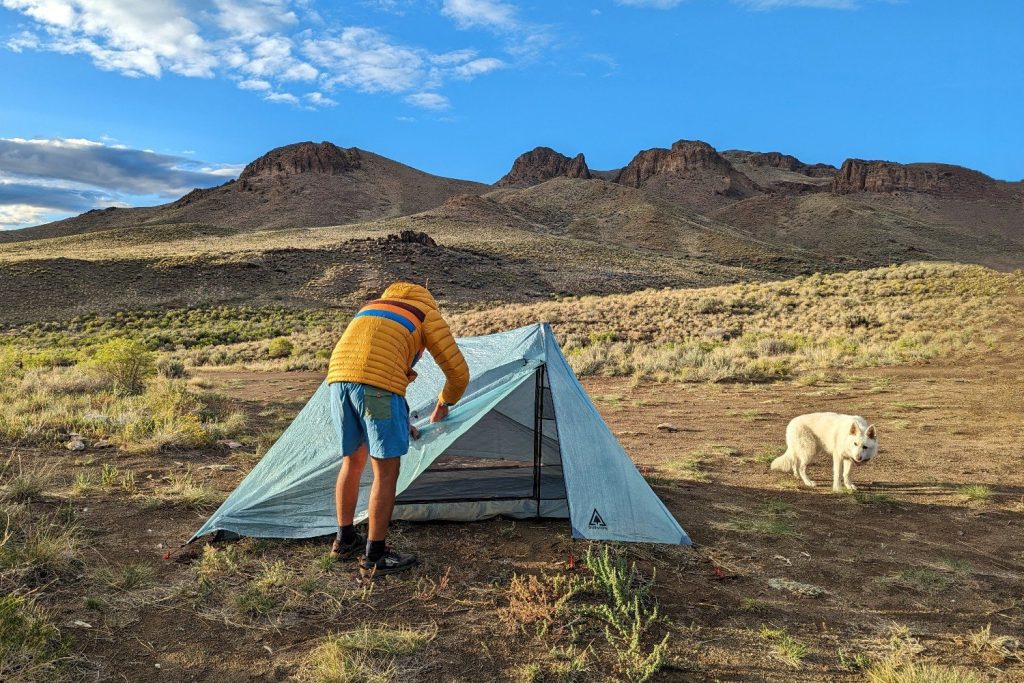
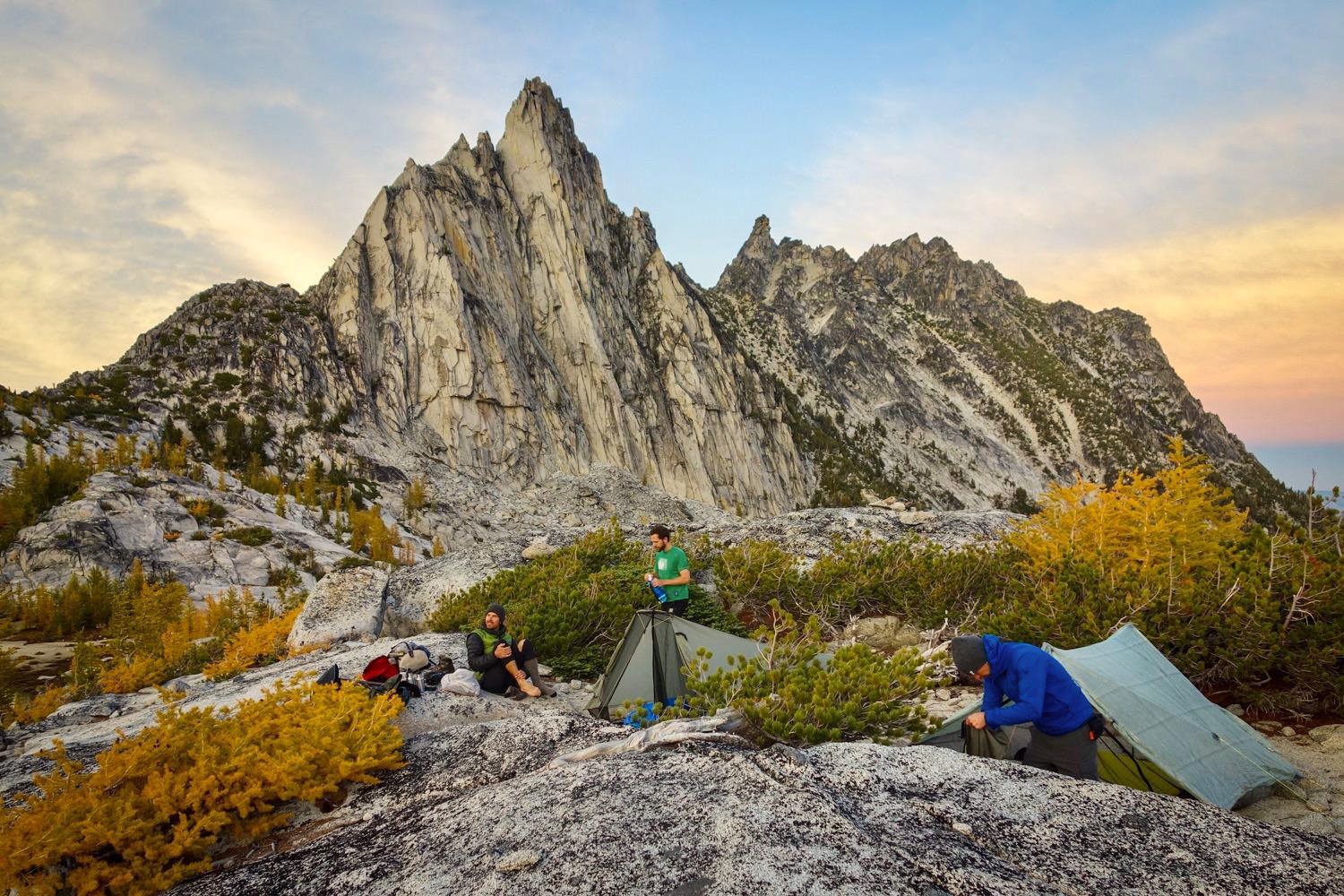
A freestanding tent uses dedicated poles and can stand before it is staked out. That makes setup forgiving and lets you reposition the tent after pitching.
A semi-freestanding tent uses a smaller dedicated pole structure and normally requires stakes at the foot to reach its full shape. These tents save weight while keeping much of the convenience of a traditional design.
A non-freestanding tent relies on stakes, guylines, and usually trekking poles for structure. These shelters can be dramatically lighter, but they require better stake placement, more campsite space, and more practice.
Double-Wall vs. Single-Wall
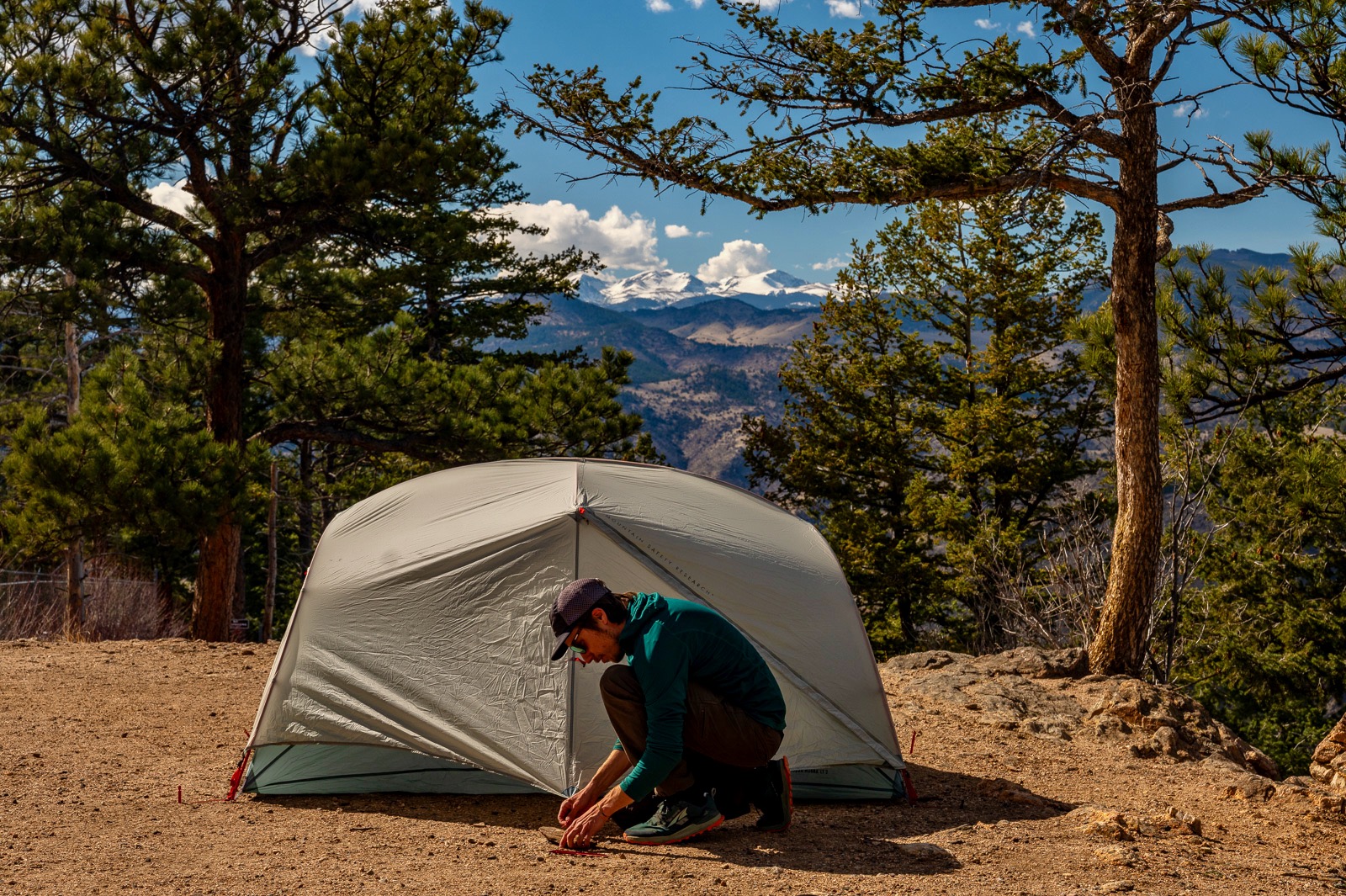
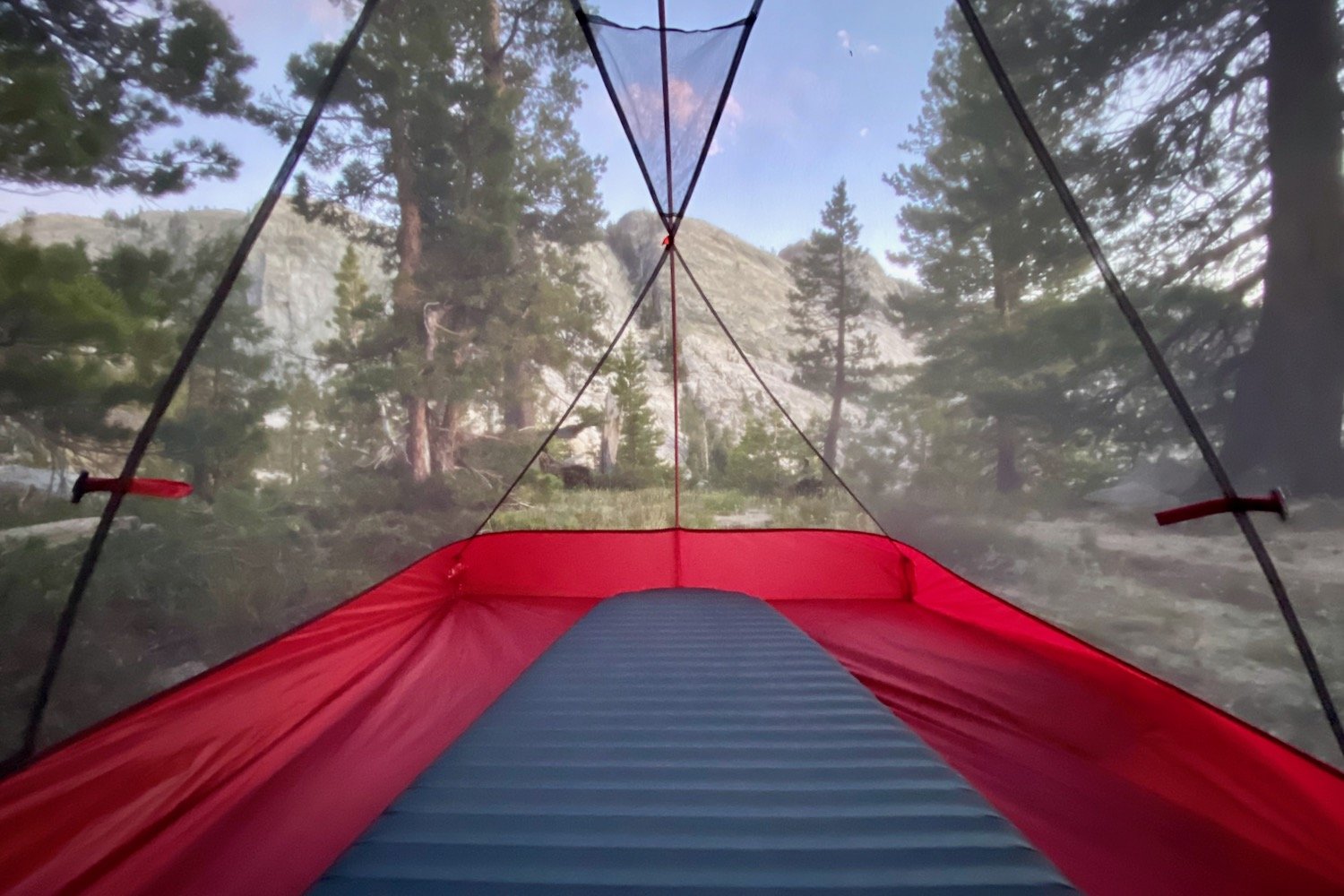
Double-wall tents separate the inner mesh body from the waterproof fly. That barrier makes condensation easier to manage and gives you the option to use the mesh inner alone in dry weather.
Single-wall shelters combine the weatherproof canopy and interior structure. They save weight but make it easier to brush against condensation on the inside of the shelter.
How Big Should Your Tent Be?
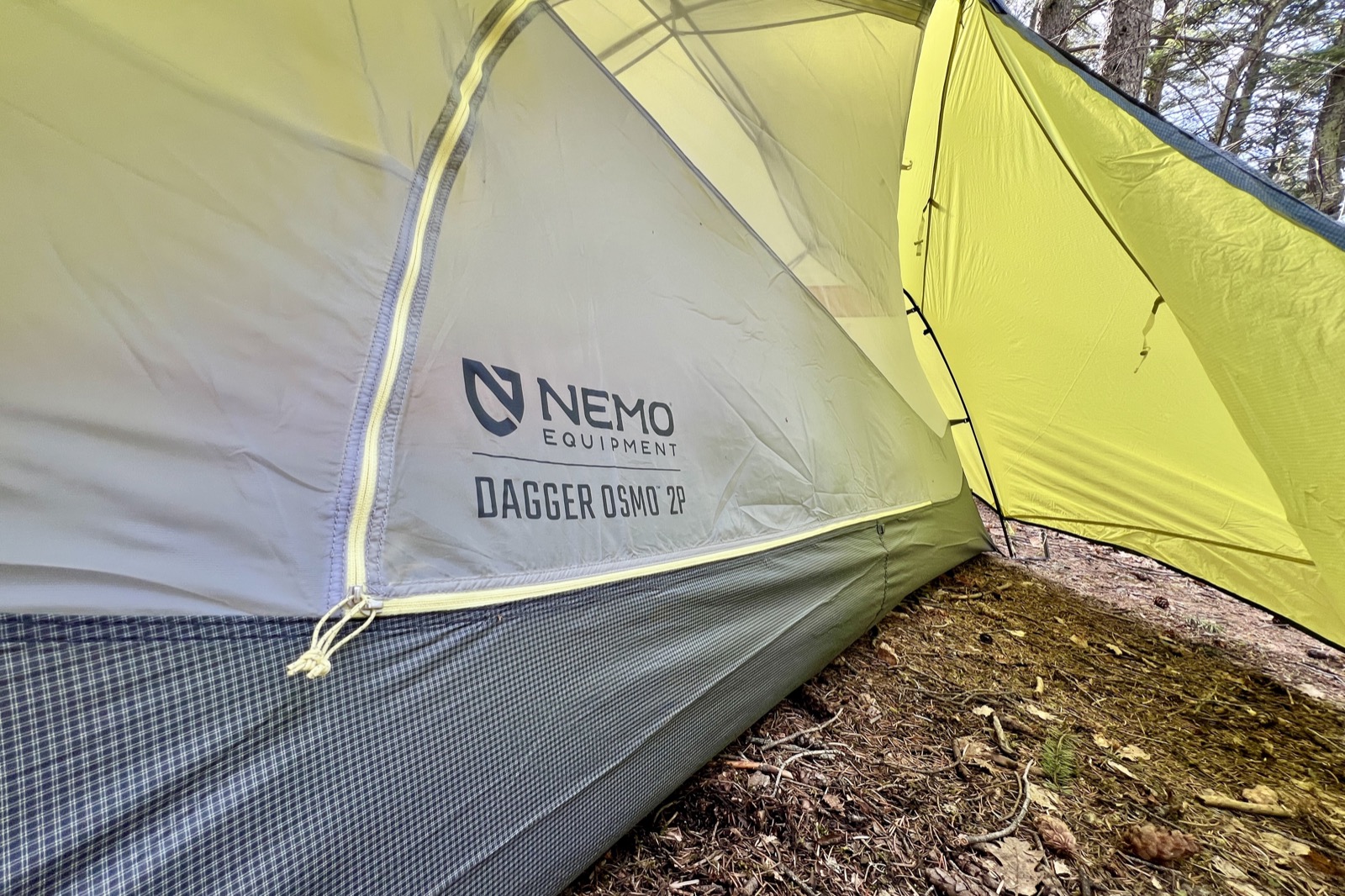
Two-person tents are the most versatile size for couples and solo hikers who like extra room. Dedicated solo hikers can save weight with a 1P, while couples with a dog or a strong preference for space often prefer a 3P.
Floor dimensions matter more than the capacity label alone. Pay attention to width, taper, usable headroom, door placement, and whether your preferred sleeping pads actually fit side by side.
What is Dyneema Composite Fabric?
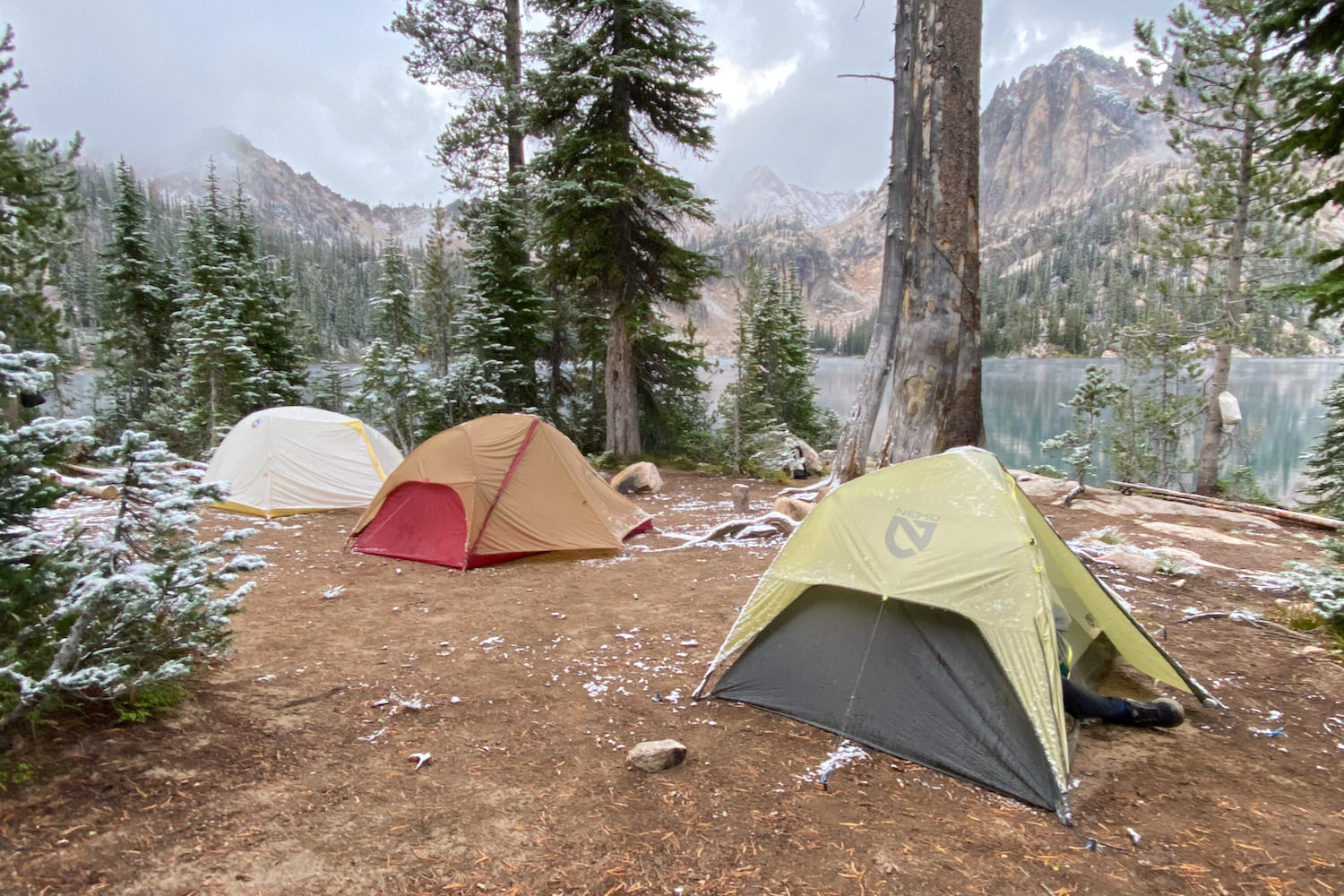
Dyneema Composite Fabric, or DCF, is a very light waterproof laminate with excellent tensile strength for its weight. It does not absorb water or sag when wet, which is a major advantage in ultralight shelters.
DCF is expensive, can be bulky when packed, and still needs care around punctures and repeated creases. We think it makes the most sense for hikers with a specific reason to prioritize minimum shelter weight.
Packaged Weight vs. Minimum Trail Weight
Packaged weight is the most useful number for comparing what you actually carry. Our measured packed weights include the tent body, fly, poles when applicable, included stakes, and the normal stuff-sack system unless we explicitly note otherwise.
Minimum trail weight is not standardized across manufacturers and may exclude stakes, guylines, sacks, or other pieces. We do not substitute a lighter minimum-trail-weight figure for our measured packed weight.
Backpacking Tent Doors
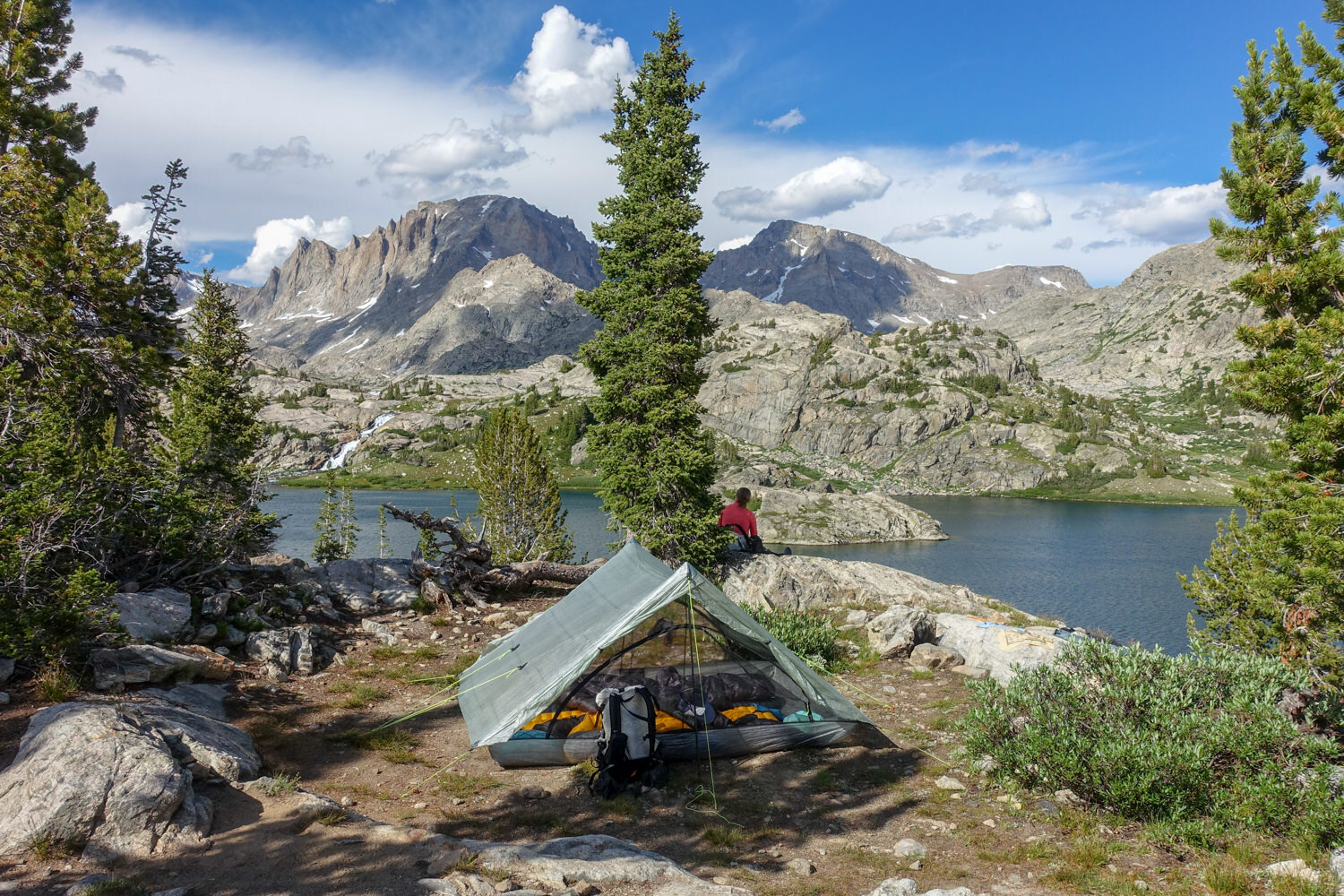
For two sleepers, we strongly prefer two side doors and two vestibules. Separate entrances reduce climbing over a partner and give each person protected storage for shoes and wet gear.
Do You Need a Footprint?
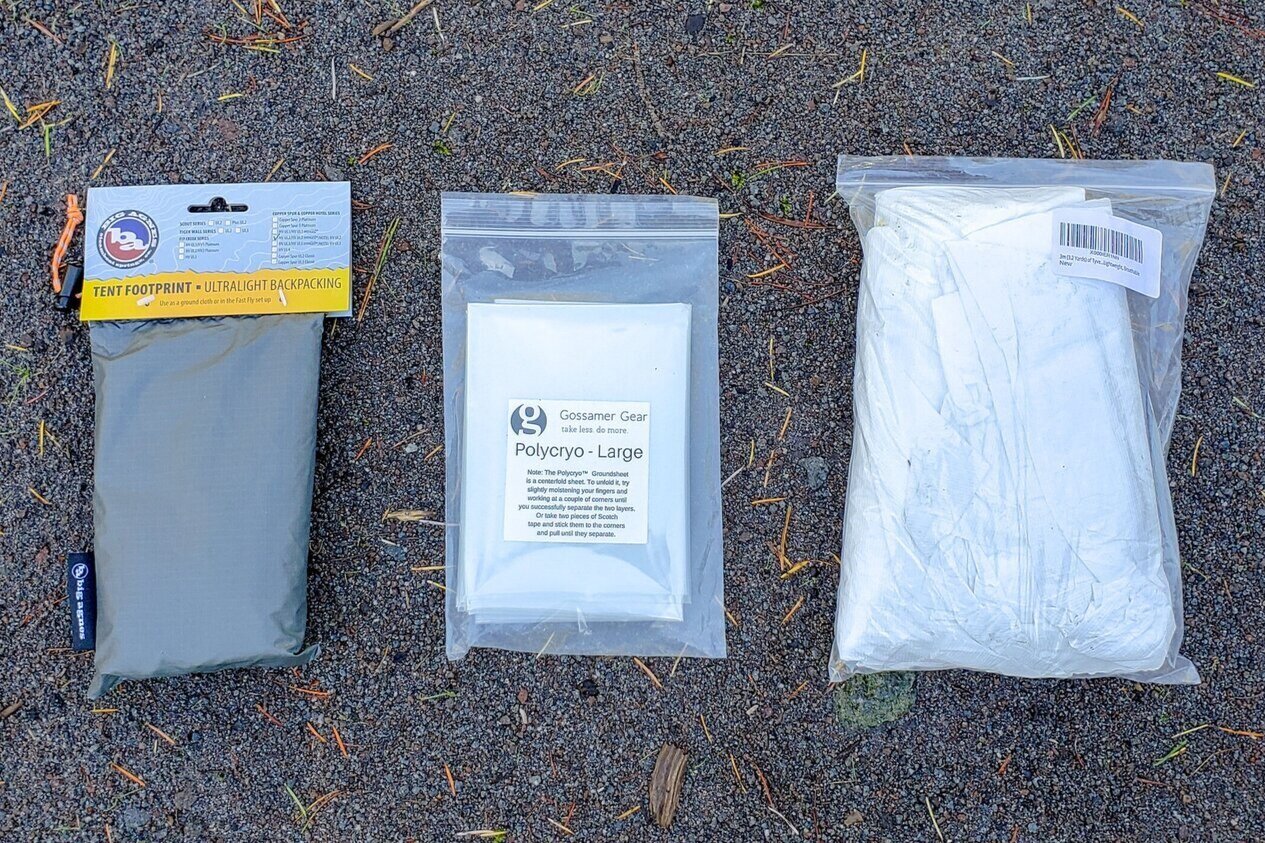
A footprint can extend the life of a tent floor and add a little protection from abrasive or wet ground, but it is not mandatory for every trip. Careful campsite selection often matters more.
If a model includes a footprint, as the REI Half Dome 2 Plus and Trailmade 2 do, remember that carrying it affects packed weight. If it does not, a lightweight groundsheet can be a less expensive alternative to a custom footprint.
Why Trust CleverHiker
We’ve hiked more than 100,000 miles on trails around the world and spent more than 5,000 nights in the wilderness. Our tent testing spans long trails, mountain trips, desert routes, wet forests, and exposed alpine camps.
We combine long-term field use with side-by-side category testing and standardized measurements. Our recommendations are based on CleverHiker testing and judgment, not manufacturer relationships or outside review consensus.
Testing Methodology
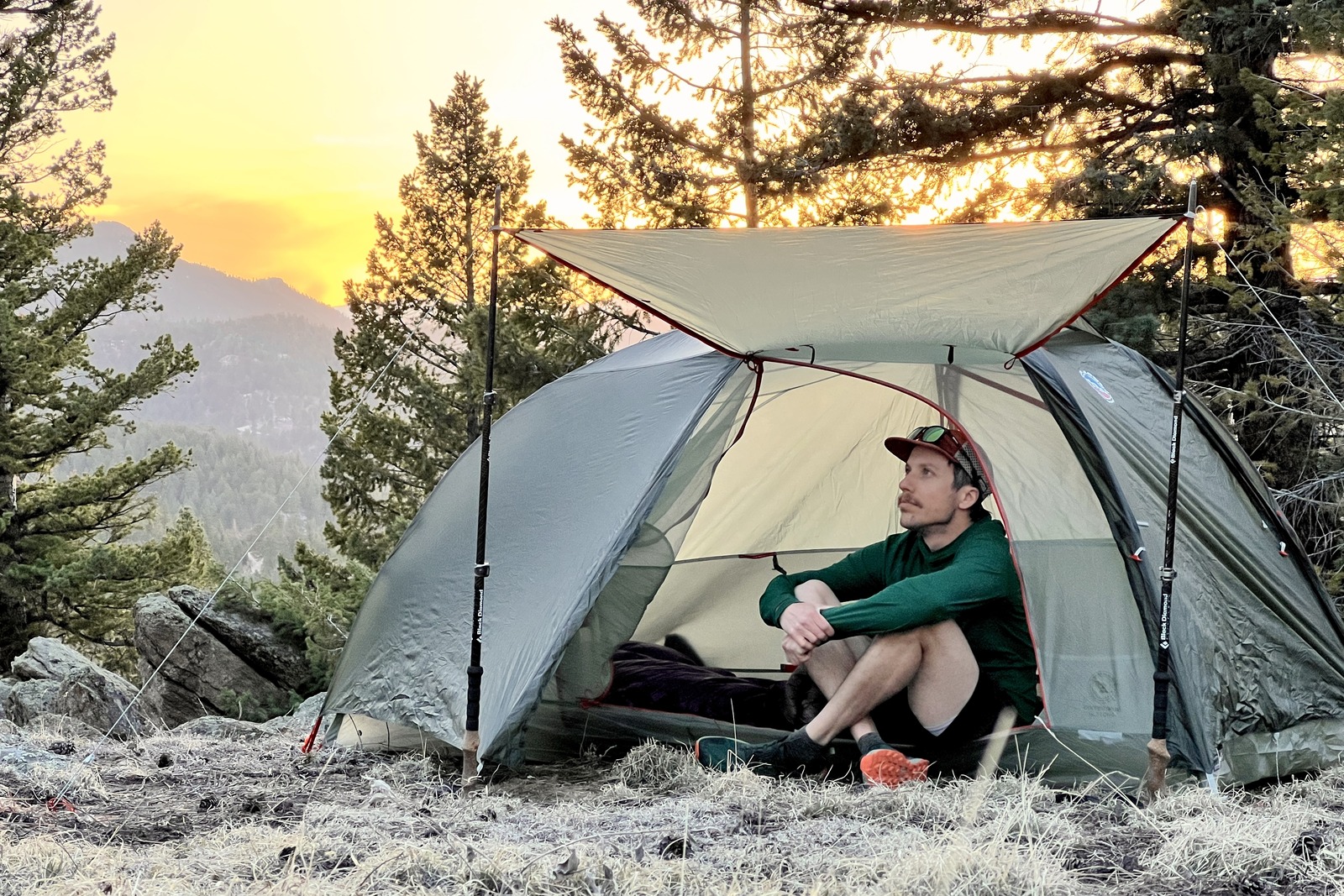
We assess every backpacking tent in this guide on comfort, weight and packed size, weather resistance, ease of setup, and durability. The overall CleverHiker Rating is a holistic editorial assessment rather than a mathematical average of the five metric scores.
How Do We Test Comfort?
We evaluate floor dimensions and taper, usable headroom, doors and vestibules, pocket layout, zipper operation, and how livable each shelter feels when sleeping, changing clothes, organizing gear, and sharing the space.
How Do We Measure Weight & Packed Size?
We measure the normal packed configuration and note how easily the tent body, fly, poles, stakes, and sacks fit into a backpack. We keep CleverHiker-measured weights separate from manufacturer-listed weights.
How Do We Assess Weather Resistance?
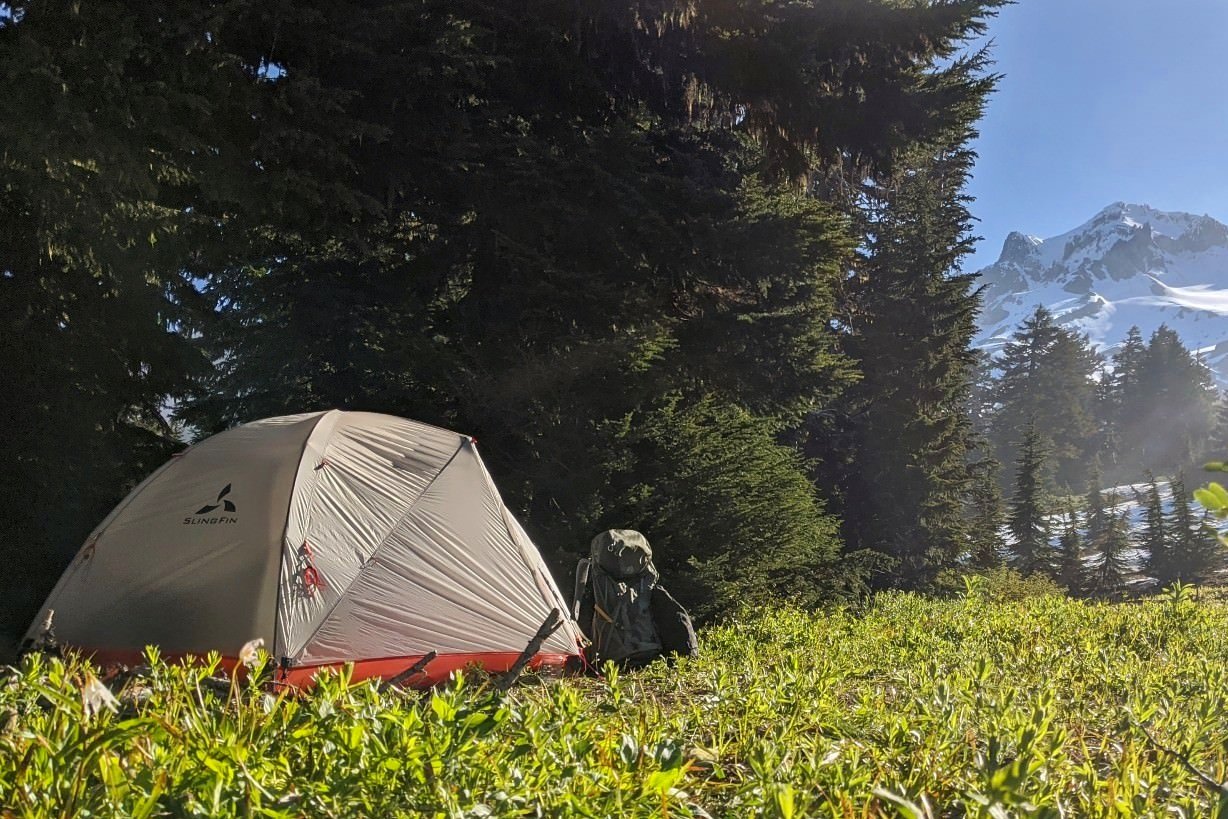
We evaluate rain protection, splashback, fly sag, wind stability, guy-out options, vestibule coverage, ventilation, and condensation over repeated nights in varied conditions.
What Do We Look at For Ease of Set Up?
We look at how intuitive the pole or trekking-pole geometry is, how much stake precision is required, whether the tent is easy to orient, and how forgiving the pitch is on imperfect ground.
How Do We Determine Durability?
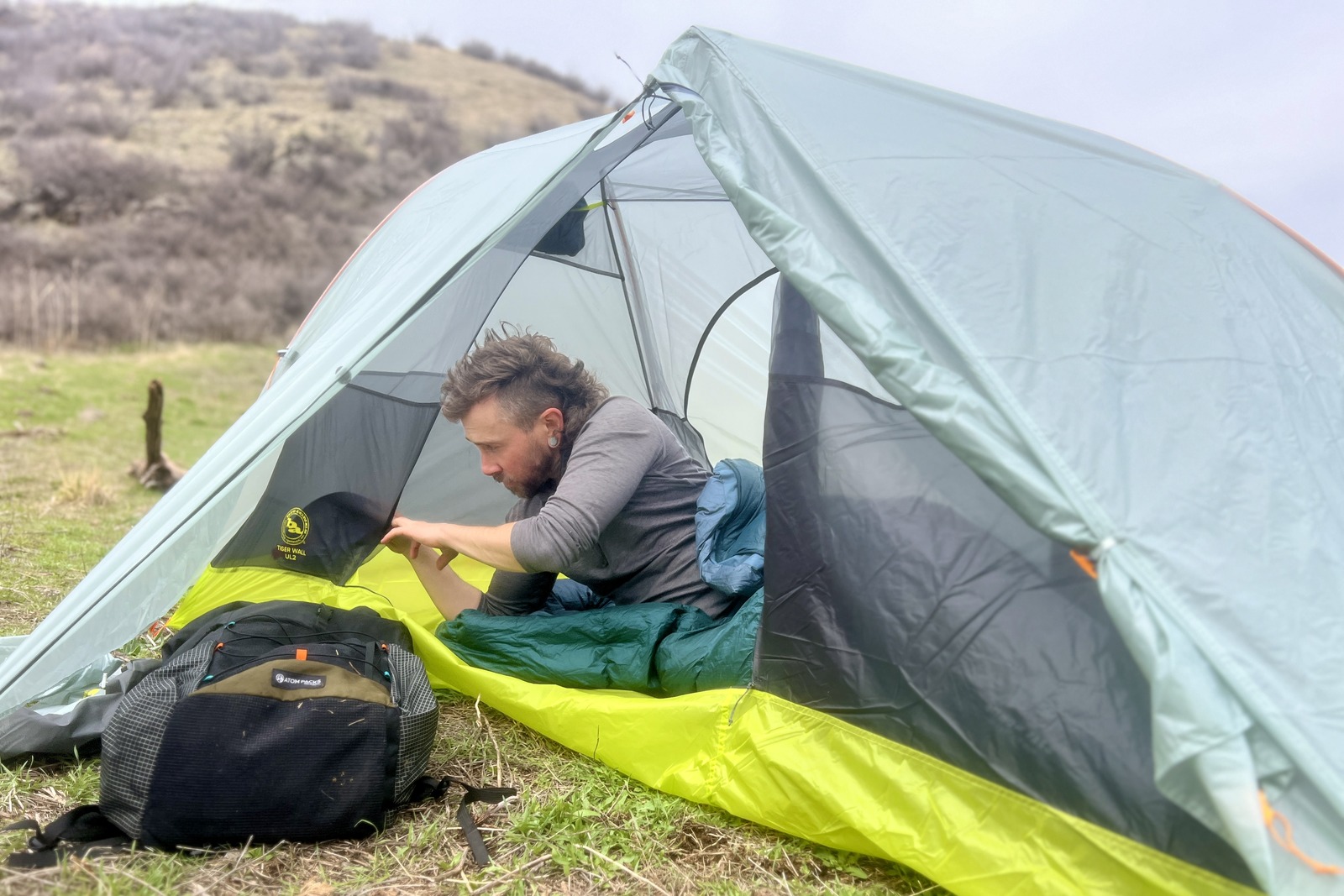
We track wear on floors, mesh, seams, zippers, pole ends, guy points, coatings, and hardware through repeated field use. We also consider whether the materials and construction match the demands of the tent’s intended user.
Conclusion
The best backpacking tent depends on which tradeoffs matter most to you: low weight, interior room, weather margin, easy setup, durability, or price. Our goal is to make those tradeoffs explicit so you can choose the shelter that fits how you actually backpack.