
Bottom Line
The Big Agnes Echo Park 20 delivers unusually bed-like comfort through a soft polyester-cotton liner, broad hybrid shape, and integrated pad attachment. Marion Tucker found it particularly comfortable in the low 30s, where its top insulation, hood, and collar worked well with a sufficiently insulated sleeping pad. Its 19-by-9-inch packed size makes it much more appealing at a car campground than on a backpacking route.
The bottom of this bag is not insulated, and that’s the critical buying condition. The Echo Park needs a thick pad securely held by its cinch sleeve to prevent heat loss and moisture transfer from below. Campers who frequently switch pads or want to sleep directly on the ground should choose a conventional insulated bag. Compare other setups in our best camping sleeping bags guide.
How We Tested
CleverHiker gear tester Marion Tucker evaluated the Echo Park’s comfort, warmth, mattress integration, packed dimensions, and ventilation during camping trips. Testing included nights in the high 20s and low 30s, when pad insulation made a noticeable difference. We checked whether a different compression sack could reduce the Echo Park’s bulky packed size and evaluated how its liner compared with other camping bags.
Quick Specs
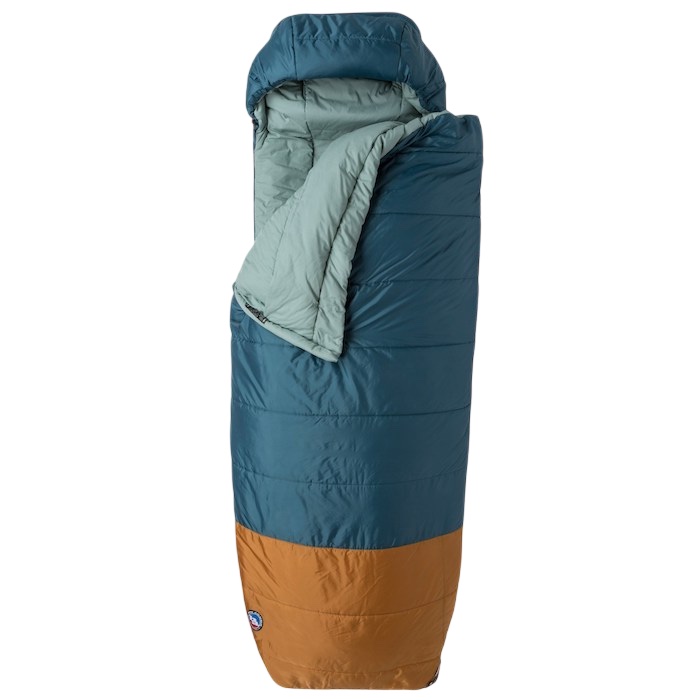
Big Agnes Echo Park 20
Best Bed-Like Comfort in a Sleeping Bag
CleverHiker Rating: 4.2/5.0
Price: $220
Temperature Rating: 20°F
Weight: 4 lb. 9.6 oz.
Fill Type: Synthetic
Pros
- Soft cotton-blend lining has a familiar bedsheet feel
- Wide hybrid shape allows multiple sleep positions
- Pad sleeve reduces sleeping bag slippage
- Cinchable hood and substantial draft collar
Cons
- Uninsulated underside requires a warm sleeping pad
- Bulky and heavy for backpacking
- Temperature performance depends on mattress insulation

Comfort
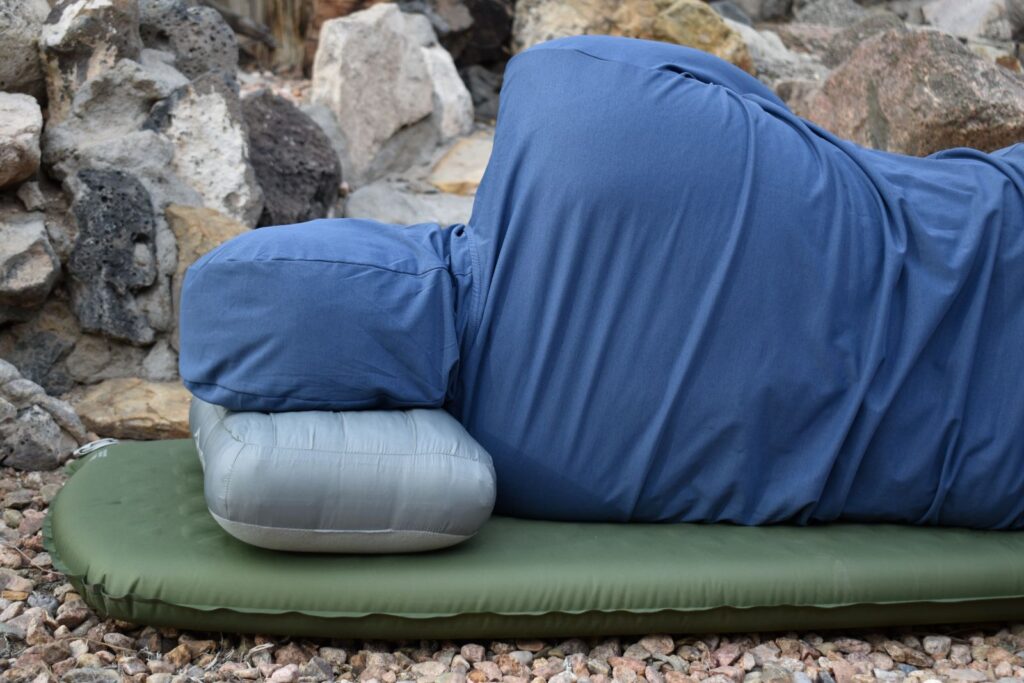
Unlike slick nylon liners that let campers slide around, the polyester-cotton blend felt reassuringly secure against our sleepwear. It was quieter as we turned over, too. That combination makes the Echo Park attractive to anyone who dislikes the clammy, slippery feel of typical technical bags.
The hybrid profile combines a broad upper body with some tapering below, giving side sleepers more freedom than a mummy while reducing excess air space relative to a full rectangle. Unlike slick nylon linings, the polyester-cotton interior stays pleasantly quiet and less slippery when you roll over. The full-size-pillow hood adds another familiar bedding touch.
The top is roomy enough for a full-size pillow, lending the setup the feel of regular bedding. The bag’s shape is neither a narrow mummy nor a full rectangle, so it gives the upper body room while limiting cold empty space at the feet. Campers seeking true head-to-toe width may still prefer the Siesta’s straight sides.
Comfort Score: 4.3 / 5.0

Warmth
The Echo Park’s defining warmth tradeoff is its uninsulated underside. Dense synthetic fill, horizontal baffles, the adjustable hood, and a zipper draft tube protected the top of the sleeper in testing, but only a sufficiently warm sleeping pad insulated against the ground. Treating it like a conventional stand-alone bag would leave the back exposed to cold and moisture.
In actual testing, the Echo Park performed best from the high 20s upward and felt most comfortable in the low 30s. The 20°F rating therefore leaves little room to omit the pad or use an inadequately insulated mattress. The top baffles, hood drawcord, collar, and zipper draft tube help keep warmth in; no amount of cinching compensates for cold air beneath the uninsulated base.
The 40D ripstop nylon shell has a water-repellent finish, and horizontal baffles keep the synthetic fill distributed above the sleeper. Those materials help in damp campground air but do nothing to insulate the otherwise bare underside. Campers considering the Echo Park should assess their pad’s warmth as carefully as the bag itself.
Warmth Score: 4.5 / 5.0

Packed Size
The Echo Park weighs 4 lb. 9.6 oz., and its hybrid width produces a bulky synthetic bundle despite the absence of insulation on the underside. The priority here is sleeping comfort in a stationary camp, not saving pack weight. Factor in the separate mattress the system requires when deciding how much space your bedding will occupy.
The bag measures about 19 by 9 inches when packed, large enough to make vehicle access the practical choice. We tried compressing it further in a different sack, but it remained a substantial bundle. Big Agnes includes a roomy mesh storage sack for keeping the synthetic insulation uncompressed between outings.
At 4 lb. 9.6 oz., it is not the heaviest camping model, but the combination of dense synthetic fill and wide body makes loading a smaller backpack impractical. Even with the extra compression we tried, it was a bulky carry. Store it loosely in the supplied mesh sack rather than relying on the tight transport sack between trips.
Packed Size Score: 3.8 / 5.0

Features
The cinch pad sleeve defines the Echo Park. Instead of relying on conventional underside insulation, Big Agnes uses a fabric ring that attaches the bag to a sleeping pad and holds that pad beneath the sleeper. It reduces the common frustration of the bag sliding away from its mattress. It also makes pad choice central to warmth and comfort: without adequate insulation underneath, the system fails at its most important job.
The bag also has a phone-sized interior pocket, full-length two-way zipper for foot venting, a cinchable hood, and a built-in pillow-retention area. These pieces support a cohesive bed-like campground setup. They are not substitutes for the insulated mattress that the bag requires.
The cinch sleeve is especially useful for campers whose sleeping bag tends to wander off their mattress overnight. It loops around the pad instead of adding rigid hardware under your back. The smooth two-way zipper allows foot venting, while the phone-sized interior pocket keeps small essentials accessible.
Features Score: 4.3 / 5.0

Should You Buy the Big Agnes Echo Park 20?
The Echo Park is a convincing choice for car campers who already use a warm sleeping pad and value a soft, quiet, bedsheet-like liner. Its hybrid shape gives side sleepers substantial space while tapering enough to manage excess air, and it performed best in our testing from the high 20s upward. The pad sleeve and pillow pocket make the sleep system feel integrated rather than pieced together.
Don’t choose it if you want to place a sleeping bag directly on the ground, regularly switch among incompatible mattresses, or need to backpack with your bedding. The uninsulated underside can transfer cold and moisture without a substantial pad, while the 19-by-9-inch stuffed bundle is difficult to justify on a trail. The REI Siesta Hooded 20 is a simpler, fully insulated alternative when pad integration isn’t important.

What Other Camping Sleeping Bags Should You Consider?
REI Siesta Hooded 20 Review: The Siesta is an easier choice if you want a wide, soft car-camping bag without building your warmth system around a pad sleeve. Its underside is insulated and its oversized hood holds a full-size pillow, though its synthetic construction packs very large. Choose the Echo Park for the cotton-blend liner and integrated pad; choose the Siesta for simplicity.
Exped DeepSleep 20F Review: The DeepSleep is another affordable cold-weather option, but follows a very different design. It has a fully insulated underside, narrow mummy shape, and substantial draft collar that felt warm on low-30s nights. That close leg taper is less comfortable for restless side sleepers, while the Echo Park provides much more room if a warm compatible pad is available.