

Bottom Line
The Exped Ultra 6.5R is our favorite cold-weather backpacking sleeping pad for hikers who want serious insulation, excellent comfort, and straightforward setup without moving all the way to a more specialized deep-winter pad. Its 6.9 R-value, 3.5-inch thickness, vertical baffles, and raised side rails create a warm, forgiving sleep surface that works especially well for side sleepers.
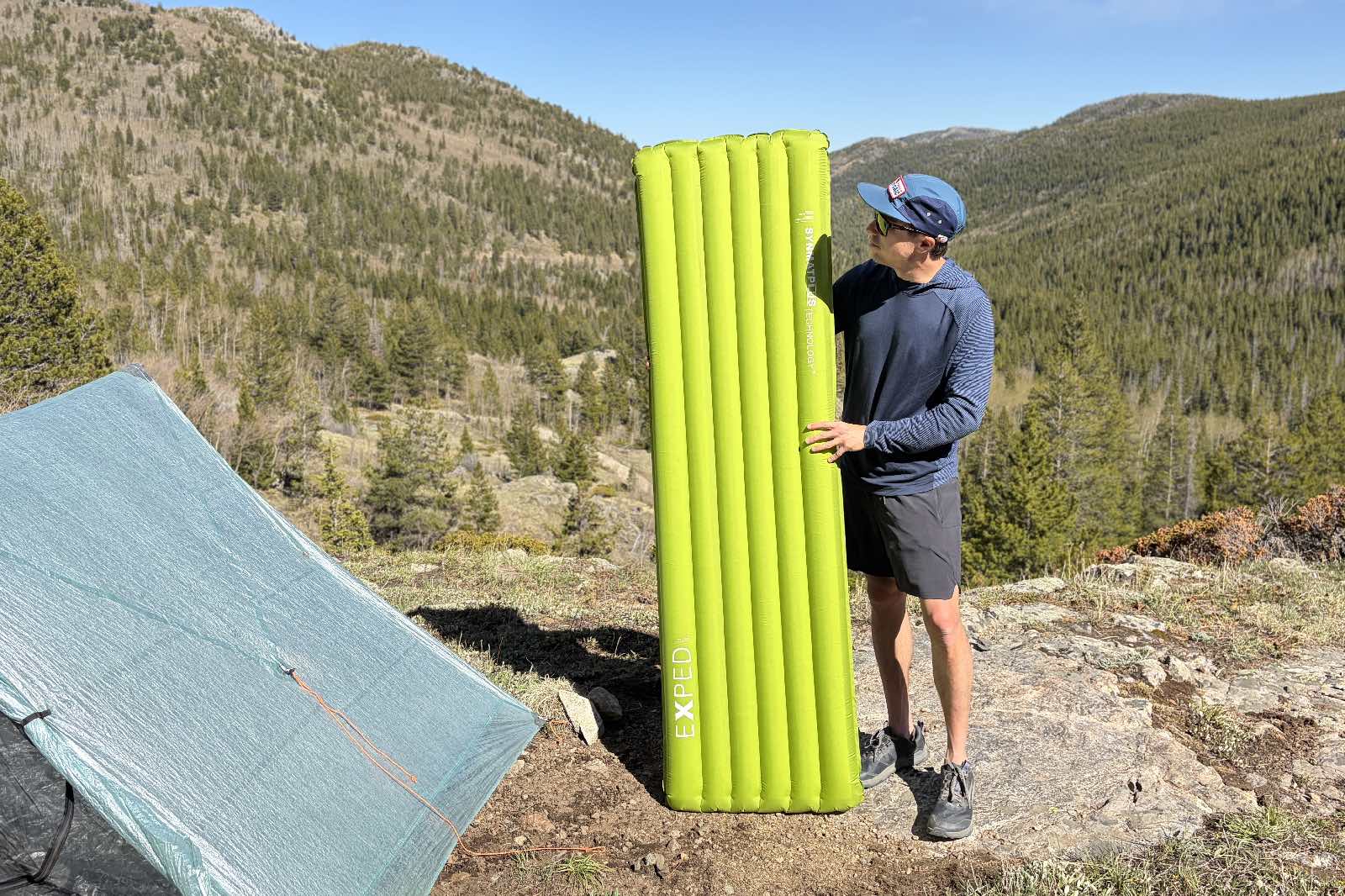
We tested it on a weeklong backpacking trip through the Grand Canyon and on several chilly overnights in the Rocky Mountains. Across those trips, the Ultra 6.5R stood out most for warmth and comfort. It’s also one of the easiest large inflatable pads in our lineup to inflate with a pump sack.
There are tradeoffs. Our Medium test pad weighed 16.2 ounces, so it isn’t a weight-first option, and the 20D fabric lands closer to the middle of our inflatable lineup for durability. For truly frigid winter trips, we trust the Therm-a-Rest NeoAir XTherm NXT more. But for backpackers who want a comfortable cold-weather pad that is still reasonable to carry outside winter, the Ultra 6.5R remains one of our favorite choices in our guide to the best backpacking sleeping pads.
How We Tested
Gear Analyst Brett Kretzer tested the Ultra 6.5R on a weeklong backpacking trip through the Grand Canyon and during several chilly overnights in the Rocky Mountains. Those trips gave us a mix of warm desert camps and colder alpine conditions to evaluate comfort, warmth, durability, packability, and daily setup in real-world use.
We tested the Medium rectangular version and measured it at 16.2 ounces. We also compared its performance against the rest of our backpacking sleeping pad lineup, with particular attention to how its vertical baffles, cold-weather insulation, lightweight fabric, and pump system affect the overall tradeoff.
Quick Specs
- Best for: Cold-weather backpacking, side sleepers, all-season use
- Tested size: Medium rectangular
- Tested dimensions: 72 x 20.5 x 3.5 in., manufacturer listed
- Fabric: Recycled 20D ripstop polyester
- Included: Schnozzel Pumpbag UL, stuff sack, repair kit
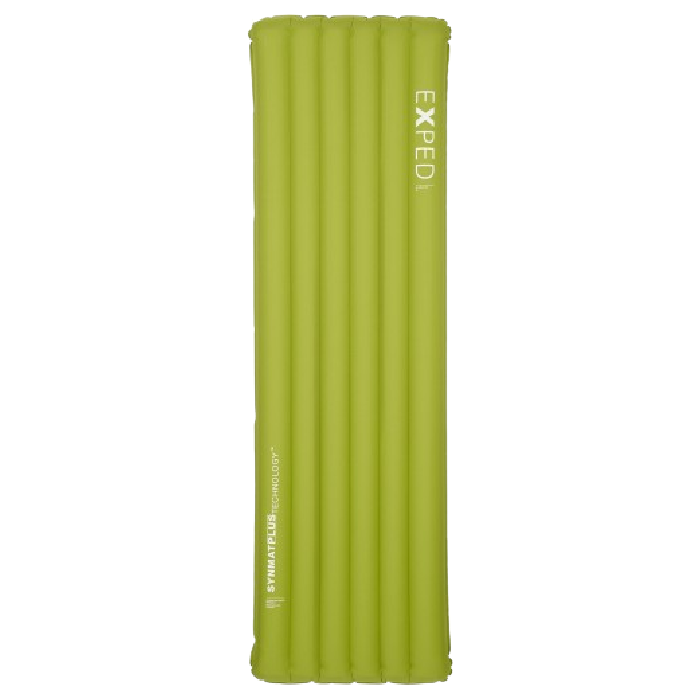
Exped Ultra 6.5R
Best Cold-Weather Backpacking Sleeping Pad
CleverHiker Rating: 4.5/5.0
Price: $200
Weight: 16.2 oz., Medium, CleverHiker measured
R-Value: 6.9
Thickness: 3.5 in.
Pros
- Excellent warmth
- Very comfortable for side sleepers
- Supportive vertical baffles and raised side rails
- Easy inflation with included pump sack
- Many size options
- Reasonable weight for the warmth
- Easy to roll and pack
Cons
- Not the lightest option
- 20D fabric requires more care than our durability leaders
- Underside valve placement can be awkward
- More insulation than many warm-weather backpackers need

Comfort
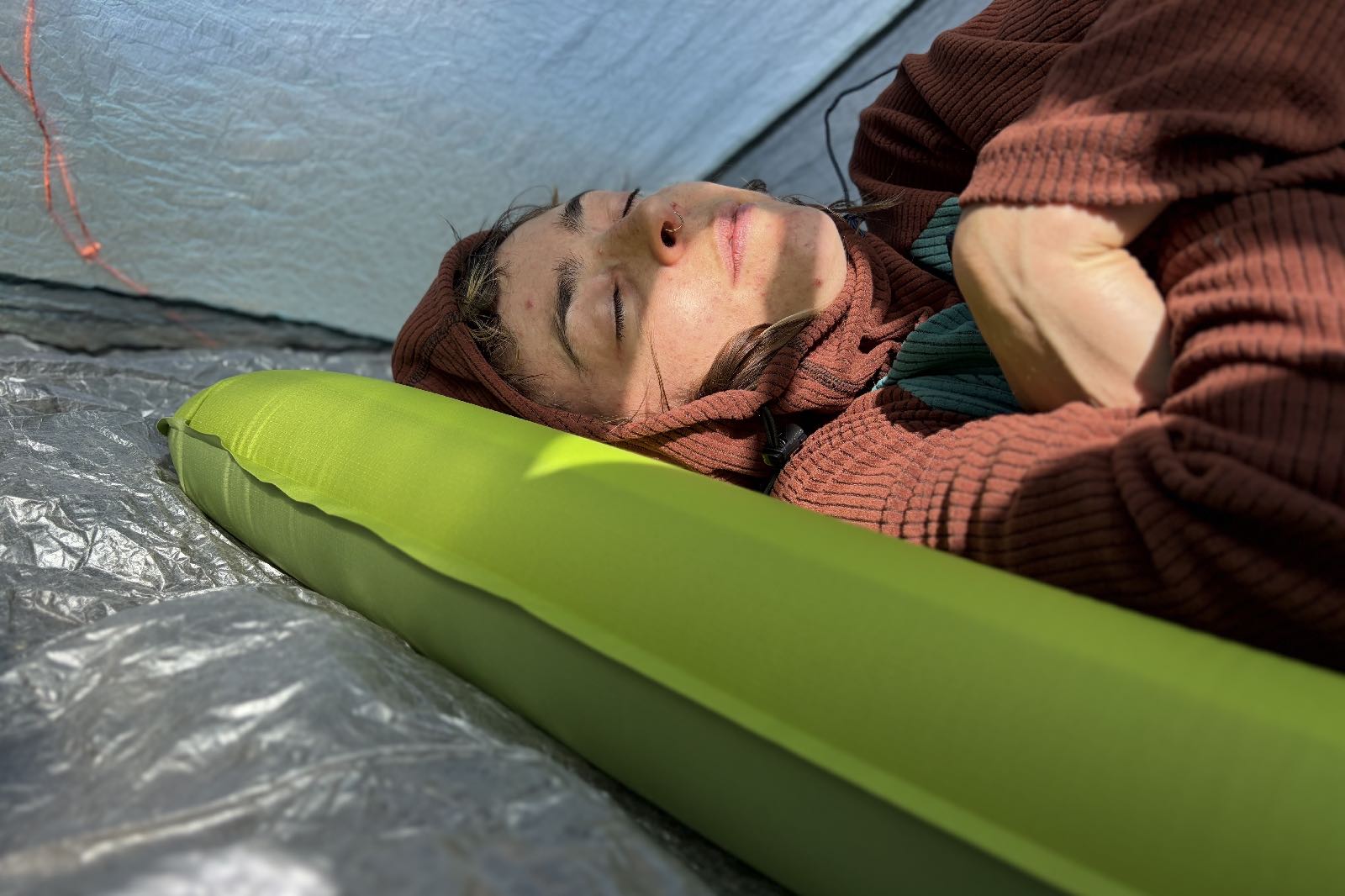
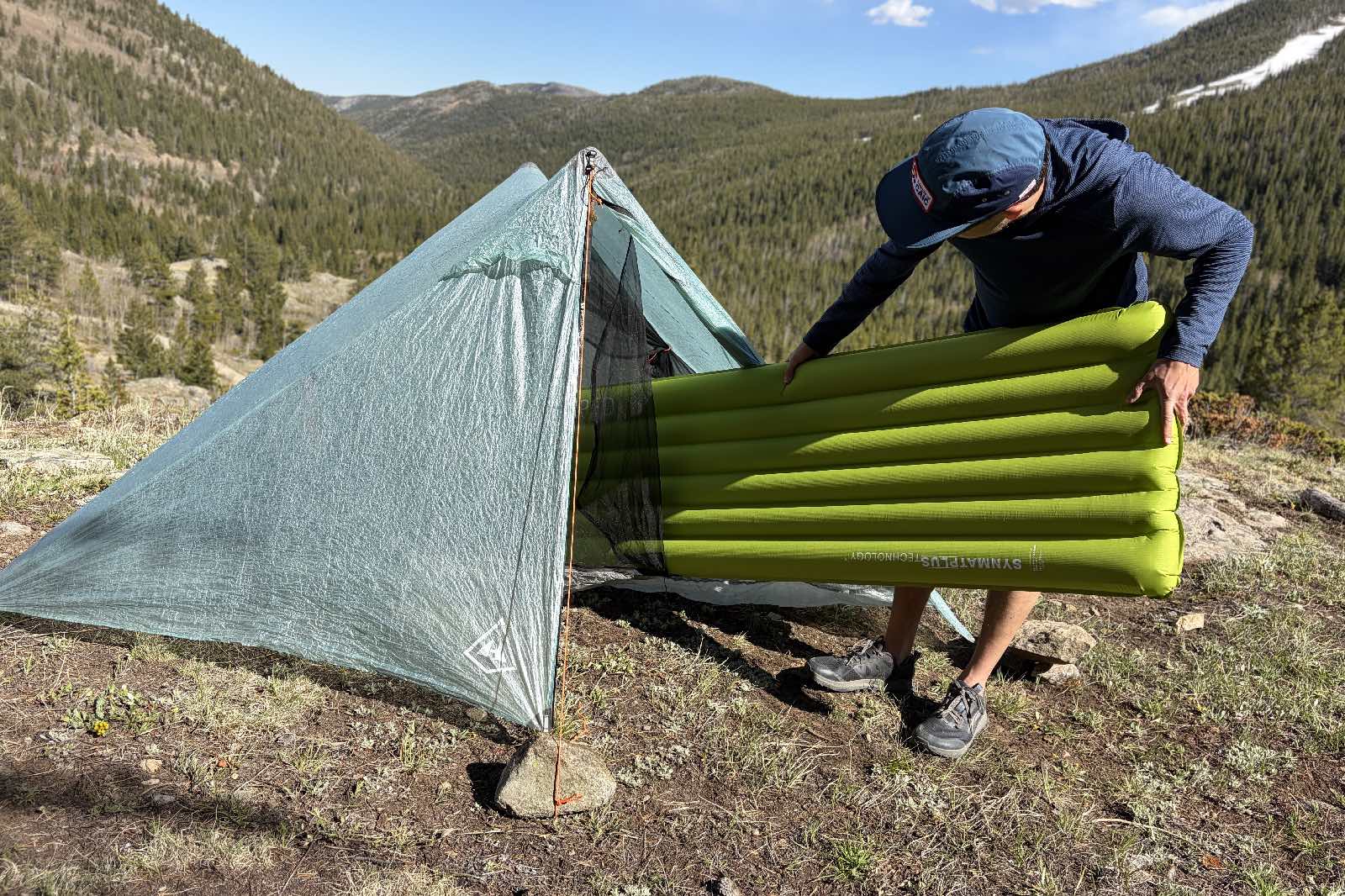
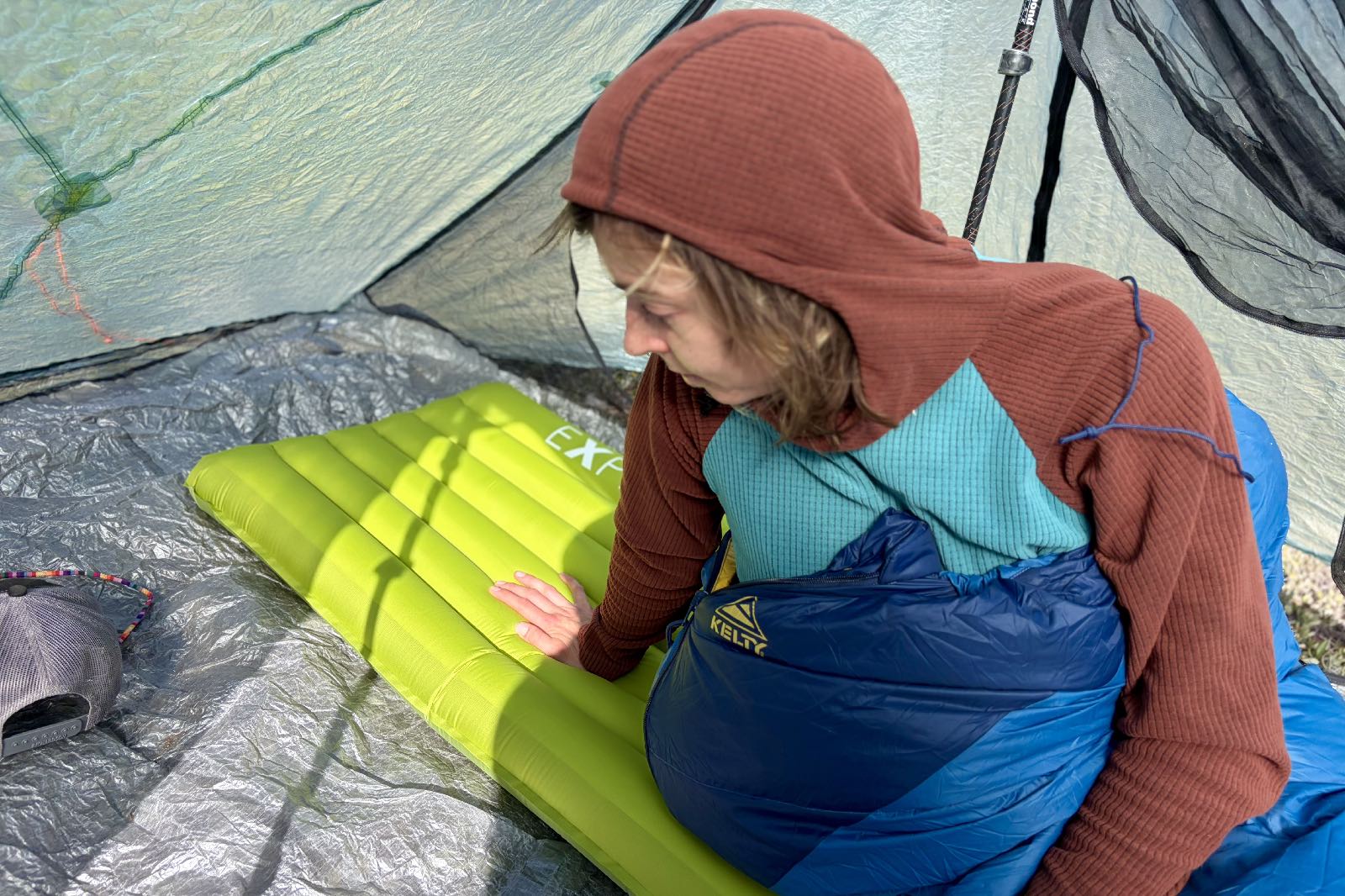
The Ultra 6.5R is one of our favorite pads for side sleepers. Its vertical baffles have a softer, more cradling feel than the stiffer horizontal baffles found on some competing pads, and the raised outer rails help keep sleepers centered through the night.
At 3.5 inches thick, the Medium rectangular version gave us enough cushioning to stay comfortably off the ground. We also like the usable space of the rectangular shape, especially for sleepers who move around or change positions during the night.
The standard Medium is 20.5 inches wide, which felt a little narrow to us compared with wider options. Larger sleepers or anyone who likes more room can step up to the 25.6-inch Medium Wide. The surface fabric itself is fairly typical for a lightweight inflatable—it’s functional rather than especially soft or plush.
Within our current sleeping pad lineup, the Ultra 6.5R remains a standout for side sleepers because the vertical baffles create a forgiving, body-hugging feel without requiring a much heavier comfort-first design.
Comfort Score: 4.7 / 5.0
Weight & Packability
Our Medium test pad weighed 16.2 ounces. That’s light enough to remain practical for backpacking, especially given the substantial insulation, but it isn’t competitive with the lightest three-season pads when minimizing every ounce is the main goal.
The weight tradeoff makes more sense for hikers who actually need the Ultra’s warmth. Its R-value of 6.9 gives it far more cold-weather capability than many pads in this weight range, so the extra ounces are buying a meaningful increase in insulation rather than unnecessary bulk.
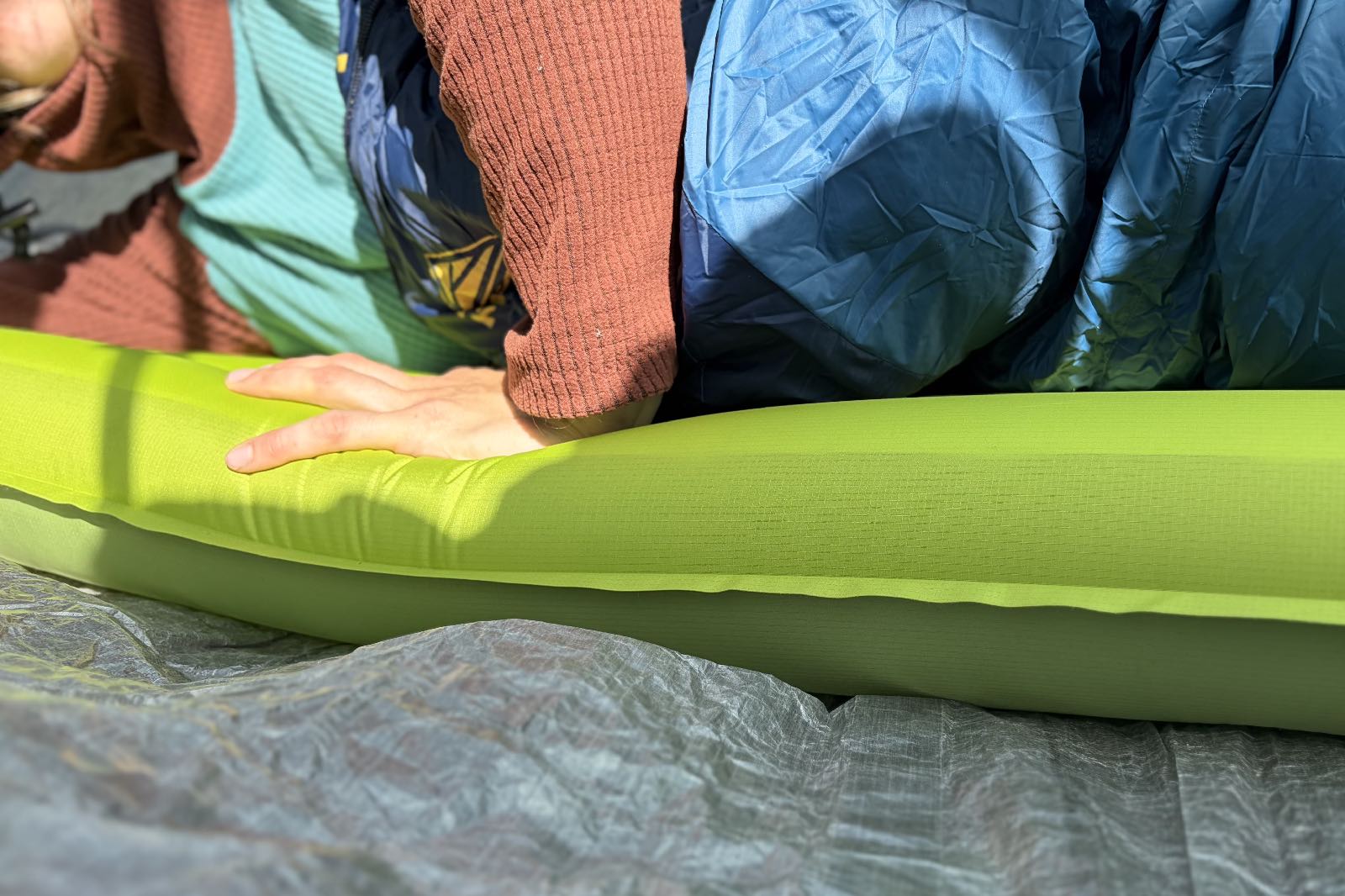
Packability is a strength. The rectangular pad rolls easily, the flexible fabric is simple to manage, and the stuff sack has enough room that we don’t have to fight for a perfectly tight roll every morning.
For warm-weather backpackers, there are lighter choices that make more sense. For cold-weather trips, we think the Ultra 6.5R keeps its weight impressively reasonable for what it provides.
Weight Score: 4.0 / 5.0
Durability
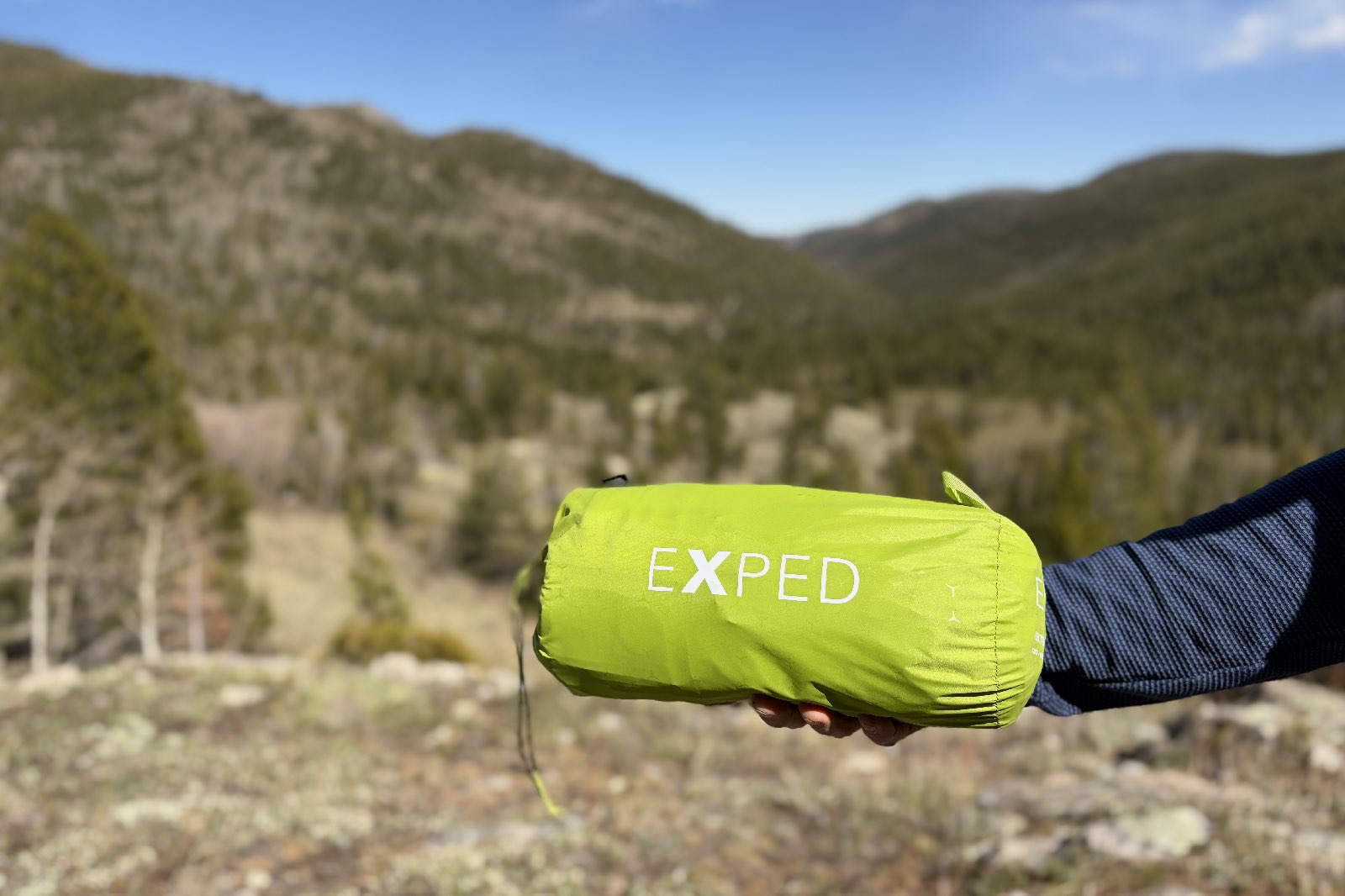
The Ultra 6.5R sits around the middle of our inflatable sleeping pad lineup for durability. Its 20D ripstop polyester keeps weight down, but it isn’t as robust as the tougher materials used on our durability leaders.
That doesn’t make the Ultra fragile. It does mean we use normal care when choosing campsites and keep sharp rocks, sticks, and other debris away from the pad. Backpackers who routinely camp on rough surfaces can add a thin foam pad underneath for extra puncture protection.
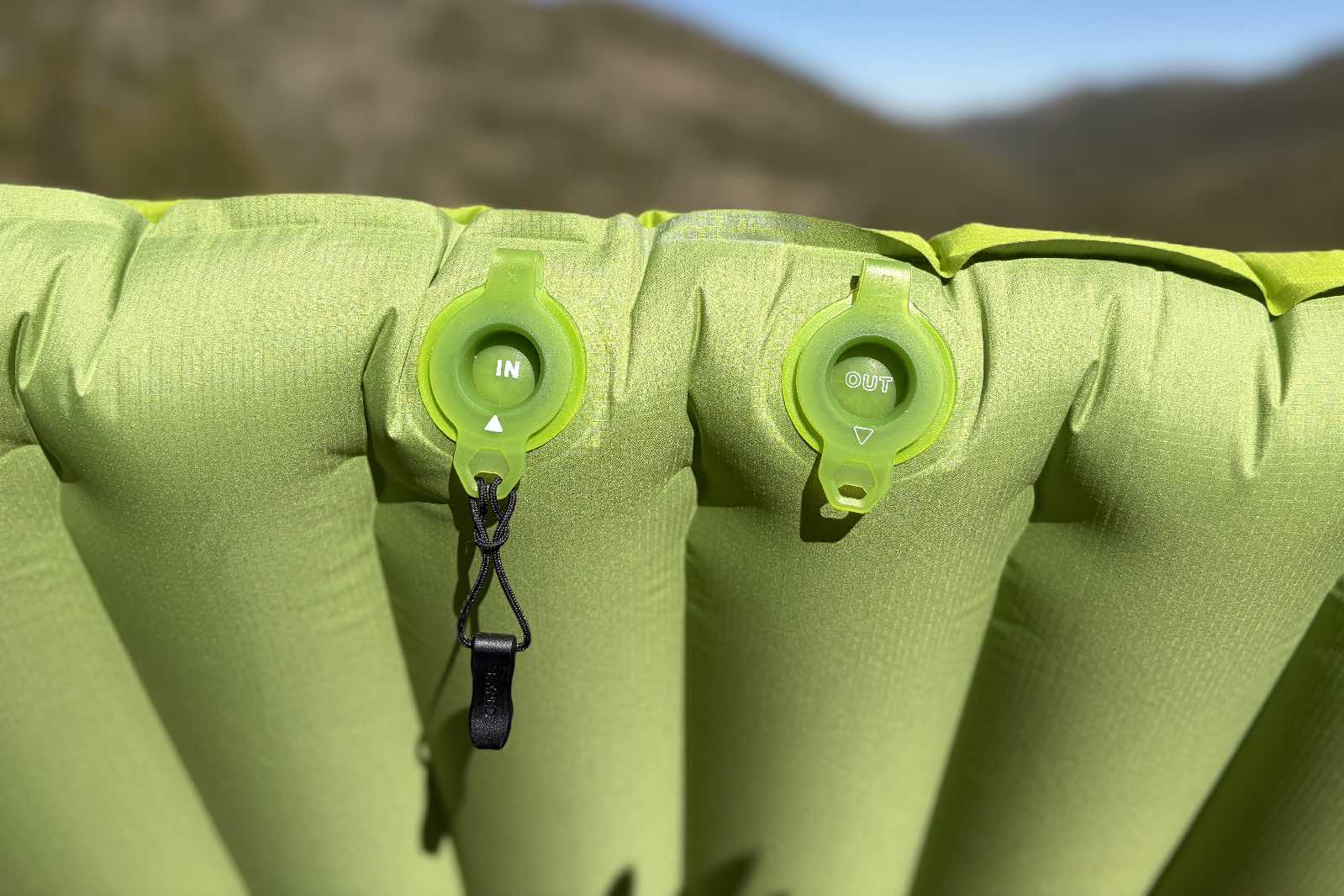
We like the separate inflate and deflate FlatValves, which are simple and substantial pieces of hardware. A field repair kit is also included if the pad does get punctured.
The basic tradeoff is straightforward: Exped uses lighter fabric to keep a warm, thick pad reasonably light. We think that balance works well for most backpackers, but durability-first buyers have tougher inflatable options.
Durability Score: 4.3 / 5.0
Warmth
Warmth is the Ultra 6.5R’s defining strength. Its R-value of 6.9 puts it firmly into cold-weather territory, and our broader category testing supports it as one of the strongest choices for backpackers who expect to camp well below typical summer temperatures.
The pad combines synthetic microfiber insulation with reflective layers to slow heat loss to the ground. More importantly for our recommendation, we tested it across warm Grand Canyon camps and chilly Rocky Mountain nights and continue to rank it as our favorite cold-weather backpacking sleeping pad.
The Therm-a-Rest NeoAir XTherm NXT is still our stronger choice for dedicated winter backpacking. It has a higher R-value and a more durable bottom fabric, and our category testing gives it the edge when temperatures become genuinely frigid.
The Exped makes a different tradeoff. Its vertical baffles, rectangular shape, and 3.5-inch thickness give it a softer, more forgiving sleeping surface than the XTherm in our testing. That makes it especially appealing to cold sleepers and side sleepers who want substantial insulation without giving up comfort.
Warmth Score: 4.8 / 5.0
Ease of Setup
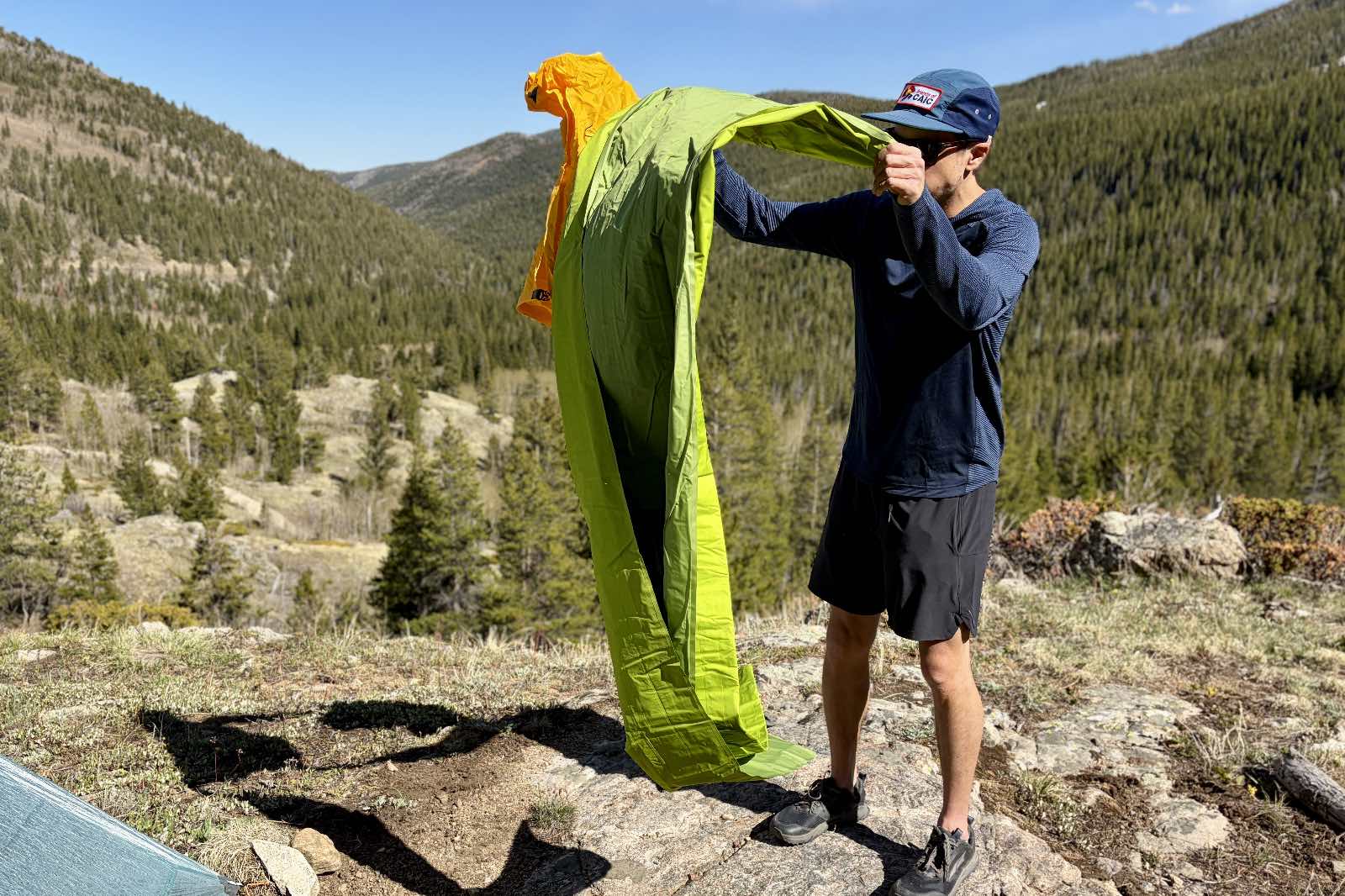
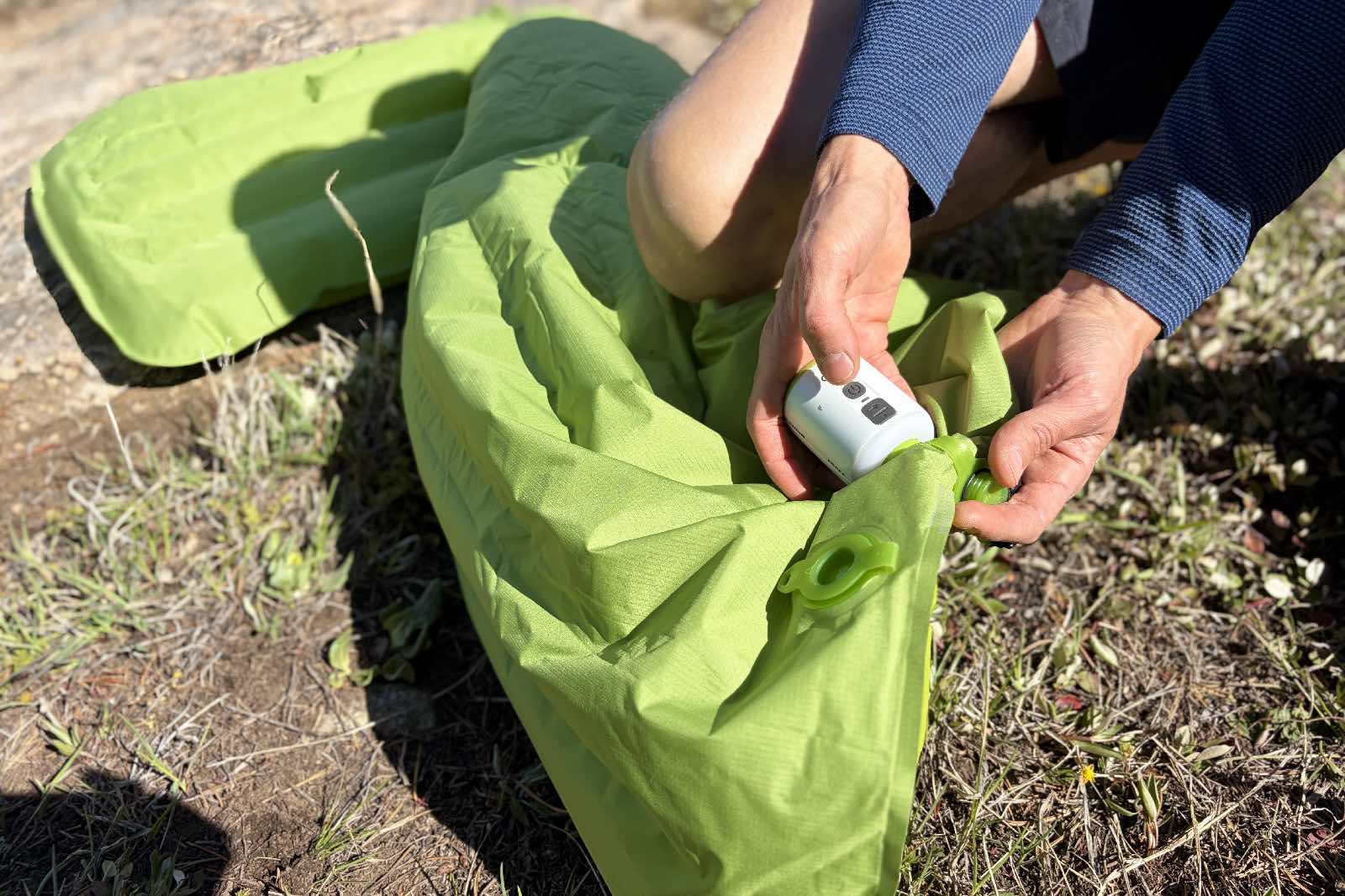
The Ultra 6.5R is one of the easiest large inflatable pads in our lineup to set up. The included Schnozzel Pumpbag UL connects securely to the inflation valve, has a large opening for capturing air, and filled our test pad in about three bags.
The pump bag is more elaborate than some competitors, with a roll-top closure and valve cap, but the system works well and keeps moisture from your breath out of the pad. The separate deflation valve also makes it easy to release air when it’s time to pack.
Our main annoyance is valve placement. Both valves sit on the underside of the pad, which can make them a little harder to find when the pad is already inside a tent or when you want to make an adjustment in the dark.
Exped also makes an electric Ultra Pump that is compatible with the pad, but the included pump bag is already quick enough that we don’t think an electric pump is necessary for most backpackers.
Ease of Setup Score: 4.8 / 5.0
Should You Buy the Exped ultra 6.5R?
The Ultra 6.5R is a strong choice for cold-weather backpackers who put a premium on comfort. Its 6.9 R-value gives it substantially more insulation than a typical three-season pad, while the vertical baffles and 3.5-inch thickness make it especially comfortable for side sleepers.
It also makes sense for backpackers who want one pad to cover a wide range of conditions. The 16.2-ounce measured weight is reasonable enough for regular backpacking, and the pad is easy to inflate, deflate, roll, and pack.
We’d look elsewhere if your trips are mostly warm-weather outings, if your highest priority is cutting every possible ounce, or if you want the toughest inflatable construction available. And for sustained deep-winter conditions, the XTherm NXT remains our preferred dedicated winter option.
For everyone in between—especially side sleepers and cold sleepers—the Ultra 6.5R offers an unusually useful blend of warmth, comfort, and manageable weight.
What Other Backpacking Pads Should You Consider?
Check out our full guide to backpacking sleeping pads to find out which one is most compatible with your sleeping style.
Big Agnes Divide Insulated Review: The Divide Insulated is a more budget-oriented alternative with a similarly roomy rectangular shape and vertical-baffle feel. It’s heavier and less warm than the Ultra 6.5R, but it remains one of our favorite affordable all-around pads and makes more sense for backpackers who don’t need as much cold-weather insulation.
Therm-a-Rest NeoLoft Review: If comfort matters more than keeping weight low, the NeoLoft is the plushest option in our current lineup. Its thick, body-conforming sleeping surface provides more cushioning than the Ultra, but it comes with a significant weight penalty and is a better fit for comfort-first three-season use than for maximizing cold-weather performance.
Therm-a-Rest XTherm NXT Review: For dedicated winter backpacking, the XTherm NXT is our preferred choice. It has a higher R-value, an excellent warmth-to-weight ratio, and tougher underside fabric. The Ultra 6.5R is more forgiving for side sleepers in our testing, while the XTherm is the stronger pick when maximum winter performance matters most.